
For business owners looking to rent trucks, understanding the equipment available is critical, especially when it comes to features like lift gates. This article delves into whether Home Depot truck rentals come equipped with lift gates, explores the importance of liftgate delivery services, and highlights alternative equipment options for transporting heavy items. As your business navigates logistics and transportation solutions, knowing your options can inform better decisions that enhance efficiency and safety.
Lift Gates and Loading Realities: Navigating Home Depot Truck Rentals Without a Built-In Lift Gate
When people plan a move or a big haul, the natural question about a familiar retailer’s truck rentals often centers on a single feature: does this truck come with a lift gate? The short answer, based on how Home Depot’s rental fleet is structured today, is nuanced but clear. Lift gates—the powered platforms that lower heavy cargo from the truck bed to ground level—are not a standard feature on Home Depot’s rental trucks. They are, in most cases, the hallmark of delivery services rather than the rental vehicles themselves. This distinction matters because it shapes how homeowners, contractors, and do-it-yourself movers approach loading, unloading, and overall logistics for large or unwieldy items.
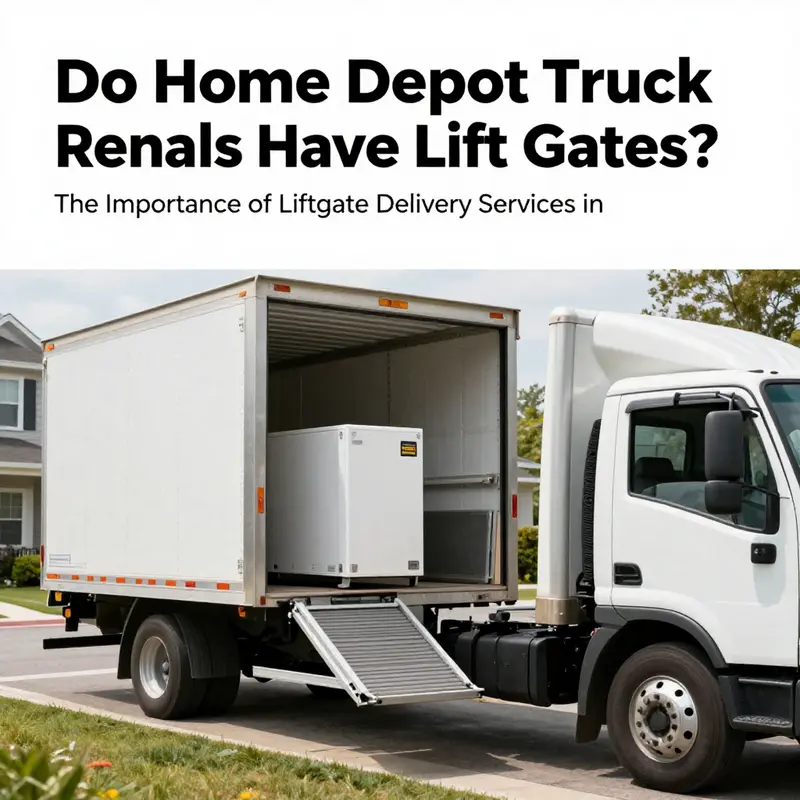
To understand why, it helps to unpack what a lift gate actually does and why it’s typically paired with freight-delivery scenarios rather than rental fleets. A lift gate is a robust, hydraulic or electric platform mounted at the rear of a truck. It lowers a palletized load to the ground or a loading dock when there is no dock or ramp at the arrival site. It protects the item from being dragged or dropped and reduces the risk of personal injury during unloading. In the context of Home Depot, lift gates are most often linked to the delivery option you choose when ordering large items online—appliances, heavy furniture, or lumber—that are shipped via a freight carrier. This service is particularly valuable when the destination is a single-family home without a loading dock or a multi-story building with stairs. It’s a practical solution for the last mile of delivery, ensuring that heavy products reach the preferred location without forcing the recipient to wrestle with lift-heavy items up stairs or into a driveway that lacks a safe unloading point.
The rental truck itself, however, is designed to be a versatile tool for transporting items rather than a freight-handling platform. The trucks typically come equipped with a tailgate that enables manual loading and unloading, along with a sturdy floor, tie-down points, and the capacity to move a broad range of goods. But the tailgate is not a powered lifting mechanism. This distinction is not merely technical; it changes how a move is planned. If your load includes unusually heavy appliances, bulk lumber, or furniture that exceeds what one person can confidently lift, you’ll need to adapt your approach. That adaptation often means relying on external equipment or services rather than the truck’s built-in features.
The practical implications unfold in several directions. First, if you’re renting a Home Depot truck for a DIY move, you’ll want to assess whether the load can be safely managed with a dolly or hand truck, plus an extra pair of hands. A tailgate, while helpful, does not replace the mechanical advantage of a true lift gate. Second, you may discover that your loading happenstance matters as much as the vehicle you rent. A driveway with a gradual slope, a narrow doorway, or a stairwell can complicate unloading—even when you have a tailgate. Third, the absence of a lift gate on rental trucks nudges many customers toward alternative arrangements for heavy items: enlist professional movers who provide lift-gate services, opt for Home Depot’s delivery options for qualifying large items, or contract with third-party freight carriers for specialized unloading assistance.
This reality is not a flaw in the Home Depot rental program; it’s a reflection of how the company structures its services to match different customer needs. The rental fleet is designed to offer flexible, cost-effective transportation for a wide range of belongings, from boxes and furniture to bulk boxes and equipment. The lift gate, when needed for loading and unloading beyond the capabilities of a tailgate, remains a specialty service that is more naturally paired with delivery logistics than with rental logistics. For customers who require a lift gate during transport, there are practical pathways to bridge the gap between what the rental truck can do and what the job requires.
One path is to consider the delivery option offered for large items when you order online. Home Depot’s online catalog includes a range of big-ticket products that are delivered via freight carriers. These deliveries can include a lift gate if the item qualifies and if the delivery arrangement calls for it. The process typically begins with selecting the item, choosing the delivery option, and scheduling a delivery window that accommodates the driveway, curb appeal, and access constraints at the destination. The lift gate, in this context, is a service layer layered on top of the carrier’s standard capabilities. It is not a feature embedded in the rental truck that you drive away with. For people who are moving themselves and want to avoid bringing a dolly through a narrow doorway or up a flight of stairs, this distinction can be critical. It clarifies what you should expect from the delivery service and what you should plan for when you rely on your own rented truck.
When planning a move or a large haul using a Home Depot rental truck, it is wise to map out the sequence of loading and unloading in detail. Start by inventorying every item you’re transporting and weighing the heaviest ones. A shopping list of equipment—dollies, ramps, pulling straps, wheel chocks, and sturdy moving blankets—helps create a safer, more efficient loading workflow. If the destination lacks a loading dock, you’ll want to allocate extra time for unloading and possibly arrange for an additional helper or two to carry items up a set of stairs, down a ramp, or across a gravel or uneven surface. The tailgate can support a cautious, incremental unloading rhythm, but repeated lifting of heavy objects is still a job for capable hands and, whenever possible, a platform or cart that reduces the load’s weight on the lifter.
The broader context also invites a comparison with other rental providers that explicitly market lift-gate-equipped trucks. Some customers who frequently transport heavy loads or move into multi-story buildings find value in rental fleets that feature integral lift gates. In these cases, you might encounter options where the truck you rent can accommodate heavy pallets or bulky furniture with less manual lifting at the point of departure and arrival. If lift-gate-equipped options are a priority, exploring a different rental provider or a plan that specifically includes this capability can be worth the extra cost or a longer lead time for reservation. In the realm of truck rentals in general, this is a reminder that equipment features vary by fleet and by the purpose of the rental, whether it is a quick local move, a long-distance relocation, or a one-off haul of heavy materials.
To give some guidance on how to compare options without over-engineering the plan, consider this practical stance. If your move involves a load placed on pallets, or if you anticipate frequent heavy items that require a platform to unload, a lift gate becomes a meaningful factor. For many households and small businesses, however, a well-planned use of a dolly and a few sturdy moving blankets, combined with the rental truck’s tailgate, provides a safe and cost-effective approach. The extra protection from a strap or two helps prevent shifting during transit, and the addition of ramps or ramps’ ramps lets you create a gentle incline for wheeling heavy items onto or off the truck. In this sense, you can treat the rental truck’s tailgate as part of a broader loading toolkit rather than as a standalone solution for every heavy load.
With that framework in mind, it’s helpful to look at how people actually navigate the decision process. Some customers rely on professional movers who can supply lift-gate services, especially for delicate or heavy items, or when a building’s entry has limited clearance. The choice often comes down to cost, time, and risk. Hiring professionals can be more expensive than doing it yourself, but it reduces the risk of personal injury and item damage and can speed up the process when stairs, tight turns, or awkward doorways are involved. In contrast, a Home Depot delivery option for eligible items can strike a balance between cost and convenience. If you’re coordinating a large purchase that requires delivery, selecting the lift gate option as part of the freight carrier’s service can be an effective way to get the item to floor level with minimal manual handling. This approach preserves your own manpower for positioning the item in the room and avoids the heavier lifting at the curb or driveway.
The choice also intersects with how you plan the day. If you’re renting a truck for a dedicated moving window and you know you’ll be dealing with heavy items, you may decide to add a couple of hours for loading and unloading, even if you are not using a lift gate. It’s easy to underestimate how long it takes to maneuver a large appliance, a bulky sofa, or a long piece of lumber through a doorway. On the other hand, if your load is more modest and you can rely on smaller items that can be boxed, strapped, and wheeled with a dolly, the rental truck’s tailgate configuration may be perfectly adequate. This is not a failure of the rental program; it’s an honest accounting of the real-world requirements of heavyweight transport.
For readers who want a broader sense of equipment options beyond the Home Depot fleet, a quick look at other rental providers can be instructive. Even within the same rental ecosystem, different trucks and service add-ons influence how you plan the move. For instance, some customers prefer a truck that includes a lift gate or at least supports one as an add-on, while others lean toward a plan that pairs a truck rental with a separate lift-gate service provided by a moving company or a freight carrier. When you weigh these choices, you’re balancing upfront costs, timing, access constraints at either end of the move, and the level of manual handling you’re willing to undertake yourself. The decision becomes less about a single feature and more about how the entire loading and unloading workflow comes together on the day of the move.
If you’re curious about the broader landscape of truck rental options that may include lift-gate capabilities, you can explore specialized fleet details and sizing from providers who advertise these features more explicitly. A practical way to get a sense of what’s available is to review materials that break down truck dimensions, payloads, and optional equipment. Such resources help you compare the real-world capabilities of a smaller 16-foot truck against a longer 22-foot or 26-foot option, and they illuminate where lift gates might be introduced into an overall rental plan. For readers who want to dig into this space, a concise overview can be found in dedicated truck-rental guides that discuss specific truck sizes and associated features. For instance, Penske truck rental 16 ft offers a glimpse into how a mid-sized rental vehicle handles loading, capacity, and the practicalities of equipment add-ons. This internal reference is not meant to upend the Home Depot decision, but it provides a comparative lens for readers weighing lift-gate needs against available rental configurations.
In the end, the core takeaway is straightforward. Home Depot truck rentals do not come with built-in lift gates as part of the standard fleet. Lift gates are primarily a feature tied to delivery services for large, bulky items that require safe, ground-level unloading when there is no loading dock nearby. For those who need to move heavy items themselves, the path includes using a tailgate-equipped rental truck with a dolly, enlisting professional movers who offer lift-gate unloading, or opting for Home Depot’s delivery option on qualified items. Each option carries its own costs, timelines, and logistical considerations. Planning ahead—assessing access at both ends, inventorying items by weight and maneuverability, and selecting the right combination of equipment and services—will determine whether you emerge from the move with fewer strains and less stress.
As you map your plan, it’s worth keeping a few practical questions in mind. Does the item require a dock or a ramp for safe unloading? Is there space at the destination to operate a dolly or hand truck effectively, or will it require stairs, an elevator, or a narrow doorway? How much time can you spare for loading and unloading, and what are the risks of trying to push heavy loads through a tight doorway? Answering these questions in advance helps ensure that you’re neither overestimating what you can achieve with a tailgate nor underestimating the effort needed to move large items without a lift gate. It also frames a reasonable budget, balancing truck rental costs, potential delivery charges for lift-gate services, and any professional moving costs if you decide to hire specialists.
For readers who want a sense of how the ecosystem looks when lift gates are factored into the plan, the official online portal remains the most authoritative source for up-to-date delivery options and eligibility criteria. You’ll often find the most current information about delivery capabilities, weight limits, service areas, and any associated fees on the retailer’s site or through its delivery scheduling interface. This real-time approach helps you avoid assumptions about availability and ensures you make a concrete choice before you rent a truck or place a large item order. If a lift gate is a must-have feature for your project, consider pairing a rental with a delivery service that explicitly offers lift-gate unloading for the items you’re moving. This strategy provides a reliable safety net for heavy loads and a smoother overall experience on moving day.
In sum, Home Depot’s truck rentals do not include a built-in lift gate as a standard feature. Lift gates belong to the delivery framework for large items that require safe ground-level unloading. For those who plan carefully, this means a range of viable pathways—from hiring professional movers to leveraging Home Depot’s freight-delivery options, to exploring lift-gate-equipped rental alternatives from other providers. The goal is clear: maximize safety, minimize physical strain, and keep the move on track. If you want to explore a broader spectrum of rental configurations and how lift gates might play into them, see the Penske option referenced above for a sense of how some mid-sized trucks are configured and what to expect in terms of equipment add-ons. The practical takeaway remains consistent: know what you need, verify what you’re getting, and choose the approach that best aligns with your load, access, and timeline.
External resource: https://www.homedepot.com/
null
null
Lift Gates on Home Depot Truck Rentals: Availability, Real-World Use, and Practical Alternatives for Moving Heavy Goods
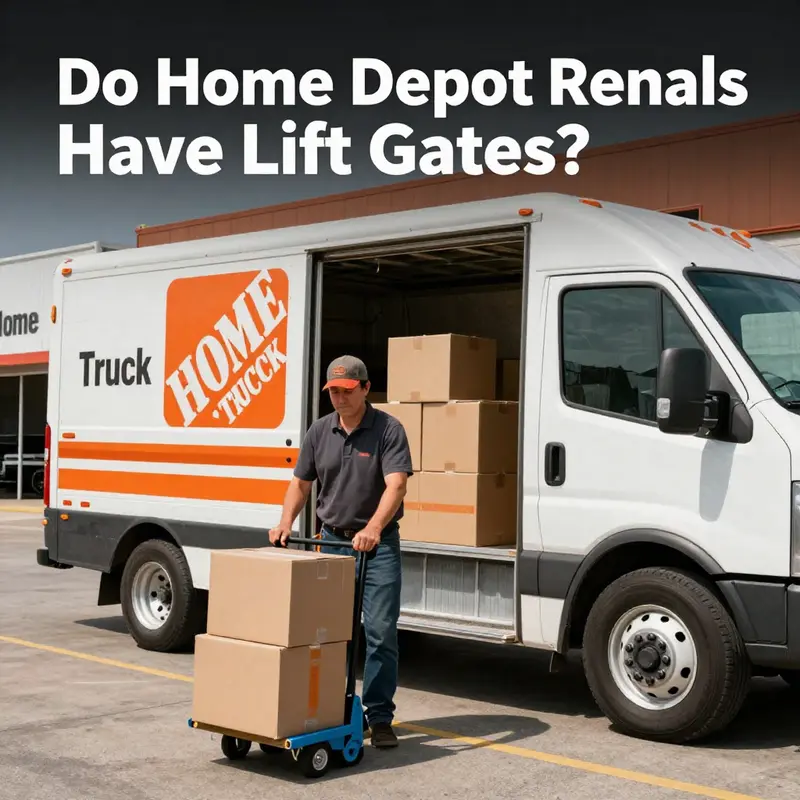
When you face a big move or a project that braucht to move bulky materials or heavy furniture, one question tends to circle back: do the rental trucks available at the home improvement store come with lift gates? The answer is nuanced, shaped by truck size, location, and the specific services you plan to use. A lift gate is a hydraulic platform that lowers and raises cargo between ground level and the bed of a truck. It is a piece of equipment designed to reduce the risk of injury and to prevent damage to items during loading and unloading. In practical terms, a lift gate can change how you approach a move. It can mean fewer trips up and down a loading ramp, less strain on the back, and greater control when maneuvering bulky items like appliances, dressers, or heavy sheets of lumber. Yet the presence of a lift gate on a rental truck is not a fixed feature across the entire Home Depot fleet. The fleet is large and varied, and availability hinges on several factors that go beyond a simple yes or no. The most reliable way to know for sure is to speak with the local store where you intend to rent and to review the truck fleet details on the official truck rental page. In other words, lift gates can be a real asset, but they are not guaranteed on every truck or at every location, particularly for smaller vehicle options like pickups and cargo vans. This reality makes planning essential, especially when you are coordinating a move or a job with time constraints. If you are managing a delivery of large items purchased from the store, you may encounter another lift gate solution that exists separately from rental trucks: lift gate delivery. This service is offered for large items such as appliances or furniture that are delivered via freight carriers. When goods are delivered with a lift gate, that hydraulic platform is used to lower the cargo to ground level at the destination. This is particularly helpful when the delivery location lacks a loading dock or when the items are too heavy to unload safely by hand. Lift gate delivery is a service designed to complement online orders and avoid the need for the customer to have additional equipment or personnel on hand. It is a different service from renting a truck, and it is worth understanding how the two options relate to your overall moving plan. If your goal is to minimize manual lifting and you are considering a rental truck as part of the solution, you will need to gather information about lift gates from the rental fleet itself, because lift gates on rental trucks are what you would rely on for loading and unloading during your move. The best practice is to check with your local store for the exact truck mix available on the day you plan to rent, since availability can vary not only by region but also by season and demand. This due diligence helps prevent the disappointment of showing up to a rental desk only to discover the vehicle you need does not come equipped with a lift gate. The Home Depot Truck Rentals page can be a helpful starting point for understanding the options, but nothing replaces a quick confirmation with a staff member who can confirm the exact equipment in stock at your location. In the context of this discussion, the lift gate on rental trucks tends to be a feature of the larger trucks and box trucks, rather than the smallest vehicles in the fleet. The logic is straightforward: larger vehicles that are designed to move more substantial loads benefit the most from a lift gate, which reduces the risk of damage to both the cargo and the vehicle, and it minimizes the physical strain on whoever is loading the truck. If you are using one of the larger rental trucks, you will likely find a lift gate as part of the package that comes with that vehicle. If not, you will need to rely on alternative loading strategies. The difference between rental trucks with lift gates and lift gate delivery is more than a matter of convenience; it shapes how you approach your moving plan and your budgeting. Lift gate delivery services are typically charged as part of the freight delivery arrangement, and they ensure that the heavy items are lowered from the carrier to ground level at the destination. This is especially valuable for items that are cumbersome or hazardous to unload without mechanical assistance. When you consider all of this, you can see why lift gates are described as an accessibility tool—an essential feature that helps many moves proceed smoothly, especially when there is no loading dock, stairs, or uneven terrain at the destination. Availability, as noted earlier, varies by location, which is why a quick call to the local store can be the most efficient way to determine whether a lift gate is included with the truck you intend to rent. If your needs go beyond the truck and you want additional help with loading and unloading, there are other pathways to consider. For instance, the store offers a range of services and equipment that can support efficient material handling. Large items can sometimes be delivered for free or at a reduced cost on qualifying orders, a benefit that can bypass the need for a rental truck altogether if your schedule and logistics align with the delivery windows. In-store pickup and delivery options can also fill gaps in the plan. And for those who still want to move items themselves but with a bit of mechanical assistance, the store often stocks hand trucks and dollies for purchase, and some locations also provide rent options for these lighter, yet still essential, moving aids. The option to rent a hand truck or dolly is particularly relevant when a lift gate is not available on the truck you select. A dolly can significantly increase efficiency when you are moving a heavy item up a ramp or into a truck bed, and it can be used in conjunction with a ramp or with manual lifting by a few strong hands. In other words, even if you cannot secure a lift gate on your rental truck, there are practical ways to improve safety and reduce effort. If you want to explore a carrying method that combines mobility with mechanical advantage, you can look into the various options for dollies and related equipment. For readers who want to investigate a dedicated loading accessory, one useful resource is the Penske car dolly post, which provides practical guidance on using a dolly to move heavy loads safely. You can learn more about this option at Penske car dolly, which offers a focused look at how dollies can complement a truck setup when a lift gate is not available or when you want extra loading flexibility. This kind of resource illustrates how the broader ecosystem of moving tools—rental trucks, delivery services, and hand trucks—can come together to meet a range of needs. The key takeaway is to approach the process with a plan that accounts for your specific destination, the weight and dimensions of what you are moving, and the availability of equipment. Lift gates on rental trucks are a significant asset when present, but they are not guaranteed for every vehicle or every location. That is why it is essential to verify ahead of time, confirm the exact truck size, and understand what equipment each vehicle includes. With that knowledge, you can tailor your expectations and choose a path that minimizes physical strain while protecting your belongings. When you map all the moving parts—truck availability, lift gate capability, alternative moving aids, and optional delivery services—you can create a smoother, safer experience. The aim is to ensure your heavy items reach their destination intact and with the least possible effort from you and your team. If lift gate accessibility is a top priority, prioritize locations known to stock larger box trucks and flatbed options, and factor in the potential for upgrade if the store confirms lift gate-equipped vehicles in stock on your rental date. As you plan, consider not just the immediate unloading moment at your new site but also the earlier and later stages of the project: loading the truck at your starting point, transport time, securing the cargo for transit, and the offloading at the destination. A well-structured plan increases the likelihood that the lift gate, if available, will be used to its fullest potential. It also helps you budget more accurately, since lift gate availability can influence rental rates and the overall cost of your move. For those who want to explore all options, the Home Depot Truck Rentals page is a useful resource to begin with, but nothing replaces direct confirmation from your local store. If you are considering a no-lift-gate route, you can still move heavy items with confidence by combining the elevator-free truck with a dolly and possibly a rental or hired loading service. The combination of these tools—lift gates where available, dollies for elevation and stabilization, and delivery services when convenient—offers a flexible framework for approaching a wide range of moving tasks. To help you visualize how these components fit together in real scenarios, imagine the typical day of a move from a single-family residence to a new home. You or your helpers load into a larger truck with a lift gate, raising and lowering appliances and boxed items with controlled precision. In this ideal case, you would arrange your items in a way that minimizes heavy lifting on the ground and leverages the lift gate to bring goods to ground level and then into the truck bed or out at the destination. If the truck you select does not carry a lift gate, you would still be able to complete the move by combining other moving tools and services in a careful, methodical rhythm. This is where planning becomes the differentiator between a midrange move and a smooth, low-stress operation. The process is not merely about shifting items from one location to another; it is about orchestrating a sequence of steps that preserve item integrity and protect the people involved. In the end, the question of whether Home Depot truck rentals have lift gates does not have a single universal answer. It has a practical answer that depends on the specific truck, the location, and the kinds of moves you plan to undertake. The most reliable approach is to start with a clear plan, verify vehicle equipment on the day you book, consider the availability of alternative equipment such as dollies, and keep in mind the delivery options that can further ease heavy loading and unloading tasks. For those who prefer to see the equipment details in context, reviewing the truck rental page and speaking with a store representative will provide concrete guidance tailored to your situation. This approach ensures you are not only aware of the potential benefits of lift gates but also prepared with practical options when a lift gate is not part of your rental package. If you are curious about supplementary loading aids, you can explore not only the lift gate scenario but also supplementary tools that can help when a lift gate is not available. One such resource is the Penske car dolly guide, which offers a practical perspective on how to use a dolly to move heavy loads safely and efficiently. This kind of information helps round out a moving plan that is adaptable to your location, your budget, and your timeline. In summary, lift gates are a meaningful feature for larger rental trucks and for certain delivery scenarios, but they are not guaranteed on every vehicle at every location. The right move is to check ahead, ask specifically about the equipment on your intended rental, and be ready to pivot to alternative solutions when needed. By combining the available truck options with dollies, handheld lifting aids, and the store’s delivery services for qualifying orders, you can design a moving plan that reduces risk, saves time, and protects both people and possessions. For the most current and location-specific information, consult the official truck rentals page and speak with a staff member at your local store. External resources and related material from the broader moving ecosystem can further illuminate how lift gates and other equipment fit into a complete moving strategy. External resource: https://www.homedepot.com/c/truck-rentals
Final thoughts
Understanding whether Home Depot truck rentals come with lift gates is essential for business owners engaged in moving heavy items. While these trucks typically do not have lift gates integrated, knowing about delivery services and equipment alternatives can enhance your logistics strategy. By exploring liftgate options and utilizing alternative equipment like dollies and hand trucks, you can ensure a safer and more efficient unloading process, empowering your business to meet its transportation needs effectively.