
Does Budget Truck Rental Charge Per Mile?
As a business owner, you understand the critical balance between efficiency and cost. When considering a budget truck rental for your next big project, one question looms large: Does Budget Truck Rental charge per mile? Many entrepreneurs overlook this detail, underestimating its potential impact on their budgets. In the world of logistics, every cent counts, and it’s essential to grasp how rental fees, including mileage charges, can affect your overall expenses.
Understanding the structure of these fees not only helps you prepare a more accurate budget but also enables you to strategize your moving operations more effectively. After all, whether you’re relocating your business or simply transporting goods, knowing the complete cost can make or break your financial planning. Learn more about cost-effective truck rental options here.
Stay tuned as we dive deeper into all aspects of Budget Truck Rental charges, including whether they charge per mile and how this knowledge can save you money in the long run.
Factors Affecting Truck Rental Charges
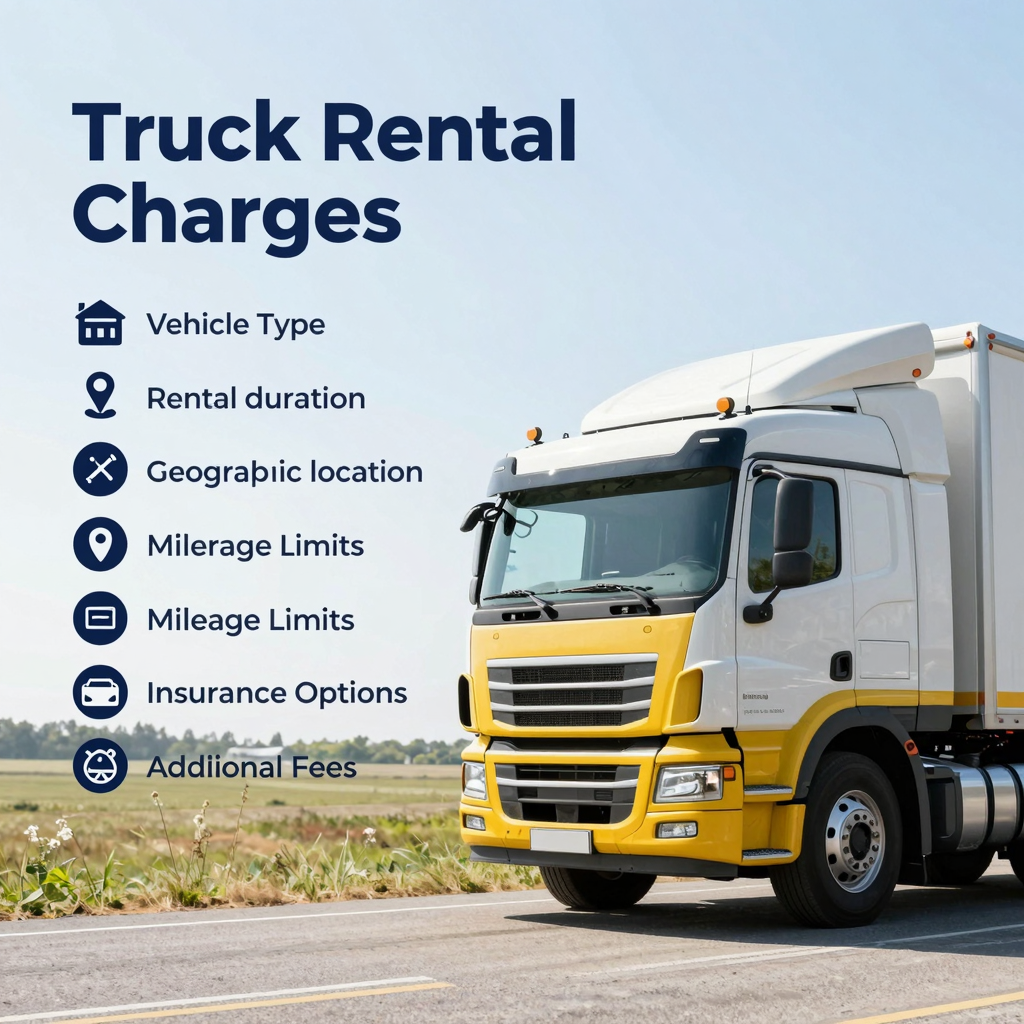
When it comes to budgeting for truck rentals, several critical factors come into play. Understanding these elements can significantly help business owners make informed decisions. Below is a breakdown of the key factors influencing truck rental prices:
- Vehicle Type and Size: The type and size of truck rented (e.g., light-duty vs. heavy-duty) determine the base rental price. Typically, larger trucks will incur higher rental costs.
- Duration of Rental: Pricing often varies based on how long you intend to rent the truck. Daily, weekly, and monthly rates can differ considerably, with longer-term rentals sometimes being more economical.
- Mileage Limits: Many rental services impose a mileage limit, and exceeding this limit can lead to extra charges. Therefore, it’s crucial to estimate your travel distance accurately.
- Insurance Options: Various insurance packages are available, and opting for comprehensive coverage could raise your overall rental cost. Deciding whether to buy insurance or use existing coverage can save or expense your budget.
- Geographic Location: Rental costs can fluctuate depending on where you’re renting. Urban centers like New York and Los Angeles often have increased rates compared to rural areas.
- Seasonal Trends: Demand for truck rentals typically spikes during peak moving seasons such as summer and the holidays, which can elevate charge rates.
- Additional Fees: Be aware of potential extra fees, including those for fuel, tolls, and other optional add-ons like GPS rentals or special equipment.
Utilizing this knowledge can help you navigate rental charges effectively. For more insights on budgeting for truck rentals, check out this detailed analysis on truck rental pricing from U-Haul.

Understanding Budget Truck Rental Pricing Structure
When considering a rental truck for your business needs, understanding the pricing structure is crucial for managing costs effectively. Budget Truck Rental follows a straightforward principle for its pricing: you pay a per-mile charge based on the distance driven.
Per-Mile Charge
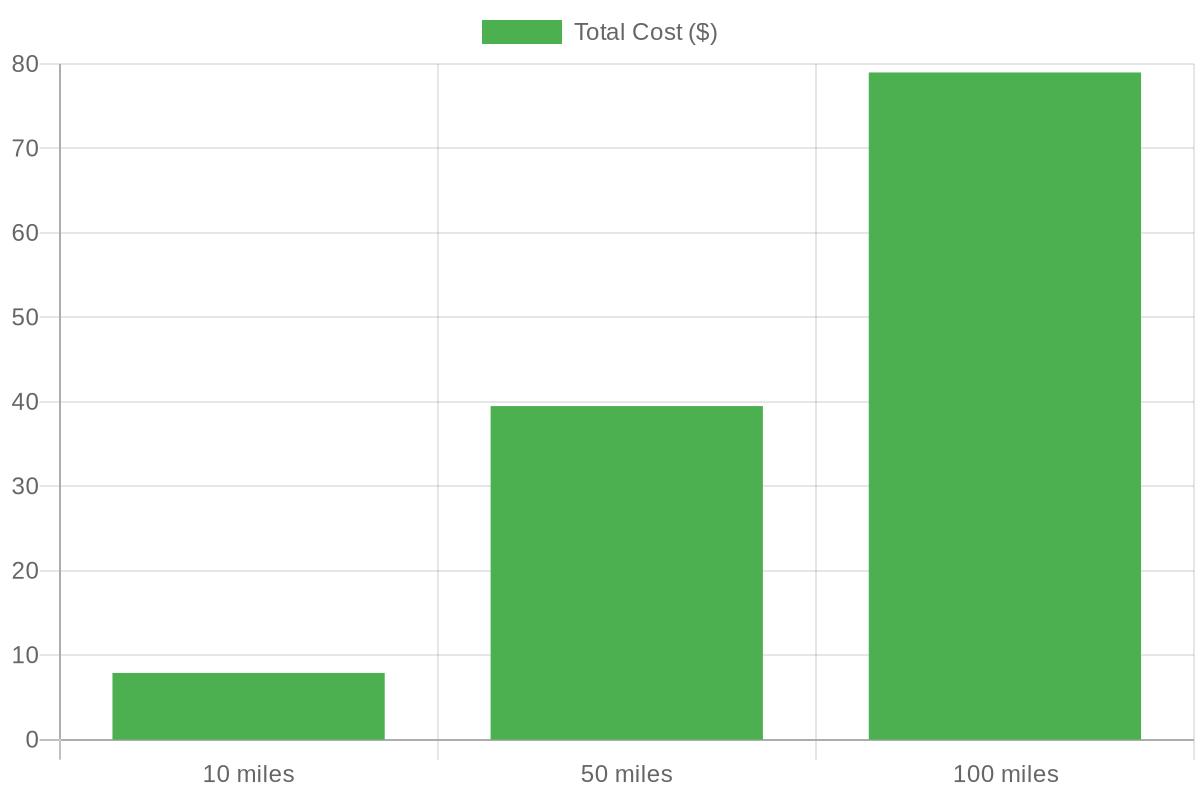
As of October 2024, Budget Truck Rental charges a standard rate of $0.79 per mile for most locations across the United States. This rate applies to every mile driven during the rental period. Importantly, there are no allowances for free miles included in the base rental cost, meaning that every mile counts towards your final bill.
For example, if your moving journey covers:
- 10 miles: You will incur a charge of $7.90 (10 miles × $0.79/mile).
- 50 miles: Your cost will rise to $39.50 (50 miles × $0.79/mile).
- 100 miles: The total would be $79.00 (100 miles × $0.79/mile).
Here’s a visual breakdown of how costs accumulate based on distance driven:
Cost Accumulation Scenarios
Let’s look at some practical scenarios that might occur for business owners:
- Local Deliveries: If you plan on making several short local deliveries throughout the day, even a trip of several 10-mile journeys can add up quickly. For instance, five separate trips of 10 miles would result in a total cost of $39.50 (5 trips × 10 miles × $0.79/mile).
- Long-Distance Moves: For businesses moving inventory over considerable distances, the mileage fees can significantly impact the overall budget. Depending on your cargo needs, you might find a set fee more fitting compared to a per-mile charge for long rentals. Learn more about moving costs.
Conclusion
Understanding the per-mile charge structure of Budget Truck Rental enables business owners to estimate expenses accurately and choose the most cost-effective solution. It’s also wise to consider additional fees such as insurance, fuel expenses, and taxes that may apply. With careful planning, you can optimize your logistics to minimize costs effectively on your next rental. Consider calculating your expected mileage in advance to avoid unexpected costs.
When renting a truck for business purposes, transparency in pricing is critical. Budget Truck Rental has recently come under scrutiny regarding its per-mile charges and other related fees, leading to a variety of customer experiences and concerns that merit discussion.
Common Experiences and Concerns
-
Lack of Clear Communication: A significant number of reviews highlight that Budget Truck Rental’s policies regarding per-mile charges are often not communicated clearly at the time of booking. Customers reported surprises in their final bills due to additional charges that were not outlined upfront. One reviewer on Trustpilot emphasized this by stating, “The per-mile charge was not disclosed upfront and ended up significantly increasing my final bill.”
-
High Final Bills: Business users have particularly expressed dissatisfaction over unexpectedly high bills. A survey cited by Consumer Reports indicated that 68% of business renters felt they were charged more than expected, with some reporting increases of up to 40% over the initial quotes. This frustration is exacerbated when customers discover hidden fees, such as fuel surcharges and administrative charges, that were not made clear during the booking process.
-
Inconsistent Pricing Practices: Reviews also point out inconsistent pricing across different locations and vehicles. Some Budget locations promote flat rates, while others apply variable per-mile fees only revealed at pickup. This inconsistency has led to considerable confusion and lack of trust among business renters.
-
Response from Budget Truck Rental: In light of the feedback, Budget announced updates to their pricing policies aimed at enhancing transparency. They now require that per-mile charges be displayed prominently at the time of booking and introduced a ‘Total Price Guarantee’ feature to lock in all costs upfront. However, many users still remain skeptical, arguing that the default pricing structure tends to favor hidden fees over upfront clarity.
-
Regulatory Scrutiny: The situation escalated to a formal investigation by the Federal Trade Commission (FTC) analyzing whether Budget Truck Rental provides adequate disclosure of per-mile charges during the reservation process. The FTC has received hundreds of complaints alleging deceptive billing communication, which further underscores the importance of transparent pricing.
Conclusion
The feedback regarding Budget Truck Rental’s charges reveals a pattern of frustration among business users, particularly related to per-mile fees and unexpected costs. While Budget’s recent attempts to improve clarity in their pricing policies are a step in the right direction, the inconsistency in practices and communication remains a significant concern. Business owners considering Budget Truck Rental for their needs should carefully read rental terms and confirm all potential charges in writing before finalizing their bookings.
For further reading about moving truck expenses and more tips about truck rentals, consider checking out our insights on Budget Truck Rental fees and how to get the best deals on rental trucks.
Budget Truck Rental vs. Competitors: Pricing Comparison
When considering a truck rental, understanding the pricing structure is essential for business owners. Below is a comparison of Budget Truck Rental, Penske Truck Rental, and U-Haul based on their per-mile charges, base rates, and additional fees.
| Company | Base Rate | Per-Mile Charge | Additional Fees |
|---|---|---|---|
| Budget Truck Rental | $29.99/day for 10-foot truck | $0.79/mile after 150 miles | $100 one-way fee (varies), fuel cost, $15-$25 late return fee |
| Penske Truck Rental | $49.95/day for 10-foot truck | $0.89/mile beyond 150 miles | $25 pickup/delivery fee, $100 deposit, fuel cost, insurance $15-$25/day |
| U-Haul | $19.95 flat rate for local moves | $0.99/mile for additional miles | Insurance, trailer rental, gas charges |
Summary of Pricing
- Budget Truck Rental: A competitive option for smaller trucks with reasonable per-mile charges. They provide additional flexibility for one-way rentals but be mindful of add-on charges for fuel and insurance.
- Penske Truck Rental: Slightly higher base rates with added charges for mileage beyond standard limits. Penske’s services involve more upfront costs like the deposit and optional insurance, which can affect your overall budget.
- U-Haul: Known for lower starting fees, especially for local moves, but the per-mile charge can accumulate quickly for longer distances. Be aware of additional costs for insurance and other extras.
For a detailed breakdown of each rental service’s offerings and promotions, learn more about Budget Truck Rental and check out Penske Truck Rental pricing.
Understanding these factors can help business owners make an informed decision balancing cost and utility for their transportation needs.
Key Insights on Rental Truck Charges
Understanding the landscape of rental truck charges is critical for business owners assessing their moving needs. Recent reviews and industry reports highlight several key trends that can guide informed decisions:
General Pricing Trends
-
Average Per-Mile Charges: The average cost for rental trucks ranges significantly based on the truck size and rental duration. In 2023, per-mile charges generally fall between $1.25 and $2.50. Short-term rentals (typically under 7 days) are closer to the higher end of this range, often charging around $2.00 per mile. Conversely, longer-term rentals can sometimes yield rates as low as $1.25 per mile.
-
Size Matters: Smaller trucks (e.g., 10-12 feet) can cost about $1.50 per mile, while larger options, such as 26-foot box trucks, may fare higher at approximately $2.25 per mile. Larger vehicles tend to incur greater operational costs, affecting the overall rental price.
-
Mileage Overages: Most rental companies tow a standard limit for daily mileage (ranging from 100 to 200 miles per day). Charges for exceeding these limits usually hover between $0.25 and $0.50 per extra mile. For example, the rental network might offer an included allowance of 200 free miles for a flat fee but impose penalties for any miles logged beyond that.
Insights from Customer Reviews
- Transparent Pricing: Many customers appreciate companies that offer clear and upfront pricing, including base rates, per-mile charges, and potential add-ons.
- Reliability Issues: A frequent concern noted in reviews pertains to hidden fees that are not disclosed at the outset, leading to dissatisfaction when the final total exceeds expectations.
- Online Booking Benefits: Engaging through online platforms can yield discounts, sometimes reducing overall costs by up to 15%.
Summary Table of Charges
| Truck Size | Rental Duration | Average Price per Mile | Notes |
|---|---|---|---|
| 10-12 feet | Short-term | $1.50 | Best for small moves; higher price per mile |
| 26-foot box truck | Long-term | $2.25 | Suitable for larger relocations; scalable cost |
| Town-to-town services | Varies | $1.85 | Subject to disclosure on all mileage overages |
For more comprehensive details on current pricing practices in the rental industry, consider exploring the analysis on average rental truck prices and truck rental trends.
Being knowledgeable about these pricing patterns will empower business owners to make effective and economical choices in rental truck services.
Cost Breakdown of Truck Rental
When evaluating the costs associated with renting a truck, it’s essential to understand both fixed and variable expenses. Here is a breakdown of the typical costs involved:
Fixed Costs
- Base Rental Fees: $800 – $1,500 per week
- Insurance: $350 – $600 per week
- Maintenance Reserves: $150 – $300 per week
Variable Costs
- Fuel Costs: $0.45 – $0.65 per mile
- Driver Pay: Approximately $0.25 per mile
Total Cost Per Mile
The total cost per mile can vary significantly based on these components, averaging between $1.20 and $1.85 per mile. This cost accounts for both fixed and variable expenses over an estimated distance and helps business owners in budget planning.
To visually illustrate these costs, here’s a chart that breaks down the fixed and variable costs associated with renting a truck:
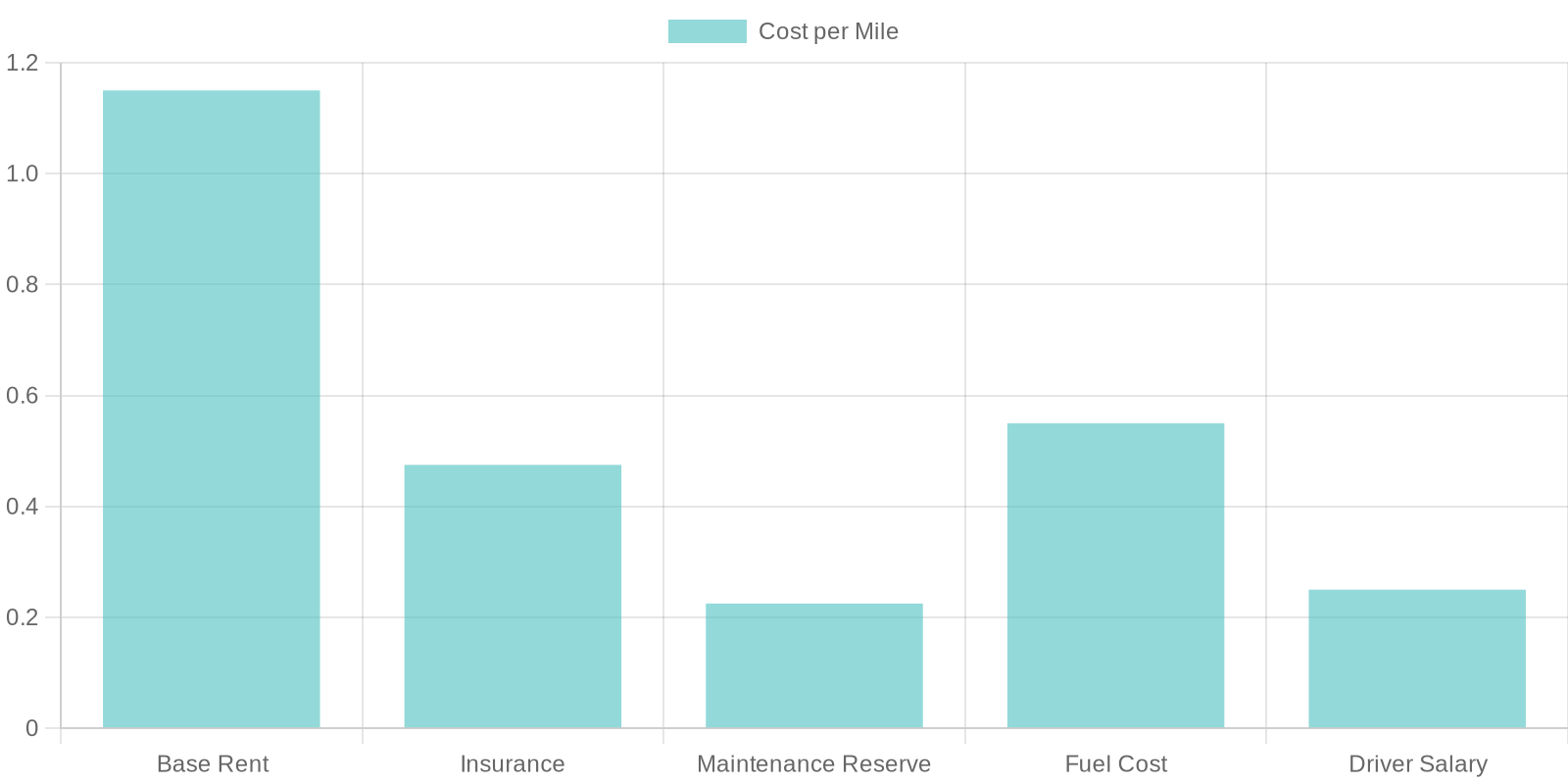
Chart caption: A visual representation of the costs associated with truck rentals, including fixed and variable expenses.
To dive deeper into more specifics about truck rentals, consider reading about Penske’s one-way moving truck rental or military discounts on moving trucks.
Understanding the breakdown of these costs can greatly assist business owners in making informed decisions when renting trucks for their operations.
Conclusion
Understanding Budget Truck Rental’s per-mile charging policy is crucial for business owners who depend on efficient transportation solutions. Budget Truck Rental combines a base rate with a per-mile fee that varies based on the truck size and rental location. For smaller trucks, this per-mile charge typically ranges from $0.79 to $0.89, while daily rental rates start at around $36.95. Moreover, additional fees for fuel and mileage over certain limits can significantly affect your overall rental costs. Therefore, evaluating your specific needs, mileage, and possible expenditures is vital in order to avoid unexpected expenses.
By being aware of these charges, business owners can better manage their budgets and make informed decisions regarding their rental options. Proper planning and comprehension of the rental policies will ease the stress of moving and help optimize operational costs.
To discover more about how to streamline your pizza truck needs and ensure an efficient transportation solution, explore our offerings here at Truck Pizza!
Let us assist you in making your next move a success!
Considerations for Truck Rental Costs
When it comes to truck rentals, particularly for business owners, understanding the total cost implications is essential. Customers often only consider the base rental fee without taking into account additional charges that may arise during the rental period. Industry expert Elliott Vigil emphasizes:
“While rental trucks may seem cost-effective upfront, long-term operational expenses-such as fuel, wear-and-tear, insurance, and idle time-can quickly erode savings. I advise business owners to conduct a full lifecycle cost analysis before committing to rentals, especially during peak seasons or large-scale projects.” Source
Incorporating Vigil’s insights into your rental strategy can prevent unexpected costs and ensure more accurate budgeting. Consider these key factors when evaluating truck rental options:
- Total Cost of Ownership: Factor in not just the rental fee but also insurance, fuel, and maintenance costs.
- Hidden Costs: Remember to account for operational costs such as driver wages and compliance fees.
To make an informed decision, business owners should actively seek multiple quotes and research rental companies, including understanding their policies on mileage charges. Learn more about Penske truck rental options.