
When it comes to moving heavy goods, the tools at your disposal can make a significant difference. Among business owners, the need for efficient transport solutions is paramount, especially when dealing with bulky items that require more than just traditional loading methods. Budget Rent A Car is a popular choice, offering a variety of rental trucks equipped with options such as lift gates. However, the availability of these features can vary based on location and vehicle type. This article delves into the particulars of lift gates in Budget Rental Trucks, how to ensure your truck is equipped with the right features, and real customer experiences to give you a comprehensive understanding of your options. Each chapter aims to equip you with essential knowledge, ensuring you can make informed decisions for your business logistics.
Lift Gates on Budget Rental Trucks: Navigating Availability, Features, and the Heavy-Load Reality
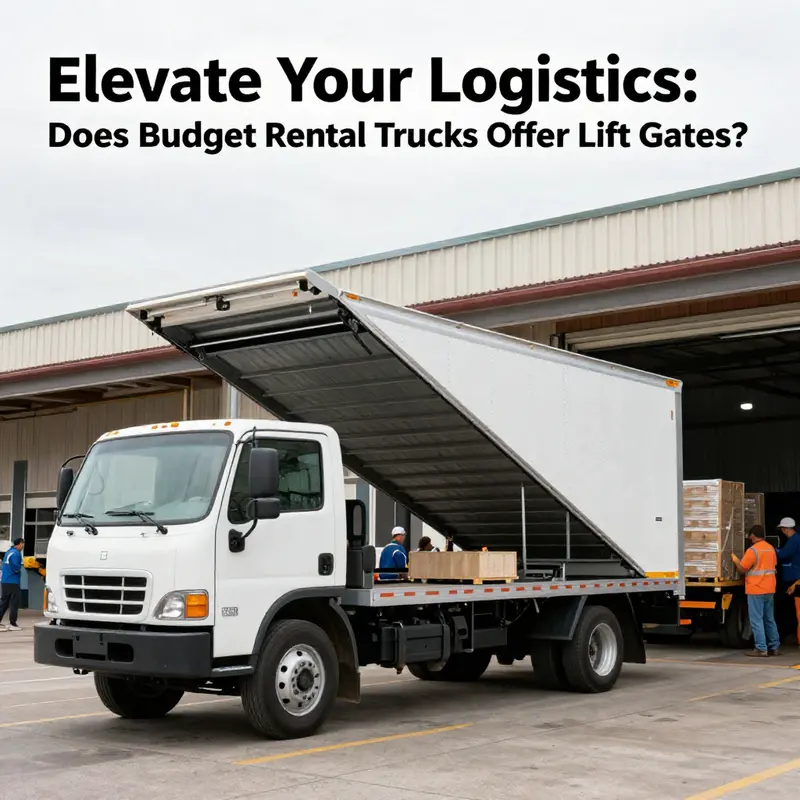
Lift gates are one of those practical features that quietly change the way a job feels when you’re moving bulky, heavy items from curb to cargo floor. For people who regularly haul appliances, furniture, or stacked inventory, a lift gate can transform labor from a grueling, back‑breaking chore into a manageable, safe operation. When you’re evaluating rental options, knowing whether a fleet offers lift gates—and more importantly, which specific vehicles in that fleet actually include the feature—will determine not just convenience but the feasibility of a particular move. In the world of budget rental trucks, lift gates do exist, but they aren’t universal. Budget Rent A Car, a name long associated with practical, mid-size moving and delivery solutions, provides rental trucks that can be equipped with lift gates or retractable loading ramps. The landscape of availability is nuanced: some configurations in the fleet are designed with lift gates as standard or optional equipment, while others arrive without them. Perhaps the most visible example often cited by customers is a 16‑foot rental truck that features a retractable loading gate, an arrangement that makes loading substantially easier for items that might otherwise require a second pair of hands or specialized equipment. Yet even with these examples, the reality remains that lift gate availability hinges on the location, the model, and the individual truck in question. This means a planner can’t assume lift gate access simply because the fleet at a given agency advertises lift gates in its broader lineup. Instead, customers must verify precisely which trucks at their preferred Budget location carry the feature before committing to a reservation.
The variability in lift gate availability is linked to several practical factors. First, different vehicle classes within Budget’s lineup—box trucks, cargo vans, and other configurations—do not all share the same set of features. A 16‑foot truck is a common workhorse for smaller moves and local deliveries, and some units in that category do include a lift gate or a retractable ramp. In contrast, larger box trucks, such as some 26‑foot models, may offer lift gate options only at certain depots or as a paid upgrade. The net effect for the renter is that lift gate capability becomes almost a reliability feature rather than a guaranteed standard. This is why the single most important step in planning a lift-gate–dependent move is to confirm the feature during the booking process and again at pickup.
From a customer experience standpoint, Budget’s approach to lift gates reflects a broader truth about fleet variability in the rental industry: the equipment buyers need can be tied to location constraints and inventory cycles. The official guidance is clear and practical: check the vehicle’s lift gate availability on the Budget Rent A Truck website at the time of booking and then confirm the presence of the lift gate during the reservation process or upon vehicle pickup. If there is any doubt, contacting the local rental location ahead of time is advisable. A brief call or email before the pickup date can save substantial time on the ground, especially if your load has a strict deadline or a sensitive schedule. The goal for renters is not to assume but to confirm, to ensure the gear you need is indeed the gear you’ll receive when you arrive.
Think through the scenarios you’re likely to face. If your plan involves moving heavy appliances, stacked crates, or furniture that would benefit from a lift gate, mapping out a path that prioritizes lift-gate-equipped units can prevent awkward situations at the loading dock. A lift gate serves two essential roles: it reduces manual lifting and it limits the risk of damage to items and floors during the transfer. When you’re loading, you want to be sure that the gate will lower smoothly and lock securely, and that there is a clear weight capacity that aligns with the items you’re transporting. These are the kinds of checks that often slip through the cracks in a rush booking, but they’re exactly the checks that determine whether a move goes off without a hitch.
To illustrate how a renter might navigate this terrain, imagine you’re booking a weeklong local move. You’ve decided you need a lift gate because you’re transporting a refrigerator, a bulky sofa, and several heavy cartons that would be impractical to carry up a ramp or up multiple stairs. You begin by selecting a Budget truck class that seems to fit the scope of your load. Within the booking interface, you search for lift-gate-equipped configurations or use the site’s filtering options to highlight vehicles with loading ramps or lift gates. If you don’t see a clear lift gate option, don’t press forward with the assumption that one will be available. Instead, call the local depot. The staff can confirm whether the 16‑foot truck with a retractable loading gate is currently in stock, or whether a larger 26‑foot model with a lift gate is available for your dates. Because availability can shift by location and by day, this direct confirmation step is invaluable. If the lift gate is confirmed, you’ll often be asked to note the exact truck model or unit number to ensure you’re assigned the correct vehicle at pickup. The alignment between reservation notes and the actual vehicle is crucial because it eliminates the possibility of a surprise when you arrive with your load.
Budget’s positioning around services like one‑way or round‑trip loads also intersects with lift gate considerations. For users who rely on a lift gate for efficient delivery workflows—whether moving items to a new residence or assisting in commercial operations—Budget offers flexibility to book one‑way or round‑trip arrangements. This flexibility is particularly beneficial for solo operators or small teams who are coordinating multiple legs of a move or delivery route. In practice, this means a renter can reserve a lift-gate-equipped unit for a leg of the journey and then arrange subsequent legs with similar or different equipment needs, depending on the fleet’s availability. For some customers, this can translate into significant time savings and a smoother workflow, especially when the work involves loading at a warehouse, unloading at a customer site, and then reloading for the next stop. The lift gate becomes not merely a convenience but a practical enabler of efficiency across an entire project.
For renters who want to learn more about the specific configuration and dimensions that accompany lift-gate equipped vehicles, there is value in cross-referencing the broader body of truck specifications available in related guides. A practical way to approach this is to explore detailed notes on truck dimensions, capacities, and features associated with medium-duty rental options. A resource that provides context on the typical dimensions and limitations of several common truck sizes—including the 16‑foot class—can be a useful companion piece when deciding whether a lift gate is essential for your move. You can approach this by looking at dedicated guides that discuss 16‑foot configurations and their loading profiles. An accessible way to orient yourself is to consult a concise guide focused on the 16‑foot truck, which can help you gauge how much space you’ll have for pallets, boxes, and furniture while planning placements and stacking. This is not a replacement for the specific lift-gate availability at Budget, but it offers a practical frame of reference for the loading process and the kinds of items you might safely manage with a gate in place.
The practical implications of lift gates extend beyond the act of loading. A well‑configured lift gate also integrates with the trailer’s floor height, the truck’s overall payload capacity, and the ramp geometry if a vehicle offers both options. When you’re composing a move plan, it’s worth taking stock of several compatible factors: the maximum weight the lift gate can handle, the incline angle during operation, and the ease with which you can align pallets and heavy objects with the gate platform. While a lift gate dramatically reduces the effort required to raise items from street level to truck bed, it does not nullify the need for safe handling practices. Operators should still assess the load’s center of gravity, ensure that items are secured after loading, and confirm that the weight distribution does not exceed the vehicle’s rated capacity. The combined effect of these considerations is a smoother, quieter loading phase that minimizes downtime and protects your equipment and inventory.
For those who are curious about how lift gates interact with specific delivery contexts, Budget also speaks to the broader needs of customers delivering via services that demand precise scheduling and reliable access. In particular, some users may be engaged with delivery platforms or logistics networks that require certain kinds of loading equipment to facilitate on‑time performance. In these scenarios, hiring a lift‑gate‑equipped truck doesn’t just ease a manual task; it helps align a move with service level expectations, reduces the risk of last‑minute cancellations, and supports a more predictable loading timeline. The practical takeaway is simple: if heavy items sit at the center of your plan, prioritize a lift gate; if the items are lighter and easier to manage by hand, a standard ramp or no gate may suffice. The choice should be guided by a careful assessment of your load’s weight, dimensions, and handling requirements, paired with a verification step at the point of rental.
To help ground this discussion with concrete next steps, consider this sequence when you’re ready to book. Start by identifying the truck size you’ll need—whether a 16‑foot, a 20‑foot, or a larger option—and then check whether lift gates are listed as a feature for that model. If you’re not seeing lift gate details in the online listing, don’t assume it isn’t available. Reach out to the local Budget location to confirm. When you arrive to pick up the truck, allocate a few minutes to inspect the lift gate in person. Test the gate’s extension and retraction, listen for unusual noises, and verify that the platform seats and latches correctly. If there is any discrepancy or defect, document it with the rental agent and request a reassignment before you depart. This small due diligence step can prevent a host of headaches later in the move, especially when the schedule is tight or the load is time‑sensitive.
As you navigate the practicalities of lift gates within Budget’s rental fleet, it can be helpful to anchor your planning to a broader understanding of truck configurations. The lift gate is one feature among several that influence how a truck handles a particular load. In addition to the gate itself, consider the truck’s interior clearance, doorway width, and floor height. These dimensions impact how easily you can maneuver a heavy item onto the platform and into position for secure transport. The gate’s weight capacity, its mechanical reliability, and its ease of operation are equally important. A lift gate that can lift a few hundred pounds with smooth operation will make a world of difference for average household moves, while heavier commercial loads may demand a higher‑capacity gate and perhaps a more robust vehicle class. When clients are weighing options, a simple rule of thumb emerges: the heavier the load and the more frequent the use, the more justification there is for choosing a lift-gate‑equipped vehicle, despite potential trade‑offs in price or availability.
To bring this back to practical, real‑world decisions, the core message is straightforward. Lift gates exist in Budget’s rental lineup, but their presence is not guaranteed across all locations or all vehicle configurations. The responsible approach is to verify lift gate availability specifically for your pickup date and requested truck model, ideally during the booking process and again at pickup. If the depot confirms a lift gate, you should still perform a brief test before loading to confirm proper operation. If the lift gate cannot be guaranteed for your dates, you’ll want to explore alternatives—whether that means selecting a different truck class with a ramp, scheduling a larger vehicle with a lift gate, or coordinating with the depot to arrange additional loading assistance on the day of the move. The overarching principle remains consistent: plan around the lift gate as a critical loading asset, not an assumed amenity.
For readers who want to explore related specifications and guidance while planning their lift-gate strategy, a practical resource that aligns well with the topic is a concise guide to 16‑foot configurations and their loading profiles. This resource can help you gauge how much cargo a typical 16‑foot truck can accommodate and how a lift gate integrates with the vehicle’s geometry. Additionally, it’s worth noting the broader ecosystem of rental resources that can help with logistics planning, weight distribution, and safety practices. If you want to dive into that context, you can follow a focused guide on the 16‑foot truck to build a fuller mental model of how these vehicles behave under load and how a lift gate changes the dynamics of loading, stacking, and securing cargo. For a direct reference, see the detailed explainer on 16‑foot configurations via this internal guide: 16-foot-truck. 16-foot-truck.
In closing, lift gates represent a tangible advantage for anyone who anticipates heavy or bulky loads. Budget’s fleet does offer lift gate options, but availability varies by model and depot. The onus is on the renter to verify feature availability, confirm it during booking, and inspect the vehicle at pickup. With careful planning, a lift gate can turn a potentially arduous loading task into a smoother, safer operation, helping you keep your move on track and your belongings protected. For the most current and specific information about lift gate availability, it is wise to consult Budget’s official channel during the booking process and to reference the official Budget Rent A Truck site for precise options and terms: https://www.budgetrentatruck.com. This ensures you’re aligning your planning with the latest fleet configurations and that you secure a truck that truly supports your heavy‑load needs.
Securing a Lift Gate on Your Budget Rental Truck: A Practical Guide to Hassle-Free Hauling
When you plan a move or a job that involves heavy or bulky items, a lift gate on a rental truck can change the whole loading experience from a chore into a controlled operation. A lift gate is a mechanical platform attached to the rear of the truck that lowers and raises cargo to dock height, reducing the risk of back strain and damage to goods. For customers renting from Budget Rent A Car, the question often comes down to availability. The reality is that lift gates are not universally included in every Budget rental truck, and the option can vary by location and by the specific model in the fleet. This makes the question more nuanced than a simple yes or no. If you want to move confidently, you need to treat the lift gate as a feature you must verify, rather than a default that will automatically appear when you book.
Understanding why lift gates matter begins with a practical assessment of your load. Heavier items, like appliances, furniture, and certain boxes, are easier to handle when you can lift them from ground level to the truck bed without manual lifting or a risky sequence of stairs and ramps. A lift gate can help you control load placement, protect delicate contents, and reduce the chance of injury to anyone assisting with the move. Yet, because truck fleets are dynamic and locations vary, a lift gate might be available on a 26-foot box truck in one city and entirely absent from the same model in another. The challenge is not just finding a truck with a lift gate but finding the right truck with lift-gate access for your specific dates and load.
This is where thoughtful planning becomes essential. The Booking phase is a gatekeeper moment. Do not assume the lift gate will be included or that it will be the same across models, even within the same budget-tiered fleet. In many rental companies, lift gates are offered as an add-on service or are tied to specific vehicle configurations. The same applies here: lift gates can come as an option or be built into only certain vehicle types, such as larger box trucks or certain cargo vans. Your goal is to map your load needs to the vehicle choices that exist in Budget’s fleet at your location and then confirm which options are actually available for your rental window.
To move from hope to certainty, begin with a clear description of your loading scenario. What are the heaviest items? How many pieces? Are any items unusually tall, wide, or awkwardly shaped? Will you need to load from the curb, from a loading dock, or from a street side? By articulating these details, you become better equipped to ask the right questions and to spot when a lift gate is nonnegotiable versus optional. As you proceed, you will find that some steps are best completed in a sequence, each one reinforcing the next until you arrive at a vehicle that truly matches your needs.
The first essential step is to specify the requirement during booking. Many rental systems let you mark a preference, a feature, or a need like a lift gate during the reservation flow. Even if the online interface offers a standard cart, the lift gate is not guaranteed to be included by default. It is crucial to communicate this requirement explicitly and to request it in the notes section if the booking platform has one. A direct, explicit request helps ensure that a lift gate is not merely assumed but confirmed as part of your assignment for the chosen dates and times. If you are unsure whether the online booking process captured your intent, don’t hesitate to call the Budget location you plan to use. A quick phone call can clarify whether the exact model you want is available with a lift gate on your rental day.
After you place a reservation, a second verification step should follow. Contact the specific rental location to confirm lift gate availability for your rental period. The reality of truck fleets is that lift gates are favored by some customers and scarce for others depending on the day, the location, and the stock of vehicles. This phone check serves two purposes. It confirms that a lift gate is available for your dates and times and gives the staff an opportunity to propose a suitable alternative if your preferred model is not in stock. In some cases, you may be offered a different vehicle with a lift gate or the same vehicle with a lift gate if another unit in the lot can be allocated to you. The outreach also reduces the risk of discovering at pickup time that your booked truck lacks the feature you need.
The third step—inspection at pickup—really completes the verification loop. When you arrive to collect the truck, do a careful, methodical inspection of the rear area. Look for the lift gate above or at the back of the vehicle. A lift gate is typically a mechanical platform that folds away into the cargo area and rises or lowers via a motorized system. Some setups may feature a retractable loading ramp instead of a lift gate. While the ramp is useful for many loads, it is not the same as a lift gate in terms of ease and ergonomics for heavier items. If the vehicle you receive lacks a lift gate, do not simply accept the situation. Notify the rental agent immediately and request an alternative vehicle that has the feature. Depending on the branch’s inventory, they may be able to swap you into a different truck or recommend a nearby location with a lift gate-equipped option.
Be mindful of any discrepancies during pickup. If the lift gate is present but appears nonfunctional, document the situation and request a different vehicle. A malfunctioning lift gate is not just a minor inconvenience; it can disrupt your loading plan and potentially shift you into a higher-risk loading scenario for you or your staff. In such cases, the staff may offer to repair the lift gate, confirm a replacement vehicle, or relocate your rental to a branch with the needed equipment.
Even when you have confirmed that a lift gate exists on your truck, the journey does not end there. The fourth step involves understanding the cost implications. Lift gates are typically not included at no extra charge in every rental. They may come with an additional fee or be bundled into a more expensive vehicle category. The best practice is to ask about the lift gate fee upfront and verify whether the cost is a one-time balance due at pickup or a daily surcharge. You should also ask about any potential fees that could apply if you upgrade to a lift gate-equipped vehicle or if the feature is used during the rental. A clear understanding of the fee structure helps prevent surprises at checkout and enables you to budget more accurately for the move.
It is also helpful to know what your budget and timeline will look like depending on the vehicle you secure. A lift gate not only affects loading ease but can influence loading speed, staffing needs, and even the choice of moving days. If you are moving on a tight schedule, having a lift gate might translate to fewer labor hours and less risk of injury. If your load is bulky but light, a ramp might suffice. In contrast, when the weight is heavy and the footprint is large, a lift gate offers a safe, controlled method to elevate cargo from ground level to the truck floor without aggressive manual handling. These distinctions matter for planning and for communicating with the rental staff who will help you select the right option.
The nuance of lift gate availability also highlights the difference between lift gates and other loading aids such as retractable ramps. A ramp provides an incline that you roll cargo up or down, while a lift gate lowers or raises the platform to dock height. A ramp can be capable and cost-effective for certain loads, but it may place more physical strain on you and your team. A lift gate blends convenience with safety, especially for heavy or awkward items. When you review vehicle options, consider not only the presence of a lift gate but whether the configuration of the truck and the loading area fits your load plan. If you want a quick reference to common box truck configurations and dimensions, you can consult this guide on box-truck dimensions to better understand how space and access points interact with lifting equipment. box truck dimensions.
The practical takeaway is straightforward. Do not assume lift gates come standard. Treat them as a distinct feature to request, confirm, and validate at pickup. Build your plan with the knowledge that availability can vary by day, location, and fleet rotation. When you take these steps—explicitly requesting the lift gate during booking, confirming availability with the local branch, inspecting at pickup, and understanding the potential fees—you create a safety margin for yourself. You also set a professional expectation for any helpers or staff involved in the move. If the lift gate is not available, you have permission to pursue alternatives promptly rather than waiting and hoping for a solution that may not materialize in time.
Beyond the mechanics of securing a lift gate, there is a broader mindset to adopt. The process rewards preparation and clear communication. It is not enough to know you need the lift gate; you must articulate that need at each critical touchpoint—booking, phone confirmation, and pickup. As simple as it sounds, that clarity is often what prevents last-minute changes, misaligned expectations, and delays. When you approach the rental with a plan that emphasizes lift-gate availability, you empower yourself to optimize the move. You also signal to the rental team that this feature matters to you, which can influence their recommendations and the options they present.
An understated but practical consideration is the physical fit of the lift gate within your loading plan. You may be dealing with a set of items that require careful stacking, secure tie-downs, and precise placement to ensure stability on ascent or descent. A lift gate gives you a predictable pathway to move items into the truck, but it does not replace the need for careful handling. Always plan your load sequence in advance. A little forethought—identifying which items go first, how you orient the oversized pieces, and where to apply straps or dollies—can save you time and reduce the risk of damage during operation. If you rely on a crew, a short briefing on lift gate operation, weight distribution, and safe load limits can make the loading process smoother and safer for everyone involved.
The broader takeaway is that lift gates are a valuable feature, but they require proactive engagement. By treating the lift gate as a key requirement, validating it through multiple checkpoints, and understanding the terms around the feature, you place yourself in a stronger position to execute a successful haul. If you want a quick refresher on the dimensional considerations that often accompany lift gate configurations, you can explore the box truck dimensions guide linked above. This context helps you anticipate how much space you have behind the gate, how long a typical pallet or load might be, and how the dimensions of your cargo align with the truck’s loading area. The more you know, the smoother the loading becomes.
Finally, while this chapter focuses on the practical how-tos of securing a lift gate with Budget rentals, a broader awareness of lift gate service standards can be helpful for readers who move across providers or use different fleets over time. The essential principles—clear communication, confirmatory checks, and an informed understanding of fees and equipment differences—translate beyond a single brand. They form a reliable framework for any rental that features lift gates, ensuring you can plan, load, and unload with confidence rather than uncertainty. For readers who want to deepen their understanding of lift gate services in the broader logistics landscape, an external resource offers a detailed explanation of lift gate service, including differences seen in various truck-delivery contexts. https://www.zhihu.com/question/650987478
null
null
Final thoughts
In evaluating your logistics needs, especially concerning the transport of heavy and bulky items, understanding whether Budget Rental Trucks provide lift gates is crucial. The flexible options available through Budget can support your operations, but ensuring you select the right vehicle with a lift gate should be a priority. Proactive checks during the booking process can help secure the necessary equipment and confirm availability. Gather insights from customer experiences to shape your approach, and be prepared for a smoother loading process that can enhance your efficiency. Ultimately, the right truck can significantly improve your business’s operational capabilities, making logistics a less daunting aspect of your workflow.