
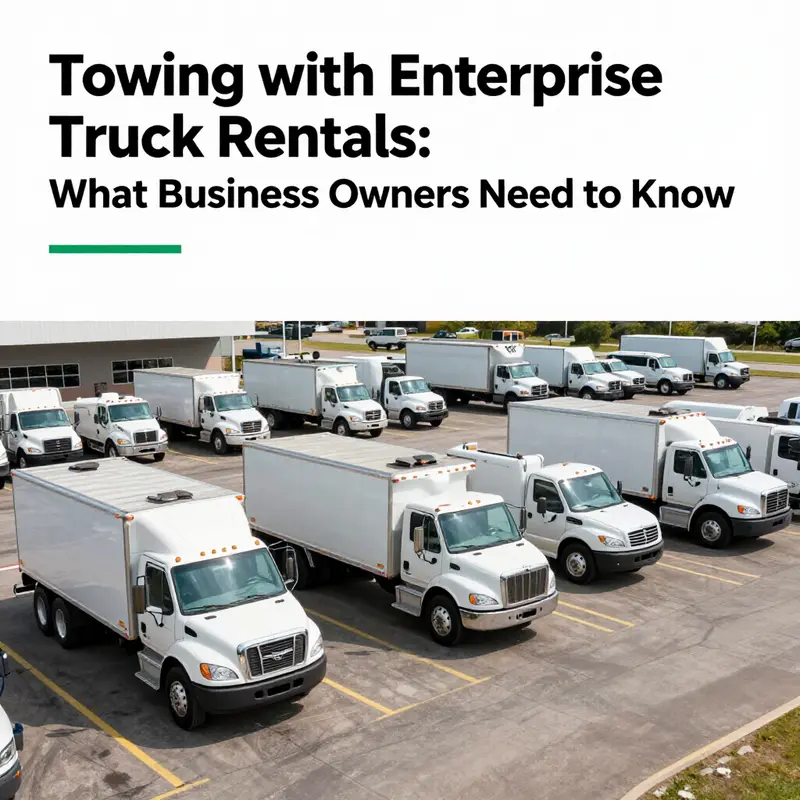
When it comes to logistics and transportation, business owners often require flexibility, especially regarding towing needs. Enterprise Truck Rentals can provide a viable solution for your towing requirements, but essential details must be understood before making a reservation. This article will walk you through the various aspects of towing with Enterprise, including the specific towing capacities of different truck models, the conditions outlined in the rental agreement that allow for towing, and the critical insurance and equipment considerations that affect your decision. By equipping yourself with this knowledge, you can make informed choices that align with your business requirements.
null
null
What Your Rental Agreement Really Says About Towing with an Enterprise Truck
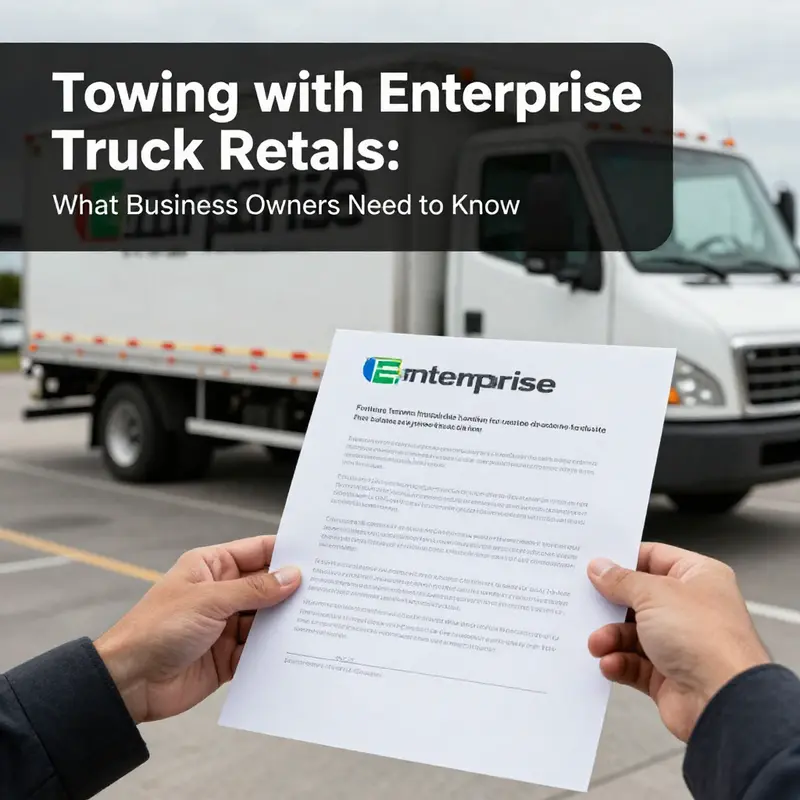
When you plan to tow with a rental truck, the written rental agreement is the single most important document. It defines what you can tow, how much you can tow, and what happens if you cross a line. For rentals from this nationwide truck fleet, the rules hinge on three core items: the truck’s rated towing capacity, explicit permission in the contract, and the insurance or liability terms tied to towing. Read these provisions closely. They determine whether your trip is legal, safe, and financially protected.
Most rental trucks are rated for a specific towing capacity. That capacity varies by model and equipment. The truck’s spec sheet will list a maximum towing weight. That number is not a suggestion. It is the limit. Exceeding it can lead to immediate consequences. Your coverage may be voided. You could be held fully responsible for any damage. Staff at the rental counter can provide the exact towing capacity for your vehicle. Ask for that information before you sign any agreement.
Not all trailers and towed items are treated the same in the agreement. Light utility trailers used for furniture or landscaping loads are commonly allowed. Towing a second motor vehicle, like a car or motorcycle, is usually restricted. If you need to haul another vehicle, you must get explicit, prior authorization. That often requires enrollment in the rental company’s special equipment program. Without that prior approval, towing a vehicle will typically violate the contract.
Insurance and liability are often the least understood parts of the rental contract. Standard rental coverage can include liability protection for towing, but it may have limits. The policy language in your agreement will note exclusions and weight thresholds. If you tow a heavy or high-value trailer, additional insurance may be necessary. You should confirm what is covered at pickup and have a clear written record of any extra coverage you buy. If there is any doubt, purchase supplemental protection that explicitly covers towing-related incidents.
Equipment requirements are spelled out in the agreement. A suitable hitch is required in almost every case. Some trailers need a trailer brake controller, sway control, or specific wiring harnesses. The rental company may offer these accessories for rent, but they are not automatically included. If you plan to tow heavier loads, request the appropriate hitch and brake controller at reservation. Make sure the equipment provided matches the trailer’s needs before you leave the lot.
Weight limits and how they are calculated deserve careful attention. The agreement will show the vehicle’s gross vehicle weight rating (GVWR) and the maximum towing capacity. Those numbers are different. GVWR covers the loaded weight of the truck itself. Towing capacity refers to the trailer and its contents. When you combine cargo in the truck bed and the weight behind the hitch, you must stay within the vehicle’s safe operating limits. The rental contract often forbids exceeding these limits under any circumstances.
There are administrative and financial consequences spelled out for violating the towing rules. You may face immediate penalties if you sign and then tow without permission. Violations can result in the loss of any coverage provided by the rental company. You could be charged for repairs, towing, and associated losses. In severe cases, the company may pursue additional fees or pursue legal remedies. That is why understanding the monetary exposure in the rental agreement is essential.
When making your reservation, be proactive. Tell the agent that you intend to tow. Provide clear details about the trailer type, its empty weight, and its expected loaded weight. Ask whether the exact truck you want is towed-capable and whether it comes with a compatible hitch. If the vehicle you plan to rent requires factory-installed towing packages, confirm availability. If the agent cannot confirm, consider choosing a different truck or booking additional equipment.
At pickup, review the rental agreement line by line where towing is concerned. Look for clauses with phrases such as “towing prohibited unless authorized” or “maximum towing capacity.” Ask the agent to initial any allowances and to record the exact towing capacity in writing on the contract. Verify if any fees will be added for towing privileges, and confirm the costs for optional insurance or damage waivers that specifically cover towing-related incidents. If anything is unclear, insist on clarification before you drive away.
Physical inspection of the vehicle and equipment is another step you should not skip. Confirm that the installed hitch is compatible with your trailer’s coupler. Test the wiring socket. Check that the trailer brake controller, if required, is present and functioning. Ensure the safety chains and breakaway switch are appropriate for the trailer. If the required items are not installed or do not match the trailer’s specifications, do not accept the truck. Ask for a replacement truck or have the correct parts supplied.
Understand the different ways the contract may restrict towing beyond weight and equipment. Distance restrictions or designated geographic limits are possible. The contract might limit towing on certain roads or across international borders. Seasonal or regional prohibitions can apply. Some agreements place limits on towing rental trailers for commercial use. If your trip crosses state lines, check whether additional permits or endorsements are required by law or by the rental company’s policies.
Documentation matters. Keep a copy of the signed contract in the truck. Store any receipts for supplemental insurance, and keep photos of the vehicle and hitch as you pick them up. Document the trailer’s empty weight if possible, and make a record of the expected loaded weight. These records help if a claim or dispute arises. They provide proof that you followed the agreement and took reasonable precautions.
If you plan repeated towing, consider long-term options the rental company may offer. Some locations maintain a fleet of trucks equipped specifically for towing. These units may include heavy-duty hitches, integrated brake controllers, and higher towing ratings. Discuss your towing needs in detail with the location manager when you arrange a long-term rental. Doing so improves the chances the company can meet specialized requirements.
Safety expectations are implicit in the agreement as well. The contract often states that the renter must operate the vehicle safely and in accordance with the manufacturer’s guidelines. That includes safe towing practices such as proper load distribution, securing cargo, correct tire pressures, and adherence to posted speed limits for vehicles towing trailers. The rental company may state that failure to maintain safe operation could result in voided coverage and financial responsibility for damages.
The combination of towing and rental insurance can be complex. Even if the company provides some insurance, your own auto policy may have provisions that affect coverage. Likewise, third-party credit card benefits that provide rental protection might exclude towing incidents. Ask the rental agent how company coverage interacts with personal policies. If you plan to rely on personal insurance or credit card benefits, get that confirmation in writing and make sure there are no hidden exclusions for towing.
If damage occurs while towing, the agreement sets out the reporting steps. Typically, you must report incidents to the rental location and to the rental company’s claims department promptly. The contract will include phone numbers and instructions for roadside assistance. Some rental packages include 24-hour emergency support, which may be crucial if a trailer failure makes a vehicle unsafe to drive.
There are practical alternatives if the rental agreement does not permit your planned tow. You can rent a trailer and tow it with a privately owned vehicle that has known capacity. Another option is hiring a professional transport service for the towed vehicle. If the rental company cannot accommodate a car tote or heavy trailer, these options may save time and prevent contractual violations.
Finally, remember that the agreement is a legal document. It is written to allocate risk between the renter and the company. Reading it carefully before you accept it protects you. Ask questions. Get written confirmations. If you need towing for work, heavy equipment, or another vehicle, request specialized arrangements well before your pickup date. Clear communication removes surprises and helps ensure your trip stays on the right side of the contract.
For more practical guidance on hitch installation and matching equipment to trailers, consult a hands-on resource like this penske trailer hitch installation guide. For full details on rental terms, refer to the company’s official rental terms and conditions: https://www.enterprise.com/en/rental-terms-and-conditions.html
Towing Insurance and Equipment Essentials for a Rental Truck
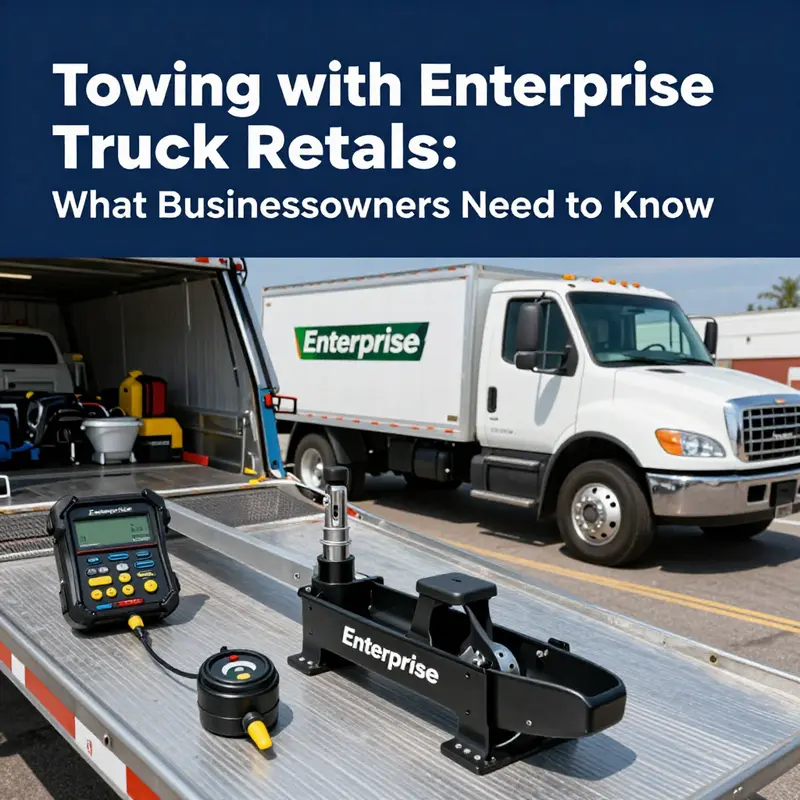
Understanding the insurance and equipment landscape before you tow with a rental truck is non-negotiable. When you plan to hitch a trailer or tow another vehicle behind a rented truck, the stakes are higher than a typical rental. Insurance limits, contract language, and the exact hardware supplied with the truck all affect your legal exposure and safety. This chapter walks through the insurance types you may encounter, the specific equipment you should confirm, and the practical steps to reduce risk. The goal is to leave you confident in what to ask, what to document, and what to refuse if it doesn’t meet your needs.
From an insurance perspective, rental companies commonly offer a menu of coverage options. Expect to see basic liability protection, a collision-type waiver for damage to the rental truck, and loss protection that can cover theft under certain conditions. Those coverages, however, often assume normal use of the vehicle; towing can change everything. Policies sometimes exclude damage that arises from towing a trailer or another vehicle, or they cap coverage based on the rated towing capacity of the truck. If the trailer’s weight exceeds that rating, damage from towing is likely excluded. That means you should never assume a standard rental policy automatically protects you while towing.
Before you drive away, read the rental agreement carefully. The contract should explicitly state whether towing is permitted for the specific truck you are renting. If towing is allowed, the wording will typically include a maximum tow weight and possibly a list of required accessories or endorsements. If the contract is silent or unclear, ask for written confirmation. Verbal assurances alone are weak if a claim arises. Obtain a signed note or an initialed amendment to the rental agreement. That written record matters if damage occurs and coverage is contested.
While reviewing the contract, pay attention to any clauses about additional fees or required insurance endorsements for towing. Some providers add daily fees for permitting a trailer or require you to buy a towing endorsement. Others will require proof of additional insurance beyond what the rental offers. If you have personal auto insurance, contact your insurer in advance to verify whether it extends coverage to a rented truck and to towing operations. Many personal policies exclude commercial vehicle types or limit towing coverage if the trailer’s gross weight exceeds specified amounts. Similarly, check with your credit card issuer if you plan to rely on card-provided rental protections. Card benefits vary widely and often exclude liability for trailers or towed vehicles.
If the rental company offers a collision damage waiver (CDW) or loss damage waiver (LDW), confirm whether those waivers apply when towing. In many cases, CDW/LDW will only cover the rental truck itself and will still exclude damage to the trailer or the towed load. Also ask whether the waiver will be voided if the truck is used to tow beyond its rated capacity or without required equipment. These finer points determine whether you face full financial responsibility after an accident.
Beyond insurance, equipment compatibility is the other critical area. Many rental trucks come with standard ball hitches and couplers. For basic small trailers, this may suffice. But heavier loads typically require specialized gear: weight-distributing hitches, sway-control devices, trailer brake controllers, and sometimes fifth-wheel or gooseneck setups. These items may not be stocked at every location. If your trailer needs a weight-distributing hitch or an integrated brake controller, request those items when you reserve, and confirm availability by phone before pickup.
A functional brake controller is essential for trailers above a certain weight. Trailer brakes reduce stopping distance and prevent the tow vehicle from losing control during hard braking. The rental truck may have a factory-installed brake controller or may require you to install a portable unit. If the truck lacks one, do not tow a heavy trailer until a compatible controller is installed. Likewise, ensure the trailer and truck wiring are matched. Faulty wiring can render brake lights, turn signals, or electric brakes inoperative, creating severe safety and liability problems.
Matching capacities matters at every junction. The truck’s Gross Vehicle Weight Rating (GVWR) and Gross Combined Weight Rating (GCWR) define safe limits. GVWR tells you how much the truck can weigh when fully loaded, and GCWR caps the combined weight of truck, trailer, passengers, and cargo. Exceeding these numbers stresses driveline components and can cause brake failure, steering problems, and accelerated wear. Tongue weight—the downward force the trailer tongue exerts on the hitch—must also fall within the truck and hitch specifications. Too little tongue weight makes the trailer unstable; too much overloads the rear axle. Aim for the trailer tongue weight recommended by the trailer manufacturer, and verify it before departure with a scale.
Safety chains, hitch pins, correct ball size, and secure coupler latches are small details with big consequences. Confirm the ball hitch size matches the trailer coupler. Use safety chains crossed under the tongue and attached to rated points on the truck’s frame. Keep a set of locking pins and a strong chain with you in case the rental’s hardware is missing or damaged. Inspect the hitch and coupler for rust, cracks, or deformation. If anything looks compromised, refuse the equipment until it is repaired or replaced. Driving with suspect hardware is a recipe for an accident that insurers may deny coverage for.
If you are unfamiliar with certain components—like weight-distributing hitches or electric-over-hydraulic brake systems—ask the rental location staff for a demonstration. Request that they show how to attach the trailer, set the brake controller, and check wiring. If the agent cannot provide a clear walkthrough, consider finding a professional installer or a location that offers better support. You can also consult an installation guide for hands-on help; for example, a trailer hitch installation resource can clarify typical setups and common pitfalls: penske trailer hitch installation.
Documentation and pre-trip inspection are your best defense when disputes arise. Take dated photos of the truck’s hitch, wiring harness, brake controller, and any included accessories before you leave the rental lot. Note the odometer and fuel level, and record any pre-existing damage. If the rental specialist points out limitations on towing in the contract or on stickers inside the vehicle, get that referenced in the paperwork. If possible, ask for a copy of towing-specific terms attached to your rental agreement. These documents will be invaluable when you file claims or contest penalties.
Operational safety and legal compliance go hand in hand. Some jurisdictions require trailers to have their own registration, license plate, and lights meeting local regulations. Ensure the trailer’s brakes and lighting systems meet those rules. Know local speed limits for vehicles towing trailers; many places impose lower limits. Be mindful of route restrictions such as weight-limited bridges, low clearances, and steep grades where heavy loads can overheat brakes. Plan your trip to avoid high-traffic urban corridors if you are inexperienced with towing.
If you encounter an issue on the road, rely on a documented roadside assistance plan that explicitly covers towing incidents. Standard rental roadside help may assist with a flat tire or dead battery, but it may not cover incidents caused by overloaded trailers or illegal hitching. Confirm whether the roadside assistance offered by the rental provider will tow a disabled trailer or will only tow the rental truck alone. Know the process for reporting accidents and preserve all receipts, repair estimates, and police reports. Insurance claims are much easier to process with thorough records.
Finally, consider risk mitigation strategies beyond what the rental company provides. If you intend to tow frequently, a short-term supplemental policy from a third-party insurer that explicitly covers towing can be cost-effective. Alternatively, ask whether your personal or business auto policy can be temporarily extended to cover the rental truck and trailer. If you carry commercial auto insurance, notify your carrier and obtain a certificate of insurance showing rented equipment coverage. In many cases, a proactive call to your insurer and the rental provider before pickup will save time and money later.
Towing with a rental truck is possible, but only when insurance, equipment, and documentation align. Do not assume permissive language or generic waivers are sufficient. Verify the rental agreement permits towing, confirm the maximum towing weight, secure any necessary endorsements, and ensure the truck is fitted with the appropriate hitch and brake systems. When in doubt, postpone the move until you have written confirmation and the right gear. That caution protects your finances and the people around you.
If you take these steps—reading the contract closely, confirming coverage with your insurer, inspecting the hitch and brake systems, documenting pre-existing conditions, and requesting any required hardware in writing—you greatly reduce the chance of denied claims or expensive penalties. Treat towing as a special operation. With preparation and attention to detail, you can tow safely from a rental truck and arrive with the load intact and your liability minimized.
For official details on rental insurance options, see the provider’s insurance page: https://www.enterprise.com/en/rent-a-car/insurance.html
Final thoughts
In conclusion, while Enterprise Truck Rentals provide a valuable resource for business owners requiring towing options, understanding the specific capabilities, rental conditions, and insurance implications is paramount. Ensuring compliance with the rental agreement terms and confirming your insurance coverage for towing-related incidents can protect your business. By being well-informed, you can confidently select the right truck rental that meets your towing needs.