
In the dynamic realm of business, understanding transportation options is crucial, especially for companies requiring mobility for goods or equipment. Renting a truck often appears as an economical choice, particularly when it comes to budget rental trucks. Yet, when the question of towing arises, many business owners are left uncertain. This article delineates essential aspects such as the true towing capabilities of budget rental trucks, evaluates their towing capacities, assesses the types of vehicles offered, explains necessary equipment and hitches, and emphasizes important insurance considerations. Each chapter builds on the understanding of how to safely and effectively leverage budget rental trucks in business operations, helping you make informed decisions that align with your business needs.
Tow or Not: Navigating the Real Limits of Budget Rental Trucks
If you’re weighing a tow as part of a budget move or a roadside scenario, the short answer is usually yes, you can tow something with a budget rental truck—up to a point. These trucks are designed to move boxes and small loads, not to pull heavy trailers or another vehicle. The temptation to stretch the limits is real, but towing beyond what the truck is built to handle can compromise safety, damage equipment, and complicate insurance coverage. To make a sound decision, you need to understand the limits, how those limits are defined, and what practical alternatives exist when your task crosses the line from light towing to something more demanding. Budget rental options come in a range of sizes—often 10- to 26-foot cargo vans or compact pickup variants—and their towing capacities are a decisive factor in whether a given job is feasible. In general, these models sit in a range from about 1,000 to 3,500 pounds. This is enough for small trailers, some utility carts, or limited towing tasks like a lightweight camper shell on a small trailer, but it is rarely enough for towing a car, a larger boat, or a heavy equipment trailer. The numbers tell a clear story: there is a ceiling here, and exceeding it invites a cascade of mechanical and safety concerns. Engine power on its own doesn’t guarantee safe towing. The chassis, frame strength, braking system, suspension, and even steering geometry all play vital roles in how well a truck can handle a trailer. Budget rental fleets often prioritize affordability and quick turnaround, not heavy-duty towing capabilities, which means the most common budget options are not equipped or engineered to manage the dynamic load of moving a vehicle or a large, heavy trailer over the road. The mismatch becomes especially evident when you look at the hitch and braking equipment. A budget truck may come with a basic hitch and limited wiring, and the added load can cause the braking system to work much harder than designed. In many cases, a trailer brake controller is either absent or only available as an extra rental item, which means you might be pushing a setup that can’t properly synchronize braking between the tow vehicle and the trailer. The result is higher stopping distances, unstable deceleration, and an increased risk of wheel lockup or sway, particularly on grades or in emergency maneuvers. The insurance landscape mirrors this safety calculus. Most standard rental agreements exclude damages arising from towing tasks that exceed the truck’s specified capacity. If you push past the rated limit and a mechanical failure occurs or a collision happens as a result, your coverage can be voided. That leaves you bearing the cost of repairs, plus any liability exposure, which can quickly escalate from a planning concern to a financial and legal headache. Because of these realities, the prudent approach starts with diligence at the point of rental. Before you sign, locate the towing section of the rental agreement and confirm the truck’s exact capacity. Then verify the trailer’s weight, including the load, tongue weight, and any equipment you’ll need to secure it. It is equally important to confirm whether the truck includes a suitable hitch and whether you’ll need to rent additional components, such as a ball mount, a proper ball size, or a trailer brake controller. Each rental company has its own set of guidelines—some restrict the types of trailers you can tow, and others require a certain hitch setup or even disallow certain trailer configurations like goosenecks or fifth wheels. Those guidelines are not mere formalities; they are safeguards designed to prevent damage to the truck, the trailer, and, most critically, you and other road users. In practical terms, light-tow tasks are feasible if the trailer and load stay well within the stated capacity and if you’re mindful of the vehicle’s handling limits. Small trailers containing lawn equipment, a motorcycle, or a light utility trailer can be acceptable if the total weight remains within the lower end of the truck’s towing rating. The key here is to stay honest about weight. If there’s any doubt, don’t guess—weigh the trailer and calculate the load. A common mistake is to assume “engine power equals tow capability.” Power can help you move the vehicle, but it doesn’t compensate for a weak frame or insufficient braking. The correct approach combines a clear understanding of the vehicle’s own specifications with disciplined load management. When you’re in the field, you’ll need to perform checks far beyond a cursory glance. Confirm the trailer’s hitch and electrical connections work properly, inspect the tires and suspension, and ensure the load is evenly distributed and secured with appropriate tie-downs. Lights and signals must be functional, and the hitch should be connected with the safety chains secured. If you’re using a basic hitch, recognize that your limits may be tied to the trailer’s weight distribution and braking requirements rather than to the engine’s pulling ability alone. For those who are considering using a trailer in a one-way rental scenario or who want to explore how trailer options fit within a budget plan, there are practical pathways to expand capability without stepping into unsafe territory. One direction is to look at trailer rental options that accommodate one-way trips and compatible towing setups. It’s important to review the terms offered by manufacturers and rental fleets to determine what configurations work with budget trucks and what additional equipment or rules you should anticipate. While this chapter centers on the general capabilities of budget trucks, it’s important to anchor expectations to manufacturer guidelines and rental terms rather than assumptions. If you want to verify exact specifications for a specific model or configuration, the best source is the manufacturer’s official data or the rental company’s detailed specs page. In practice, you’ll want to consult the precise towing capacity, payload rating, and available equipment for the vehicle you’re considering, and you’ll want to ensure that any trailer you attach is compatible with that setup. Even when a particular budget truck seems to tick all the boxes, you should test the arrangement with a light trailer first, operating at low speeds in a controlled environment to observe any handling or braking quirks before attempting longer or busier trips. This measured approach is the backbone of safe towing on a budget. Remember that the goal isn’t to squeeze every possible mile out of the rental but to complete your task safely, legally, and without compromising any component of the towing system. In the end, budget rental trucks can handle very light towing tasks, but they are not designed to tow another vehicle or heavy trailers. If your load crosses the upper limits, or if you anticipate frequent towing during the rental period, you’re better served by a dedicated tow vehicle or a specialized rental option built with towing in mind. For those who need solid guidance on the technical specs and to explore model-by-model differences, official specifications and guidelines from manufacturers and rental fleets offer the most reliable compass.
Tow Weight, Budget Limits: Decoding Towing Capacity in Budget Rental Trucks
When you’re planning a move or a roadside setback that involves pulling something behind a budget rental truck, the decision should start with capacity, not courage. The reality is simple: budget rental trucks are built primarily to move household goods and light cargo. They’re not engineered as towing machines, and pushing beyond their design limits invites risk to the truck, your cargo, and everyone on the road. The practical path is to treat towing capacity as a hard ceiling and to align your plan with what the vehicle can safely handle. This means understanding the numbers in front of you, reading the rental contract with care, and knowing where the line is between practical help and unsafe overreach. The core idea is straightforward: know the weight you’re asking the truck to bear and keep it within the limits laid out by the manufacturer and the rental agreement. Only then can you assess whether a budget truck can realistically handle the task at hand, or if a different tool—like a proper tow setup or a heavier-duty vehicle—belongs in your plan.
To translate that idea into action, start with the towing capacity. The reality in the market is that budget rentals often fall on the lighter side. Many compact or mid-size pickups, which are commonly marketed for moving tasks rather than heavy towing, sit in a range from about 2,000 to 5,000 pounds in towing capacity. That bracket covers small utility trailers, some lawn equipment trailers, and modest boat trailers, but it will be stretched thin by anything heavier, including larger campers, enclosed trailers with substantial payload, or another vehicle. In other words, you’ll frequently encounter the constraint that makes roadside towing scenarios impractical or unsafe when the requirement touches the higher end of that spectrum. If you need to shuttle a car or a substantial trailer, the low end of the range quickly becomes a non-starter. The nuance here is that the specific capacity depends on the model, the engine, the drivetrain, and the state of the vehicle when you sign the rental agreement. A budget truck might offer a reasonable pulling option for light-duty work, yet that same truck can’t simply be expected to haul a heavy trailer with the same ease it would for moving boxes.
The numbers themselves matter, but they’re not just a single figure. Towing capacity is part of a larger picture—the Gross Vehicle Weight Rating (GVWR) and the Gross Combined Weight Rating (GCWR). The GCWR is the most relevant for towing because it combines the vehicle’s own weight with the weight of passengers, cargo, and the trailer. When you add a trailer to that mix, you must ensure the total weight never exceeds the GCWR. This is more than a rule of thumb; it’s a safety boundary that protects braking performance, steering response, and overall control. The placard on the driver’s side door jamb and the vehicle manual are the primary sources for these numbers. Rental companies may publish this data online or provide it at pickup, but it’s your responsibility to verify. If the numbers don’t line up with what you’re planning to tow, don’t fudge them. The consequences of ignoring GCWR can include reduced braking efficiency, overheating of the transmission, or even frame and axle stress that leads to a breakdown or a crash.
Beyond the numbers, the hardware matters. A budget rental truck—often a compact panel van or a light-duty pickup—may not come with the same heavy-duty hitch, reinforced frame, or robust braking systems designed for towing. The hitch receiver, ball mount, and trailer braking options can be limited and may require additional rental or purchase. Some trucks may not include a hitch at all, and you’ll need to arrange a compatible hitch setup separately. The result is clear: even if the stated towing capacity sounds adequate, the truck’s frame strength or braking system might not be prepared to accommodate the load. You want a setup that maintains safe stopping distance, predictable handling, and stable towing dynamics. The mismatch between a budget truck’s intended use and a heavier towing task is one of the most common sources of trouble on the road, especially for those who assume “pulling power” is the same as “towing capability.”
Insurance adds another layer of complexity. Towing a trailer or vehicle that pushes the limits often falls outside the scope of standard rental coverage. When you exceed the truck’s capacity, you risk not only damage to the rental itself but also potential liability in an accident. Policies typically exclude damages caused by towing practices that violate the manufacturer’s specs or the rental agreement. This means you can end up paying out of pocket for repairs or, worse, for an accident that occurs because the load exceeded what the truck was built to manage. The responsible decision is to treat towing within the margins of the truck’s declared capacities and to consult the rental company if you’re unsure. This is one of those moments where conservatism pays off in safety, cost control, and peace of mind on the road.
There is a practical alternative to guessing your way through this dilemma. For light towing tasks, a tow dolly or a small trailer can be a feasible option when paired with a vehicle that the rental truck can manage. If you’re curious about the mechanics and setup, you can consult a focused guide that walks through the considerations of using a tow dolly with rental trucks. The anchor text for that resource is Penske Truck Rental Tow Dolly, which provides a concrete reference point for users weighing their light-towing options alongside a budget rental. This kind of guidance can sharpen your understanding of what a budget truck can and cannot do and help you avoid improvising a solution that’s not up to the task. For direct access, you can explore the dedicated guide linked here: Penske Truck Rental Tow Dolly.
Ultimately, the takeaway is precise and practical: budget rental trucks can assist with very light towing, such as small utility trailers or trailers carrying minimal cargo, but they are not suitable for towing another vehicle or for heavy-duty trailer work. If your plan includes moving a car, an RV, or a substantial trailer, it’s prudent to secure a dedicated tow vehicle or a specialized tow setup designed to handle the load. The path to success in budget-towing scenarios is careful planning, verification of capacity, and an explicit acknowledgment that the small, budget-friendly truck has its limits. When the stakes are high, a purpose-built tow solution is not a luxury—it’s a safety necessity that protects people, property, and your budget in the long run. For readers who want a clearer, model-specific sense of what “heavy-duty” means in this space, consulting manufacturer specifications can be enlightening. As a starting point, official data from manufacturers provides the most reliable baseline for weight ratings, ensuring the numbers you apply to your plan reflect reality rather than assumption.
External reference: https://www.ramtrucks.com/trucks/ram-1500/specifications
null
null
Towing on a Budget: Decoding Hitches, Capacity, and Safe Practices with Budget Rental Trucks
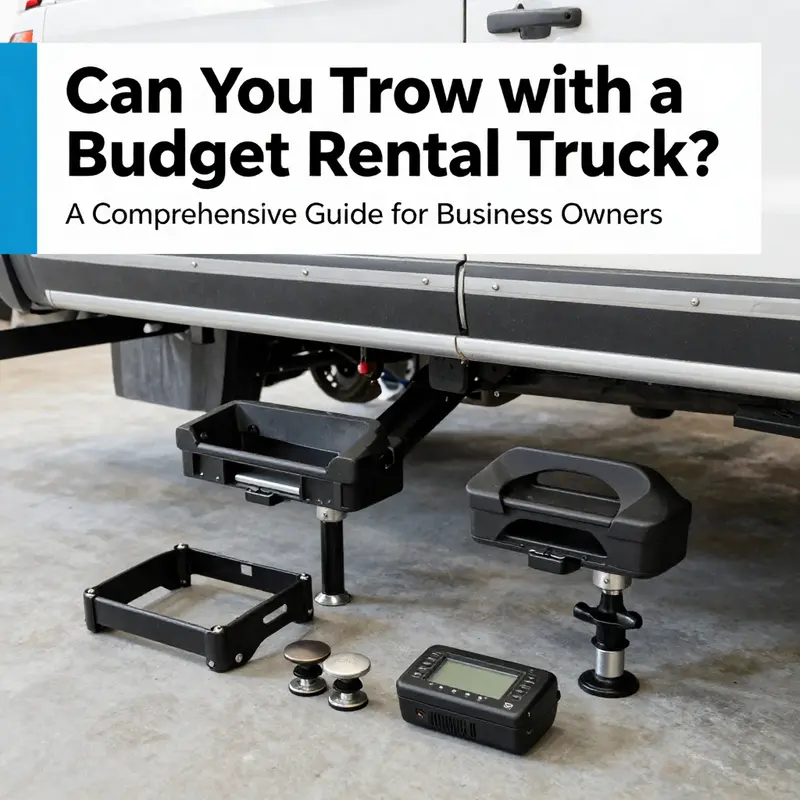
Bringing a budget rental truck into a towing scenario often feels practical. You need to move equipment, haul a trailer, or pull something light. Yet the decision to tow with a budget truck should come with a clear understanding of limits. These vehicles are designed to maximize space and move household goods, not to serve as heavy-duty haulers. The first thing most drivers notice is the towing capacity, which typically sits in a modest range. On many budget trucks, you’ll see a rating from about 1,000 to 3,000 pounds. That bracket covers small utility trailers, compact equipment, or light watercraft gear, but it excludes most large trailers, RVs, or another vehicle. If your load approaches or exceeds those numbers, you’re dealing with a risk that can affect the truck’s frame, brakes, and overall stability, as well as your insurance coverage.
The vehicle type matters far beyond the engine’s horsepower. A budget rental truck is often a compact or mid-size platform with a standard hitch receiver. The chassis may not be engineered to absorb the lateral and longitudinal stresses created by towing heavy loads. Even if the engine can pull, the frame and suspension may not respond well to sustained towing. This distinction is crucial for anyone who is picturing a quick roadside rescue or a heavy-duty hookup. When you consider towing, you’re not simply adding weight; you’re altering driving dynamics, brake response, and steering feel. The reality is that a budget truck’s hitch and braking systems are not universally suitable for heavy towing. Some trucks offer a basic hitch as part of the rental, but often this setup is paired with a limited payload and no additional safety features that higher-grade tow vehicles provide.
If you’re intent on pursuing any towing task with a budget rental, you’ll encounter the need for auxiliary equipment. A hitch upgrade may be available, but it frequently comes with added cost and installation requirements. In many cases, the rental company will provide a hitch, and you may still need a ball mount, proper ball size, and perhaps a trailer wiring harness to ensure lights and brakes function properly. The presence of a connector for trailer lights is essential; without it, you risk other drivers losing you at a crucial moment. For lighter loads, a simple wiring harness and a secure ball mount may suffice. For heavier usage, you’d want a more robust setup, potentially involving a weight-distributing system to keep the truck stable on the road. It’s worth noting that any upgrade or add-on must be compatible with the truck model you’ve rented, and it’s wise to confirm this during the booking process to avoid last-minute surprises.
Before you even hitch a trailer, you must verify the vehicle’s GVWR (gross vehicle weight rating) and payload capacity. The GVWR is the maximum allowable weight of the vehicle, including passengers, cargo, and the trailer’s tongue weight. Payload capacity reflects what the truck can carry beyond its own weight. When towing, you must ensure that your total load—the trailer plus its contents and any cargo in the truck itself—does not exceed these limits. Online booking platforms often let you add towing accessories during reservation, which helps you lock in the right equipment. However, these tools do not magically increase the truck’s capacity; they merely ensure you have the right gear to connect and manage the load safely. The simplest rule is to subtract the trailer’s weight from the truck’s payload capacity and then compare the remainder to the combined weight of the load you plan to haul. If there’s any doubt, step back from the plan and reassess.
Safety is about more than numbers. It begins with a thorough check of the hitch receiver and its security. A loose connection can lead to dangerous detachment. You should inspect the hitch ball, mount, and coupler to verify they’re properly engaged and secured. Safety chains deserve attention, even when the trailer has its own brake and electrical connections. Lighting is critical: tail lights, brake lights, and turn signals must work in concert with the truck’s wiring. Without a reliable lighting system, you create a risk for yourself and other road users. The braking relationship between the truck and trailer is also essential. If the trailer you’re towing has its own brakes, ensure the brake controller is compatible with the rental truck. In many budget options, a brake controller is not included by default, and retrofitting one may require additional rental or professional installation. Skimping on this step can lead to unsafe stopping distances and unpredictable handling.
The kind of load you’re towing matters as well. Light utility trailers, small boat trailers, or lawn equipment trailers are the most feasible candidates for budget rentals, but even then you must stay within the stated limits. A trailer’s weight changes with water, fuel, and gear, so you should account for every variable. When considering a trailer, also factor in pride of place: the load’s distribution on the trailer and within the truck’s bed. Improper distribution can magnify sway and compromise control during turns and lane changes. The risk isn’t just about speed; it’s about surprise moments on the highway—the need to stop quickly, or the challenge of merging into traffic—all of which depend heavily on how the combined vehicle behaves under load.
All of this sounds practical, but the human element remains central. If your plan involves towing heavy loads or attempting to tow another vehicle, the prudent choice is to rent a dedicated tow vehicle or a purpose-built tow truck. Budget rental vans and trucks are not designed for high-stakes towing operations. The insurance angle reinforces this caution: standard rental insurance typically excludes damages arising from improper towing or when the vehicle is used outside its rated capacity. Even if you hold a perfect driving record, the policy may not cover a failure that originates from attempting a task beyond the vehicle’s design. It’s not just about legality; it’s about reducing risk to yourself, other road users, and the rental company.
For those who still want to explore light-tow options, there’s value in educating yourself about the right equipment. You may discover that small upgrades—when compatible with your rental model—offer better control rather than attempting an unsupported towing arrangement. If your plan includes anything beyond very light hauling, seek alternatives. One smart route is to inquire about a tow dolly option if your load qualifies. A tow dolly can simplify some setups by coupling a trailer to the truck in a way that concentrates the weight more manageably and reduces the complexity of a full trailer connection. See the Penske truck rental tow dolly guidance for a practical overview of how such a setup can work in a rental context. penske-truck-rental-tow-dolly
As the journey from idea to execution unfolds, you’ll benefit from a measured approach. Map out the exact weights of the trailer and its contents. Add any gear inside the truck that will ride with you. Compare this total to the truck’s payload capacity, and then check the trailer’s weight with its own tongue weight. If the numbers align, you still have to address the hitch size and the compatibility of the components. A two-inch or two-and-a-half-inch hitch receiver is common in many tents of budget trucks and is typically enough for light towing. But you must confirm the class of hitch your rental provides. Class I and Class II hitches can manage lighter loads, while Class III hitches open the door to heavier but still moderate tasks. If your load sits above those classifications, you’re entering a zone where the rental’s standard setup may be inadequate without a professional upgrade and assessment.
In the end, the decision rests on clear calculations, honest self-assessment, and a willingness to adjust plans to prioritize safety. Readers who anticipate heavy or even moderate towing should consider alternate arrangements that align with the intended load and distance. The goal is not merely to move something from point A to point B; it’s to do so without compromising vehicle integrity or personal safety. If you’re unsure, don’t guess. Consult the rental company ahead of time, review the agreement with care, and ask about the specific limitations tied to your truck’s model and year. And remember, there are resources and guidelines from industry organizations that can illuminate best practices for hitch compatibility, load balance, and safe operation while towing with any rental vehicle. External resource: NATM guidance and safety recommendations can provide additional charts and practical recommendations to help you navigate this decision with confidence. https://www.natm.org
Towing on a Budget: Insurance, Limits, and the Real-World Costs of Using a Budget Rental Truck
When you rent a budget moving truck, your instinct might be to grab a tow strap and hitch up a small trailer to move a mower or extra equipment. The reality, however, is more cautious. Towing with a budget rental truck is possible only within strict limits, and the insurance and liability math changes once you introduce a trailer or a second vehicle into the equation. The truck’s purpose is to haul boxes and furniture, not to haul heavy loads or protect a car behind it. Before you decide to tow, you should understand the capacity, the compatibility of the hitch and brakes, and the ripple effect on coverage and costs. The difference between a quick moving task and a roadside rescue task is not merely about distance but about weight, dynamics, and risk. A clear-eyed assessment now can prevent expensive surprises later and keep the move on track rather than spiraling into a insurance or mechanical disaster on the road.
Towing capacity is the first and most practical barrier you’ll encounter. Budget rental trucks, especially those categorized as compact or mid-size, generally carry a towing range that tops out around 1,000 to 3,000 pounds (roughly 450 to 1,360 kilograms). That limit covers small utility trailers, lawn equipment, or a modest boat—but it is not a green light for a car, a sizable trailer, or most larger cargo configurations. The moment the load tips past that ceiling, you’re operating outside the truck’s design envelope. You may feel confident pulling a light trailer in a quiet parking lot, but on a highway merge or a long grade, the strain on the engine, transmission, and suspension can escalate quickly. Even when the engine has the requisite horsepower, the chassis and braking system may not be engineered to manage the added inertia and steering forces that come with heavier towed loads. This isn’t fearmongering; it’s physics in a rented frame, and it’s why capacity checks are non-negotiable before you back toward the ramp.
The kind of vehicle you rent matters almost as much as the weight you intend to tow. A truly budget-oriented rental may be a small panel van or a compact pickup with a modest frame. These are not typically engineered to accommodate heavy hitch hardware, reinforced frames, or robust brake controllers that heavy trailers demand. The hitch system that comes with a budget truck is often basic, and the vehicle’s vacuum or electric braking setup may not be coordinated with a trailer’s brakes. It might be enough for a light utility trailer, yet far from sufficient for towing a car behind it. The mismatch isn’t simply about power; it’s about how the entire towing system—tongue weight, hitch receiver, wiring for lights, braking signal synchronization, and even tire construction—harmonizes under stress. In practical terms, this means you should treat a budget truck as a moving platform for boxes, not as a DIY tow rig for another vehicle. If your plan includes any heavy or hazardous loading, the smart move is to rethink the approach rather than risk a roadside catastrophe.
Hitch equipment and the legal paperwork around it are another layer of complexity. The rental company may provide a hitch as part of the rental package or as an add-on, but a basic setup often accompanies only the bare minimum for light-duty use. If you need a more secure coupling, a ball mount, or a trailer brake controller to satisfy safety standards on a long haul, you’ll likely incur additional rental charges. And even when the hardware is available, you’ll want to confirm that it’s properly installed and compatible with your trailer or load. A loose connection, a misaligned brake, or a dimly lit lighting circuit isn’t just an inconvenience—it’s a risk that affects your control, the following traffic, and your insurance liability should something go wrong.
Insurance and liability lie at the heart of the decision to tow with a budget rental truck. Standard auto insurance policies typically do not extend to cover rental trucks or trailers, and many do not cover towing scenarios that exceed the policy’s ordinary use. That means if you borrow a truck and attempt to tow beyond its capacity, you may be financially responsible for damages to the rental vehicle, to the towed load, and to other parties in the event of an accident. Rental agreements often include only basic liability protection, which may leave gaps wide enough to swallow repair costs if a mishap occurs. To secure genuine protection, you must understand what the rental company offers and assess whether those protections meet the risks you’re taking. A common path is to purchase additional coverage such as a collision damage waiver (CDW) or a loss damage waiver (LDW) that can help with repair costs if the truck is damaged when towing. Comprehensive coverage can also protect against non-collision incidents like theft or vandalism of the trailer or load while in transit. Yet, the specifics vary by company, by state, and by the type of load. The crucial step is to examine the policy language, confirm what is and isn’t covered for towing, and then decide if the extra cost is worth the peace of mind given your particular load.
In practice, the best course is to start with the rental contract and have a frank discussion with the agent about towing. Ask whether the particular truck is rated for towing, what the weight restrictions are, and whether towing changes the liability structure. If you’re moving a damp or precious load, you should also ask about comprehensive or extra liability coverage that travels with the trailer. In some cases, you may discover that towing a trailer, even a small one, voids certain waivers or imposes higher deductibles. If the hauling involves a heavier or more delicate item, you may find yourself needing supplemental insurance or even a different vehicle type altogether. The takeaway is simple: don’t assume. Every rental agreement is a distinct contract with its own inclusions, exclusions, and limits. Reading the fine print and asking targeted questions saves money and avoids surprises on the road.
For a practical sense of how to approach equipment and coverage, consider the following approach to planning. Before you rent, map out the exact load and its weight, the trailer type, and the route you’ll travel. If the total weight is near the upper edge of the truck’s rating, look for a rental option that can guarantee a more robust hitch setup and stronger braking system, even if it means stepping up to a larger, more expensive vehicle—provided that larger option is designed for towing. When you call the rental office, have the load’s weight, the trailer dimensions, and the planned speeds ready to discuss. This level of detail helps the agent offer a compliant solution rather than a generic answer. If you want to extend safety beyond policy, a practical step is to ensure you have a reliable, tested setup for lights and braking on the trailer, and to confirm the correct hitch ball size and weight rating. It’s also wise to familiarize yourself with the towing limits dictated by your license and local regulations, because legal boundaries can intersect with policy limitations in meaningful ways.
If your appetite for towing with a budget truck remains, you can further support your decision with practical references that address the friction points between coverage, weight, and road safety. For instance, a widely cited resource outlines how standard car insurance generally does not cover moving-truck rentals or associated towing activities, underscoring the need for targeted coverage when you embark on a move. In addition, a hands-on guide on hitch installation offers clarity on the mechanical side of safely attaching a trailer to a rental truck, including compatibility checks, mounting procedures, and basic safety checks. For readers who want a concrete step-by-step, see the hitch installation guidance here: Penske trailer hitch installation.
Ultimately, the decision to tow with a budget rental truck comes down to respecting limits, securing appropriate insurance, and recognizing the risk calculus involved. It is feasible for light, non-vehicular trailers, but not for towing another vehicle or heavy loads that push the truck beyond its design spec. If towing a car or a heavy trailer is part of the plan, the safer, more reliable path is to use a vehicle and setup explicitly designed for towing, or to hire a dedicated tow-capable service that can handle the job within approved safety and insurance parameters. The cost of cutting corners in this area can be steep, especially if a claim is denied because the load exceeded the truck’s rating or because the towing activity wasn’t covered by the policy. To maintain both financial and physical safety, plan with precision, verify coverage in advance, and be prepared to adjust the plan if the numbers don’t add up. For broader context on how insurance coverage can behave in these scenarios, you can consult resources such as Bankrate’s overview on whether car insurance covers a moving truck rental: https://www.bankrate.com/insurance/auto-insurance/does-car-insurance-cover-a-moving-truck-rental/.
Final thoughts
Understanding the towing capabilities of budget rental trucks is imperative for business owners who rely on transportation for logistics. By evaluating each truck’s towing capacity, recognizing the type of vehicle rented, ensuring proper equipment is in place, and comprehensively reviewing insurance policies, businesses can maximize efficiency and safety. While towing with budget rental trucks is possible for lightweight loads, knowing the limitations and requirements is crucial for avoiding potential liabilities. Equip your business with the right information to navigate the needs of your transportation tasks successfully.