
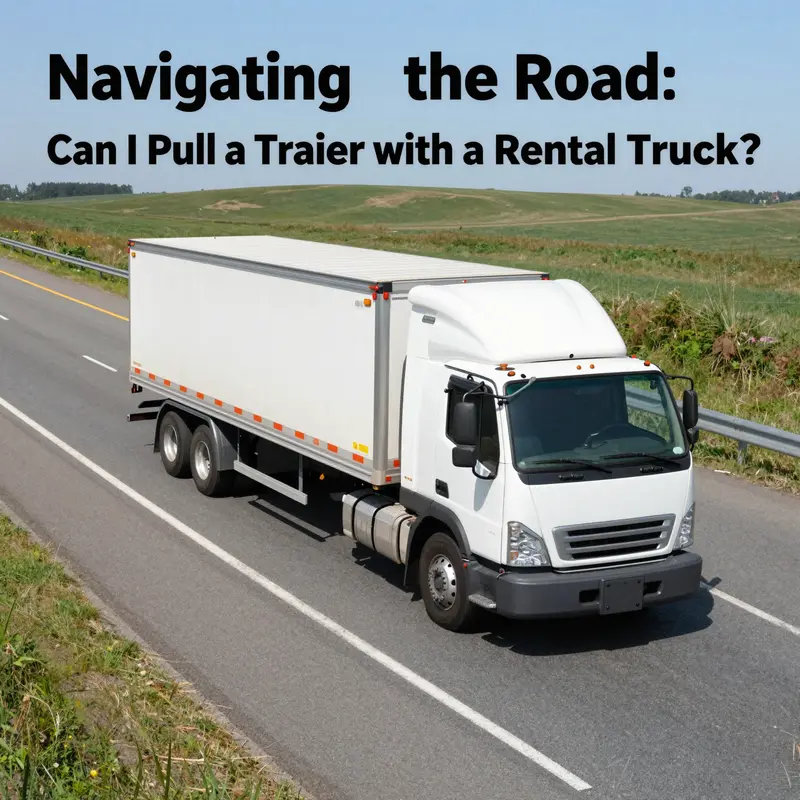
As a business owner, carrying equipment or products often necessitates towing capabilities. Understanding whether you can pull a trailer with a rental truck is vital for efficient operations. This topic encompasses multiple critical factors, notably the truck’s towing capacity, rental company policies regarding towing, and necessary licensing and equipment considerations. Each chapter will delve deeper into these elements to provide a well-rounded understanding, ensuring you make informed decisions that align with both your business needs and legal requirements.
Tow Weight on the Open Road: Mastering Trailer Towing with a Rental Truck
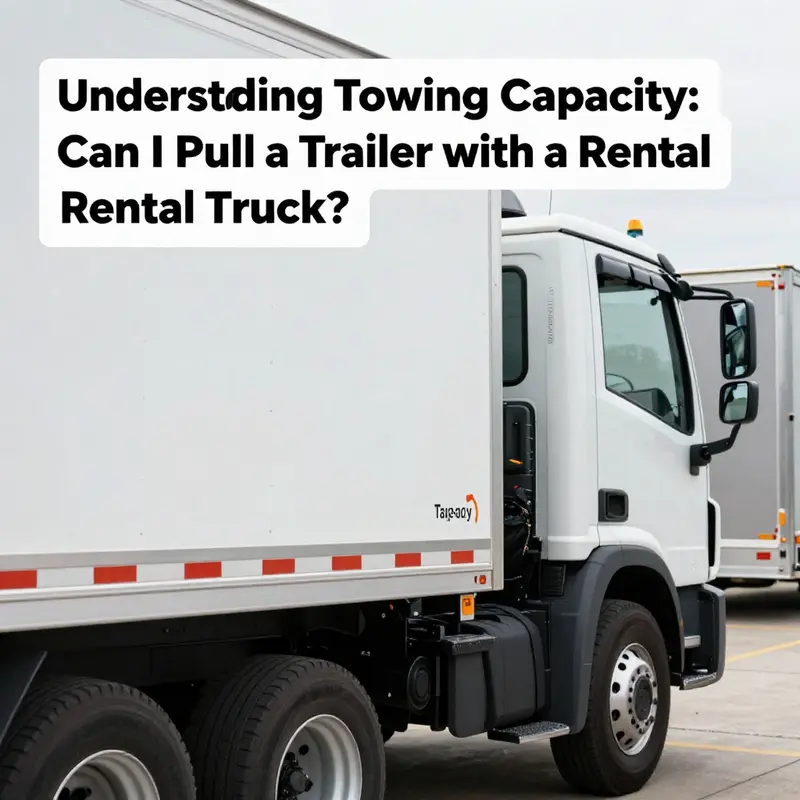
When you plan a move or a job that involves hauling a trailer, the question often comes up: can I pull a trailer with a rental truck? The honest answer is yes, but it is not a free pass. It rests on a careful balance of capacity, policy, and practical know-how. The open road rewards those who respect weight limits, understand the equipment, and anticipate how the truck and trailer will behave together. This chapter walks you through the core idea—the towing capacity of the rental truck—and then threads through the related realities so you can plan, acquire, and operate with confidence rather than improvising on the fly. At the heart of the matter lies one universal truth: towing capability is not a generic feature of “any rental truck.” It is specific to the exact model, year, transmission, and whether the vehicle has been equipped for towing. A truck that is capable of delivering a strong payload on dry land does not automatically become a safe or legal tow vehicle for a loaded trailer. To unlock the full answer, you must begin with capacity and end with proper procedures, legally compliant operation, and a clear-eyed assessment of the risks and responsibilities involved. The framework is simple in concept, but the details matter as you translate them into real-world steps for your move or project.
Towing capacity is the linchpin of every decision you will make about pulling a trailer with a rental truck. In plain terms, it is the maximum weight the combined truck and trailer can safely handle when moving. This is not the same as how much weight the truck can carry in its bed, or the amount of cargo you can pack into the trailer. It is the ceiling that takes into account the vehicle’s gross vehicle weight rating and its braking, steering, and suspension systems, along with the dynamics of a trailer behind it. The essential numbers you will encounter are the Gross Combined Weight Rating (GCWR) and the curb weight of the truck itself. The GCWR represents the total allowable weight of the truck plus the trailer and everything in or on them when the vehicle is fully loaded. The curb weight is the truck’s own weight without passengers, cargo, or fuel. The difference between GCWR and curb weight is the maximum trailer weight you can tow. Expressed simply, this is the towing capacity, and it defines the boundary beyond which you should not push the throttle, the hitch, or the brakes on the highway. The standard formula many people use, when the numbers are laid out, is Towing Capacity = GCWR − Curb Weight. When you apply this equation to your exact rental truck, you reveal the hard limit for trailer weight. Then you compare that limit to the loaded weight of your trailer and its contents, including any gear, boxes, appliances, or other cargo you intend to haul. If the trailer plus its cargo weighs less than or equal to the towing capacity, you are within the safe range from the capacity perspective. If not, you either reduce the load, opt for a larger truck, or re-evaluate whether towing is the right approach for this job.
Understanding this principle makes the next steps clearer. The towing capacity is not a single number you locate once and forget. The capacity can vary from one rental truck to another even within the same general class of vehicles. A truck with automatic transmission may have a different towing profile from a similar model with a different transmission or engine configuration. The vehicle’s weight ratings, the design of the hitch, and even how the truck has been maintained can influence performance in meaningful ways. This variability is why the first move is to locate the exact numbers for the vehicle you plan to rent and to verify them with the rental company before you sign the agreement. The owner’s manual and the door jamb sticker are your primary references. The door sticker typically includes GVWR, GCWR, and sometimes the payload capacity. GVWR, or Gross Vehicle Weight Rating, tells you the maximum weight of the truck when it is fully loaded with passengers and cargo. The GCWR embodies the maximum allowable weight of the truck plus the trailer when both are loaded for operation. When you subtract the curb weight—the truck’s weight without passengers or cargo—from the GCWR, you arrive at the practical ceiling for the trailer’s total weight. If your trailer and its cargo exceed that boundary, you risk overloading the braking system, suspension, and stability of the vehicle, and you may also be courting legal trouble or insurance complications. The key takeaway is straightforward: never tow anything heavier than the stated capacity, and always build a margin of safety into your planning. In practice, this margin matters a great deal. Real-world driving involves accelerations, decelerations, hills, wind, and road conditions that collectively push the system beyond the simple weight measure. A trailer that sits just under the maximum weight rating on a flat, smooth highway can behave very differently on a windy rural road or when climbing a steep grade. The margin becomes a quiet but essential ally for your safety and your equipment’s longevity.
The rental arrangement itself introduces a parallel set of considerations. Rental providers differ in how they structure towing options, what equipment they require, and where their liability ends and yours begins. Some rental companies offer hitches as an add-on or require a tow package, while others restrict towing unless you opt into certain insurance provisions or specialized packages. This is not merely a matter of preference; it is a policy designed to limit risk for the rental operation and for you as the user. Before you commit to a truck, you should have a frank discussion about towing with the rental agent. Ask specifically whether the truck you want can tow your trailer, what limitations apply, what kind of hitch or brake controller is necessary, and what the insurance implications or exclusions might be if you tow in a certain way or in certain locations. A simple, direct question—“Is towing allowed with this vehicle, and what must I provide or purchase to tow safely and legally?”—can save you from last-minute surprises at pickup. If the policy allows towing, insist on written confirmation of the towing capabilities for the exact vehicle and the exact trailer you intend to use. If the policy prohibits towing or imposes restrictions, you have to reconfigure your plan to align with those rules or seek an alternative vehicle that meets the necessary criteria. The clarity you gain at this stage prevents a host of downstream problems, from mechanical failure on the road to insurance disputes after a mishap.
Licensing and legal compliance form the third leg of the stool. In many jurisdictions, including the United States, there is a legal threshold where the combined weight of the truck and trailer necessitates a commercial license endorsement, such as a Class B CDL, to legally operate the vehicle. The exact thresholds vary by location and by the precise combination of truck and trailer. A typical line of thinking is that “lighter trailers” can be towed with a standard driver’s license, but when the combined weight crosses certain limits, or when brakes are present on the trailer, or when certain trailer configurations demand additional training, the rules change. It is essential to verify the licensing requirements for your specific weight scenario and location. Do not assume a standard license will suffice simply because the trailer is smaller or because you have a clean driving record. Check with local motor vehicle authorities or the dealership that rents the truck to ensure your credentials align with the law. The consequences of towing without the appropriate license are not only legal penalties but also the potential voiding of insurance coverage in the event of an incident.
Beyond capacity, there is the craft of the equipment itself. You will need a towing setup that matches the truck’s hitch system, which often means a receiver hitch and a properly sized ball—commonly 2 inches or 2-1/2 inches in diameter. The trailer’s coupling must align with the ball, and the load path should be configured so that it tracks predictably behind the truck. If the trailer has brakes, a brake controller installed in the cab is typically required to modulate the trailer’s braking force in concert with the truck’s brakes. The brake controller is a safety feature that helps manage stopping power and smooth deceleration, particularly with heavier trailers. All wiring for lights and signals should be tested prior to departure. The trailer’s lighting and braking system must respond correctly to the truck’s signals, brake lights, and turn indicators. Safety chains must connect securely, and the chain’s arrangement should prevent any gap between the hitch and the trailer in the event of a hitch failure. These are not cosmetic concerns; they are critical to safe operation on the road, especially when you travel through mixed traffic, urban corridors, and highways where the speed of other vehicles reduces reaction times.
To bring these ideas into a practical frame, consider the relationship between towing capacity and payload capacity. Payload capacity is the weight the truck can carry in its bed or cab, in addition to its own weight, without exceeding GVWR. Towing capacity, by contrast, concerns the weight of a trailer and its contents that the combination can safely manage. Both capacities must be respected. If you load the truck with heavy gear or furniture, you risk exceeding the payload capacity even if you have enough towing capacity for the trailer itself. The governing principle is simple: you cannot double-dip on weight—overloading the payload can compromise steering, braking, and overall handling, even if the trailer itself is within the towing limit. When you plan your load, you should estimate not only the weight of the trailer itself but also the weight of the cargo inside the truck and the cargo inside the trailer. An accurate estimate allows you to confirm that both payload and towing limits are respected. For many moves, this requires some careful weighing of items and a careful calculation of tongue weight—the downward force that the trailer exerts on the hitch. If tongue weight becomes excessive, it can forward-bias the truck’s front axle, reducing steering control, while too little tongue weight can make the trailer sway more easily. The middle ground—balanced tongue weight—is essential for stable, predictable handling.
In some cases, you will find it helpful to prepare a concrete example to ground the theory. Suppose you rent a truck with a GCWR of 14,000 pounds and a curb weight of 7,000 pounds. The towing capacity, following the formula, would be 7,000 pounds. If your trailer weighs 6,000 pounds when loaded, you would be within the capacity, provided you are not loading the trailer beyond 6,000 pounds and you have accounted for the tongue weight. If the trailer plus cargo approaches or exceeds 7,000 pounds, you are at or beyond the limit, and you would either need a truck with a higher GCWR or a lighter trailer. This kind of arithmetic is not merely a classroom exercise; it translates directly into the traction and braking performance you will experience on the road. It also communicates a mindset: plan with data, not with guesswork. In the real world, the difference between a safe tow and a near-mmiss can be a few hundred pounds of cargo, a small miscalculation, or a wind gust that pushes the trailer off its intended path. The math becomes your early warning system, a practical tool to prevent mistakes before you head out.
Even with a solid understanding of capacity and careful planning, you must operate within the policies of the rental company and adhere to legal requirements. Before you depart, confirm that the plan is permissible, documented, and insured. Confirm the hitch is installed correctly, that the brake controller is functioning, and that the trailer’s lights, brakes, and turn signals work in tandem with the truck. If you are unsure about any of these items, do not improvise. Ask the rental agent for specific guidance or request a test drive in a controlled environment. This is not only about safety; it is about accountability and clarity. If an incident occurs, the details—the truck’s capacity, the actual weight towed, and the adherence to policy—will determine who bears responsibility and how the claim is resolved. The sooner you can translate the weight you intend to tow into a clear permission with the equipment and licensing you have, the smoother your journey will be.
For readers who want a quick reference to a common truck size as a stepping-off point, a widely used resource outlines the typical dimensions and capabilities of the 16-foot truck. This reference can help you frame your expectations and prepare questions for the rental agent. See the detailed overview at the 16-foot truck resource. This is not a prescription to chase that exact model, but it can anchor your planning alongside the specific numbers you obtain from the actual vehicle you rent.
Finally, safety and legality are not abstract concerns. They anchor every decision you make on the road. If you plan to tow, treat the process with the same seriousness you would bring to any high-stakes driving situation: check the load, confirm the equipment, verify compliance, and methodically test before hitting the highway. The spirit of responsible towing with a rental truck is not just about meeting the minimum requirements; it is about building a buffer—the margin of safety you owe to yourself, your passengers, other road users, and the people whose possessions you are transporting. When you approach towing in this way, you are not merely meeting a mechanical constraint; you are embracing a practice that keeps you, your cargo, and the road safer.
For additional context on policy and procedure beyond the basics discussed here, you can explore a broader set of practical resources about trailer towing, hitch configurations, and move-related equipment through one of the internal resources in this site. Specifically, the content on the 16-foot truck page can offer a practical touchpoint for a typical rental vehicle and its towing considerations, including how to approach loading, fuel planning, and basic maintenance. You can access it here: 16-foot truck. This link is intended to provide a concrete, accessible reference to a widely used truck size and to bridge the general principles described above with a specific, practical example. It is not a substitute for checking the exact specifications of the vehicle you intend to rent, but it can help you frame your questions and expectations as you prepare for your towing scenario.
As you close the planning phase and move toward execution, keep a clear record of all the checks you performed, the numbers you calculated, and the policies you confirmed with the rental provider. That documentation will be a valuable reference if you ever need to revisit your plan or if you are called upon to explain your decision-making in the event of a roadside stop or an insurance inquiry. The practice of documenting your plan is rarely glamorous, but it is an essential component of responsible towing with a rental truck. It aligns the practical realities of your equipment with the legal and policy frameworks that govern safe operation on public roads, ensuring that your move is not only possible but prudent and predictable from start to finish.
External resource for further reading: https://www.fmcsa.dot.gov/
Tow Time and Terms: Navigating Rental Policies When Pulling a Trailer with a Rental Truck
When you ask whether you can pull a trailer with a rental truck, you’re really asking a cascade of questions: Is the truck capable of towing the load? Does the rental company permit towing with that particular model? Do I need special licensing, equipment, or insurance to do this safely and legally? The answer isn’t a simple yes or no. It’s a careful alignment of the truck’s towing capacity, the rental company’s policies, and your own readiness to handle the weight and the road. The good news is that towing a trailer with a rental truck is often possible, but it requires a deliberate check of several moving parts before you sign the rental agreement. Skipping any one of these parts can turn a straightforward move into a frustrating and potentially unsafe voyage. The heart of the matter is the towing capacity of the specific truck you’re renting. Even among the same rental company’s fleet, trucks come in different configurations: some are built with towing as a standard feature, others are limited to straight hauling with no hitch attached, and a few require you to pay for a separate towing package or insurance add-ons. The vehicle’s towing capacity is not a vague number you memorize from a brochure. It is the vehicle’s actual ability to pull a certain amount of weight safely, which takes into account the engine, transmission, cooling system, braking, and chassis. To determine this, you can consult the owner’s manual or look for the GVWR, or Gross Vehicle Weight Rating, printed on the door jamb or inside the manual. The key figure is the number that represents the maximum weight the truck can safely handle, including its own weight and everything you attach to it. When you’re towing, you’re not looking for a ceiling; you’re looking for a limit that the truck can exceed only with risk. The total weight you must not exceed equals the trailer’s weight plus its cargo, plus any accessories or additional gear you add to the hitch setup. If that total approaches or exceeds the truck’s towing capacity, you’ve already walked into a zone where your safety and your legal clearance begin to erode. In this sense, the first duty of due diligence is not to assume that any rental truck can pull any trailer. The towing capacity is a hard boundary. The second duty is to check the rental company’s policies. Towing with a rental truck is not universally allowed. Some fleets are flexible and enable towing with the right vehicle and the right paperwork. Others may permit it only if you add a special insurance policy, a towing package, or a specific approval process that must be completed before you drive off the lot. It’s essential to ask, in clear terms, whether towing is allowed for your chosen truck and the exact requirements you must meet. Do not rely on a single promise from a reservation agent or a general policy listed in a brochure. Ask for the precise vehicle, confirm the hitch type and the weight rating, and request a written statement of towing eligibility. If you need to secure an extra insurance policy or a towing package, understand the cost, the coverage limits, and how a claim would be handled if you encounter any road issue. The third crucial element is licensing and regulatory compliance. In many jurisdictions, the combined weight of the truck and trailer can push you into a different licensing category. The rule commonly cited is that once the total weight surpasses a certain threshold—sometimes around 10,000 pounds—you may need a special license endorsement or a commercial license to operate legally. While the exact threshold can vary by state or country, the practical takeaway is clear: lighter trailers typically require only a standard driver’s license, whereas heavier combinations can require additional credentials. If you anticipate towing a substantial trailer, you should verify whether your current license permits such operation, and if not, what steps you must take. This step protects you and others on the road, and it also ensures that you are compliant with the law in the jurisdiction where you’ll be driving. The fourth strand in this weave is the equipment itself. A proper hitch is not simply a question of whether you can connect a ball to the ball mount. It is about selecting the correct ball size, the correct receiver hitch rating, and ensuring the overall towing hardware matches the trailer’s configuration. The most common hitch sizes are 2 inches and 2.5 inches, but some setups may require different fittings. The hitch must be compatible with the trailer’s coupler and the vehicle’s hitch receiver. If the trailer has brakes, you usually need a brake controller inside the cab to modulate the trailer’s braking force in sync with the truck. Safety chains, lighting and wiring, an effective electrical connection, and properly rated towing mirrors are not optional add-ons; they are the minimum for legal operation and for preventing accidents or equipment damage. The brake controller, in particular, is something that many first-time tower overlook, assuming the trailer’s brakes will automatically synchronize with the truck’s braking. In reality, disengaged or misadjusted brakes on a trailer can lead to dangerous instability in emergency braking situations. With the right equipment in place, you still need to plan carefully. The planning begins with a precise calculation of weights and capacities. Weigh the trailer with its cargo to determine its gross vehicle weight rating. Then compare that figure to the truck’s towing capacity and to the combined weight of truck plus trailer. One tempting but dangerous assumption is that the truck’s listed towing capacity will accommodate any trailer of the same gross weight rating. In truth, the towing capacity is not a guaranteed cushion; it is a limit. If your trailer’s GVWR is near or above the truck’s limit, you risk overload conditions that can lead to overheating brakes, tire failures, or control issues on the highway. The fourth step is to ensure you have the correct licensing, but it’s also about ensuring you carry the right insurance and documentation. When you rent with a trailer in tow, you may need to declare that you will be towing and provide details about the trailer’s weight and dimensions. Some rental desks will want to see your license class and a certificate showing you meet the weight and equipment requirements. If you’re working with a rental provider that requires this declaration, treat it as part of the rental contract and not an afterthought. A small misalignment here can invalidate insurance coverage or even invalidate the rental if you are found to be towing without the required authorization. The practical consequence of these layers is that pulling a trailer with a rental truck is feasible in many cases, but it is not a universal entitlement. It requires a conscientious approach: verify the truck’s capacity, confirm policies with the rental company, ensure your licensing meets the local rules, and assemble the correct hitch and safety equipment. In practice, the process starts long before you pull away from the curb. It begins with a frank conversation with the rental agent—request the exact model you plan to drive, ask if it has a tow package, and insist on written confirmation that towing is permitted for that vehicle under the terms you will sign. This is not merely a customer service nicety; it is a contractual safeguard that clarifies what you can and cannot do, and it protects you if something goes wrong on the road. If you’re unsure about the vehicle’s capacity, don’t guess. Ask for the vehicle’s GVWR, the combined towing capacity, and any restrictions on the trailer’s size, weight, or braking requirements. If the trailer you intend to tow has its own brakes, confirm that the braking system is compatible with the truck’s electronics and that the brake controller is functioning correctly. In the same breath, check the hitch and wiring harness. A misfit connector is a common source of faults—lights failing, brakes not engaging, or signals not being transmitted correctly. It may be tempting to rely on a DIY setup or a makeshift adapter when you’re on a tight schedule, but the safest course is to use equipment that matches the towing system specified for the rental vehicle. The road is unforgiving to improvisation, and a single faulty connection can create a cascade of problems for you and other drivers. If you want a practical, hands-on look at hitch basics and installation, you can consult a guide that walks through standard hitch components and safety considerations. trailer hitch installation guide. The guide emphasizes compatibility, correct ball size, weight ratings, and proper securing methods, all of which are critical to a safe towing setup. Once you’ve cleared capacity, policy, licensing, and equipment, the question becomes one of common sense and preparedness on the day you tow. Maintain realistic expectations about fuel consumption and handling. A loaded trailer increases the vehicle’s stopping distance, steers with different sensitivity, and can amplify wind resistance. You’ll want to drive at moderate speeds, allow extra space for braking, and anticipate longer response times when turning or merging. If you’re new to towing, practice in a safe, open area before you embark on a longer highway route. Even if your trailer is relatively small, the added weight changes the way the vehicle accelerates and how it handles in crosswinds or gusting conditions. Plan your route with extra time and consider weather conditions that can intensify these effects. You should also consider weight distribution. Hard-to-turn trailers are often the result of poor weight distribution or an imbalance in payload. Distribute cargo evenly and secure items so they do not shift during transit. Use proper tie-downs and verify that nothing can slide forward or backward under braking. Secure heavy items low in the trailer to lower the center of gravity and maintain stability. Before you start a move, verify that all lights, signals, and braking systems on the trailer function correctly. Do a quick test at a safe area: back-up lights, brake lights, turn signals, and tail lights should all respond as expected. If the trailer has brakes, ensure that the brake controller in the cab responds smoothly and predictably when you apply the brakes. It is also wise to inspect tires and wheels on both truck and trailer. Low inflation, uneven wear, or damaged tires increase the risk of tire failure, which can be catastrophic at highway speeds. Check lug nuts and wheel bearings, and carry fresh spare parts or a roadside kit for the possibility of a sudden flat. All these checks are part of the broader practice of responsible towing and reflect a culture of safety first. The practical takeaway is this: if you intend to tow with a rental truck, you are entering a collaborative workflow with the rental company that extends beyond the reservation. You will need a clear answer about towing eligibility for the specific truck you’ve chosen, a precise understanding of weight limits, a well-configured hitch and safety system, and a readiness to comply with licensing and insurance requirements. It is not merely about completing a rental agreement; it is about ensuring a safe transport for you, your cargo, and everyone else on the road. Making a smooth, compliant tow starts with the conversation. It continues with the careful math of weight, the verification of policy, and the meticulous setup of the hitch and braking system. It culminates in a mindset that treats the trailer as an extension of the vehicle rather than a separate load to be managed on the fly. If you approach towing with that mindset, you will find that a rental truck can be a versatile ally for moving, hauling, or cross-town trips. The experience will be safer, more predictable, and more aligned with your moving timeline when you invest a bit of time up front to verify capacity, policy, licensing, and equipment—and when you stay within those verified boundaries on the road. For further practical guidance on how hitch systems work and how to install the components correctly, you can refer to the trailer hitch installation guide linked above. This resource emphasizes the critical steps for safe connections, which you will want to review before your departure day. External resource: https://www.fmcsa.dot.gov/ .
Tow with Confidence: Licensing, Gear, and Rules for Pulling a Trailer with a Rental Truck
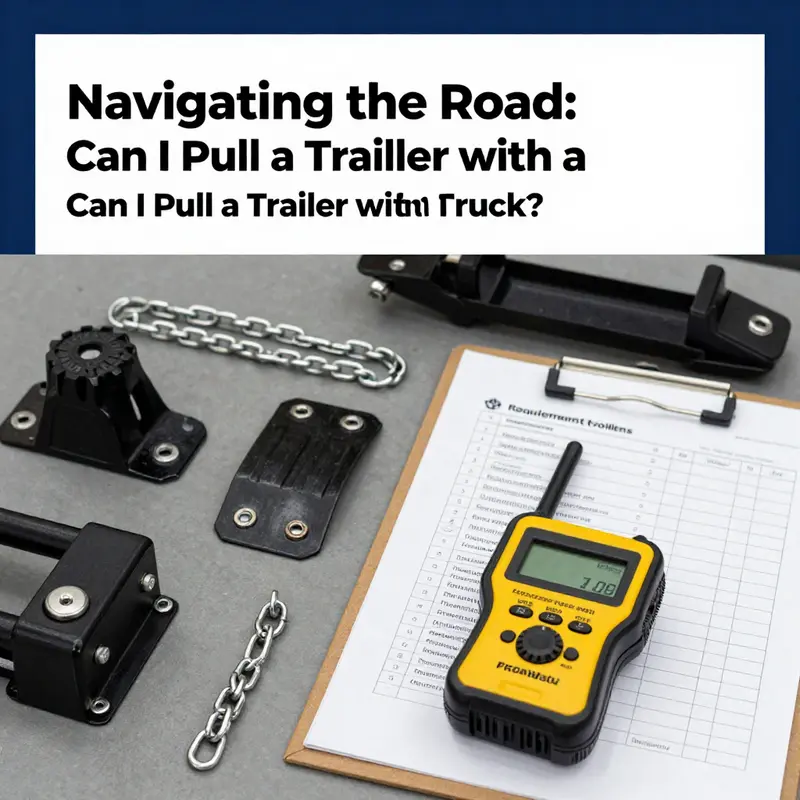
If you’re moving with a trailer, the key is matching the trailer and load to the truck’s towing capacity and the rental company’s policies. In many cases you can tow with a rental truck, but not all trucks or trailers, and only after confirming a few details. The core idea is to plan safely: check the truck’s rating, confirm towing permission and required equipment with the rental company, verify licensing for your weight class, and ensure the hitch, brakes, and lights are correctly installed and tested. Start with the truck’s towing capacity as shown on the door jamb sticker or in the manual; this rating is the maximum weight the truck can safely pull, and it must exceed the trailer weight plus cargo. Weigh the trailer and its cargo, add any other items in the truck that affect weight distribution, and compare to the rated capacity. If the numbers don’t add up, choose a lighter trailer, lighter cargo, or a different truck. Some trucks may be limited by hitch, brakes, cooling, or transmission under sustained load. When in doubt, consult the rental company.
Policy and licensing follow. Not all rentals allow towing; call ahead for written confirmation that towing is permitted for the exact truck. Ask about required equipment such as a tow hitch or brake controller, and any trailer type or weight restrictions. A tow hitch may not be included by default and may require a towing package. Some rentals require supplemental insurance or a towing endorsement. Read the rental agreement, keep a copy, and check for any long distance or jurisdictional limits.
Licensing depends on weight. In many places, once combined weight passes around 10,000 pounds, a commercial license endorsement or higher may be required. A standard passenger vehicle license may suffice for lighter trailers, but heavier loads may need a Class B CDL or equivalent, plus training on braking and handling of combinations. Check with the local regulator to confirm thresholds and requirements for your state or province.
Equipment is critical. A compatible hitch such as a receiver hitch and a ball size that fits the trailer coupler is essential, and the tongue weight must be within the hitch rating. If the trailer has brakes, a brake controller is typically needed to coordinate braking with the tow vehicle. Wire the lights and signals correctly and test them before leaving. Secure cargo with straps and distribute weight to keep the load stable.
Finally, plan a cautious drive. Verify lights, tires, and mirrors, and map a route that avoids steep grades or adverse conditions if possible. Always drive with extra distance and slower speeds when towing. If you cannot confirm a compatible hitch, ball size, brake controller, or insurance, consider a vehicle and trailer configuration with clearer towing support.
For reference, FMCSA guidance exists for commercial vehicle operations and can be useful for understanding general rules, though most renters are not treated as commercial carriers by default. The practical focus remains: verify, equip, and drive with care.
If you want a practical checklist, map your route, confirm capacity and equipment, verify licensing, install and test the hitch and brake controller if needed, weight the trailer and cargo, secure all items, and perform a final pre-trip check.
Final thoughts
Understanding the complexities of pulling a trailer with a rental truck is vital for business operations. By mastering the essential elements such as towing capacity, rental company policies, and legal requirements for licenses and equipment, business owners can efficiently manage their logistics and avoid potential challenges. With the right information at hand, you can confidently utilize rental trucks to assist in your business needs while adhering to all safety and legal standards.