
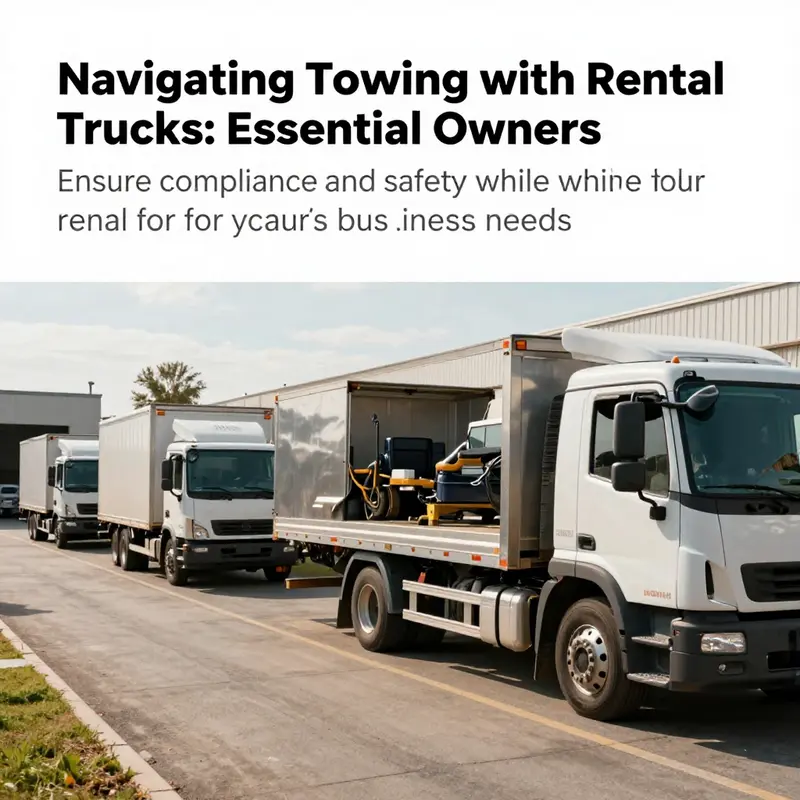
For business owners requiring transportation solutions, understanding the nuances of towing with rental trucks is essential. Towing can enhance operational efficiency, whether moving equipment or transporting goods. However, not all rental trucks are designed for this purpose, and strict compliance with rental agreements and legal guidelines is necessary. This guide will dissect crucial aspects: assessing vehicle capabilities for towing, understanding rental agreement stipulations, navigating insurance and liability concerns, and identifying best practices for safe towing with a rental truck. Each chapter provides key insights that directly support your decision-making process, ensuring your towing operations are both legitimate and secure.
Tow Ready: Reading Vehicle Capability, Rules, and Safe Practice for Rental Trucks
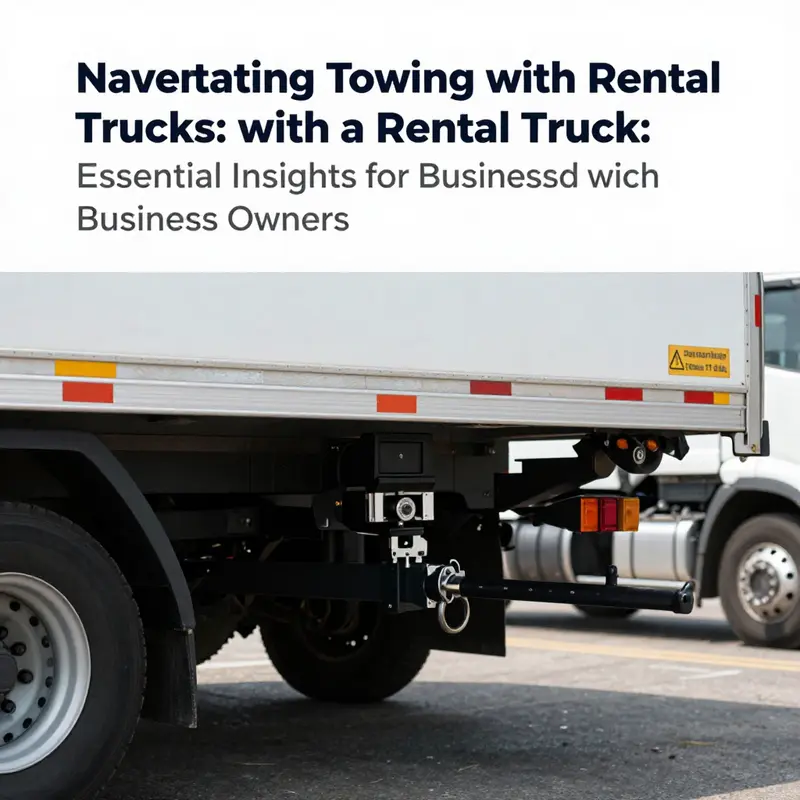
Towing with a rental truck can be a practical solution when you’re moving, transporting equipment, or staging a job that needs extra towing power. Yet the ease of renting a truck that can tow does not translate into automatic permission or unconstrained capability. The chapter that follows treats towing with rental equipment as a carefully managed capability — one that depends on the truck’s advertised performance, the specific terms of your rental agreement, and disciplined safety practices. The goal is not merely to move a load but to move it with reliability, compliance, and a clear sense of responsibility for everyone on the road.
At the heart of this topic lies a fundamental distinction that many new renters overlook: towing capacity versus payload. Towing capacity refers to the maximum weight a vehicle can pull behind it, typically evaluated as a trailer’s gross weight that the hitch and powertrain can manage safely. Payload, by contrast, is what the truck itself carries inside and on its bed — the passengers, cargo, fuel, and any equipment. A rental truck can boast a stout towing rating yet still be stretched thin on payload if you load the bed heavily or fill the cab with crew. The two figures are not interchangeable. Before you attach any trailer, you should locate the vehicle’s data plate or the manufacturer’s manual, then confirm the exact towing capacity for the specific model and trim you are renting. In practice, that means a careful cross-check of the engine choice, transmission, axle ratio, and whether the truck has a towing package installed. Lighter-duty rental trucks often come with towing capacities in the lower end of the spectrum, while heavier configurations or diesel-powered models can reach much higher limits. The takeaway is simple: do not assume a vehicle can tow the same weight you observed in another truck of the same model line. The precise configuration matters.
To read this correctly, you need to look not only at the capacity but at how the truck is rated to operate within that limit. A towing capacity of, say, 10,000 pounds does not mean you can haul 11,000 pounds by redistributing weight or using lighter trailer construction. The numbers are there to reflect tested safety margins and engineering limits, and overloading beyond the stated maximum is a direct route to instability, tire failure, and potential legal exposure. Conversely, a rental truck with a well-matched towing setup and properly engineered trailer can deliver a surprisingly robust towing experience when the load remains within safe boundaries. When you start your planning, the first step is to verify the vehicle’s towing capacity for the exact truck you intend to rent. This is not something you should assume from a similar-sounding model in a different rental lot or from vague online estimates. If in doubt, ask the rental agent to read the capacity from the vehicle’s data plate or the manufacturer’s configuration sheet and to confirm that the load you plan to pull falls within that limit.
Equally important is ensuring that your trailer and hitch are compatible with the truck’s capability. The hitch class typically correlates with towing capacity. Class III hitches are common for lighter trailers, while Class IV hitches support larger trailers. For the heaviest loads, specialized arrangements such as fifth-wheel or gooseneck hitches are used in larger trucks, though such setups are less common in standard rental fleets. The trailer’s coupler and wiring harness must also match the truck’s electrical system, and many rental operators provide trailers with compatible equipment to minimize the risk of mismatches. When you connect the trailer, you should also confirm the presence of a working hitch ball or equivalent secure connection, the integrity of safety chains, and the compatibility of load distribution with the tongue weight. In many rentals, the trailer is accompanied by a basic braking system, but not all trailers have brakes. If the trailer has its own braking system, you need to ensure that the truck is wired to activate those brakes and that the appropriate controller is installed and configured. If a brake controller is required, the rental company will typically install it or supervise installation to ensure proper operation. These details are not mere formalities; they translate directly into predictable braking response, tire wear, and the ability to stop safely under heavy towing conditions.
Beyond the mechanical linkages, you must align your plan with the rental agreement’s terms. Rental contracts rarely reserve blanket permission to tow; they specify whether towing is allowed at all and, if so, the maximum weight, the types of trailers permitted, and any additional equipment or operational restrictions. Reading these terms carefully helps you avoid surprises such as coverage gaps, penalties, or the harsh consequence of a suspension of your account. The contract is the legal backbone of your towing activity with a rental truck, and it is not something to bypass or defer to memory. You should also verify how towing affects insurance coverage. Reputable rental companies typically offer insurance packages that cover towing-related risks, but there are caveats. Damage resulting from improper towing, such as exceeding the legal limit or failing to maintain the trailer’s braking system, may fall outside coverage, leaving you personally responsible for repair costs and liability. A proactive approach is to confirm in writing with the rental company that towing is permitted, understand the limits, and obtain explicit confirmation about the insurance application to both the truck and the trailer.
When you map out the journey, safety becomes the compass that guides all decisions. A trailer shifts the dynamics of a vehicle’s stability in ways that are not always intuitive. Heavier loads can magnify the effects of wind and road irregularities, and towing demands greater attention to tire pressures, brake performance, and suspension load. A simple check before departure becomes a routine habit: verify tire pressure for both the truck and the trailer, inspect tires for wear and damage, and test the trailer’s lights and brakes if applicable. Your pre-trip routine should also include verifying hitch connections, safety chains, breakaway switch operation, and the trailer’s load distribution. A balanced load is critical: keep heavier items toward the front of the trailer and as close to the axle as possible to minimize tongue weight fluctuations and reduce sway. Correct weight distribution improves steering response and reduces the risk of fishtailing at speed. Conscious speed control is essential; most manufacturers suggest reducing speed when towing, especially on turns or in high-w gusts, and many operators caution against exceeding typical highway speeds when towing. Slow and steady tempos, coupled with longer following distances, minimize the risk of sudden maneuvers that could destabilize the trailer.
In relation to safety gear, the basics cannot be skipped. Safety chains serve as a backup if the hitch fails, a breakaway switch provides an automatic braking cue if the trailer detaches, and properly adjusted mirrors or a camera setup helps maintain visibility around the trailer’s blind spots. Regular inspections, including brake and coupling integrity, should occur at the start of each trip and at reasonable intervals along longer journeys. It is worth noting that many municipalities and jurisdictions impose rules that compare to driving a vehicle with a larger towing profile. Some regions require additional licensing or endorsements once you are towing a heavy trailer. While most hobbyists and casual renters will not encounter such complexities, a few routes and jurisdictions do exist where a higher level of driver qualification is expected or mandated for safety compliance. If you are traveling through unfamiliar areas, take a moment to review the local rules, especially those related to maximum permissible weights, speed restrictions for trailers, and any lane-use restrictions that may apply on certain roadways.
The practical upshot is clear. Tow with a rental truck only after you have confirmed the specific vehicle’s towing capability and have a bright line on what the rental contract and insurance will cover. Do not rely on memory or on anecdotes from other renters; the exact model, trim, and equipment level determine what is permissible and safe. If you discover a mismatch — for example, you planned to tow with a truck that simply cannot handle your trailer’s weight or a payload that overwhelms the bed — pause and re-evaluate. It is far better to swap to a higher-capacity truck or reconfigure the load than to push past safe limits and risk damage, accidents, or policy disputes over insurance coverage. In other words, effective towing with a rental truck is not about finding a workaround; it’s about aligning capability, terms, and practice in a way that preserves safety and financial prudence.
As you navigate this process, a useful practice is to seek out practical how-to guidance specific to hitching and towing. For instance, you can consult resources that focus on trailer hitch installation and compatibility, which helps you understand how different trailers connect to different trucks and what to expect in terms of maintenance and operation. The guidance is not merely about achieving a secure connection; it is about understanding how that connection behaves under real driving conditions. When you prepare for your move or transport task, consider reviewing a resource on hitch installation to gain a better mental model of the components involved and the potential failure points you want to avoid on the road. You can also discuss your plan with the rental agent to confirm that a hitch installation or particular wiring configuration is appropriate for the truck you choose and for the trailer you will tow. Online forums and official manufacturer documentation can provide additional clarity on the limits and best practices for your exact combination of truck and trailer, but the authoritative track remains your rental contract and the truck’s official technical specifications.
In short, towing with a rental truck is a viable option when you approach it with a rigorous, safety-first mindset. It requires you to verify the truck’s maximum towing capacity for the exact vehicle you will drive, ensure hitch and trailer compatibility, confirm the presence of any required braking or lighting systems, and comply with all rental terms and insurance considerations. If you do these things, you gain a dependable and efficient way to move heavy loads without committing to a dedicated tow vehicle. If uncertainty remains about whether a particular truck can tow your planned load, do not hesitate to pause the process and confirm capabilities directly with the rental company before signing. A moment’s diligence now can prevent a cascade of problems later, from accidents on the road to complications with insurance coverage and contractual penalties.
For readers seeking deeper, practical details on hitching and trailer integration, see the internal resource on hitch installation linked here: penske-trailer-hitch-installation. This reference provides a practical look at the mechanics of hitch compatibility and the steps you’ll typically encounter when preparing a rental truck for towing, helping you translate the theory of towing capacity into a dependable, on-the-ground procedure. While the specific brand mentioned in the link reflects a real-world example, the concepts apply broadly: match the hitch class to the load, ensure electrical compatibility, and validate the safety systems that keep you and others on the road protected.
Finally, it is worth acknowledging that laws and regulations governing towing vary by region. In many places, towing limits are legally defined and require adherence to weight-based thresholds, licensing requirements, and specific safety standards for equipment and operation. A responsible renter treats these rules as a baseline rather than a target. You should plan your route with these rules in mind, and if you anticipate crossing borders or entering areas with stricter controls, take proactive steps to confirm your compliance before departure. The overarching message remains consistent: towing with a rental truck is allowable and often convenient, but it is not a free pass. It is a calibrated activity that hinges on your diligence about vehicle capability, trailer compatibility, contractual terms, and steadfast safety practices. For those who invest time in verifying these elements, the experience can be smooth, productive, and ultimately safer for everyone on the road. External resources can further illuminate the practical realities of towing beyond your local context, complementing the information you secure directly from your rental provider and the truck’s manufacturer.
External resource: https://www.163.com/dy/article/JPVJFQJN0514K47B.html
Tow by the Book: Navigating Rental Agreement Terms for Towing with a Moving Truck
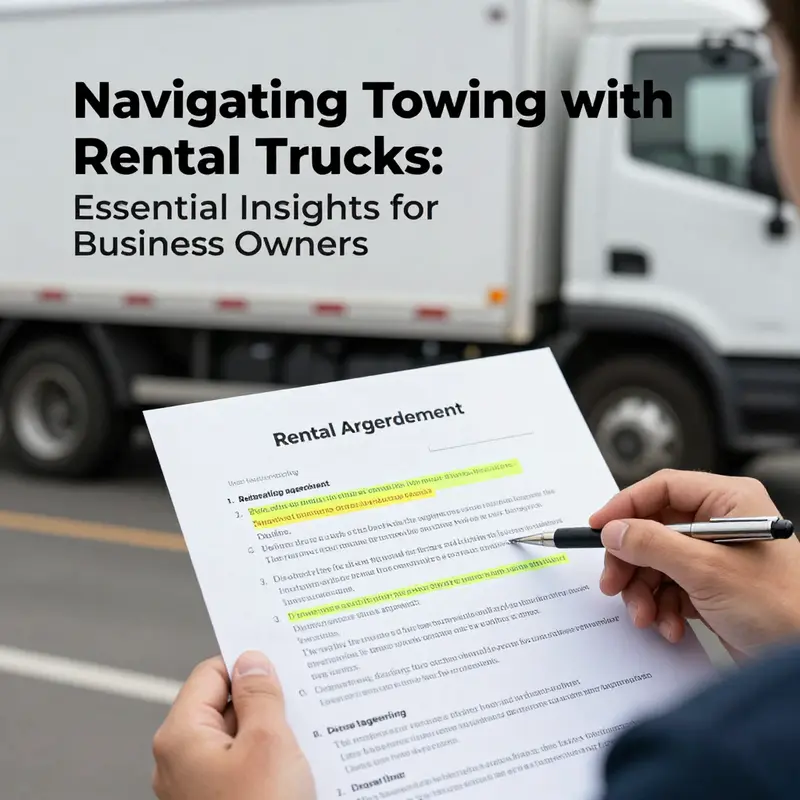
Moving holds its own pressure, and the question of towing within a rental truck adds a layer of legal and practical complexity. The moment a customer contemplates towing a trailer, boat, or extra cargo behind a rental truck, the landscape shifts from straightforward vehicle selection to reading a contract with careful footing. The driving force behind most rental agreements is liability and risk management. Rental companies want to keep vehicles, drivers, and third parties out of avoidable danger, and they want to know who is responsible when something goes wrong. Because of that, towing is rarely allowed as a default practice. Instead, it hinges on explicit authorization, vehicle-specific capability, and adherence to a defined set of rules. If you intend to tow, you must first confirm that the exact truck you plan to rent has the legal and practical capability to tow the kind of load you have in mind, and you must carefully follow the terms laid out in the rental agreement. Without that alignment, you risk not only fines or chargebacks but also the loss of insurance coverage and the possibility of damaging a rental account. The situation becomes more transparent when you approach the matter as a two-part requirement: the truck’s own towing capacity and the contractual permission that governs how, where, and under what conditions you may tow. Vehicle capability is not a mere marketing spec; it is a technical boundary. A rental truck will display its maximum allowable towing capacity in the vehicle’s documentation, on a compliance certificate, or in the owner’s manual. This number represents the practical ceiling for towing—exceed it, and you are operating outside the designed safety margins. In some jurisdictions, there are formal standards or regulations that translate to how this capacity is calculated and displayed. When a truck is advertised as tow-capable, that claim must be supported by the manufacturer’s data, and the rental agreement must reflect that the specific unit you rent is certified for towing. The disconnect between “can tow” and “may tow” is where many renters trip up. A truck that can tow a trailer in theory may still require explicit authorization in the rental contract. The two checks are critical: first, you verify the truck’s technical capability; second, you verify the contract’s permission. It might sound simple, but it is where many misunderstandings originate. The practical path begins with a clear, upfront conversation with the rental provider. If you are planning to tow, ask specifically whether towing is permitted with the model you intend to rent, and if so, what kind of trailer or load is allowed, what equipment must accompany that towing, and what fees or deposits apply. A straightforward inquiry can spare you from later disputes or uncovered liabilities. In many contracts, the towing clause operates as a gatekeeper. If the clause says “no towing unless explicitly authorized,” the burden of proof rests on the renter to demonstrate compliance. In some cases, authorization is conditional: you may be allowed to tow only certain trailer types, up to a maximum weight, with a hitch type installed by the rental company or a pre-approved third party, and with a licensed driver who meets qualifications. While such terms may seem onerous, they exist to prevent damage to the vehicle and to reduce the chances of an accident that could expose the rental company to liability. The insurance angle adds another important dimension. Reputable rental firms offer insurance options designed to cover towing-related risks, but policies are rarely universal. Coverage typically hinges on following the terms precisely. If you tow a load that exceeds the stated capacity, uses unauthorized equipment, or violates any other clause, the insurer may deny a claim or impose a substantial out-of-pocket cost. The end result is that you may face significant financial exposure for something that seemed simple at the planning stage. The safest approach is to treat the towing clause as a contract with real teeth, not a cosmetic addition. Read the entire agreement with a focus on any section that mentions hitch usage, trailer types, load limits, required equipment, and on-road behavior while towing. If the contract uses generic language such as “towing prohibited,” be prepared to seek exceptions in writing from the rental company. If towing is allowed, seek specifics. What is the maximum trailer weight? What types of trailers are permissible—flatbeds, utility trailers, or dolly attachments? Are weight distribution hitches required, and if so, who supplies and inspects them? Is a braking controller required for certain loads, and what about lighting, reflectors, safety chains, or breakaway systems? Is a separate insurance rider needed for towing, and does it add to the daily rate or security deposit? These questions, when answered in writing, create a clear path that protects both you and the rental company. The need to verify with the provider before signing cannot be overstated. It is not enough to rely on generic statements found in the article or widely circulated guides. The specifics can vary by location, by truck model, and by the exact configuration of the vehicle you intend to rent. For instance, a vehicle might be rated to tow a lightweight trailer but require a certain hitch assembly that the rental does not normally equip, or it might require a tow package that must be added at the time of pickup. Some contracts may also impose geographic limitations, restricting towing to certain states or regions or requiring that you avoid toll lanes or particular road classes while towing. The upshot is that every towing plan should be cross-checked against the letter of the rental agreement, with explicit authorization in writing before the tow begins. A practical path, then, is to perform a quick audit in your own mind as you prepare to rent. If you genuinely intend to tow, do not skip the step of confirming the truck’s towing capacity and the contract’s stance on towing. Make notes of the exact model you will rent, the VIN if possible, and the specific towing-related terms the provider confirms in writing. If the provider cannot confirm these details before you sign, you will have legitimate grounds to delay the rental until confirmation is obtained. This is not merely a cautious approach. It is a risk management strategy that protects your safety, your cargo, and your financial interests. It also aligns with responsible moving practices. For an illustration of how these terms play out in real-world guidance, you can explore how one major rental provider frames trailer and tow policies in their instructional content. The linked resource offers concrete examples of what kind of towing equipment and arrangements are typically required when authorization is granted, such as the use of specific hitch types, brake controllers, and weight limits. This can give renters a practical sense of what to expect and what to negotiate when discussing their own rental terms. In short, towing with a rental truck is not a free-range activity. It is a legally bounded activity that depends on two pillars: the truck’s certified towing capability and the rental agreement’s explicit permission and conditions. A renter’s success hinges on treating those two pillars as non-negotiable from the moment they consider towing. The process is not about finding a loophole but about building a clear, documented understanding with the rental provider. When done correctly, you can plan a tow with confidence, knowing that you have verified the vehicle’s limits, understood the contract’s requirements, and aligned with insurance provisions that apply to towing. If you want a practical reference point that shows how the policy discussions are framed in customer-facing guidance, consider looking at a detailed breakdown of towing policy examples linked in the internal resource. The guidance there emphasizes checking for authorization, understanding fees, and ensuring compliance with both the vehicle’s capacity and the contract’s terms. And while the exact terms will vary, the overarching principle remains constant: towing is possible with a rental truck, but it is never automatic. It requires deliberate verification, precise documentation, and strict adherence to the rules set by the rental company. Enduring success with towing starts well before you hook up a trailer or attach a dolly. It begins with the conversations you have at pickup, the exact language you secure in writing, and the diligence you apply in following the contract to the letter. For readers who want to see how these ideas translate into everyday practice, a practical internal reference point is available through a resource that discusses towing policies and related tips—this content mirrors the emphasis on confirming towing permission and understanding any additional requirements or fees that apply. By approaching towing through this lens, renters protect themselves from unforeseen charges and from gaps in coverage that could otherwise arise when a move hinges on a single decision to tow. External resources can provide broader context and reinforce the central message: towing is permissible only when the truck’s capability is verified, the contract explicitly allows it, and all safety, insurance, and procedural requirements are satisfied. As you prepare to navigate your own rental experience, keep in mind that the exact steps may differ from one company to another, but the core practice remains consistent: verify, document, and comply. This disciplined approach transforms a potentially risky maneuver into a well-managed part of your moving plan. External resource: Can You Tow with a Rental Car? Key Rules and Tips – CarInterior is available for further reading and offers a broader perspective on how rental policies frame towing practices across different providers and contexts.
Tow, Liability, and Peace of Mind: Navigating Insurance When Towing with a Rental Truck
When you rent a truck with plans to tow, you step into a careful intersection of capability, contracts, and coverage. Towing may be a practical necessity during a move or a job, but it isn’t automatically assumed or automatically protected by the rental itself. The chapter ahead moves through the layered realities you confront when towing with a rental truck, from the exact wording in your rental agreement to the way insurance can respond if something goes wrong. The key idea is simple and surprisingly often overlooked: towing with a rental truck is allowed in many cases, but it hinges on two things that you control directly—whether the vehicle is certified to tow and whether you comply with the terms of your contract and insurance. The result can be a straightforward, affordable solution or a costly misstep that unsettles a move and a budget alike.
First, the most practical place to start is the rental agreement itself. It will spell out whether towing is permitted at all, and if it is, the limits. Some rental agreements allow towing only for specific kinds of trailers, with defined maximum weights. Others require that the vehicle’s own tolerance and towing capacity, as stated in the manual or compliance documents, be clearly compatible with the load you intend to pull. This is not a gray area you can bypass with common sense; the vehicle’s certification and the explicit terms in the contract govern what you can legally and safely attempt to tow. In a world where regulatory standards are increasingly explicit about vehicle mass, braking systems, and trailer limits, crossing those lines can complicate liability, insurance, and even the rental relationship itself. A misread or a rushed decision at pickup can turn a simple move into a knot of fines and disputes.
The second pillar is insurance. Insurance for a rental truck isn’t a single, universal shield. It travels through a chain: your personal policy, any coverage offered or required by the rental company, and optional add-ons you may choose to purchase. Your personal auto policy may extend to a rental vehicle, but only if it explicitly includes rental coverage and, crucially, if the event triggering towing costs falls within a covered scenario. Comprehensive coverage, liability, and any roadside plans you add can alter what you pay out of pocket and what the insurer will reimburse after a tow or related service. A common misstep is assuming that towing services are automatically covered under a standard rental insurance package. In reality, many carriers consider towing an ancillary service, frequently billed separately from the base rental price. If you have a roadside assistance or collision-damage waiver option, that can shift responsibilities in the event of a breakdown or an accident, but only if the terms clearly include towing scenarios and the type of tow required.
The reality of coverage is nuanced. If a breakdown or accident occurs during a tow, the question becomes: who is liable for the tow charge, and who pays for any damage or additional costs? If another party’s fault drives the incident, their liability insurance is typically responsible for towing costs associated with the incident, provided you can document the event with appropriate evidence—police reports, tow invoices, and a clear chain of custody for the vehicle and trailer. If you are found at fault, your own liability—along with any collision or comprehensive coverage you carry—will interact with the tow cost and any repairs. In all cases, documenting what happened is essential. If you were involved in a collision, a police report and a detailed invoice for the tow can be critical when presenting a claim to the responsible party’s insurer or to your own insurer when you pursue coverage through a claim process.
Yet the practical world often introduces complexity. Insurance may cover towing costs only under specific conditions: the incident must arise from a covered event, such as a collision, where the policy’s terms apply. If the tow results from a mechanical breakdown or from a misuse of the vehicle outside the rental agreement, coverage may disappear. This is where the “when insurance does not cover towing” scenario becomes a decision-maker. Mechanical failure, routine wear and tear, or maintenance issues typically fall outside standard coverage unless you purchased a roadside package that explicitly includes towing or added protection. Unauthorized use—such as using the rental truck for a purpose not permitted in the contract, or attempting to tow a load beyond the stated maximum—can void coverage and shift the financial burden directly to you. In short, the coverage map is not a single, simple shield; it is a mosaic that depends on your contract, your purchases, and the precise circumstances of the tow.
To navigate these waters with confidence, there are practical steps you can take before you sign or drive away. Start by reading the rental agreement with care, and do not assume that “towing” means you can strap anything behind the truck. Confirm that the vehicle you are renting has the advertised “maximum allowable towing capacity” and that any trailer or load you plan to haul falls within that limit. If you intend to tow heavier loads, you will need explicit certification or authorization from the rental company, and you should obtain written confirmation of the approved towing limits. This is not merely bureaucratic ritual; it is essential to keep yourself protected from insurance gaps and unexpected charges.
Next, align your expectations with the insurance layer. Review your personal policy to determine whether it covers rental vehicles and, more specifically, whether it extends to towing events. If you have an umbrella policy or a rider that includes rental cars, you may gain an additional safety net for towing costs arising from a covered accident. If your policy includes LDW (Loss Damage Waiver) or CDW (Collision Damage Waiver) or their equivalents, understand what they cover in the context of towing. Some add-ons reduce or eliminate the renter’s responsibility for damage to the rental vehicle and may include roadside or towing services as part of their package; others cover only vehicle damage, with towing billed separately. The premium you pay for these add-ons should be weighed against the potential out-of-pocket costs if you encounter a breakdown, a collision, or an event that requires towing. If you have any doubt about how a towing scenario may be treated under your policy, contact your insurer for a clear interpretation before your trip. Keeping copies of policy documents, coverage limits, and contact numbers in your vehicle or on your phone can save you time and stress if towing becomes necessary.
There is also the practical reality of out-of-pocket costs for towing that can arise even with insurance in place. Towing is a specialized service with its own cost structure—depends on distance, the type of service (flatbed versus wheel-lift), the trailer configuration, and whether the tow is from a remote location or a city street. These charges can escalate quickly, especially if the incident occurs at odd hours or involves an unusual load. Some rental agreements require renters to pay towing fees upfront and then seek reimbursement via the insurance claim; others may bill the renter and handle the claim directly with the insurer. Either way, keep every receipt and document every step of the process—from the moment you realize you will need a tow, through the service, to the final claim settlement. This documentation is the bridge between the incident and the settlement, reducing disputes and delays.
The question of liability for towing costs also has a practical, real-world dimension. If another party is at fault in an incident, their liability insurance should cover towing costs related to the event, provided you have the necessary documentation. If you are at fault, the tow costs may be incorporated into your own policy’s coverage and the related claim. In both situations, the available coverage can hinge on the exact type of damage, the cause of the breakdown, and the terms of the rental agreement. If the tow arises from mechanical failure or wear and tear rather than an accident, the insurance landscape becomes more complicated. In those moments, the rental company’s roadside assistance program—if purchased or included—can be a critical source of support. These programs are designed to minimize the chaos of a breakdown and provide a structured path to service, even if the claim itself ends up outside the insurer’s standard blade of coverage.
Best practices for staying protected are straightforward, though they require deliberate action. First, always verify, before you drive off the lot, that the specific truck you rent is rated for towing and that your planned load complies with that rating. Then, confirm with the rental company what towing-related services are included or available as add-ons, and whether those services are billed separately in case you need to use them. Second, consult your personal policy to confirm coverage for rental vehicles and any towing events. If you choose to buy optional insurance packages, understand exactly what they cover and under what circumstances they will pay. Third, resist the urge to improvise a tow plan if it pushes you beyond defined limits or outside your contract. If you encounter a breakdown or accident, call the rental company first for authorized towing guidance; insurers often require that you follow the proper procedure to ensure coverage. Fourth, document everything—police reports, the tow operator’s invoice, photos of the scene, and notes about the vehicle’s condition before and after the tow. These records will be invaluable when a claim is filed, whether with your own insurer or with the at-fault party’s insurer.
In practice, you will sometimes find yourself balancing two competing imperatives: the most affordable option and the most protective coverage. The former may tempt you to minimize add-ons or skip certain declarations in the rental contract; the latter speaks to financial peace of mind when a tow is unavoidable. The truth is that the cost and risk are not proportional to the rental price you see at checkout. They scale with the specifics of your load, the environment you’re moving in, and the precise terms of the insurance you carry. A well-structured plan—one that aligns the rental agreement, the vehicle’s towing capacity, and your insurance coverage—can prevent a minor hiccup from becoming a major financial setback. If you want a practical, user-friendly starting point for understanding the roadside assistance options that some rental packages may offer, consider checking the general overview of roadside services discussed in related content here: roadside assistance options.
Ultimately, the practical guidance is that towing with a rental truck is feasible, but it demands deliberate due diligence. Confirm the truck’s towing capability and the contract’s terms, secure appropriate insurance or add-ons, and prepare for the tow with meticulous documentation. If you maintain this discipline, you can approach a tow scenario with a clear map of responsibilities and a lower risk of unwelcome surprises. It is this clarity that turns a potentially fraught episode into a routine support service—one you know you can count on if the load shifts, the weather worsens, or the road presents an unexpected challenge. For readers seeking broader, external guidance on how insurers view towing-related claims for rental vehicles, consult official resources such as the National Association of Insurance Commissioners for a comprehensive overview of insurance coverage considerations, including questions about how towing costs may be handled in various scenarios: https://www.naic.org/.
Tow Wise: Navigating Legality, Safety, and Best Practices When Towing with a Rental Truck
Towing a vehicle behind a rental truck sits at the intersection of practicality and responsibility. It isn’t a default capability you can assume comes with any truck rental. Instead, it hinges on two intertwined factors: the technical design of the truck you’re renting and the terms you sign when you pick it up. Across many regions and rental fleets, towing is allowed only when the vehicle is explicitly rated for it and when you comply with the contractual guidelines. The result is a straightforward message with important nuance: you can tow with a rental truck, but you must verify the truck’s towing capability and live within the rules of the rental agreement. This approach protects you from unexpected costs, gaps in insurance coverage, and the kinds of liability that can derail a move or an emergency recovery operation. In practice, the most reliable path starts with a careful assessment of the truck’s specifications, followed by a disciplined review of the rental contract, and then a set of safety-first procedures that keep you and others on the road safe. The specifics can vary by region and fleet, yet the underlying logic is consistent: towing is a special use case that requires explicit authorization, proper equipment, and prudent operation. Knowledge here is not about pushing boundaries, but about validating capacity, understanding liability, and adopting a towing mindset that prioritizes safety over speed. If you’re preparing for a move or a recovery scenario that might involve towing, treat this as a decision-making framework rather than a quick workaround. Begin with the truck you plan to drive, verify its towing capability, confirm the terms of the rental agreement, and then implement a safety plan that reflects the realities of sharing the road with a towed load. The aim is simple: do the math, follow the lease, and drive deliberately. The math begins with capacity and the lease begins with consent, and both must align before you engage the equipment in any towing operation. In regions where standards evolve, you may also encounter minimum compliance requirements that reflect shifts in regulatory thinking. For instance, compliance certificates or owner’s manuals often spell out the maximum allowable towing capacity. A truck may be able to tow a light trailer, but heavier tows require explicit certification on the vehicle’s documentation. The evolving regulatory framework in some jurisdictions emphasizes that a weight-and-train alignment is not just a matter of the vehicle’s strength, but also a matter of legal permission and insurance coverage. When you line up these pieces, towing with a rental truck becomes a structured process rather than a risky improvisation. A careful renter checks three pillars: capability, contract, and coverage. The first pillar—capacity—requires that you locate the maximum towing capacity listed for the exact truck you’re renting. In some fleets, this figure appears on the vehicle’s compliance certificate or in the owner’s manual. If the load to be towed is near or exceeds that rating, you must select a different truck or a different hitching approach that remains within the permitted limits. The second pillar—contract—ensures you have explicit permission to tow and that you know the type and size of trailer allowed. Contracts commonly set a ceiling on gross vehicle weight, tongue weight, and sometimes the category of trailers (for example, flatbed, dolly, or bumper-pull). Reading the terms guardrails against fines, insurance limitations, or even account termination. The third pillar—coverage—addresses insurance and liability. Reputable rental companies usually offer insurance packages that cover towing-related risks, but they almost always exclude damage arising from improper towing or from exceeding the vehicle’s stated limits. If you tow beyond the certified capacity or ignore the hitch rating, a claim can be denied, leaving you responsible for the full cost of repairs, towing, and any collateral damage. This triad—capacity, contract, and coverage—frames the practical reality: towing with a rental truck is feasible but conditional. The 2025 updates to national standards in certain markets underscore a familiar pattern: legal towing capability is not assumed but verified, and weight thresholds are not merely guidelines but prerequisites for safe, lawful operation. Even where standards enable a towed load under a generalized category, the vehicle’s own certification must explicitly authorize it for heavier duties. With this context, the decision to tow should begin with the truck you intend to rent and proceed with a careful cross-check against the rental agreement. It is tempting to overlook the fine print when the practical need to move is urgent, but the consequences of ignoring it tend to be costly and time-consuming. The simplest way to avoid trouble is to confirm the truck’s towing limits directly with the rental company before you sign. This step, combined with a conservative approach to hitching and load distribution, creates a strong foundation for a safe tow. In addition to the certificate-and-contract framework, a proactive renter builds a safety buffer into the operation by selecting a hitch system that is appropriate for the weight and type of the towed vehicle. A properly rated hitch, secure tie-downs, and functional lighting are not optional accessories; they are essential components of safe towing practice. The literature on towing safety consistently emphasizes that a flatbed approach can mitigate many common risks, particularly when a vehicle is all-wheel drive, low-clearance, or damaged. A flatbed, sometimes called a rollback or slide truck, allows the entire vehicle to be winched or rolled onto a level platform, lifting the vehicle off the ground rather than dragging it behind. This technique minimizes wear and tear on the towed vehicle, reducing the chance of differential damage or jolts that can twist its alignment. When feasible, opting for a flatbed reduces the risk of liability while simplifying the towing process. It is not only about the towed vehicle; it is about the broader picture of insurance and accountability. If the towed load is completely off the ground, there is less likelihood of damage to the drivetrain, transmission, or suspension, and that translates into a cleaner insurance claim, should one ever be necessary. The end-to-end safety logic circles back to human factors: drive slowly, anticipate the added length and weight, and plan for longer braking distances. Towing is not a time-saving technique; it is a controlled operation that requires extra time to stop, turn, and reposition. The basic rule—never rush—can be the difference between a smooth move and a costly accident. In practice, the choice of towing method and the truck you select begin with a clear understanding of both load and route. Heavier tows on steep grades or congested corridors demand a more conservative approach and possibly alternative equipment. For lighter, compliant tows, you may get by with a standard hitch and a properly rated trailer, paired with a truck that is explicitly permitted to tow that configuration. The rental agreement, once again, has the final say. It is not unusual for a renter to encounter restrictions that reflect fleet design or liability considerations. Some agreements specify no towing at all, while others allow towing only if the vehicle, trailer, and hitch meet certain weight thresholds. The key discipline is to read and heed those terms before you commit to any towing plan. From a safety perspective, it helps to approach the process as a series of checks that align with best practices. Before you depart, inspect the hitch connections for any signs of wear or fatigue. Check the towed vehicle’s lights, brakes, and taillights to ensure visibility and signaling are intact for the entire journey. Regular inspections during the trip are equally important; a loose connection or a shifting load can create hazards far behind you. When you arrive at a destination, the same careful routine applies. The towed vehicle should be re-secured, and the hitch inspected again after the movement. The habit of routine checks is a practical discipline that protects you from mechanical failures and reduces the likelihood of insurance friction in case of an incident. The narrative above does not exist to scare you away from towing with a rental truck. It exists to reassure you that a thoughtful, rule-based approach makes towing possible and safer. If you have a towed load that is within the safe and permitted range, you can leverage the rental truck’s capabilities to complete a move, respond to an emergency recovery, or assist in a roadside scenario with confidence. The practical reality is that many renters already tow small trailers, car dollies, or light equipment behind a rental truck—always within the documented limits. The most valuable takeaway is this explicit, practical checklist: confirm the exact truck’s maximum towing capacity, review the rental agreement for any towing restrictions, and secure the appropriate hitch and tie-down equipment. Then, adopt a slow, deliberate driving style, closely monitor hitch connections, and plan your route with contingencies, including wider spaces for turns and longer stopping distances. In this way, towing with a rental truck becomes a disciplined operation rather than an improvisation. For additional nuanced guidance on the practical aspects of equipment and procedure, see the 16-foot truck guide. This internal reference offers a grounded look at the kind of truck most commonly rented for moving tasks and the mechanical realities that accompany towing operations. If you would like to explore that resource for more context on compatible setups and safety practices, you can refer to the internal link I mentioned earlier: 16-foot-truck. The integration of capacity, contract, and coverage remains the axis around which all decisions rotate. And while the specifics of what is allowed will depend on the exact truck you select and the terms you sign, the operating philosophy is universal: tow only when authorized, tow within limits, and tow with care. As you prepare for a towing task, the emphasis should be on preventing preventable problems. The consequences of neglect—insurance disputes, hefty out-of-pocket costs, or even a rental account hold—are not theoretical. They are real-world outcomes that can disrupt a move, create delays, and complicate logistics. The path to avoiding those outcomes lies in upfront verification, conservative planning, and a clear appreciation for the additional responsibility that towing imposes. In short, you are allowed to tow with a rental truck, but not all rental trucks are created equal in this regard. The decision to tow should be grounded in the vehicle’s official capability, the explicit authorization in your rental agreement, and a thorough plan for safe operation. If you keep these pillars in view, you will navigate the towing landscape with confidence and reduce the risk of surprising setbacks on the road. External resources can offer deeper procedural insights as you prepare to tow. For more detailed towing procedures beyond the core safety practices discussed here, you can consult an external guide dedicated to truck-towing procedures. External reference: https://www.uhaul.com/truck-rental/towing-guides/
Final thoughts
In conclusion, while towing with a rental truck can significantly enhance business transport capabilities, it comes with responsibilities that must not be overlooked. Owners must ensure that the truck rented is capable, read the rental agreement carefully for any towing stipulations, understand their insurance to mitigate potential liabilities, and follow best practices for safe towing operations. By paying attention to these critical facets, business owners can confidently leverage rental trucks for towing while minimizing risks and ensuring compliance.