
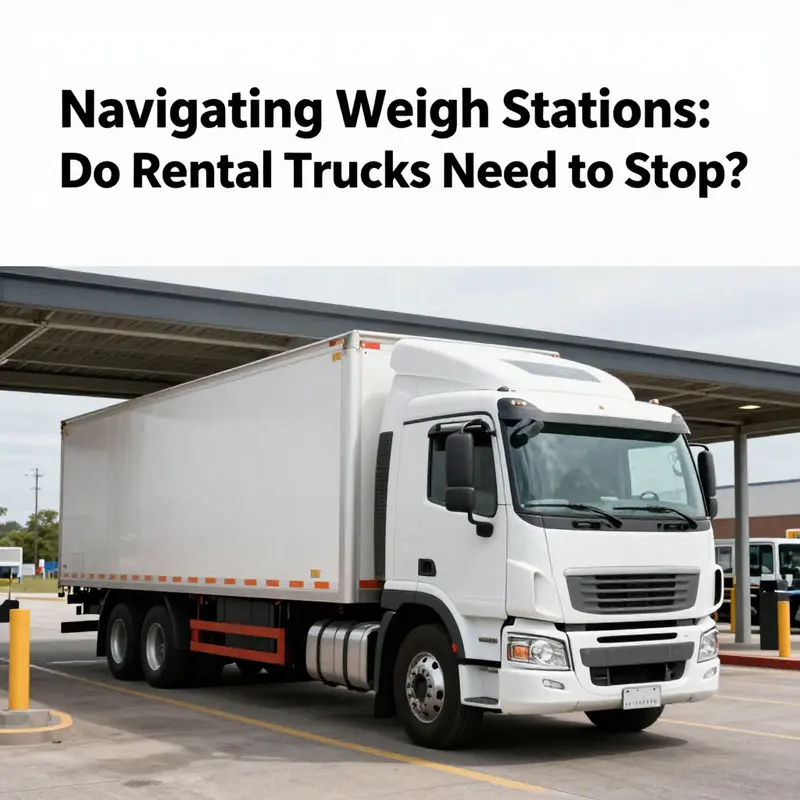
Understanding the regulations surrounding weigh stations can be crucial for business owners planning to rent trucks. The question of whether these rental trucks must stop at weigh stations can have significant implications for logistics, operational efficiency, and compliance with local laws. This article will explore the nuances of weigh stations as they pertain to rental trucks used in personal and business capacities. Each chapter will delve into essential topics, from an overview of weigh stations to the specific regulations that apply to rental trucks, the differences between rental and commercial vehicle classifications, the discretion of law enforcement at weigh stations, and state-specific regulations that could impact your planning as a business owner.
Weigh Stations and Rental Trucks: What Moves You Need to Know
Weigh Stations and Rental Trucks: What Moves You Need to Know
Weigh stations exist to protect roads and public safety by keeping heavy vehicles within legal limits. They check for overloaded axles and gross weights that cause pavement damage and can impair braking and handling. For drivers of rental trucks, especially people moving household goods, weigh stations raise practical questions: must you stop, when will you be inspected, and how do you avoid surprises? This chapter walks through the rules, the common exceptions, and simple steps to stay compliant while you travel.
At the core, most states require commercial vehicles to stop at weigh stations. The definition of a commercial vehicle depends on weight and how the vehicle is used. If a rental truck is being used for personal, non-commercial moving and its loaded weight stays below state thresholds, the driver typically is not required to enter a weigh station. These thresholds often hinge on gross vehicle weight rating, axle limits, or a specific gross vehicle weight number, commonly around 10,000 pounds in many states. But rules vary, and state or federal standards can apply differently on different roads.
Practical application starts with the truck’s rating. Every rental truck has a Gross Vehicle Weight Rating, or GVWR. The GVWR is the maximum safe weight for the vehicle, including its own weight, passengers, fuel, and cargo. A truck’s empty weight, known as curb weight, plus the weight you load determines the actual gross weight at any moment. If that number approaches the state limit for mandatory weigh-ins, you can expect to be required to pull into a station if directed.
Law enforcement and weigh station personnel also use discretion. Even a rental truck that would normally be exempt could be stopped if it looks overloaded or unsafe. A visibly sagging suspension, bulging tires, sparks from the wheel area, or poor steering can trigger a stop. Officers may also be looking for safety violations such as insecure cargo, faulty lights, or improper placarding. If an officer suspects a violation, they can require the driver to drive to a weigh station for inspection.
Technology has changed how many stations operate. Traditional weigh stations required a full stop for a static scale measurement. Modern systems use weigh-in-motion (WIM) technology. WIM allows compliant vehicles to be screened at reduced speeds without stopping. Systems like electronic screening and transponder-based programs also let eligible commercial carriers bypass scales when they have a clean compliance history. Rental trucks are rarely enrolled in these carrier programs automatically, so renters should not assume they will be cleared by automation.
Knowing how to prepare is the best defense against delays and fines. Start by checking the truck’s GVWR and curb weight on the vehicle placard. Add up the expected weight of cargo. Household items such as books, appliances, and packed boxes add weight quickly. Distribute heavy items over the axles to avoid overloading a single axle. If you tow a car or trailer, count that weight and its effect on the towing vehicle’s axle loads.
Route planning helps too. Some highways and bypasses restrict heavy trucks or maintain different thresholds. Look up state Department of Transportation pages for the states you will cross. These pages list weight limits and weigh station locations and give the status of open stations. Many states also offer mobile apps or live signage to indicate whether a station is operating. When in doubt, treat posted signs as mandatory; pull into the scale or follow the instructions from officers.
If a weigh station appears closed, do not assume it is permanently inactive. Stations close for a variety of reasons, including staffing or maintenance, then reopen. A passing officer can still require a pull-in if they have reason. Good practice is to verify status with official resources or plan a stop at a public scale or truck stop that offers weigh services before you cross a state line.
Documentation and communication can smooth a stop. Carry the rental agreement and any paperwork that explains the truck’s intended use. If you are carrying another person’s items or moving goods on behalf of someone else, understand whether that constitutes commercial activity under state law. If an officer questions the trip’s purpose, clear and concise answers help. If the truck is overweight, be prepared to redistribute cargo or make arrangements to reduce weight.
Penalties for violating weight rules vary widely. Fines can escalate with the degree of overweight, and excessive overloads may lead to orders to offload, vehicle impoundment, or temporary prohibition from continuing the trip. In some jurisdictions, the truck owner or rental company could face additional liability. For renters, this means extra costs beyond fines—towing, storage, and additional rental or postponement fees.
To avoid such outcomes, take these practical steps: weigh the truck before leaving when possible; pack with weight distribution in mind; avoid overloading the truck with heavy appliances or dense belongings without checking weights; secure cargo to prevent shifting; and know how your load affects axle weights. Many truck rental locations or truck stops can help you find a certified scale. Checking weight there gives you a chance to adjust loads before you reach a state line.
If you are pulling a trailer or using a tow dolly, remember that tow arrangements and trailers often change the combined vehicle weight and axle distributions. Towing can push a rental vehicle into a weight class that triggers mandatory inspections. Confirm the combined GVWR and ensure your hitch and tow setup are rated for the load. If you are unsure how to calculate combined weights, ask the rental provider for documentation or guidance before you depart.
Handling a stop professionally reduces stress. Pull into the designated area promptly and follow directions. Provide requested documents such as the rental agreement and driver identification. If weighed and found compliant, get a receipt or verification if available. If you are overweight and required to offload, ask about secure ways to store or transfer items. Be polite and cooperative; officers and inspectors aim to enforce laws but also to keep travel safe.
In rare cases you may wish to contest a citation. Keep records: the rental agreement, a photograph of the vehicle placard, receipts for any scales used, and notes about the inspection. Many states have appeal processes for weight citations. If you believe the weighing procedure was incorrect or your truck was improperly classified, gather evidence and use the formal appeal steps.
Finally, a word about rental company policies. Rental agreements often include weight limits and conditions of use. Exceeding those limits may void insurance coverage or transfer liability to the renter. Before you sign, confirm the truck’s GVWR and ask about any restrictions on towing. If you plan a long interstate move, consider asking the rental company for advice on scale locations and recommended routes.
For a quick guide, consider looking up a map or description of common moving truck sizes such as 16-foot models. A practical overview of a 16-moving-truck can help estimate how much cargo fits into such a vehicle and how that cargo affects weight calculations. This information can help you plan loads to stay within safe and legal limits: https://larentaltrucks.com/blog/16-moving-truck/
For official guidance on who must stop at weigh stations, and for technical details about weigh-in-motion and screening programs, consult the Federal Motor Carrier Safety Administration’s resources. They describe federal standards and offer links to state contacts and regulatory clarifications: https://www.fmcsa.dot.gov/regulations/weigh-stations
Between the Scale and the Move: Navigating Weigh-Station Rules for Rental Trucks
When a driver heads toward a new city or a long move with a rental truck, weigh stations may feel like a detour rather than a destination. They exist to protect highway safety, ensure weight limits are observed, and safeguard road infrastructure. For a rental truck, the key questions are how the vehicle is classified, how weight is measured, and how to plan a trip to minimize surprises without risking penalties. Classification plays a central role: weigh stations distinguish between commercial and non-commercial use based on vehicle weight rating (GVWR) and how the truck is used. A rental truck used for a personal move and staying under weight limits might be treated as non-commercial, but enforcement discretion may apply, and a stop may be required if there is suspicion of overload or safety concerns. The process itself is straightforward: verify weight distribution and the condition of tires, brakes, and coupling devices, with inspections aimed at preventing overload and ensuring safety, not trapping drivers. Even if a rental truck is not classified as commercial, a stop may occur if the load size, GVWR, or safety issues trigger review. From a planning perspective, many drivers treat weigh stations as planned waypoints, using preloaded points of interest to flag ahead of time. This helps adjust routes to minimize delays and stress, particularly for renters unfamiliar with a corridor. The practical guidance is simple: ensure even weight distribution, secure cargo, and verify load stability during turns and stops. If the vehicle is used for business or for-hire shipments, it is typically treated as commercial and must comply with weigh-station requirements. If used strictly for personal moves within weight limits, it may be exempt from mandatory stops, but officers retain authority to inspect any load. Documentation helps; carry a rental agreement, proof of insurance, weight certificates, or a load plan to support the vehicle’s use and weight class, and be prepared to show a logbook if requested. The broader regulatory landscape combines federal guidelines from the FMCSA with state variations; agencies set general responsibilities while state DOTs tailor rules to local networks and limits. For planning a rental-truck move, consult the regulations of each state along the route, map weigh stations, and plan rest breaks to minimize risk and disruption. Practical steps include maintaining even weight distribution, securing shifting cargo, and verifying load stability throughout the journey. A typical 16-foot rental truck is a common reference point for size, weight, and space planning, and online resources can help compare sizes and potential weight ranges. In the end, there is no single universal answer to whether rental trucks must stop at weigh stations. It depends on weight, use, and jurisdiction. Most personal-move rentals stay within non-commercial boundaries, but variations exist. The safest approach is to treat weigh stations as routine checkpoints for heavier or commercial use, plan ahead, carry documentation, and stay cooperative if asked to stop. For authoritative guidance, federal resources from the FMCSA outline weigh-station rules and enforcement, with state variations noted. See the official guidelines at https://www.fmcsa.dot.gov/regulations/weigh-stations and verify local requirements with the state DOT along your planned route.
How Weight Classes Decide Whether a Rental Truck Must Stop at Weigh Stations
Understanding weight classes matters when deciding if a rental truck must stop at a weigh station. The key measure is GVWR, or Gross Vehicle Weight Rating. GVWR is the maximum certified weight a vehicle can safely carry. It includes the truck’s curb weight, cargo, passengers, and fuel. Regulators use GVWR to sort vehicles into classes that carry distinct rules. Those classes, in turn, determine licensing, safety inspections, and whether a truck must stop at a weigh station.
Light-duty rental trucks typically fall into the lower GVWR classes. These are often the moving vans and pickups people rent for household moves. They generally sit in Class 1 through Class 3. Their GVWR rarely exceeds 14,000 pounds. Because of that, these trucks usually do not meet the state thresholds that mandate weigh station stops. That exemption applies when the vehicle is used personally and not for commercial hauling.
Commercial vehicles occupy higher weight brackets. Medium-duty trucks fall into Classes 4 through 6, with GVWR between 14,001 and 26,000 pounds. Heavy-duty trucks are Class 7 and 8, above 26,000 pounds. Class 8 covers big rigs and tractor-trailers. These vehicles carry much stricter rules. They often require a commercial driver’s license. They must stop at weigh stations in most states. Enforcement focuses on safety and protecting public infrastructure.
Weight class alone does not always determine obligations. How a vehicle is used matters too. If a rental truck is used for a fee-based freight service, for instance, regulators may treat it as a commercial vehicle regardless of its rental label. Similarly, state rules sometimes specify vehicle registration and plate type. A truck registered commercially can trigger weigh station requirements even when the truck’s GVWR sits near the threshold.
Practical identification of a truck’s GVWR is simple. Manufacturers place a label on the driver-side door jamb or door edge. The label lists GVWR, axle ratings, and payload capacity. Renters should check that sticker before loading. Payload capacity tells how much cargo the truck can legally carry once you subtract the vehicle’s curb weight. Exceeding payload or GVWR is risky. It stresses axles, brakes, and steering. It also increases the chances of a weigh-station stop and a citation if detected.
Axle limits matter as well. Weigh stations and roadside officers check both gross weight and axle weight. Even if total weight stays under a state’s threshold, overloaded axles can result in fines. Axle overloading harms bridges and accelerates road wear. Many states publish axle weight limits and formulas to calculate acceptable distributions. When loading, distribute weight evenly and keep heavy items over the axles when possible.
State thresholds vary. Some states set the mandatory stop threshold at 10,000 pounds GVWR. Others use higher thresholds or base rules on a combination of GVWR and vehicle purpose. Because of this variability, a rental truck that avoids stops in one state may be subject to inspection in another. When planning a multi-state move, verify the rules for each jurisdiction you will cross. DOT websites for each state list weigh station rules and thresholds.
Enforcement practices also differ. Weigh stations are plainly marked and operate on major highways. Many states use peak-hour or random inspections. Officers often target trucks that appear overloaded, unsafe, or improperly secured. Visual cues that can trigger a stop include sagging suspension, cargo hanging off the bed, or unsafe loading practices. Even a light-duty rental truck can be pulled over if it appears overloaded.
If stopped at a weigh station, cooperation helps. Have rental paperwork, rental agreement details, and vehicle registration ready. The officer may ask for driver identification and a statement of cargo. If the truck measures overweight, the officer will document axle and gross weights. You may receive instructions to offload cargo, redistribute the load, or arrange a permit or tow. Penalties range from warnings to fines, depending on the severity and state law.
Insurance and liability considerations are important when a rental truck crosses into higher weight classes. Standard renter insurance may not cover commercial loads or certain weight-based violations. If you plan to use a rental truck for business, confirm coverage and permissible uses with the rental company and your insurer. Failure to follow legal use terms can void coverage and shift liability to the driver.
For companies and individuals alike, knowing the difference between GVWR and payload prevents surprises at weigh stations. GVWR is a fixed number set by the manufacturer. Payload is the dynamic amount you can load after accounting for vehicle weight and passengers. Overpacking a light-duty truck is the most common mistake. Movers stack boxes and ignore the vehicle’s limits. That increases risk of an overweight stop and costly fines.
Beyond fines, there are safety risks tied to misclassification and overloading. Braking distance increases with weight. Steering and handling suffer. Tires wear more quickly and carry a higher blowout risk. Heavy loads shift unexpectedly, causing rollovers during sudden maneuvers. These hazards matter even if weigh stations do not require your stop. Law enforcement can require an unscheduled inspection if they suspect an unsafe condition.
Business use raises additional red flags. Transporting goods for hire, operating scheduled deliveries, or moving property across state lines can shift a truck’s regulatory status. Interstate commerce often triggers federal standards. That can mean registration under federal programs, more thorough inspections, and a greater chance of weigh station stops. If you operate a rental truck for business, review federal carrier rules and your state statutes.
For renters who want to avoid unnecessary stops, preparation helps. Check the GVWR sticker immediately. Estimate the total cargo weight before loading. Use scales at truck centers, transfer stations, or public scales if available. Weighing your loaded truck before entering highways with active weigh stations removes uncertainty. If your load exceeds safe limits, reduce it or choose a larger, properly classed vehicle with the correct registration and insurance.
When you are unsure about rules on your planned route, a quick call to the rental company or a state DOT can clarify obligations. Many states offer online guidance and maps showing active weigh stations. Real-time apps and trucking route planners can show weigh station locations, status, and hours. These resources reduce surprises and help you plan stops or alternate routes if needed.
Remember that a rental company’s policies also influence what you must do. Some rental agreements prohibit commercial hauling or require you to notify the company if you plan heavy or unusual cargo. Violating those terms can lead to penalties, void insurance, or legal exposure if an incident occurs. Always read the rental contract closely before hitting the road.
In short, whether a rental truck must stop at a weigh station depends on more than the word “rental.” It depends on GVWR, axle weights, how the vehicle is used, and the state rules you cross. Light-duty rental vans and pickups are unlikely to require mandatory stops. But overloaded cabins, business use, or heavier classes change that picture. When in doubt, check the door jamb sticker for GVWR, measure your load, consult state resources, and plan accordingly. Taking those steps protects you, your cargo, and the roads you travel.
For tips on planning long moves and mileage considerations that affect vehicle choice, see guidance on unlimited rental truck mileage. For authoritative federal guidance on vehicle classifications and regulatory standards, consult the U.S. Department of Transportation: https://www.transportation.gov
When Officers Decide: How Law Enforcement Discretion Shapes Rental Truck Stops at Weigh Stations
Law enforcement discretion at weigh stations matters more than many renters realize. While regulations often exempt non-commercial rental trucks from mandatory stops, officers at weigh stations retain wide authority. That authority lets them decide when a vehicle should be weighed or inspected. Their decisions protect road safety and infrastructure. They also determine whether a renter experiences a short delay or a costly citation.
Officers base that discretion on visible cues and context. A rental truck that looks small and light will usually pass without a second glance. Larger box trucks or vehicles with full cargo can resemble commercial haulers. Size alone can trigger concern. A 26-foot box truck, for example, is commonly treated like a commercial vehicle. Even a 16-foot truck can draw attention when overloaded or driven suspiciously. For quick comparisons, see practical vehicle size notes like those for a 16 moving truck.
Beyond size, the truck’s condition matters. Bad brakes, heavy sagging in the rear, or visibly unbalanced cargo signal a safety risk. Officers will stop vehicles that appear unsafe, regardless of rental status. A well-maintained truck with secure cargo reduces the chance of a stop. Tires in good shape, visible lights, and proper load distribution help too. The appearance of a vehicle tells a story at a glance, and that story often determines whether discretion is exercised.
Driver behavior also influences decisions. Drivers who seem nervous, avoid eye contact, or struggle with basic paperwork may prompt an officer to inspect further. Conversely, calm, cooperative drivers who present clear rental agreements and identification tend to move through faster. Carrying the rental contract, proof of insurance, and a current registration makes it easier to show non-commercial use. A brief explanation of the trip purpose—such as a local move—can prevent misunderstandings.
Regional policies vary and affect how discretion plays out. Some states have strict rules that require all large trucks to stop at weigh stations. Others focus enforcement on clearly commercial carriers. That means a rental truck might be forced to stop in one state but not in a neighboring one. Enforcement priorities can also shift with road conditions and budgets. During heavy construction periods or after a bridge inspection, states may intensify weight enforcement to protect infrastructure.
Officers sometimes exercise discretion driven by documentation concerns. If a driver cannot provide a rental agreement, an officer may treat the vehicle as commercial until proven otherwise. Similarly, if the truck’s license or registration appears inconsistent with private use, the stop will likely follow. Keep paperwork handy and organized inside the cab. A clear rental contract, a driver’s license, and proof of insurance answer most questions that arise at a weigh station.
Safety observations can override any paperwork. Visible loads that extend beyond the bed, cargo tied with inadequate straps, or signs of shifting freight are immediate safety flags. Officers act to prevent accidents. They will require a stop if they see unsecured furniture leaning over the tailgate, or heavy loads pushing the axle down. A quick pre-trip check helps avoid these situations and reduces the chance of discretionary stops.
When an officer does decide to stop a rental truck, several outcomes are possible. They may simply ask a few questions, glance under the vehicle, and allow you to go. They might weigh the truck to ensure compliance with axle and gross vehicle weight limits. If the vehicle is overweight, an officer can issue a citation or require the driver to shift cargo. In more serious cases, a vehicle can be placed out of service until problems are corrected. Knowing these potential outcomes helps drivers act calmly and cooperatively.
Understanding the legal line between commercial and non-commercial use is crucial. Federally, commercial motor vehicle rules apply to vehicles used for compensation or those meeting specific weight thresholds. However, state definitions and enforcement practices vary. A truck used for a paid move or freight delivery is treated differently than one used for a personal move. Clarify your use before you travel, especially if your rental trip crosses state lines.
Preparation reduces friction when discretion is applied. Secure cargo carefully and balance the load to avoid visible sagging. Check tire pressure, light operation, and brake function before departure. Keep paperwork within easy reach. If crossing multiple states, research each state’s rules for weigh stations ahead of time. Mobile apps and state Department of Transportation sites provide route-specific guidance on weigh station requirements.
If you are stopped, remain respectful and concise. Answer questions clearly. Offer documentation without volunteering extra information. If an officer asks to weigh the truck, comply. Arguing at the scene rarely helps. If you believe an inspection was unjustified, use proper legal channels later. Document the encounter, gather witness details if available, and consult the appropriate state agency or a legal professional to determine next steps.
Commercial carriers face different standards and stricter enforcement. When a rental truck is used for contracted work or paid hauling, officers will often enforce commercial rules. That includes mandatory stops in many jurisdictions. If you are unsure whether your trip could be viewed as a commercial operation, treat it like one for planning purposes. Ensure your paperwork, insurance, and vehicle condition match the higher standards.
Insurance and liability concerns also influence enforcement. A rental truck without adequate coverage creates risk for both the renter and law enforcement. Presenting valid insurance documentation reassures officers and speeds up interactions. If your coverage is limited or uncertain, contact the rental company before the trip. Clear, current insurance reduces the chance that an officer will pursue a more detailed inspection.
Finally, consider the practical side of travel planning. Weigh station stops are unpredictable when discretion applies. Build extra time into your schedule. Keep contact numbers handy, including roadside assistance and rental support. Prepare a checklist for pre-trip inspections so you avoid obvious triggers for discretionary stops. These simple steps lower the odds that an officer will need to intervene for safety or compliance concerns.
Officers use discretion to balance safety and efficiency. For renters, understanding what prompts that discretion helps avoid delays. Focus on safe loading, clear paperwork, and honest communication if stopped. When in doubt, consult the state DOT for local rules, and remember that an officer’s duty is to prevent hazards. Being prepared, cooperative, and informed turns potential weigh station encounters into routine moments rather than costly interruptions.
For authoritative guidance on who must stop at weigh stations and how federal regulations define commercial and non-commercial vehicles, consult the Federal Motor Carrier Safety Administration overview: https://www.fmcsa.dot.gov/regulations/overview
State-by-State Rules for Weigh Stations and Rental Trucks: Navigating Compliance on Your Move
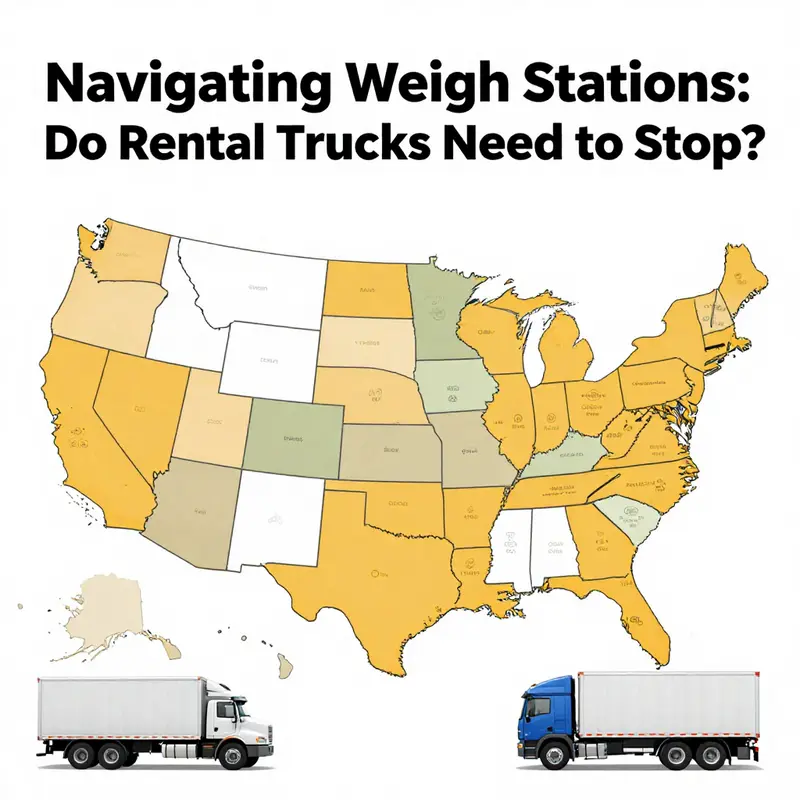
When you rent a moving truck to haul your life from one place to another, the road feels like a straightforward path to a fresh start. Yet beneath the surface, a maze of state-by-state rules shapes what you must do at weigh stations, and those rules can change what seems routine into a moment of pause and paperwork. The core question—do rental trucks have to stop at weigh stations?—is not answered by a single universal rule. It hinges on how each state views your vehicle, how much you load, and whether the trip qualifies as a commercial operation in the eyes of regulators. In practical terms, most rental trucks used for personal moves fall under non-commercial exemptions as long as they stay within weight limits and are not used for profit or large-scale freight. But “most” is not the same as “always,” and a routine cross-state move can become a sequence of checks if you stray into the gray areas that state DOTs, sheriffs, or road safety officers watch closely.
Weigh stations emerged as dedicated checkpoints to verify that heavy trucks comply with weight restrictions and safety standards. They are not universal stoppoints for every vehicle on the road. Instead, they target larger, commercial-sized vehicles whose weight and configuration pose higher risks to road surfaces, bridges, and general highway safety. The operative distinction for rental trucks is whether the vehicle, in its current configuration and use, triggers a commercial-class designation. If the truck, including its cargo, exceeds typical thresholds—often around 10,000 pounds gross vehicle weight in many states—it nudges the vehicle into a commercial category, subject to more stringent inspection requirements. When rental trucks stay below that threshold and are used for a personal move, they are frequently treated as non-commercial and may be exempt from mandatory weigh station stops. This framework is not a blanket-free pass, though. Law enforcement retains the authority to pull over a vehicle if there is a reasonable suspicion of overweight loading, unsafe operation, or other violations. In a moving-day reality, that means you could be asked to pull into a weigh station or another inspection lane if an officer believes a weight or safety issue exists, even if you technically meet the non-commercial criteria.
The nuance, then, is not whether a rental truck can bypass weigh stations in general but whether it must. Several layers shape that answer. First, state regulations differ in how they classify commercial versus non-commercial vehicles for weigh-station purposes. Some states implement a bright-line threshold that clearly places rental trucks under the non-commercial umbrella when they’re used for personal moving and stay within weight limits. Other states run more inclusive programs that require all commercial vehicles, including rental units used in a commercial sense or with specific cargo loads, to stop regardless of prior compliance history. For travelers, that means a road trip through one state may glide through the weigh station queue, while a neighboring state could demand a mandatory stop. In addition, many states have adopted flexible, technology-enabled approaches that reduce friction for safe and compliant carriers. PrePass, for instance, allows pre-cleared, non-problematic commercial vehicles to bypass traditional weigh stations, dramatically cutting delays for those who routinely operate within the rules. Weigh-in-Motion (WIM) systems also exist; these sensors embedded along highways gauge weight in real time as vehicles pass, providing data to enforcement agencies and enabling safer, more efficient traffic flow. The underlying aim is clear: to minimize unnecessary stops for compliant vehicles while ensuring safety and weight compliance for all.
Technology does not replace human judgment, but it does change how you plan a move. If your route crosses states with robust bypass programs, you may travel longer stretches without stopping, provided your rental truck is enrolled in and deemed low-risk by the state program. When a state does not offer automatic bypass, or when your vehicle’s weighting or configuration triggers scrutiny, you should expect a more routine encounter with weigh-station processing. The status of weigh stations themselves is not static; staffing, maintenance, and even weather can alter which lanes are open, which lanes are designated for trucks, and what forms of inspection are active at any given time. Modern drivers can stay ahead by verifying weigh-station status through electronic logging devices (ELD) or state-specific mobile apps designed to surface current operating conditions. Keeping an eye on these resources reduces the chance of getting caught in a bottleneck or surprised by unexpected delays that can upend a carefully timed moving day.
Within the broader regulatory framework, rental-truck operators and drivers shoulder a practical responsibility. Rental companies typically provide guidance on weigh-station expectations, but the final obligation rests with the driver and the route. The key is to know your vehicle’s weight and how your cargo converts to gross weight. If you’re renting a mid-sized box truck for a typical household move, you should be prepared to encounter state-by-state variation. Some states require all commercial vehicles, including rental trucks, to stop at weigh stations, regardless of weight or cargo type. Others implement programs that distinguish low-risk, pre-approved commercial vehicles using infrastructure like PrePass, which helps bypass stalls for those with clean inspections and compliant paperwork. The combination of weight thresholds, enforcement practices, and technology-driven exemptions creates a moving map of regulatory likelihoods you must navigate.
For drivers who want a practical, actionable approach, the most reliable strategy is to stay informed through official channels and to treat weigh stations as a potential routine checkpoint rather than a surprising hurdle. Before you depart, confirm the weight specifications for your rental truck and review any state-specific rules along your planned corridor. The official Department of Transportation (DOT) resources for the states you’ll traverse provide the most definitive guidance on inspection requirements, operating hours, and enforcement protocols. In addition, some routes benefit from road-planning tools and driving apps that incorporate real-time weigh-station data, including whether PrePass is operational in a given area and whether WIM sensors are in use along your route. By integrating these tools into your trip planning, you can reduce the risk of delays and better anticipate where you might be required to stop.
For example, when a driver confronts a weigh station, the decision to stop is not purely a regulatory formality. It is a safety gesture: to ensure the vehicle remains within weight limits, that the cargo is secured, and that the vehicle’s braking and steering systems align with road-safety expectations. The scenario is not merely about compliance but about safeguarding the move itself. If a truck is overweight, the penalties can range from fines to restrictions on travel until the load is redistributed or corrected. If safety concerns emerge—such as brake issues or tire wear—the officer may require a stop to address those issues before continuing. In this light, the weigh-station experience becomes a small but meaningful part of a broader safety culture that underpins the move rather than a punitive barrier.
To make sense of the rules and reduce uncertainty, drivers should approach each trip as a learning process that blends policy literacy with practical preparation. Begin by confirming whether the states you’ll pass through treat rental trucks as commercial or non-commercial below their defined thresholds. Then consider whether your route intersects with bypass programs or Weigh-in-Motion deployments that can alter the traditional weigh-station experience. It is also wise to remember that the status of a weigh station can change from day to day. Staffing shortages, maintenance, or weather can render a station temporarily offline or push it into a different inspection mode. Therefore, even if you’ve traveled a familiar corridor before, a last-minute regulation update can influence whether you must stop.
In the end, the practical answer remains nuanced. A rental truck used for a personal move, staying under the standard weight limits, is often exempt from mandatory weigh-station stops in many states. However, exemptions are not universal, and exceptions do occur. Enforcement discretion adds another layer: law enforcement officers may direct a stop if they have concerns about weight or safety. For those who want to stay ahead of the curve, a proactive approach is essential.
To connect this guidance with real-world resources, consider reviewing materials that discuss common rental-truck considerations and state-specific nuances. For drivers who want a quick point of reference, a move-focused overview of rental-truck dimensions and operation can be a helpful starting point. For example, the Penske 16-foot box truck page provides a practical look at a typical rental-truck configuration that many households choose for a standard move. Access the detailed discussion here through the linked resource: penske-16ft-box-truck. This page offers context about vehicle size, weight distribution, and typical load profiles that help you anticipate how your own cargo might influence regulatory considerations on your route.
When designing a cross-state move, map your route with awareness of potential weigh-station requirements. While the non-commercial exemption is common for smaller rental trucks used in personal moves, you should not rely on luck. Verify weight thresholds, operating hours, and enforcement approaches for each state, and whenever possible, plan routes that leverage bypass programs to minimize delays. Above all, stay informed: weigh-station policies are a moving target, and the best defense against disruption is current, state-specific information. This approach protects your moving timeline, your cargo, and your budget.
External resource: For a broader regulatory reference, consult the Federal Motor Carrier Safety Administration’s weigh-station guidelines, which outline who must stop, how inspections are conducted, and how commercial status is determined across the country. https://www.fmcsa.dot.gov/regulations/weigh-stations
Final thoughts
In summary, while rental trucks generally aren’t required to stop at weigh stations unless they surpass certain weight thresholds, specific regulations and law enforcement discretion can affect this. Business owners must remain vigilant about understanding and complying with local laws and regulations to avoid potential fines and ensure safe operations. Knowledge of how weigh stations function and the classification differences between rental and commercial vehicles can significantly enhance your logistical planning. Always check with local authorities or relevant transportation departments to stay informed on the most current regulations affecting your rental truck use.