
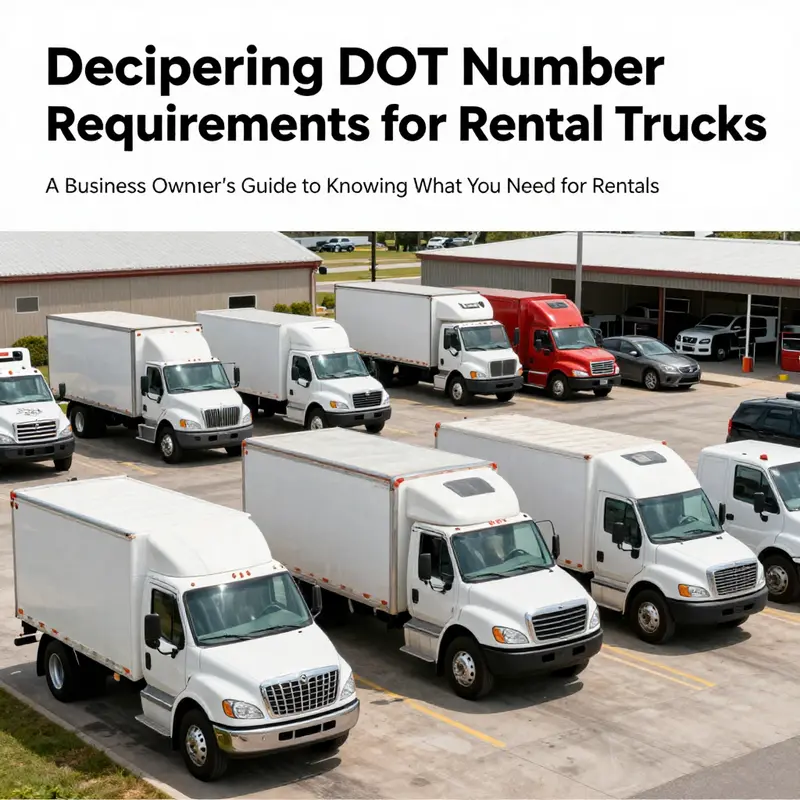
Understanding DOT number requirements is crucial for business owners who rely on rental trucks for their operations. A DOT number can dictate whether your rental experience is smooth or fraught with regulatory challenges. In this guide, we will navigate the specifics of when a DOT number is needed based on factors like vehicle weight and use. Each chapter will illuminate critical aspects, from the nuances of personal versus commercial use to the implications of interstate commerce regulations. Equip yourself with knowledge to ensure compliance and enhance your business efficiency.
DOT Numbers and Rental Trucks: Decoding the 10,000-Pound Threshold for Personal Moves and Business Use
When people rent a truck to move their possessions, a common question emerges from the clutter of GVWR labels, insurance certificates, and logistics plans: do I need a DOT number? The short answer is nuanced, because federal requirements hinge on how you use the vehicle, not merely its size. The key to clarity lies in the distinction between personal moves and commercial work, and between intrastate and interstate activity. A rental truck can be a straightforward tool for a home relocation, or it can be the backbone of a business operation that transports goods for others. Understanding where you stand on that spectrum helps you stay compliant without paying for a registration you don’t need. At the heart of the matter is a basic threshold: 10,000 pounds gross vehicle weight rating, or GVWR. For many homeowners and small one-off moves, a truck under that weight usually falls outside the DOT numbering regime. But once the operation crosses into commercial use or reaches or exceeds that weight, the regulatory terrain tightens considerably. This is not a tailor-made decree from a single agency; it’s a weave of definitions and rules from the Federal Motor Carrier Safety Administration (FMCSA), guided by how you use the vehicle and where you operate. The simplest way to approach the question is to picture two paths that converge at the same road: a for-hire carrier and an exempt private carrier. A for-hire carrier rents trucks to transport goods for compensation. In this case, a USDOT number is typically required, regardless of fleet size, because the operation is treated as a commercial transport enterprise. The USDOT number acts as a unique identifier, linking the business to safety records, insurance, and compliance data. FMCSA specialists often describe the USDOT number as the license to run a regulated commercial operation, a safeguard that promotes accountability and enables the nationwide tracking of safety performance. It’s not about the vehicle alone; it’s about the activity you’re conducting and the risks you assume when you move other people’s cargo for profit. If your moving plan is strictly personal—moving your own belongings and not offering transport services to others or charging a fee—your operation may fit the category of an exempt private carrier. Exempt means you’re not operating as a commercial carrier under FMCSA rules that demand a USDOT number; however, this exemption is not a blanket pass for all regulatory obligations. Even if you don’t register with FMCSA, other requirements can apply. Insurance, safety inspections, and vehicle maintenance standards could still be relevant to the operation, particularly if the rental truck is used in a way that touches on public safety or commercial activity. When you’re sorting through these rules while standing in a rental lot or staring at a GVWR spec, the weight threshold is a useful compass. In many rental catalogs, a standard moving truck comes in at or below the 10,000-pound GVWR line, a sweet spot for personal relocation. But as soon as the vehicle’s organization changes—if you start transporting goods for hire, if you begin operating across state lines, or if your payload pushes you past that GVWR threshold—the DOT number question becomes salient, and sometimes urgent. The interstate commerce facet is another layer to consider. Interstate operations, by definition, cross state boundaries. If your rental activity involves moving goods across state lines for compensation, FMCSA rules apply more explicitly, and a USDOT identifier becomes a central piece of compliance. The practical implication is that a rent-turned-business operation may need to transition from a private, exempt stance to a regulated one, with the associated paperwork, insurance, and safety compliance obligations. It can feel like a lot of paperwork, but the system exists to ensure accountability across thousands of small logistics activities that, collectively, carry meaningful safety and consumer-protection implications. For many readers, the most immediate, tangible guidance is practical: ask the rental company about DOT requirements before you sign the agreement. The rental agent can confirm whether your planned use triggers a DOT number, and many rental outfits will help you interpret the specific scenario—personal move, small business delivery, or something in between. This is not just a formality. The rental company’s policy can reflect FMCSA guidance, state-specific nuances, and insurance constraints tied to the vehicle’s GVWR and intended use. If there’s any doubt, you’ll want to check with the FMCSA directly or with a compliance expert who understands how the rules apply to rental truck operations. The FMCSA website provides a definitive map of eligibility, guidelines, and the application process for a USDOT number. A practical way to approach this is to imagine your operation as a narrative: are you moving your own cargo for personal purposes, or are you moving goods for business and collecting payment? The moment the answer leans toward compensation or commercial transport, you’re entering the territory where a USDOT number is commonly required. The relationship between GVWR and the DOT requirement also deserves emphasis. In many cases, a truck with a GVWR under 10,000 pounds used for personal moving may not need a USDOT number. But if you’re renting a larger vehicle, or if the vehicle is used for hire to transport goods for another party, you should anticipate the possibility of DOT registration. This is especially true when interstate transport is involved, as federal oversight becomes more pronounced. It’s important to understand that even when DOT registration is not required, other regulatory obligations may still apply. Insurance requirements, vehicle safety inspections, equipment standards, and driver qualification considerations can play a role in ensuring the operation is conducted safely and legally. The practical approach is to treat DOT requirements as a matter of compliance rather than a hurdle to overcome. By clarifying how you intend to use the rental truck and where you will operate it, you can map out the steps needed to stay within the law. For readers who want to visualize typical rental truck configurations, the 16-foot truck is a common option for moderate moves and small business tasks. If you’re considering this size, you can explore its dimensions and capabilities in more detail here: 16-foot truck. This contextual reference helps ground the regulatory discussion in a real-world image of what you might be driving and the payload you might carry. Yet even a familiar vehicle size does not automatically settle the DOT question. Each rental agreement can have unique terms that touch on compliance, insurance coverage, and driver qualifications. The safest path is to treat the DOT issue as an essential due-diligence item rather than a box to be checked late in the process. In situations where you’re renting for personal use and the vehicle remains below the GVWR threshold, you’ll typically be free of USDOT numbers. But this does not absolve you from maintaining proper insurance coverage, ensuring the vehicle meets safety standards, and following state and local rules for vehicle operation and licensing. If your move expands into a business activity, or you begin offering transport services for compensation, you’ll want to revisit the need for a USDOT number and ensure you meet all FMCSA prerequisites. The process of obtaining a USDOT number is laid out on the FMCSA portal, and it involves providing basic information about your business, the nature of the transportation service, and details about insurance. A typical step-by-step guide can be found on the FMCSA site, and consulting a compliance expert can help tailor the steps to your specific scenario. Beyond the DOT question, the broader takeaway is to maintain clarity throughout your planning. Confirm the vehicle’s GVWR, review the rental agreement for any regulatory notes, assess whether your operation will involve compensation, and verify interstate vs. intrastate operation. If you’re moving your own belongings, aim to keep your plan within the non-commercial, private carrier pathway. If you aren’t certain, ask the rental representative for a written policy statement or seek an FMCSA clarification. The overhead of compliance can feel heavy at first, but it becomes a matter of protecting yourself, others on the road, and your investment in the truck and cargo. And if you ever decide to expand into a commercial service, you’ll already have a framework in place to pursue USDOT registration with the necessary insurance and safety program support. For readers who want additional practical references, the FMCSA DOT Number Registration page serves as the authoritative source for eligibility, application steps, and required documentation. External resources, however, should be approached with the same careful due diligence you apply to any regulatory decision. External resource: https://www.fmcsa.dot.gov/regulations/dot-number-registration
Weight, Regulation, and the Rental Truck Dilemma: Do You Need a DOT Number for Your Move?
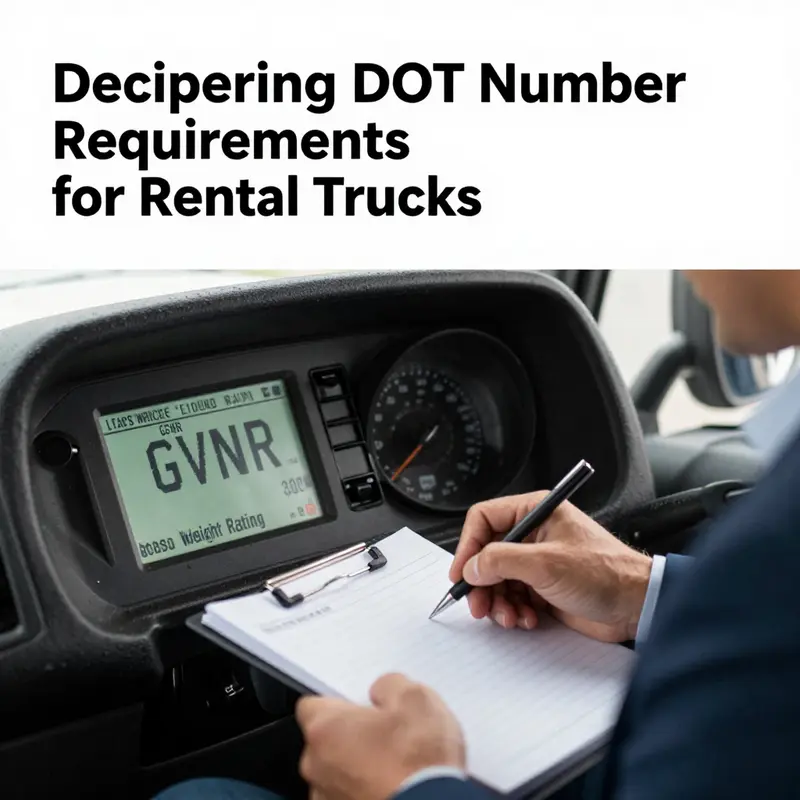
When renting a truck to move, the question of whether you need a DOT number hinges on weight, use, and travel. A GVWR of 10,001 pounds or more in interstate commerce typically makes the vehicle a CMV, requiring DOT registration with FMCSA. If used only for a private move within one state and the GVWR is under 10,000 pounds, a DOT number is usually optional. However, hazardous materials or seating more than eight passengers triggers DOT requirements regardless of weight. The line between personal and commercial use matters; always verify with the rental company and consult FMCSA guidance. The practical decision points are: check the GVWR on the label; determine whether your use is interstate or commercial; confirm with the rental agency about any additional paperwork or insurance. If in doubt about crossing state lines or handling hazardous materials, seek FMCSA or official DOT resources. Non-compliance can result in fines and complications with insurance. Renters should plan accordingly: identify GVWR, confirm with the rental company, and consult FMCSA resources. Rental fleets often stock heavier trucks for business tasks, which increases the likelihood of DOT considerations. If you are moving for personal use with a lighter vehicle, DOT registration is typically not required; otherwise, be prepared for possible requirements. For authoritative guidance, visit the FMCSA DOT-number requirements page.
null
null
Crossing State Lines Without a Hitch: DOT Number Realities for Rental Trucks
Planning a move or coordinating a small business haul with a rental truck often begins with a practical question: do I need a DOT number? The answer hinges on a few legal thresholds and how the vehicle will be used. It is not the kind of question that benefits from a scattershot approach or a string of generic cautions. Instead, it deserves a clear, convergent explanation that helps you decide early in the process how to proceed, so you can avoid delays, fines, or last‑minute changes to your plan. In the simplest terms, the federal requirement centers on two elements: what the vehicle weighs and how it is employed across state lines. If you are moving your own belongings with a truck that weighs less than 10,000 pounds gross vehicle weight rating (GVWR), you generally do not need a DOT number. This regional and personal-use scenario is where the typical rental experience falls for many people, and most rental companies will honor that distinction without requiring a DOT registration. But the moment the operation crosses into commercial use or the vehicle is heavier than the threshold, the landscape shifts dramatically. The DOT number becomes a symbol of federal oversight, a permission slip of sorts that’s tied to how the vehicle is used rather than merely who is driving it.
Understanding why the threshold exists helps you see the logic behind these requirements. The Department of Transportation traffic safety and regulatory framework is designed to monitor vehicles that carry goods for hire, operate across multiple states, or pose unique safety concerns due to their size. The Federal Motor Carrier Safety Administration, or FMCSA, lays out the criteria that trigger DOT numbering. A DOT number is typically required for any motor vehicle used in interstate commerce that has a GVWR of more than 10,001 pounds, is designed to transport more than eight passengers for compensation, is designed to transport more than 15 passengers not for compensation, or is carrying hazardous materials in quantities requiring placarding. In practical terms, this means that when a rental truck is part of a commercial operation or a business transaction that spans state lines, the vehicle may be subject to federal safety regulations and record-keeping requirements that go well beyond what a private mover might encounter.
For many renters, the most common scenario sits in a gray zone: a vehicle that weighs more than 10,000 pounds but is used strictly for a single, personal moving job within one state, or for a private transfer of goods not tied to a business. In that zone, the DOT number is not automatically necessary, but the exact status can depend on how the rental company classifies the load, the intended use, and the state laws that apply to your route. The nuance is important because the same physical vehicle can present different regulatory obligations based on how it is used. If the move involves crossing state lines, or if the operation is commercial in nature—meaning it is performed for payment, with a business purpose, or with an extended fleet use—the federal rules can apply, even if the truck is rented rather than bought by a carrier. In those cases, you may be required to obtain a DOT number and to comply with FMCSA regulations on maintenance, driver qualification, hours of service, and record-keeping.
The practical takeaway is straightforward but essential: know the GVWR of the rental truck you plan to use and be clear about whether your activity qualifies as interstate commerce. GVWR is typically listed on the truck’s door placard, in the owner’s manual, or sometimes in the vehicle specifications provided by the rental company at the time of booking. If your plan is a personal move with a truck under 10,000 pounds GVWR, you can reasonably expect to proceed without a DOT number. If you anticipate transporting goods for a business, or if the vehicle will cross state boundaries, you should treat the DOT question as a live one and verify the requirements before you sign the rental agreement. This is not a test you want to fail in the field, where enforcement can involve fines, penalties, or operational restrictions that disrupt your schedule.
Rental truck operators themselves may have their own policies that conform to FMCSA guidance but also reflect practical considerations on the ground. Some fleets that regularly handle interstate routes may require customers to acknowledge whether the operation will cross state lines or involve a commercial load. Others may advise that a DOT number is not needed for certain GVWR ranges but still require additional documentation, insurance disclosures, or driver qualification information. In any case, the safest approach is to confirm in advance with the rental provider and cross-check your specific scenario against FMCSA criteria. This proactive step helps you avoid surprises at the pickup location or during your trip. If you are unsure, frame a simple, direct question to the rental desk: Will this rental require a DOT number given the vehicle’s GVWR and the intended use across state lines?
As you weigh your options, consider how the rules translate into everyday planning. If the vehicle you’re considering is a common moving workhorse like a box truck or a straight truck with a GVWR well above 10,000 pounds, you should anticipate the possibility of DOT-related requirements. On the other hand, a smaller rental that remains within a single-state boundary, used strictly for personal belongings, is far less likely to trigger such oversight. The key factor is not the date on the calendar or the rental rate but the combination of GVWR, usage, and geographic scope. When these elements point toward interstate commerce, you are entering a regulatory space where DOT registration and FMCSA compliance become relevant, and skipping them can lead to enforcement actions or the need to reroute the plan entirely.
For renters who want a concrete starting point, it helps to know where to look for guidance. The FMCSA site is the official resource that lays out the criteria for DOT numbering and interstate commerce. Always verify your interpretation against that guidance, and if questions remain, ask the rental firm to provide a written statement on how they classify your planned use. Keeping the conversation transparent from the outset saves time and avoids friction at the counter. In the meantime, you can further ground your planning by consulting practical references that discuss truck sizes and configurations. For example, when evaluating a rental option, consider whether the truck you’re eyeing fits a typical personal-move profile, such as a shorter, lighter vehicle that is easier to maneuver and less likely to call forth DOT considerations. If you need a quick, tangible reference to a common rental vehicle type, you can review specific vehicle specifications for a 16-foot truck, which often serves as a middle-ground choice for apartment moves or smaller households. You can read more about that size at this resource: 16-foot-truck.
In practice, the path to clarity is a simple sequence of checks. First, confirm the GVWR of the rental truck you intend to use. Second, determine whether the move or operation crosses state lines and whether there is a commercial aspect to the load. Third, discuss with the rental company whether a DOT number is needed for your particular plan and request written confirmation if possible. Fourth, review FMCSA guidance to understand the scope of any additional requirements that might apply to the driver, the vehicle, and the routes you intend to cover. Finally, document everything you determine and keep a copy of the response from the rental company as part of your move planning records. This approach minimizes ambiguity and helps you stay compliant without overcomplicating a straightforward rental transaction.
The importance of aligning your expectations with regulatory realities cannot be overstated. A DOT number is not a badge for every rental truck, but it is a signal that the vehicle is part of a broader regulatory framework when used in specific ways. When your use remains personal and the GVWR stays under the critical threshold, the paperwork is minimal and the move proceeds with fewer regulatory hurdles. When the use shifts toward commercial purposes or interstate travel with a heavier truck, the DOT number becomes a regulatory necessity, and the consequences of noncompliance can ripple through your planning, insurance coverage, and even your eligibility to operate that vehicle in certain contexts. This is not merely a bureaucratic hurdle; it is a safety and accountability framework designed to ensure that trucks carrying loads across borders meet consistent standards for maintenance, driver qualifications, and safety practices.
In sum, whether you need a DOT number for a rental truck depends on the precise mix of vehicle weight, use, and geography. A personal move with a light-to-midweight truck, confined to a single state, is typically exempt from DOT numbering. A commercial use, heavier vehicle, or interstate operation triggers FMCSA requirements, and the rental provider will likely flag this for you. When in doubt, start with a clear evaluation of GVWR, then confirm with the rental company and consult the FMCSA guidelines to verify that your interpretation aligns with federal expectations. By approaching the question with a practical, step-by-step mindset, you can keep your move or operation compliant and focused on the task at hand rather than chasing paperwork. For official information, refer to the FMCSA guidelines at https://www.fmcsa.dot.gov.
External resource: https://www.fmcsa.dot.gov
DOT Numbers and Moving Trucks: Decoding When Rentals Enter the Regulatory Field
When you rent a moving truck, the question of whether you need a DOT number often feels like a technical trap that nips at the edges of a simple move. In truth, the answer hinges on how you plan to use the truck, how much it weighs when fully loaded, and whether you will be moving goods across state lines for compensation. Understanding these criteria not only saves you from potential fines but also helps you coordinate with the rental company so your move goes smoothly. At center stage is the gross vehicle weight rating, or GVWR, a specification that manufacturers attach to every truck. The FMCSA uses a threshold of 10,001 pounds or more to determine when a vehicle enters the realm of interstate commerce regulation. If your rental truck exceeds this weight and you intend to transport goods across state borders, you are likely operating under a regime that requires DOT clearance. Conversely, if your move is strictly personal, you are usually far from needing such registration, provided the GVWR stays below that critical line and you stay within a single state’s boundaries. Yet the nuances matter because real-world moves rarely stay perfectly within one lane of regulation, and rental fleets come with their own policies about who must bear responsibility for compliance.
A practical way to picture this is to think of GVWR as the maximum safe weight the vehicle is designed to carry, including passengers, cargo, and fuel. It is not the weight of the truck when it rolls off the lot, but the ceiling that governs how the vehicle can be operated under federal rules. A truck of modest size, say a typical personal moving trailer, often lands below the 10,001-pound line. In that zone, most rental companies will not require a DOT number for a noncommercial move. The journey from “do I need a DOT number?” to “how do I legally move goods for hire?” becomes clearer once you confirm two things: the actual GVWR of the truck you plan to rent and the nature of your use. If you intend to relocate personal items or furniture and you do not plan to transport goods commercially, you are most likely in the clear—so long as the GVWR remains under the threshold and you stay within a single state.
If, however, your purpose shifts toward commerce—delivering goods for hire, running a one-off business move, or using the truck to support interstate commerce—then the federal framework tightens. The FMCSA’s requirements kick in for any commercial vehicle used in interstate commerce with a GVWR of 10,001 pounds or more. In practice, this means that a rental truck used to shuttle products across state lines needs to be registered as a motor carrier with the DOT, and the company that owns or leases the truck may also need to carry appropriate operating authority, maintain records, and ensure compliance with safety rules. The key point for renters is that the regulatory label attaches to how the vehicle is used, not merely to the vehicle’s presence in your driveway. If you are paid to move goods across borders or to deliver for a business, you may be stepping into a realm that requires a DOT number, even if you are not the business owner yourself.
The landscape becomes a little more intricate when you consider the roles of rental companies versus individual renters. Rental fleets that exceed the 10,001-pound GVWR threshold and that participate in interstate service operate as motor carriers under FMCSA rules. This means the companies must register their fleet, keep certain records, and comply with hours-of-service provisions, driver qualification standards, and safety regulations. The financial and legal consequences of noncompliance can be significant, including fines and potential enforcement actions. For rental outfits, the responsibility to verify the weight class of each vehicle and to confirm its use in interstate commerce is part of the operating model. They may preemptively require renters to sign agreements that place the onus of regulatory compliance on the rental company’s authority rather than the individual’s; or they may require the renter to ride under the company’s motor carrier authority for the duration of the lease if the move crosses state lines or involves commercial transport.
For individuals renting trucks, the line is about use as much as weight. If you are transporting goods across state lines for compensation, expect DOT-related requirements to surface, sometimes even if you are not a registered business. Law enforcement and inspections can probe commercial use, and the vehicle’s status—if it is part of a motor carrier’s fleet—may trigger scrutiny. The best practice is to be explicit with the rental agent about your planned use. If your plan involves interstate delivery or commercial transport, you should anticipate questions about your intended operations and be prepared to demonstrate how the vehicle will be used. This is not simply a formality. It is a check that helps ensure you and the rental company stay on the right side of federal regulations while you complete your move.
To keep all movers informed, many readers will find it helpful to reference practical guidance when planning a rental. Consider a widely used option in the rental truck landscape, such as a 16-foot model that balances cargo space with manageable maneuverability for residential moves. For readers curious about this particular size, there is a dedicated overview you can consult: 16-foot truck article. This reference can help you visualize the kind of vehicle you might be considering and remind you to check the GVWR label on the vehicle you plan to rent. The GVWR label, often found on a door jamb or near the driver’s seat, is the quickest way to confirm which regulatory lane your move will traverse. If you find the GVWR at or above 10,001 pounds, you should approach the rental process with extra diligence, clarifying whether your intended use would be treated as interstate commerce and whether the rental company will operate under its own DOT authority for that vehicle.
In practice, the decision path is not a single hinge but a small set of checks. First, verify the GVWR of the truck you plan to rent. If it sits below 10,001 pounds, a DOT number is generally not required for personal moves within one state. If you anticipate crossing state lines or delivering goods for hire, that assessment changes. Second, assess your intended use: personal relocation or household moves versus commercial transport for hire. If the latter, then even if you are renting for a personal user’s reason, the commercial use of the vehicle could trigger DOT considerations. Third, talk directly with the rental company. They can tell you whether their fleet requires DOT numbers for the vehicle you plan to rent and whether they will permit you to operate under their authority. Fourth, confirm the regulatory framework that will govern your particular move by consulting FMCSA guidance. The FMCSA’s rules are the backbone of interstate trucking regulation and provide the definitive answers about registration and compliance. While most small moves stay within the personal-use corridor, it remains prudent to perform these checks, especially if you are renting a larger truck or if you foresee moving goods for multiple destinations or clients.
The practical upshot is straightforward: a DOT number is required for any rental truck with a GVWR of 10,001 pounds or more used in interstate commerce. Rental companies must register their fleets and comply with FMCSA regulations if they operate as motor carriers. Renters with commercial interstate plans should be aware that they may need to operate under the carrier’s DOT authority, or in some cases, the rental company may require them to obtain or coordinate the necessary registrations for the period of the lease. Even if your goals are modest, the possibility of moving across state lines with a business objective introduces regulatory complexity that is best addressed before you sign the rental agreement. Be proactive: confirm the vehicle’s GVWR, clarify your use case with the agent, and plan for compliance from the outset so there are no surprises on moving day.
For a quick, memorable reference, keep in mind four core takeaways: first, a DOT number is required for any rental truck with a GVWR of 10,001 pounds or more when used in interstate commerce. Second, rental companies that operate as motor carriers must register their fleets and adhere to FMCSA regulations, including record-keeping and safety obligations. Third, renters using trucks for commercial purposes across state lines should ensure compliance, even if they lack a formal business entity. Fourth, always verify the specific use case and the vehicle’s weight to determine whether a DOT number is needed. To stay compliant, consult the FMCSA website for official guidance, and if you want to read about the practicalities of choosing a truck size for a given move, refer to the resource linked above and explore the related topics on the site.
External resource for official guidance: https://www.fmcsa.dot.gov/.
Final thoughts
Navigating DOT number requirements for rental trucks can significantly influence business operations and compliance. By understanding the intricacies of vehicle weight, intended use, and interstate commerce regulations, you can avoid potential complications and ensure a seamless rental experience. Keeping informed allows business owners to make wise decisions, ensuring that their transport needs align with legal requirements. Whether you’re moving personal items or operating a commercial venture, knowing the rules is a critical step toward efficient logistics.