
For many business owners, finding an efficient and cost-effective way to handle logistics is essential. One of the best ways to tackle this is through truck rentals, which provide the necessary flexibility and resources. Home Depot has established itself as a reliable option in the truck rental market, offering a variety of vehicles suited for various business applications. This guide will delve into Home Depot’s truck rental pricing, exploring their rates and what you can expect to pay over different durations. We’ll also cover the deposit requirements and any additional costs you might encounter. The insights from each chapter will equip you with the knowledge to make informed decisions for your business’s transportation needs.
Understanding Home Depot Truck Rental Pricing: What Affects the Final Bill
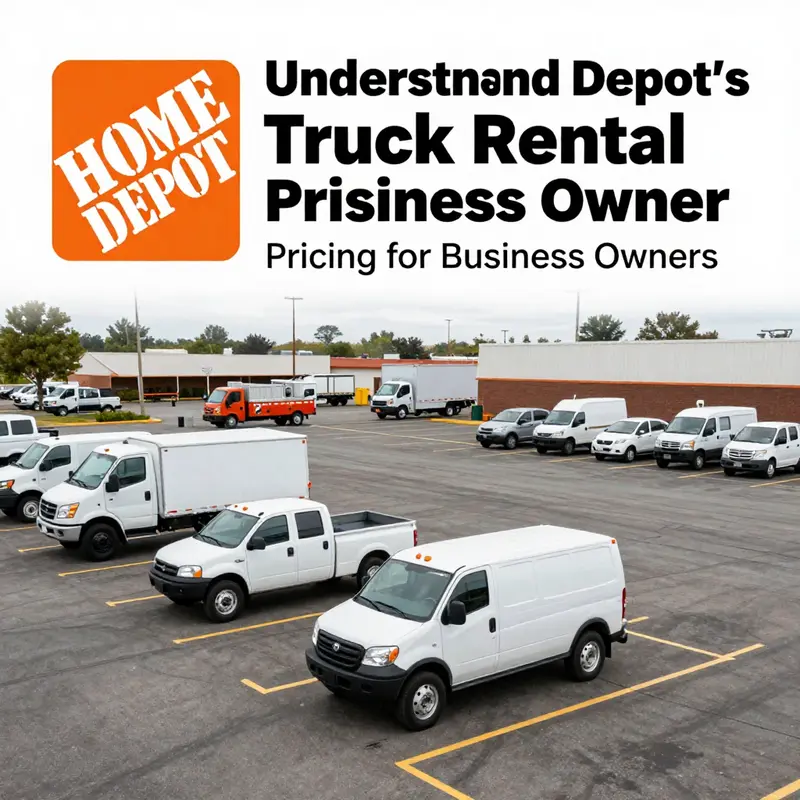
Home Depot truck rental pricing blends a base daily rate with mileage, fuel, optional protection plans, and a refundable deposit. The exact numbers vary by store and vehicle size, and regional demand can lift or lower the daily rate. In practice, smaller box trucks often fall in the mid to upper teens per day, while larger 26-foot trucks sit in a higher range. Mileage is typically charged for miles driven beyond an included daily allowance, and fuel costs apply if the tank is not returned at the same level. Insurance or protection options add to the daily cost if you opt in. A refundable deposit is collected at pickup and returned at checkout if the vehicle is in good condition. Promotions such as free delivery on qualifying purchases can offset rental costs, especially on large home improvement orders. Because pricing can differ by location, the best approach is to check the local store page or contact the store for an exact quote for your dates and truck size.
Timing, Tiers, and True Cost: Decoding Home Depot’s Truck Rental Durations and Fees
When you plan a move, a renovation project, or a cleanout that involves hauling bulky items, the choice of a rental truck becomes a practical hinge on your timetable and budget. The way a store prices its trucks, how long you can keep the vehicle, and what you pay up front all shape the total cost more than many people expect. With Home Depot offering a range of vehicles and a tiered pricing system, understanding the core structure can save you from overbooking time or overpaying for a short job that could have been done with a smaller vehicle or a shorter rental window. The fleet includes flatbed pickup trucks, cargo vans, and box trucks, each serving different needs. The box truck, in particular, is notable for its sizable 515 cubic feet of space, which makes it a strong candidate for someone moving the contents of a one- to two-bedroom home. The size matters not just for space but for cost and practicality: a box truck that offers more room can reduce the number of trips, which might translate into a lower overall cost if you factor in labor, time, and fuel. The decision is rarely about one factor alone; it’s about how the duration of use, the type of job, and the rental terms align with your plan and your budget.
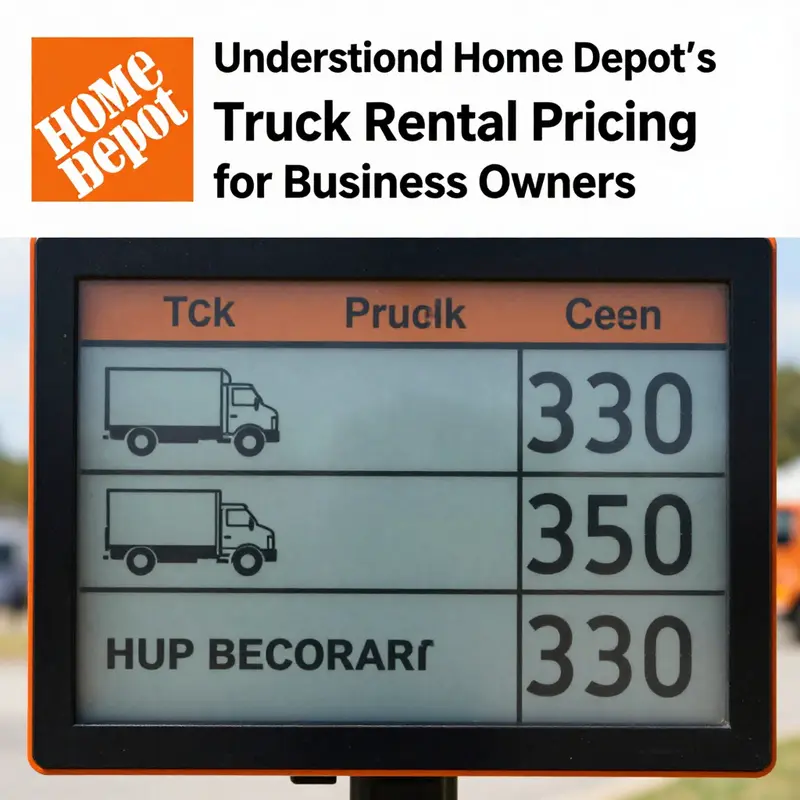
Pricing carries several layers that can influence the total. At the outset, Home Depot uses an initial block of time that is charged at a set rate depending on the vehicle type. For the box truck, that first block—the initial 75 minutes—costs $29. This is a concrete entry point that gives you a defined window to begin the job without immediately escalating to the higher hourly rate. For pickup trucks and cargo vans, the equivalent initial block is priced at $19. After that first block, the pricing reverts to what is described as the standard hourly rate. While the exact hourly rates after the initial period aren’t published in a single universal figure for all stores and vehicle types, the pattern is clear: you’ll switch from a promotional-like first window to the regular hourly charges that apply to the vehicle you are using. If your move or project runs longer than the initial period, you’ll want to estimate how many extra hours you’ll need and how those hours add up against the daily or weekly options.
The same box truck that starts with a $29 for the first 75 minutes also presents a daily rate of $139 if you decide to keep the vehicle for a full day. That daily option can be particularly advantageous when your work spans a day’s worth of trips, especially if you’re coordinating multiple runs within a single day and want a predictable price for planning. The weekly rate, often the most economical choice for longer projects, is $973 for a box truck. A week’s rental reduces the per-day cost and can be a smart strategy if you are moving a substantial amount of furniture or conducting a number of trips across several days. In practice, this creates a cost framework where you compare a few variables: the number of trips you anticipate, the time each trip will take, and whether a multi-day plan could replace repeated hourly charges with a single flat weekly fee.
No matter the duration, one constant stands out: a refundable deposit of $150 is required for all rentals. That security holds until the vehicle is returned in the same condition as when you took possession. The deposit policy is a common safeguard that helps the rental provider cover potential damage or excessive wear, and it’s a cost you should anticipate even if the trip itself looks straightforward. The return process matters here as well; when you bring the vehicle back with its interior and exterior in good order, the deposit is fully refundable. This means that while the upfront cash outlay is real, the final tally for a well-planned job could come back down once you recover the deposit.
An important nuance exists beyond the explicit price tags: Home Depot may offer free delivery under certain conditions. This can function either as a separate savings or as a substitute for renting a truck if your order qualifies. The premise is straightforward: sometimes the project can be supported by Home Depot’s delivery service, which saves you the trucking costs and the time spent picking up and returning a vehicle. If free delivery applies to your order, that can tilt the decision toward opting for delivery instead of a rental, particularly for larger moves where the truck rental might otherwise occupy a sizable portion of your budget. This possibility is a reminder that the true price of a job rarely rests on a single line item. The overall value is shaped by how the different services integrate with your plan and how the logistics unfold in practice.
To think through the practical implications, consider the common scenarios people face when renting a truck for a move or a heavy-haul project. A single-bedroom move can be well served by a box truck from Home Depot, especially if the move happens over a weekend or a couple of days when you’re on a tight schedule. The box truck’s ample space makes loading simpler and fewer trips can mean less time behind the wheel, fewer opportunities for delays, and a smoother day overall. If you can time your tasks so the initial 75-minute window covers a large portion of the loading, you’ll minimize the chance that hourly rates kick in and push costs beyond what you anticipated. Conversely, for a smaller or more straightforward job, a pickup truck or cargo van could be the more economical choice, particularly if your need is to shuttle a handful of large items rather than an entire household.
The financial logic comes full circle when you map your plan against the vehicle’s capacity. A 515-cubic-foot box truck supplies a comfortable buffer for a one- to two-bedroom move, which means you could consolidate the relocation into fewer rounds. That can save time and reduce the risk of weather delays or scheduling conflicts. The box truck is especially well-suited for bulky items like mattresses, dressers, and sizable sofas, which might otherwise require multiple trips in smaller vehicles. The decision hinges on two questions: how much space do you truly need, and how long will you be behind the wheel? The answers will determine whether the daily or weekly rates are a smarter buy than stacking up hourly charges across several days.
Because the initial 75-minute block already incorporates a tangible charge for the box truck, many planners lean toward maximizing that window. A practical approach is to build a brief schedule that fits within the first block and then assess whether the job will spill into a second block or require a full day. If the load is substantial, a daily plan might be more predictable and could avert the risk of running into higher incremental hourly costs after the initial window. If your task is time-critical, you may consider the weekly rate; on the surface it appears to be a good value for a multi-day project, but you’ll need to be confident you can use the truck consistently for the entire period without overlapping other obligations. In any case, the deposit remains a constant, and you should factor it into your overall budgeting as a recoverable but temporary reservation that ties up cash until the truck is returned in acceptable condition.
One aspect of the rental that many buyers underestimate is the administrative and logistical overhead. The process at a Home Depot location typically involves verifying your license and credit card, confirming the vehicle type and location, and coordinating pickup and return logistics. The local store’s policies can influence the exact hourly rate after the initial period, as well as any additional fees that might apply for mileage, fuel, or extra equipment such as dollies or loading ramps. While the core pricing structure gives you a framework, the specifics can vary by store and region. That is why the most reliable way to anchor your plans is to check the official Home Depot truck rental page or contact your local store for a precise quote that reflects the current availability and any local terms. In other words, use the numbers as a guide, but verify the day-of arrangements to avoid sticker shock when you arrive to pick up the truck.
If you want to compare options as part of a broader moving plan, you can also explore related resources that discuss truck sizes, typical costs, and how to optimize a move with the right vehicle. For a practical reference on how different vehicle sizes fit common cargo loads, one can consult a compact option such as a 16-foot truck and its usage guidelines. A convenient starter reference is the dedicated guide to a 16-foot truck, which can be found here: 16-foot truck rental guide. This internal link provides context about the capacity and maneuverability of a midsize rental that often lands in the sweet spot for small-to-mid-sized moves, offering a contrast to the box truck and helping you visualize how much space you actually need for your items.
As you plan, remember that the best price is not simply the lowest sticker price. It is the price that aligns with the time you need the vehicle, the distance you will drive, and the amount of labor you can cut by having the right tool for the job. If your project is time-sensitive, verify whether the free-delivery option could overlap with or replace a rental, and weigh that against the convenience of driving to a store, loading, and returning the vehicle. On the flip side, if you have a flexible schedule and can consolidate trips effectively, the combination of a box truck’s spacious interior and a properly staged loading plan can minimize the number of miles driven and the hours billed, potentially yielding the best overall cost despite the higher upfront per-hour rate after the initial window.
In sum, Home Depot’s truck rental pricing is structured to accommodate a broad spectrum of moving and hauling needs. The box truck offers substantial capacity with a clear price ladder: $29 for the first 75 minutes, followed by standard hourly rates; $139 per day if you choose to rent by the day, and $973 per week for longer undertakings. A refundable $150 deposit is required for all rentals, ensuring accountability while you complete your task. A potential free-delivery option adds another dimension to the cost calculus, offering a viable alternative when it applies. For the most up-to-date pricing and availability, the best course is to check Home Depot’s official site or connect with your local store to confirm what applies to your specific order and location. If the plan includes careful timing, efficient packing, and a thoughtful choice of vehicle size, you can navigate the costs with greater clarity and reduce the chance of pay-for-time surprises at checkout.
External resources can provide a broader picture of truck rental costs across providers and help you benchmark your plan. For a broader overview of typical truck rental costs, you can consult Move.org, which offers guidance and cost ranges that help place the Home Depot numbers in a wider context: https://move.org/articles/truck-rental-costs/.”
Beyond the Sticker Price: Decoding Deposits, Durations, and Hidden Costs of Truck Rental at a Major Home Improvement Retailer
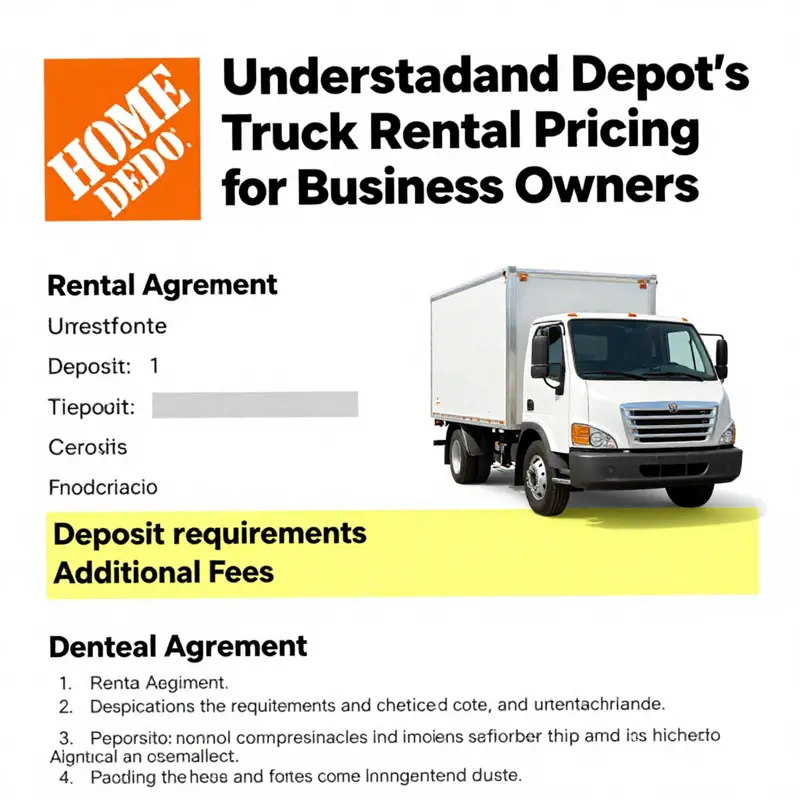
Renting a box truck from a national home improvement retailer involves more than the posted daily or hourly rate. The final bill typically includes several components: a base rate tied to a time window, a refundable deposit, and optional add-ons that can change the total cost. Understanding how these parts interact helps you forecast expenses more accurately and avoid surprises at checkout.\n\nA common pricing structure uses three timeframes: a short window (for quick moves), a daily rate for a full day, and a weekly rate for longer projects. The deposit is usually held during the rental and refunded after the vehicle is returned in good condition. This is not a punitive fee; it’s a security against damage or extra charges.\n\nBeyond the base rate and deposit, additional costs often appear. Fuel policy may require returning the truck with a similar fuel level to when it was picked up, otherwise a fuel surcharge applies. Mileage beyond the included allotment incurs per-mile or per-hour charges. Insurance is another variable option that can add a daily premium, with price and deductible varying by location and vehicle size. Some retailers offer delivery alternatives or bundled services that can lower the total cost if they replace a rental in your plan. Always check local terms, mileage limits, and what the deposit covers before signing.\n\nTo plan effectively, estimate your total usage, compare the total projected cost across the applicable windows, and consider whether delivery options or different truck sizes might yield savings. If you’re moving on a tight schedule, the shorter window might be best; for longer tasks or multi-day moves, a weekly rate can provide better value. The goal is to understand the math behind the quote so you can budget confidently rather than accepting the headline price alone.
Final thoughts
With a clear understanding of Home Depot’s truck rental pricing, duration options, and deposit requirements, business owners can better plan their logistics. By leveraging these rentals effectively, you can optimize your business operations without incurring unnecessary expenses. Understanding the total cost structure helps you budget appropriately for transportation needs and make the most out of your rental experience. Remember to consider whether your needs align with Home Depot’s offerings or if exploring alternatives could yield better results for your business operations.