

Box truck rentals serve as an essential solution for businesses needing to transport goods, whether for moving, freight, or deliveries. Understanding how pricing works can save your business significant costs and ensure you select the right vehicle for the job. This comprehensive guide will walk you through the different aspects of box truck rental costs, exploring daily and weekly rates, the importance of truck size, specialized options, and how to uncover the best deals available. Each chapter will provide insights designed specifically for business owners aiming to make informed rental decisions.
Daily Price Breakdown: How Much You’ll Pay to Rent a Box Truck
Daily Price Breakdown: How Much You’ll Pay to Rent a Box Truck
Renting a box truck for a day is rarely just a single price. The quoted daily rate is a starting point. Size, equipment, location, mileage rules, and additional fees all shape the final bill. Understanding how those pieces fit together lets you predict costs and avoid surprises when you pick up keys.
Smaller trucks, typically in the 10–16 foot range, are the most affordable for single-day needs. Expect base daily rates to start near the low eighties in many markets. These trucks are common for local moves and light deliveries. They usually include a straightforward cargo box and a standard cab. Mid-size trucks, in the 20–26 foot range, increase the base daily rate significantly. Larger vehicles offer more cubic feet and payload and are used for full household moves or commercial freight. For these, typical daily rates climb into the two-hundreds, and specialized features can push prices even higher.
Special equipment matters. Refrigerated units, known as reefers, have built-in cooling systems and higher operating costs. Their daily rates reflect that added complexity and fuel draw. Trucks with hydraulic tail lifts or integrated liftgates add convenience and a moderate daily premium. Those add-ons reduce manual labor and loading time, which you may need to weigh against the extra cost. When a vehicle includes climate control, lift equipment, or other specialty features, expect a noticeable jump in the daily charge.
Location plays a consistent role. Urban centers and high-demand seasons generally produce the highest daily rates. Rural or off-peak locations often have lower base prices but fewer vehicle options. When planning, check rates for nearby neighborhoods or adjacent towns. A modest drive to a different branch can lower the daily rate, though you must balance that saving against extra time and fuel.
Rental duration changes the math. Daily rates are designed for short-term use and therefore are higher on a per-day basis. Weekly and monthly rentals typically reduce the per-day cost, sometimes substantially. If you need a truck for several days, compare a day-by-day quote to weekly pricing. Often a seven-day or 30-day rate will make extended use cheaper overall. Many companies price week or month packages to encourage longer bookings, so ask explicitly for those options.
Mileage policies are as important as the advertised daily rate. Some providers include unlimited miles in specific packages; others set strict daily caps and charge per-mile fees for excess. If your move or route has many miles, an unlimited option will often be more economical. Conversely, if you expect only local driving, a capped mileage rate might be cheaper. Read the mileage terms and estimate your total miles before committing. For local deliveries, pay attention to whether mileage is measured from pickup to drop-off, or if it includes deadhead miles returning the vehicle.
Fuel is another frequent hidden cost. Many rentals require you to return the truck with the same fuel level as at pickup. Failing to do so creates a refueling charge, typically at a higher per-gallon rate. Fuel economy varies by truck size and load. Smaller box trucks achieve better miles per gallon, while larger units and reefers consume more fuel. If you plan heavy loads or long distances, include fuel in your daily cost estimate rather than treating it as incidental.
Insurance and liability coverage add meaningful cost. Daily rates rarely include comprehensive coverage for damage or loss. You will see options for collision, theft protection, and liability. If you already have coverage through your personal auto policy or commercial fleet policy, verify whether it extends to rental trucks. Declining supplemental insurance can reduce daily costs but raises financial risk. Always confirm coverage limits and deductibles before decline.
One-way rentals and drop fees change the equation. A local round-trip rental—pickup and return at the same location—will often be cheaper than a one-way move. One-way reservations allow pickup at one branch and drop-off at another, which is convenient for point-to-point moves. But convenience can carry a hefty one-way fee, especially when the drop-off is far from pickup or across regions. If your move is one-way, ask for a breakdown of any drop fees or relocation costs.
Timing affects availability and price. Weekend and month-end demand peaks cause higher daily rates. Book early for predictable pricing. Last-minute needs can incur premium fees or force you into a more expensive truck size. If your schedule allows flexibility, mid-week pickups and off-peak dates often return lower daily rates.
Discounts and bundled savings deserve attention. Rental providers sometimes offer reduced rates for weekly or monthly bookings. Military or organizational discounts may apply in some locations. If you expect to rent trucks regularly, long-term contracts or corporate rates can lower daily costs. Always ask about package deals that combine days, mileage, and optional equipment into a single negotiated rate.
Comparing quotes properly requires consistent assumptions. Ask each provider for a fully loaded estimate that includes base daily fees, mileage policy, fuel expectations, insurance options, and any potential drop or cleaning fees. Small differences in mileage rules or insurance can change the total by a large percentage. Put those numbers side-by-side to judge true value rather than lowest sticker price.
A few practical tips will reduce surprises. Reserve the exact size you need to avoid upcharging at pickup. Confirm the fuel fill policy and return fuel level before leaving the lot. Photograph the vehicle and note any pre-existing damage in writing. Ask about roadside assistance and whether it’s included in the daily rate. If your load requires secure transportation, inquire about cargo ratings and tie-down availability.
For moves where distance matters, estimate total fuel and mileage charges up front. For local moves, verify whether unlimited-mile packages exist and whether they offer better value for short bursts. If you value easier loading, price the liftgate option and weigh that against hiring loading help. And when possible, secure a written quote detailing every fee the company may apply.
Finally, remember that the posted daily rate is only a starting point. Treat it as a baseline for comparison. The true cost arrives after you layer on equipment, distance, insurance, and administrative fees. Being thorough when you request quotes, and transparent about your needs, will make the daily price a reliable predictor of what you will pay.
For a more detailed cost breakdown and examples across truck sizes, see this practical guide: https://www.boxtruckrentals.com/blog/how-much-does-it-cost-to-rent-a-box-truck/ . For more on mileage options, review the unlimited miles box truck rental details available in our guide to mileage policies.
Week by Week: Unpacking the True Cost of Box Truck Rentals for Extended Use
When you plan a move, a project, or a rolling operation that stretches across days, weeks, or even months, choosing the right box truck is only half the battle. The other half is understanding how the cost compounds when you extend the rental period. In this weekly cost analysis, the focus shifts from the day-to-day sticker price to the real budget, the one that a business owner or household keeper will face after a full seven days, and, for many, beyond. The starting point is simple enough: daily rates tend to rise or fall with the size of the truck, the distance involved, and the demand in your region. But once you map out a full week or more, other factors begin to dominate the math. The spectrum stretches from compact 16-foot models to large 24-foot units, and occasionally into specialized configurations that include refrigeration or loading aids. Across many markets, a standard week for a mid-size box truck commonly lands in a broad corridor—from roughly five hundred to around twelve hundred dollars per week for typical non-specialized trucks. In plain terms, think of a seven-day rental of a 16- to 24-foot box truck as a package deal: you’re paying for a block of logistics, not just a single day of service. The average weekly cost, when you factor in the typical size used for local moves or routine business tasks, is often cited as a range. Some operators price inclusively for seven days, while others structure it so the weekly rate includes a modest discount but still relies on a higher daily rate if your dates don’t align with the most efficient block of rental days. In many markets, the common weekly price sits somewhere around six hundred to one thousand dollars, with variations driven by the exact vehicle size, the need for extra features, and the vendor’s pricing policy. The larger the box truck and the more specialized the features—such as refrigeration or a tail lift—the higher the weekly bill tends to climb. Refrigerated units, in particular, raise the stakes. They carry the cost of the cooling equipment, increased power consumption, and the extra weight and maintenance implications that come with keeping perishables at safe temperatures. It’s not unusual to see weekly quotes for such equipment surpassing a thousand dollars, and in some cases exceeding fifteen hundred dollars for a week when demand is high or when the truck is configured for tight delivery windows and controlled environments. These figures underscore a critical reality: the weekly rate is not simply a multiple of the daily price. The pricing structure for longer rentals often includes concessions, but it can also introduce new complexities that aren’t visible in a single-day quote. For a business that must budget with precision, the weekly frame helps reveal the true all-in cost, especially when the operation spans a full workweek or longer. It also highlights why many managers and households look for long-term arrangements that unlock discounts beyond the weekly cap. Companies frequently offer reduced weekly or monthly terms when the rental extends past a certain threshold. The logic is straightforward: securing a steady stream of business for a longer horizon reduces administration costs and guarantees vehicle availability. Those discounts can be meaningful, particularly for ongoing projects or recurring seasonal needs, and they can shift the cost calculus from an expensive daily rate into a more predictable, lower monthly burden. A careful evaluation of the week-long equation must also account for the inevitable add-ons and hidden costs. Mileage overages remain a common trap when the weekly plan assumes a set mileage that is easy to forget in the heat of planning. If your operation involves a lot of driving between multiple sites or routes with significant back-and-forth, you’ll want to confirm whether mileage is included in the weekly rate, or if there is a per-mile charge that accelerates your total as soon as you hit the cap. Fuel is another variable, especially if the truck consumes more fuel at highway speeds or carries heavy loads. The weekly estimate should specify whether the rate includes a baseline fuel level or if you’ll be billed for refueling to a defined level at pickup or return. Insurance is a must, and it often appears as a separate line item or as a percentage of the rental. Even when your business has coverage, the rental agency will typically require a supplemental policy to bridge any gaps, with costs that depend on the vehicle’s value, the coverage limits, and your claim history. Then there are the potential penalties and fees that quietly nudge the total upward: late returns, tolls, cleaning charges, or damage waivers that don’t fully cover the risk of incidental damage. A weekly rental that looks affordable on the surface can become expensive if the terms allow for add-on charges after the fact. This is why sharp budgeting hinges on reading the rental agreement with care and asking explicit questions about what is included in the weekly rate and what constitutes extra costs. When the goal is accuracy, reaching out to local rental providers directly tends to yield the clearest picture. A phone call or email inquiry can surface practical details that might be glossed over in a website quote, such as whether you can lock in a fixed weekly rate across all seven days, how holiday periods affect the price, and whether there are flexible pickups and returns to avoid wasted days. For organizations that need to compare options quickly, online platforms that aggregate offers across vendors can be helpful, but they require caution. Prices differ not only by truck size but also by the business model of the rental company, the included services, and the way warranties or roadside assistance are packaged. The balance, then, is to assemble a realistic weekly budget that accounts for both the core rental fee and the ancillary costs that accumulate with time. The day rate serves as a baseline, but the seven-day framework reframes the assessment. It invites a deliberate choice about whether a longer rental period is financially advantageous when you factor in the probability of moving more goods in fewer trips or completing multiple phases of a project within one vehicle window. For those planning extended use, there is a practical option worth considering: the prospect of unlimited mileage upgrades within a weekly plan. This approach can stabilize the budgeting process by removing mileage uncertainties that often derail cost projections. It can be especially appealing for operations that must shuttle between several sites, or for individuals who anticipate a sprawling route and want to avoid surprise charges that kick in after a fixed mileage allowance. The value of such an option, of course, depends on the expected distance and the frequency of use. If your work involves a predictable, moderate mileage with consistent daily hours, a standard weekly plan may suffice. If, however, you anticipate substantial travel or erratic days, the incremental cost of unlimited miles can be justified by the peace of mind and the reduced administrative effort. When you are ready to secure quotes, the best practice is to reach out to providers with a clear picture of your needs: the truck size, the anticipated weekly duration, the mix of local trips versus longer hauls, and any special equipment such as refrigeration, power tail lifts, or extended loading capabilities. The more precise you are, the more accurate the quotes will be. And if you expect fluctuations in your schedule, ask about the possibility of switching plans or maintaining a flexible week that can adapt to changing volumes without eroding value. The chapter’s core takeaway is straightforward: weekly cost analysis reframes the decision from a simple daily price to a strategic budgeting exercise. It highlights the cost drivers that shape the total outlay over a week, including size, features, location, and the terms of the rental agreement. It also points toward practical strategies for reducing cost pressure, such as seeking long-term discounts, negotiating fixed weekly rates, and evaluating whether unlimited mileage options align with your real travel needs. To deepen your planning, consider exploring a dedicated resource on box truck rental prices that compiles typical weekly ranges and highlights the patterns that emerge across different vehicle classes. For a broader sense of market behavior and to ground your estimates in published data, you can consult external guidance that analyzes the components of these costs and offers benchmarks for budgeting. This external reference provides a useful frame of reference for comparing your quotes against established expectations and helps you avoid overpaying for a weekly rental.
Internal link reference (for extended use): unlimited miles box truck rental
External resource: https://www.packer.com/box-truck-rental-prices
Sizing the Move: How Box Truck Dimensions Drive Rental Costs and Efficiency

Choosing a box truck is rarely a simple equation of space versus price. The numbers on a truck’s side or the way a rental quote is displayed can seem straightforward, but the cost you pay is shaped by the vehicle’s physical footprint as much as by the rental terms. The dimensions—length, width, height, and the interior volume—set the ceiling on how much you can safely and efficiently move in one shot. They also influence fuel use, insurance, and the overhead of moving operations. When you understand how each dimension translates into capacity and cost, you gain a practical tool for budgeting, planning, and avoiding the two most common moving mistakes: paying for space you won’t use and underestimating how much cargo you need to transport.
At a high level, rental pricing tends to rise with the truck’s size for several reasons. Longer trailers have heavier empty weights and operate at higher fuel consumption rates. Taller and broader boxes demand more powerful engines, different suspension considerations, and stricter loading procedures. All of these factors filter into the daily rate that rental companies quote. Yet the relationship between size and price is not perfectly linear. A 26-foot truck may cost roughly twice as much per day as a 15-foot box, but the incremental cost of moving from 26 feet to 53 feet can be disproportionately higher, reflecting not just added space but additional complexity in handling, maintenance, and often, specialized features such as lift gates or refrigeration units. In this sense, the dimensions are a window into the broader economics of moving in a commercial-grade vehicle.
When evaluating the specific sizes commonly used for moves, three archetypes emerge as a practical framework for budgeting and decision-making: the compact 15-foot box, the mid-sized 26-foot truck, and the expansive 53-foot box that dominates long-haul freight. The 15-foot option, with approximate dimensions of 15 feet in length, seven feet in width, and seven feet in height, roughly translates to 735 cubic feet of interior space. It is ideally suited to studio apartments or one-bedroom moves and for small business deliveries where tighter streets and easier maneuverability are priorities. Because the cargo footprint is modest, fleets commonly price these smaller rigs at the lowest daily brackets, often in the broad range of twenty-five to fifty dollars per day depending on location, rental duration, and the provider’s policies. In the real world, many customers discover that the savings on the daily rate can add up quickly when their actual haul fits neatly into the box, without an excessive number of trips.
The 26-foot box, with its longer chassis and bigger interior, offers a much broader canvas. It typically measures around 26 feet long, seven to eight feet wide, and seven to eight feet tall, yielding roughly 1,200 to 1,500 cubic feet of cargo space. This size strikes a balance between residential moves that cross a city or county line and light commercial freight. The rental price reflects the enhanced load capacity and the added length, with daily rates commonly ranging from about sixty to one hundred twenty dollars. This band captures the extra value of greater versatility—enough room for bulky furniture, multiple bedrooms, or a steady stream of smaller packages for a business that needs timely local delivery without multiple trips. The tradeoff, of course, is that longer, heavier trucks consume more fuel and require more careful planning to navigate narrower streets and tighter loading docks.
Moving into the upper tier, the 53-foot box represents the standard long-haul workhorse of general freight, appliances, and bulk goods. These giants can deliver roughly 3,900 to 4,000 cubic feet of interior space, providing capacity for entire households or large commercial shipments in a single trailer. The price landscape shifts noticeably here. Daily rental rates begin around $150 and can climb past $300 per day, especially when the vehicle comes equipped with specialized features such as refrigeration, tail lifts, or heavy-duty locking systems. The higher cost is not only about the space on the inside but also about the operational complexity of managing such a vehicle—greater turning radii, more fuel burn, and the need for additional training or permits in some jurisdictions. For businesses shipping perishables or temperature-sensitive goods, reefer units add substantial daily premiums, reflecting the energy management and regulatory assurances those systems entail.
Those base figures—the 15-foot, 26-foot, and 53-foot price bands—represent starting points. In practice, a renter may see a broader spectrum because mileage limits, insurance add-ons, and location-based pricing all tilt the final number. Some rental companies include mileage within the daily rate up to a fixed limit; others bill per mile once the cap is exceeded. Fuel costs are another hidden variable. Larger boxes use more fuel, and fuel pricing itself shifts with regional supply and road conditions. Insurance options, from basic liability to comprehensive coverage that includes collision and theft, contribute a predictable uplift to the daily charge but offer a safety net that can prevent much larger costs in the event of damage or loss during a move. Delivery or drop-off between locations can introduce additional fees, particularly if the truck must be moved between campuses, warehouses, or residential/commercial zones where access is restricted or requires special handling.
The choice of one-way versus local rental also feeds into the cost. One-way trips, popular for cross-city or cross-region moves, frequently carry a premium to account for the logistics of returning the vehicle to a different location or repositioning one or more units. Local moves tend to be priced with shorter rental windows in mind, which can be advantageous if the duration aligns with a single move window. For many customers, the decisive factor is not a single line item but a balance of space, timing, and the risk profile they are willing to absorb. A well-chosen size reduces the number of trips, limits shrink-wrapped or fragile items’ exposure to shifts in transit, and streamlines the loading process for a smoother day of moving.
To translate these dimensions into a practical plan, start with a careful inventory of what you intend to move. Items such as mattresses, sofas, wardrobes, and appliances consume space in predictable ways when you group them by density. Estimating interior volume before you rent helps prevent paying for unused space or ending up with a truck that’s too small for a full load. There are widely used cubic-foot calculators and reference guides that map common furniture and boxes to approximate space, but nothing beats a hands-on approach: take measurements of your largest pieces, note their stacking possibilities, and think through how they will be loaded and secured in transit. When possible, visualize the sequence of loading and unload steps. Will you need to disassemble furniture? Are there oversized doors, stairs, or narrow turns at your origin or destination that could influence which size you can practically maneuver? The more you anticipate, the more precise your size decision becomes, and the less you risk paying for extra capacity you won’t use or falling short of space mid-move.
For readers seeking a practical reference during planning, a concise guide that maps sizes to typical scenarios can be a helpful companion. For a quick look at how size aligns with loading scenarios, consider exploring a dedicated overview such as 16-moving-truck. This resource provides a compact snapshot of what a given box length implies for space and routing needs, helping you translate dimensions into a real-world plan that fits your budget and schedule. See more at the linked guide: 16-moving-truck.
Beyond the math of cubic feet and daily rates, the real art of cost management in box truck rental lies in balancing capacity with efficiency. If your load is dispersed across many small, light items, a smaller truck can be the smartest choice, even if it means more trips. If you’re carting dense furniture and heavy appliances, a larger box reduces the number of trips and can save time, even if the daily rate appears steep. Your decision should reflect not just the box’s interior volume but the practicalities of loading, securing, and transporting safely within your specific route and local regulations. The best planners also line up quotes across providers, because price landscapes shift by region and season, and promotions can further tilt the final figure. While third-party marketplaces can help with side-by-side comparisons, it’s essential to verify the terms directly with the rental provider to confirm mileage allowances, insurance requirements, and any miscellaneous drop-off charges.
As you map the costs to your moving plan, remember that a precise estimate rests on more than the truck’s box size. It rests on how you allocate resources for fuel, time, access at both ends of the move, and the necessary protective measures for your belongings. The dimensions frame the budget, but the logistics fill in the details. A well-chosen size minimizes travel time and reduces the risk of damage from tight turns or cramped docking spaces. It also reduces the administrative friction that comes with complex rental terms and multiple add-ons. In short, the number you see in a daily rate is the cost of space plus the overhead of reliable, predictable movement.
For readers who want a broader context about dimensions and pricing, note that official size guides and price comparisons are widely available. These resources reinforce the idea that the vehicle’s physical footprint invites a cascade of cost factors, from fuel to insurance to equipment like tail lifts or refrigeration. When you start from the truck’s dimensions and work outward to the related costs, you create a transparent, defendable budgeting approach that serves both individuals and businesses.
In sum, the dimensions you choose will shape not only how much you can move but at what price. A 15-foot box often offers the lowest daily rate and suits small moves; a 26-foot box delivers a strong middle ground for midsize moves and mixed loads; a 53-foot box supplies the capacity for large, cross-regional shipments and may carry the highest daily cost, especially with specialized configurations. The right choice aligns with your inventory, your route, and your willingness to trade a fuller truck for fewer trips. With careful measurement, careful sourcing of quotes, and a clear picture of the move’s timeline, you can lock in a rental that balances space, cost, and efficiency—the essential triad for a smooth, controlled move.
External resource for further reading: https://www.uhaul.com/moving-trucks/ (official moving truck sizes guide).
Specialized Rentals Unpacked: The True Cost of Refrigerated and Tail-Lift Box Trucks for Sensitive Cargo and Easy Loading
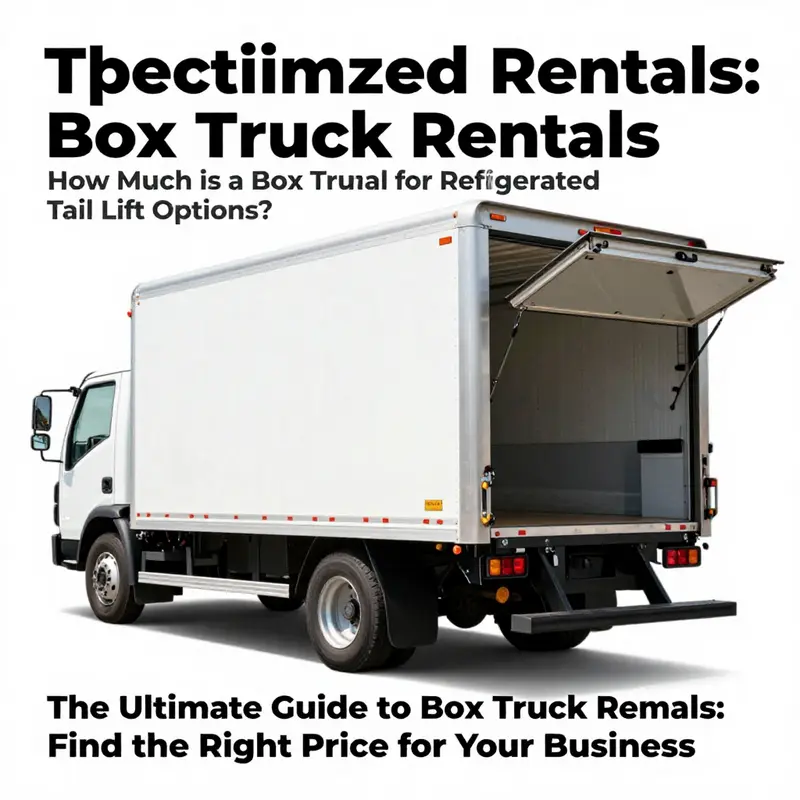
Specialized box truck rentals sit at a higher price tier for good reason. When your operation depends on precise temperature control or on reliably lifting heavy loads to street level, the rental market rewards you with capacity and capability—at a price that reflects the engineering, energy requirements, and safety features behind those features. In this chapter, we explore how refrigerated units and tail-lift systems affect daily rates, what drives those costs up, and how these premiums align with real-world use cases. By understanding the economics, you can gauge whether a reefer or a liftgate unit is an essential investment for your project or a dispensable luxury you can do without, and how to optimize your rental strategy across longer engagements or recurring needs.
Refrigerated box trucks, commonly called reefers, are specialized by design and purpose. They keep cargo within tight temperature bands, whether you’re transporting fresh produce, dairy, pharmaceuticals, or even ice cream. The core value proposition is clear: product integrity depends on climate control, and that control requires insulation, refrigeration equipment, energy management, and precise monitoring. The cost structure reflects these added systems. Market data shows that a 53-foot refrigerated box truck typically commands a daily rate in the range of roughly five hundred to eight hundred dollars, with variation driven by season, region, the strictness of temperature control (single-temp vs. multi-temp setups), and the length of the rental period. Shorter-term use, such as a three- to seven-day window, can offer modest discounts, though the daily price remains higher than non-refrigerated models due to the increased logistical complexity and energy needs. In contrast, smaller refrigerated options—think about 14 to 26 feet—tend to land in the three-to-five hundred-dollar per day range. These units suit local deliveries, catering operations, or medical supply transport where climate control is still non-negotiable but cargo volume is more modest.
To understand the practical implications, imagine a mid-sized grocery delivery operation that needs to move perishable ingredients across a regional corridor for a week. A 53-foot reefer would handle the higher volume, ensuring that meat and dairy stay within safe temperatures during peak loading and during hours on the road when ambient temperatures rise. The economics, however, demand careful planning. While the per-day rate may be high, longer rentals can yield favorable average daily costs, especially if you can negotiate a weekly or multi-week lease that lowers the incremental cost per day. Seasonal demand also plays a role. In hot summer markets or regions with high demand variability, reefers may command a premium due to the added strain on refrigeration systems and the need for more robust coolant management. The flip side is that for businesses with predictable schedules—regular weekly deliveries—the higher unit cost can be offset by consistent utilization, reducing idle capacity and enabling more reliable service to customers.
In all cases, a comprehensive quote is essential. Fees beyond the base daily rate can include fuel surcharges, insurance options, mileage allowances, and charges for temperature monitoring equipment or data logging. Some providers may include basic temperature ramps and unit maintenance in the quoted price, while others itemize these as separate line items. It is not unusual to see a broader price spread when you add ancillary services such as multi-temperature zones or data loggers that certify product safety upon arrival. This is where an apples-to-apples comparison becomes critical: you want to ensure that your quote accounts for the operational realities of your cargo and route, not just the sticker price.
Tail lift (liftgate) box trucks add another layer of capability and cost. A tail lift is a hydraulic or electric platform mounted at the rear of the truck that lifts cargo from ground level to the truck bed, enabling loading and unloading without a dock or forklift. This feature single-handedly improves loading efficiency, reduces manual handling, and expands the geographic range of locations you can service—urban deliveries, construction sites, retail replenishment near non-dock locations, and any scenario where dock access is unreliable. The cost delta for liftgate functionality is typically in the neighborhood of fifty to one hundred dollars per day, depending on truck size and the lift’s capacity. The economic logic is straightforward: liftgates add mechanical complexity, require maintenance, and demand higher insurance considerations due to potential loading risks. A standard 26-foot box truck with a liftgate commonly rents around two hundred fifty to three hundred fifty dollars per day, while a 53-foot dry van with a liftgate can command roughly four hundred to five hundred fifty dollars per day. These numbers illustrate how every added feature compounds the total cost, especially when you consider peak demand, vehicle availability, and regional price dispersion.
When both refrigeration and a liftgate are required, cost levels rise further. In practice, a 53-foot refrigerated unit with a liftgate can reach daily rates in the six-hundred-to-nine-hundred-dollar range, reflecting the dual-engineered systems at play: climate control and hydraulic loading support. For the more compact end of the spectrum—a 26-foot refrigerated unit with a liftgate—expect roughly four hundred to six hundred dollars per day. The premium is justified for operations that move temperature-sensitive goods with frequent loading and unloading in locations without docks, or for businesses that demand precise handling and rapid turnover at delivery points.
The decision to rent specialized gear is ultimately driven by the cargo’s nature, the route topology, and the service expectations you aim to meet. If you transport time-sensitive products to locations with limited dock access, a liftgate becomes an operational necessity that improves both speed and worker safety. If the cargo requires strict temperature control to comply with quality or regulatory standards, a reefer unit becomes a non-negotiable investment. Some companies, particularly those with frequent, high-volume needs, discover that owning a refrigerated or lift-equipped trailer is more economical in the long run than repeatedly renting. Others find that strategic partnerships with rental fleets offer a better balance of flexibility and cost, especially when combined with a robust maintenance and service agreement.
To ensure you are not surprised by hidden costs, request a detailed, itemized quote and read the fine print carefully. Confirm what is included in the base rate and what constitutes add-on charges. Ask whether fuel, mileage, insurance, and basic maintenance are bundled or billed separately. If your project spans multiple locations with varying access requirements, you may want to negotiate a blended daily rate that reflects the full spectrum of service conditions you expect to encounter. It can also be helpful to discuss whether the provider can guarantee equipment availability during your peak window, or whether you’ll need to schedule in advance and potentially accept a substitute unit if your primary choice is unavailable.
To plan around dimensions and fit, you may want to size your rig carefully before you rent. Concrete measurements, especially when space is tight or when you’re stacking pallets, matter a lot. A helpful resource to gauge the right unit size is to review dimensions and capacity for different truck configurations. To that end, consult the Penske box truck dimensions page for precise size specifications and loading capabilities, which can guide your selection and ensure the vehicle can handle your cargo without compromising safety or efficiency. Penske box truck dimensions
Beyond the unit’s core features, the rental experience itself can influence total cost and satisfaction. Some providers offer bundled services that include routine maintenance, tire service, and 24/7 roadside assistance, which can reduce downtime during critical delivery windows. Others rely on third-party networks for service and support, which might require more careful coordination but can yield broader availability in remote regions. When you read a quote, look for the level of support and the potential for proactive maintenance versus reactive service calls. The peace of mind that comes with reliable support can be worth a portion of the premium, especially for businesses that operate on tight delivery schedules or in regions with challenging road conditions.
For readers seeking real-time pricing and a broader view of availability, a practical approach is to consult a dedicated truck rental marketplace. These platforms filter results by size, type, and location and can help compare reefers and liftgates side by side. When you drill down to specifics, you’ll often see the variability across regions, season, and fleet composition, which reinforces the importance of obtaining a firm quote for your exact dates and location. The market moves quickly, and prices can shift with demand, maintenance cycles, and fuel costs. As a rule, plan for a window that allows you to lock in favorable rates when demand is comparatively lower or when promotional pricing is offered for longer-term commitments.
In sum, specialized rentals like refrigerated and tail-lift box trucks command higher daily rates than standard dry vans due to the added technology and safety features. Reefers emphasize temperature integrity and energy management, with rates typically ranging from five hundred to eight hundred dollars per day for the largest units and three hundred to five hundred dollars for smaller models. Tail lifts bring a distinct operational advantage, elevating the base daily price by roughly fifty to one hundred dollars, depending on the size and lift capacity. When both features are required, the combined price can approach nine hundred dollars per day for the largest configurations. These numbers are indicative, and actual quotes will reflect location, seasonality, and the specific configuration you need. The key to getting the best value is to treat the rental decision as a strategic one: align unit capabilities with cargo requirements, secure a detailed quote that itemizes all charges, and evaluate whether ongoing rental with bundled maintenance or a short, targeted lease best fits your workflow. By doing so, you can balance the premium you pay for specialized equipment with the operational gains in reliability, safety, and cargo integrity.
External resource for further context and up-to-date pricing trends can be found here: https://www.rentaltruck.com/
Hunting the Best Box Truck Rates: Smart Comparison, Timing, and Fee-Checking

Finding the right box truck at the right price means thinking like a buyer and a planner. Rates vary widely by size, location, and purpose. A compact 10–16 foot truck can cost in the low double digits per day in some areas, while larger 22-foot trucks or specialty vehicles can triple that amount. Knowing which details drive price and where to look gives you control over the final bill.
Start with a clear picture of what you need. Decide the truck size and any special features required. Are you moving household goods, hauling commercial freight, or transporting perishables? A refrigerated unit or a tail lift increases daily cost. Longer rentals usually reduce the per-day rate. One-way moves often have drop-off fees. Local round-trip rentals may include mileage charges. These choices determine which price buckets you should compare.
When you begin shopping, compare multiple sources. Search aggregator tools can show side-by-side rates from competing companies, but remember those prices reflect what the individual rental companies set. Use an aggregator to find the low starting points, then visit the rental companies’ own listings to confirm availability and details. Availability drives price spikes. If there are only a few trucks left for your dates, expect higher rates.
Timing matters. Weekday and off-peak bookings tend to be cheaper. Weekend or end-of-month moves often attract premium pricing. Book early when demand is predictable, especially for moves during summer months or holiday weekends. Conversely, last-minute deals do appear if a location is overstocked, but this is risky if your move date is fixed. Week-long rentals normally drop the daily rate compared with single-day hires, and monthly agreements often offer the best per-day value for longer projects.
Location can change the numbers dramatically. Urban centers and high-demand regions command higher base rates. Rural or suburban locations may have lower daily costs but can add mileage or fuel surcharges if you travel into busy areas. Cross-border or intercity relocations may include additional taxes, tolls, or paperwork, which should be factored into your budget.
Watch the headline price and then unpack it. Base rate is only the beginning. Insurance coverage, fuel policies, mileage limits, environmental fees, and optional equipment can raise the effective rate by a substantial amount. Some companies sell daily or per-rental insurance waivers that cover damage and liability; these look expensive on paper but can be worthwhile compared with out-of-pocket repair bills. Confirm what your personal auto insurance and credit-card protections cover for rental trucks before you buy extra coverage.
Fuel policy changes the total cost. Some rentals require you to return the vehicle with the same fuel level or charge a premium for refueling. Others include a fuel service charge per gallon at a higher rate than retail. If you expect to drive long distances, estimate fuel expenses based on the truck’s typical miles per gallon and current fuel costs, then add that number to your rental subtotal.
Mileage rules differ. Some local rentals include unlimited miles within a geographic zone. Long-distance or one-way rentals often come with per-mile charges after a threshold. If you expect heavy driving, hunt for unlimited-mileage options or calculate the break-even point where a slightly higher flat rate beats a per-mile fee. For guidance on mileage options, consult detailed resources about unlimited rental truck mileage to see how providers structure those offers.
Special equipment and service add-ons increase base rates. A refrigerated truck may double the price of a standard box body. Tail lifts and pallet jacks add convenience but carry daily supplements. If you need a lift gate for heavy items or special tie-downs for fragile cargo, request those upfront and factor their daily charges into your quoted total. It is cheaper to add optional equipment at booking than to pay rush or emergency fees at pickup.
Negotiate when possible. Smaller local branches may be willing to waive certain fees, offer discounts for longer rentals, or provide complimentary equipment like dollies and moving blankets. Ask about discounts for students, military or corporate affiliations, and off-peak promotions. Some locations run seasonal promotions or loyalty incentives—check the rental provider’s site and call local branches to confirm availability.
Read the fine print before you commit. Cancellation policies, fees for late returns, and repair responsibility clauses vary. A low daily rate may hide high penalties for even minor damage or late drop-off. Clarify whether tolls, parking fines, or traffic citations incurred during your rental are your responsibility. Confirm the required driver qualifications and age limits to avoid surprises at pickup.
Plan the logistics to cut costs. Choose the right size truck to avoid paying for unused capacity. Load efficiently to minimize trips. If you can manage multiple stops without exceeding mileage limits, a local rental may be substantially cheaper than a one-way with a drop-off fee. Coordinate loading and unloading times to avoid hourly labor overtime charges when hiring movers.
Use technology to watch price changes. Aggregator platforms and rental company websites update in real time. Set alerts for rate drops and check weekday mornings when inventory refreshes. Compare the aggregator quote to the direct company quote to catch any hidden fees or discounts available only through the official site.
Finally, build a simple cost spreadsheet before booking. Include base rental, taxes and fees, insurance or waivers, estimated fuel, mileage or per-mile fees, drop-off charges, and extras like equipment. This reveals the true per-day and total costs. Revisit the worksheet when you get quotes so you can compare offers on an apples-to-apples basis.
A deliberate approach—defining needs, comparing multiple offers, checking the fine print, and estimating add-ons—reduces surprises. The cheapest advertised rate may not be the cheapest total cost. By focusing on total cost and flexibility, you can find a box truck rental that fits both your budget and your schedule.
For a practical comparison of vehicle rental prices across providers, consult this aggregator tool: https://www.kayak.com/rental-cars. For guidance on mileage options and how they affect cost, see this resource on unlimited rental truck mileage: unlimited rental truck mileage.
Final thoughts
Understanding the costs associated with box truck rentals is crucial for business owners seeking to streamline their transportation solutions. By breaking down daily and weekly rates, considering the importance of truck size, exploring specialized rental options, and leveraging various platforms to find the best deals, you can make informed decisions that benefit your bottom line. Whether your needs are short-term or long-term, recognizing these key factors will empower your business to navigate the truck rental market effectively.