
For business owners considering the rental of trucks for transport needs, understanding the dynamics of tow hitches is crucial. While many rental trucks come equipped with tow hitches, this does not guarantee that towing is permitted. This guide will delve into the fundamentals of rental trucks and tow hitches, explore potential towing restrictions, identify commonly found tow hitches, and clarify rental agreements along with their towing policies. Each chapter provides essential insights crucial for business owners to navigate their rental truck needs effectively.
Tow Hitches on Rental Trucks: Navigating Availability, Rules, and Real-World Towing
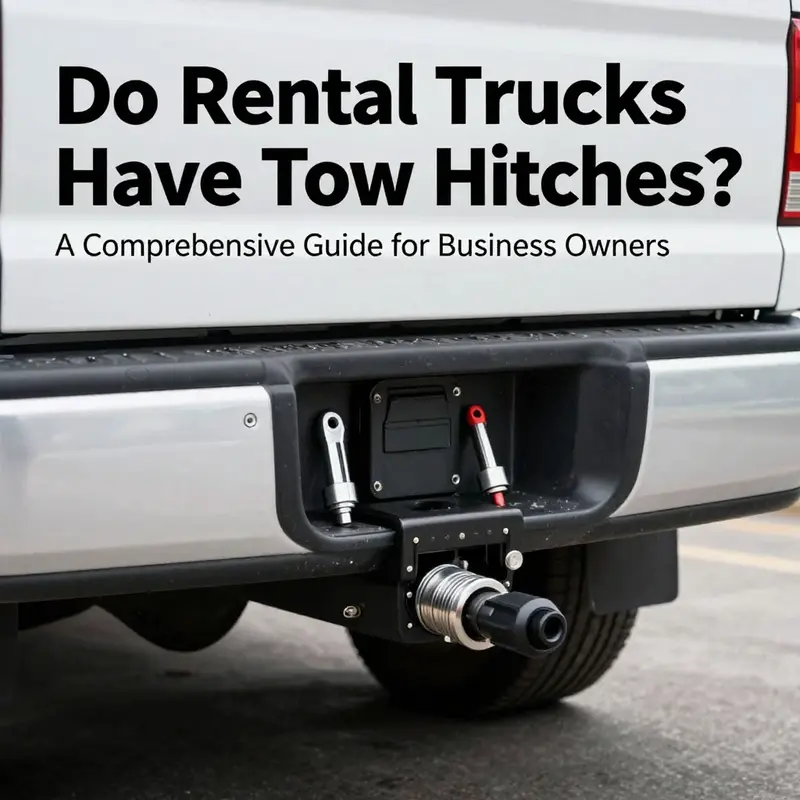
When people ask whether a rental truck with a hitch can actually tow something, the answer is rarely as simple as yes or no. A hitch receiver in the bumper or frame might suggest capability, but towing is not guaranteed by the mere presence of a hitch. The real decision rests on the rental agreement, the vehicle’s specific configuration, and the insurance and liability frameworks that govern the rental. This distinction matters because many renters assume “hitch = tow,” only to discover they are prohibited from towing once they review the contract or speak with a representative. The quiet truth behind that hitch is that it signals potential capability, not automatic permission.
From the outset, the type of hitch matters. Many rental trucks that are designed for moving and convenience carry a hitch receiver that accommodates a standard ball, and it is common to see Class II or Class III configurations in pickup-style rentals. However, the mere existence of a hitch does not guarantee that the vehicle has the towing capacity for a given trailer or load, nor does it guarantee that the rental company will permit towing at all. The policy landscape is shaped by liability concerns, insurance limitations, and the particulars of each contract. These are not arcane details designed to trip up a renter; they are guardrails meant to prevent damage to property, injuries on the road, and gaps in coverage when something goes wrong. To navigate them wisely, a renter must treat the hitch as a potential tool rather than an automatic permit to tow.
A runner-up question is which rental locations actually stock trucks with hitches. Availability can vary by region, fleet composition, and vehicle class. In some cases, a location might have a hitch-equipped model, but another model in the same category might not. The variability means that calling ahead is not enough; you should confirm the exact vehicle you’ll be driving, or you should verify the hitch specifications and towing permission for that specific unit as part of the rental process. This level of due diligence helps avoid surprises on departure day and reduces the risk of discovering a mismatch between what you plan to tow and what the rental agreement allows.
Even when a hitch is present, you may encounter restrictions that require additional steps. A common stipulation is that towing requires an additional fee, a special permit, or a pre-authorization from the rental company. Some contracts explicitly state that towing is prohibited unless a trailer brake controller is installed, or unless an upgraded hitch setup, wiring, or braking system is requested and approved. The presence of a hitch receiver does not automatically imply that you can connect a trailer and hit the road. The contract may also specify a maximum trailer weight, tongue weight, or gross vehicle weight that the truck can safely handle, and these figures may differ from the hitch’s nominal rating.
In practice, what this means for a renter is prudence and clarity. Before attempting to tow anything, read the rental agreement with care, and then confirm with the rental agent or the corporate support line. Ask specifically about towing rules, weight limits, whether a trailer brake controller is required, what ball size is supported, and whether any additional equipment—such as safety chains, wiring adapters, or hitch-mounted wiring harnesses—needs to be rented or installed. These questions help ensure that you are not risking equipment damage, personal injury, or violations of the rental contract. A few minutes of upfront verification can prevent hours of stress later on.
The policy landscape matters because towing is not purely about the truck’s capability. Insurance coverage factors into the equation. If a renter attempts to tow under a policy that excludes certain loads, or if a trailer is not properly aligned with the truck’s rating, the insurer may deny coverage if an incident occurs. This is not about catching someone out; it’s about ensuring that a move or a haul does not become a financial or legal burden. Rental providers may enforce stricter rules for liability and claim handling to keep the operation safe and compliant for everyone involved. In this sense, the hitch is a gateway to a wider conversation about what you’re allowed to tow and how you should prepare to tow it.
For those who need practical guidance on how to evaluate a hitch and prepare a trailer carefully, it helps to understand the core elements: hitch class and capacity, tow ball size, trailer compatibility, and required auxiliary systems. A Class II or Class III receiver might be standard in many rentals, but the actual towing capacity can be lower than the receiver’s theoretical maximum. The ball size is another detail that matters because a mismatch between the trailer coupler and the hitch ball can create dangerous situations on the road. In addition, many trailers require electrical wiring to power lights and brakes, the reliability of which becomes a critical safety issue if not installed correctly. A trailer without properly functioning brake lights is not just a legal violation; it is a safety hazard that endangers you and others on the highway.
A further layer of nuance comes from the trailer itself. Trailers vary widely in weight, size, and braking requirements. A light utility trailer used for a small move could be within a vehicle’s safe towing envelope, but a larger enclosed trailer or a heavy equipment trailer may exceed what a rental truck can safely manage. Even when a trailer’s weight appears to be within a truck’s static rating, dynamic factors like long hills, highway speeds, and weather conditions can change the equation. The key practice is to align the trailer’s weight, tongue weight, and braking demands with the truck’s certified capabilities and with what the rental contract permits. If there is any doubt, do not assume—verify.
From a policy perspective, the safest approach is to confirm three things before towing: the exact vehicle’s towing allowance in the rental contract, the hitch and trailer’s compatibility with the truck’s electrical system, and any required add-ons or professional installation. Compatibility checks should cover hitch class, weight ratings, trailer ball size, wiring, and the presence or absence of a functional braking system on the trailer. It is not unusual for renters to encounter a requirement for a trailer brake controller, particularly when towing heavier trailers. Some contracts may permit towing only with certain trailers or only with a subset of the fleet, which again underscores the importance of precise confirmation before departure.
To illustrate how this translates in practice, consider the experience of a moving task that requires a hitch-equipped truck. A renter may find that a local location advertises hitch-equipped pickup trucks, but the actual pickup may not be the right model for the move. The hitch may exist, but the payload and towing specifications may render the unit unsuitable for a given trailer. In such cases, the renter’s best move is to seek alternatives within the rental system—perhaps a different truck in the same class that is confirmed to meet the towing needs—or to adjust the plan to use a dedicated towing-capable vehicle or another transport option. The goal is to avoid a last-minute mismatch that could lead to improper hitch setup, inadequate trailer compatibility, or unsafe towing conditions.
One practical advantage to look for in a rental provider, beyond the basic hitch, is a robust suite of support resources. Some providers offer detailed how-to content, loading guides, and 24/7 roadside assistance to help customers manage their moves safely. They may also provide a mobile app with real-time updates on rental status and service requests, which can be invaluable when you are juggling logistics on moving day. These resources do more than just answer questions; they help ensure that the technical aspects of towing—how to hitch a trailer, how to connect wiring, how to verify brake operation, and how to secure cargo—are performed correctly. When in doubt, consult these resources and use the official channels to confirm towing eligibility.
If towing remains essential but the rental contract will not permit it, there are legitimate alternatives. Some renters find success by reserving a truck that is explicitly marketed with towing capabilities and by securing the appropriate add-ons or equipment through the rental provider. Others opt for specialized moving services that can handle both vehicle transport and trailer towing in a managed package, often with additional insurance options and professional guidance. In any case, the guiding principle stays constant: do not assume that a hitch means permission to tow. The hitch signals potential capability, while the contract and policy framework determine the actual scope of use.
For readers seeking deeper, technical details about hitch installation and trailer compatibility, there are practical references that describe how to assess a hitch’s readiness and how to secure a trailer correctly. These resources emphasize fundamental checks—weight ratings, coupling, wiring, and braking—and they complement the hands-on advice renters receive from rental staff. The central takeaway is simple: verify, verify again, then tow only when the contract and the vehicle’s configuration align. The peace of mind that comes with this approach is worth the extra conversations and confirmations, especially when the move or haul involves valuable equipment or heavy loads.
In the end, the hitch on a rental truck is not a guarantee of towing. It is a prompt to read, verify, and comply with the rules that govern the rental. By treating the hitch as a potential capability and not as an automatic permit, renters reduce risk, protect themselves from liability, and keep their moves moving smoothly. If you want a more hands-on understanding of hitch installation and compatibility, explore the corresponding guide linked here. Penske trailer hitch installation.
As you plan, remember to anchor your decisions in the rental agreement and in direct confirmation from the rental team. Ask pointed questions about tow capacity, equipment requirements, and any additional costs. Confirm the exact truck model you will drive, verify the hitch rating, and ensure the trailer you intend to tow is within those limits. If the staff can provide written confirmation, keep a copy with your rental documents. This level of documentation protects you and clarifies expectations for everyone involved. If you choose to tow, perform a pre-tow checklist: inspect the hitch and hitch pins, check the ball size versus the coupler, test the trailer wiring and brakes, ensure proper lighting, and confirm that safety chains and load securement gear meet the necessary standards. A calm, methodical approach at the start of the journey pays dividends on the road, where every mile of the move depends on one solid, well-executed setup.
For readers who want a broader understanding of the towing landscape in rental fleets, it is helpful to recognize how different providers structure their policies. Some operators emphasize flexibility, offering towing-friendly terms with clear step-by-step instructions and robust roadside assistance. Others place tighter limits on what can be towed, prioritizing liability controls and insurance boundaries. Either way, the central thread remains consistent: a hitch does not equal permission. The responsible approach is to verify permission in writing, confirm technical compatibility, and prepare for safe towing with the proper equipment. This mindset helps prevent costly missteps and makes the overall experience more predictable, which is especially valuable when you are coordinating a move, a project, or a last-minute haul.
External resource: https://www.pensketruckrental.com
Tow Hitches on Rental Trucks: Reading Contracts, Respecting Restrictions, and Moving Forward Safely
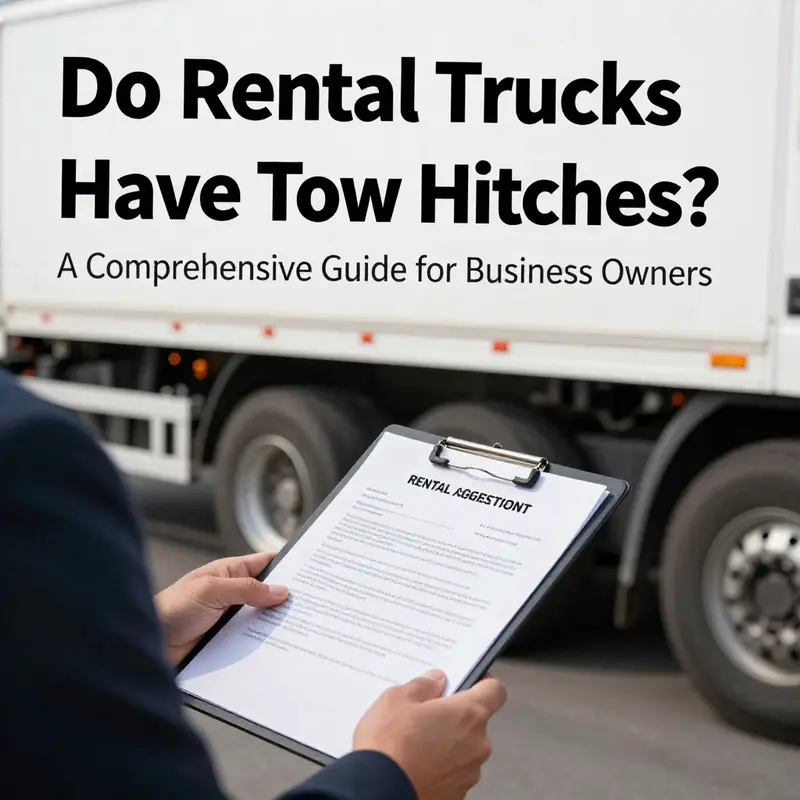
When you rent a moving truck, the sight of a hitch receiver on the back might spark a practical question: can I tow with this vehicle? The instinct to hook up a trailer can be strong when you’re balancing heavy furniture and fragile appliances. Yet the truth, reinforced by rental policies and insurance rules, is more complex. A hitch on a rental truck does not automatically equate to permission to tow. Rental agreements often contain explicit restrictions that limit, delay, or entirely prohibit towing. The hitch might be there as a courtesy of design, a feature of the vehicle’s configuration, or a structural component intended for future use, but the act of towing can be off-limits unless you obtain additional permission or pay for a supplemental endorsement. This is not a technical quirk; it is a liability and risk management issue for the rental company. Understanding the distinction between equipment and authorization is essential for a smooth, safe, and legally sound move. The consequences of towing without permission can range from voided insurance coverage to substantial penalties, and in some cases, exposure to liability in the event of an accident. In other words, the presence of a hitch is not a green light to tow; it is a signal to verify and confirm first.
To navigate this terrain, think of towing with a rental truck as a two-step process: first, confirm permission; second, confirm the specifics. The first step is straightforward but not always immediate. Before you drive off the lot, ask the rental agent or consult the contract about towing. Some companies approve towing only under certain conditions, while others forbid it entirely, regardless of equipment. The second step requires precise information: the maximum towing weight, the required hitch type and installation, whether a trailer brake controller is necessary, and what kind of trailer is permitted. Even when permission is granted, the agreement may specify that you must use only company-approved accessories and that certain trailer configurations are off-limits. Reading the contract carefully before making plans is the responsible move, and it often saves you from late surprises, extra charges, and possible disputes during a move.
This is not merely about following rules for their own sake. It is about aligning your towing plans with the vehicle’s design, the insurance framework, and the rental company’s liability limits. The line between a permissible setup and a risky, non-approved configuration can be narrow. Towing a heavy trailer with a rental truck without understanding the contractual terms can compromise handling, braking, and stability—of both the vehicle and the trailer. The dynamics of towing differ from driving solo. A trailer introduces additional mass behind the truck, magnifying sway, reducing maneuverability, and altering stopping distances. Even if you’ve towed in a personal vehicle before, a rental truck is not guaranteed to share the same tolerances or safety features. With rental fleets, the emphasis is on standardization, predictable liability exposure, and ensuring that drivers have access to appropriate equipment and support if something goes wrong. Therefore, the reality is clear: hitch presence is a factor to be aware of, not a guarantee of towing capability.
The practical questions then become concrete: Is towing even approved for this specific truck model? What is the truck’s maximum towing weight, and how does that weight limit intersect with the trailer you plan to use? What equipment is permitted, and what add-ons, like a trailer brake controller, are required? How will insurance respond if you tow under a restricted policy or without the proper endorsements? These are not abstract concerns; they translate into real-world decisions about speed, brakes, turns, and the risk you assume during a move. To help you anticipate these considerations, rental providers often publish model-specific data, but that information is not always the same across fleets or locations. A common trap is assuming that a hitch implies universal towing permission across all rental trucks. In truth, the policy can vary by vehicle class, by regional risk assessments, and by the specifics of your rental agreement. The safest bet is to approach towing plans with a mindset of verification and documentation rather than assumption.
The structured way to approach this is to start with the basics, then layer in the details as you confirm them. First, obtain explicit towing approval for the specific truck you’ve booked. If the answer is no, you’ll avoid the awkward moment of discovering you can’t tow after you’ve loaded your furniture and rented a trailer. If the answer is yes, insist on knowing the exact limits: the payload rating, the gross combination weight rating (GCWR), and any truck-specific restrictions. It’s important to note that the hitch type can matter as well. Some rental fleets provide a Class II or III hitch receiver that is suitable for light towing, but even this does not automatically authorize you to tow beyond a certain weight. The rental contract may explicitly cap weight or restrict the use of certain trailer types, such as car trailers, utility trailers, or enclosed cargo trailers, depending on the vehicle’s intended use and insurance posture.
Equally critical is the equipment itself. If towing is permitted, you must use the equipment that the rental company approves. That often includes a specific hitch class, a secure connection method, and sometimes a trailer brake controller installed in the cab or a compatible interface. Unauthorized accessories or makeshift connections can affect insurance coverage and lead to penalties. In many cases, the policy hinges on whether the equipment has been inspected, installed by qualified personnel, and used in accordance with the manufacturer’s instructions and the rental agreement’s terms. This emphasis on approved hardware is not arbitrary; it is about ensuring that the trailer, hitch, and tow setup are suitable for the patchwork of highway conditions that can arise on the road.
Another layer is the insurance arrangement. Towing with a rental truck can trigger requirements for additional coverage. The base rental insurance often covers the vehicle itself but may exclude or limit coverage when a trailer is involved, particularly if the trailer is loaded with goods or if the hitch installation deviates from the approved configuration. If your towing plan pushes the boundary of the standard policy, you may need to secure extra insurance or a special endorsement that explicitly covers towing and trailer liability. The cost of this coverage can be a meaningful factor in your moving budget, but it is a prudent safeguard against unexpected out-of-pocket expenses should something go awry.
Beyond the financial and legal implications, there are operational guidelines that deserve attention. Towing with a rental truck is not a casual activity; it demands safe practices that reflect both the vehicle’s capabilities and the trailer’s characteristics. You should understand how speed, braking, and steering are affected by towing, and you should plan routes that minimize tight turns and steep grades where practical. If a trailer is involved, you must consider wheel chocks, proper loading distribution, and securing cargo to prevent shifting. Some rental agreements require you to complete a brief checklist before towing, ensuring that lights, brakes, and turn signals on the trailer are functioning and compatible with the truck’s electrical system. These checks are not mere formalities but critical safety steps that protect you, your cargo, and other road users.
The chapter of official guidance often points to practical resources that help demystify these policies. In the broader ecosystem of information, you’ll find that CarInterior’s Pickup Truck Rentals for Towing Buying Guide outlines the core considerations—towing policies, weight limits, and approved equipment. The guide emphasizes verifying towing approvals early, understanding the model-specific weight constraints, and ensuring that any hitch or accessory is authorized for the rental. While this chapter has drawn on similar themes, it’s useful to consult such resources as a reference when you’re negotiating terms with a rental agency. If you want a concrete, hands-on example of hitch and accessory configurations used with rental fleets, there is a practical walkthrough available that discusses hitch installation and trailer setups for rental trucks. This reference can be accessed here: Penske truck rental tow dolly guide.
It is worth noting that not all rental trucks are designed or approved for towing. Some fleets deliberately separate towing from standard practice, retaining the hitch as a hardware feature but restricting its use to spare-tire carriers or accessory racks rather than for actual towing. Other fleets may permit light-duty towing with specific trailers that meet weight and compatibility criteria, while others may require a more specialized vehicle or a separate tow vehicle. The best approach is to treat towing as a separate product or service within the rental agreement, subject to its own terms, pricing, and limitations. If you do opt to tow, you should anticipate additional checks, such as confirming that the trailer has functioning lighting and braking systems and that the truck’s tow package is properly configured for the load. Any plan that involves a vehicle-trailer combination should be treated as a new risk assessment rather than a mere add-on to the move. As a practical rule, if there is any doubt, postpone towing or consider alternative arrangements such as a dedicated trailer rental, a car carrier, or a separate vehicle transport service.
The overarching takeaway is clear and actionable: before you assume anything about towing with a rental truck, verify, verify again, and document what you confirm. This means reading the rental agreement with care, asking precise questions about the model you’ve booked, and keeping copies of any endorsements or confirmations you receive. It also means recognizing that the hitch presence is a detail worth noting but not a substitute for official authorization. If you prepare in advance, you’ll avoid being surprised at the loading dock, reduce the chance of insurance issues, and preserve your focus for the actual moving day. The practical confidence that comes from this preparation cannot be overstated. It translates into smoother logistics, safer driving experiences, and a clearer understanding of what your rental truck can—and cannot—do when it comes to towing.
For those who want to anchor their plans to real-world guidance, the process can be less mysterious once you see the steps laid out in one place. Start by confirming towing permission for the exact truck you’re renting. If approved, obtain and retain the precise weight limits and required equipment. Ensure that all accessories are the ones approved by the rental company. Check your insurance coverage, and consider adding a towing endorsement if your plans demand it. Finally, familiarize yourself with the operating guidelines specific to towing, and reference official resources as you prepare for the move. The result is a move that stays within policy, within safety margins, and within your schedule, with fewer surprises and greater peace of mind as you roll toward your new address.
External resources can provide additional perspective and safety guidance as you finalize your plan. For a general, authoritative overview of towing safety and trailer use, you can consult published guidelines from recognized federal safety agencies. While these sources are not substitutes for the terms of your rental agreement, they offer useful context for the kinds of safety considerations that matter when towing, including weight limits, braking performance, and stability controls. You can explore these external resources at: https://www.nhtsa.gov. As you proceed, keep in mind that nothing replaces the clarity you gain from a written confirmation of towing authorization and a documented, approved equipment list. Your move, your safety, and your policy all depend on it, and a little upfront diligence goes a long way toward a smoother journey.
Tow Hitches on Rental Fleets: What They Are, What They Permit, and How to Check Before You Tow
When people start planning a move or a road trip with a rental truck, a common question surfaces early: does this truck have a tow hitch, and can I actually tow something with it? The short answer is often more nuanced than a simple yes or no. Many rental fleets do equip trucks with hitch receivers as a standard convenience, but that does not automatically grant permission to tow. The hitch is a hardware feature that invites potential towing, yet the legal and financial framework that comes with the rental agreement may still shut the door on towing plans. Liability, insurance coverage, and the vehicle’s own specifications all play a decisive role. Before you attach a trailer, you should review the rental contract or confirm directly with the rental company. This check protects you from unknowingly violating terms that could void insurance, invalidate roadside assistance, or create liability if something goes wrong on the road. It is easy to assume that a hitch means freedom to tow, but the reality in rental fleets is that the capacity to tow and the permission to tow are two separate questions governed by the paperwork that accompanies the vehicle.
That distinction matters not just for the legality of your ride but for the practicalities of your load. A rental truck might arrive with a hitch receiver—often a Class II or Class III design—that can physically accept a ball mount or a drawbar. Yet the contract may still prohibit towing altogether, or restrict it to certain trailer types, weights, or configurations. Those restrictions are usually in place for reasons that are both prudent and protective: insurance limits, risk allocation, and the realities of bringing a fleet vehicle in and out of service after a towing incident. The terms can specify whether you need to add a trailer brake controller, whether a lighting and braking system on the trailer must be inspected, or whether a particular trailer size requires a different class hitch altogether. In short, the mount is present, but the permission to use it is a separate condition you must verify.
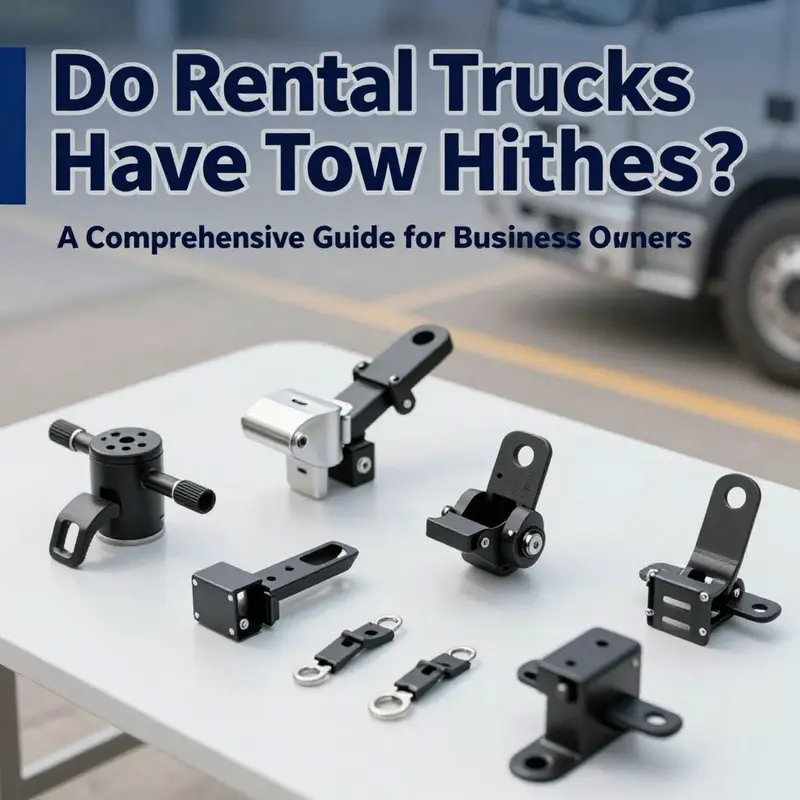
Within this framework, it helps to know what kinds of hitches rental trucks actually offer. The most common sight is the ball mount hitch, typically categorized as Class II or Class III. A ball mount hitch is a receiver tube with a removable ball that you swap to accommodate different trailer couplers. Class II hitches are standard on many mid-sized rental trucks and are well suited to light to medium trailers—think small utility trailers, boat trailers, or modest campers. Class III hitches, offering higher weight capacities, are a common upgrade for heavier loads such as larger equipment trailers or bigger recreational trailers. The presence of these hitches in the fleet is a practical nod to versatility: you can tow a range of small and mid-sized trailers, provided the rental terms permit it and the trailer itself falls within the hitch’s weight and tongue-load ratings.
Beyond the everyday ball-mount configurations, there are larger, more specialized hitching options that show up on some rental fleets, especially in the heavier-duty segments. Gooseneck hitches are typically mounted in the truck bed and connect to a specialized coupler on the trailer. They deliver outstanding stability and strength for very heavy or large trailers. The trade-off is that they are not universal in rental fleets and, when they appear, they usually accompany explicit terms about what you can tow and under what conditions. Gooseneck setups are valued for their low center of gravity and weight distribution, which can reduce sway and improve control with heavy payloads. Then there are fifth wheel hitches, mounted in the bed of the truck and using a king pin connection to the trailer. Fifth wheels offer exceptional towing capacity and stability, making them the preferred choice when towing large RVs or substantial commercial trailers. While they exist in some high-end or specialized rental offerings, they are far less common than ball mounts and goosenecks, and, again, their use is governed by the rental agreement and the vehicle’s configuration.
For fleets that work as tow trucks themselves—vehicles designed to recover or transport disabled cars—the hitching system is often integrated into the vehicle’s architecture. A wrecker or rollback truck may feature a hydraulic boom, winch, or a tilt bed rather than a conventional trailer hitch. These integrated towing systems are specialized tools for vehicle recovery rather than for pulling standard trailers. If you encounter one of these vehicles in a rental fleet, the kind of towing it can perform, and the safety checks required, will be distinct from those for a simple ball-mount trailer. The bottom line for renters is clear: you must verify the specific hitch type, its weight ratings such as the Gross Trailer Weight Rating and tongue weight, and the contract terms before planning any tow.
With that practical framework in mind, there is value in understanding how the hitch type aligns with real-world towing needs. A Class II or III ball mount can support a surprisingly broad range of small to medium trailers, but even within those classes the actual limit matters. The GTWR—gross trailer weight rating—and the tongue weight rating tell you what the trailer and its cargo must not exceed. Exceeding these numbers is not just a matter of diminishing performance; it can compromise steering, braking, and overall vehicle stability. A trailer heavier than the hitch is meant to handle increases the risk of sway, reduced braking efficiency, and accelerated wear on the truck’s driveline and suspension. For many renters, the involvement of a trailer stops at the driveway test. They discover a hitch is present and assume that towing is a simple matter of coupling the trailer and rolling out. The reality, however, is that towing is a coordinated activity that requires matching vehicle capacity, trailer weight, and a set of procedural checks.
The contract often requires additional steps to enable towing. A trailer brake controller, for instance, may be required for larger trailers to ensure that the trailer’s brakes are properly synchronized with the truck’s braking system. This is not just a matter of preference; it is a safety requirement that helps prevent dangerous decoupling or misalignment of the trailer’s braking power. Lights, turn signals, and brake lights on the trailer must be functional and compatible with the truck’s electrical system. The installation or operation of such devices can be subject to a supervisor’s approval or may require a technician’s involvement, depending on the rental company’s policies. The practical implication is straightforward: even if the hitch hardware is installed and ready, you must ensure that all ancillary systems are in order before any towing begins.
In many rental scenarios, the simplest path to clarity is to consult the contract or speak with a representative before plugging a trailer in. The staff can confirm whether towing is permitted, what types of trailers are allowed, and whether any additional equipment is required. If towing is permitted, they can also provide precise specifications for the vehicle’s GTWR and TW ratings, as well as guidance on how to calculate payload and distribution to maintain stability on the road. If you are curious about technical installation details or the practical steps of hitch usage, you might explore a dedicated guide that walks through the process of hitch installation and compatibility. For a detailed, user-friendly overview that keeps you focused on the practical steps, you can refer to a resource dedicated to trailer hitch installation. See the trailer hitch installation guide for more information.
The chapter that follows, grounded in practical measurements and policy considerations, aims to bridge the gap between what you can physically see—the hitch receiver—and what you are allowed to do with it under a rental agreement. It examines how different hitch types translate into towing capabilities, how the weight ratings translate into real-world load limits, and how to approach the rental counter with the right questions to avoid surprises on the road. It is a compact map that helps you navigate the space between hardware and permission, between a visible hitch and a legitimate tow.
All of this matters because the decision to tow with a rental truck is not a universal permission granted by hardware alone. It is a function of the vehicle’s configuration, the trailer’s weight, the insurance and liability framework, and the rental agreement you sign at pickup. If you plan to tow a trailer, you want the process to be predictable, safe, and compliant. That starts with recognizing that the hitch is a piece of equipment with a defined purpose and a defined limit. It ends with you, the renter, knowing exactly what you are allowed to tow, how heavy it can be, and what extra gear you may need to make the journey safe.
For further orientation around the practical specifics of hitch configurations and installation considerations, the following internal resource offers additional context while staying focused on the practical needs of rental users: trailer hitch installation guide. This reference can help you visualize how a hitch is integrated into a truck, what the components look like, and how the installation landscape changes as hitch classes shift from II to III, or as gooseneck and fifth-wheel options appear in higher-end or specialized fleets.
While the material here emphasizes the importance of checking the contract, it also reinforces a prudent approach to planning. If you find yourself considering a heavy trailer or a long-haul setup, talk through the plan with a rental agent early in the process. Confirm the exact trailer type you intend to tow, the trailer’s weight, and how it relates to the truck’s GTWR and tongue weight. Discuss whether you need to attach a brake controller or whether you can rely solely on a standard electrical hookup for basic lighting. Ask about insurance coverage for towing, and whether you need to purchase any additional protection for the trailer or the load. All these steps help ensure that your towing plan remains within policy boundaries and that you are not caught off guard by a late discovery at the roadside.
In sum, rental trucks do come equipped with hitch receivers in many cases, but the ability to tow is not guaranteed. The hitch is the hardware that makes towing possible in theory, but the permission to tow, the payload limits, and the safety requirements are defined by the rental agreement and the vehicle’s specifications. Understanding the difference between hardware and authorization can save you trouble and keep your trip on track. If you are curious about the installation and the hardware in more detail, the internal guide linked above provides practical insights without getting lost in jargon. And if you need to widen your safety net, the external resources on towing safety and best practices can offer additional context to help ensure your towing plans stay secure from start to finish.
External reference for broader safety considerations in towing: https://www.nhtsa.gov/road-safety/tow-dolly-safety
Tow Rules: Reading Rental Agreements Before You Tow
Trying to tow with a rental truck starts with reading the contract rather than inspecting the hitch. A hitch is not permission to tow. To decide what is allowed, read the section about towing and the section about equipment compatibility. Some fleets require written approval, preauthorization forms, or the installation of specific equipment such as a trailer brake controller or an upgraded hitch. Keep an eye out for addenda or riders to the standard agreement that may spell out exceptions. If you see language about exceptions write down terms and keep a copy.
The physical hitch is common but does not speak to policy. Most trucks come with a Class II or Class III receiver, typically 2 inch. But a 2 inch receiver does not equal permission to tow. If the contract forbids towing or requires a permit, attempting to tow can breach the contract and void insurance coverage. The rider may limit liability if not.
When approval exists, verify weight ratings for both truck and trailer, confirm hitch type and compatibility, and ensure lighting and braking systems are functional. The act of towing requires more than pulling a lever. The policy protects you and the rental company, not just the hardware.
In practice, common patterns include explicit bans on towing without written approval, restrictions to certain vehicle classes, or towing as an optional add on with extra fees. Always obtain approval in writing before towing. If not approved, do not tow.
Finally, remember that insurance coverage is a central risk. Towing outside approved terms can void coverage and leave you financially exposed. Document approvals and requirements clearly and keep them on hand during the move.
If you want practical guidance, check the fleet policy and consult the rental center before you attach anything to the hitch.
Final thoughts
Understanding the relationship between rental trucks and tow hitches is essential for business owners who rely on transportation of goods and equipment. While many rental trucks are equipped with tow hitches, compliance with specific rental agreements and towing restrictions is paramount to avoid liabilities. Always check your rental contract for towing permissions, required add-ons, and the types of hitches offered. By being informed, you can avoid unexpected challenges and ensure a smooth rental experience.