
For business owners navigating the challenges of relocation and logistics, understanding the role of storage facilities that offer moving truck rentals is crucial. These facilities not only manage space for your goods but also provide essential transportation solutions, significantly simplifying your moving process. Each chapter of this article explores various facets of this integrated service model: the types of moving truck rentals available, the considerable benefits these arrangements offer, regional variations, and a comparative analysis of facilities with and without truck rentals. Read on to uncover how these services can enhance your operational efficiency and ease your transition.
From Lockers to Roadways: The Growing Link Between Storage Facilities and Moving Trucks
When people plan a move, storage facilities often serve as more than a simple holding space. They can function as a gateway that connects secure storage with access to moving trucks through partnerships, referrals, or coordinated services. The result is a spectrum of arrangements rather than a single standard, with local realities shaping how tightly storage and transport are integrated.
At a high level, storage sites are optimized for containment, protection, and controlled access. They excel at securing belongings, maintaining climate control, and providing reliable access windows. Moving trucks, by contrast, are optimized for mobility and loading efficiency. The two models intersect when facilities align with truck rental networks or engage third-party partners to simplify scheduling, pickup, and return logistics. In many markets the on site fleet is rare; instead, the facility acts as a facilitator that connects you with an external rental provider. This pattern can reduce frictions by offering a single point of coordination without forcing a single checkout for two separate services.
Three practical pathways commonly appear in real life. First, some facilities maintain formal relationships with truck rental networks and can arrange a rental with pickup or drop-off at the site. Second, others rely on referrals or concierge styles of assistance, guiding you to a trusted provider and sometimes offering discounts via a partner program. Third, there are locations where on site truck access is not available at all, and you must rent from a provider at a nearby location or arrange a one way rental. Across these options, the storage piece remains a separate service, while the truck component is coordinated through a partner ecosystem.
This spectrum matters for timing, cost, and simplicity. If you want to use a moving truck alongside storage, start by confirming whether the site can connect you to a partner network and what sizes are supported. Ask about pickup and drop off options, required notice, and any fees. Then verify the truck size against the volume of your load and the site’s loading dock constraints. Planning ahead—reserving a truck slot, aligning it with storage dates, and understanding any extra equipment needs—usually yields smoother days and fewer last minute surprises.
Seasonality also shapes these arrangements. Demand for trucks tends to rise in spring and summer, which can tighten available slots. A proactive approach, including written confirmations of pickup times and insurance terms, is especially valuable when coordinating storage with a rental vehicle. If a site cannot offer on site truck access, use a dedicated truck rental provider nearby and treat the storage site as a staging area rather than a pickup point.
For readers seeking practical steps, a simple checklist helps turn planning into action: confirm on site truck access and partner details; collect written terms for sizes, fees, and scheduling; evaluate the need for loading equipment; compare total costs across storage and truck rental; and confirm any access restrictions that could affect your chosen truck size or loading plan.
In the end, storage facilities are not universal substitutes for dedicated moving fleets. Rather, they can be valuable connectors that reduce friction when integrated with a trusted truck rental network. The best outcomes come from clear questions, written confirmations, and a plan that treats storage and transport as coordinated pieces of a larger moving strategy.
Why Choosing a Storage Facility That Rents Moving Trucks Makes Your Move Easier
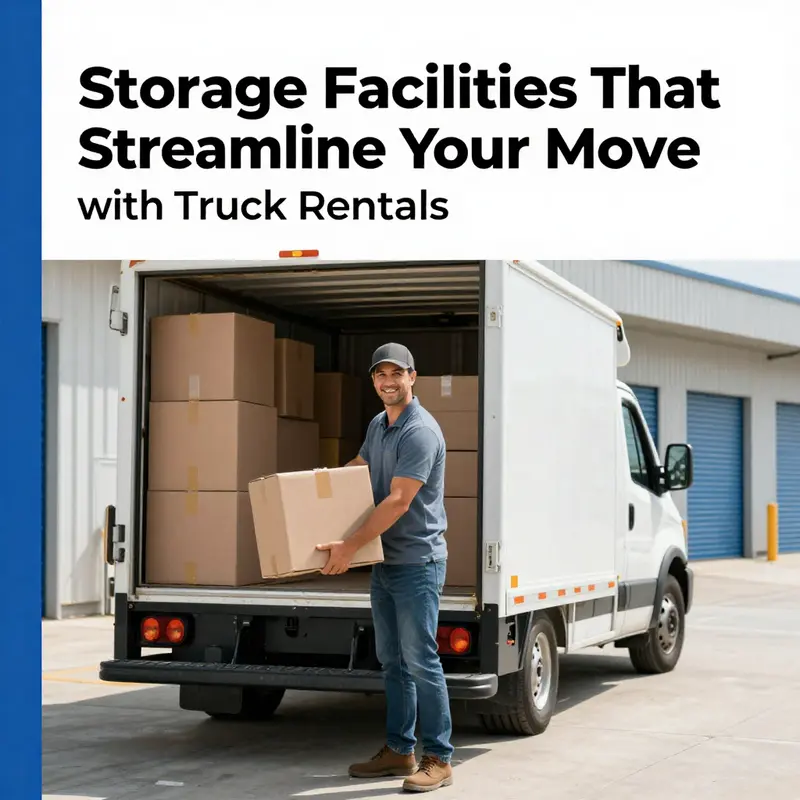
A single place to handle transport, packing and secure storage transforms a move from a headache into a manageable project. When a storage facility offers moving truck rentals alongside unit access, the benefits extend beyond mere convenience. This integrated approach streamlines timing, reduces coordination errors, and often lowers overall costs. The difference shows up in practical ways: fewer phone calls, fewer late arrivals, easier loading, and a clear point of accountability when something goes wrong.
Many people underestimate how much complexity a typical move involves. Renting a truck from a separate company often means juggling pick-up windows, return deadlines, fuel policies, and drop-off fees. When the truck and the storage space are part of the same operation, those moving parts come together. You can reserve a vehicle and a unit at once, plan a single trip to one facility, and handle loading with fewer interruptions. That continuity is especially valuable for people working to tight schedules, managing long-distance relocations, or moving without additional help.
Practical time savings are one of the clearest advantages. With on-site truck rental, you often park the vehicle right next to your unit. That eliminates extra walking time and reduces the number of heavy lifts. Loading becomes safer and faster when the truck is adjacent to the storage door. For large items, appliances, or bulky boxes, this proximity can save hours and reduce the risk of damage. It also makes it simpler to make multiple short trips during the same day without returning the truck to another location between loads.
Cost benefits are real, too. Facilities that bundle truck rentals with storage frequently offer package pricing or discounts for customers who use both services. That could mean lower daily rental rates, waived mileage fees, or reduced insurance costs when both services are booked together. Even when special discounts are not advertised, the elimination of extra travel time and fewer logistical hiccups translate to savings in labor and incidental expenses. For someone hiring movers by the hour, cutting loading time by just a few hours lowers the total bill.
Another important advantage is the reduced likelihood of scheduling conflicts. Separate vendors operate with different booking systems and availability windows. When you rely on a single provider for both truck and storage, there is less chance that your truck will arrive late or your unit won’t be ready. That reliability is particularly important during high-demand seasons when trucks and units are both harder to secure. A single reservation covers the core pieces of a move and makes it easier to build a confident timeline.
Beyond scheduling, the integrated model often includes practical resources that simplify packing and protection. Many facilities that offer rentals also stock packing materials, moving equipment, and loading aids. Items such as furniture blankets, dollies, tie-down straps, and moving pads are frequently available where the truck is parked. Having these supplies on site reduces the need to source them from third parties and minimizes downtime. It also promotes better handling of fragile items, since the appropriate materials and tools are available when they are needed.
Security and insurance are important considerations that favor the integrated option. Storage facilities tend to have established security systems, monitored access points, and on-site staff. When the vehicle used for loading and unloading is part of the same facility, the transition from truck to unit occurs within a controlled perimeter. That continuity helps protect belongings while they are waiting to be stored. Additionally, facilities often offer insurance or valuation coverage options that can be extended across the rental vehicle and the storage unit, simplifying claims if damage or theft occurs.
Flexibility in rental terms also grows when storage and truck services are combined. Short-term hourly rentals make sense for quick loads or local moves. Day or multi-day rentals work for longer moves or when time is needed to load items gradually. Some facilities even arrange for one-way rentals or drop-off services tailored to customers storing items temporarily during a move. This adaptability supports a range of moves, from a brief apartment transition to a stage in a long-distance relocation where timing is uncertain.
For small businesses, the integrated model offers distinct business advantages. Firms that need to move inventory or equipment temporarily benefit when the truck, storage, and workspace are all coordinated. This setup is useful for seasonal inventory shifts, pop-up retail operations, or short-term project storage. Rather than contracting several vendors, a single relationship simplifies billing, logistics, and timing. That streamlined process makes it easier for business owners to focus on operations instead of managing transport details.
The customer experience improves in subtle ways as well. When staff at a storage facility are familiar with the truck fleet and the loading flow, they can provide targeted help. Staff may advise on unit sizing, suggest the best loading pattern for efficient use of space, or recommend protective packing solutions for high-risk items. This localized knowledge reduces trial and error. It also prevents the common misstep of over- or underestimating unit size, which can lead to wasted space or an emergency need for a second unit.
There are also environmental and logistical efficiencies to consider. Fewer separate trips and consolidated logistics mean lower fuel use and fewer vehicles on the road. When customers can complete loading and move directly to storage at the same site, there is less driving between locations. For communities aiming to reduce traffic and emissions during busy moving seasons, integrated truck-and-storage services contribute in a practical way.
Of course, not every facility will offer identical benefits, so evaluating options is important. Look for transparent pricing, clearly stated insurance and fuel policies, and hours that match your schedule. Confirm the availability of moving supplies and on-site equipment. Ask about access rules—such as whether you can park a rented truck in front of the unit for loading and how long you may do so without additional charges. Good providers will make these policies easy to understand and will help you plan a loading sequence to minimize time and effort.
For those unfamiliar with rental trucks or with tight capacity needs, a few planning tips improve the outcome. Make a list of large items and measure them. Use these dimensions to choose a unit and truck size that fit together logically. Pack boxes with clear labels and move heavy items first to allow balanced stacking. Reserve the truck and unit well in advance of peak moving dates. Finally, ask whether the facility offers assistance with loading or can recommend vetted local movers for a partial labor solution.
Integrating truck rental with storage solves many pain points that make moving stressful. It consolidates vendors, simplifies timelines, and provides practical on-site support. Whether moving across town or staging items during a longer relocation, the benefits of this integrated approach are tangible: less time wasted, fewer logistical surprises, and a clearer path from origin to secure storage. For people who value predictability and control during a move, choosing a storage facility that also provides truck rentals is a strategic way to reduce friction and protect time and resources.
For a practical example of how providers combine moving and storage services to create cohesive solutions, see this resource: https://www.ups.com/en-us/services/moving-and-storage/ .
For additional tips on truck sizes and planning for a storage-linked move, check out this blog post: https://larentaltrucks.com/blog/hello-world/.
Regional Tides: The Geography of Storage Facilities That Rent Moving Trucks
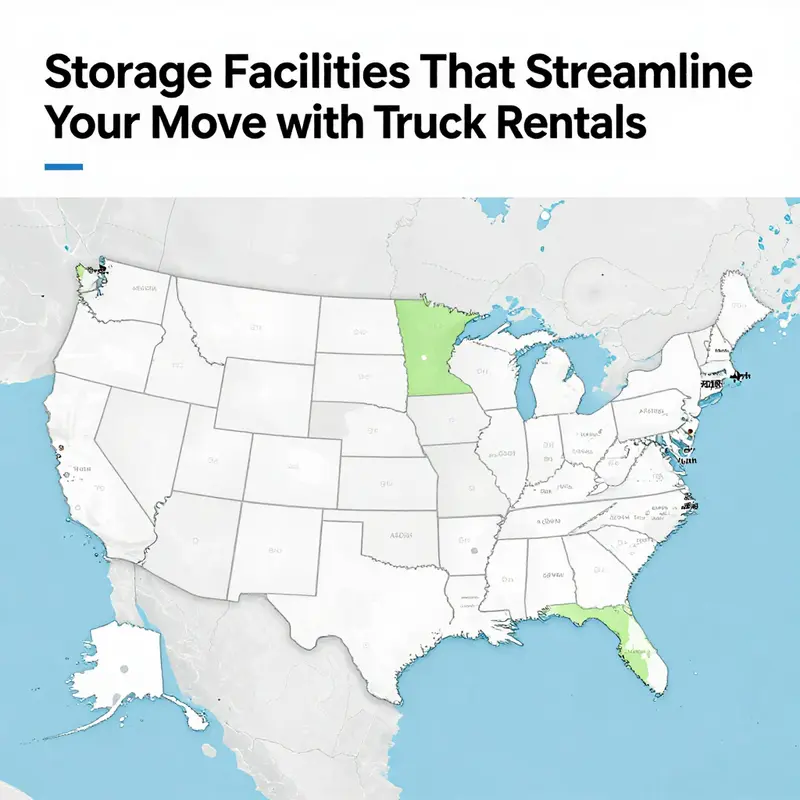
When you map a move, the geography of where you live shapes everything that comes after the truck is loaded and the boxes are taped shut. Regional variations in population density, economic activity, and local rules don’t just alter the price of a storage unit; they reshape the entire logistics chain that ties storage together with moving truck rentals. In dense urban cores, space is precious and footprints are small. Storage facilities cluster near transit corridors and in neighborhoods where every square foot counts. The result is a network of compact, security-minded facilities that emphasize climate control, around-the-clock access, and tight security. The fixtures are well-tuned to the local rhythm: shorter leases, flexible access hours, and a willingness to handle the occasional last‑minute storage need that crops up during a move. And because urban land costs are higher, the cost structure of moving truck rentals tends to reflect that premium. Parking is at a premium, fuel surcharges are extenuated by the traffic realities of the city, and congestion charges can alter the sticker price before the truck even pulls out of the driveway. In this landscape, customers often pay more for the convenience of a truck nearby and the ability to swing by a storage site the same day to retrieve a box or move a few pieces straight into storage.
In contrast, suburban and rural regions tell a different story. Cities that span large tracts of land and sparse traffic can offer larger facilities with easier parking and quicker truck delivery windows. Inventory that includes longer-term storage, more flexible access, and fewer restrictions on loading zones becomes a practical advantage when a move is spread over several days. The same regional dynamics—land costs, zoning rules, and the availability of skilled labor—show up in the price of a rental truck, but the impact is often softened by the scale of operations and a broader geographic footprint. In these areas, storage can be priced more competitively, and the rental fleets associated with moving can be more diverse, creating a practical ecosystem where customers can combine a storage solution with a truck rental in one stop. The result is a smoother, more predictable experience for a move that benefits from the additional space and flexibility that comes with less dense settings. An important consequence is that households planning interstate moves or long-term storage are more likely to encounter bundled options in the suburbs and countryside, where delivery windows align with open roads rather than crowded city blocks.
This regional tapestry has real implications for the way people plan a move. The National Association of Realtors highlighted in recent Moving Trends research that more than four in ten movers view storage and transportation costs as a significant factor shaping relocation decisions. That statistic captures a broader truth: people are not simply buying a unit or renting a truck in isolation. They are negotiating a package that includes access to space, the reliability of transportation, and the ability to coordinate both assets in a way that minimizes stress and time. In urban markets, that package is defined by speed and proximity. In suburban markets, it’s defined by scale, flexibility, and a wider spectrum of options for delivery and pickup. The regional mix influences not only the price tag but also the choices that come with a move—whether to rent a larger truck for a single day or arrange a compact vehicle that can run back and forth between a storage unit and a loading zone with multiple trips.
The service mix at storage facilities also shifts with the region. In tech-forward cities, some facilities emphasize automation and streamlined, self-serve experiences. A customer might reserve a truck or a storage slot online, complete a digital check-in, and schedule access during extended hours, all without the need for a staff member to be present. In mid-sized towns and rural areas, the model often leans toward community ties and personalized service. A locally owned site may offer hands-on help with loading equipment, guidance on how to pack fragile items, and even flexible delivery options that align with regional traffic patterns or seasonal road closures. These differences matter when you’re overseeing a move that involves specialty items, weather-sensitive belongings, or a tight timetable. The architecture of a region—its roads, its parking norms, and its regulatory environment—nests within the storage-truck rental equation and shapes the practicalities of day-to-day use.
Where does a reader begin when trying to choose a storage facility that rents moving trucks across these diverse landscapes? First, recognize that the closest facility might not always be the best choice for a given move. In dense urban areas, proximity is valuable, but the higher costs and parking constraints can weigh on the decision. A slightly farther facility with a robust truck fleet, better access hours, and simpler loading zones can save time and reduce fuel surcharges in the long run. In less dense regions, proximity still matters, but the advantages of larger units, extended access, and an array of truck sizes become more pronounced. The most effective approach blends practical constraints with a clear view of the move’s scale and timeline. A family moving to a new home within the same metro area might find a bundled option that includes a compact truck and a month of storage appealing. A business relocating inventory across a state line could benefit from a fleet that offers flexible delivery windows, insurance options for the transport, and a smoother integration of storage for staging and consolidation.
For many readers, the decision hinges on a few core questions that cut across regions. How large is the moving truck needed for the job, and what is the availability in the target region? Are there hidden charges related to parking, fuel, or extended access hours? What security features does the facility offer, and how easily can you access the unit after hours if the move stretches over a weekend? How do storage terms align with the planned duration of the truck rental, and can you bundle both services for a single quote that covers access, insurance, and delivery options? In urban markets, there is a premium on speed and access, and the ability to coordinate a truck rental with a small storage unit can be a strong selling point. In suburban markets, customers may be more concerned with the cost per square foot of storage and the flexibility to choose from a wider range of truck sizes and delivery arrangements. These preferences shape how facilities structure their offerings, from price tiers to delivery windows and even partnerships with regional fleets that can deliver a truck to a home or a loading dock within a defined radius.
The regional differences also influence the way consumers evaluate value. A customer who is moving a few large furniture pieces may prefer a larger truck in a suburban setting, where a one-way rental and a delivery to a storage site could be arranged to minimize multiple trips. The same customer moving a city apartment might favor a smaller truck, with the understanding that parking restrictions and city congestion could make a larger vehicle impractical. In both cases, the ability to book online, compare quotes, and view real-time truck availability is essential, yet the local reality—traffic patterns, toll regimes, and parking policies—continues to shape the final choice. Some regions see higher demand in spring and summer, when families coordinate school transitions and weather is more forgiving. In these periods, booking in advance becomes critical, not only to secure a truck but also to lock in a preferred storage unit, especially where space is scarce or where climate-controlled options are limited.
The landscape is further nuanced by the regulatory environment that governs storage facilities and vehicle rental in a given region. Local zoning and safety rules influence the layout of storage campuses, the distribution of loading bays, and the hours during which trucks can operate on nearby streets. In some cities, congestion pricing and fuel taxes or surcharges at the pump can tilt the cost calculus for a move that relies on a rental truck. In others, the regulatory climate may be more permissive, allowing larger pipelines of delivery to be scheduled during off-peak times. Across regions, the capacity of a storage facility to absorb a move—without compromising security or access for other customers—depends on how well the site can coordinate with a rental fleet, how efficiently it manages its space, and how clearly it communicates with customers about fees, insurance, and logistics. This orchestration is what ultimately shapes the user experience and determines whether a move feels smooth or stressful, irrespective of the actual distance between origin and destination.
From a consumer behavior vantage point, regional variations also shape expectations about the bundled nature of these services. The idea of “one-stop” moving often resonates more in suburbs where space and budget by the square foot are both more forgiving, and the logistics of loading and unloading can be accommodated with relative ease. In city centers, a leaner, more healthcare-like precision in scheduling may be the norm, with a premium placed on predictable access times and minimal waiting. The capacity to reserve a truck, arrange delivery to a storage facility, or even coordinate a pickup from the site all on the same platform becomes a value proposition that can tilt decisions in favor of one provider over another, particularly when customers weigh total relocation costs against the intangible benefits of convenience and predictability. In sum, regional factors—density, road infrastructure, labor availability, regulation, and seasonal demand—interact with the core products of storage and truck rental in a way that makes each market unique.
To translate these insights into practical guidance, consider a few closing pointers that can help readers approach a regional move with greater clarity. Start by estimating the true scale of your storage need. If you only require short-term storage for a handful of items, prioritize facilities with flexible access hours, small unit sizes, and straightforward insurance terms. If your move involves staging space for a longer period, look for sites that offer larger units or walk-up loading bays, even if they are outside your immediate neighborhood. Then compare the truck options in your region. In dense markets, a compact truck that fits through narrow streets and can be parked in limited spaces may be the best compromise between cost and practicality. In more expansive regions, a mid-size or full-size truck could reduce the total number of trips and, over several days, provide a meaningful savings in time and stress. Always request a comprehensive quote that includes truck rental rates, fuel charges, tolls, delivery or pickup fees, insurance, and any potential surcharges related to parking or extended access. Reading the fine print before you confirm a booking can save hours of back-and-forth later, especially if your move spans weekends or holidays when prices and availability shift quickly.
If you want to explore practical examples that illustrate how these regional dynamics play out in real life, you can review practical guides that discuss how to navigate local storage and moving truck options in a typical metropolitan corridor and in a nearby suburban belt. For readers seeking a direct exploration of truck sizes and their fit for different move profiles, the following resource provides a focused look at 16-foot truck options and how they can align with modest storage needs in many markets. <16-foot-truck> 16-foot truck
As you move forward with planning, keep in mind that the choice of storage facility and the truck rental plan are inseparable parts of a successful relocation. The regional geography you inhabit does more than shape prices; it defines timing, convenience, and the rhythm of a move. Urban environments demand agility and precise coordination, while suburban and rural settings reward scale, flexibility, and straightforward logistics. The chapter you’re reading now is meant to illuminate that geography so you can approach your own move with a clearer map, a more accurate budget, and a calmer mindset than you might have had otherwise. The next section will continue to weave these regional insights into actionable steps, from budgeting for storage and transport to evaluating quotes in a way that respects both local realities and personal timelines. For broader context on how regional movement patterns intersect with housing trends, see Moving Trends 2023.
External reference: Moving Trends 2023. https://www.nar.realtor/research-and-statistics/market-research/moving-trends-2023
How Integrated Truck Rental Changes the Self-Storage Equation
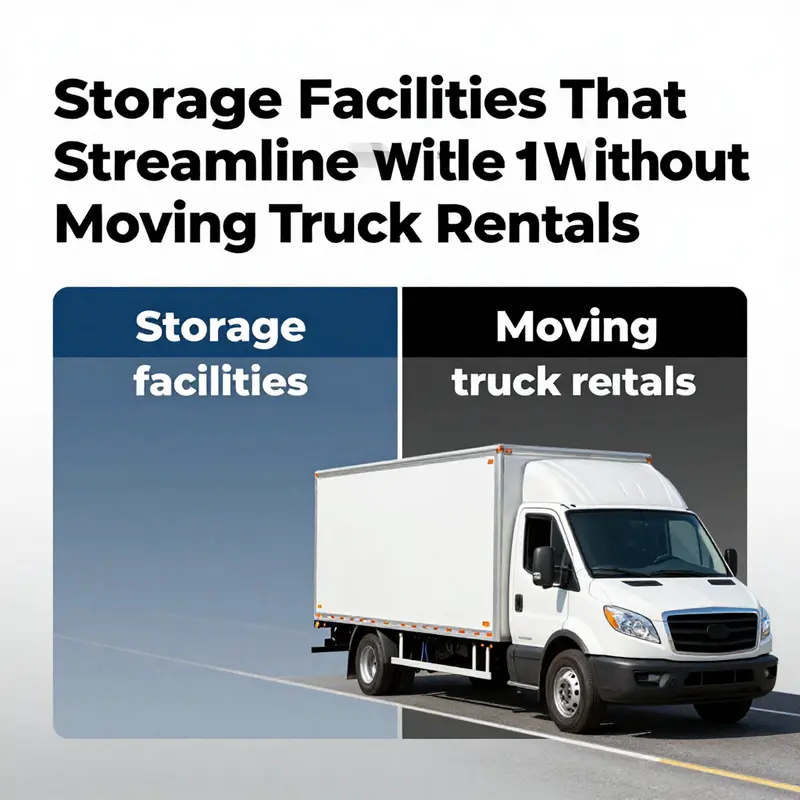
Integrated truck rental changes the self-storage equation by shifting the customer’s experience from fragmented tasks to a unified process. When a storage facility provides truck rental options, the move becomes a single coordinated service instead of several loosely connected steps. This affects cost, planning, risk, and time management in ways that matter for nearly every mover. The following narrative unpacks how those differences play out, what trade-offs to expect, and how to choose a model that fits the scale and complexity of a move.
A storage provider that bundles truck rentals aims to be a one-stop solution. Booking a unit and reserving a vehicle happen on the same site or at the same service desk. That single point of contact simplifies scheduling and reduces the chance of double-booking. It also allows for bundled pricing structures. For example, facilities may offer reduced vehicle rates when combined with a storage contract. These savings are not always headline discounts; they often appear as waived delivery fees, reduced mileage charges, or temporary promotional rates. For moves that require multiple trips or larger vehicles, a modest percentage savings on rental and fuel can add up quickly.
Beyond direct savings, there is a convenience premium. When the storage facility coordinates vehicle access, customers avoid many friction points. The provider can align gate hours, loading dock availability, and staff assistance with the truck drop-off and pick-up schedule. This alignment reduces idle time and the likelihood of unexpected waiting periods. For people moving under tight time constraints, that reduction in uncertainty can translate to fewer missed work hours or less need for last-minute help from friends.
Integrated services also tend to offer more streamlined operational support. Staff at these facilities are often trained to advise on vehicle sizes and loading strategies that match their unit dimensions. That practical guidance reduces the risk of renting a truck that is too small or too large. It also helps customers calculate fuel needs and estimated trip counts. When vehicles and units are matched intelligently, customers often make fewer trips and use less fuel. This benefit is especially meaningful for long-distance moves, where each avoided trip represents hours and dozens of dollars in operational costs.
Customer satisfaction scores reflect these tangible improvements. Studies show that users of bundled moving and storage services report lower stress levels and higher ease-of-use ratings than those who coordinate services themselves. The difference is not only emotional. Lower stress usually means fewer mistakes, better packing, and less damage to belongings. Facilities that offer truck rentals often also provide supplementary services like packing supplies, dollies, and protective materials. These extras further reduce the friction in the loading and unloading phases.
However, integrated solutions are not always the cheapest option on paper. When you compare baseline rates, standalone truck rental companies sometimes offer lower advertised prices for specific vehicle types or short-term needs. These providers may run aggressive short-term promotions or last-minute deals. For a very short move with a predictable itinerary, independently sourced vehicles can outperform bundled options on cost. The trade-off is that independent rentals require more coordination and carry more scheduling risk.
Another trade-off concerns flexibility. Facilities that manage their own rental inventory or partner closely with a provider may have limited vehicle options at peak times. During high-demand seasons, customers might find only certain truck sizes available. Independent rental networks with many locations can sometimes offer a wider selection and one-way drop-off flexibility. That said, many storage facilities that include vehicle rental have made arrangements to offer a range of sizes and one-way options precisely because customers expect that convenience.
Insurance and liability also differ between the two models. When a storage facility controls the rental arrangement, it often bundles or recommends certain insurance products. This can simplify claims if damage occurs during the move or while the vehicle is on site. Conversely, when customers bring their own rental or hire a third party, they must navigate separate insurance policies. Misunderstandings about coverage limits or exclusions can leave homeowners exposed. Bundled services reduce this complexity by creating clearer lines of responsibility.
For businesses, integrated truck rental offers distinct advantages. Commercial customers frequently move inventory on tight timelines. When their storage partner also controls vehicles, deliveries can be scheduled with predictable windows. Real-time tracking and fleet management tools are often available in these setups. That capability allows businesses to plan labor and inventory flow more precisely. Even smaller enterprise moves gain from the reduced administrative overhead and one invoice for both storage and transport.
Yet some customers prefer the autonomy of choosing their own transport. DIY movers who already own or have access to a vehicle, or who prefer a particular independent rental brand, may value the freedom to mix and match services. They may also capitalize on niche promotions targeted to certain customer groups. For them, the absence of a bundled truck rental at a facility is not a disadvantage. Instead, it is an opportunity to optimize cost and service on their own terms.
Operationally, facilities that include truck rental must also manage more complex logistics. They need systems to handle vehicle maintenance, roadside support, and scheduling across storage and transportation resources. These requirements increase operating costs and administrative complexity. In turn, facilities recoup those costs through modestly higher base rates or by negotiating volume deals with a fleet partner. If those partners are efficient, the net effect for the customer remains positive. If not, gaps in service can cause frustration.
Scalability is another important aspect. For a single-family move, either model works well with careful planning. But as the scale grows—long-distance relocations, business inventory transfers, or repeated seasonal moves—the value of an integrated solution compounds. Repeat customers benefit most from consistent processes, loyalty pricing, and easier scheduling. Some facilities extend these benefits with enterprise-level accounts, offering predictable pricing tiers and prioritized vehicle availability.
Environmental and time-cost considerations also favor integration. Fewer trips mean lower emissions and less time spent on the road. When facilities help customers estimate load efficiency and choose the right vehicle, they reduce both fuel consumption and carbon output. This pragmatic efficiency is an often-overlooked advantage for movers who value sustainability or who face city regulations on vehicle use.
Ultimately, the choice between storage facilities with or without truck rental hinges on priorities. If convenience, reduced coordination, and smoother logistics matter most, an integrated facility usually wins. If absolute lowest upfront price or specific vehicle options are the priority, an independent rental combined with a standalone storage unit may be better. For many customers, the ideal approach blends both: choose a facility that offers rental options but remain open to comparing independent rental rates when budgets are tight.
For those exploring facilities, it helps to ask a few targeted questions. Inquire about bundled discounts, vehicle availability by date and size, insurance offerings, and how scheduling between unit access and vehicle drop-off works. Ask about additional support such as loading equipment and roadside assistance. A clear answer to these questions reveals how well a facility can truly act as an integrated moving partner.
If you want to read a detailed perspective on local providers that pair storage with rental vehicles, consider this overview of regional arrangements at the facility level: https://larentaltrucks.com/blog/penske-storage
For broader trends and statistics about moving and storage behaviors, see the 2024 moving trends report linked in the research section: https://www.amstat.org/insights/2024-moving-trends-report
Final thoughts
Incorporating moving truck rentals into your storage solutions can significantly enhance your logistical efficiency, allowing for smoother transitions during relocations. By understanding the types of rentals available, the benefits they provide to customers, and the regional variations that might affect your choices, you can make informed decisions that positively impact your business operations. As the market continues to evolve, embracing these integrated services will not only streamline your moving process but also support your growth.