

As businesses strive to manage expenses effectively, truck rental emerges as a crucial consideration for logistics and delivery operations. With various rental options available, understanding which service provides the best value for your investment is essential. This article delves into the cheapest truck rental currently available, evaluating current options, factors affecting costs, customer reviews of budget services, and comparing local and national providers to guide business owners towards making informed decisions.
Stretching Your Freight Budget: A Thorough Look at the Cheapest Truck Rentals for Small-Scale Deliveries
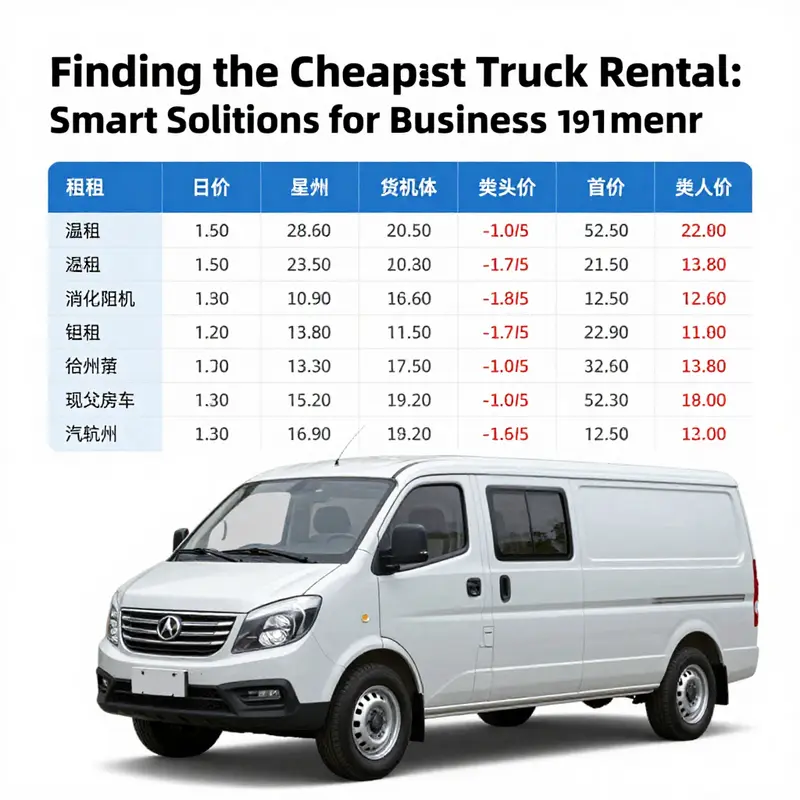
Finding the cheapest truck rental is not just about chasing the lowest daily rate. It is about reading the entire price structure with its hidden costs, understanding how mileage, maintenance, and insurance are packaged, and aligning those factors with the actual needs of a small business or freelancer. The search for affordability in urban logistics often centers on the electric cargo van and other light-duty options that promise low monthly commitments and straightforward terms. In practical terms, a typical market signal has emerged from a few key regions: if you can commit to a month at a time, a new energy cargo van might be advertised at surprisingly low monthly rates, sometimes around ¥2,000 per month in certain cities. While such figures may appear astonishing at first glance, they usually reflect targeted offers designed to catalyze early-stage ventures into logistics work, where the operator wants a simple, predictable cost of entry. The appeal is clear: a small business can launch a delivery operation without a heavy upfront investment, and a freelancer can test a logistics idea with a single, transparent monthly payment. The rewards go beyond the sticker price when the plan includes insurance, routine maintenance, and basic inspections bundled into the monthly fee. In these cases, the owner avoids many of the administrative headaches that can plague traditional leasing arrangements, such as end-of-term charges, uncertain renewal terms, or surprise service costs. The economics, then, hinge on how well the package fits the day-to-day reality of urban delivery, where trips are short, routes are dense, and vehicle uptime is more valuable than a few extra dollars in savings on a longer lease. The notion of the cheapest truck rental in this context becomes a question of balancing access with reliability, and of choosing a solution that reduces friction as much as it reduces price. One striking feature of the current landscape is the proliferation of electric, light-duty vans offered under flexible terms. These vehicles, well suited to city streets and curbside loading, are often promoted as the most cost-effective entry points for new shippers. The advertised monthly rates can dip into the ¥2,000 range in certain urban centers, with the caveat that such deals may come with regional limitations, mileage caps, shorter rental windows, or a reduction in service guarantees. For a small business, that trade-off can be worthwhile if the operation is concentrated in a single market and the driver plan aligns with a predictable daily route. Yet the absence of a broader national footprint means that the same deal may not be mirrored across provinces or neighboring cities. The consequence is simple: where you operate determines whether the cheapest option remains viable. This is where the narrative broadens to include more traditional light-duty cargo vehicles on platform-based rental models. In several markets, what you find is a spectrum of monthly rental tiers. A commonly cited tier involves a high-bar, 4-meter-plus cargo van that appears in many local fleets and private rental listings. In those cases, the monthly rent is approximately ¥3,800, with a deposit around ¥8,000, and a maintenance-and-insurance package often factored into the rate. The trade-off here is straightforward: you trade the lowest possible monthly price for a vehicle that may be newer or better maintained, with the certainty that insurance and periodic inspections are included and that the vehicle is ready for a longer-term commitment. This arrangement is especially attractive for small operators who anticipate heavy use, or who want the confidence of a well-maintained vehicle with standard service coverage. The same market often offers long-term or multi-month leases with favorable terms, where the monthly price falls closer to ¥3,000 or even lower under a commitment that exceeds several months. The idea is to push the per-day cost down by committing to a longer horizon, while still keeping the vehicle within a city-focused or regional delivery pattern. The range of options expands further when looking at online rental platforms that provide a menu of brands and configurations. In several cities, you will encounter a variety of light-duty vans and even larger cargo options, with monthly rents that hover around ¥2,850 or ¥3,000 in certain market segments. These listings commonly emphasize flexible tenure (long-term, short-term, or even holiday promotions) and may include a standardized package that covers basic insurance, routine maintenance, and road service. The presence of such inclusive terms is precisely what makes the cheaper options more appealing, especially for those just starting out in logistics or for freelancers testing the viability of a homegrown delivery operation. To synthesize these patterns into practical guidance, a few core considerations become indispensable. First, examine the total monthly cost rather than the headline rent. The total may be the same or even higher than a nominally cheaper option if it excludes insurance, maintenance, or routine inspections, or if it carries mileage penalties after a certain threshold. Second, evaluate the deposit requirements and how easily they are returned at the end of the term. High deposits can be a hurdle for new entrants, even if the monthly rate looks attractive. Third, scrutinize the inclusions. A good deal is not simply a low price; it is a bundled package that includes essential protections and predictable service intervals, which reduce downtime and frustration. Fourth, assess flexibility. If your business plans change—seasonal demand spikes, a shift to longer routes, or a need for a larger vehicle—you will favor options that scale smoothly rather than those that lock you into a restrictive configuration. It is also important to keep in mind that the cheapest option in one city may not be portable to another, because the cost structure is heavily influenced by local demand, regulatory conditions, and the ecosystem of supporting services such as charging infrastructure for electric vans. The landscape, in short, rewards those who do their homework with a careful map of what is included in the monthly bill and what might be added on a kilometer-by-kilometer basis. For readers evaluating the market today, several concrete markers help shape decisions. In the electric-van lane, the lowest entry barrier is often a new energy cargo van conveyed through a city-focused rental scheme that markets itself to solopreneurs and very small businesses. The allure is not just the price; it is the simplicity of a one-month payment with minimal complications and a vehicle that is typically suitable for urban deliveries, package drops, and last-mile work. For operations with a broader footprint, the cheaper entry point frequently shifts toward a slightly larger or more flexible vehicle through a traditional rental platform that aggregates multiple brands and models. Here the monthly rent is higher, yet the package may include a more robust maintenance framework, better insurance terms, or a larger geographic coverage area. The important takeaway is that the cheapest option is not universally fixed; it is highly dependent on locale, the scope of usage, and the readiness of the operator to accept terms tied to a specific use case. A practical approach for aspiring shippers is to pursue a tiered evaluation: start with a low-cost electric van when the delivery regime is predictable and confined to a few blocks; then compare with a more established 4-meter or larger cargo van when the routes or volumes begin to exceed the tight confines of a single neighborhood. Because the urban delivery problem often centers on reliability as much as price, the best decision may hinge on the predictability of uptime and the certainty of service terms, not solely on the monthly sticker price. Within this framework, one internal reference point remains valuable without naming brands or specific models. A compact electric van that can handle typical city deliveries and is offered with inclusive insurance and maintenance can be a strong first choice for a budding courier operation that prioritizes cash flow and simplicity. If your operation scales and you require more space or longer ranges, there are options that push the per-day cost down further by committing to longer terms or by choosing a platform that bundles more services into a single monthly obligation. In short, the cheapest truck rental today is less about a single magic number and more about a disciplined price comparison that foregrounds total cost of ownership, ease of use, and uptime. For those who want a concrete path into the current market, the landscape offers a lower-cost avenue through local electric van leases with monthly payments around ¥2,000 in some cities, paired with straightforward terms. This can be enough to pilot a delivery operation, test a route, and build the business case for expansion. Conversely, if you require more space, if your work spans multiple cities, or if you want a longer-term commitment with a robust maintenance framework, you may find that a slightly higher monthly rate—around ¥3,000 to ¥3,800—delivers greater peace of mind and fewer operational headaches. Either way, the key is to align the rental structure with the everyday rhythm of your work, make sure you have clarity on every included service, and anticipate how the plan will adapt as your business grows. For readers who seek a concrete example of current low-cost options and a broader sense of what to expect, a recent market snapshot highlights a direct, welfare-driven approach to small-vehicle rental that prioritizes simplicity and cost certainty. The example shows a setup where a private, well-maintained van could be available at a monthly rate that makes sense for an early-stage logistics venture, especially when the price includes essential protections. In this sense, the cheapest truck rental is not merely a price tag; it is a thoughtfully packaged proposition that helps a new business start moving, stay solvent, and scale with confidence. As you navigate this landscape, keep in mind that a single city’s bargain is not a universal truth. The most reliable way to identify value is to compare all-in costs across several offers, confirm what is included, and verify whether you can sustain the pattern of monthly payments over the life of the term. When you consider all of these factors together, the cheapest option becomes a strategic decision rather than a mere financial impulse. For readers who want to explore a practical case study of current low-cost options, this overview points toward a well-documented local listing that demonstrates the kind of terms that can create an affordable entry point for new logistics ventures. The listing illustrates how a combination of modest monthly rent, a transparent deposit policy, and inclusive maintenance and insurance can make a big difference over the course of a year. It also underscores how regional markets differ and why a plan that works beautifully in one city may require adjustments elsewhere. If you want to delve deeper into a specific, budget-conscious option and see how the cost stacks up against other regional offerings, you can consult a reputable industry resource that compiles current lease terms and price ranges for city-delivery fleets. This external reference provides context for the numbers discussed here and helps frame the decision in terms of total cost rather than a single line item. For readers who prefer to review an actual listing from a well-known aggregator, consider visiting a local catalog that aggregates multiple brands under one roof and offers flexible tenure. This approach can reveal a broader spectrum of prices and terms, with the added benefit of easier comparison across vehicle sizes, conditions, and service packages. It is also useful to note that flexible, long-horizon agreements often yield lower monthly payments, but they require more extended commitments and may involve stricter terms regarding mileage and use. Conversely, shorter terms can offer more agility but with higher monthly costs and more frequent renewal negotiations. The balance between these two forces—price and flexibility—defines the practical cheapest option for a given business. For a practical anchor, consider how a low-entry-cost electric van could enable a first-phase delivery operation, especially if the business model relies on consistent urban routes, predictable demand, and a low overhead for vehicle maintenance. If you are weighing a broader expansion, demand forecasts and route optimization should drive decisions about when a larger or more powerful vehicle is worth the higher price tag. This kind of systematic evaluation helps avoid the temptation to chase a single low-rate offer without understanding its long-term implications. In closing, the market offers compelling opportunities for the budget-minded operator: the cheapest option can be a smart, policy-driven choice when it provides predictable, inclusive terms and aligns with day-to-day logistics. It is reasonable to begin with a low-cost electric van in a city where the infrastructure and service terms support a lean start, and then to scale up as demand grows and cash flow stabilizes. To support readers who want a real-world, current case study with data, a recent listing in the Chinese market demonstrates how a low monthly rate, a reasonable deposit, and bundled protections can come together in a way that makes sense for a first-timer stepping into deliveries. The key is to treat price as part of a broader package that includes reliability, service quality, and the ability to grow with your business. For those exploring beyond local markets, the global comparison underscores a universal truth: cost efficiency in truck rentals is about value as much as velocity. External reference: https://product.m.360che.com/zuche. Internal reference: if you want to see a broader set of discount-oriented rental options across the industry without naming specific brands, check this guide to truck rental discounts: truck rental discounts guide. Using these resources, you can chart a practical, cost-conscious path through the current landscape and identify the cheapest viable option for your delivery operation without sacrificing reliability or service.
The Frugal Fleet: Reading the Real Cost of the Cheapest Truck Rentals for Small Businesses and Solo Operators
The question of what is the cheapest truck rental often begins with a single, sharp number in a search result and ends with a tangle of additional charges, conditions, and practical tradeoffs that reveal how true cost is built. In the latest real‑world landscape, the most affordable options look appealing at first glance: a compact, electric cargo van offered for a low monthly fee in a city where urban deliveries are the daily bread of many freelancers and small shops. Yet the cheapest sticker price rarely tells the whole story. To understand what makes a rental truly economical, it helps to map the terrain of costs that come with any truck rental, from the smallest urban van to the largest hauler, and to learn how those costs shift with use, distance, and duration. This chapter follows that map, tying the thread back to the broader pursuit of a low‑cost, reliable means of moving goods in small batches, last‑mile deliveries, or light‑durniture runs for a one‑person operation or a tiny micro‑logistics outfit.
First, size matters, and it matters in two related ways. The size and class of a vehicle determine the base rental rate, but they also gate your potential savings on fuel, maintenance, and insurance. A smaller van with roughly 6 to 8 cubic meters of cargo space typically carries the lowest published daily or monthly rate among cargo vehicles. It is designed for urban deliveries and short hauls, and its compact footprint makes parking and maneuvering in congested city streets easier. The tradeoff is obvious: you pay less upfront but may need to make more trips to complete the same amount of work that a larger truck could accomplish in fewer runs. For a one‑person operation, the marginal time cost of extra trips can be acceptable if the per‑mile or per‑day rate stays tight and if the vehicle remains reliable in the urban environment where you operate.
The numbers you see in a price sheet do not exist in a vacuum. Most rental providers price by the vehicle class, with distinct tiers for vans, 12‑ to 16‑foot box trucks, and larger 20‑ to 26‑foot models. The smaller classes often come with a bundled or fixed mileage allowance, which means a flat rate for a month or a set number of miles. If your work stays within that allowance, the monthly cost is predictable and easy to budget. If you exceed it, the incremental charges can erase the savings you hoped to gain from the low base rate. For freelancers or startups testing a new delivery model, predicting monthly mileage is as important as negotiating the monthly payment itself. In practice, the most cost‑effective path is to choose a vehicle whose mileage cap aligns with your projected needs, then monitor usage and adjust as needed.
Duration is another critical piece of the puzzle. Short‑term rentals usually come with higher per‑day or per‑week costs, and they frequently carry setup fees or minimums. The logic is straightforward: a fleet owner must recover the capital outlay and the ongoing costs of keeping the vehicle ready for rental, plus the administrative overhead of turnover. The longer you rent, the more favorable the economics become, up to the point where a different contract or vehicle class would deliver greater savings. A one‑month term that aligns with a business cycle can be ideal, especially when the cost structure favors a simple, recurring payment. Flat monthly rates that require no deposits or extra paperwork can be especially attractive for someone starting a venture in logistics or delivery work.
One‑way versus round‑trip trips also shapes the price, particularly when the fleet is in motion and repositioning a vehicle is logistically necessary. One‑way rentals, which avoid the burden of returning a truck to its origin, often incur higher costs to cover routing and vehicle recovery. If your operational model can tolerate a round‑trip pattern within a single locale, you may reap savings that compound over time. The aim is to design a workflow that minimizes repositioning while maximizing utilization of the vehicle within the bounds of your budget. In a dense urban setting, that balance tends to favor small, nimble vans that can weave through traffic and fit into tight spaces, allowing you to deliver more miles per day without a proportional rise in the base daily rate.
Fuel costs are another enduring driver of total expense, and here electric vans can tilt the scales in a counterintuitive way. While many cities and delivery services increasingly embrace electrification for its lower operating costs, the economics depend on more than the per‑mile price of electricity. Electric vans tend to have lower fuel costs per mile and reduced maintenance costs due to fewer moving parts, which adds up to meaningful savings over a longer horizon. The caveat is that electric fleets introduce considerations around charging time, the availability of charging infrastructure, and, in some cases, higher upfront rental premiums or security deposits. For a small operator who runs a steady, modest route, the ongoing energy savings can dwarf the extra administrative effort of planning charging stops and ensuring access to power. Conversely, for someone who must complete a burst of work in a tight window, the flexibility of a traditional internal combustion engine vehicle may still be preferable if charging logistics threaten reliability.
Insurance is another area where many beginners misread the total cost. The base rental price almost never includes every possible risk, and the cheapest option may still require coverage that protects against theft, damage, and liability. Some renters assume that a lower price implies thin insurance, but in practice, the cheaper option can carry a similar insurance package if you select a standard coverage tier. The decision hinges on your risk tolerance and the specific nature of your deliveries. If your operation involves a high value of cargo or frequent loading in busy urban spaces, you may opt for higher limits, which will raise the monthly figure but provide peace of mind that reduces the likelihood of expensive out‑of‑pocket incidents.
Beyond the vehicle and its basic protection, there are a handful of ancillary services that can quietly inflate or deflate the bottom line. Delivery or pickup services, after‑hours access, GPS tracking, roadside assistance, and vehicle maintenance add‑ons all contribute to the monthly cost. The challenge for any operator is to distinguish what truly adds value from what simply adds expense. A modest, well‑chosen set of services can reduce stress and improve reliability, which in turn preserves time and protects against costly delays. The best approach is to map the actual needs of your operation and resist the impulse to add features you do not genuinely require. A lean configuration that keeps the core costs low while delivering dependable service will usually outperform a more feature‑rich package that you seldom use.
In practical terms, the cheapest option is rarely the same as the best value. A low monthly rate on a small van can look unbeatable until you tally mileage overages, insurance, and any required add‑ons. In this sense, the path to affordability is a deliberate balance between upfront price and ongoing costs. For a new operator with a modest delivery footprint, the plan that minimizes volatility—predictable, fixed monthly payments with a reasonable mileage cap and essential insurance—often yields the most sustainable cost structure. It allows you to forecast cash flow with fewer surprises and to scale up or adjust as your business grows.
To identify a truly economical arrangement, a careful comparison of quotes is essential. It is not enough to collect a handful of base rates; it is necessary to ask about mileage allowances, any fees for excess distance, and the exact terms of the insurance coverage. The goal is to daylight every line item that could creep into the monthly bill. When you see a price that looks strikingly low, probe for the fine print: what mileage is included, what happens if you miss the monthly payment, is there a required security deposit, and what is the policy on early return or extension of the rental period? These questions reveal the real cost of ownership over the term of the rental and help you decide if the lowest quote is truly the most economical choice.
For those who are ready to do more legwork, a practical strategy emerges. Start with a vehicle class that matches your typical job size, and insist on a fixed monthly rate with a clear mileage cap. If the route you plan involves steady, predictable activity, this model works best, especially when you can factor in electric options that lower ongoing energy costs. Then, solicit multiple quotes from reputable providers, not just to secure a lower rate but to understand the spectrum of terms and offerings available in your city. The exercise is not just about price; it is about extracting a contract that aligns with your operational reality so that every mile you drive translates into tangible value for your business.
To illustrate how a real‑world scenario plays out, consider a small delivery operation in a dense urban environment that prioritizes flexibility and speed. The operator chooses a compact van with a monthly rate and a reasonable mileage allowance, knowing that their typical monthly miles do not exceed the cap. The electric option carries a slightly higher base cost but cuts fuel expenses substantially. Insurance remains a standard tier that covers the most common risks. The operator also decides to forego optional add‑ons like premium roadside assistance, recognizing that a simple, reliable vehicle and a straightforward contract keep costs predictable. In this setup, the monthly payment remains the anchor of the budget, and the other costs—fuel, insurance, and minor add‑ons—fit neatly within the columns of a forecasted cash flow. If the business expands, the operator can transition to a slightly larger class or renegotiate terms for a more favorable rate, using the same disciplined approach to cost analysis.
For readers who want a practical, hands‑on path to the best deal, a few short notes can help. First, always compare quotes from several providers, but do not assume that the advertised base rate is the final number. Second, look for off‑peak discounts or loyalty programs that reward repeat use without requiring a major commitment. Third, consider whether early booking discounts apply to a longer horizon or whether they are tied to specific periods. Fourth, be mindful of the regional realities that affect pricing, such as city congestion costs, parking restrictions, and local fuel or energy incentives. Finally, keep a running ledger of what you actually spend on a rental month by month. When you start to see patterns—days when you exceed mileage or need extra coverage—you can adjust the plan before it becomes costly or inefficient.
All of this matters because the cheapest option on paper can yield the best overall result only if it integrates with how you actually move goods. The right balance of vehicle size, duration, mileage, fuel type, and risk protection creates a coherent, sustainable economics model for a small operation. The leap from a single, appealing price to a dependable, low‑stress workflow is about embracing the tradeoffs that matter: predictability, reliability, and the capacity to grow without breaking the budget. For many independent operators, the cheapest truck rental becomes the cheapest only after you account for the days you work, the miles you put on the road, and the peace of mind that comes with a plan that won’t surprise you at the end of the month.
If you would like to explore a practical entry point into these considerations, you can start by looking at discounts that help reduce the drive that a rental entails. One concise way to gauge the landscape is to review a dedicated resource on rental discounts and promotions. This can help you see how pricing strategies are structured across providers and how you might leverage a favorable term to minimize costs over time. For example, a widely used approach is to compare discounts offered for different rental periods and mileage tiers, which often reveals opportunities to lock in a lower rate for the long run while staying aligned with your actual delivery needs. Such insights can empower a new operator to approach a rental decision with a clear hypothesis about where the savings lie rather than relying on a single price point.
In sum, the cheapest truck rental is not a single absolute figure but a balance of vehicle class, duration, mileage, and ancillary costs that together determine the real monthly outlay. Small, urban‑friendly vans can offer the lowest base price, while the broader value comes from choosing a plan that minimizes surprises and aligns with your workflow. An electric option can tilt the economics toward savings on fuel, provided the charging and scheduling constraints fit your schedule. Insurance, add‑ons, and one‑way versus round‑trip logistics must be weighed against the core rate to avoid chasing a number that looks good on a page but fails to deliver when you actually use the vehicle. The path to affordability, then, is a disciplined approach to pricing that honors the realities of your business and the rhythm of your deliveries.
Internal link for further reading on how discounts can shape your overall rental cost: discounts on truck rentals.
External resource for broader pricing context: Official pricing information.
Finding the Absolute Cheapest Truck Rental: A Price-Savvy Guide to Size, Location, and Practical Fit
The search for the cheapest truck rental starts with one essential truth: price alone rarely tells the whole story. It can be a lure that hides extra costs or a base rate tied to conditions that don’t fit your job. From city centers to rural routes, the cheapest option often depends on how well the vehicle matches what you need, for how long, and where you are starting from. A very low daily rate may come with mileage caps, insurance add-ons, or one-way fees. A careful read of terms and a clear view of your schedule and cargo usually reveals where the real savings lie, and where they don’t.\n\nAcross regions and providers, the smart move is to compare all-in costs rather than chasing the single lowest number. A mid-sized van with a fair mileage policy can be cheaper in practice than a slightly cheaper base rate on a truck you barely use, because the total outlay includes fuel, insurance, and potential penalties. The best approach is to map your cargo needs, typical routes, and planned rental duration, then estimate the total monthly cost under several vehicle classes. The goal is to balance size and cost so you don’t overspec the truck or underspend and slow you down.\n\nTransparency is the key. Base daily or weekly rates are only the surface. Insurance terms, mileage allowances, fuel policies, tolls, late return penalties, and cleaning fees can all add up. The cheapest sticker price can vanish behind hidden costs if you don’t review the full price with every possible add-on. When comparing options, look for an all-in quote that covers insurance, a realistic mileage plan, and any mandatory fees. If you can avoid extra charges by planning pickup and return locations carefully, that can save more than a small base-rate discount.\n\nA practical tactic is to use price comparison platforms that aggregate offers from multiple rental networks. They help you see how a higher daily rate might be offset by included mileage or a longer rental term. They also make it easier to spot policies that suit your schedule, such as flexible cancellation or free early return.\n\nIn the end, the cheapest truck rental is not a single number but a combination of the right vehicle, the right terms, and the right price visibility. If your routes are urban and your loads are modest, a compact or mid-sized van often delivers the best value. If you need frequent regional trips with predictable mileage, a slightly larger truck paired with favorable terms may reduce total cost even if the sticker price looks higher at first glance.\n\nFor readers seeking a quick benchmark, consider a standard 16-foot moving truck as a reference point for capacity and maneuverability. Ground your decision in a simple model: estimate daily use, multiply by planned rental days, and add expected fees. When the all-in price is predictable and within your cash flow, you can focus on delivering goods rather than chasing a cheaper headline price.
The Cheapest Truck Rental Demystified: Local Fleets, Smart Timing, and Real-World Decisions
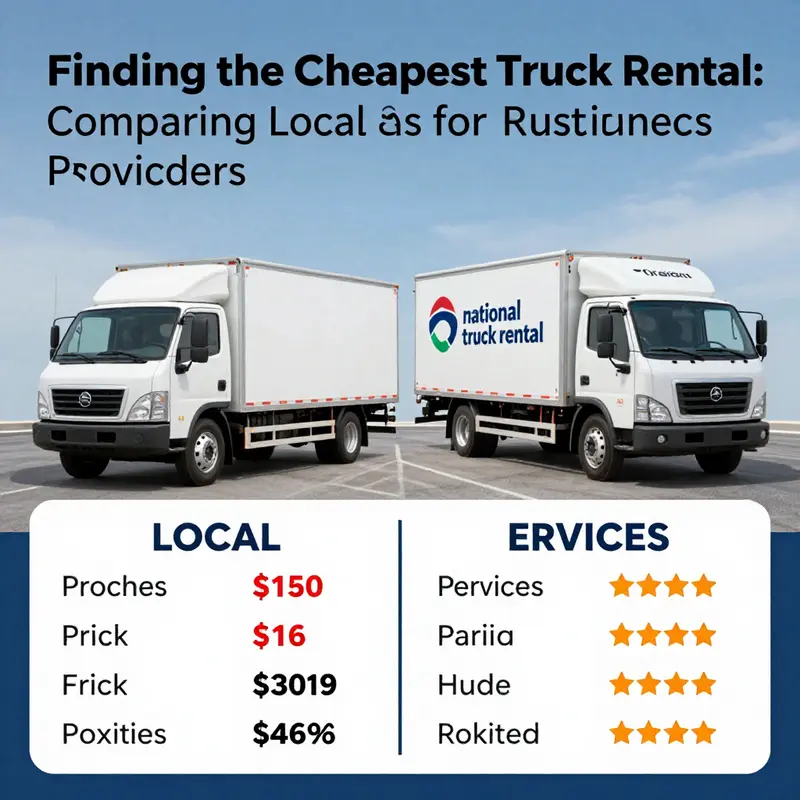
Finding the cheapest truck rental isn’t about chasing a single low sticker price; it’s about aligning your vehicle choice, timing, and total cost. For small operations, compact cargo vans used for urban runs are often the cheapest entry point, especially when short terms and flexible terms are available. The lowest monthly price may look attractive, but read the fine print: maintenance, insurance, mileage caps, and one-way fees can erase savings. When planning, map your typical routes, daily mileage, and load size to estimate a realistic monthly use. Local fleets frequently offer more flexible terms and room for negotiation than national chains, and they can tailor a deal to midweek pickups or short-term needs. A national network offers consistency and predictable terms, which can be valuable for multi-city work, but local providers often beat them on price and responsiveness. The cheapest option usually emerges from a bundle: base rate plus a sensible mileage allowance, basic roadside assistance, and a reasonable insurance plan that fits your risk profile. Always verify the total cost: base rate, insurance, deposits, fuel or charging costs, and any overage charges if you exceed the mileage limit. If the work grows, reconsider the vehicle size and the cost per mile rather than chasing the lowest headline rate. Use comparison tools to compare multiple offers side by side and book in advance when possible to lock in better terms. A cheaper rental should not compromise reliability or uptime; frequent breakdowns or delayed deliveries inflate the true cost of operation. For those exploring discounts, check for promotional codes or loyalty programs and combine those with a reputable comparison platform to keep prices honest as your needs evolve. In the end, the cheapest truck rental is the option that covers your actual use without hidden fees, delivering the right balance between pace, payload, and predictability. See pricing resources and compare offers at trusted platforms, for example https://www.kayak.com for reference.
Final thoughts
In summary, businesses seeking to reduce logistics costs without compromising on quality can find viable solutions in exploring affordable truck rental options. By understanding the various facets influencing rental prices and customer feedback on services, one can make educated choices that align with both budget constraints and operational needs. Whether opting for a budget-friendly flote, or exploring local versus national providers, a strategic approach to truck rental can enhance efficiency and contribute to overall business success.