
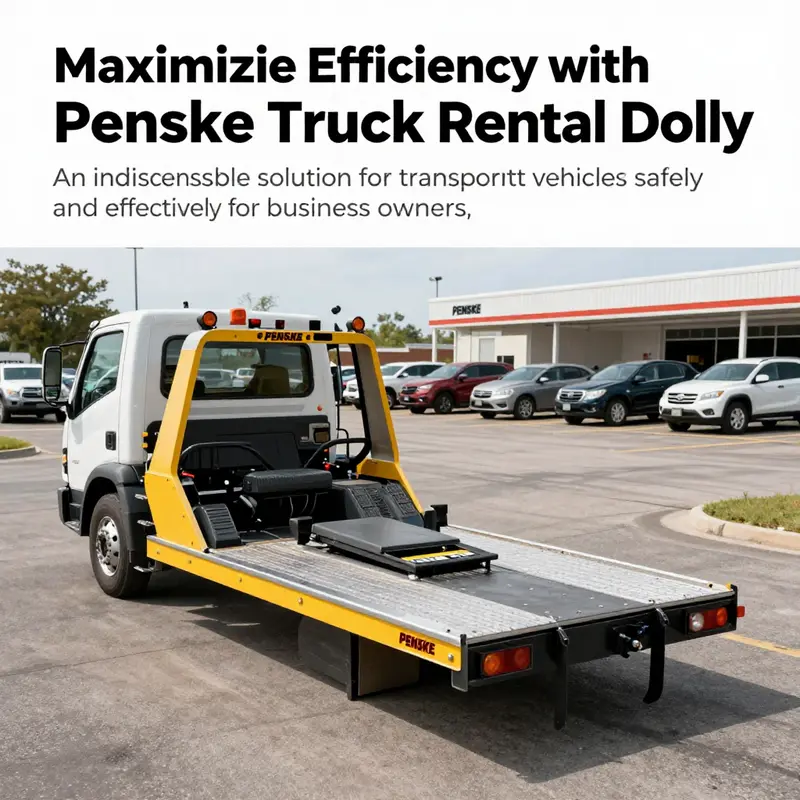
For businesses requiring transportation solutions, ensuring the safe movement of vehicles can be a logistical challenge. The Penske Truck Rental Tow Dolly serves as an essential tool, especially when considering its effectiveness during relocations or long-distance trips. This article delves into the versatility and reliability of the tow dolly, exploring its safety features in compliance with regulations, the rental process and pricing structure, as well as its various use cases and the benefits it offers. Through this comprehensive overview, business owners will gain insights into how the tow dolly can enhance operational efficiency and protect their valuable assets during transport.
Tow Dolly Essentials: How Vehicle Hauling Behind a Rental Truck Transforms Moves
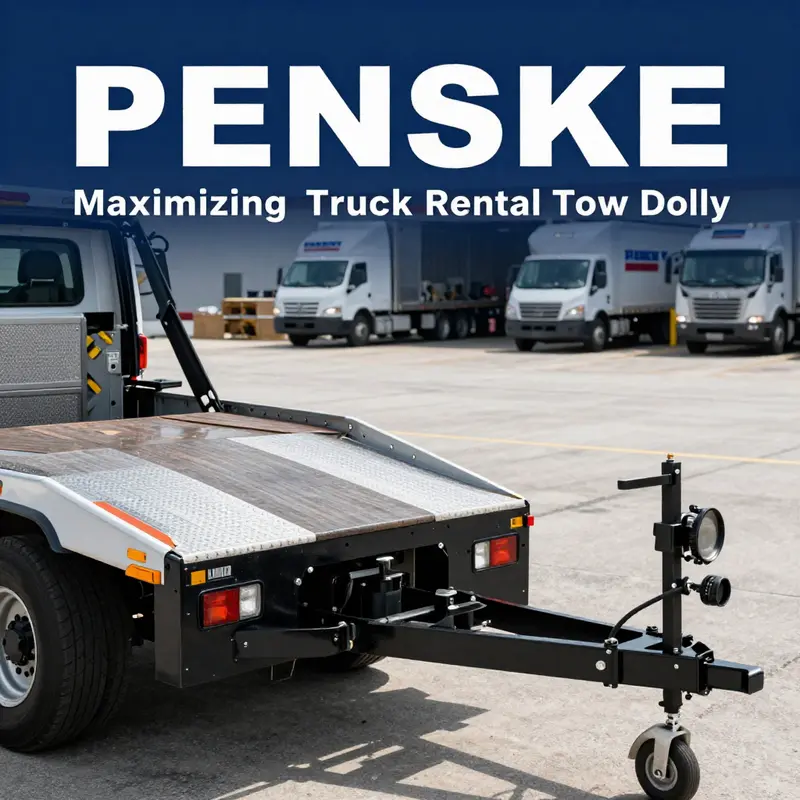
Few tools alter the choreography of a move quite like a tow dolly. When a rental truck tucks in behind a compact or midsize vehicle, a compact, purpose-built platform takes the burden of moving that car off its wheels and places it on a stable, maneuverable cradle. The result is a more streamlined journey, one that lets you checkpoint your timing, protect your drivetrain, and keep the long haul focused on moving goods rather than improvising solutions on the road. In practice, a tow dolly sits at the intersection of simplicity and capability. It is designed to lift the vehicle’s front wheels, allowing the rear wheels to roll freely. This arrangement minimizes the risk of front-end drivetrain wear and reduces the need for a full trailer, which can complicate routes, licensing, and fuel consumption. The concept is straightforward, but the execution matters. A solid tow dolly blends thoughtful engineering with dependable safety features, ensuring that a car can be transported securely behind a rental truck through city streets, rural byways, and multi-lane highways alike. The appeal is practical: for short moves within a metro area or long hauls across states, this equipment makes vehicle transport feasible without the overhead of a dedicated trailer or the expertise required to hitch a heavy flatbed. It is a solution that translates the physics of vehicle movement into a compact, user-friendly package, one that can be rented at many roadside locations and booked in advance online for convenience. What makes this approach compelling is not merely the capability to move a car, motorcycle, or small utility vehicle, but the clarity it brings to the moving process. By lifting only the front wheels, the dolly keeps the vehicle’s weight distribution manageable, reduces rolling resistance, and provides a stable towing point that is easier to control than a loose trailer. The result is a transport experience that can be both predictable and economical, a crucial combination for families relocating, contractors managing equipment, or individuals moving a lot of life with limited time to spare. The design philosophy behind tow dollies in modern rental fleets centers on safety, versatility, and ease of use. A typical tow dolly features a robust steel frame, a pair of sturdy ramps, and a vehicle cradle that aligns under the front axle. The wheels roll on standard tires, and non-slip ramps help vehicles ascend with minimal effort. The system is engineered to accommodate a wide range of vehicles—especially front-wheel-drive cars or vehicles with limited loading height—while maintaining a stable, balanced towing point behind the rental truck. Industry developers recognize that a single solution must appeal to a broad spectrum of customers. As a result, tow dollies emphasize compatibility with different vehicle widths, wheelbases, and curb weights. A key element is the braking signal integrated into the dolly’s design. An effective braking mechanism on the dolly helps ensure that the combined vehicle-and-truck system responds to accelerator input with predictable deceleration. This is not merely about stopping; it is about ensuring the towed vehicle is aligned with the truck’s braking behavior, reducing the risk of swerving or sudden drag if the driver must slow down quickly. The brakes on tow dollies are designed to operate in concert with the truck’s own braking system, delivering consistent performance across long stretches of highway and through congested corridors. Beyond the mechanical aspects, the safety features of a tow dolly are what reassure renters. Locking pins secure the wheels in place, preventing unexpected movement that could destabilize the load during a lane change or a steep descent. Reflective surfaces, lighting connections, and tie-down points provide the infrastructure to keep everything visible and tethered during night travel. While the vehicle is on the dolly, the operator is tasked with a few essential rituals that safeguard the entire operation. The vehicle must be properly aligned with the dolly’s cradle, ensuring that the wheel contact points are evenly distributed and that the axle sits precisely where the design intends. The front wheels are chocked to prevent rolling before connection, and the straps or ratchets that secure the tires must be snug but not over-tensioned. The goal is a secure, non-slip fit that resists movement caused by wind, braking, or minor bumps in the road. In addition, most rental fleets provide a loading guide or a set of instructions that walk renters through each step, from positioning the dolly to securing the vehicle and performing a final inspection. These guides are more than procedural; they are built on decades of practical experience with vehicle transport and the realities of road travel. They help renters avoid common missteps, such as over-tightening straps that could damage the tire sidewalls, or failing to check the tow hitch connection, which could lead to detachment while driving. The broad utility of tow dollies is part of their appeal. They are well-suited for transporting cars during a move, for keeping a vehicle mobile during maintenance work, or for delivering a vehicle to a service location without a separate trailer. Their simplicity is a virtue when compared with a trailer, which requires additional hitch equipment, lighting connections, and sometimes a larger vehicle to maneuver. Tow dollies can make a long road trip feel more straightforward, letting the driver focus on navigation and logistics rather than the mechanics of towing. Of course, like any equipment used on public roads, towing requires attention to legal and safety considerations. Regulators at both federal and state levels provide guidelines about how to tow a vehicle, where lighting needs to be connected, and how to properly secure a load behind a moving truck. In practice, this means that renters should verify that the dolly’s lighting connector is compatible with the truck’s electrical system and that the towed vehicle displays appropriate lights for tail, brake, and turn signals. It also means adhering to weight limits for the dolly and the combined vehicle, as exceeding these limits can compromise braking, steering, and suspension. The idea is straightforward: you want a controlled, predictable towing experience that keeps all road users aware of the towed load. The load distribution matters because a front-heavy arrangement can put more stress on the dolly’s ramps and restraints, while a very light vehicle can reduce the overall towing stability if not properly secured. This is why the loading guides emphasize center-of-gravity placement and balanced tire contact. The human element remains central to all this. A renter who approaches the task with patience, attention to detail, and a methodical checklist tends to achieve the best outcomes. The checklist is not a lengthy ritual; it’s a compact mental model that covers align, secure, inspect, and test. Align means the vehicle’s front wheels settle onto the dolly’s cradle in a way that distributes weight evenly. Secure means the wheel straps are fastened, the safety pins are in place, and the load is stable. Inspect means the operator walks around the entire setup, checking for loose components, frayed straps, or misaligned ramps. Test means a brief, gentle pull forward to confirm that nothing shifts before the main journey begins. For many movers, this discipline translates into fewer surprises and a smoother overall experience. The practical implications go beyond safety. A well-executed tow-dolly setup reduces the risk of road delays caused by equipment failures, lowers the chance of damage to the vehicle being moved, and improves the predictability of the trip. When you are operating a rental truck in busy corridors or on unfamiliar roads, predictability is as valuable as the horsepower in the truck itself. The marriage of a sturdy dolly and a careful operator yields a transport solution that is versatile, economical, and surprisingly capable. The equipment remains ready to serve across a variety of scenarios. A vehicle might be moved temporarily for maintenance or storage, or a car could be relocated during a longer-distance move. The tow dolly is not a license to push beyond the limits of the vehicle or the road. Rather, it is a tool that, when used with awareness and discipline, enhances mobility and reduces the cost and complexity of vehicle transport. This perspective aligns with how many major rental fleets present their offerings: a reliable, easy-to-use system that integrates with the broader moving toolkit. Renters can book online, pick up at a convenient location, and rely on the fleet’s maintenance standards to keep the equipment in top condition. The emphasis on pre-trip checks, post-trip disclosures, and 24/7 roadside assistance reinforces the sense that the process is designed to be transparent and supportive. Roadside support becomes particularly important for longer moves, where a broken strap or a stuck ramp could derail plans. Having access to assistance around the clock reassures customers that they can handle unexpected events without losing momentum. In the broader context of moving and logistics, tow dollies play a critical role in enabling more people to relocate with confidence. They bridge the gap between a full trailer and a bare truck, offering a balanced compromise between capability and complexity. They liberate customers from the need to own multiple specialized trailers for different tasks and give renters the chance to tailor their transportation approach to the job at hand. The result is a more flexible moving ecosystem, where the right tool can be matched with the right route, the right vehicle, and the right schedule. For practitioners coordinating relocations, the dolly is a trusted companion. It supports a range of scenarios—from emergency repairs that require moving a vehicle temporarily to a planned long-distance move that would be infeasible without a lightweight, easy-to-handle transport solution. It is this combination of practicality, safety, and adaptability that makes tow dollies an enduring asset in the moving industry. As with any tool, the best experience comes from informed use. Renters who take the time to understand the dolly’s specifications, the limits of their vehicle, and the laws of the road consistently achieve better outcomes. They develop confidence in their ability to navigate traffic, weather, and road surfaces, while maintaining the security of the load behind them. The chapter on towing behind rental trucks would be incomplete without acknowledging the broader ecosystem that supports this practice. From the availability of online booking and flexible pickup times to the presence of roadside assistance and maintenance programs, the modern rental experience is designed to remove friction from the process. The end result is a moving journey that feels controlled and predictable even when it involves an unfamiliar route or a vehicle that presents its own quirks. In the end, tow dollies are not merely devices; they are enablers of mobility. They translate a potential logistical challenge into a manageable operation, a bridge between location and destination that respects the integrity of the vehicle being moved while honoring the schedules and budgets of those organizing the move. For readers seeking further detail about official guidelines and options, consult the external resource linked below. External resource: https://www.pensketruckrental.com
Tow Dolly Safety on the Move: Features, Regulations, and the Quiet Assurance of a Safe Haul
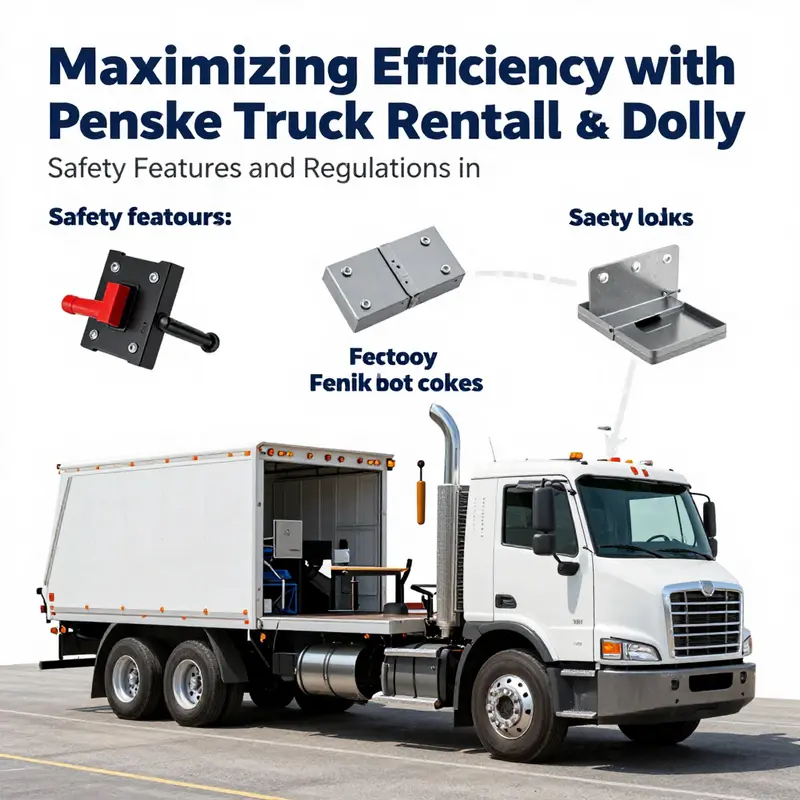
In the orchestra of a long, deliberate move or a careful, vehicle-by-vehicle haul, the tow dolly plays a crucial but often underappreciated role. It acts as the bridge between two machines—the towing vehicle and the vehicle being transported—allowing a front-wheel-drive or partially driven car to travel behind a truck or larger vehicle without demanding the full weight-bearing responsibility of the tow itself. The design purpose is simple: elevate the towed vehicle’s front wheels while the rear wheels remain on the dolly, so the drivetrain stays out of the primary load path. Yet simplicity in design does not imply safety can be assumed. The reality is that a tow dolly woven into a moving plan brings with it a stack of safety-critical features and regulations that must be understood, respected, and routinely checked if the goal is a smooth, uneventful journey from origin to destination. This chapter builds a narrative around those features and the regulatory frame that governs how dollies operate on public roads, and it threads practical guidance through the theory so that readers can imagine a single, safe process from start to finish rather than a sequence of isolated precautions.
The most visible and tangible safety feature on a tow dolly is its braking system. A braking mechanism on the dolly is not just a convenience; it is a force multiplier for overall stopping power. When a dolly carries a loaded vehicle, the combined mass behind the towing vehicle can create a formidable inertia. If the dolly has no brakes, or if the brakes are underpowered for the load, the towing vehicle’s brakes must absorb the entirety of the scenario. That concentration of demand increases the risk of overheating, reduced braking efficiency, and, in extreme cases, loss of control. A dolly with built-in brakes reduces the chance of jackknifing and enhances stability by providing active retarding force where the mass is distributed. This is especially important on grades or during sudden deceleration. In practical terms, the presence of brakes means the driver needs to plan for a longer, more controlled stop, and it means keeping up with regular maintenance checks that ensure the braking system remains responsive in all weather and road conditions. The objective is not to rely solely on the vehicle’s brakes but to share the braking task so the entire towing setup behaves like a cohesive unit rather than a two-part system misaligned in speed and response.
Beyond brakes, there is the quiet reassurance of roadside assistance that a savvy rental arrangement often includes. Long hauls, unexpected detours, or weather-driven route changes can create moments when a simple hiccup—like a flat tire on the tow dolly or an issue with hitching—could escalate if help is not immediately available. A 24/7 roadside assistance program provides an essential safety net, offering confidence that a trained responder can come to the scene, evaluate what has happened, and guide the driver toward a safe resolution. In the context of tow dolly operation, this feature helps soften the line between risk and resilience. It does not substitute for proper loading, hitching, and supervision of the equipment, but it does provide a critical backstop that makes the overall undertaking feel more manageable and less fraught with fear of the unknown.
A core piece of the safety puzzle is the loading guidance that comes with the equipment. The best tow dollies are paired with clear, practical loading guides and sometimes accompanying videos that illustrate weight distribution, securement, and the sequence for connecting the dolly to the towing vehicle and the car to the dolly. Proper loading, with correct weight distribution, is more than a procedural step; it is the essential condition for maintaining tracking and stability. For example, if too much weight sits behind the dolly or if the load shifts during transit, steering response can become unpredictable. The loading guides address these concerns by showing how the towed vehicle’s weight should be balanced—usually achieved by aligning the front wheels onto the dolly while ensuring the vehicle’s center of gravity remains within the stabilized envelope of the dolly’s platform. The guides often emphasize the critical role of wheel chocks, tie-down straps, and wheel straps that secure the tires to the dolly’s roller surface or locking harness. When used correctly, these elements prevent tire slippage and reduce the risk of movement that could alter the towed vehicle’s alignment with the towing vehicle.
The regulatory face of towing dollies is as important as the hardware itself. Regulations governing light tows, braking requirements, lighting, and hitching standards are designed to ensure that when multiple vehicles share the same road, the risk to other drivers is minimized and the overall system behaves predictably. In broad terms, many jurisdictions require that any dolly used for road travel—especially when it is transporting a vehicle over long distances or in commercial contexts—be equipped with a braking mechanism and lighting suitable for traffic conditions. This means functioning taillights, brake lights, and amber turn signals that are synchronized with the towing vehicle. It also implies that the hitch and safety chains must be properly installed and rated for the weights involved, and that the dolly’s own frame and axles meet structural requirements that prevent failure under load. The compliance landscape is not a one-size-fits-all map; it spans federal guidelines and state or provincial variations. Drivers are encouraged to consult official safety resources and adhere to both the letter and the spirit of the rules. The aim is simple: to ensure that the dolly, the vehicle, and the far more massive combination behind them behave as a single, well-managed unit on every mile of the journey.
In practice, this regulatory reality translates into several concrete actions. First, the brake system’s function is not optional. It must be present, accessible, and tested before every trip. Roadside checks during a routine stop may tactically verify that the dolly’s lighting and braking indicators respond correctly to the towing vehicle’s operation. Second, lighting and reflectors must be visible to other road users. The requirement is not merely to illuminate but to be perceived under a variety of lighting conditions—dusk, dawn, rain, fog, and heavy traffic. Third, hitching must be robust. The connection between the tow vehicle and the dolly should be secure, with safety chains crossed in the event of a primary hitch failure, to maintain control and prevent separation. Finally, weight ratings must be respected. The maximum load a dolly can carry, including its own weight and the vehicle’s weight, sets the boundary for safe operation. Pushing beyond that boundary is a breach of regulation and a recipe for failure, regardless of the driver’s experience or intent.
To navigate these facets effectively, drivers benefit from a practical, action-oriented mindset. Before departure, a concise pre-trip inspection should become second nature. This is a moment to verify that the dolly’s brakes engage smoothly when tested on a gentle slope, that the taillights illuminate when the towing vehicle’s lights are on, and that the hitch and safety chains are correctly fastened with no visible signs of wear. The securement of the towed vehicle rests on the dual pillars of restraint and alignment: straps that hold the vehicle tightly in place and a configuration that keeps the vehicle aligned with the dolly’s platform to preserve a straight, stable track behind the towing vehicle. Those steps are not mere formalities; they are the front-line defense against the types of mishaps that can produce a sudden and dangerous loss of control.
The practical dimension of the loading process deserves particular attention. It begins with a measured assessment of the vehicle being towed. Front-wheel-drive cars, and some rear- and all-wheel-drive options, require different handling to ensure the wheels that touch the dolly are correctly secured and that the vehicle’s transmission is protected from unnecessary strain. The dolly’s platform is designed to support front-wheel lifting, but the way the vehicle’s weight is distributed matters. If the vehicle sits too far toward the rear of the dolly, there can be excessive overhang that destabilizes the chain of response between the dolly, the towing vehicle, and the towed vehicle. Conversely, if the weight is biased too far toward the front, steering and braking dynamics can be adversely affected. The loading guides address these balance considerations and provide a clear, repeatable method for achieving a stable, safe configuration across a variety of vehicle sizes and types.
Another layer of safety concerns is the routine maintenance and inspection that keeps the dolly in peak condition. Regular checks for rust, cracks in the frame, damaged ramps, worn straps, and signs of wear on the wheel bearings are part of a responsible approach to long-distance towing. The equipment is subject to the same diligence that any critical road-transport device requires: the idea that routine, proactive maintenance reduces the odds of a roadside catastrophe. The maintenance discipline extends to the towing hitch and connection points, where torque checks and pin safety measures are essential. A loose or corroded hitch can escalate risk quickly, especially when traveling on multi-lane highways or negotiating long, isolated stretches before the next service stop. A well-maintained dolly, paired with a disciplined approach to loading and securing, creates a baseline of safety that allows drivers to focus more on route planning and less on constant, anxious monitoring of the wagon behind.
From a broader perspective, the experience of using a tow dolly in a moving plan is inseparable from the overarching philosophy of safe hauling. It is not merely about following a checklist; it is about cultivating a mental model that considers the dolly as a dynamic system that interacts with the towing vehicle, the towed vehicle, and the road itself. This mindset shapes how one negotiates traffic, how one chooses profiles for speed on curves and hills, and how one plans rest breaks to avoid fatigue that could undermine even the most robust equipment. The reality is that a calm, prepared, and educated driver is better equipped to respond to sudden conditions than a driver who treats the dolly as a passive accessory rather than an active component of the moving plan.
In terms of operational flow, the partnership between the rental provider and the customer is essential. A reputable rental program typically combines well-maintained equipment with accessible, practical resources that help customers move confidently. This includes not only the physical dolly but also support content such as how-to videos, loading guides, and clear safety guidelines. While the dolly itself is engineered to be sturdy and reliable, the success of any move depends on how well the driver understands and applies the safety principles in real-world conditions. The guidance provided by the rental company—whether through online materials, in-store briefings, or follow-up support—ties the whole process together. It helps ensure that the equipment is not only compliant with safety standards but also used in a manner that minimizes risk from the moment the dolly leaves the loading dock to the moment it reaches the new address.
The regulatory and safety framework described here is not about fear or restriction; it is about enabling safer, more predictable transportation. When brakes, lighting, hitching, and load securement work in harmony, the towing configuration becomes a robust system rather than a fragile assembly. The peace of mind that comes with such a system is not incidental. It is the direct result of attention to the pieces that make it up—the dolly’s braking capability, the availability of roadside assistance, the fidelity of loading guides, and the clarity of the regulatory expectations that govern how dollies function on public roads. In this way, the chapter returns to a simple truth: the more you know about the safety features, the more you can plan around them, and the safer your long-haul or local move becomes as a result.
For readers who want to explore actual specifications or confirm the precise requirements for their region, the best course is to consult the official safety and equipment guidelines published by the rental provider. These resources are designed to inform customers about the particular brake configurations, lighting systems, hitching procedures, and maintenance expectations that apply to the equipment in use. They also reflect updates to regulations and best practices as traffic environments evolve and as standards adapt to new road realities. While the details can vary by jurisdiction, the core principles explained here—secure loading, proper weight distribution, active braking assistance, and clear signaling—translate across contexts and remain the backbone of responsible towing practices. The overarching aim remains consistent: to deliver safe, predictable, and legally compliant movement of vehicles on the road, no matter the distance or the type of vehicle being moved.
As moves become more complex, and as the number of factors a driver must balance grows, the value of a well-designed tow dolly and a well-structured support system becomes clearer. The equipment provides essential safety features, and the accompanying guidance and support translate those features into reliable performance on the road. In that sense, the chapter’s emphasis on braking, lighting, securement, and regulatory compliance is not a mere checklist. It is a philosophy of safety that honors the complexity of hauling while simplifying the experience for the driver who wants to arrive at the destination with confidence and peace of mind. For readers seeking more detailed regulatory specifics and official equipment specifications, practical resources are available through the equipment provider’s safety pages, which stay current with federal and state requirements and reflect ongoing commitments to safe road travel. https://www.pensketruckrental.com
Tow Dolly Realities in Truck Rentals: Navigating Availability, Process, and Pricing for Safe Vehicle Hauling
When a move or a long road trip involves transporting a vehicle, the option that often feels like a simple fix is a tow dolly. The basic idea is straightforward: a compact trailer carries the front wheels of a car, the rear wheels remain on the road, and the whole rig is pulled by a larger tow vehicle. For many drivers, this setup promises a practical balance between cost, accessibility, and control. Yet the reality behind the curtain of rental fleets is more nuanced. Tow dollies, as a tool for car transport, sit at the intersection of convenience and complexity. To understand how this equipment fits into the broader ecosystem of truck rental, it helps to unwind the logic behind availability, the rental process, and the price tag that arrives at the end of the day.
First, the appeal. A tow dolly can be a smart solution when you need to move a car that isn’t suitable for highway travel on its own wheels. Front-wheel-drive cars, for example, often benefit from lifting the driven wheels off the pavement. The dolly’s design concentrates the load forward while leaving the rear wheels free to roll. Typical safety features include a braking system on the dolly, wheel straps or tie-downs to secure the vehicle, and a locking mechanism that helps prevent unintended movement during transit. A ramp helps with loading, and lighting on the dolly or the towing vehicle helps ensure visibility on the road. The principle is simple, and the promise is practical: safer, more efficient transport for a vehicle that might otherwise be damaged by long-distance towing or by being driven over great distances when it isn’t prepared for it.
But the practical question for a consumer is not just how the device works. It’s where to get one, whether it’s included in a rental package, and how much it will cost. In the world of national truck rental fleets, the most common arrangement centers on the rental of trucks and trailers designed for moving households, with a grab bag of supplemental moving gear—pads, straps, dollies for furniture and appliances, and related accessories. Tow dollies, specifically designed for car transport, do not always sit in that standard menu. In fact, many large rental networks position their core offerings around box trucks, cargo vans, or large gravity-assisted trailers that carry larger loads or furniture rather than a vehicle in need of a separate transport device. The implication is not that tow dollies are unavailable everywhere, but that they are not universally part of the core inventory as a standard, easy-to-book option. The result is a practical reality for customers: if your plan hinges on renting a tow dolly from a particular fleet, you may discover that the device is not listed as a standard rental item at your local branch. In some cases, that means you will either need to reserve a tow dolly from a different provider or pursue an alternative transport arrangement that does not rely on the provider’s standard equipment.
This reality often surprises first-time renters who assume that the major names in truck rental cover every conceivable accessory needed for vehicle transport. The truth is more nuanced. The equipment mix varies by location, season, and the specific fleet at a given branch. Some locations carry a broader array of car-hauling options and may coordinate with third-party services for specialized gear. Other locations lean toward the essentials needed for a household move and basic vehicle support, without a dedicated tow dolly in their daily lineup. The result can feel like a maze if you are planning to haul a car yourself and want to keep everything under one roof.
So what should a prospective renter do when a tow dolly is essential to the plan? The chapter’s guidance rests on two pathways: first, verify the rental network’s exact offerings before you commit to a location; second, be prepared to consider alternatives that fit within your schedule and budget. Verification starts with a careful inquiry at the rental counter or in the online booking flow. You want to confirm two things: whether tow dollies are currently part of the fleet and if so, under what conditions (availability, location, pickup times, and any limitations). If the tow dolly is not part of the standard equipment, it’s time to look at alternatives. A common route is to check with other vendors that specialize in car-hauling equipment or to use a local equipment rental shop that lists tow dollies among its inventory. In some cases, car transport requires pairing with a compatible hitch setup, wheel straps, and safety equipment that the rental company may or may not provide. In those situations, understanding what you must supply versus what is included is essential for a smooth experience.
Another layer to consider is the broader support ecosystem that accompanies rental vehicles. Even when tow dollies aren’t part of the equipment lineup, most major rental fleets offer a 24/7 roadside assistance program for truck issues. This service is a safety net for breakdowns, lockouts, or other emergencies you might encounter while on the road. Keeping the emergency contact information handy—along with the understanding of what incidents qualify for assistance—can provide real peace of mind. It’s worth noting that such roadside resources can be accessed not only for emergencies but also for guidance about what to do if you encounter trouble while attempting to use alternative transport arrangements. The combination of a dependable towing aid and a robust roadside program can be comforting when the logistics become complex.
Given this landscape, a practical plan begins with a careful assessment of your vehicle and route. A typical car transport scenario involves a vehicle that is drivable but not roadworthy for long distances, or a vehicle that you prefer not to subject to the miles and wear of highway driving. If a tow dolly is not readily available from the primary rental provider, you may decide to rent the dolly from a specialized equipment rental service that offers car-hauling trailers. This option often comes with its own set of rules and responsibilities: you may need to arrange a separate pickup and return, ensure you have proper insurance coverage for the rental period, and confirm that your vehicle’s weight and axle configuration are compatible with the dolly you select. The process may include additional steps such as confirming the hitch type on your tow vehicle, ensuring the towed vehicle’s tires are in satisfactory condition, and verifying the dolly’s braking system and lighting function before you hit the road.
The pricing dimension is an essential part of this decision. When you rent a tow dolly from a standard fleet that does not include it in the regular lineup, the cost structure shifts. The daily rental rate for a car-hauling dolly is typically separate from the cost of the moving truck or the household trailer. You’ll also want to consider accessories and safety equipment that may be bundled or offered as add-ons, such as ratchet straps, wheel chocks, or extra lighting. Insurance is another area where cost can vary significantly. Some rental providers include basic coverage, while others require you to purchase supplemental liability protection for the duration of the rental. If you are coordinating multiple pieces of equipment—a truck, a dolly, a few moving pads—the combined daily rate accumulates quickly, which makes a clear, upfront price estimate crucial to avoid surprises at pickup.
Beyond straightforward daily charges, there are often mileage considerations. Tow dollies themselves do not accumulate mileage in the same way as a tractor-trailer may, but the towing vehicle does. When you bundle the dolly with a rental truck, the total mileage is typically calculated for the truck, and the dolly may have its own, separate terms. When you lease a dolly from a non-truck rental source, the rental agreement might include per-mile pricing or a flat fee for the duration. These distinctions matter because they influence the overall affordability and feasibility of your plan. In practice, a careful calculation is essential: you’ll want to capture the distance you will travel, the expected travel time, and any required detours to accommodate loading, securing, and unloading the vehicle.
The quality of the equipment is another critical factor wading through the decision. Tow dollies are not all created equal. Weight ratings determine what kind of vehicle can be safely carried and how it can be attached to the towing vehicle. The quality of the tires, the presence of a functional braking system on the dolly, and the reliability of the lighting used for signaling are non-negotiables for road safety. If you are renting from a provider that does not standardize tow dollies, you may be faced with a mix-and-match of gear from different suppliers. The risk here is not just about equipment malfunction; it is about inconsistent safety practices, varying levels of training, and potential misalignment of safety standards. If you decide to go this route, you should demand a thorough exit check at the pickup, including a test run on a closed course to verify braking performance, lighting, and proper securing of the towed vehicle.
From a planning standpoint, the question becomes whether you can effectively centralize your process within a single rental network or whether you should assemble a plan that uses multiple providers. The convenience factor of one-stop shopping must be weighed against the potential savings or availability found by pursuing separate specialists. In some moves, the most efficient path is to keep your main equipment with a single provider and arrange the transport with a third-party service for the vehicle hauling portion. This approach reduces friction when coordinating pickup and return times, ensures that you are covered by a consistent insurance stance, and minimizes the risk of miscommunication between disparate vendors. It also reduces the cognitive load that comes with juggling multiple contracts, invoices, and pickup instructions.
The final piece of the puzzle is the human factor: the people who actually handle the rental, prepare the equipment, and connect the pieces on the day you pick everything up. The rental process itself is designed to be straightforward, but the experience can vary by location. The best practice is to approach the rental with a checklist in hand. Confirm the exact equipment you will receive, verify the vehicle compatibility, inspect the dolly for visible wear, and test essential functions with a staff member present before you depart. In addition to the safety checks, ask about the return process. Will the same location accept the dolly, or do you need to bring it to a different facility? Are there any drop-off windows, late fees, or special cleaning requirements? These practical details can derail a plan if left unaddressed.
Roadside assistance remains a valuable safety net. If you encounter a problem—say the dolly’s brakes seize up, a strap fails, or you have a flat tire on the towing vehicle—knowing that a 24/7 support line is available can reduce stress. While the roadside team is primarily associated with rental truck issues, many providers extend general guidance to users navigating unexpected situations during a move. The knowledge that help is a phone call away can transform a potentially stressful moment into a manageable one, especially when you are in unfamiliar territory or pressed for time.
In sum, the journey from initial need to a mounted, secure transport of a car using a tow dolly—whether obtained from a primary rental fleet or through an external provider—depends on a few core factors. Availability at your local location, the exact terms of the rental, the safety and compatibility of the equipment, the total price including insurance and potential add-ons, and the clarity of the pickup and return process all shape the final outcome. The modern rental ecosystem rewards forward planning and clear communication. If you have a clear plan and a readiness to adjust when a specific item isn’t available, you can still achieve a smooth vehicle transport without compromising safety or breaking the budget.
For those who want to anchor their understanding in a reliable, official source of information, the road ahead is straightforward: check the rental provider’s site for equipment availability, ask direct questions about tow dolly options, and confirm any alternative routes if needed. If you need to connect with the broader support network, note that you can access 24/7 roadside assistance for rental truck issues. This safety net can be a valuable ally as you navigate the logistics that accompany moving a vehicle across town or across a region.
If you want to explore official details directly from the primary rental provider’s platform and learn more about how their fleet and services are structured, you can visit their official site for current equipment listings, policy details, and contact options. External resource: https://www.pensketruckrental.com
Tow Dolly Essentials: Safe, Cost-Effective Vehicle Transport for Movers and DIY Relocations
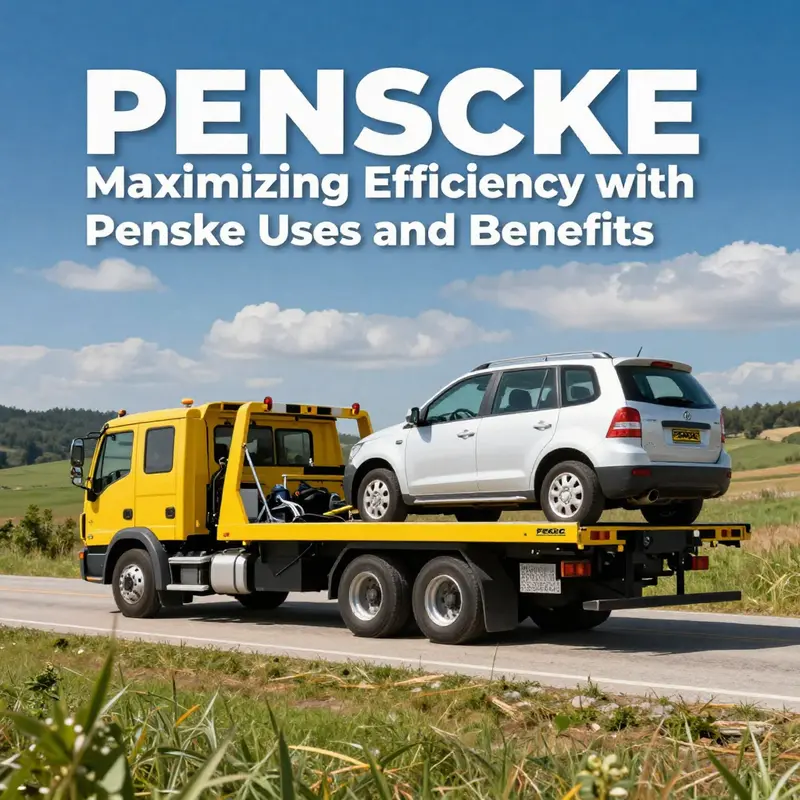
A tow dolly sits quietly in the repertoire of practical tools for moving vehicles, offering a compact, versatile solution when driving a car to a new home or relocating a vehicle for repair or sale. It is a small trailer designed to lift the front two wheels of a vehicle off the ground while its rear wheels stay on the road. This arrangement preserves steering control and stability, making it possible to guide a trailer-equipped rig with the same precision you’d expect from a standard tow setup. In practical terms, a tow dolly lets you move a car without putting miles on the engine or relying on a tow truck driver to transport it for you. For many households, this translates into a cost-effective option that blends convenience with safety, especially when the destination is nearby, when the vehicle is not drivable, or when you simply want to handle the move yourself to maintain control over timing and logistics.
A typical scenario involves hitching the dolly to a towing vehicle—usually a car, SUV, or pickup truck—and then loading the vehicle it will transport onto the dolly. The process is grounded in the principle of transferring the burden of motion from the car’s drive wheels to the dolly itself, while the towed vehicle’s rear wheels roll along the highway. The result is a transportation setup that remains nimble, maneuverable, and easier to manage than larger, fully enclosed car carriers in many residential or urban environments. The simplicity of the system is part of its appeal: attach the dolly to the hitch, secure the towed vehicle with sturdy restraints, and you’re ready to roll. This approach is especially attractive for short moves, local relocations, or situations where a vehicle needs to travel a few hundred miles without being driven.
In addition to home moves, this method finds utility in more specialized contexts. A tow dolly can streamline the process of moving a vehicle from a dealership to a customer when a car is not yet booked on a transport trailer, or when a vehicle has to be delivered to a repair shop where it cannot be driven. For vehicles that are not operational due to mechanical issues, the dolly provides a controlled, road-legal means of transport that avoids further mechanical strain. The broad appeal lies in its blend of simplicity and practicality: the dolly makes the act of moving a car as routine as a grocery run, when executed with care and forethought.
From a safety perspective, the design and operation of a tow dolly emphasize predictability and control. Modern installations emphasize mechanical safety features that help keep both the dolly and the towed vehicle stable. For many operators, these features include integrated braking on the dolly and robust locking mechanisms to prevent accidental release or shifting during transit. Brakes on the tow dolly contribute significantly to stopping performance by sharing the braking workload with the towing vehicle. This division of responsibility helps shorten stopping distances, reduces wear on the towing vehicle’s brakes, and improves overall handling especially on downhill grades or in emergency scenarios. The emphasis on safety is not merely a matter of comfort; it is a critical component of road-legal transport in which the combined rig must perform reliably under a range of conditions and traffic patterns.
The choice between a brake-equipped dolly and a non-brake alternative often comes down to risk tolerance, driving environment, and the specifics of the move. A brake-equipped model is generally preferred for its added control and compliance with a broad spectrum of state regulations. While a non-brake dolly might seem lighter or cheaper, it places more responsibility on the towing vehicle’s brakes and requires extra vigilance from the operator. In practice, the brake-equipped option reduces stopping distances, enhances stability on curves and grades, and contributes to safer overtaking and lane changes. This distinction matters not only for the driver’s confidence but also for insurance considerations, which increasingly hinge on verifiable safety features and documented maintenance.
Loading and securing a vehicle onto a tow dolly is a choreography of balance and restraint. The process begins with careful positioning of the dolly behind the towing vehicle and alignment with the vehicle to be towed. Ramps or a built-in inclined approach are used to guide the front wheels onto the dolly’s platform. Once the vehicle’s front wheels are resting on the dolly, wheel straps or locking pins anchor the tires to the platform. The most important principle is immobilization: the towed vehicle must not shift during acceleration, braking, or cornering. Tie-downs are tightened to a documented tension range, with attention paid to preventing wheel movement while avoiding over-tightening that could damage tires or rims. The operator then engages the dolly’s hitch mechanism and connects any braking and electrical continuity required for lights and signals, ensuring that the trailer’s indicators mirror the towing vehicle’s operation. In many setups, safety features such as wheel chocks and a wheel-lift lock contribute an extra layer of protection, preventing unintended movement while securing the load. The entire sequence, when performed methodically, becomes a routine memory rather than a source of anxiety.
The practical experience of using a tow dolly also depends on an awareness of weight limits and vehicle compatibility. Every dolly has a stated capacity, which includes the weight of the vehicle on the dolly plus its own weight and any cargo loaded on the dolly. Operating within these limits protects the equipment and prevents undue stress on the hitch, the towing vehicle’s suspension, and the tow hitch itself. It also helps ensure that the combination maintains manageable handling characteristics at highway speeds. Understanding the weight distribution between the tow vehicle and the dolly is essential. A misbalance can alter steering feel, increase tire wear, and complicate braking. Casual moves can still be safe, but larger distances or heavier vehicles invite a more deliberate approach to load calculation and distribution.
Beyond the driveway and the highway, there is a broader ecosystem that shapes how a tow dolly is used in the real world. Tow-dolly rentals are typically offered through a nationwide network of rental centers that provide standardized equipment, frequent inspection schedules, and maintenance protocols designed to align with federal and state safety standards. The availability of rental locations in urban centers, suburban communities, and travel corridors means that a user can plan a move that minimizes backtracking and reduces the need for extra driving by the towed vehicle. The rental experience often includes the option to reserve online, pick up at a convenient point, and return at a different site, subject to policy terms. This flexibility is a key factor in why the dolly is so appealing to DIY movers who want to preserve time and budget while maintaining a sense of control over the moving process.
When it comes to the economics of using a tow dolly, the calculations are straightforward yet meaningful. The upfront cost of renting a dolly is typically lower than the expenses associated with a professional auto-transport service, especially for shorter moves or for those who value the autonomy of managing their own schedule. For many people, the savings come not only from labor costs but also from the predictability of timelines. You can choose when to begin and finish loading, arrange for a pickup or drop-off that matches your calendar, and avoid the whims of third-party transport delays. The total cost also depends on distance, rental duration, and whether fuel or mileage charges apply. In addition to the price tag, there is the intangible benefit of confidence: the ability to monitor each step of the process, to verify that the vehicle is transported in a controlled, transparent manner, and to address any questions promptly should they arise during transit.
Of course, there is a learning curve. For first-timers, the idea of loading a vehicle onto a dolly can feel like a small engineering challenge. Yet with patient instruction, a methodical approach, and attention to the equipment’s feedback, most people gain competence quickly. A few practical tips go a long way. Always inspect the dolly before departure for signs of wear, such as frayed straps, worn wheels, or loose pins. Confirm that the brakes are functioning and that the lights on the dolly, if applicable, mirror the towing vehicle’s signals. Check tire pressures and the dolly’s own suspension to ensure a smooth ride. At the loading point, measure the ramp angle and confirm that the vehicle’s front tires align with the dolly’s platform. During transit, periodically check the connection and strap tensions; in long journeys, re-tighten straps and inspect for heat buildup in the wheel areas. Though these steps add a small amount of time to the process, they pay off in peace of mind and a safer voyage for both the towed vehicle and the towing rig.
The environmental and logistical context also matters. In dense urban settings, a tow dolly can help avoid the complexities of enclosed transport, permit requirements, and oversized hauling equipment. In rural or suburban contexts, the dolly’s smaller footprint makes it easier to navigate tighter streets, driveways, and parking situations. The choice to rent a dolly rather than hire a full-service transport line often reflects a balance between control, budget, and the specific needs of the move. While some people opt for a do-it-yourself approach for the flexibility it affords, others appreciate the guidance and safety checks that come with professional rental programs, including equipment that has undergone routine inspections and maintenance to ensure compliance with applicable safety standards. In every case, the underlying principle remains the same: the dolly is a tool to extend the reach of your own driving capability, turning a potentially stressful task into a manageable project you can complete with careful planning and steady execution.
As moves unfold, certain lessons crystallize. The importance of choosing a dolly with brakes cannot be overstated. Brakes on the dolly guard against runaway concerns and help synchronize the stopping process with the towing vehicle’s braking system. This is particularly critical when descending grades or navigating congested stretches where abrupt stops could jeopardize both the load and other road users. The presence of braking, coupled with reliable strap-down mechanisms and a sturdy hitch, frames a safety triangle that supports safer movement. Any discussion of a dolly’s capabilities should foreground the need for comprehensive checks, clear communication with any passengers in the vehicle, and a conservative approach to speed and following distance. These practices not only align with general road-safety expectations but also harmonize with the practical realities of moving equipment through varied terrain and weather conditions.
Ultimately, a tow dolly is more than a piece of equipment; it is a bridge between planning and execution. It makes possible the relocation of a vehicle with minimal engine use, reduced wear, and often lower costs than more elaborate transport arrangements. The decision to employ a tow dolly reflects a thoughtful assessment of the move’s scope, the vehicle’s condition, and the mover’s willingness to take on a hands-on role. For many, this approach yields tangible benefits: the ability to control timing, the satisfaction of managing the transport personally, and the reassurance that the process is being conducted with attention to safety and reliability. The result is a transportation option that respects both budget and practicality, while keeping the focus on safety, compliance, and deliverability. As with any tool for moving goods, success comes from understanding capacity, following best practices for loading and securing, and choosing models that align with the specific needs of the journey ahead. In that sense, the tow dolly embodies a pragmatic philosophy: when used thoughtfully, it makes vehicle transport simpler, more affordable, and more controllable for a wide range of moves.
External resource: https://www.penske.com/truck-rental/tow-dollies
Final thoughts
Utilizing a Penske Truck Rental Tow Dolly can significantly enhance your vehicle transportation capabilities, particularly for businesses with specific logistical needs. From its robust construction and safety features to the straightforward rental process, the tow dolly serves as an efficient and effective solution. By investing in this essential equipment, business owners can ensure their vehicles are transported safely, complying with regulations, while minimizing downtime during relocations or repairs. The Penske Tow Dolly stands out as not just a rental, but a valuable asset for your transportation needs.