
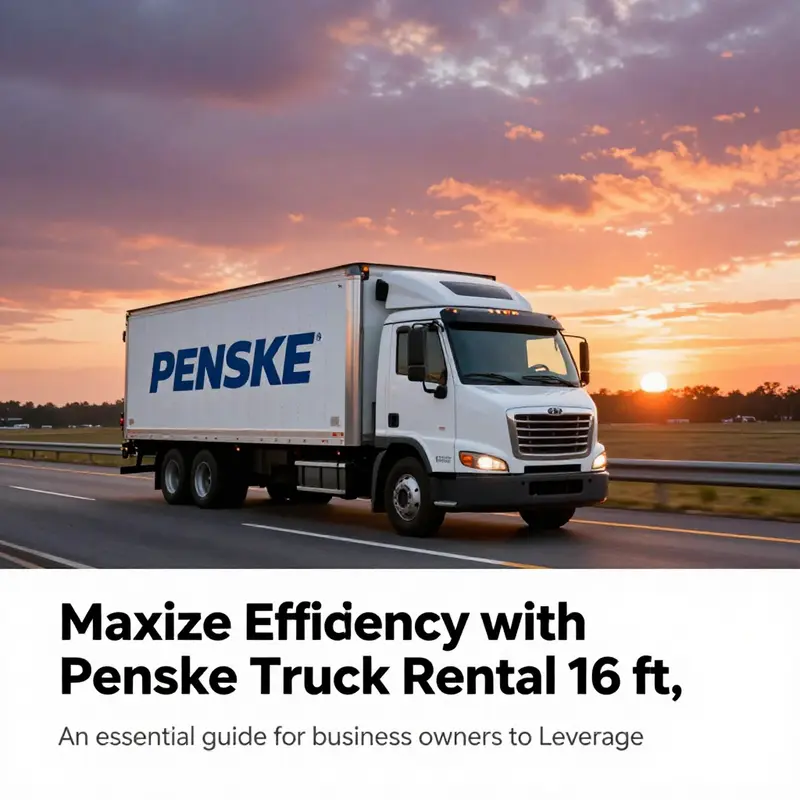
Business owners today require reliable transport solutions to optimize moving operations, whether for inventory, event logistics, or expansive deliveries. The 16 ft Penske truck rental offers a perfect solution, balancing capacity and maneuverability. This guide extensively covers the available services, key features, and reservation processes of the Penske truck, equipping you with the knowledge to make informed decisions for your logistical needs.
The 16-Foot Workhorse: Mastering Moves and Large Hauls with Penske’s Versatile Truck
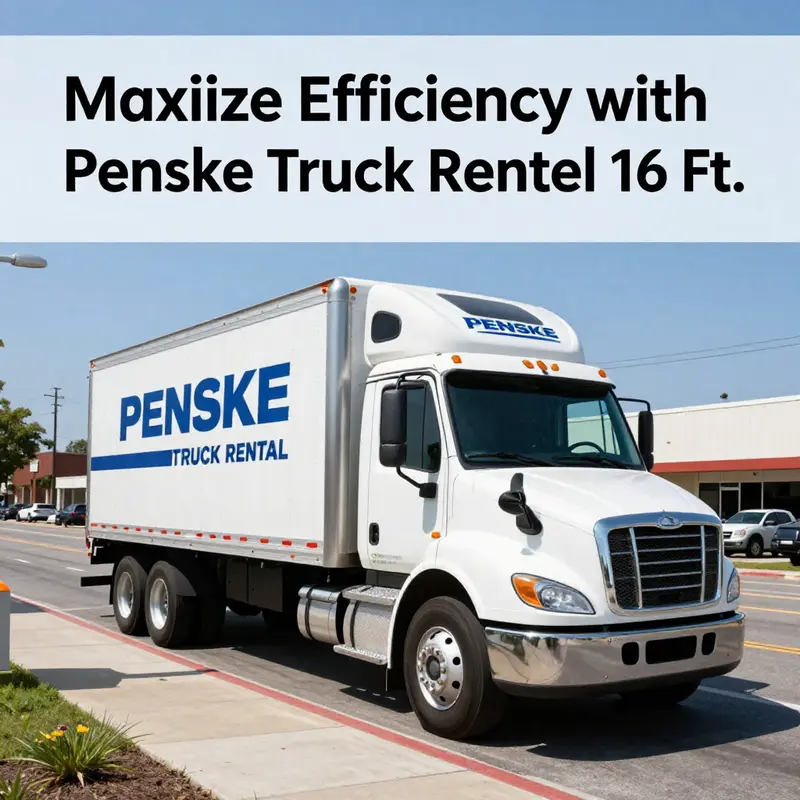
Choosing the right moving vehicle is more than a matter of cost or availability. It’s about fitting the scale of your load to a machine you can drive with confidence, especially when the journey stretches from a crowded city street to a long highway. The 16-foot Penske truck embodies a critical balance point in the rental market: it offers enough interior real estate to handle a significant portion of a household move or a sizable commercial shipment, while still remaining approachable in tight urban corridors where maneuverability matters. When you picture an 800 cubic feet interior, you begin to understand how this vehicle can become part of the story of a move rather than just a means to an end. It’s large enough to accommodate a 3- to 4-bedroom household’s belongings, yet compact enough to navigate avenues and avenues with confidence. The interior space is not simply a void; it’s a thoughtfully designed chamber where furniture, boxes, and equipment can be arranged with care, ensuring stability and protection for what matters most during transport. The truck’s design emphasizes practical geometry: a manageable loading height, wide doors, and a floor plan that supports stacking and securing items without creating fragile stacking hazards. This is where the 16-foot scale earns its stripes, especially for those who have moved before and know the visual estimate of a living room, a kitchen, and a couple of bedrooms can number their own configuration. The interior space translates into a moving strategy: you can plan a two-by-two arrangement for couches and dressers, then pack boxes of varying sizes in layers that won’t shift in transit. The adjustable internal partitions play a subtle but pivotal role in this choreography, allowing you to create zones inside the cargo area that hold different categories of belongings, from delicate glassware to heavy appliances. Paired with dependable safety belts and a stable floor, these features contribute to a sense of order that remains even as the vehicle climbs a grade or negotiates a curving exit ramp. In practical terms, this setup reduces the risk of shifting loads, which not only protects your goods but also makes the drive smoother. The factor of stability matters as soon as you leave the driveway; a well-secured cargo footprint translates into less concern about damage and a more predictable ride for the driver, which in turn supports safer, more comfortable highway performance. Comfort and control are not just buzzwords in the cab. A 16-foot truck in Penske’s fleet embraces the essentials of modern trucking ergonomics: power steering, an automatic transmission, and a cabin that prioritizes visibility and ease of operation. The driver’s seat is designed to reduce fatigue over longer legs of a journey, and the overall temperament of the vehicle—responsive steering, balanced weight distribution, and solid braking—contributes to a driving experience that feels confident rather than intimidating. It’s not merely about getting from point A to point B; it’s about doing so with a sense of control that every mover knows is worth paying for. Beyond the cabin, the chassis and structure of the truck are built with durability in mind. These vehicles are intended to endure the rigors of repeated loading cycles, steep grades, and varying weather conditions, which adds a layer of predictability to the rental decision. When you plan a move that involves lifting and moving heavy items, the knowledge that the truck can handle the weight distribution you assign and that it won’t falter under demand is a meaningful reassurance. This reliability matters not only for the safety of goods but for the pace of the day itself. The 16-foot class is particularly well-suited to urban moves, where tight corners, parking restrictions, and street closures can complicate the logistics. The truck’s size is small enough to handle city blocks with more ease than a larger box truck, yet forward-thinking design keeps it unfazed by typical street obstacles. The result is a vehicle that aligns well with the rhythm of many relocations, where time is precious and the ability to plan a precise loading sequence becomes a practical advantage. Turning to the broader rental experience, Penske offers flexible options that respond to different moving scenarios. The 16-foot truck is part of a portfolio designed to accommodate a wide range of needs, from a one-way domestic move to a short-term project haul. The rental framework acknowledges that plans may change, and that a customer might decide to add or strip away services as the day approaches. Insurance options provide a shield that converts potential risk into a manageable cost, while roadside assistance adds another layer of security for journeys that cross unfamiliar landscapes. Those who want help beyond driving—such as loading, unloading, or even delivery services—will find packages designed to match varied levels of support. The key idea is that the truck is a tool, not a constraint. When a project calls for more than a couple of carloads, the 16-foot rental arrangement offers the reliability and flexibility to tailor the experience to the specifics of a given move, rather than forcing a one-size-fits-all approach. Online tools are an important part of this ecosystem. The Penske reservation system enables customers to locate a pickup and drop-off site with a few clicks, and then to reserve a vehicle for a date that aligns with other moving tasks. Availability checks by location simplify the planning process, and the ability to compare rates by region helps consumers manage the financial aspects of a move without surprise. This online flexibility extends to the ancillary materials that often accompany a move. You can add moving accessories—dollies for easy furniture handling, straps and ropes to secure items, and protective blankets to reduce surface damage during transport. It’s a small ecosystem of convenience that recognizes the reality of moving: preparation reduces friction, and good security reduces risk. For many, a well-planned move is a multi-step ritual, and Penske’s approach reflects that with a balance of practical tools and clear guidance. In fact, the company provides helpful resources that expand beyond the truck itself. Packing guides, loading checklists, and unloading tips populate the support landscape, enabling customers to approach the process with a structured plan rather than improvisation. When you’re ready to begin, you can initiate a booking online, choose an appropriate location, and then decide whether you require additional services. The possibility of arranging delivery or receiving roadside assistance in moments of need is part of the longer arc of planning, a reminder that transportation is only part of the moving equation. The 16-foot footprint is more than a measure of space; it is a practical instrument for thinking through how to move household items efficiently and safely. The dimensions of the truck and its accessible interior are not abstract specifications. They are the keys to a more predictable schedule, a smoother loading process, and a safer journey for both the driver and the goods. In this sense, the 16-foot option functions as a strategic choice. For many families and small businesses, it represents a mid-range solution that pairs capacity with manageability, enabling a wider range of moves to be completed with fewer trips, less time spent in transit, and greater confidence on the road. As you weigh the decision, one practical reminder stands out: book your truck at least 24 hours in advance, especially around holidays or weekends when demand spikes. The reason is straightforward. Availability tightens during peak periods, and securing the right truck becomes a matter of timing. The 16-foot option becomes a dependable anchor in a shifting moving plan, a vehicle that can be counted on to be ready when you need it. If you want to cross-check how this vehicle fits your specific load, you can explore a quick, practical overview in a dedicated online guide that walks through the typical capacities and configurations for 16-foot trucks. For a quick, practical overview, see the 16-foot truck guide 16-foot-truck. This resource can help you translate your list of belongings into a concrete loading plan, translating the abstract measure of space into actual placement and securing strategies that keep everything intact from living room to new address. Finally, in considering the total cost of a move, remember that the 16-foot class is designed to be cost-conscious for the volume it delivers. You’re not simply paying for a vehicle; you’re paying for a turnkey process that includes access to reservation tools, support services, and educational resources designed to reduce the unpredictability of moving. The value rests not only in the truck’s mechanical reliability but in the way planning tools align with the needs of modern relocation. You’ll be able to estimate fuel usage and trip duration in advance, guided by practical calculators and maps that reflect typical routes and loading scenarios. The interplay between space, driveability, and service options creates a cohesive experience in which the 16-foot truck becomes a trusted partner rather than a transient necessity. In that sense, the choice to rent a 16-foot Penske vehicle reflects a philosophy about moving as a project that benefits from foresight, organization, and a little professional support. It’s a balance of capacity and control, of practical space management and human-centered service. It’s the recognition that a mid-sized truck doesn’t just carry cargo; it carries the plan that defines a successful transition from one home or workspace to another. External resources can provide additional reassurance and technical detail. For a deeper look at official specifications and service options, you can consult the Penske’s own 16-foot truck page after you’ve thought through your particular move needs. External resource: https://www.penske.com/truck-rental/16-foot-truck
The 16-Foot Box Truck Advantage: Planning, Packing, and Driving a Penske Workhorse
Choosing the right truck for a move or a business delivery is more than picking a size; it is selecting a partner that balances space, weight, maneuverability, and reliability. The 16-foot box truck from Penske emerges as a compelling option for many scenarios, from small households shifting across town to regional deliveries that require a steady, predictable vehicle with a proven footprint. This chapter delves into what makes the 16-foot model a practical workhorse, how its design and features translate into real-world results, and how best to plan, load, and drive it so the journey—whether a routine move or a logistics task—goes smoothly from start to finish. In the end, the aim is to illuminate how a carefully chosen truck can reduce friction, protect belongings, and keep schedules intact, all while navigating urban streets and quiet neighborhoods with clarity and confidence.
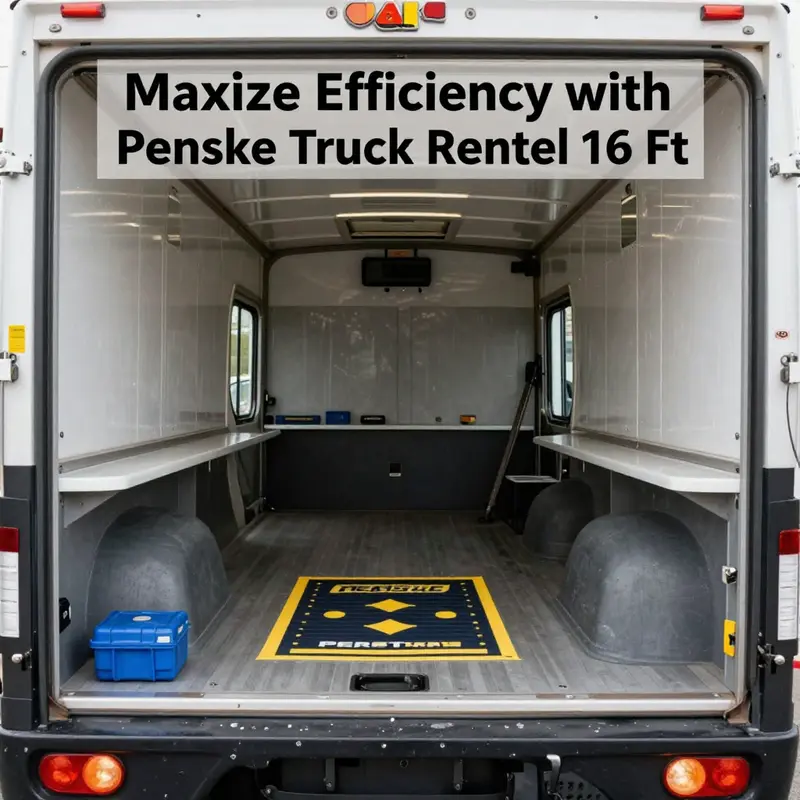
The interior space of the 16-foot box truck is often described in terms of cubic capacity and the ability to accommodate a broad range of items. In practice, this model offers interior space that generally falls in the vicinity of three-quarters of a thousand cubic feet, with some configurations approaching 800 cubic feet. This breadth translates into a flexible staging area for furniture, boxes, equipment, and inventory without forcing owners to push items to the ceiling or lean heavy pieces against doors. The capacity to carry up to around 8,000 pounds, depending on configuration and local regulatory limits, adds a robust margin for heavier items—appliances, machinery, or stacked crates—that would strain lighter vehicles. For a user planning a mid-sized move or a fleet-based delivery route, those numbers matter not only for what fits, but for how safely and efficiently it can be moved. The ability to transport heavy loads without compromising maneuverability makes the 16-foot model a versatile choice when space must be balanced with street logistics.
The practical implications of this capacity come into sharper relief when you picture the daily rhythm of a move or a delivery schedule. A typical apartment transition might involve dense components: dressers and bed frames, book-heavy cartons, a section of seating, and miscellaneous odds and ends. In many cases, the items can be separated into two or three distinct zones within the cargo area, each with its own secure footing and restraint. The truck’s interior design—durable, weather-resistant, and adaptable—facilitates this kind of arrangement. Adjustable internal partitions are a particularly useful feature, enabling you to create distinct compartments or to reconfigure the space as counts of items shift during loading and unloading. The combination of roominess and modularity helps to prevent shifting during transit, which translates into cleaner routes, less risk of damage, and a calmer driving experience for the operator.
Beyond raw space, the truck’s performance characteristics contribute to a smoother journey. Power steering reduces the effort required to navigate tight corners or park in congested neighborhoods, a practical advantage for drivers who often operate in urban environments. Automatic transmission options offer a predictable driving feel, reducing fatigue during longer routes or mixed driving conditions. The interior is designed to be durable and weather-resistant, which matters when loading in damp basements, exposed docks, or outdoor staging areas. These elements come together to support a reliable, low-stress transport experience, allowing movers to focus on the sequence of loading and unloading rather than wrestling with the vehicle’s handling or the condition of cargo.
In addition to the core specifications, Penske’s rental package includes a network and a set of terms that support a broad range of user needs. The nationwide rental network means you can reasonably expect a pickup location that is convenient and consistent with a customer’s plan, reducing downtime and backtracking. Flexible rental terms give users room to adjust their schedule if dates shift—an important consideration when a move is weather-affected or when inventory counts change mid-loading. Optional add-ons expand the vehicle’s capabilities and protection: insurance packages that help cover accidental damage or loss; fuel services that can simplify the accounting of fuel consumption on trips; and loading ramps or other equipment that enhance efficiency when moving heavy items. These add-ons complement the base vehicle by extending its utility, and they are often critical to keeping a move on track, especially when personnel are handling multiple tasks across a single day.
To make the most of the 16-foot model, planning is essential. Prospective users should begin by inventorying their items and roughly estimating their total cubic footage, paying attention to both the volume and the weight distribution of the load. A well-planned loading plan reduces the risk of unsafe stacking and helps preserve the truck’s handling characteristics. Weight should be distributed evenly and kept forward to maintain steering control and braking effectiveness. Heavy items are best placed on the floors toward the cab to help manage the vehicle’s center of gravity; lighter items can be layered toward the top, with softer packing to cushion fragile goods. Using the right tools—dollies, moving straps, and sturdy blankets—reduces the likelihood of damage and speeds up the process. The interior’s adjustable partitions can be leveraged to separate items that might shift during transit, creating modular zones that protect perishable goods, electronics, or delicate furniture.
Another layer of planning comes with route and time. The 16-foot truck’s size generally offers a favorable balance between interior space and maneuverability, which is particularly valuable when navigating city streets with tight corners, restricted parking, or narrow access points. This balance becomes especially important in peak moving seasons or weekends when vehicle availability can be tighter. Booking ahead—ideally 24 hours in advance—helps ensure the vehicle you want is on hand and reduces last-minute stress. The rental process typically involves selecting pickup and drop-off locations and dates, and, if needed, confirming whether a driver’s license is required for operation. The ability to handle these logistics online, through a catalog of step-by-step options, is a practical advantage that saves time and reduces friction for both individuals and businesses.
When it comes to the physical act of loading, there is value in the synergy between space planning and process discipline. The 16-foot model’s interior layout supports a workflow that keeps items moving in a single, logical sequence—from entry to staging to final placement in a home or business location. This approach minimizes double handling and helps ensure that fragile items receive appropriate protection at every stage. The array of add-ons—ranging from basic insurance to loading ramps—can be strategically used to safeguard assets and streamline the loading process. For instance, loading ramps can dramatically reduce the effort required to move heavy goods up and down from the truck bed, a benefit that translates into less physical strain on staff and a lower risk of accidental drops or slips. Insurance options provide a safety net that eases the concerns of moving valuable items, while fuel services can simplify logistics in long-distance tasks where fuel margins become a consideration.
A central theme in using the 16-foot model effectively is reliability—the consistency of the rental experience across locations and across days. The Penske network’s scale often means corresponding availability during variables such as holidays and weekends, which previously used to complicate planning for many people. The ability to reserve online, confirm details, and adjust plans helps ensure the vehicle fits into a broader schedule that includes transit time, loading windows, and even the needs of contractors who must coordinate multiple shipments within a single day. This reliability extends beyond the vehicle to the service ecosystem—customer support, accessibility to parts and maintenance, and the availability of accessories and services to tailor the truck to specific tasks.
A practical way to think about the 16-foot box truck is not as a single object, but as a transport solution that scales with the job. For a small household move, it can hold a complete set of furniture and a substantial number of boxes, with the remainder of belongings placed in protective packaging to minimize shifting. For a mid-sized business, the truck can serve as a portable warehouse on wheels, supporting the timely delivery of goods to customers or the efficient transfer of inventory between sites. The ability to separate cargo with partitions, secure items with restraints, and minimize shifting during transit makes this model a stable foundation for a range of tasks. In addition to this functional versatility, the vehicle’s design helps reduce the cognitive load on the driver. A calm loading environment, a predictable driving experience, and a straightforward return process all contribute to fewer surprises on a moving day and more focus on the sequence of tasks that keep the operation moving forward.
To further illustrate the practical value of the 16-foot model, consider how a typical moving project unfolds. Once a date is confirmed, a careful plan is laid out: which rooms will be loaded first, how furniture will be disassembled, and how fragile items will be wrapped. The interior’s weather-resistant materials reduce the risk that rain-soaked boxes or damp upholstery will be compromised during loading. The adjustable partitions become a resource for creating logical groupings—one zone for electronics, another for kitchenware, and a third for fragile heirlooms—each supported by secure belts and straps to minimize movement. The drive itself, aided by power steering and, when selected, automatic transmission, remains manageable even when the truck is fully loaded. The result is a cohesive, step-by-step process rather than a stall-filled afternoon where items are shuffled repeatedly to make space. In short, the 16-foot model supports a workflow that reduces friction and heightens predictability—a quality that many planners and operators prioritize when time is of the essence.
For readers who want to explore practical, real-world guidance about how this model fits into a broader fleet or moving strategy, there is value in looking at how such vehicles are described in moving-centric resources and guides. Our own overview and discussion of the 16-foot Penske truck includes references to capacity, dimensions, and the kinds of tasks it handles best, as well as the rental terms that help people secure the right vehicle for the job. If you want to see a concise, operation-ready summary of the model and its features, you can follow a dedicated guide that outlines the key specifications and considerations. It is a resource that complements hands-on planning, providing a framework for thinking about what matters when selecting a box truck for a move or a delivery route. To connect with the broader knowledge base, you can refer to the guide linked here: 16-foot box truck Penske details, which offers a focused look at the model’s dimensions, capacity, and interior features in a concise format that practitioners can apply during planning and execution.
The experience of renting and operating a 16-foot Penske box truck is not merely about moving items from one location to another. It is about how a well-designed, appropriately sized vehicle integrates with a process, a schedule, and a team’s workflow. The truck acts as a mobile workspace, a temporary inventory hub, and a transportation conduit all in one. It invites careful pre-planning, precise loading, disciplined driving, and thoughtful post-move steps, such as inventory checks and proper unloading. When the job is done, the vehicle can be returned with a clear sense of what has been accomplished, leaving the driver and the client with a sense of closure and a straightforward accounting of time, distance, and resources used. In that light, the 16-foot model is not simply a tool for transportation; it is a partner in momentum, helping to advance projects and moves with confidence rather than uncertainty.
For readers seeking practical, official specifications and guidance beyond the layperson’s overview, the external resource provides authoritative details on the truck’s dimensions, performance, and safety standards. This resource can serve as a reliable reference point when planning a move or coordinating with a fleet manager who needs to compare specifications across vehicles. By connecting the practical planning and execution practices described here with the formal specifications from the manufacturer, readers can build a robust, evidence-based approach to selecting, using, and returning a 16-foot box truck that meets the demands of their job. External resource: Official 16-foot truck specs.
Securing the Right Move: A Thorough Guide to Reserving the 16-Foot Rental Truck
Choosing the right moving solution begins long before the first box is packed. The 16-foot rental truck sits at a strategic intersection of maneuverability and cargo space. Inside it, you’ll typically find roughly eight hundred cubic feet of capacity, enough to handle a multi-room move for a small to mid-sized household. It also includes adjustable internal partitions and built-in safety belts to help stabilize and secure belongings during transit. This combination makes the truck a reliable workhorse for both short trips and longer moves, especially when you want a balance between ease of parking in tight urban areas and a sizable interior for furniture and boxes. Knowing these basics helps set expectations for the reservation process, because the goal is not simply to secure any vehicle, but to reserve the right truck for the specific load, route, and timeline you’re facing. The reservation experience is designed to be straightforward, but it rewards careful planning and timely action, particularly when demand is high around holidays and weekends. Every move benefits from a little foresight, and the 16-foot option is uniquely forgiving for many scenarios, from apartment-to-apartment exchanges to small office relocations, when a larger truck would bring excess complexity or a smaller one would leave you short on space.
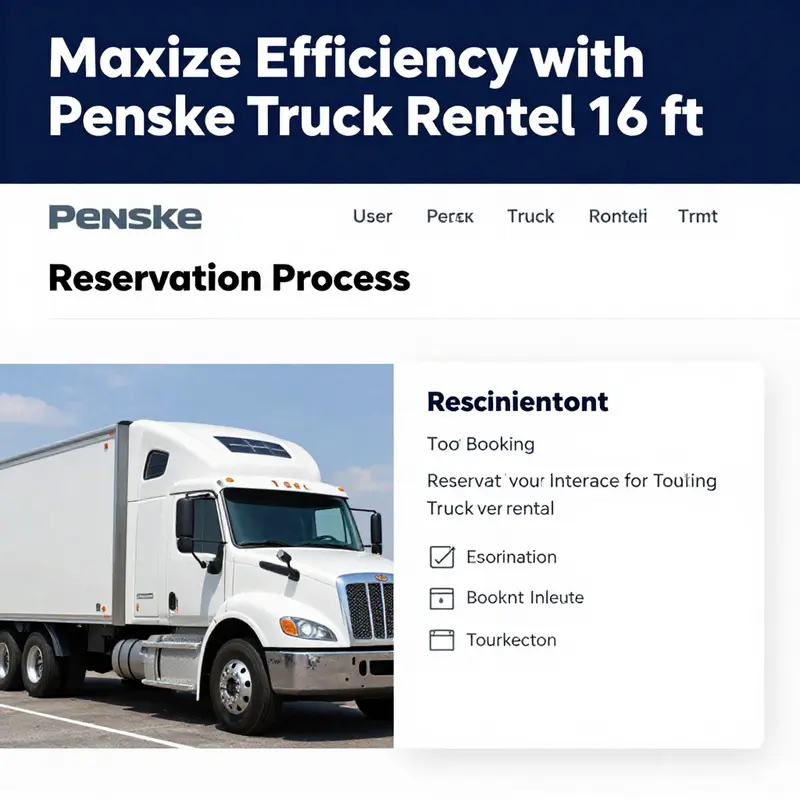
Most people begin their reservation by locating the truck provider’s online reservation portal. The process emphasizes three core elements: choosing a pickup location, selecting dates and times, and then identifying the truck size that matches the move. The “Find a Location” feature is a practical starting point, guiding you to a nearby Penske facility or equivalent service center. Once you’ve pinpointed a convenient pickup site, the system presents available truck sizes for your chosen window. It’s common to see the 16-foot vehicle appear among the options, along with other sizes that can accommodate different load volumes. If you’re unsure about the exact space you’ll need, you can begin with the 16-foot option and adjust later, or compare with a smaller box truck for pattern loading. This decision is not merely about space but about how you will load, stack, and secure your items. A large portion of the value of renting a 16-foot unit stems from its interior versatility—dollies, straps, and rope can further enhance stability, while partitions allow you to cordon off zones, which can be useful for fragile items or for separating a high-value subset of your cargo from heavier boxes.
As you move through the reservation tool, you’ll be able to customize the rental with optional services. Insurance coverage is a common choice for people who want peace of mind without the risk of unexpected repair costs. Moving supplies—dollies, moving blankets, ropes, and tie-downs—are additional conveniences that can save trips to a hardware store and keep the moving day efficient. Some moves benefit from a delivery or drop-off service, especially when you’re coordinating multiple legs of a journey or when you want the truck waiting at a specific point on the route. When you’re ready to set the terms, you’ll be asked for basic information. A notable feature of the current policy is the ability to place a cash reservation with just a name, address, and phone number. This streamlined approach lowers the barrier to securing a truck while you confirm the finer details. You’ll still need to finalize the reservation with a payment method before the date, but the ability to lock in a truck with minimal initial data can be a practical first step when schedules are tight.
The reservation concludes with a confirmation step. After you review the selected truck, dates, locations, and any add-ons, you complete the payment using a credit card or another accepted method. Immediately after the payment is processed, you receive an email confirmation that outlines all the critical details: pickup site, the exact truck size reserved, dates and times, and any special instructions or services you’ve added. This confirmation is your anchor for the move, a reliable reference that you can print or keep on your phone. The process is designed to be transparent and user-friendly, but as with any reservation system, little things can influence your experience. For example, if you’re booking through corporate channels, communication gaps between corporate offices and local branches have been reported by some customers. In those situations, a quick call to the local Penske location in advance can help confirm availability and smooth out any discrepancies. The number provided for urgent assistance is 1-844-847-9517, a line that can connect you to a local team if there’s a mismatch between corporate records and the site you’re using. This proactive check is particularly wise during peak periods when fleet availability shifts rapidly. To explore the reservation workflow in more depth, you can refer to a detailed walkthrough available at penske-truck-rental-16-foot.
Beyond the booking itself, the experience can be enhanced by leveraging the Penske Truck Rental app. The app is designed to speed up reservations, provide real-time updates on your rental status, and deliver practical notifications about deadlines, changes, and location details. It is a handy companion for anyone juggling multiple moving tasks or coordinating with a moving company, storage services, or a cross-city route. Like any software, the app has its quirks. Some users have found that uploading documents—such as a driver’s license or proof of insurance—within the app can be tricky. This limitation does not typically affect the core reservation or pickup process, but it can matter if you’re trying to complete every prerequisite within the app alone. For most moves, you can complete the essential steps online or at the pickup site, and save the app’s use for status updates and reminders. The key is to plan ahead and to be aware of where your information is stored. If you anticipate needing to present documents remotely, it’s prudent to prepare digital copies in advance and verify whether the app supports uploading them.
Those practical nuances aside, booking a 16-foot truck is a straightforward exercise, but the real work begins before you click the final confirm button. A successful reservation hinges on anticipating your load and your route. The 800 cubic feet of interior space is not simply a statistic; it’s a measurement that guides how you pack, how you distribute weight, and how you secure items so they arrive intact. Consider the layout you will use inside the cab and cargo area. Partitions can help you segregate sensitive components—glassware, electronics, or fine art—from heavier, dense items like textbooks and kitchenware. Properly distributing weight from front to back and side to side improves handling and reduces the risk of shifting cargo during transit. The presence of safety belts and tie-down anchors gives you practical tools to secure items as you move. It’s not glamorous, but it is essential to a safe and efficient move. You’ll also want to confirm with your pickup site about any local requirements, such as proof of insurance, driver’s license status, or special permits if you’re navigating restricted zones or toll-heavy corridors.
A common concern is whether you should book well in advance. The short answer is yes, especially if you’re planning a move that includes seasonal shifts in demand. Holidays and weekends tend to be busy, and fleets can fluctuate quickly as rental needs spike. Reserving at least 24 hours in advance is wise, but in peak seasons it’s prudent to extend that window to several days if your timeline allows. The extra lead time reduces the risk of last-minute changes, ensures you have access to a truck that matches your load, and creates a buffer for unforeseen conflicts in scheduling. If you’re moving across states or planning a longer journey, double-check mileage policies and fuel requirements, as these can influence the total cost and the choice of truck. A quick line of inquiry with the local branch can also reveal any regional nuances—such as limited weekend hours or varying pickup times—that might affect your plan.
When you arrive to pick up the truck, the experience is typically hands-on and methodical. A pre-trip inspection is standard: you’ll verify lights, brakes, tires, fluids, and the condition of the cargo area. You’ll also confirm the truck’s internal capacity and any protective equipment that accompanies it. If you’ve booked optional accessories like dollies or straps, these are retrieved and inspected for safety, then added to your load plan. A good practice is to walk through the loading plan mentally before you start: identify the heaviest items first, anchor them against the partitions, and propose a layout that minimizes shifting. The goal is to create a balanced arrangement so that the truck handles smoothly on the road, especially if you’re navigating winding routes or congested urban centers.
The day of the move is often the culmination of careful planning. You have your truck, your route, and your load plan, plus a clear understanding of the time window you’ve reserved. The 16-foot model is particularly appreciated for its balance of turning radius and interior width, which makes it feasible to maneuver in tight driveways and crowded parking lots with less stress than larger commercial vehicles. It’s also a practical choice for moves that involve stairs, elevators, or multiple drop-off points, where a heavier truck would introduce more complexity. The internal space allows you to organize items into zones: fragile items in one area protected by blankets, heavier boxes in another, and appliances kept ready for a controlled transfer to the resident space or storage. The ability to adjust partitions during the move means you can reconfigure on the fly if some items don’t fit your original plan. While the truck provides a stable platform, the success of the move still rests on your packing discipline, the quality of your protective materials, and the care you take in securing each item for transit.
As the move unfolds, it’s natural to reflect on what makes the 16-foot option particularly reliable. It’s not just about raw space; it’s about the practical adaptability of the interior and the support services that accompany the vehicle. The customer-centered options—insurance, moving supplies, and optional drop-off services—allow you to customize the experience to your specific needs, whether you’re downsizing, relocating to a new city, or transferring inventory between sites. If you value continuity and predictability, this level of customization can reduce the number of moving headaches and help you stay on schedule. It’s also worth noting that a well-timed checkout and return process is part of the overall experience. If you return the vehicle with full fuel and within the agreed mileage, you’ll likely avoid extra charges and ensure a smoother post-move settlement. For those who must coordinate returns with multiple stops or unusual routes, confirming the return location in advance and understanding any local procedures helps prevent surprises at the end of the rental period.
In this context, internal linking to focused resources can be a useful way to deepen understanding without interrupting the narrative flow. The linked resource provides a concise, step-by-step overview of the reservation workflow specific to the 16-foot truck size, offering readers a practical reference that complements the broader discussion presented here. You can explore the detailed workflow at penske-truck-rental-16-foot. This reference is especially helpful for readers who prefer a quick, structured outline that mirrors actual online interactions, from locating a pickup site to finalizing a payment. It also reinforces the point that the reservation experience is designed to be intuitive, with options to tailor the rental to a wide range of moving situations.
For those who want a direct, official channel to manage the reservation or seek immediate assistance, the original reservation platform remains the primary touchpoint. The official page provides the current policies, location details, and contact options that a reader might need when plans change or when a local branch’s hours differ from the online schedule. It’s normal for moving plans to evolve as you confirm details, and having access to timely information from the source minimizes confusion. The combination of a user-friendly interface, flexible add-ons, and reliable support helps ensure that the 16-foot truck remains a dependable option for a variety of moves. By taking time to review the available services and to confirm the correct pickup and drop-off parameters, you set the stage for a move that proceeds with fewer delays and less stress.
In sum, reserving a 16-foot rental truck can be as straightforward as a few online clicks, with a few practical checks along the way. The interior capacity and adjustable features accommodate diverse loads, while optional services offer additional convenience. The reservation process, complemented by a mobile app and a responsive support line, creates a framework that supports efficient planning and execution. Whether you are a first-time mover or an experienced relocator juggling multiple stops, the combination of clear steps, careful load planning, and proactive communication with the local branch helps ensure that your truck is ready when you need it and that your move stays on track. The experience is deliberately designed to be intuitive, but the benefit comes from thinking ahead: measuring the load, selecting the right truck size, and arranging the add-ons that match your risk tolerance, budget, and schedule. This approach turns a potentially stressful undertaking into a sequence of orderly tasks that culminate in a successful, on-time arrival at the destination. If you want to revisit any of the practical details, the internal resource linked above provides a tight, action-oriented summary that you can reference as you prepare for your move. And as you finalize plans, remember that the day’s outcomes depend not only on the truck’s space but on the care you bring to packing, securing, and timing. A deliberate, well-communicated plan is the surest route to a smooth, efficient relocation that meets your expectations and lets you focus on settling in rather than wrestling with logistics.
External resource: Official reservation page for the provider can be found at https://www.pensketruckrental.com.
Final thoughts
The 16 ft Penske truck rental stands out as an efficient choice for business logistics, offering ample space and safety features geared for the transportation of goods. With a user-friendly reservation process and tailored services, you can ensure that your logistical needs are met confidently and reliably. Therefore, seize the opportunity to enhance your business operations by making the smart choice of renting a Penske truck.