
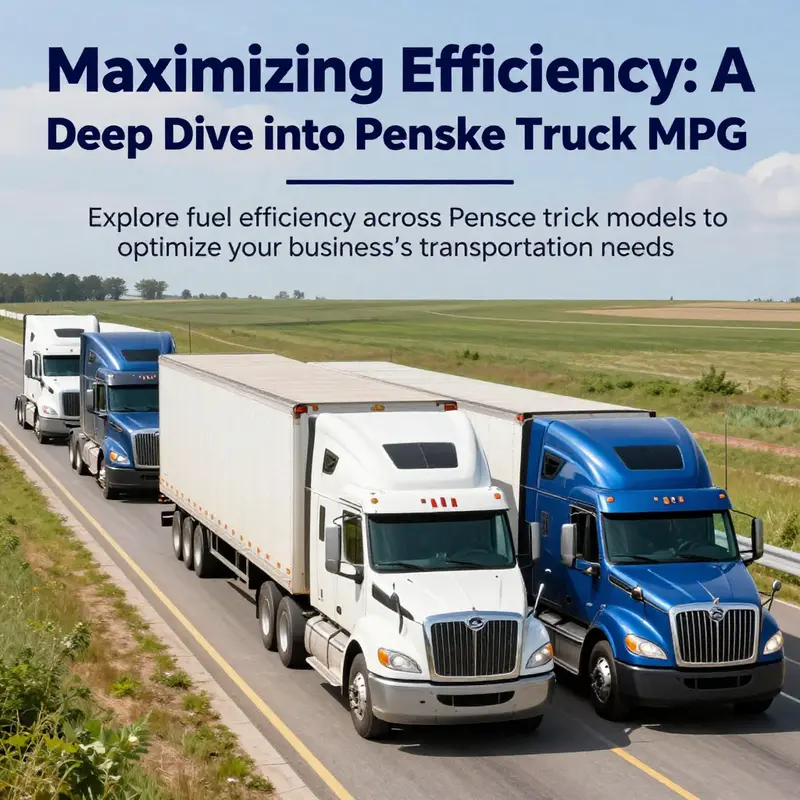
For business owners relying on transportation for logistics, understanding fuel efficiency is paramount. Penske trucks, known for their reliability, exhibit varying mpg ratings depending on the model and year. This article will guide you through the intricacies of Penske truck MPG, exploring its varying fuel efficiencies, the factors influencing fuel economy, and a comparative analysis of different models. Whether you’re planning long-distance moves or regular deliveries, knowledge about truck mpg can impact your operational efficiency and costs.
Penske Truck MPG Demystified: How Model Variations Shape Mileage, Costs, and Sustainable Delivery
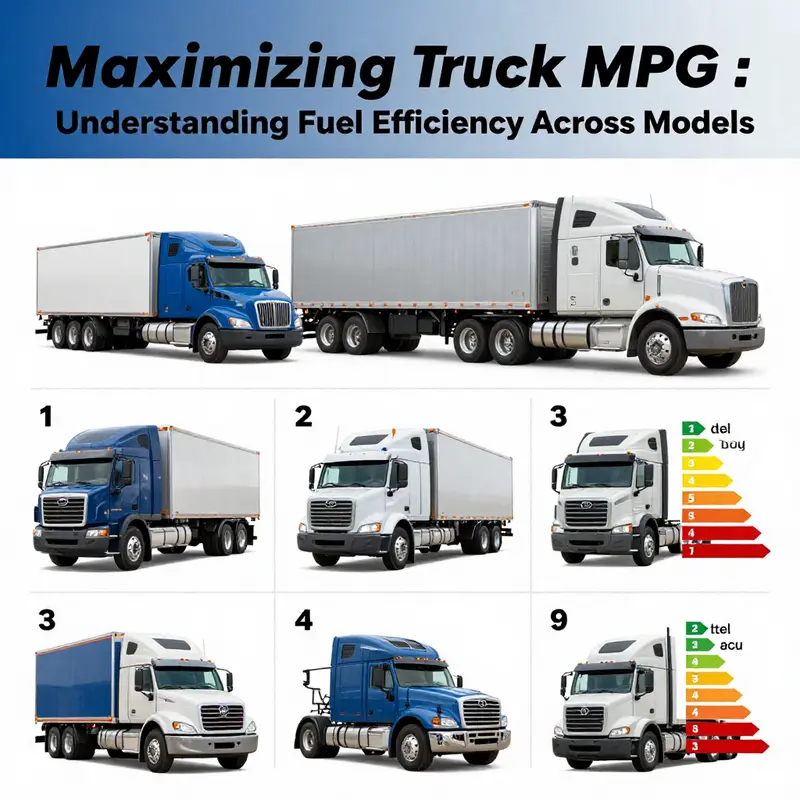
Fuel economy sits at the intersection of cost efficiency, reliability, and responsibility for fleets that move goods across town and across states. In the moving and logistics world, the miles-per-gallon metric is not just a number on a spec sheet; it translates into fewer stops, steadier budgets, and a smaller environmental footprint. For businesses that rely on a Penske fleet, fuel efficiency becomes a planning tool as much as a performance indicator. The picture of MPG across Penske’s lineup is a blend of machine size, tank capacity, engine design, and the way a truck is driven and loaded. When you add the broader regulatory environment and shifts in customer expectations, fuel economy emerges as a dynamic factor in how a fleet is managed and how moves are priced. It is instructive to trace what the mpg figures look like across the most common classes of Penske trucks, and then to consider how those figures are achieved in real-world operations through careful planning and smart technology, rather than relying on luck at the pump.
Across the core diesel fleet, the scale of a truck—and the load it is built to carry—largely governs miles per gallon. Medium-duty trucks, typically ranging from about 22 to 26 feet in length, stand out for their efficiency in the stretch between city streets and highway corridors. These vehicles are often cited as achieving up to 13 miles per gallon under typical operating conditions. That efficiency is not just a number for the cold readout on a spec sheet; it translates into practical advantages: the ability to cover longer distances between refueling stops, better predictability in fuel budgeting for a move, and a reduced likelihood that a long-haul assignment will become a fuel-coverage planning headache. In a fleet context, that translates into more reliable scheduling, tighter cost controls, and improved service consistency for customers who measure performance in on-time deliveries and total move cost. The range per tank for these larger diesel trucks frequently exceeds five hundred miles, which is a meaningful advantage for operations that involve long-haul moves or multi-leg routes where dwell time at fuel stops adds up.
The contrast with smaller, lighter-duty trucks—such as a 12-foot model—illustrates how vehicle size and design shape fuel economy. The 12-foot class is typically more efficient on a per-mile basis than larger trucks in certain urban or local move scenarios, but when evaluated on total fuel consumption per job, the picture becomes more nuanced. The 12-foot model often runs around 12 miles per gallon, and it is equipped with a 35-gallon tank. That configuration yields an approximate range of about 420 miles per tank, which makes it well-suited for shorter moves and local deployments where the emphasis is on maneuverability, parking flexibility, and cost containment for small-to-mid-sized households or offices. In practical terms, the mileage of this smaller class of trucks must be weighed against the distance involved in a move, the density of stops, and the weight of the load carried in a typical assignment. A single long day that includes multiple loading and unloading stages can alter the real-world mpg far from what the engine could achieve on a steady highway run, underscoring that fuel efficiency is as much about planning and route design as it is about the machinery itself.
The overarching theme across Penske’s fleet is that fuel efficiency is a function of how the truck is used, not just what is written on the dashboard. Several factors actively shape the number that ends up on the odometer. Driving conditions carry the loudest signal: sustained highway speeds with light to moderate loads typically produce better mpg than stop-and-go city driving when fuel is burned through frequent acceleration and idling. Load weight contributes a second decisive pressure: heavier loads demand more torque, more power, and more fuel, especially when combined with climbs and unfavorable wind. Transmission type also matters; gear ratios, torque conversion, and acceleration profiles influence how efficiently the engine can perform its tasks. A well-maintained drivetrain, proper tire inflation, and a clean air intake system all contribute to a truck’s ability to meet or exceed its published miles-per-gallon numbers. In practice, a fleet operator can optimize MPG by combining performance-focused maintenance with disciplined driving practices and route optimization. Penske’s data reflects this philosophy, offering a credible benchmark for planning fuel needs and controlling costs across a portfolio of moves.
The evolving demand for fuel efficiency has been shaped by a pair of forces: market pressures from higher fuel prices and a regulatory trajectory that favors cleaner, more efficient fleets. In the near term, fluctuations in fuel prices can cause spikes in operating costs and push managers to choose the most fuel-efficient vehicle for a given task, even if it entails adjustments in payload or transit time. Over the longer horizon, environmental regulations at the federal and regional levels push fleets toward higher efficiency as a baseline expectation. The result is a landscape where efficiency gains are expected not purely as a response to price signals but as a systematic, strategic feature of fleet design and management. In response, Penske has embraced a proactive approach that looks beyond the pump to the broader toolkit of fuel management. The company highlights that fuel efficiency needs to be coupled with smart technology and tailored fleet solutions. For instance, GPS-based cruise control and other intelligent routing and speed-management features can help fleets extract more miles from every gallon without compromising service quality. These technologies provide a practical gateway to translating mpg numbers into reliable, predictable performance on the road, which is essential for customers whose moves hinge on tight schedules and stable costs.
Beyond the numbers, the sustainability narrative that surrounds Penske’s operations underscores a broader shift in the industry toward greener logistics. The commitment extends past fuel economy to the kind of energy-conscious choices that shape corporate responsibility and public perception. A notable example is the partnership with City Harvest to support a first-of-its-kind “green” refrigerated truck fleet. This collaboration showcases a portfolio of efficiency-minded strategies—ranging from advanced refrigeration technology that minimizes energy use to route and scheduling innovations designed to reduce emissions while preserving food safety and quality. The green fleet initiative is less about chasing a single mpg statistic and more about integrating fuel efficiency with emissions reductions, better optimization of cold-chain logistics, and a meaningful contribution to urban sustainability goals. For fleets managing moving and delivery services, this kind of initiative demonstrates how fuel economy can be part of a broader value proposition—where cost, reliability, and environmental stewardship reinforce one another rather than compete.
The practical takeaway for someone planning a move or steering a fleet is simple: use the published mpg figures as benchmarks, but treat them as guidance rather than guarantees. Real-world mileage will always diverge from the ideal due to the variables of terrain, traffic, weight, and route. The most effective approach is to pair a clear understanding of the vehicle class and its capabilities with disciplined planning and the right mix of equipment. That means choosing the truck size that aligns with the job’s size and weight, planning routes that minimize backtracking and congestion, and equipping drivers with tools and training to maintain fuel-efficient driving habits. In short, MPG is a starting point for dialogue about cost, service, and sustainability, not the final word on every move. As you explore the fleet options, consider how the numbers interact with your operational realities: distance to be traveled, average load, and acceptable transit time. Some operators may find that a larger truck with a higher tank capacity reduces the number of refueling stops and, in aggregate, lowers downtime for a given job. Others may find that a smaller, nimbler truck minimizes empty miles and reduces the load-to-speed ratio, yielding a more favorable cost-per-mile even if the published mpg is modest.
For readers who want a quick, practical reference to mileage specifics in real-world contexts, a deeper dive into the available guidance can be helpful. See the Penske truck gas mileage resource for a concise review of how different truck sizes perform under typical moving scenarios. The link below points to a resource that aligns mileage with task type, route profile, and load considerations, providing a useful companion to the broader discussion of fuel efficiency across Penske’s fleet.
As with any fleet decision, the goal is to bake fuel efficiency into the planning and execution process. A few practical guidelines help translate mpg numbers into tangible savings and service improvements. First, align the truck class to the job. A larger, longer-distance move may justify a bigger tank and better mpg per mile, especially on highway-heavy routes, while a smaller, lighter-load task may be more cost-effective with a compact vehicle that can navigate tighter turns and access easier curbside parking. Second, invest in maintenance that preserves fuel economy. Routine tire checks, alignments, air filter replacements, and engine tune-ups all keep the vehicle operating near its optimal efficiency. Third, leverage technology to target miles per gallon through better speed regulation and route planning. A well-calibrated GPS-based cruise control system helps sustain steady speeds that optimize fuel burn, while dynamic routing can sidestep congested corridors that would otherwise degrade mpg and inflate fuel spend.
The broader narrative of Penske’s fuel economy strategy reinforces a point that resonates across the logistics sector: efficiency is not a one-time achievement but a continuous discipline. As fuel markets shift and as environmental standards tighten, fleets that build fuel management into daily operations gain a competitive edge not only in cost control but in reliability and customer satisfaction. The company’s emphasis on proactive fuel management—emphasizing data-driven decisions, driver training, and advanced technologies—illustrates how MPG can be translated into meaningful business outcomes. In practice, that means fewer breakpoints in a move plan due to fuel concerns, more predictable budgeting, and a reputation for dependable performance.
The sustainability dimension—the long arc toward greener logistics—also plays a central role in shaping customer expectations. When a fleet demonstrates a tangible commitment to emissions reductions and responsible energy use, it creates a differentiating story for customers who are increasingly mindful of the environmental footprint of their operations. The green refrigerated truck initiative is a case in point: it signals that fuel efficiency and environmental stewardship can be pursued in parallel, delivering improvements in energy use, emissions, and overall system performance. For customers and operators alike, such initiatives offer a blueprint for how fuel economy fits into a broader strategy of responsible growth. The practical implication for managers is clear: look beyond the mpg number to the entire ecosystem that supports it, including vehicle selection, maintenance, technology, and partnerships that reinforce sustainable logistics.
In crafting a plan that leverages Penske’s mpg data, businesses can approach their next move with confidence and clarity. Start by identifying the typical distance and load range for the moves you expect to conduct in a given period. Use the published mpg benchmarks to estimate fuel costs, then add a contingency for real-world variation. Consider the tank size and its effective range when scheduling refueling stops, and factor in driving conditions that tend to reduce fuel efficiency, such as heavy congestion or hilly terrain. Training drivers in efficient acceleration and braking techniques, maintaining consistent speeds on long stretches, and using routing tools to minimize backtracking all contribute to higher miles-per-gallon performance in practice. When you couple these operational practices with a thoughtful fleet strategy—selecting the right truck classes for the job, optimizing load distribution, and integrating fuel-management technologies—you create a sustainable loop: better mpg drives lower fuel spend, which reinforces the case for planned maintenance and continued investment in efficiency-enhancing tools.
For readers seeking additional context about fuel range and what to look for when evaluating a vehicle for a move, Penske’s own resources offer practical guidance, and the linked materials provide deeper dives into fuel range considerations for different truck sizes. The target is not to chase a single figure but to understand how the numbers map to real-world scenarios and to design processes that keep miles-per-gallon at the center of decision-making. As moves evolve—whether they’re straightforward residential relocations or more complex commercial transitions—the MPG conversation remains a crucial lens through which to view cost, reliability, and environmental responsibility in tandem.
External resource: https://www.pensketruckrental.com/news/penske-truck-leasing-and-city-harvest-team-up-for-first-ever-green-refrigerated-truck-fleet
Unpacking Penske Truck MPG: How Design, Driving, and Terrain Shape Fleet Fuel Economy
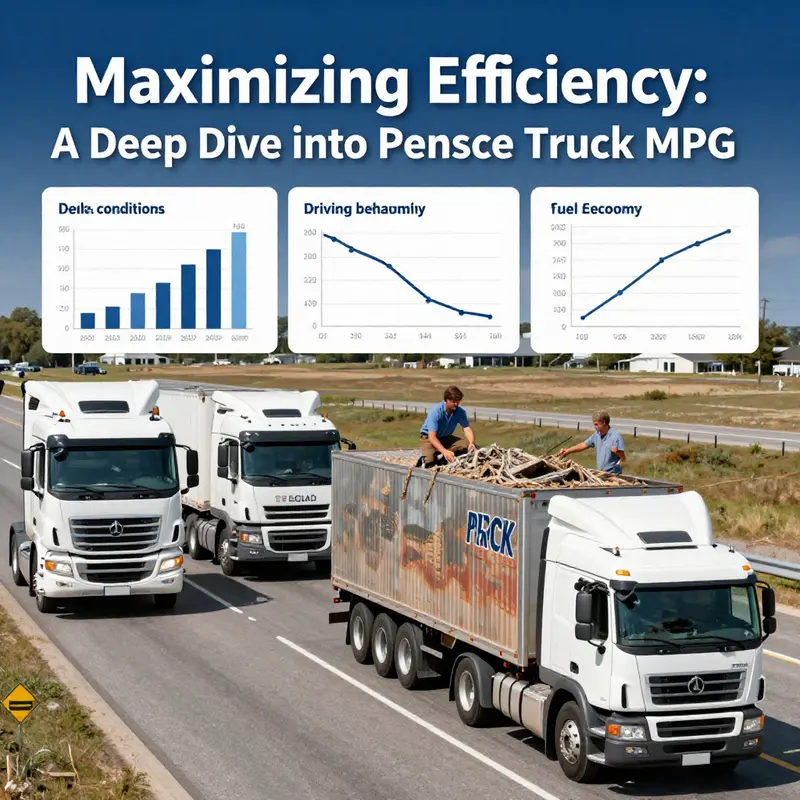
Fuel efficiency in a fleet of heavy-duty commercial trucks is not a single number but a living equation. It depends on the machine at the heart of the operation, the way it is driven, and the conditions under which it travels. In a large fleet like Penske’s lineup, the mpg figure is a composite result of engineering choices, maintenance practices, and the practical realities of daily moving and logistics. When you begin to unpack what goes into miles per gallon for these trucks, you quickly see that every factor matters, and together they determine whether a trip costs more in fuel or runs with leaner energy use. A useful way to ground this discussion is to consider real-world numbers for different sizes in the fleet. For example, a large box-style truck in their 2026 lineup is equipped with a substantial diesel tank and can achieve up to about 13 miles per gallon on highway segments, a design choice that supports longer trips with fewer refueling stops. In contrast, smaller models, such as a compact 12-foot truck, can deliver around 12 mpg, with a 35-gallon tank that yields roughly 420 miles per tank depending on load and route. These figures illustrate how a single fleet can span a spectrum of efficiency depending on design and mission. For anyone seeking the most precise, up-to-date specifications for specific units, the official fleet information from the operator is the best place to start, and it often serves as the anchor for budgeting and fleet planning.
Beyond the raw numbers, the miles-per-gallon story lies in the interplay of several core factors. The most fundamental of these is vehicle design and engineering. The engine its operation depends on the thermal efficiency of the powertrain, how aggressively energy is allocated between acceleration and steady cruising, and how the transmission matches engine speed to road demand. In modern heavy-duty applications, transmission design can shift the efficiency equation in meaningful ways. A transmission that keeps the engine in a lean, efficient band across a range of speeds reduces fuel burn, even when the vehicle is fully loaded. In some fleets, the adoption of advanced transmission technologies, including concepts that mimic the smooth, adaptive shifts of modern automatics, helps to minimize fuel waste during starting, climbing grades, and merging.
But design is only part of the picture. Aerodynamics plays a central role on long hauls, where air resistance becomes a dominant energy drain at highway speeds. The human eye can see the impact of cab shapes, fairings, and trailer skirts, all designed to ease the air flow around the combination. Small improvements in drag coefficient, multiplied over tens of thousands of miles, translate into measurable mpg gains. The right aero package may not dramatically alter a short city run, but it can produce consistent relief on those cross-country legs that define fleet economics. Coupled with aero considerations is rolling resistance—the friction between tires and the road. Tires with low rolling resistance compounds, proper inflation, and appropriate tread design can shave tenths of a mile per gallon in the right conditions. The math here is simple but powerful: reducing rolling resistance reduces the energy required to sustain motion, and the savings compound over time and miles.
A Penske fleet, like many others, also reveals how driver behavior and operational practices influence fuel outcomes. The difference between smooth, steady driving and aggressive acceleration or abrupt braking can be dramatic. In highway conditions, aggressive patterns can erode fuel economy by as much as a third, while in city driving the hit can be substantial as well. Training and monitoring, paired with telematics and route optimization, can turn this factor from a cautionary note into a practical lever for savings. The story of fuel economy is not only about what the machine can do; it is about how it is used. Fleet managers increasingly see this as the first line of defense against rising fuel costs, using real-time feedback to encourage fuel-efficient habits across drivers, routes, and schedules.
Road conditions and terrain exert their own influence on mpg. Even a well-designed truck can be pushed off its efficient path by grades, wind, and surface quality. Hilly routes demand more power to crest climbs, which raises fuel consumption in comparison with flat sections. On the reverse side, steady, well-planned routing that minimizes unnecessary climbs and slowdowns can recover some of the lost efficiency through continuous momentum. Environmental conditions, particularly temperature and wind, add another layer of complexity. Cold weather can suppress engine efficiency and extend warm-up times, while the need for heating and defrosting adds auxiliary loads that draw on the fuel supply. Wind, especially headwinds on open stretches, can impose additional drag and push mpg lower than on calm days. These conditions remind operators that fuel economy is a moving target, shifting with the weather and the landscape.
Maintenance is the quiet, constant driver of efficiency. A vehicle that is well-tuned, with clean air filters, clean fuel injectors, and tires inflated to the correct pressure, tends to sip fuel rather than gulp it. Conversely, neglected maintenance creates hidden penalties: clogged filters, dirty injectors, and under-inflated tires collectively raise fuel consumption and reduce performance. Regular checks keep the powertrain operating in its most efficient range, enabling the engine to deliver the right amount of power with the least amount of fuel burn. In practice, this means fleets that invest in preventive maintenance programs, predictive diagnostics, and timely tire care will often see mpg stability and improvement over the long arc of fleet life.
All these factors are not merely technical curiosities; they feed directly into broader policy and market dynamics. The regulatory milieu surrounding vehicle efficiency, most notably the corporate average fuel economy standards in the United States, frames the performance expectations for light trucks and, by extension, for large fleets that move goods across the country. The dialogue around these standards has evolved in response to regulatory shifts, political considerations, and industry lobbying, but the underlying objective—encouraging manufacturers and operators to improve efficiency where it counts most—remains clear. For fleets like the one that uses these trucks, compliance is intertwined with cost control, sustainability goals, and reliability across peak moving seasons. Understanding the factors that influence mpg helps fleets navigate regulatory demands while maintaining predictable operating costs and service levels for customers.
The practical takeaway for fleet operators is simple in outline yet nuanced in execution. Fuel economy rises when each piece of the system—engine and transmission, aerodynamics, tires, driver behavior, road management, weather adaptation, and maintenance—works in concert. The science behind these interactions is well studied, and the business implications are tangible: every marginal improvement in mpg translates to fewer fill-ups, longer ranges between refuels, and lower total operating costs. A thoughtful approach to fleet efficiency starts with accurate baseline data for each vehicle category in use, followed by targeted actions tuned to the vehicle’s role. What works for a long-haul box truck may not be the same for a short-wheelbase, urban-oriented mover. Yet the same core principles apply: reduce drag where possible, minimize rolling resistance, keep the powertrain operating in its sweet spot, and ensure that drivers are aligned with efficient practices through training and feedback.
When readers want a snapshot of a provider’s current fuel-mileage realities, they can consult the operator’s published specifications for concrete models, yet it is essential to remember that real-world performance depends heavily on load, route, and conditions. A helpful, practical reference that delves into the mileage specifics of Penske’s trucks is provided in their publicly available content on gas mileage for the fleet, which offers real-world performance insights derived from typical use scenarios. For readers seeking a quick, practical benchmark that ties directly to driving habits and day-to-day operations, this resource complements the broader engineering discussion and highlights how a fleet’s mpg evolves as trucks are deployed across diverse tasks. See Penske Truck Gas Mileage for a concise snapshot aligned with everyday moving operations. While numbers will vary by model year and configuration, the principle remains constant: the most effective mpg strategy blends smart engineering with disciplined driving and proactive maintenance.
For readers who want to situate these fleet-specific insights within a wider policy and industry context, the literature on fuel economy regulation offers important perspective. The corporate-average framework shapes how fleets plan their purchases, maintenance budgets, and driver training programs. It is not only about meeting a numeric target but also about designing operational practices that reduce fuel burn without compromising service levels. That balance between performance, reliability, and efficiency defines the modern approach to fleet management in the era of stricter fuel-economy expectations and rising energy costs. To explore the theoretical and regulatory underpinnings of these standards, consult external resources that analyze the economics and policy implications of corporate-average fuel economy and how they interact with industry practices.
External context, long considered in strategic planning, underscores why the drivers of efficiency are as important as the machines themselves. The broader academic and professional discussions emphasize that improvements in fuel economy come from a portfolio of actions rather than a single silver bullet. From engine technology and transmission strategies to aero optimization and tire management, every lever must be considered. Fleet leaders who integrate engineering intelligence with real-world driving data are best positioned to reduce fuel spend, extend vehicle life, and meet evolving environmental expectations without sacrificing the reliability their customers depend on. The discussion above sketches a practical, field-ready narrative that aligns with the more abstract insights from industry analyses and regulatory literature. For readers who want to anchor their operational decisions in established research, a foundational external source offers a broader view of how corporate-average fuel economy interacts with industry practice and policy. See external sources such as corporate average fuel economy theory and policy literature for deeper context.
Fuel on the Move: Understanding Penske Truck MPG Across Models and Miles
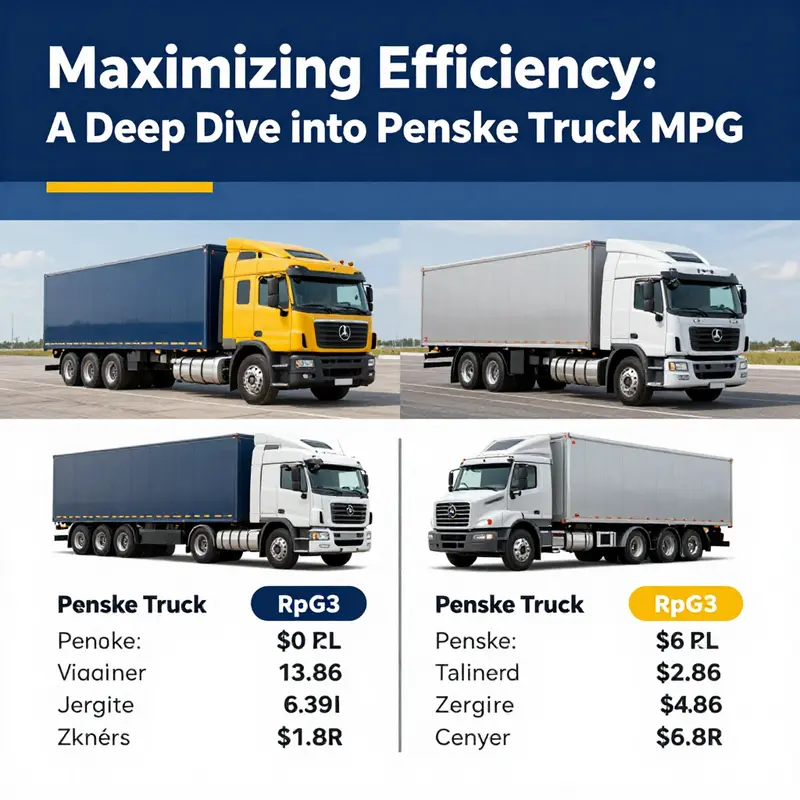
Fuel efficiency, or mpg, is more than a number on a spec sheet. For anyone planning a move, a rental fleet, or a commercial haul, mpg translates into real money saved or spent over hundreds or thousands of miles. Penske offers a spectrum of trucks that are designed to balance cargo capacity, maneuverability, and fuel efficiency. The key is recognizing that fuel economy is not a one-size-fits-all figure; it shifts with the model, the year, the load, the route, and the way the vehicle is driven. Taken together, the numbers paint a practical picture of how far you can go on a tank, how often you will stop for fuel, and how those stops affect your schedule and your budget. In the world of moving and hauling, mpg becomes a strategic element—one that can determine whether a long cross-country trip is cost-efficient or simply a logistical headache waiting to happen. The most accurate, up-to-date guidance, of course, comes from the specific model you choose and the conditions you face on the road, but the broad pattern remains clear across Penske’s lineup: larger, tank-heavy models tend to stretch their miles per gallon further on long hauls, while smaller configurations refresh more frequently but can still deliver solid efficiency in the right circumstances.
Take, for instance, the 26-foot box truck, a staple for longer moves where fewer fuel stops can translate into big savings on time and cost. This model carries a hefty 70-gallon diesel tank, and its fuel economy can reach up to about 13 miles per gallon under favorable conditions. In practical terms, that combination yields a generous range of roughly 900 miles per tank—nearly a full cross-country stretch between refuels if traffic and terrain cooperate. The math is straightforward, but the implications are meaningful: with a larger tank, you can cover more ground on each fill, reduce the frequency of refueling stops, and keep the moving schedule tighter. For commercial hauling and cross-country rentals, those efficiencies have a direct impact on total move cost, fleet utilization, and the reliability of delivery timelines. Yet, it’s essential to remember that the proverbial “up to” figure reflects best-case scenarios. Real-world mpg depends on load weight, road grade, wind, tire condition, maintenance, and even how aggressively the truck is driven. When planning a long haul, drivers and fleet managers often build in a buffer for the mpg range, knowing that every mile carries a measurable premium or savings in fuel.
On the other end of the spectrum, Penske’s 12-foot truck offers a distinctly different balance. With a 35-gallon fuel tank and mpg in the neighborhood of about 12, this smaller unit can be exceptionally practical for tight urban moves, studio-to-storage transfers, or limited-scope relocations. The shorter wheelbase and lighter overall mass can translate into greater agility in congested areas and easier navigation around city blocks or into older multifamily complexes with narrow driveways. The trade-off, of course, is range. At roughly 420 miles per tank, a 12-foot truck is designed for shorter trips or a more flexible schedule that prioritizes accessibility over long-haul efficiency. In practice, that means planning refueling points more frequently on longer days or designing two-person moves where the vehicle can be swapped or complemented with smaller trailers. The difference in mpg between the 26-foot and the 12-foot models isn’t just a statistic; it’s a reflection of how a renter’s needs—distance, payload, and access—shape the most economical choice.
Beyond these two benchmarks, Penske’s pickup trucks occupy a different corner of the efficiency spectrum. The pickups provide a range of configurations to accommodate various hauling needs, and their mpg figures are heavily influenced by year, engine choice, and drivetrain. The emphasis with pickups tends to lean toward reliability, versatility, and performance rather than maximizing fuel economy. For customers evaluating pickup options, the practical question shifts from “how far can I go on a tank?” to “which engine, cab size, and bed length best match the cargo and the route, without compromising the schedule.” In other words, mpg remains important, but it becomes one of several crucial variables—together with payload capacity, maneuverability, and total rental cost—that determine the best fit for a given move or project.
The numbers matter most when you translate them into planning and budgeting. A move is not simply about loading boxes and unloading them at the other end; it is a sequence of decisions about how far you can travel before stopping, how much fuel you must purchase, and how those refueling intervals affect labor, time on the road, and the speed with which a project can progress. The fuel capacity of each model is part of that equation. The 70-gallon diesel tank on the 26-foot box truck is not just a convenience; it’s a strategic asset that reduces downtime, especially on longer routes where fuel stops can become bottlenecks. When a driver maintains steady speeds, uses efficient shifting patterns, and minimizes unnecessary idling, the mpg advantage can be realized in practice, turning theoretical fuel savings into measurable outcomes on the road. For those who want a more technical sense of how these figures are calculated and what factors tend to push mpg higher or lower, a detailed guide on Penske truck gas mileage offers useful context and is worth reviewing for anyone who plans long-distance relocations or manages a fleet with multiple truck types. Penske truck gas mileage guide.
In real-world terms, the decision to select one Penske model over another often comes down to the scale of the move and the consistency of the route. A cross-country relocation with heavy furniture and appliances will tax even the best aerodynamics and engine choices, but the efficiency of the 26-foot box truck can still offer noticeable savings over repeated legs on a journey that would otherwise require more frequent stops with a smaller vehicle. The larger tank and higher mpg ceiling give operators a stability that is harder to achieve in smaller trucks that frequently need to refuel. Conversely, a move concentrated within a metro area, with tight loading zones and frequent door-to-dock transitions, may benefit from the nimble footprint and sturdy performance of a 12-foot truck, even if the mpg per gallon isn’t dramatically higher. The logistical logic is straightforward: match the vehicle to the route, payload, and schedule, and you maximize both fuel efficiency and operational reliability. This is not about chasing a single number but about balancing multiple factors to minimize total move costs while preserving efficiency and safety.
Another layer of consideration is how driving behavior interacts with mpg. Fuel economy improves when drivers maintain steady speeds, anticipate stops, and use cruise control judiciously on highways. Hills and wind can erode mpg quickly, especially for heavier payloads or when the truck operates at the upper end of its rating. Proper tire inflation, regular maintenance, and timely engine service help ensure the mpg figures reflected in the specs translate into real-world performance. Load distribution matters too; an overpacked trailer or a poorly balanced payload can add drag and reduce efficiency, while thoughtful packing and even weight distribution can help the vehicle slice through air more effectively. In practice, renters who plan routes with consistent pacing and fewer interruptions tend to see mpg numbers that approach the upper end of the published ranges, particularly on longer trips where the opportunity to optimize fuel use increases.
Of course, the economics of mpg extend beyond the vehicle itself. Fuel prices fluctuate, and diesel costs can swing with market conditions. The total cost of operation for a move or a fleet operation hinges on more than liters or gallons; it depends on the ratio of miles traveled to the amount of fuel consumed, the rental rate for the vehicle, maintenance costs, and the time value of the driver’s hours. When evaluating options, it is useful to compute the cost per mile for each model under expected conditions, accounting for typical load, anticipated routes, and seasonal variation in fuel pricing. The broader point is clear: mpg is a central variable in cost planning, but it operates most effectively when integrated with an honest assessment of payload needs, route structure, and time constraints.
For those who want a deeper dive into the practical aspects of fuel efficiency on Penske trucks, the fuel-related guidance provided by Penske’s own resources can be a valuable supplement to the numbers here. It is important to compare sizes, engine types, and features when choosing a pickup truck, as these factors significantly affect fuel consumption. In addition, the official pickup truck buying guide from the Penske site offers direct information on model options, performance characteristics, and current specifications that can help customers make an informed decision aligned with their specific moving scenario. External reference to the broader Penske ecosystem can be helpful, especially for readers who want to translate mpg into a concrete cost framework for their next rental or fleet plan. For the most accurate, up-to-date information, visit the official site: https://www.penske.com.
In sum, Penske’s mpg story is not a single number but a spectrum that reflects model design, payload realities, and the realities of the road. The 26-foot box truck stands out for long hauls and high-mileage efficiency, offering a substantial range on a full diesel tank and a mpg figure that supports extended travel with fewer interruptions. The 12-foot truck, while not matching that ceiling, delivers essential efficiency in tight spaces and urban moves where maneuverability and accessibility trump sheer distance per gallon. Pickup trucks, with their diverse configurations, remind us that efficiency is still a moving target, shaped by engine choice, drivetrain, and how the vehicle is used day to day. For planners, the practical takeaway is clear: assess the route, anticipated load, and operating environment; forecast fuel needs with a realistic margin; and choose the model that best aligns with the mission, so fuel efficiency translates into tangible time and cost savings across the journey. External resource: https://www.penske.com
Fueling the Move: How Penske Truck MPG Shapes Long-Distance Relocation
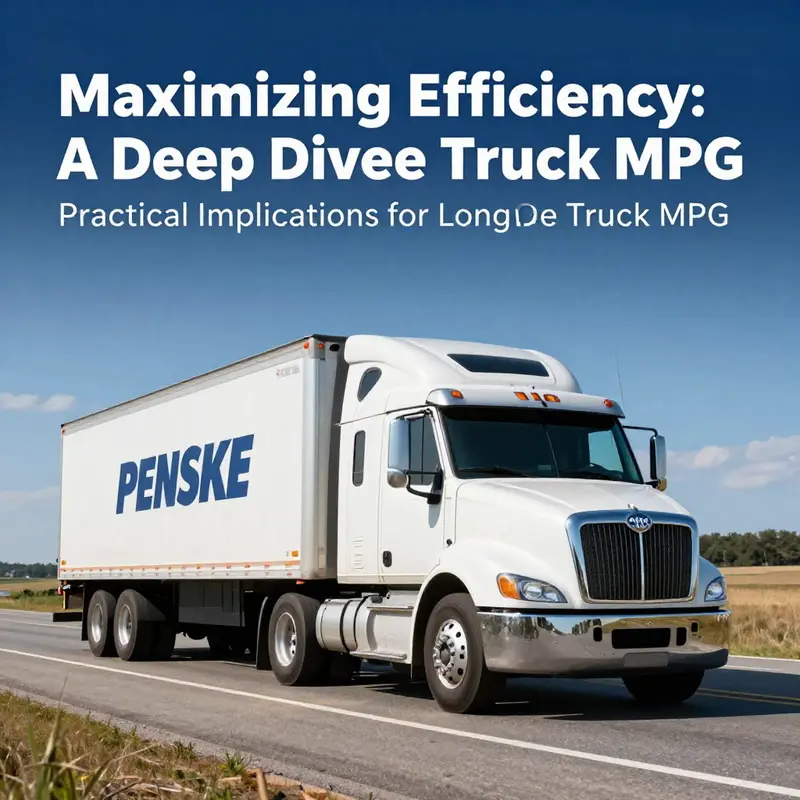
Every big move begins with a question that feels practical and almost surgical: how far can I push a truck before I have to refuel again, and how much will this trip really cost me in fuel alone? The answer is layered and surprisingly nuanced, especially when the moving involves large, purpose-built trucks designed for long-haul efficiency. Penske, a name that often surfaces in discussions of rental fleets and relocation logistics, offers a spectrum of trucks that span the needs of a household move to a corporate relocation and beyond. In this chapter, we explore how miles-per-gallon (MPG) figures emerge from real-world operation, how those numbers shift with weight, terrain, and upkeep, and how informed choices about truck size, route planning, and maintenance can translate into meaningful savings on a long-distance relocation. The numbers are not a fixed ceiling but a dynamic function of the vehicle, the payload, and the journey itself. Understanding that is the key to turning fuel economy from a dry statistic into a practical ally in planning and budgeting a move.
The diesel engine’s efficiency story begins with the truck’s model and its era. In Penske’s lineup, the largest 53-foot box trucks and their refrigerated cousins have the broadest footprint on the highway—an impact that tends to pull MPG downward at first glance because bigger machines require more power to accelerate and more energy to maintain steady highway speeds. Yet the story is more nuanced. For example, a newer 2026 Penske box truck carries a substantial 70-gallon diesel tank and can deliver fuel efficiency figures approaching 13 miles per gallon under favorable conditions. That number is a snapshot of a modern, aerodynamically conscious platform with advanced engine management, efficient transmissions, and a design tuned for long-distance stability. Compare that with smaller workhorse models, such as the 12-foot configuration, which typically operate around 12 mpg with a 35-gallon tank. The practical takeaway is not that one size is inherently superior, but that the fuel economy envelope shifts with the scale of the vehicle and the mission it’s undertaking. A move that demands a longer range and heavier payload may justify the larger vehicle if it reduces the overall number of fuel stops and keeps the schedule intact.
But MPG is a variable portrait rather than a single data point. Weight is the first color in that portrait. A loaded commercial truck is essentially a moving block of mass that requires proportionally more energy to accelerate, climb grades, and maintain momentum on rolling hills. The trick is balancing payload and efficiency. A household load that still leaves the truck well below its maximum gross vehicle weight, coupled with routes that favor steady cruising over stop-and-go segments, can translate into a surprisingly favorable MPG outcome. Conversely, a move that fills every cubic inch with belongings, furniture, and boxes, especially on a hot day with strong headwinds, can erase the difference between a 12 mpg and a 13 mpg scenario. The road’s conditions—urban crawls through city centers, freeway stretches with long, uninterrupted miles, or mountainous terrain—play an equally decisive role. Even maintenance status matters: inflated tires, clean air filters, and timely oil changes all contribute to a truck’s ability to extract the most miles per gallon from every gallon of fuel.
Within that framework, the choice of truck model becomes a practical calculus rather than a branding decision. For long-distance moves, Penske’s fleet includes configurations designed for efficiency on sustained highway miles, including the larger 53-foot box trucks and refrigerated options. The counterintuitive nuance is that while larger trucks may consume more fuel per mile at a glance, they can achieve better overall efficiency per ton of cargo moved if the alternative is making two trips with a smaller vehicle. In other words, the objective is not simply to minimize gallons per mile, but to maximize the cargo moved per gallon spent over the life of the relocation. It’s about optimizing the value delivered per mile traveled. Fleet managers and planners who model a relocation’s needs often run scenarios that weigh the cost of fuel against the cost of additional vehicle deployment, maintenance intervals, and the risk of delayed timelines. Those models lean on MPG estimates, but they also account for real-world constraints like fuel availability along the chosen route, rest breaks required by labor regulations, and the time value of the move for a family or business.
The sustainability thread woven through modern fleet management also nudges these decisions toward better fuel economy. Newer truck models frequently deliver improvements in MPG compared to older counterparts, driven by cleaner engines, more efficient transmissions, and refined aerodynamics. This isn’t only about reducing fuel expenditure; it aligns with broader environmental goals and regulatory expectations that emphasize efficiency, emissions control, and responsible fleet utilization. For planners and movers, that means that choosing a newer, well-maintained vehicle can yield benefits beyond the obvious fuel savings. It can reduce maintenance downtime, shorten the risk of breakdowns along a long route, and contribute to a more predictable relocation timeline. In practice, that translates to a smoother experience for clients and a more reliable service window for a moving project.
What does this understanding mean for practical decision-making as a move approaches? First, it underscores the value of precise model knowledge. When families or businesses book a Penske truck, they should seek current MPG estimates for the exact model and configuration they will use, recognizing that those numbers will vary with payload and route. It’s not enough to rely on a single value reported somewhere; the real-world MPG that applies to a given move is a function of the specific truck, its condition, and the journey’s characteristics. This places a premium on accurate, up-to-date information—ideally sourced from the official fleet resources or local Penske representatives who can tailor a plan to the move’s particulars. In this context, even a simple, practical tool can be a game changer for budgeting. A fuel calculator, for instance, helps translate MPG into a reliable cost estimate across a planned route, taking into account fuel price fluctuations, expected mileage, and the truck’s load.
The idea of using a calculator is more than arithmetic; it’s about building confidence in the relocation plan. A fuel calculator can project how changes in load weight or route choices affect overall fuel consumption. It can illuminate the cost of extending a trip by a day versus cutting a day by trading fuel efficiency for a faster, more direct route. It becomes a narrative of trade-offs: heavier loads demand more energy per mile, longer routes might require more fuel but save time, and a lighter, more strategically packed truck could deliver a smaller overall fuel bill even if the trip takes slightly longer. These are real-world decisions embedded in the day-to-day planning of a move. In practice, a client might compare two scenarios—one using a larger, gas-optimized truck and another using a mid-size truck with a lighter payload—and see how the trade-offs balance across total mileage, fuel cost, and move duration.
Another practical consideration is the rhythm of refueling. A truck that carries a larger tank, such as a 70-gallon diesel tank, can cover more miles before the next stop, reducing the frequency of refueling and the time spent at a station. For long hauls, fewer stops can also translate into fewer opportunities for delays or weather-related interruptions. The decision, however, should still weigh the time taken to refuel versus the time gained from fewer stops. A careful route plan that pairs steady highway speeds with planned refueling points can keep a move on track and minimize the total duration of the journey. The driver’s behavior matters here as well: steady acceleration, maintaining appropriate speed, and minimizing idle time all contribute to better MPG. Simple habits—such as ensuring tires are properly inflated and the vehicle is well-tuned—become part of the move’s cost-containment strategy.
For those who want to ground their planning in concrete data, there are practical, accessible resources that help translate MPG into real cost. The idea is to supplement a general understanding of fuel efficiency with a concrete tool that can factor in current fuel prices and expected miles. The connection between MPG and cost per mile is not a mysterious equation but a straightforward calculation when you bring in the right inputs. It is also a reminder that the moving plan should include a contingency for fuel price volatility, which can be a significant driver of total relocation expense, especially on longer routes where fuel constitutes a meaningful portion of the budget.
Amid the considerations, there’s also room for strategic choices about the move’s timing and logistics. Peak seasons, for instance, influence not just the availability of trucks but also the price of fuel and the demand for drivers. Penske notes that managing peak shipping seasons requires foresight and adaptable planning, a reminder that the MPG discussion sits within a broader fleet-management landscape. When coordinating a move, businesses and households alike can benefit from understanding how seasonality affects both fuel efficiency and operational efficiency. A documented approach to peak period planning helps ensure that a vehicle selected for a long move remains a cost-effective tool rather than an unexpected expense. The broader lesson here is that MPG is most powerful when it’s integrated into a holistic plan that treats fuel economy as a moving piece of the puzzle rather than a standalone statistic.
In the end, the takeaways for a long-distance move revolve around three pillars: the model’s efficiency potential, the impact of weight and route on actual MPG, and the systemic benefits of maintenance and planning. The first pillar—model choice—reminds us that larger does not always equate to inefficient; it depends on how the vehicle is utilized and how far it must go while carrying a given payload. The second pillar—weight and route—emphasizes the practicality of optimizing load distribution, choosing routes that favor steady miles, and planning refueling stops in a way that minimizes downtime. The third pillar—maintenance and planning—reaffirms that upkeep and informed scheduling can unlock the best possible MPG for a given move. This triad translates into real-world outcomes: lower fuel costs, more predictable scheduling, fewer last-minute disruptions, and a move that feels less like a sprint and more like a well-timed journey.
For readers who want to translate these ideas into actionable steps, the path is straightforward. Start by identifying the exact model and configuration you will use, then obtain the current MPG estimate for that setup under typical loading conditions. Use a fuel calculator to translate that MPG into dollars per mile and total fuel cost for your planned route, adjusting for current diesel prices. Consider how your payload might shift the MPG and whether a larger truck will reduce the number of trips needed to complete the move. Build a route plan that aligns with highway driving for the longest continuous miles, while forecasting refueling stops at intervals that fit your schedule. Keep maintenance in check—ensure tires are correctly inflated, the engine is tuned, and fluids are up to date. And finally, plan for peak-season realities by building flexibility into your schedule and budget so that fuel price volatility doesn’t derail your relocation timeline.
The conversation about Penske truck MPG is less about chasing a perfect number and more about understanding how to move smarter. It’s about recognizing that fuel economy is a dynamic quality that adapts to the load, roads, and rhythms of a given move. It’s about equipping yourself with the data and the tools to estimate, compare, and decide with confidence. In the end, MPG becomes a practical compass guiding choices about truck size, loading strategy, and timing. When you treat fuel efficiency as a practical, actionable component of the move plan, you gain a clearer view of the true cost of relocation and a stronger ability to safeguard your schedule, budget, and environmental footprint.
For readers seeking a quick, hands-on starting point, a dedicated fuel calculator can provide a personal projection tailored to the exact configuration and route. Tools like these translate the numbers into something tangible—an estimate you can rely on as you book, pack, and drive. And as you prepare for a long-distance relocation, remember that the journey’s pace is influenced not only by miles traveled but by the choices you make along the way. MPG is, in essence, a narrative about efficiency written into moving—the quiet arithmetic behind a smoother, more predictable, and ultimately more affordable transition to a new place.
Internal link reference for practical planning: Penske gas calculator.
External resource for broader context on peak-season planning and fleet efficiency: https://www.penske.com/blog/manage-peak-shipping-seasons-a-guide-for-businesses-fleets/
Final thoughts
Understanding Penske truck MPG is essential for business owners looking to optimize their logistics and transportation costs. By recognizing the differences in efficiency across models and the various factors that influence fuel economy, you can make well-informed decisions that enhance your operational effectiveness. As you plan your transportation strategies, keep in mind the impact of fuel efficiency on your bottom line and choose the model that best fits your unique business needs.