
Understanding optimal storage and logistics solutions is crucial for business owners seeking efficiency and effectiveness in their operations. Penske offers tailored storage solutions designed to respond to the complex needs of businesses, including seamless integration within supply chain management. This article will dive into three key aspects of Penske storage solutions: the comprehensive offerings available, the competitive pricing structure, and the innovative technology that enhances mobile support for business operations. Through this exploration, we aim to equip business owners with knowledge that will empower their logistical decisions and streamline their supply chain management strategies.
From Shelves to the Global Stage: The Strategic Role of Storage in Penske Logistics
Storage is more than a quiet corner where goods wait for their next move. In the modern supply chain, it is a dynamic, strategically designed node that coordinates timing, quality, and reach. For manufacturers, distributors, and retailers, the ability to store, access, and move products decisively—without sacrificing accuracy or speed—becomes a competitive differentiator. Penske Logistics treats storage as a central capability, not a peripheral function. It is embedded in a broader promise to connect procurement and production with demand, linking warehousing to transportation, inventory management, and value-added services in a seamless, end-to-end network. The scale and coherence of this approach are grounded in a practical philosophy: storage should adapt to the needs of the business, not constrain them. The Reading, Pennsylvania operations center anchors a global network, serving as both hub and proving ground for storage strategies that translate into reliable service across regions. This center is more than a facility; it is a test bed where approaches to space utilization, process design, and data visibility are refined before they roll out to other markets. In this way, Penske Logistics positions storage not as a fixed asset but as a flexible platform that scales with demand, aligns with customer service levels, and supports growth without forcing customers into rigid contracts or capital commitments. When a client seeks a solution that can cushion seasonality, align with product launches, and meet diverse regulatory or market requirements, the response is a carefully choreographed combination of physical space, people, and digital insight. Storage becomes a bridge—between the clock and the container, between the product and the audience, and between the supplier’s plans and the retailer’s shelves. The objective is to reduce the friction that often slows product flows and to turn storage from a potential bottleneck into a dependable, responsive capability that elevates the entire supply chain.
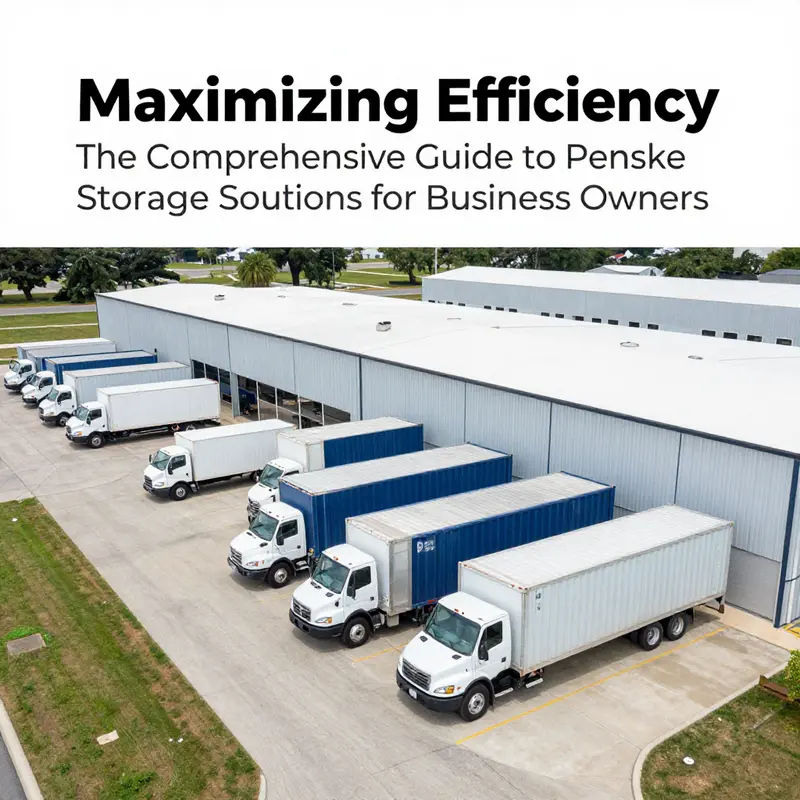
The network Penske Logistics operates is expansive yet coherent. It encompasses hundreds of logistics centers worldwide, designed to place inventory closer to end markets while enabling centralized governance that preserves consistency in service levels and quality. This structure matters because modern demand signals are volatile, and the speed with which a company can reallocate space, shift storage modes, or prioritize certain SKUs often dictates market responsiveness. A client can transition from a longer-term, stable storage arrangement to a more flexible, on-demand model during peak seasons or product introductions, without sacrificing control, traceability, or accuracy. In short, storage is a lever for agility rather than a passive repository. The architecture of the network supports this agility through a balanced mix of facility types and configurations. There are aisle-based racks for stable, high-volume SKUs; dynamic or seasonal storage configurations that can be reclassified as demand patterns shift; climate-controlled zones for temperature-sensitive items; and secure, access-controlled areas for high-value goods. Each facility is designed with an eye toward efficient material flow, optimal space utilization, and the ability to scale up or down in response to forecast deviations. The outcome is a storage ecosystem that can hold a spectrum of products—from routine consumer goods to high-value components—without compromising throughput, accuracy, or security.
But storage is not only about space. It is about the quality and timeliness of information that travels with those goods. Penske Logistics emphasizes that storage gains value as the data around it grows richer. Real-time status updates, loading guidance, and continuous visibility into inbound and outbound movements form the digital backbone of the network. This data enables planners to see inventory in every facility, track turnover rates, and identify bottlenecks before they escalate into delays. When demand shifts or promotional campaigns alter the intake and fulfillment profile, the storage network responds with analytics-driven speed rather than improvisation. Forecast accuracy, safety stock calculations, and service-level targets are translated into daily actions on the warehouse floor through dashboards, exception alerts, and automated workflow triggers. The result is a rhythm of operations where storage decisions are informed by transparent, actionable insights that improve both efficiency and customer experience.
Storage, however, is most powerful when combined with value-added services that convert space into a fulfillment engine. Disk space becomes a staging area for labeling, kitting, light assembly, repackaging, and returns processing. These functions are integrated into the storage architecture so that products can be prepared for their next destination without leaving the facility. Such capabilities shorten the order-to-delivery cycle, reduce handling steps, and protect product quality by maintaining appropriate handling and packaging standards throughout the process. The beauty of this integrated approach lies in its efficiency: a single network of spaces and processes supports both traditional warehouse activities and more specialized workflows needed for omnichannel fulfillment or business-to-business distribution. In this model, a storage facility is not merely a warehouse; it is a modular fulfillment node that can be tuned to specific product classes, customer requirements, and market priorities.
Flexibility is built into the contract and the capacity itself. Storage is offered with scalable terms that align with a company’s capital strategy. The solution design acknowledges that capacity must match the pace of a business’s growth, the cadence of product launches, and the needs of seasonal demand. Modern warehousing is characterized by adaptive space, modular racking, and configurable zones that can be reconfigured as product assortments evolve. In practice, clients gain the advantage of holding space for critical items close to demand while avoiding overinvestment in fixed assets for slower-moving lines. This balance—between stability and adaptability—helps reduce carrying costs, lowers risk, and improves cash flow. It also enables more precise capacity planning across the network, because the decision to allocate more space in one region does not necessitate a corresponding, costly expansion in another. The storage design thus becomes a living system, capable of evolving with the client’s strategy, without forcing compromises on service levels or cost efficiency.
Sustainability is a central thread in this story. Green logistics is not a niche add-on but a core design principle for storage networks that aim to balance performance with environmental stewardship. The path to greener storage weaves together route optimization, proximity of facilities to demand, energy-efficient building practices, and intelligent use of storage space to minimize waste and unnecessary handling. Even within climate-controlled zones, managers pursue energy-smart cooling strategies, better insulation, and more efficient material handling workflows that reduce energy consumption. In terms of fleet operations, the broader objective is to integrate storage with distribution planning so that vehicle routes are minimized, loads are consolidated, and the number of trips required to move the same volume of goods is reduced. The shift toward zero-emission and low-emission technologies in the transport leg feeds back into storage design through decisions about power management, facility electrification, and the use of energy-efficient equipment. Sustainability, in this sense, is a cross-cutting discipline that informs every choice—from the layout of a warehouse to the way in which data is captured and used to optimize energy consumption.
The strategic value of storage extends beyond short-term efficiency. It supports market entry, product lifecycle management, and cross-border operations by providing a resilient, proximate, and adaptable platform for growth. When a client explores new geographies, the ability to deploy storage near major consumer bases, while maintaining centralized governance and visibility, reduces risk and accelerates time to market. Any expansion plan benefits from a network that can accommodate pilot programs, regional rollouts, and seasonal campaigns without requiring the client to assume the burden of building and maintaining new facilities in far-flung locations. In this way, storage becomes a strategic asset for business development, offering a flexible platform to test ideas, refine supply chain configurations, and scale efficiently as demand materializes. The same principles apply to product lifecycle management: storage supports prototype testing, stabilization of manufacturing forecasts, and phased introductions to new markets. A well-designed storage layer helps ensure that as products mature, the supply chain remains aligned with demand signals, regulatory requirements, and channel strategies, offering a stable foundation for growth at every stage of the lifecycle.
The experience of customers who rely on this integrated storage model often centers on clarity and dependability. A robust network translates into predictable lead times, improved order accuracy, and greater agility in responding to disruptions. In the face of unexpected events—supply interruptions, port congestion, or weather-related disruptions—the storage layer can absorb shocks, reallocate resources, and re-prioritize activities to preserve service levels downstream. The value proposition for clients rests on reliability, visibility, and flexibility—three pillars that are underpinned by disciplined storage management. The governance framework that accompanies this approach ensures uniform standards of accuracy, safety, and service across facilities, whether goods are stored at a regional hub or a satellite site serving a specific manufacturing campus. The resulting coherence makes the entire supply chain more predictable and more capable of absorbing shocks, which in turn strengthens partner trust and customer satisfaction.
Looking ahead, storage within Penske Logistics is poised to advance through digitalization, automation, and electrification—trends that are reshaping the efficiency and resilience of the entire supply chain. The aim is not to replace human expertise but to complement it with tools that lift accuracy, reduce manual handling, and free team members to focus on exception management and value-added activities. Facilities may increasingly feature human–robot collaboration, where routine tasks are automated and human decision-makers tackle optimization and strategic planning. The data thread that ties storage to transportation and last-mile execution will grow stronger as data quality improves, enabling more precise demand sensing, better capacity forecasting, and richer performance benchmarking. With electrification, the conversation expands beyond the road to include how storage facilities are powered and cooled, how energy is managed, and how building operations support sustainable throughput. This broader lens reinforces the idea that storage is a strategic capability: it anchors operational excellence while enabling environmental stewardship and long-term resilience.
The narrative around storage is not a sterile tale of shelf space and SKU counts. It is a story of governance, collaboration, and trust between the storage provider and the business that relies on it. Clients entrust their products, data, and reputations to a network whose success hinges on consistent, measurable outcomes. This trust is earned through disciplined inventory stewardship, rigorous quality controls, transparent performance metrics, and a culture of continuous improvement. The day-to-day work of storage teams—counting, verifying, and optimizing—translates into tangible outcomes for customers: reliable product availability, on-time fulfillment, and a robust platform for growth. A warehouse, in this sense, becomes more than a building; it is the governance mechanism by which value is created and safeguarded in an increasingly complex global marketplace.
To connect the concept to practical application, consider the importance of alignment between storage operations and customer operations. The best outcomes arise from ongoing collaboration in which storage providers and product users co-create policies for order frequency, replenishment cycles, and packaging standards. When forecast data, product lifecycle plans, and channel strategies are shared, the storage network can translate that information into concrete configurations of space, staff, and processes. And because pace matters, the network should enable rapid reallocation of resources in response to demand shifts, minimizing capital expenditures while maintaining service levels. In this framework, storage becomes more than a place to hold goods. It becomes a strategic partner for growth, offering insight into inventory health, supplier performance, and channel risk that can influence strategic choices across the enterprise.
Finally, the chapter would be incomplete without acknowledging the trust at the core of this relationship. Clients entrust not only products but forecasts, agreements, and reputations to a network that must deliver consistently. That trust is built daily through disciplined inventory control, transparent performance reporting, and a genuine commitment to continuous improvement. The chapters of a successful storage strategy are written not only in the layout of a warehouse or the sophistication of a data system but in the daily practice of teams who count, verify, and optimize. When all elements align, storage becomes a measurable contributor to customer satisfaction, market expansion, and profitability. It is a reminder that a warehouse is not just a building but a governance mechanism for value creation—an essential capability in a world of finite resources, rising customer expectations, and increasingly interconnected logistics networks.
External resource: https://www.penske.com/logistics
Internal link: 16 Moving Truck
Price, Space, and Availability: Navigating the Quiet Geography of Modern Storage Networks
In the world of logistics, storage is not aware of a single price tag or a fixed shelf. It is a living component of supply chains that expands and contracts with demand, location, and the nuances of space itself. This chapter follows a practical thread through the pricing and availability landscape of a major storage network, using its regional footprint as a lens on how customers make decisions when time, space, and budget collide. It is a narrative about how people translate a need for extra space into a precise, location-specific choice, and how the numbers behind that choice are shaped by geography, unit characteristics, and promotional incentives. The result is not just a price list but a calibrated approach to planning that keeps a project on track even when the warehouse floor is not a single, uniform plane but a map of distinct markets, each with its own rhythm and constraints.
Pricing in storage shows how space, demand, and features work together to set monthly costs. Across a broad network, average rates for storage units in early 2026 tend to fall within a practical band, typically from the mid-70s to the low hundreds of dollars per month. That spectrum is more than a single number. It reflects the realities of where a facility sits: urban cores crowd out space, and the premium for proximity to downtown, transit hubs, or large employment centers can push rates higher. Conversely, suburban and rural settings often offer more space for the same money, aided by easier access and reduced competition for square footage. The same principle applies to unit size. Common configurations—compact 5×5 spaces for seasonal items or a few boxes, medium 10×10 cubicles for home contents or small office inventories, and larger 10×20 bays that can accommodate furniture, equipment, and bulk storage—carry distinct price points. When a unit is paired with additional features, such as climate control or drive-up access, the price can rise further, sometimes noticeably so. Climate-controlled environments add not just comfort but a restraint on humidity, temperature swings, and material degradation. Drive-up access, meanwhile, translates into convenience for moving in and out, particularly when large items or heavy equipment must be staged close to the loading door. These features are often the primary levers a facility uses to differentiate itself, especially in markets where space is scarce and competition is intense.
Location remains the most visible determinant of cost, and the science behind it is simple in theory, complex in practice. Urban facilities command higher rates because the cost of land, construction, and ongoing operations is greater, and the opportunity cost of blocked or limited space is higher for businesses and households alike. Suburban sites, while typically offering more generous layouts, must still balance price with accessibility and demand. The difference between a 5×5 and a 10×20 unit can be dramatic in a city where storage space is at a premium and leases turn over more quickly as projects evolve. In many markets, the incremental cost of features like climate control or enhanced security pushes the total beyond what a baseline unit would command, even for the same footprint. For customers, the practical implication is straightforward: a larger unit with climate control may be worth it when inventory integrity or long-term preservation is critical, while a compact, non-climate space can be the smarter choice for short-term overflow that won’t be sensitive to temperature swings.
Availability, by contrast, is a function of both geography and season. The most active urban centers—where businesses cluster and households move in tandem with job opportunities—tend to experience tighter supply, especially during peak moving seasons in spring and summer. In those windows, the same 10×10 space may vanish quickly, replaced by higher prices or longer wait times. Smaller towns or regions with modest demand often enjoy more consistent availability, with a broader banner of options and less pressure on price. The volatility of supply reminds buyers that the market for storage is not a monolith but a patchwork: a single city block may offer several competing spaces, while a neighboring suburb might present a handful of options with similar sizes but different access hours, climate controls, or drive-up amenities. For individuals and teams planning an operation—whether it is seasonal inventory overflow, a project transition, or a home move—this variability underscores the value of early scoping and flexible timing. It is not merely about choosing a price; it is about aligning the timing of a move with the right facility and the right set of features.
The decision matrix becomes more nuanced when timing intersects with promotions. Storage providers routinely run incentives aimed at attracting new customers or encouraging longer-term commitments. These promotions can dramatically tilt the economics of a given unit, especially for first-time renters or when leases extend across multiple months or quarters. The effect can be as meaningful as a price reduction for the initial term, or as favorable as a bundled package that includes access to online account tools, expedited move-ins, or reduced administrative fees. In practice, a customer might find a new-leaser discount, a promotional rate for a fixed-term agreement, or a reduced rate tied to a longer commitment. The practical takeaway is clear: promotions should be evaluated not as temporary novelties but as structural elements of the total cost of occupancy. When planning a storage decision, it is prudent to compare the base rate against the promotional offer, then calculate the blended monthly cost over the anticipated lease period. The arithmetic is straightforward, but the impact on cash flow and project budgeting can be substantial.
As with any large-scale planning exercise, the ability to see and compare options rapidly matters. This is where the digital tools built into the storage provider’s ecosystem prove valuable. A facility’s website will often feature a map that can be searched by zip code, city, or neighborhood, with the ability to filter for unit sizes and price ranges. A dedicated unit finder can help users narrow the field by amenities, such as climate control or drive-up access, and then present precise availability for each location. The map-based search transforms what could be a sequence of phone calls and visits into a concise assessment of options that are realistically obtainable within a given timetable. In the modern storage market, visibility is almost a currency. It allows a business to forecast costs with greater confidence, compare alternatives across locations, and identify a path that minimizes risk while meeting the practical needs of the operation.
The experience of selecting a storage space is, at its core, a logistical exercise. It is a balance between minimizing cost and maximizing reliability and ease of access. For households, the calculation is often about preserving cherished items with minimal risk of damage while keeping the process of moving and staging manageable. For businesses, the calculation extends to timing, inventory flow, and the ability to maintain operations without interruption. The best outcomes arise when the decision is grounded in a clear understanding of the unit footprint, the location’s demand dynamics, and the value added by features that matter most to the user’s specific scenario. In markets where space is at a premium, those features can tip the scales toward a smaller unit with climate control or a larger space with straightforward, unobstructed drive-up access. The choice becomes less about chasing the lowest sticker price and more about achieving a balance between price, risk, and operational discipline.
To illustrate how these factors come together in practice, consider how a renter might approach a local search. They would start with a precise zip code and a target unit size, then compare the posted rates and the available dates. They would note whether climate-controlled space is offered and how much additional monthly cost that adds. They would assess access conditions—whether there is 24/7 access, elevator availability, or drive-up entry—and how those features correlate with the items being stored. They would also examine any promotions in effect, calculating how they alter the effective monthly cost over the lease term. The exercise is not purely academic; it informs the choice of facility and the exact terms of the lease, including whether a short-term or long-term commitment best aligns with the user’s schedule and budget.
In this context, the role of digital tools and transparent pricing becomes central. A well-designed unit finder and a responsive map enable users to identify near-term openings, price trends, and the equipment or amenities that most directly affect their storage needs. The interactivity helps guard against the misstep of assuming a single price applies across a whole metro area. It also protects against the temptation to pick a location solely on proximity, without considering the broader costs of time and potential access limitations. When a user sees a location’s price alongside its available dates and features, the decision becomes a calculation rather than a guess, and the risk of paying for space that is inconvenient or insufficient for the job diminishes.
Promotions, too, deserve a closer look in this pricing landscape. The economics of a storage arrangement can be transformed by a timely discount or by a longer lease that spreads the fixed costs over more months. For those evaluating options in the same market, a promotion could move a unit from the realm of the aspirational to the affordable, especially if the longer-term commitment aligns with a future project phase or a long-term storage need. This is why, even when a facility shows a higher base rate for a more favorable location or a larger footprint, the total cost over the chosen lease term may still compare favorably to a competing option with a lower sticker price but fewer days of access or more expensive add-ons. The net effect is that price must be read in the context of access, reliability, and the practical realities of what the space enables the user to accomplish.
The broader takeaway for readers navigating storage pricing and availability is to adopt a framework that combines clear budgeting with a disciplined search strategy. Start with a realistic forecast of how long the storage will be needed and estimate the required unit size. Then layer in access needs, climate considerations, and the value of drive-up convenience. Next, scan the market with the unit finder and map, noting which locations offer the best alignment of price, space, and features. Finally, evaluate promotions with careful attention to lease length and total monthly cost. The outcome is not merely a lower price, but a smarter allocation of space that supports the user’s broader moving or inventory goals. For those who want a more concrete path to pricing and availability, the official platform provides a robust suite of tools that translate this framework into actionable results.
A final note on practical steps helps translate theory into action. Begin by identifying a precise target area, whether it is urban, suburban, or rural, and determine the unit size that best fits the anticipated need. Use the facility’s map and unit finder to compare open units by date and price, and pay special attention to any climate-control premiums and drive-up access fees. In markets with high demand, consider flexibility in move dates to lock in favorable terms or take advantage of promotional offers. When promotions are in play, compute the blended cost across the lease period to capture the true economic picture, rather than focusing solely on the first month’s rate. Throughout this process, keep the decision anchored in the goals of the arrangement—protecting items, enabling a smooth transition, and preserving budget clarity.
To learn more about current promotions and to see how pricing varies by location and unit size, consult the official storage platform. It provides a searchable map, a unit finder, and up-to-date details on availability and terms. For readers who want to explore related moving or rental resources, one can also review broader moving guidance and promotions on relevant content hubs. Prominent within these resources is a practical reminder that the right storage decision is the one that fits the particular timing, space, and budget constraints of the project at hand. When those elements align, the path from planning to occupancy becomes straightforward and dependable.
For readers seeking a direct path to limited-time offers and a curated view of nearby options, see the promotions and pricing content linked below. This reference helps connect the planning framework described here with concrete, location-specific numbers and opportunities, while reinforcing the broader principle that storage decisions are best made with both a clear price picture and a reliable map of available space.
Internal link note: For a practical example of how promotions fit into the calculator for a storage decision, you can explore the Penske truck rental promotion code page for related discount ideas in the context of a broader move plan. Penske truck rental promotion code.
External resource: For the latest, location-specific pricing and availability, refer to the official storage site at https://www.penskestorage.com. This resource offers a searchable map, a unit finder, and current terms to support informed decisions across the network.
Tech-Driven Storage and Mobile Support: Reimagining the Interface Between Moving and Storing
Across industries, the line between moving goods and storing them has blurred. A leading logistics partner understands that storage is not a passive holding pattern but an active, value-creating node in the supply chain. The shift toward technology-enabled storage and robust mobile support marks a turning point where customers experience storage as a service that travels with them—rather than a static warehouse tucked away on a map. This evolution is not just about more space or faster checkouts. It is about synchronizing a network of physical assets with digital lanes of information so that every pallet, every carton, and every shipment moves with clarity, speed, and predictability. In this broader landscape, the storage function becomes a dynamic fabric woven through transportation routes, inventory visibility, and user-friendly access points that customers carry in their pocket or on their desk—always ready, always connected.
At the core of this transformation is the idea that storage is a service layer, not merely a site. The digital platform that underpins modern storage solutions serves as a broker, a dashboard, and a decision engine rolled into one. It helps users locate available storage capacity across a wide network, compare terms, and book space with a few taps or clicks. But it does more than locate space; it data-illuminates the decision, revealing occupancy trends, seasonal demand, and cost implications in real time. A capable platform translates scattered, siloed information into a unified picture of where capacity exists, how it is priced, and how quickly it can be deployed. This is crucial for small businesses that maneuver through peaks and valleys without maintaining large, fixed inventories, and for larger enterprises that need scalable, flexible storage to complement their global logistics playbooks. By turning storage into an agile resource, the provider reduces idle capacity and accelerates response times for customers who face sudden shifts in demand or unexpected disruptions in the supply chain.
The practical implications of this digital approach expand far beyond the saddlebag of a truck or the doors of a warehouse. It changes how users plan, execute, and measure storage-related activities. A self-service interface lets customers reserve space, schedule drop-offs and pickups, and assign access rights to teams or locations, all while tracking costs against budgets in real time. The automation layer reduces manual paperwork, streamlines invoicing, and shortens onboarding cycles for new storage partners. In this sense, storage becomes a frictionless extension of the customer’s day-to-day operations. The fingertip convenience translates into a more predictable flow of goods, fewer bottlenecks, and a tighter alignment between storage capacity and the ebbs and flows of demand. The customer is empowered to make decisions with confidence because the information is current, granular, and actionable. When every storage decision is grounded in live data, it is possible to respond to a late shipment, re-route a delivery, or adjust storage terms on the fly—without sacrificing accuracy or speed.
The collaboration with a digital marketplace partner for storage facilities illustrates how an expansive network can be navigated with ease. Rather than limiting customers to a single location or a narrow set of options, the platform broadens the horizon. It aggregates a spectrum of storage environments—from climate-controlled units to high-security spaces—while maintaining quality controls, service-level standards, and transparent pricing. The result is a more resilient supply chain, where the ability to pivot between spaces is baked into the operating model. This expanded network matters because storage is not only about holding goods; it is about securing the right kind of space at the right time to maintain product integrity and optimize throughput. For customers, the experience is simplification—search, compare, book, and track—without sacrificing reliability or governance. The digital marketplace acts as a bridge, connecting customers to capacity in a way that preserves control, ensures compliance, and preserves trust across the end-to-end journey.
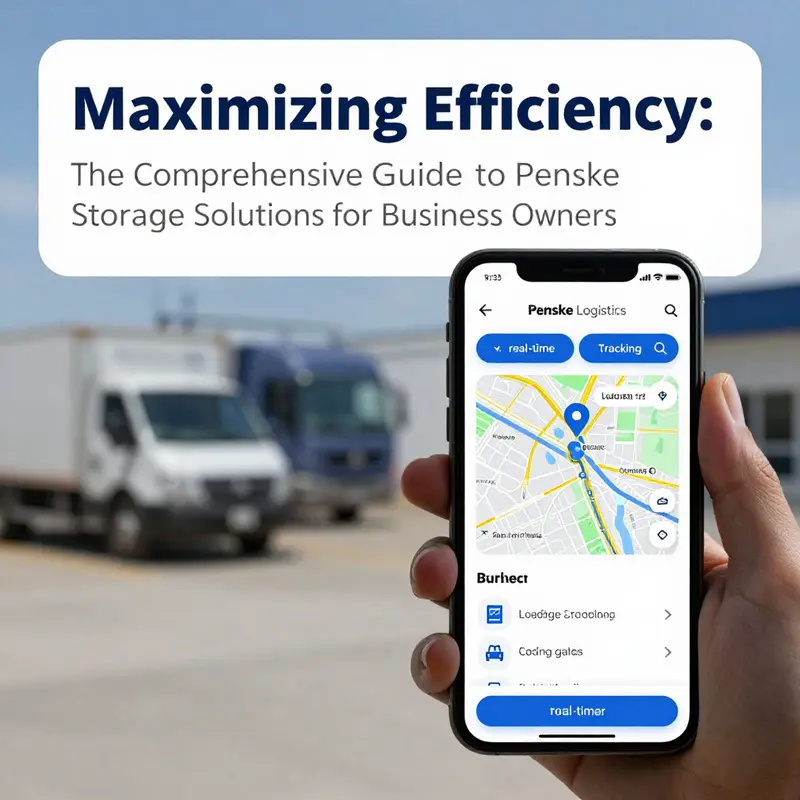
To appreciate how this integration operates in practice, consider the mobile dimension. The modern storage solution is designed to be mobile-first, reflecting how users work and move in the real world. The mobile experience extends well beyond reservation and payment. It is a gateway to live status information, route-aware decision support, and instant access to essential documents like access codes, loading guides, and insurance certificates. A robust mobile platform syncs with the broader logistics ecosystem to present a single source of truth, no matter where the user is located. This connectivity enables customers to manage their storage alongside transportation plans, inventory management tasks, and supplier communications. It also supports field personnel who need to coordinate with the storage network while in transit or at a remote site. The goal is to reduce friction at every touchpoint so that the process of storing and moving goods can be conducted with the same ease as checking a notification on a smartphone.
Alongside mobility, real-time visibility is the other cornerstone of the technology stack. Inventory in storage is often distributed across multiple facilities, each with its own layouts, access requirements, and handling protocols. A centralized, real-time view that integrates storage status with transportation timelines enables tighter synchronization. This means customers can monitor space availability, track the status of each shipment in transit, and anticipate when a particular item will reach its temporary home. From an operational perspective, the visibility layer supports proactive planning: if a container is delayed, the system can suggest alternative storage options or adjust pickup schedules to minimize idle time and prevent cascading delays. For businesses managing seasonal surges, this level of insight is invaluable for maintaining service levels, protecting inventory quality, and sustaining a positive customer experience. In effect, visibility becomes a strategic asset rather than a tactical convenience.
The role of data analytics in this ecosystem cannot be overstated. Every interaction with the storage network—search queries, bookings, access events, and movement logs—generates data. When this data is collected and analyzed with rigor, it reveals patterns that inform capacity planning, pricing strategies, and service offerings. Predictive analytics can forecast demand for storage space in different regions, suggesting where to allocate or reallocate assets before a spike occurs. Machine learning models can identify anomalies in access patterns or temperature readings that might indicate a need for preventive maintenance or enhanced security measures. For customers, these insights translate into more stable costs and higher confidence in the reliability of the storage network. For providers, analytics drive smarter capital deployment—investing in the right facilities in the right locations at the right times to maximize utilization and minimize waste.
An often-overlooked but essential element of this model is the way it handles security, governance, and trust. A networked storage system must enforce strict access controls, protect sensitive information, and maintain compliance with industry standards. The digital layer is designed to document every action—from who accessed a unit to when a space was leased and under what terms. This creates an auditable trail that is vital for risk management and for meeting the expectations of customers who require accountability across their storage arrangements. In practice, this means a combination of digital credentials, role-based access, tamper-evident logging, and trusted data exchange with partners. The net effect is a storage network where customers can operate with confidence, knowing that their goods are not simply stored, but safeguarded and governed by a transparent, verifiable digital backbone.
If one looks at the architecture behind this transformation, it becomes clear how storage and mobility reinforce each other. The logistics network supplies the movement, while the storage network supplies the stability and the buffer that make movement predictable. When integrated effectively, the two systems create a loop of continuous flow rather than a linear handoff. Goods are not just transported to a warehouse and forgotten; they are positioned within a dynamic storage framework that optimizes for time, cost, and quality. This integration supports a broader strategic objective: to reduce total cost of ownership by lowering handling steps, shortening lead times, and improving service reliability. It also aligns with sustainability goals by maximizing asset utilization and reducing unnecessary trips or empty miles through smarter scheduling and routing.
The human element remains central to this digital shift. Technology is a powerful enabler, but it does not replace the need for clear communication, oversight, and collaborative problem solving. Operations teams interpret data, answer questions from customers, and design processes that leverage the digital tools without sacrificing flexibility. In this environment, the role of account management, operations coordination, and customer support remains critical. The best experiences arise when the interface between people and technology is seamless: when a user can ask for a particular storage term, receive a clear response, and see how that option affects the rest of their supply chain in real time. The most resilient providers build a culture that blends disciplined process with adaptable thinking—an approach that keeps the system responsive to changing conditions while maintaining the integrity of the data that supports every decision.
The Reading, Pennsylvania operations footprint, referenced in industry discussions as a center of gravity for storage and logistics capabilities, highlights how a regional hub can anchor a national network. A well-positioned hub provides more than physical capacity; it offers a convergence point for cross-functional collaboration, data integration, and service design. In this setup, storage spaces are not just warehouses; they are nodes in a synchronized network that includes inbound and outbound transportation, cross-docking activities, and value-added services tailored to industry needs. The hub supports continuity, enabling the network to absorb shocks—such as a sudden surge in inventory or an unexpected route disruption—without compromising service levels. The ability to blend local operational excellence with global scale is what ultimately enables customers to rely on storage as a strategic resource rather than a reactive cost center.
As we look ahead, the trajectory of storage technology and mobile support is likely to accelerate. New features will likely emerge that further blur the lines between physical space and digital interface. For instance, augmented reality tools could guide loading and stacking in real time, ensuring that every inch of space is used efficiently while protecting product integrity. Remote monitoring devices could extend the reach of the platform into each unit, offering temperature, humidity, and vibration alerts that trigger automatic countermeasures. On the mobility side, tighter integration between the app experience and fleet operations could enable field personnel to approve storage appointments, adjust access permissions, and coordinate pickups without returning to a desktop. The combined effect would be a more resilient, adaptable, and user-centric ecosystem in which storage is not a separate function but an integrated capability that travels with the customer’s entire logistics plan.
In sum, technology-enabled storage and robust mobile support are redefining what it means to store and move goods. They are turning storage from a passive holding zone into an active, intelligent, and highly responsive part of the supply chain. The benefits span cost efficiency, service reliability, and strategic flexibility. For customers, that translates into greater predictability and a smoother operational rhythm. For providers, it means better asset utilization, stronger network effects, and a sustainable path toward growth in an increasingly complex logistics landscape. The journey from traditional storage to a living part of the distribution system is not a single checkpoint but a continuous evolution—one that requires careful design, relentless execution, and a relentless focus on the customer’s evolving needs. The result is a storage service that is as mobile, as visible, and as adaptive as the world it serves, with technology and people working in concert to keep the flow seamless, safe, and efficient.
For readers seeking a compact primer that mirrors the idea of starting small with a mobile-first approach, a short introductory post offers a clear, accessible entry point: Hello World. This reference point underscores how foundational concepts—access, visibility, and control—scale into a sophisticated, networked storage and mobility framework when paired with a thoughtful technology strategy and a willingness to iterate. For readers who want to see how these principles translate into real-world guidance, the broader ecosystem continues to evolve, with external perspectives and case studies accessible through industry resources that document the progress of technology-driven storage and mobility platforms. To gain a deeper understanding of the technology-driven storage and mobile support solutions shaping today’s logistics landscape, visit: https://www.gopenske.com.
Final thoughts
Penske’s storage solutions provide an invaluable asset for business owners looking to optimize their logistics and supply chain operations. Each chapter presented critical insights into the comprehensive nature of Penske’s offerings, the competitive pricing, and the advanced technology that supports mobile operations. By leveraging these services, businesses can enhance their operational efficiencies and adapt to ever-evolving market demands. As you consider your storage and logistical needs, Penske stands out as a reliable partner poised to support your endeavors and help your business thrive.