
For business owners managing commercial fleets, efficient operations are paramount. One critical component of logistics management is reliable roadside assistance. This is where Penske Roadside Assistance comes into play. Offering a suite of services designed to ensure vehicles are back on the road as quickly as possible, Penske Roadside not only helps with vehicle recovery but also plays a key role in minimizing downtime, enhancing operational efficiency, and ultimately saving money. As we delve into the specifics of Penske Roadside Assistance, we will explore the services offered, the economic implications for commercial fleets, and how this assistance enhances the overall logistics and supply chain processes.
On Call on the Open Road: How Penske Roadside Keeps Commercial Freight Moving
Every fleet knows the moment that can derail a schedule: a truck breaks down, a tire goes flat, a battery stalls in the pre-dawn chill, or a lockout happens just as a driver arrives at a crucial delivery point. In the logistics world, downtime is not just an annoyance; it is a direct cost, a ripple that can impact contract commitments, customer promises, and even the bottom line. The role of a robust roadside support program in such moments is not merely to fix the immediate problem but to restore momentum—to turn a potential bottleneck back into a smooth link in a long chain of deliveries. Penske Roadside is designed with that principle at its core. It is a service built to act swiftly, to reach beyond the factory gate, and to integrate seamlessly with how fleets operate, book, and manage risk on the road. The operating philosophy behind Penske Roadside blends reliability, scale, and a deep understanding of fleet operations. It is not a simple public-service response to a single breakdown; it is an orchestrated capability that supports the entire lifecycle of rental equipment used by commercial shippers, freight brokers, and logistics teams who depend on predictability more than spectacle when the unexpected happens. The overarching aim is simple but powerful: keep freight moving while minimizing downtime and facilitating quick, practical resolutions that align with the realities of modern supply chains.
From the moment a driver recognizes a fault, the path to resolution is designed to be straightforward. The roadside program is 24/7, a continuous line of support that doesn’t dim when the sun goes down or when weekends roll around. The intent is clear: by providing on-site assistance, the service preserves operational continuity. It is especially critical for fleets that rely on predictable turn times and precise scheduling. A delayed truck can throw off a chain of dependent tasks—from loading windows to arrival and unloading times, and ultimately from warehouse capacity planning to last-mile execution. In this sense, the roadside support system functions not as a separate add-on but as an integral part of the value proposition of using Penske’s rental solutions. The customer experience is designed to be almost seamless: when a vehicle encounters trouble, drivers or fleet managers can initiate a call, and the reply is a coordinated response that arrives with the goal of restoring service quickly and safely.
The spectrum of needs that Penske Roadside covers mirrors the realities fleets encounter on long journeys and in busy hubs. Flat tire assistance, for instance, is more than changing a wheel—it is about maintaining tire temperature, assessing the condition of the tire and rim, and determining whether a repair is possible at the scene or if a tow becomes the most efficient option to reduce downtime. This approach extends to mechanical breakdowns, where the line between a roadside repair and a planned maintenance intervention can be nuanced. A mechanical issue may be something as simple as a battery check or a more involved matter like a starter or alternator fault. In many cases, the operator may be able to arrange on-site assistance that resolves the problem without pulling the unit off the route for an extended period. The service recognizes the limits and capabilities of on-site fixes; when necessary, it coordinates safe, prompt towing to a Penske facility or to a nearby partner repair shop with a readiness to continue the assignment as quickly as possible.
Fluid leaks and low fluid scenarios are another common stress point, especially on routes that cross remote stretches or traverse areas with limited immediate access to maintenance vendors. In those cases, the roadside team can arrange the delivery of essential fluids—oil, coolant, windshield washer fluid, and other critical supplies—to ensure the vehicle can be maneuvered to a service location without compromising safety or reliability. A quick fuel passage is not simply about filling up with oil or coolant; it is about maintaining the engine’s health, the cooling system’s integrity, and the driver’s sense of security on the road. A battery that struggles to turn over the starter can trigger a cascade of delays if a driver has to sit and wait in a lot for jump-starts or a tow. The roadside coverage is structured to address these moments with speed and expertise, restoring functionality so the truck can resume its route, ideally without significant detours. In the same vein, lockout assistance may be a rare event, but when it happens, it carries a cost in time and in the potential risk to the cargo. The service thus includes a swift unlock capability that minimizes the time the vehicle is immobilized and keeps the shipment on track.
What makes Penske Roadside particularly resonant for fleet operators is the integration into rental agreements. The coverage is not an afterthought or a separate add-on that fleets must chase down after a breakdown; it is embedded into the contractual framework that governs rental usage. Eligible customers can access the roadside program without incurring additional charges beyond the agreed terms, provided they have the appropriate coverage. This integration is crucial for fleet governance: it creates predictability in budgeting and removes the friction of post-hoc claims after a roadside event. The customer who signs a Penske rental agreement does not need to manage a maze of vendor contacts or multiple line items for emergency support. Instead, there is a single, trusted point of contact, a hotline that becomes a lifeline when a vehicle experiences an unforeseen issue on or off the highway.
The practical steps to engage the service are straightforward, further enhancing its appeal to busy fleet managers. In the moment of need, a driver or a fleet supervisor dials the dedicated hotline—1300 Go Penske (467 367)—and the call is triaged by a dispatcher who can determine the most efficient way to respond. This triage focuses on safety first, ensuring the driver is in a secure position and that the vehicle is as safely immobilized as possible if it cannot be moved immediately. The dispatcher then coordinates with a network of service providers that Penske has cultivated through years of operation. The aim is a rapid on-site resolution that keeps disruption to a minimum. In some scenarios, the resolution can be as simple as a tire change on the roadside, particularly if a spare is available and the tire can be swapped quickly. In others, it may involve an on-site mechanical evaluation, a more thorough diagnostic, and a plan to either repair the vehicle on-site or arrange a tow to a Penske facility or an approved repair partner that can complete the service with the least possible impact on the delivery schedule.
An essential dimension of the program is its accessibility across a broad geographic footprint. The service is designed to respond to customers across the United States and in select international regions. This breadth matters because modern fleets often traverse multiple jurisdictions and time zones. A robust roadside program reduces the variance in response times that can occur from one region to another and creates a more uniform standard of support that fleets can rely on, regardless of where they are operating. The value of this consistency is not simply operational; it translates into the ability for fleet managers to plan with confidence. When a driver enters a route with an awareness that roadside support is a predictable, reliable resource, the driver—who is often the most immediate contact with the road—can focus on safe driving, efficient routing, and effective communication with the dispatch team rather than worrying about what might happen if the vehicle fails.
The service aligns with the broader ecosystem of Penske’s fleet-support philosophy, which is built around reducing friction, enabling smoother operations, and preserving the integrity of the delivery schedule. As the trucking industry becomes more complex—with fluctuating fuel costs, evolving compliance demands, and tighter service-level agreements—the value proposition of an integrated roadside program grows. It acts as a risk management tool that helps fleets absorb shocks without letting those shocks cascade into uncontrollable costs or missed commitments. In this context, the roadside program is not merely about keeping a truck moving down a road; it is about preserving the cadence of a supply chain, the reliability of a customer promise, and the reputational value of a logistics partner who can be counted on during a disruption.
To illustrate how this unfolds in practice, consider the experience of a fleet operator who manages a mixed fleet of tractors and trailers used for regional distribution. The operator might be routing goods across a corridor with high demand, where tight delivery windows demand a high degree of reliability. A tire issue on a late-evening leg might threaten a crucial morning handoff at the distribution center. The driver, recognizing the potential delay, places a call to the Penske Roadside hotline. The dispatcher gathers essential information—vehicle type, location, the nature of the issue, any safety concerns, and whether a spare tire is on site. The response is then calibrated to maximize speed and minimize the risk to the driver and cargo. If the tire can be changed quickly, that becomes the immediate plan, and the truck can continue its route with minimal detour. If the tire requires professional repair or the wheel and rim are compromised, the plan may shift toward a tow to a nearby Penske facility where the crew can perform a proper repair or coordinate a replacement vehicle. In the meantime, a replacement truck or an available trailer could be arranged to cover the next leg of the planned route. The result is not simply a fix; it is a continuity strategy that stitches back together a schedule that could otherwise unravel.
Another layer of value emerges from the way this program strengthens collaboration between drivers, fleet managers, and maintenance teams. The roadside program provides a bridge between the field and the shop floor. When a driver contacts the hotline, the information captured—location, vehicle status, fault codes if available, and the expected duration of the disruption—feeds into a broader workflow. The maintenance team can triage the issue with real-time data, enabling more efficient planning for repairs and parts procurement. In some cases, it might be possible to complete a quick fix that avoids a tow and keeps the vehicle on the road. In others, the data-driven triage helps the maintenance team prepare for a more comprehensive service at the next available downtime, reducing time wasted in the field and avoiding unnecessary waiting for a shop appointment. This approach shifts the roadside encounter from a one-off repair episode into a learning opportunity for the fleet, informing preventive maintenance decisions that can reduce similar incidents in the future.
The human dimension of Penske Roadside should not be underestimated. Behind every dispatch is a team of professionals who understand the realities of freight movement. They appreciate the importance of careful risk assessment when deciding whether to perform an on-site repair or arrange a tow, the safety considerations that come with roadwork during nighttime or adverse weather, and the practicalities of working within the constraints of a driver’s schedule. This expertise is complemented by a network that spans a wide geographic area, allowing the service to adapt to urban environments, rural routes, and everything in between. The combination of human judgment, logistical coordination, and supported infrastructure creates a dependable capability that fleets can rely on when the unforeseen occurs.
For fleets that value flexibility, Penske Roadside also anchors its value in the broader rental ecosystem. Rental agreements are not merely about access to a vehicle; they are an operating framework that provides a suite of support services designed to reduce the total cost of ownership and the risk of project delays. In this sense, roadside coverage becomes an essential component of fleet resilience. It provides a buffer against the unpredictable realities of the road and helps guarantee that the primary tasks—moving goods from producer to customer, maintaining service levels, and supporting just-in-time inventory systems—are not derailed by a single incident. The practical implication for a fleet manager is straightforward: a reliable roadside program translates into more secure budgeting, better uptime guarantees for customers, and a workload that remains consistent even when the road presents its challenges. It also fosters a deeper sense of partnership with the rental provider, a relationship rooted in shared outcomes and a mutual commitment to keeping freight moving.
The interconnection between Penske Roadside and other Penske services is, in fact, an important part of its appeal. While the roadside response focuses on the immediate problem, it sits within the larger framework of maintenance, fleet management, and logistics support that Penske offers. For operators who are evaluating options, the knowledge that a single organization can provide both vehicle access and the corresponding emergency support creates a simpler, more predictable purchasing and operating environment. It is easier to align maintenance schedules, service level expectations, and reporting requirements when the roadside function is harmonized with the rental and fleet-management ecosystem. This coherence is valuable because it reduces the overhead associated with coordinating multiple vendors and disparate service agreements, a friction point that often emerges in high-velocity logistics operations.
The 24/7 availability is not an after-hours luxury; it is a practical guarantee for fleets that must maintain continuous operations. The need can arise at any time and in any location, and the ability to access support around the clock delivers a level of reassurance that translates into daily decision-making. Fleet managers can plan with more confidence because they know that if something goes wrong, there is an established pathway to a solution. Drivers can focus on safety, route optimization, and fuel efficiency rather than worrying about who will help them when a vehicle stalls. The combination of immediate access, coordinated dispatch, and a reliable network of service partners is what makes Penske Roadside a meaningful component of the rental experience and a cornerstone of the operational discipline that modern fleets rely on to maintain service levels.
From a strategic perspective, the value proposition extends beyond immediate problem-solving. The roadside program contributes to a culture of reliability and continuous improvement. By consistently delivering rapid on-site assistance and minimizing downtime, the service reinforces performance metrics that matter to executives and operations leaders. It becomes part of the credibility argument for choosing a particular rental partner when the goal is to sustain a high level of service quality across multiple hubs and distribution centers. For organizations that manage fleets across regions and borders, the reliability of roadside support helps ensure that service-level commitments are met consistently, reducing the likelihood of missed windows that could compromise customer relations or contractual obligations.
In short, Penske Roadside Assistance is not a single act of help on the roadside. It is a comprehensive, integrated capability that supports the entire lifecycle of rental equipment used in commercial freight, with an emphasis on speed, safety, and continuity. It recognizes that in freight movement, timing is not a luxury; it is a condition of success. The service embodies a practical, field-tested approach to problem-solving, one that balances on-site efficiency with the strategic needs of fleet operators. Whether the challenge is a routine tire change in a city corridor, a battery that refuses to cooperate in a remote stretch, or a complex mechanical issue that requires professional assessment, the roadside team is there to steer the moment back toward progress. And because the service is embedded within the rental agreement framework, there is a built-in trust, a shared expectation that the road will be navigated with competence and care.
For readers who want to connect the practical realities of roadside support to the broader questions of fleet efficiency, it helps to consider how this service intersects with other aspects of vehicle management. It is an important reminder that the cost of downtime is not just about what a tow or a repair bill looks like in isolation. It is about how much time the fleet loses when a vehicle is immobilized, how many shipments are delayed, and how that delay cascades through a network of warehouses, drivers, and customers. In this light, the roadside program is a critical enabler of reliability, an operational investment that keeps the gears turning when the road becomes unpredictable. It is precisely this quality—the ability to convert a potential disruption into a controlled, managed response—that makes Penske Roadside a meaningful partner for fleets who value uptime as a core performance metric.
Readers curious about the rental experience on the road may also be interested in related resources that explore how Penske’s rental options support different logistical needs in varied contexts. For example, fleets considering one-way rental arrangements can find guidance in materials about Penske’s flexible one-way truck rental offerings. This kind of option can complement roadside resilience by enabling a driver to continue a journey with a different vehicle instead of returning to a base location when a breakdown occurs, thereby preserving the continuity of the schedule. For a deeper dive into that topic, you can read about Penske One-Way Moving Truck Rental here: Penske One-Way Moving Truck Rental.
All told, the Penske Roadside program reflects a philosophy that values proactive support, robust networks, and the practical realities of moving goods at scale. It translates the abstract promise of reliability into a tangible, actionable capability that fleet operators can rely on in the moment of need. It also underscores the broader principle that the road, while unpredictable, does not have to be a source of uncertainty for companies that manage complex logistics networks. When a breakdown occurs, the difference between a crisis and a quick recovery often comes down to the quality of the support structure behind the vehicle—the people, the processes, and the partnerships that together create a path back to progress, safely and efficiently. In this sense, Penske Roadside is more than a contingency plan; it is an integral part of how a modern fleet stays resilient in a dynamic, demand-driven world.
External resource for further context and official reference: https://www.penske.com
Keeping Fleets Moving: The Economic Power of Penske Roadside for Commercial Operations
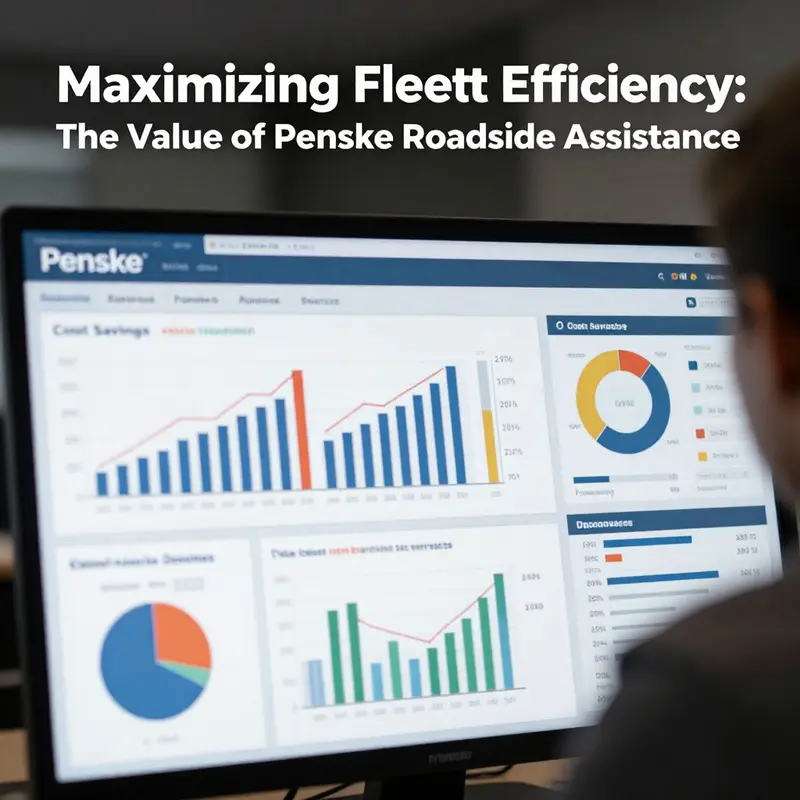
Uptimes and margins ride on the speed and reliability of roadside support in professional logistics. In this framework, Penske Roadside functions not merely as a crisis response but as a strategic asset that shapes the economics of every fleet it touches. When a tractor-trailer breaks down or a tire blows out in the field, the cost is more than the repair bill; it is the expense of idling, the risk of missed commitments, and the forgone revenue that would have been earned by keeping the schedule intact. A robust roadside program converts that cost into a controllable expense by delivering rapid on-site assistance, mobile labor, and the ability to move the vehicle back into operation quickly. The service catalog, which includes on-site repair capability, towing when needed, and tire or part substitution, is designed to minimize the distance between a fault and a fix, the distance between an idle engine and a running engine. It is not only about patching a problem; it is about preserving the continuity of a complex network that moves goods across regions with precision. The economic impact unfolds in layers: immediate reductions in downtime, improvements in fleet utilization, and longer-term savings through more predictable maintenance patterns and a lower total cost of ownership. Central to the value proposition is the cadence of support that never sleeps. A 24/7 roadside aid, in combination with proactive maintenance programs, shifts maintenance from an event to a process. Fleets are not forced to chase down a single repair; instead, they benefit from a preemptive approach that identifies potential issues before they become full outages. This proactive stance reduces emergency repairs, lowers labor and parts costs, and helps fleets maintain a safety and regulatory posture that is essential in an industry that is tightly governed by compliance standards. The numbers behind this shift are not abstract; they are the daily arithmetic of freight motions: fewer breakdowns means fewer skipped loads, shorter detention times, and the ability to maintain delivery windows that customers rely on for planning. A well-timed roadside response can translate into a significant reduction in late deliveries, a reduction in penalty fees, and a more stable cash flow cycle for carriers that must manage fuel costs, driver wages, and capital expenditures on equipment. This framework of reliability also optimizes asset utilization, a critical lever in an era of investment discipline and rising capital costs. When a fleet can count on the immediate return of a vehicle to service, the same physical asset can complete more cycles in a year, spreading depreciation and maintenance costs over a larger number of revenue miles. The result is a lower total cost of ownership and a more predictable budget forecast. The economic argument extends beyond the mechanical; it touches the planning and decision-making that shape a carrier’s capacity strategy. With reliable roadside support, fleet managers gain confidence to run larger or more efficient configurations, to consolidate routes, or to push more miles through the same equipment with less risk of schedule slippage. The overall effect is a healthier balance sheet where uptime and efficiency feed into profitability, not merely into compliance. Beyond the arithmetic, the human dimension matters as well. Drivers experience less stress when the response to a breakdown is swift and competent, and that morale translates into better performance, safer operations, and lower turnover in a workforce that is often stretched thin by tight schedules. For managers, the benefit is clearer risk management: the ability to quantify the impact of unplanned downtime and to plan contingencies around it. In the current climate of rising transportation costs and tighter trucking capacity, the ability to get back to business quickly and affordably becomes a decisive competitive edge. As Jim Lager, Senior Vice President of Sales at Penske Truck Leasing, has noted in the companys communications, these services are integral to the value proposition and help businesses get back to business in a way that supports growth under pressure. The emphasis on speed, cost control, and reliability aligns with the broader objective in fleet operations to optimize every mile and every hour the truck spends on the road. Coverage and flexibility are also essential in translating roadside resilience into real-world outcomes. The program is designed to respond across vast geographies, with the capacity to reach small towns and major corridors alike, ensuring that even dispersed fleets can maintain consistent service levels. This breadth of reach matters most for shippers who rely on multi-regional networks, where a delay in one leg of a route can disrupt dozens of downstream tasks. In that sense, Penske Roadside acts not as a single service but as a connective tissue that holds together the fabric of a freight operation, linking maintenance, dispatch, driver assignments, and customer commitments into a coherent, working system. The value is not merely the rescue at the moment of failure; it is the guarantee that the broader logistics equation remains solvable under stress. To understand how this translates into everyday practice, consider the way fleet managers balance costs, reliability, and growth. When a vehicle experiences a fault, the timing of the intervention matters as much as the intervention itself. A rapid response minimizes the downtime that would otherwise cascade through the chain—delays in unloads, missed handoffs, and blank mileage that would otherwise burn fuel without producing revenue. By accelerating the time-to-repair and by ensuring that the solution is appropriate to the fault, roadside providers help keep the fleet schedule intact and reduce the risk of cascading disruptions that erode reliability metrics and customer trust. In this sense, the economic effect is a function of both speed and intelligence: speed to the fault and intelligence in diagnosing and applying the right fix, often informed by the maintenance history and the data streams that fleets accumulate from telematics, maintenance diaries, and dispatch logs. The most effective programs do not view roadside support as a one-off service; they see it as part of an integrated approach to fleet health and performance. Suppliers and customers alike increasingly expect fleets to operate with a level of resilience that protects service commitments even when shocks—such as supply shortages, traffic constraints, or weather events—arise. Penske Roadside contributes to that resilience by acting as a steadying force that reduces the need for last-minute freight repricing or capacity adjustments driven by vehicle downtime. The economic outcome is a set of improvements in predictability: better on-time delivery performance, fewer penalties, and more stable relationships with shippers who reward reliability with repeat business. For fleet executives, this translates into tangible financial metrics: improved asset turnover, steadier fleet utilization rates, and a more favorable balance between operating expenses and capital investments. The cumulative effect is a stronger competitive position in a market where carriers and shippers are constantly evaluating value through the lens of reliability, cost, and service quality. For fleet operators exploring ways to complement roadside support, consideration of mobility options can be a practical extension of the same value proposition. For example, fleets seeking temporary mobility solutions alongside ongoing roadside resilience can explore options such as Penske One-Way Moving Truck Rental. This kind of pairing illustrates how a mature fleet services ecosystem can blend on-road support with flexible, short-term vehicle availability to maintain momentum when demand spikes or when equipment is out of service for routine or corrective maintenance. The point is not to replace road service but to integrate it with a broader capability set that keeps the operation agile in the face of changing conditions. In that sense, the chain of value extends from the roadside rescue to the next mile of a route, from the maintenance bay to the dispatch board, and from the warehouse dock to the customer’s door. Each link reinforces the others, creating a cohesive system that supports growth, protects margins, and reduces risk. Finally, it is important to recognize that the economic benefits described here sit within a broader industry move toward resilience and efficiency. The current environment—characterized by elevated transportation costs, tightened capacity, and accelerating demand for reliable delivery times—amplifies the importance of dependable roadside support as a strategic asset rather than a simple contingency. In this frame, the revenue protection, cost containment, and asset optimization enabled by a strong roadside program contribute to a virtuous cycle: better uptime improves customer satisfaction, which in turn sustains higher utilization of the fleet and justifies continued investment in preventive maintenance, modern telematics, and scalable support capabilities. As the business landscape continues to evolve, fleets that treat roadside assistance as an integral part of their operating model will be better positioned to weather shocks, capitalize on opportunities, and maintain the kind of operational tempo that keeps goods moving efficiently across regions. External resource: https://www.penske.com/news/press-releases/penske-offers-fleets-get-back-to-business-special-lease-terms
Penske Roadside: A Strategic Engine for Fleet Continuity and Supply Chain Resilience
Penske Roadside sits at a critical intersection between vehicle uptime and supply chain performance. For commercial fleets, a single stalled tractor or disabled trailer can ripple through schedules, driver shifts, inventory availability, and customer commitments. Penske Roadside is more than a towing or emergency response offering; it functions as a strategic capability that preserves the cadence of logistics operations. This chapter examines how a purpose-built roadside program integrates with broader logistics systems, the technological and operational levers that drive its impact, and the ways fleets and shippers can use roadside services to reduce risk, improve visibility, and accelerate recovery from disruptions.
Roadside assistance for commercial fleets differs from consumer-focused help in scope, response requirements, and expected outcomes. Where a passenger vehicle owner may accept hours of delay for a repair, a fleet manager must weigh downtime in minutes and lost miles in tens or hundreds. That sensitivity reshapes the mission of roadside programs: minimize impact, restore mobility fast, and provide clear, timely information to decision-makers. A well-architected roadside solution addresses three practical demands simultaneously: rapid physical intervention, intelligent diagnosis, and actionable data flow. Physical intervention covers classic needs—towing, tire changes, jumpstarts, mobile repairs—but it also demands fleet-aware prioritization and qualification. Intelligent diagnosis uses telematics, historical failure patterns, and predictive algorithms to triage incidents. Actionable data flow means standardized incident records, real-time status updates, and integration into transportation management and maintenance systems.
Technological capabilities are the lynchpin that turns roadside response into logistics leverage. Predictive analytics can forecast likely component failures from operational telemetry. When predictive models detect elevated risk for a vehicle, preemptive maintenance can be scheduled to avoid roadside events altogether. In practice, this reduces the frequency of emergency calls and concentrates resources on fewer, more manageable incidents. Prescriptive analytics then extend that value by recommending the specific remedy or spare parts likely to resolve a failure on the first visit. For fleets, that translates to fewer repeated service stops, shorter repair times, and lower total repair costs. The synergy between prediction and prescription moves the needle on availability because it shifts the model from reactive to anticipatory.
The operations supporting roadside response must be designed for scale and consistency. A national or multinational fleet operates across varied geographies and regulatory frameworks. That requires a network of vetted technicians and tow providers with standardized service protocols, consistent pricing models, and clear escalation paths. Centralized coordination centers that operate on consistent operating procedures ensure that a disabled asset receives the right resource at the right time. They also have to manage capacity dynamically: surge resources in high-demand areas, reroute technicians from lower-priority tasks, and maintain communication with drivers and dispatchers. Sophisticated dispatching systems that combine location data, technician skill sets, and parts availability improve first-time-fix rates.
Equally important is the human interface. Drivers on the road need clear, simple guidance when an incident occurs. A driver-facing app or a dedicated hotline should provide rapid connection to a live coordinator who understands commercial operational constraints. That coordinator must be empowered to authorize repairs, request parts, and arrange temporary mobility solutions such as tow-and-redeploy or replacement equipment. For carriers, minimizing administrative friction is critical; fast approvals and consolidated billing reduce the back-office burden and remove obstacles to quick resolution.
From a supply chain perspective, roadside services support continuity by reducing unplanned detention and demurrage costs. A delayed pickup or delivery can generate cascading expenses: layover pay for drivers, overtime, missed delivery windows with potential penalties, and inventory bottlenecks at distribution points. By cutting the duration of roadside events, fleets maintain schedule integrity, preserve driver hours within regulatory limits, and protect service commitments to shippers. The value is not merely in avoiding tow bills; it is realized across tender acceptance rates, on-time delivery metrics, and customer satisfaction.
Roadside programs also play a role in sustainability and efficiency gains. When technicians are dispatched intelligently, travel and idle time for service vehicles are minimized. Fewer repeat visits reduce fuel usage and emissions associated with field service operations. Additionally, the shift toward electrified and alternative-fuel powertrains introduces new roadside needs—high-voltage safety protocols, specialized mobile charging, and unique diagnostic capabilities. A roadside program that evolves in step with fleet technology ensures that the operational benefits of newer, cleaner equipment are not compromised by a lack of field support.
Strategic partnerships strengthen roadside execution. Collaboration with fuel and lubricant networks, parts suppliers, and equipment manufacturers creates an ecosystem in which response times are improved and parts availability is predictable. Joint pilot programs to test new vehicle types or charging solutions provide a controlled environment to refine field procedures. When partnerships prioritize shared protocols for sustainability or safety, fleets gain a consistent experience regardless of location.
Integration is the connective tissue that makes roadside services truly influential. When incident data flows into a fleet’s maintenance management system, operations teams can close the loop between failure and repair. This creates a continuous learning cycle: incidents inform maintenance schedules, recurring issues can be traced to supplier batches or route conditions, and driver coaching can reduce misuse-related failures. Real-time integration with transportation management systems enables dispatchers to replan routes dynamically, allocate replacement assets, and communicate revised ETAs to customers. The net effect is reduced downtime and better alignment between field reality and planning models.
Financially, roadside programs should be evaluated as risk mitigation instruments rather than marginal service line items. Cost per incident tells only part of the story. Consider the total cost of an unplanned failure: direct repair and tow costs, plus indirect expense such as lost revenue from idle assets, additional driver hours, and potential penalties for delayed deliveries. A roadside solution that reduces incident duration by meaningful percentages can deliver a high return on investment through avoided downstream costs. Further, predictable billing models and consolidated invoicing simplify accounting and assist in budgeting for variable risk exposure.
Governance and compliance must be baked into roadside operations. Drivers and technicians must adhere to safety standards, hazardous materials handling protocols, and local regulations governing tow operations and roadside repairs. A robust program includes training programs for both internal personnel and vendor partners, standardized documentation of incidents for auditability, and clear procedures for high-risk situations. For fleets operating across borders, this also means understanding differing legal frameworks and ensuring that service partners meet regional certification requirements.
Data security and privacy are additional considerations. Telematics and mobile apps capture location, vehicle health, and driver behavior data. The systems that manage roadside incidents must protect that information and use it within agreed contractual boundaries. Encryption, access controls, and clear data retention policies protect both the fleet and its drivers, and they ensure compliance with regulatory frameworks governing personal and operational data.
For procurement and operations leaders, designing or selecting a roadside program should follow a clear rubric. First, assess network depth: does the provider maintain vetted partners across your operating geography? Second, measure integration capability: can the program exchange incident and maintenance data with your existing systems? Third, evaluate response performance metrics: what are first-time fix rates, average time-to-service, and average downtime per incident? Fourth, verify flexibility: can the program scale with seasonal demand and support pilot initiatives for new vehicle types? Finally, analyze commercial terms: are invoicing and reporting transparent, and do service-level agreements align with the cost of poor performance in your operations?
Operationalizing a roadside program requires internal alignment. Fleet managers, maintenance leaders, safety teams, and logistics planners must agree on escalation thresholds, acceptable downtime windows, and replacement asset policies. A shared decision protocol makes field coordinators’ choices faster and keeps incident handling consistent. Regular review cadences that analyze incident trends and vendor performance ensure continuous improvement and allow the fleet to adapt procurement choices and maintenance plans.
Training and communication close the loop between policy and practice. Drivers should be trained on how to report incidents, take initial safety steps, and capture evidence that helps remote diagnostics. Dispatchers and coordinators should rehearse scenario responses for complex incidents. Joint tabletop exercises with provider partners—simulating multi-vehicle failures or operations in remote areas—reveal gaps and improve preparedness. Clear, concise driver-facing materials reduce confusion in stressful roadside situations and preserve safety.
Looking ahead, the most impactful roadside programs will be those that embed foresight into their design. Anticipatory maintenance, automated parts replenishment, and intelligent dispatch that accounts for traffic, weather, and technician skill sets will reduce the incidence and impact of roadside failures. The proliferation of electrified vehicles and advanced driver-assist systems will require specialized field protocols, and those providers that invest in technician training and mobile equipment will preserve the operational benefits of these technologies.
A final practical note: fleets can test and refine their roadside strategy by starting with targeted pilots. Choose a specific region, vehicle type, or route with measurable metrics, then roll out enhanced roadside support and track performance versus baseline. Use the results to scale incrementally, refining integration points and commercial terms as you learn. Over time, the roadside program transitions from a cost center to a resilience capability that protects schedule integrity, safeguards revenue, and enables the fleet to operate with greater confidence.
For readers interested in a specific example of vehicle support resources that complement roadside strategies, see this practical guide to using a tow-dolly option during light vehicle moves: Penske truck rental tow dolly.
For more comprehensive information on how roadside services align with enterprise logistics and supply chain operations, visit the provider’s logistics overview at Penske Logistics: https://www.penskelogistics.com
Final thoughts
Penske Roadside Assistance is more than just emergency support; it is a strategic asset for business owners managing commercial fleets. By ensuring quick response times and a suite of essential services, Penske Roadside not only mitigates the risks associated with vehicle breakdowns but also promotes overall operational efficiency. As the logistics landscape continues to evolve, businesses that leverage reliable roadside assistance will find themselves better equipped to meet challenges head-on and enhance their long-term success.