
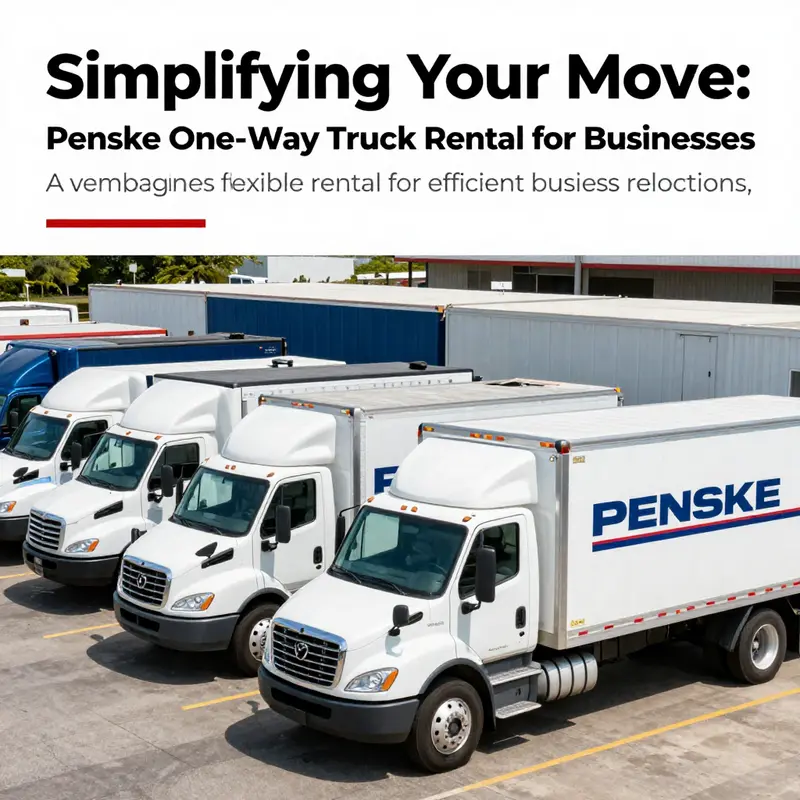
For business owners considering a relocation, selecting the right moving solution is crucial to minimizing downtime and expenses. Penske’s one-way truck rental services offer an ideal balance of convenience, reliability, and affordability, tailored specifically to meet the unique demands of businesses of all sizes. This article will delve into five key aspects of Penske’s one-way moving truck rentals: an overview of their services, a detailed look at pricing structures, the features of their fleet, insights into customer experiences, and a comparative analysis of Penske against its competitors. Understanding these components will empower business owners to make informed decisions, ensuring a smooth transition during their move.
Onward, One Way: Navigating Flexible Truck Rentals for Long-Distance Moves
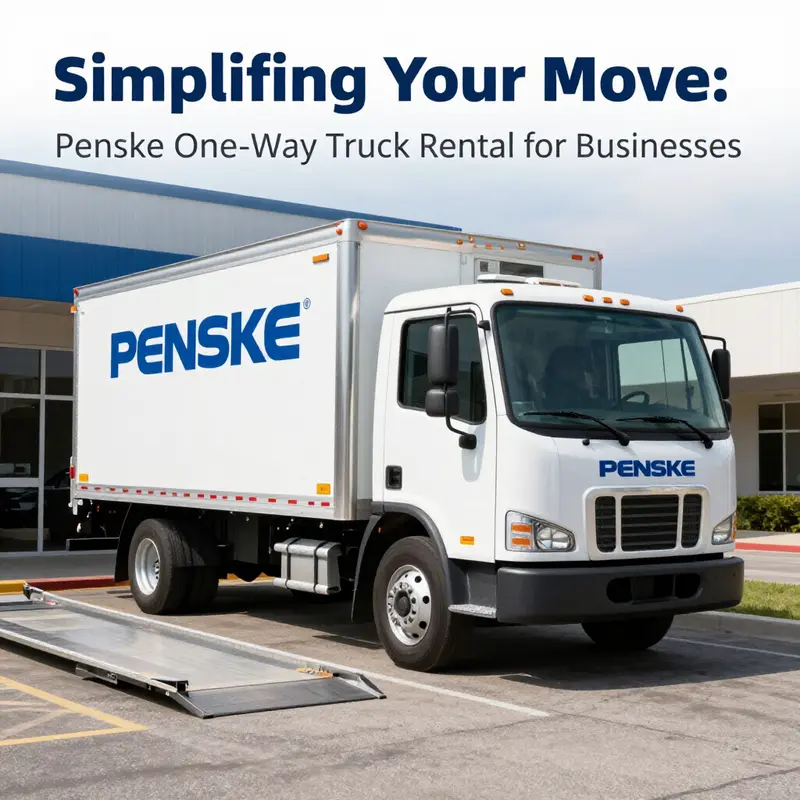
Relocating across states or regions introduces a level of planning that can feel overwhelming even before the moving day arrives. One-way truck rentals offer a practical path through that planning maze by letting you pick up a vehicle at the origin and drop it off at the destination, with no obligation to return the truck to where you started. For many families and small businesses, this arrangement translates into real-world advantages: a streamlined schedule, fewer logistical hoops, and a clear end date for the move. The core idea is simple, but its impact on the moving experience is substantial. Instead of juggling multiple trips, you can map out a single, decisive journey. You gain the flexibility to align your timeline with a busy work or school calendar, and you can tailor the move to your pace rather than the constraints of a round trip. In practice, that means you can begin loading when it’s most convenient, pause for family commitments, and finish when the route feels right. The ability to select a drop-off point closer to the new home or business location reduces the back-and-forth shuttling that often drains time and energy. When the focus is on the destination rather than the round trip, the move becomes a project that fits into life’s natural rhythms instead of one that dictates those rhythms back to you.
Behind this simple premise lies a set of operational strengths that make one-way moves not just possible but practical for a broad range of households and enterprises. The fleet supporting one-way assignments is typically among the newest and most reliable in the industry. Vehicles that have seen modest mileage and regular maintenance checks contribute to predictable performance, smoother handling, and fewer unexpected delays along the road. Clean cabs, comfortable seating, and engine reliability are not just about comfort; they are about reducing fatigue during a long day on the highway. A well-kept vehicle translates into steadier acceleration, responsive braking, and fewer mechanical surprises, which in turn lowers the stress that often accompanies long-distance relocations. A modern fleet also tends to feature better safety systems and clearer instrumentation, helping drivers stay focused on the road and on the task of protecting belongings from start to finish.
Yet the value of a one-way rental goes beyond the vehicle itself. A moving plan that leans on this model typically includes access to a full spectrum of moving equipment and supplies. In many programs, customers can augment the truck with essential tools—packing materials to secure fragile items, moving blankets to cushion furniture, and dollies to move heavy boxes safely. Tie-downs and straps help stabilize cargo and prevent shifting during transit, especially on highways with varying speeds and wind conditions. The presence of these accessories under one roof means fewer trips to different stores, less improvisation on moving day, and more confidence that every item can be secured for the journey. Customers appreciate a one-stop approach that minimizes the number of vendors they must coordinate with, since coordination is a large part of what turns a move from a plan into a realization.
A service offering that centers on one-way mobility also emphasizes support that guides customers through the logistics of selecting the right vehicle. The typical consultation helps estimate load size and choose the appropriate truck length, cargo box height, and cargo capacity. This guidance is not a sales pitch dressed up as advice; it reflects a practical evaluation of what can comfortably fit in one trip while leaving some margin for maneuvering. Choosing too small a truck can force additional trips or risk damage to items; choosing too large a truck can inflate costs and complicate the loading sequence. With experienced staff to help weigh options, customers can make an informed decision that aligns with their budget, timeline, and the physical realities of their move. The goal is a balance between efficiency and safety, ensuring that every inch of space is used wisely without compromising the protection of belongings.
The operational framework supporting one-way rentals also extends to delivery and pickup processes. Clear pickup procedures help customers know what to expect on loading day, from checking the vehicle’s exterior condition to inspecting the cargo space for pre-existing damage. A well-structured handoff reduces miscommunications, speeds up the process, and provides a documented baseline for the condition of the truck at the start of the move. On the drop-off end, straightforward return procedures and location-based instructions are designed to eliminate guesswork. Roadside assistance, when available, acts as a safety net for unexpected hiccups, giving movers a sense of security that the operation is supported by a larger network. The combination of dependable equipment, practical accessories, and accessible support creates a reliable framework that many migrating households and small businesses rely on to stay on track when the road ahead is uncertain.
Booking a one-way rental is typically streamlined through online platforms that display available vehicles, rental terms, and any optional add-ons. Transparency in pricing is a recurring theme in this space, with rates often reflecting factors such as distance, vehicle size, and the chosen rental duration. Seasonal demand and regional availability can influence prices, making early planning a smart move for those with rigid timelines. A thoughtful approach to budgeting recognizes that the base rate covers the vehicle alone, while add-ons—whether an extra day, additional packing materials, or a higher mileage package—address the practical realities of moving heavy loads through varied terrain and weather. For many users, this modular setup is a practical way to scale the move to fit their needs, avoiding unnecessary costs while preserving the flexibility to adjust plans as new information emerges about the route, weather, or family schedules.
Beyond the numbers, one-way rentals imprint a different mindset on the moving process. The single-trip philosophy invites focus on the core objective: to transport belongings from one place to another with minimal disruption to the rest of life. That shift in perspective has tangible benefits. Fewer trips means less exposure to traffic hazards, fewer opportunities for loading mistakes, and a reduced risk of weather-related delays. It also invites more deliberate pacing. A move does not need to be sprinted; it can be approached as a controlled, planned journey that respects the daily realities of the people involved. In practice, this translates into better sleep the night before loading, more time to organize a kitchen or an office, and, crucially, more energy left to start anew once the move is complete. The result is not merely a change in transportation; it is a reframe of how relocation can feel when people hold the pace and the destination in clear view.
As the move unfolds, the operational backbone—fleet reliability, accessible equipment, straightforward handoffs, and transparent pricing—becomes more than a collection of features. It becomes a framework for peace of mind. The ability to secure a well-maintained truck, access practical moving tools, and rely on support when needed all contribute to a smoother day. The one-way model is less about the allure of a single convenience and more about a coherent experience that allows families and teams to concentrate on what matters most: setting up a new home or workspace with clarity, care, and intention. In this sense, the rental becomes less about renting a vehicle and more about enabling a transition. It is a structure that supports the emotional rhythm of moving, recognizing that the success of a relocation hinges not only on how well items are packed and loaded, but on how confidently the people involved can navigate the road ahead. For those preparing to embark on a long-distance move, that combination of practical resources and thoughtful service often proves to be the decisive difference between a hectic day and a steady, manageable one.
For those who want to explore the specifics of pricing, availability, and vehicle options, the official moving page offers a direct path to the latest details and terms. It is here that prospective movers can align their timelines with actual inventory, compare vehicle sizes, and understand the nuances of one-way rental policies in their region. In the broader context of a well-planned relocation, this information becomes a critical anchor—helping to convert a general intention into a concrete schedule that stays on track even as other moving pieces shift. Access to this kind of resource empowers readers to move from curiosity to commitment with confidence, turning what might feel like a logistical puzzle into a clear, actionable plan. https://www.penske.com/moving
Decoding One-Way Moving Truck Pricing: What Really Shapes Your Rental Cost
Understanding what drives the price of a one-way moving truck helps you plan and avoid surprises. When you reserve a truck to move belongings from one city to another, the final invoice reflects more than a single daily rate. Costs stack from a few predictable pillars: time, space, distance, fuel, coverage, and local taxes or fees. Watching how each of these elements interacts gives you control over the total and helps you make choices that match both your budget and move complexity.
At the heart of the quote is the base rate, which usually appears as a daily charge. This rate covers the basic rental of the vehicle for each day you have possession. It’s straightforward: more days equal a higher base cost. However, the way you schedule pick-up and drop-off can change the effective days billed. For example, collecting a truck late in the day and returning it the next morning may still count as two rental days. Planning pick-up times and minimizing unused days on either end of the rental period is an easy, reliable way to reduce the amount you pay for the base rate.
Truck size is the second major lever. Rental fleets commonly include smaller 10-foot trucks for studios or light loads and larger 26-foot trucks for full-house relocations. The larger the truck, the higher the daily base rate. Size choices also affect mileage: a bigger truck may consume more fuel per mile, and it’s easier to overload a large vehicle when estimating cubic space. Choosing the right size means balancing cost against the risk of needing a second trip. Underestimating size leads to a cramped load and potential extra mileage; overestimating size results in paying for unused capacity. A careful inventory of furniture and boxes helps you select the smallest truck that still fits everything safely.
Distance often creates the largest single variable in a one-way rental. Many providers include a limited mileage allowance in their one-way quotes; once you exceed that allowance, per-mile charges apply. For long-distance moves, a dedicated one-way fee is frequently added and typically scales with how far you travel. That fee accounts for the logistical burden of returning the truck to its originating area or redistributing it across the network. Because of this, routes crossing many state lines or spanning several hundred miles will see proportionally larger one-way fees.
Fuel is a direct and non-negotiable cost. Renters are responsible for refueling before returning the vehicle. That means you’ll pay at the pump for every mile driven, and fuel efficiency varies by truck size and load weight. Estimating fuel costs requires roughly calculating miles and using conservative fuel-efficiency figures. Don’t forget to budget for potential detours, heavy traffic, and the reduced mileage that comes with towing a heavy load.
Insurance and protection options also change the quote substantially. Most rental companies offer tiered coverage packages: basic liability, loss and damage protection, and sometimes supplemental options covering windshield or tire damage. Each incremental step raises your daily or flat-fee cost but decreases your financial exposure if something goes wrong. If your personal auto insurance or credit card already extends coverage to rentals, you may be able to decline certain options and save. Verify coverage limits and exclusions carefully before opting out; what looks like a small savings can become an expensive gap after an accident or damage claim.
Taxes and administrative fees finish the total. Local and state taxes apply based on pickup and drop-off jurisdictions. Administrative or processing fees for licensing, vehicle preparation, or customer service may be tacked onto the bill. While each fee alone might be modest, together they can add several percent to the final price. Always review the quote line-by-line so these smaller items don’t surprise you at checkout.
Three practical strategies cut the overall cost without compromising the move. First, firm up your schedule. Reducing rental days by even one can lower the base rate and associated daily insurance charges. Second, measure and inventory carefully to pick the right truck size. Bringing a couple of extra boxes might be cheaper than upgrading to the next truck size. Third, compare the mileage allowance against your route. If the included miles fall short, shop for a quote with a larger allowance or plan a slightly shorter route that uses major highways, which are typically more direct.
Another overlooked lever is ancillary equipment and supplies. Dollies, moving pads, straps, and furniture covers are often available for rent. Buying these supplies beforehand at a hardware or big-box store can be cheaper in some cases, especially for longer rentals. Likewise, packing services offered by third parties or professional moving labor can be added to the move and influence the timeline and therefore the rental duration. Factor these into calendar planning so service providers and truck return times align.
When comparing one-way options, use the online booking tools. An accurate quote requires pickup and drop-off ZIP codes, desired dates, and the truck size. These tools calculate the one-way fee and mileage allowance automatically, giving you an apples-to-apples price for different dates and sizes. If your dates are flexible, try shifting the pickup or drop-off by a day or two; small timing changes can shift availability and rates, sometimes substantially.
Finally, read the fine print about returns and refueling. Some companies charge premium fees when trucks are returned dirty, without required supplies, or with missing equipment. Others apply late-return fees that multiply the daily base rate if the vehicle is not returned within a narrow grace period. Confirm return window policies and plan buffer time for unexpected delays. Filling the tank the day before return and keeping receipts prevents disputes over fuel charges.
A clear, itemized quote is the best tool to evaluate value. Look for the base daily rate, the mileage allowance and per-mile charge, the one-way fee and how it scales with distance, fuel responsibility, insurance choices, and estimated taxes and administrative fees. By understanding how each piece contributes to the total, you can adjust duration, truck size, or coverage to meet your budget and risk tolerance. For precise price estimates tailored to your move, use the official online booking tool to enter your pickup and drop-off locations and receive a detailed quote instantly (https://www.pensketruckrental.com).
The Road-Ready Advantage: Fleet Features for Seamless One-Way Moves
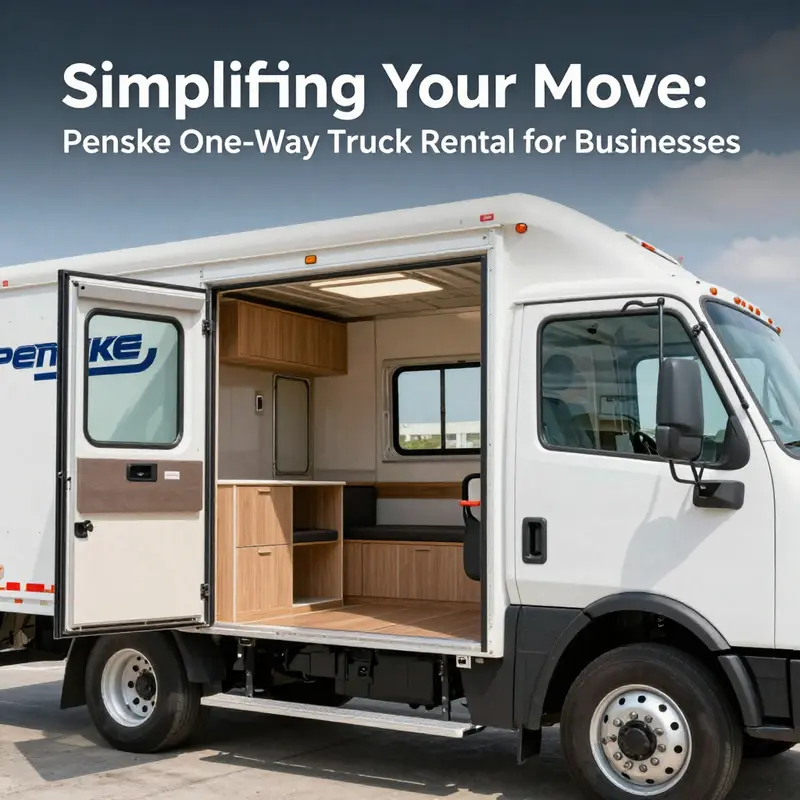
Choosing a one-way moving solution is about more than a truck and a date; it’s about the confidence that the vehicle you depend on will perform reliably from doorstep to destination. The fleet designed for one-way moves balances comfort, safety, and practicality, recognizing that relocation often spans long hours and unfamiliar routes. In a modern one-way fleet, reliability comes from disciplined maintenance cycles, routine inspections, and a proactive approach that prioritizes care over reactive fixes. Newer vehicles tend to be cleaner, more dependable, and more efficient, reducing the chances of unplanned delays caused by mechanical issues. Cleanliness and upkeep signal a broader commitment: the vehicle has been prepared to travel with minimal surprises, with fluid levels checked, tires inspected for even wear, and onboard systems tuned for a predictable ride.
Inside the cabin, the driving experience is engineered to minimize fatigue and maximize control. A fundamental feature is responsive power steering that makes maneuvering in tight urban streets surprisingly effortless. When negotiating congested neighborhoods, parallel parking at a temporary stop, or threading through a narrow loading zone, such a system reduces strain on the arms and helps you stay focused on the road ahead. Coupled with cruise control, this setup becomes a simple rhythm for long stretches of highway travel. Cruise control reduces mental load while maintaining a steady pace that can also improve fuel efficiency.
A key pillar of safety in any fleet designed for one-way moves is a robust braking system. Anti-lock brakes are part of a basic safety package that helps prevent wheel lockup during abrupt stops or when maneuvering through rain or slick pavement. This capability gives drivers greater control and reduces the risk of skidding, especially when carrying a full load. The presence of ABS is complemented by a chassis and suspension tuned to provide a stable ride, keeping tires in better contact with the road and reducing abrupt jolts that could unsettle both driver and cargo.
The modern cockpit also hosts technology that reduces cognitive load and improves in-cab comfort. Inputs for entertainment and connectivity—such as AUX and USB interfaces—materialize into a more pleasant drive, allowing you to listen to a familiar playlist or stay connected with hands-free devices. When moving across unfamiliar terrain, the features can transform a potentially monotonous trip into something more manageable by balancing focus with occasional distractions that don’t compromise safety. The overall cabin environment—comfortable seating, clear instrument panels, intuitive controls—adds to a sense of reliability.
Beyond the driver’s seat, the fleet’s design considers the range of moving tasks. Cargo space is optimized for a range of loads, with secure tie-downs and accessible points. Modern one-way trucks are compatible with standard moving aids—dollies, straps, and blankets—that protect items during transport. The synergy between cargo space and securing equipment matters as much as the vehicle’s powertrain, reducing the risk of shifted loads that could damage belongings. When safeguards are in place, a family’s possessions can travel with greater confidence.
Flexibility is another cornerstone of the one-way moving model. The capability to pick up at one location and drop off at another aligns with modern life, where timing and logistics don’t always align neatly with a round trip. Online booking channels, straightforward terms, and transparent pricing complement the vehicle’s practical strengths, resulting in a smoother, more predictable relocation experience.
As you weigh options for a one-way relocation, the ecosystem surrounding the truck—access to packing supplies, the ease of booking, and the clarity of terms—plays an essential role. The ability to secure packing materials alongside a reliable vehicle means you can focus on the bigger picture: organizing, protecting, and transporting your belongings with confidence. In a world where efficiency matters, the union of a dependable vehicle with practical moving aids becomes more valuable each mile of the journey.
For more details on vehicle specifications and rental options, visit the official site: https://www.pensketruckrental.com
null

null
On the Open Road: Navigating One-Way Moving Truck Rentals with Penske Amid a Pricing and Policy Landscape
Relocating involves more than packing boxes; it is a test of plans and patience, a test of whether a van can carry the story of a life in transit from one address to another. When a move unfolds across state lines, the choice of vehicle becomes a hinge on reliability, coverage, and cost that can ripple through the budget long after the last box is unloaded. In this chapter, we turn a careful eye toward one-way moving truck rentals and the way a leading provider positions itself in a competitive field. Penske, known for a fleet described as among the newest and most reliable in the industry, offers a compelling blend of quality and convenience. Customers frequently cite clean, well-maintained trucks, with the added practicality of essential moving supplies such as packing materials, dollies, and straps included or readily available at the location. The ability to pick up at one site and drop off at another is not merely a feature; it reshapes planning, reduces back-and-forth, and can trim the time spent coordinating a cross-country relocation. With online booking, the process becomes even more straightforward, a modern touch in a process that otherwise asks a lot of a single day. Yet in the real world of moving, cost is rarely a single number. It is the sum of many pieces that can shift as a move progresses. That is precisely where the contrast with competitors becomes instructive. The comparative narrative reveals how policies, especially around extended rental days, can move a project from feasible to financially burdensome or sustainable, depending on the map of a move and how long a truck must be kept on the road. The most salient figures for this chapter revolve around the daily extension charges when a one-way rental stretches beyond its planned window. In this area, the differences are stark and instructive. Penske charges one hundred dollars for each additional day added to a one-way rental. That policy is simple and predictable: the rate is fixed per day beyond the expected duration, regardless of the truck size, location, or time of year. The impact of such a policy becomes visible only when plans derail or delays occur. A two-day extension, for a vehicle that was initially booked with a set term, can add two hundred dollars to the total; a week of unforeseen delays can inflate costs by seven hundred dollars or more, depending on the base rental. The math is not merely arithmetic; it is a scenario that tests a mover’s tolerance for risk and contingency. In contrast, a well-known competitor presents a more economical option for extra days, at forty dollars per additional day. This difference has meaningful consequences for the overall cost bracket, especially in moves that face uncertainty or that involve multi-week timelines. The contrast invites a careful calculation before a booking is confirmed. It is not simply the base rate that will decide the outcome—it is how the rental terms behave when reality intrudes on the ideal plan. For a budget-minded mover, the lower per-day extension fee represents a stronger cushion against the unpredictable rhythms of moving. The savings on those extra days can be substantial, and in a scenario where last-minute changes are possible, the lower extension charge reduces the likelihood that delays will derail a carefully crafted budget. Yet the story does not end with per-day costs. Base rates, mileage terms, fuel charges, insurance options, and drop-off fees all contribute to the final tally. The fleet, too, matters in ways that go beyond sticker price. Here, Penske’s emphasis on a newer and cleaner fleet translates into a tangible value. The reliability of a modern truck reduces the risk of breakdowns, the nuisance of maintenance-related delays, and the emotional toll of a malfunction on a crucial day. The fleet’s maintenance standard is matched by the support ecosystem that surrounds it. Moving involves not only the vehicle but the entire network needed to keep boxes moving: packing supplies, straps, dollies, and other essentials. Penske’s approach to supplying these items, whether included with the rental or readily available on-site, can shave off time and friction from the moving day. When a truck arrives at a residence, the experience is often shaped by the condition of the vehicle and the familiarity of the crew that operates it. Clean, well-maintained equipment supports smoother loading and unloading, minimizes the risk of damage to belongings, and reduces the chance of unexpected stops to address minor mechanical issues. Alongside the physical vehicle, the flexibility of rental terms plays a crucial role. The ability to book online, to adjust pickup times, or to alter the drop-off location within a reasonable radius can transform a potentially stressful process into a series of manageable steps. The value of such flexibility grows when moves cross state lines or involve multiple transfers. It also interacts with the other costs in play. When a customer considers whether to opt for Penske’s fleet and policy mix or to look toward a lower daily extension rate offered by a competitor, the decision often resolves toward a broader calculus: reliability, predictability, and the experience of a smooth, well-supported move. The numbers offer one dimension; the qualitative aspects offer another. For instance, the reliability of a newer fleet may reduce the likelihood of delays that would otherwise incur additional charges for reevaluation or last-minute changes. A truck that starts clean and well-maintained can shorten loading time, which indirectly lowers the risk of a missed window and the need to pay for more days. In such a scenario, the potentially higher daily extension fee might be counterbalanced by real-world efficiency and reduced downtime. The balance between these factors is shaped by the individual’s move profile. A move across a few hundred miles meant to be completed within a tight timeframe may favor the certainty of a single, planned day with a slightly higher base price but minimal risk of extension. Conversely, a longer, more elastic schedule—perhaps a move across a broad region with flexible timing due to work commitments or weather—may push the decision toward a provider whose terms are more forgiving in terms of daily extension costs. The overarching lesson emerges with clarity: for many movers, the choice between Penske and a major competitor hinges less on the headline daily rate and more on reading the rental terms as a whole. It is a reminder that the total cost of a one-way rental is an equation with multiple moving parts. The base quote is only the starting line. The extension policy, mileage charges, optional insurance, fuel reimbursement, late-return penalties, and the quality of the fleet all contribute to the final cost and the moving experience. The comparison—with concrete figures—offers a practical guide, especially when the move scope involves uncertain timelines or potential delays. The numbers themselves are important, but their interpretation matters even more. A higher extension fee is not inherently worse if paired with stronger reliability, simpler terms, and faster throughput on moving day; a lower extension fee can still yield higher total costs if coupled with inconsistent availability or an underperforming fleet. For people who run occasional moves, a pattern emerges: if one anticipates tight scheduling and minimal risk of days added, a lower extension rate may not provide a meaningful advantage. If, however, the likelihood of delays is higher—winter weather, a shifting moving plan, or a complex relocation—the lower extension fee can offer a meaningful hedge against cost creep. In practice, moving teams and households tend to prepare for the worst while hoping for the best. The preparation involves not only choosing a rental partner with the right fleet and terms but also building a budget that can accommodate the unpredictable nature of a move. A careful approach asks for transparent quotes, a breakdown of all charges, and a clear understanding of what is included in the base rate. It also invites questions such as whether the company offers free mileage during a promotional period, how many miles are included in the base rate, whether tolls are billed separately, and what the policy is for returning the vehicle with a full tank or with a partial tank. These questions are not mere pedantry; they shape whether the move remains within financial reach or becomes an unanticipated strain. In the end, the decision aligns with individual priorities: a priority on peace of mind and reliability may justify a higher upfront cost if it translates into fewer headaches, less stress, and a smoother process. A priority on keeping overall spend as low as possible may pull toward a provider whose terms are more forgiving on daily extensions, even if that choice requires careful budgeting around potential delays. This chapter does not claim that one path is universally superior. Instead, it offers a framework for evaluating one-way rentals as part of the broader planning landscape of a move. It invites careful reading of terms, proactive contingency planning, and a balanced consideration of both quantitative figures and qualitative indicators such as vehicle condition, fleet reliability, and online convenience. To close, the practical takeaway remains straightforward: before committing to a one-way rental, gather quotes for the dates you anticipate, map out the most likely duration of use, and stress-test the scenario with a few plausible delays. Build a budget that accounts for the extra days at the rate you would actually incur, not just the base rate. Compare the total cost across providers, but also weigh the intangible benefits of a modern, reliable fleet backed by a streamlined booking process and a robust support network. If you wish to broaden your context, you can review external resources that discuss pricing structures and policies across major rental fleets. For further context on rates and policies, see U-Haul.
Final thoughts
Navigating a business move can be challenging, but with Penske’s one-way moving truck rental services, the process is streamlined and efficient. Their well-maintained fleet, competitive pricing, and positive customer experiences make them a top choice for businesses needing reliable relocation solutions. By considering the insights presented in this guide, business owners can confidently make informed decisions that facilitate a smooth transition, ensuring minimal disruption to their operations.