
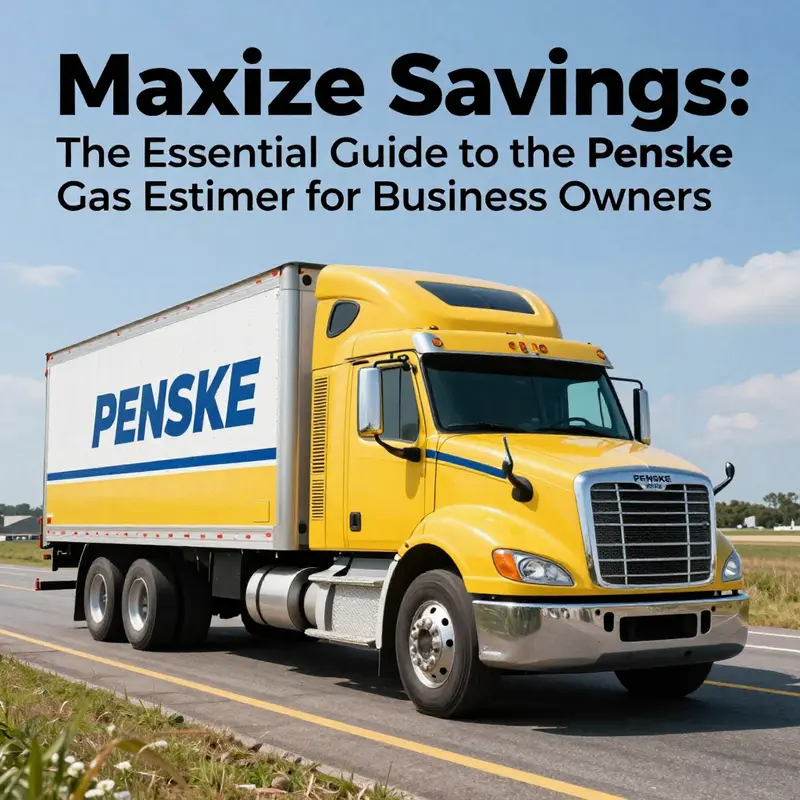
For business owners in the moving and logistics sectors, controlling costs is pivotal to ensuring profitability. Among the many variables to manage, fuel costs stand out as both variable and significant. This is where the Penske Gas Estimator tool comes in, offering a reliable method to estimate and manage fuel expenses tied to truck rentals. Throughout this article, we will explore the Penske Gas Estimator in detail, elaborating on its features, calculation methods, influencing factors, benefits for budget planning, and practical applications. Equip your business with knowledge that helps you forecast costs more accurately and maintain a robust bottom line.
Forecasting Fuel for Your Move: Mastering the Penske Gas Estimator and Budget-Smart Truck Rentals
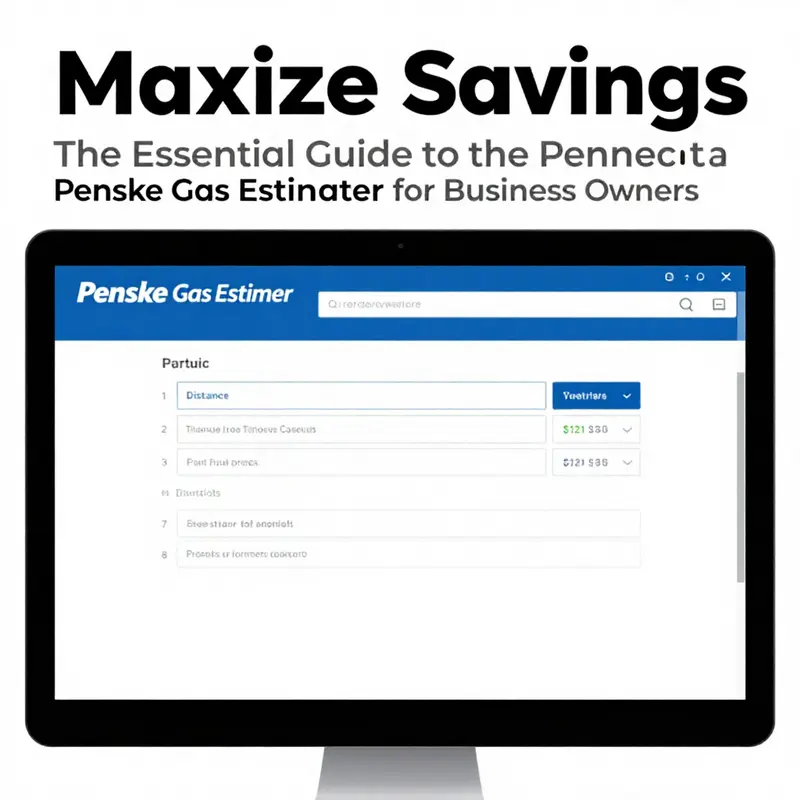
Fuel is often the unseen line item in a moving budget. It can creep up with last-minute route detours, heavy city traffic, or unexpectedly steep climbs that drain fuel tanks faster than planned. For anyone planning a rental truck move, the Penske Gas Estimator offers a practical starting point to translate rough miles into a measurable forecast of fuel costs. This online calculator is designed to take the edge off uncertainty by using your chosen route, the type of truck you plan to rent, and standard driving conditions to estimate both the fuel needed and the associated price. In a world where fuel prices swing with the weather, geopolitical events, and regional supply chain dynamics, having a transparent forecast allows you to budget with more confidence and to adjust your plan before you press the final button to confirm a rental.
The estimator works by inviting you to input a few specific factors. First is the route distance. The calculator translates miles or kilometers into an expected gallons of fuel, based on representative fuel economy figures for the vehicle size you select. Second is the vehicle type. Different moving trucks have different engines, aerodynamics, and payload considerations that can alter fuel efficiency. A larger box truck with a higher gross vehicle weight will usually pull more fuel than a smaller moving van, even if both travel along the same path. Third, and perhaps most nuanced, are the driving conditions. The tool currently models typical highway cruising, steady speeds, and relatively light traffic, as well as the impact of hills and city congestion. When these inputs align with your real-world trip, the output becomes a practical planning aid rather than a mere curiosity.
In practice, this means you can, with a few clicks, estimate not just how far you’ll travel, but how much fuel you’ll burn and at what approximate cost. The value is not simply a single number; it’s a budgeting anchor. You can compare scenarios—for instance, choosing a smaller truck versus a larger one, or deciding between a route with more stretch on highways versus a route with shorter segments through urban streets. The Penske Gas Estimator thus supports a broader decision framework: it helps you weigh reliability, capacity, and cost in one place, which is especially valuable when you’re balancing packing logistics, timing, and truck availability.
Yet it is important to use the tool with a clear understanding of its assumptions. The estimator bases its forecast on “typical” driving patterns and favorable conditions. It presumes a consistent pace, smooth traffic flow, and weather that doesn’t force abrupt changes in speed or route. Real-world trips, of course, rarely stay within those narrow bands. Road work, road closures, heavy downtown traffic during peak hours, or adverse weather can all push actual fuel consumption higher than the estimate. Viewing the calculator’s output as a best-possible forecast rather than a guaranteed cost helps you set realistic expectations and avoid surprises when you return the truck and settle the bill.
This is not to diminish the estimator’s value. It anchors your planning to transparent inputs and an explicit calculation. Because the numbers reflect the vehicles’ intrinsic fuel economies under given conditions, you can make better decisions about not only how much to budget, but when to travel. If you’re flexible with your dates, you might find a window with milder traffic patterns or lower fuel prices, and the estimator can be re-run to compare outcomes. In addition to the online tool, it’s prudent to couple these projections with live price information, which brings the forecast closer to reality as your move date approaches.
A useful way to enhance accuracy is to pair the estimator’s framework with real-time price data from reliable sources. The U.S. Department of Energy’s Fuel Gauge Report provides updated gasoline price ranges across the country, capturing regional fluctuations that can influence your total cost. When you plan a move that traverses multiple states or provinces, accessing current price data helps you adjust expectations and logistics. For a comprehensive understanding of the latest pricing landscape, you can consult the Fuel Gauge Report and compare it against the estimator’s fuel-cost projection. This approach keeps your planning grounded in current market conditions and reduces the likelihood of unexpected expense as you execute your move.
To use the estimator with maximum effectiveness, consider it as part of a broader budgeting approach that includes the rental contract’s fuel policy. Some rental agreements include free mileage or define fuel return requirements, such as returning the vehicle with a full tank. Understanding these terms before you rely on the calculator ensures you’re not double-counting costs or missing policy-driven savings. The policy details can shape your route and driving choices; for instance, you might opt for a route that preserves fuel efficiency or time efficiency in light of return fuel requirements. Keeping the policy front and center helps you align your usage with the contract terms, minimizing post-move friction and refunds or additional charges.
Within this framework, the Penske Gas Estimator also serves as a practical coaching tool. It prompts you to think through your driving style and the realities of long-mileage moves. If you anticipate longer stretches on highways with steady speeds, you may observe a more favorable fuel forecast. Conversely, if your plan includes frequent stops, backtracking, or steep ascents, you’ll likely see a higher projection. In this sense, the tool becomes a mirror for your own driving habits. It invites you to consider changes that might reduce costs, such as combining trips, consolidating load to avoid unnecessary acceleration, or choosing a truck size that best matches the actual volume you need to move. Awareness of these factors empowers you to optimize not just the fuel cost, but the entire move—time, energy, and resources.
For readers who want to navigate this topic with even greater clarity, there is a resourceable way to deepen your understanding without leaving the planning frame. The internal guide on the Penske site offers a concise overview of how the estimator functions and what inputs shape the forecast. You can explore the detailed explanations and related planning tips by following the Penske fuel estimator article via this link: Penske Fuel Estimator. This companion piece can help you interpret the numbers you see on the tool, understand the assumptions embedded in the model, and apply the results to real-world decisions such as scheduling, packing strategies, and vehicle selection.
As moving audiences increasingly rely on data-driven planning, the estimator’s value also lies in its potential to illuminate tradeoffs. A larger truck offers more space and better load stability but carries higher fuel costs per mile. A smaller truck reduces fuel consumption yet may require an additional trip if space is not adequate. The estimator helps you quantify these tradeoffs side by side, turning a potential conflict between speed and economy into a clear calculation. It also encourages prudent contingency planning. If your budget shows a tight margin between expected fuel costs and total relocation expenses, you might add a buffer, identify cost-saving alternatives, or adjust your move date to a period with more favorable price dynamics. This iterative approach, applied early, can prevent expensive last-minute changes that disrupt a carefully planned relocation.
Beyond personal moves, the estimator has value for professional or hybrid moves as well. Small businesses that relocate equipment, inventory, or office furniture can apply the same logic to forecast fuel spend across different routes or fleets. By understanding how route structure, truck capacity, and driving patterns interact, managers can design more fuel-efficient operations. In this broader sense, the Penske Gas Estimator becomes not only a budgeting tool but a strategic planning instrument that informs route planning, fleet assignment, and scheduling. It invites a disciplined, data-informed mindset to what is often a messy, real-world process, helping teams move with accountability and foresight rather than improvisation.
In summary, the Penske Gas Estimator is a practical, user-friendly tool that translates distance, vehicle specifications, and expected driving conditions into a transparent forecast of fuel costs. It helps you budget more accurately, consider policy constraints, and think strategically about route selection and vehicle size. While it operates on assumptions about optimal conditions, its value lies in its ability to anchor your planning in repeatable inputs and to serve as a baseline for comparison against real-world prices and experiences. By coupling the estimator with up-to-date price data and clear contract terms, you equip yourself to manage the fuel component of your move with confidence and clarity, avoiding surprises and ensuring a smoother transition to your new space.
For additional context on related gas mileage and fuel budgeting topics, readers can explore related planning resources that discuss efficiency and cost considerations in truck rentals and moving operations. Further insights can be found in the broader body of moving-truck guidance and fuel management discussions available through the site’s content ecosystem. This keeps your planning cohesive and aligned with practical tips drawn from real-world experiences and industry practices.
External resource for further detail on fuel price dynamics: Fuel Gauge Report – U.S. Department of Energy. https://www.fueleconomy.gov/feg/Find.do
Fuel On the Move: How a Fleet Fuel Estimator Shapes Your Truck-Rental Budget
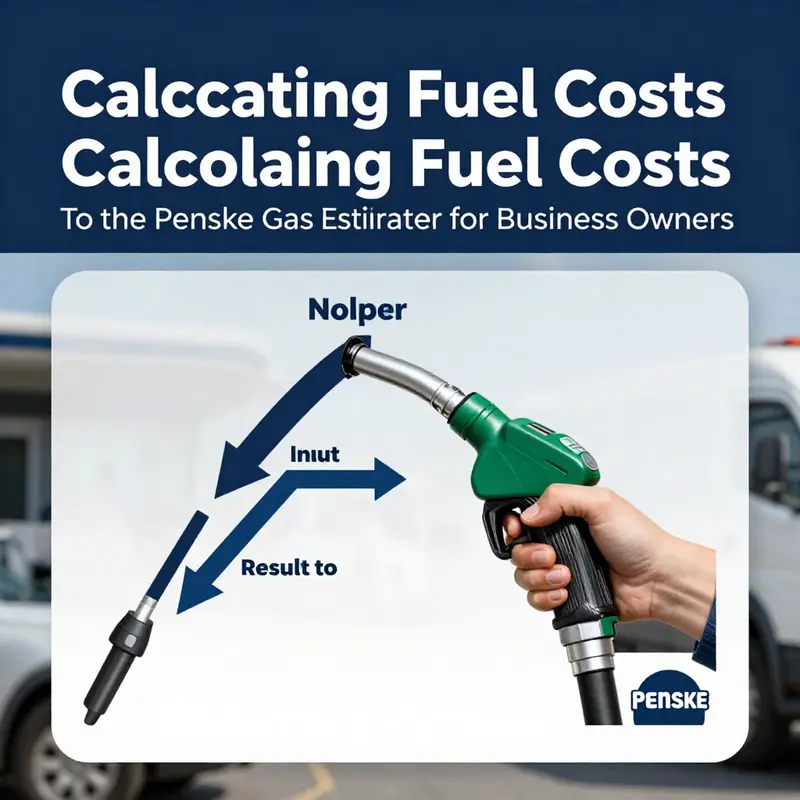
Budgeting for a move or a commercial relocation often hinges on the ability to forecast costs before the first truck hits the road. Fuel, while just one line in the ledger, can swing the total bill by a surprising margin. A dependable fleet fuel estimator exists to translate a handful of practical inputs into a clear forecast, turning guesswork into a plan you can trust when you book a rental truck. The tool works by combining three straightforward ingredients: how far you intend to drive, how efficiently the vehicle operates, and what you expect to pay at the pump. When you view the estimate, you’re not merely looking at a number; you’re peering into the cost structure of your entire moving process. This clarity helps you decide how large a truck you truly need, whether you should plan for fuel-efficient routing, and how to set a realistic budget that won’t be thrown off by a sudden spike in gas prices. In that sense, the fuel estimator acts as a budgeting compass, guiding decisions before the keys are handed over and the odometer begins to roll. The practical value comes from the estimator’s ability to turn a moving plan into something tangible: a dollar figure you can defend to clients, project managers, or family members who rely on a firm cost forecast to proceed with confidence.
Access to the tool is straightforward. It lives on the rental company’s official site, typically tucked under resources or fleet-management utilities. The interface invites you to input three essential data points: the vehicle’s average miles-per-gallon (MPG) or kilometers-per-liter (km/L), the planned trip distance in miles or kilometers, and the current fuel price per gallon or liter in your location. The design is intentionally simple because fuel costs tend to be volatile and time-sensitive. By reducing inputs to core variables, the estimator avoids burying users in complexity and instead delivers an immediate, actionable projection. For people moving across town, the numbers can be surprisingly small, and for long-haul relocations, they can become the dominant expense, especially if fuel prices rise during the window between planning and execution.
The calculation itself follows a familiar arithmetic path, but seeing the logic spelled out can help you adjust expectations and interpret results with greater confidence. In imperial units, the Fuel Cost is computed as Distance divided by MPG, then multiplied by the price per gallon. In metric terms, it’s Distance divided by km/L, multiplied by the price per liter. In both cases, the estimator effectively answers a simple but critical question: how many gallons (or liters) of fuel will the trip consume, given the vehicle’s efficiency, and what will that amount cost at the current price? The result is a forecast rather than a guarantee, yet it is the most reliable guide available before you lock in the rental agreement.
To illuminate the process with a concrete example, imagine you’re planning a 200-mile move in a truck that averages 10 MPG. If current fuel prices hover at $3.50 per gallon, the estimate would be (200 ÷ 10) × 3.50, which equals 20 × 3.50, or $70. A different scenario helps show how sensitive the outcome is to the inputs. If the same distance is covered by a vehicle averaging 8 MPG and the price per gallon rises to $4.25, the calculation becomes (200 ÷ 8) × 4.25, i.e., 25 × 4.25, which equals $106.25. Switching to metric terms clarifies the same principle: with a trip of 500 kilometers and a vehicle that runs at 6 km/L, priced at $1.20 per liter, the cost is (500 ÷ 6) × 1.20, or about 83.33 × 1.20, equaling roughly $100. This illustrates how even modest shifts in vehicle efficiency or fuel price can tip the scale by a noticeable margin, underscoring why real-time price awareness matters.
The estimator’s scope often goes beyond a single fuel type. It can present scenario comparisons across different fuel types that a given truck might use, such as diesel versus gasoline, when those options are available for the fleet you’re considering. A well-designed tool will let you toggle between scenarios and observe how the cost changes with each fuel type or price fluctuation. The upshot is practical: you gain a sense of which configuration yields the most predictable cost path for your specific route, load, and timeline. This is not about locking yourself into a single plan; it’s about mapping a few credible futures so you can choose the one that aligns with your budget and risk tolerance. In the context of a relocation, that means you can prepare for both best-case and worst-case fuel price trajectories, helping you set aside an appropriate contingency without derailing the overall plan.
Real-world accuracy, however, hinges on price volatility. Fuel today is a moving target, and the estimator’s reliability improves when you treat its output as a timely snapshot rather than a fixed prediction. The most valuable practice is to update the inputs as you approach booking or departure. If you know your travel window is flexible, you can run multiple scenarios with slightly different distances or price assumptions to capture the range of possible costs. This flexibility is especially meaningful when coordinating with a team or clients who require a transparent budget, since you can share a short, referenceable set of estimates rather than a single uncertain figure. To keep the projection current, rely on live price data from trusted sources. While the estimator uses local price inputs, corroborating those figures with live data can confirm that the forecast remains aligned with market conditions as your plan evolves.
An important, practical dimension of using the estimator lies in understanding the fuel policy embedded in your rental contract. Some contracts include free mileage or require fuel to be replenished to a specified level upon return. Others may set minimum fuel levels but not include free mileage beyond a certain threshold. The estimator can help you anticipate how these policy terms translate into cash flow. If you know you’ll be driving more on moving day or returning the truck with a near-full tank, you can adjust the input carefully to reflect those circumstances. If, on the other hand, you’ll only need the vehicle for a short window with limited driving, the cost projection may look dramatically different. The key is to align the estimator’s inputs with the actual terms of the rental agreement so your forecast remains faithful to reality rather than a best-case abstraction.
The value of this tool becomes even clearer when you consider how it fits into a broader planning conversation. Before you finalize a reservation, you can compare the fuel projection across the most likely routes, different truck sizes, and alternative return fuel scenarios. The exercise isn’t merely academic; it equips you to negotiate, adjust, and optimize the overall move plan. For instance, if the estimate reveals that a larger truck’s fuel cost is only marginally higher than a smaller one when you factor in time savings, route efficiency, and potential need for multiple trips, you might opt for the bigger truck to reduce the total number of trips. Alternatively, if keeping fuel costs tight is the primary objective, you might choose a smaller vehicle and a more fuel-efficient route. By thinking through these choices in terms of fuel cost, you keep the conversation grounded in dollars and sense rather than abstractions of “the right size for the job.”
For readers looking to dig deeper into practical usage beyond the overview, there is a hands-on resource that walks through the estimator’s interface and its real-world applications. You can explore a detailed, step-by-step walkthrough of the estimator at the dedicated guide linked here: penske-fuel-estimator. This internal resource offers concrete, example-driven explanations that complement the high-level concepts discussed above and illustrates how the inputs you provide translate into the final numbers. While the guide is specific to a particular fleet solution, the core arithmetic and budgeting logic apply equally well to any fuel-cost calculator used in truck rental planning. In practice, the estimator reduces the uncertainty you face when moving, enabling you to forecast, justify, and fine-tune your plan with a level of precision that becomes invaluable when coordinating a budget or presenting it to stakeholders.
Beyond arithmetic and interface familiarity, the broader lesson of using a fleet fuel estimator centers on disciplined planning. Fuel costs are rarely the sole driver of the total move price, but they are a consistently volatile component that can dominate the final tally if left unaddressed. The tool helps you anchor your estimates in actual fuel dynamics rather than wishful thinking about mileage or price. When you take the results seriously—by updating inputs as your trip details firm up and by cross-checking live price trends—you create a robust, defendable budget. This habit pays dividends whether you’re coordinating a personal move, managing a corporate relocation, or scheduling a fleet deployment for a larger operation. The estimator becomes less of a curiosity and more of a budgeting discipline: a practical, repeatable step in the planning workflow that keeps cost control at the forefront of the decision-making process.
To close the loop on accuracy and reliability, many planners complement the tool with live fuel-price data from trusted resources. While local inputs in the estimator provide a current snapshot, cross-referencing live data enhances confidence in the forecast, especially in markets where prices swing quickly. For ongoing monitoring, you might consult real-time price trackers and gauge reports that offer updates on regional trends and fuel availability. This integrative approach—combining a reliable estimator with up-to-date market data—ensures that the budgeting process remains grounded in reality, adaptable to shifting conditions, and aligned with the practical realities of moving logistics. In the end, the fuel estimator is not a single-use calculator but a dynamic companion in budget planning, route optimization, and contract discipline, helping you move with clarity and confidence.
External resource: For live fuel pricing trends and market context that can enrich your planning, you can refer to industry price trackers and fuel data resources available online. See a widely used live price source here: GasBuddy.
Navigating the Variables Behind the Penske Gas Estimator: How Distance, Truck Type, and Price Shape Your Rental Budget
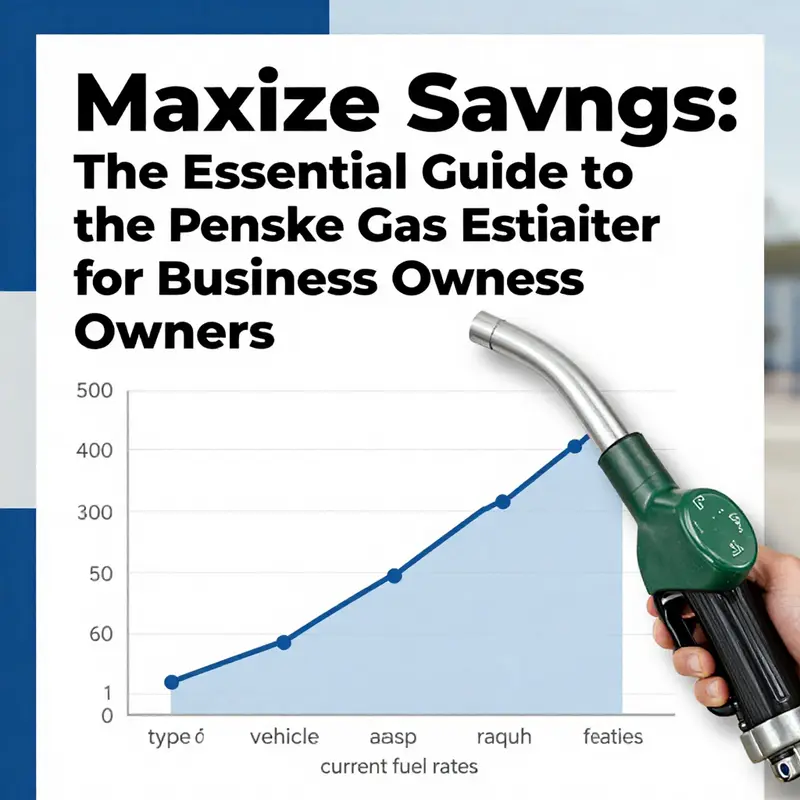
Every rental project begins with a number, and the Penske Gas Estimator is designed to provide a grounded starting point for that figure. It is a practical tool built to project fuel costs for a rental truck, helping you map out a budget before you sign a contract or load the first box. The value of this estimator lies not in predicting a perfect, unchangeable total, but in offering a transparent baseline you can compare against real-world outcomes. When you know the rough fuel landscape ahead of time, you can make smarter decisions about truck size, route planning, and even timing. In this way the estimator becomes less a forecast carved in stone and more a budgeting compass you use throughout the move.
At the heart of the tool are three core inputs that shape nearly every projection you will see. First is distance traveled. The estimator translates your planned journey into miles and then links that mileage to an assumed level of fuel consumption. The longer the trip, the more critical even small differences in fuel efficiency become, because small percentage gaps compound over many miles. Second is the specific type of truck. Different models burn fuel at different rates because engine size, aerodynamics, curb weight, and turbocharging affect efficiency. A larger box truck will typically sip more fuel per mile than a smaller one, and the estimator reflects that reality by applying model-specific consumption figures. Third is current local gas prices. Fuel costs fluctuate with regional markets and supply dynamics, and the tool uses real-time or near-real-time pricing data to translate miles and mpg into a dollar amount. When gas prices rise or fall in your area, the estimate shifts in direct proportion to those shifts. These three inputs—distance, truck type, and price—set the framework for the projection you’ll use to plan logistics and allocate funds.
To understand why these inputs exert such influence, consider a simple comparison. If you drive the same route with two different trucks, the one with better fuel efficiency will produce a noticeably lower fuel bill, even if the distance is identical. The difference grows with distance: a modest mpg gap that might seem negligible on a short hop becomes a meaningful cost delta over a multi-hundred-mile move. Likewise, price volatility can erase or amplify perceived savings. In a region where fuel is pricey on a given day, the cost impact of choosing a more fuel-efficient model is amplified, while in a day of cheap gas the same choice may appear less urgent. This responsive nature makes the estimator a practical planning aid rather than a static prediction.
Beyond these primary inputs, several other factors influence actual fuel consumption in ways the estimator cannot directly adjust. These factors live in the real world of driving and loading, where the quiet math of an online calculator meets the messiness of movement. Driving habits exert a powerful influence: aggressive acceleration, frequent hard braking, and extended idling all erode mpg and push actual fuel costs higher than the baseline estimate. Road conditions matter as well; congested urban streets with stop-and-go traffic force more frequent acceleration, while long downhill or flat stretches can alter energy use in unexpected ways. Weather conditions—the engine’s response to heat, cold, or humidity—can affect efficiency through air density, tire pressure, and auxiliary systems. Even load weight, a factor not adjustable within the estimator’s interface, plays a crucial role. A truck carrying a heavier payload uses more energy to move the same distance, altering fuel consumption and total cost.
The estimator’s design acknowledges these realities by delivering a baseline projection based on an average driving scenario. It serves as a practical starting point for budgeting, not a guarantee. Discrepancies between the estimate and actual fuel use are common, and they tend to trace back to a handful of controllable or predictable variables. The takeaway is simple: use the estimate as a frame of reference, then adjust expectations as you refine your plan with real-world data from the move. If you want to explore the estimator firsthand and see how it handles different inputs, you can consult the Penske Fuel Estimator through the Penske-related content in the rental community. The internal resource for this topic offers a user-friendly walkthrough and can be a valuable companion as you prepare your logistics plan. Penske Fuel Estimator.
Even with a clear sense of the main inputs, interpreting the results requires a disciplined approach. Start by comparing not just a single estimate but a small set of scenarios. For example, run the calculator for the largest truck you would consider and for the most fuel-efficient option that still meets your load needs. Look at the percentage difference between these two projections and translate that into a budget range for fuel. Then layer in variability by considering possible price swings in the region you’ll be driving through. If the route involves significant hills or rough terrain, acknowledge that fuel consumption can diverge from the stable, idealized numbers produced by the estimator. In short, treat the output as a decision-support tool rather than a definitive spend figure. Use the results to negotiate contracts, set expectations with movers, and, if necessary, adjust the move plan to balance cost against time and risk.
A key aspect of planning with the estimator is understanding the fuel policy associated with your rental. Many contracts include different provisions about mileage, fuel levels at return, and whether certain miles or fuel allowances are included. Knowing these terms ahead of time helps you map the estimator’s numbers to actual charges and avoids surprises at checkout. If you anticipate a high-fuel-cost scenario, you can incorporate fuel-saving strategies into your plan. Simple steps such as choosing a truck size closer to the actual volume you intend to move, planning efficient routes, and minimizing idle time can have outsized effects on the final cost. Additionally, you can incorporate buffer margins in your budget to cover price fluctuations and minor deviations from average driving conditions.
To stay aligned with official guidance and to ensure you’re using the most up-to-date data, it helps to consult trusted resources directly associated with the estimator. The Penske team maintains an official fuel savings resource that provides current insights and context about how these estimates are calculated and updated. This external reference complements the internal budgeting exercise by offering a broader view of the factors at play and the rationale behind the modeling choices. External readers can review that resource for the latest practices and caveats about price volatility and model-specific efficiency tallies. External resource: https://www.penskerental.com/fuel-savings-estimator
When you approach the Penske Gas Estimator with a clear plan and a realistic set of inputs, the experience becomes one of disciplined budgeting rather than guesswork. Start by defining the exact distance and plausible truck models for your move. Access the estimator early in the planning process so you can iterate scenarios as you refine other aspects of the move. Then compare those results against transparently stated contract terms and fuel policies, ensuring your expectations are grounded in the full spectrum of costs you may encounter. Remember that the estimator’s value lies not in a single number but in its ability to illuminate the trade-offs between truck size, route choice, and fuel price exposure. That awareness translates directly into smarter decisions about timelines, resource allocation, and the overall risk profile of the move.
For readers who want to explore related topics and deepen their understanding of fuel considerations in truck rental, the broader body of content in this space covers related practicalities such as fuel efficiency metrics by truck type, cost-saving strategies, and how to interpret MPG figures in the context of vehicle payload and route design. While the specific numbers will vary with geography and vehicle choice, the underlying principle remains the same: a well-informed planning process, anchored by a credible estimator, helps you anticipate costs, optimize the rental configuration, and navigate the move with greater financial confidence. If you’d like to see how these principles connect to broader moving logistics or case studies in truck utilization, you can also explore related posts in the rental blog space for additional context and practical insights.
In sum, the Penske Gas Estimator is most effective when treated as a planning tool that reveals how distance, vehicle choice, and fuel price interact to shape your moving budget. It shines brightest when used iteratively, with attention paid to real-world variables that the calculator can’t directly adjust but that you can influence through planning, routing, and efficient driving practices. Your move becomes less about chasing a perfect projection and more about making informed decisions that keep costs predictable while maintaining flexibility for the inevitable uncertainties of travel and transport. As you approach your moving timeline, return to the estimator with updated mileages, updated price snapshots, and any changes to the truck model you’re seriously considering. The process becomes a loop of continual refinement, one that translates data into smarter choices and a smoother transition to your new space.
Forecasting Fuel Costs: How a Gas Estimator Enables Smarter Budgeting for Truck Rentals

A well-planned budget for a truck rental hinges on a single, sometimes elusive factor: fuel. When you are moving across town or across the country for a business project, the fuel bill can either be a predictable line item or a source of surprise that derails an otherwise carefully crafted plan. A dedicated fuel estimator acts as a reliable compass in this terrain. It does not pretend to predict the future with precision, but it translates available data—distance, vehicle size, rental duration, and current fuel prices—into a thoughtful projection of what you are likely to spend. This projection becomes the centerpiece of budgeting rather than a vague assumption, and that shift in mindset—from guesswork to forecasting—reshapes every other decision you make about the rental process. In a world where price volatility is woven into the daily news, having a forecasted fuel cost in hand offers a sturdy baseline that can anchor your entire budget, from contingency planning to the choice of vehicle and even the route you decide to take.
The practical value of the estimator begins with accuracy. You input your estimated mileage, the length of the rental period, and the current or anticipated fuel price along your route. The tool then computes a projected fuel cost, yielding a figure you can rely on when you discuss the move or trip with teammates, clients, or family. This accuracy matters because it clarifies how much of the total rental expense is tied to fuel and how much is tied to the rental itself. When you can separate those components, you gain clarity about where to cut costs if needed and where to preserve value. For someone arranging a long-distance move, that clarity translates into concrete options—whether it makes sense to choose a different vehicle with better miles per gallon, whether a shorter trip with planned stopovers could trim fuel use, or whether an extended trip with more driving but less mileage in total might balance other costs. The estimator thus becomes a tool for strategic thinking, not merely a calculator for a line item.
Beyond precision, the estimator promotes transparency. In many rental scenarios, fuel charges can creep into the total bill through policy specifics like return fuel requirements or mileage thresholds. The estimator lays out a forecast that accompanies your decision, so you know what to expect rather than reacting to a post-hoc invoice. This transparency reduces the likelihood of disputes or misinterpretations about fuel policies and how they were applied to your rental. When you have a clear, forecasted fuel cost, you can hold conversations about the best fit for your needs with a level of confidence that keeps the budgeting process steady—a rare asset when schedules are tight and deadlines loom.
Transparency, in turn, supports informed decision-making. If you are planning a long-haul assignment or a multi-city project, early awareness of potential fuel costs can shape the scale and scope of your plan. It might lead you to adjust the schedule to optimize driving times and fuel efficiency, or to favor a route with fewer idling periods or steeper grades that sap fuel. It might influence whether you opt for a vehicle with greater efficiency or a different fuel policy that aligns with your operating budget. The estimator is not simply a forecasting tool; it is a decision-support tool that feeds into the broader conversation about how best to deploy people and resources across a travel plan.
A central consideration the estimator helps address is the choice between full-to-full and empty-to-empty rental options. These terms describe how you return the truck, and they carry a meaningful impact on total fuel costs. Returning the tank full can be cheaper or more expensive depending on the price of fuel and the actual mileage you cover. If you expect to burn through fuel rapidly during the move, returning full might be the straightforward choice that minimizes last-minute refueling stress. On the other hand, if your journey is shorter or your routes are optimized, an empty-to-empty arrangement could reduce overhead by avoiding pre-purchased fuel that ends up unused. The fuel estimator shines here by revealing the projected cost differential between these options before you commit to a policy. You can compare scenarios side by side, weigh risk against predictability, and decide with a level of confidence that comes only from seeing side-by-side projections rather than relying on gut feel.
What makes the tool particularly useful is its integration into a broader budgeting mindset. It anchors a wider process of cost management that includes planning for fuel price volatility, maintenance considerations, tolls, and insurance. When fuel is forecasted as a concrete line item, you can model best-case, most-likely, and worst-case scenarios. For example, you might create a base plan using today’s fuel price, then explore a scenario where prices rise by a certain percentage due to seasonal fluctuations or regional shortages. Seeing how these variations influence the bottom line helps you determine how much contingency to set aside and where to tighten other spending in order to stay on budget. This scenario-based thinking is especially valuable for teams coordinating large moves, corporate relocation, or field operations that depend on predictable travel costs.
Integrating the estimator into the reservation workflow also supports better vendor negotiations and scheduling. When you arrive with a clear fuel forecast, you can discuss alternatives with a level of knowledge that often prompts better terms. You might learn that a longer rental period unlocks a lower daily rate that offsets a higher fuel estimate, or you may discover that a particular vehicle class offers superior fuel efficiency that reduces the projected cost more than expected. The idea is to use the estimator not in isolation but as a cornerstone of the entire planning conversation. It creates a shared reference point that helps stakeholders align on what matters most for the budget: predictable fuel costs, sensible vehicle choice, and a realistic plan for the trip’s timing. In many cases, this alignment lowers stress and accelerates decision-making because everyone can see the same data guiding the same conclusions.
One practical way to maximize the estimator’s value is to treat it as a living part of your planning routine rather than a one-off calculation. Run a forecast at multiple points during the planning process: as soon as the move is proposed, after you select a route, and again when you lock in a rental agreement. Each iteration sharpens the forecast as you revise distance estimates, adjust rental durations, or update fuel price expectations. If the route changes—perhaps because of a detour for a load-out stop or a change in delivery windows—the estimator can be quickly re-run to yield a fresh projection. This flexibility keeps your budget resilient and responsive to real-world changes without turning fuel costs into an afterthought.
As you prepare to use the estimator, there are a few practical tips that help maximize its usefulness. Start with accurate mileage estimates and a realistic rental duration. Small errors in distance or time can compound into noticeable differences in projected fuel costs. If you know you will drive outside typical hours or encounter heavy traffic on certain legs, factor those conditions into your mileage estimates, as idling and stop-and-go driving burn more fuel than steady cruising. Use current fuel prices as a baseline, but consider local variation along your anticipated route. Fuel prices can vary significantly by region, so a forecast that accounts for this variation tends to be more reliable than a single national average.
The policy details in your rental agreement deserve careful attention as well. Some agreements include free mileage or impose penalties for exceeding a mileage threshold, while others require you to refuel to a specific level before return. The estimator helps illuminate how these policies interact with your fuel costs. For example, if you tend to drive beyond the included mileage, the estimator can help you see whether paying a higher upfront price for a larger package delivers a net savings when fuel costs are considered. Conversely, if you plan to travel a shorter distance and refuel at the end, the tool can clarify whether an alternative option could yield a leaner budget. In short, the estimator becomes a practical lens through which every line in the rental contract can be interpreted in the light of fuel economics.
For those who want a direct route to using this tool, the official fuel cost estimator page offers a guided experience that aligns with the budgeting approach described above. You can find detailed inputs, scenarios, and forecasts that support careful planning. If you need further assistance beyond the online calculator, customer support is available around the clock to help interpret results and translate them into actionable budget decisions. The combination of a transparent forecast, scenario planning, and supportive guidance makes the estimator a robust ally in budget management for truck rentals.
To summarize, the fuel estimator serves as a practical bridge between numbers and decisions. It translates miles and prices into a forecast you can trust, it clarifies cost implications of different rental options, and it anchors budgeting in a data-driven approach. In moves, business trips, or any long journey that relies on rented trucks, this tool turns fuel from a potential budget buster into a predictable part of the plan. The result is not just a number on a screen; it is a foundation for smarter decisions, smoother logistics, and a budget that remains stable even when fuel markets swing. For those who want to explore further and see how the estimator behaves with different inputs, the page dedicated to fuel savings offers a guided experience you can start before you book. See the dedicated resource for more details: https://www.penskerental.com/fuel-savings-estimator
Fuel in the Driver’s Seat: Real-World Applications of the Penske Gas Estimator in Fleet Strategy
Fuel costs touch every decision in a fleet, from quarterly budgets to daily route choices. The Penske Gas Estimator functions as more than a calculator; it is a decision-support companion that translates volatile fuel markets into actionable insights. For operators who manage dozens or hundreds of trucks, the tool becomes a lens through which planning, negotiation, and sustainability intersect. When managers feed in route distances, expected driving behavior, and current fuel prices, they do not merely forecast a number. They illuminate a path to more reliable schedules, tighter budgets, and smarter asset deployment. The value rests not in a single estimate, but in the disciplined process of testing scenarios, measuring something closer to truth in a shifting energy landscape, and anchoring strategic choices in data rather than in hope or guesswork. In practice, fleet leaders use the estimator to guide choices across departments that touch fuel, from operations and procurement to finance and sustainability leads.
The backbone of effective fuel forecasting is recognizing what the estimator already brings to the table: a structured framework for inputting knowns and exploring unknowns. Distance matters, but so do speed profiles, idling duration, payload, and vehicle efficiency. A routine mile on a flat highway costs differently than a mile through congested urban corridors or uphill stretches. The estimator aggregates market price signals with those route and vehicle characteristics, producing a projection that is both specific to a given itinerary and adaptable to changes in price or policy. For budgeting cycles, this capability is invaluable. Instead of relying on generic benchmarks, managers can model the expected fuel spend for a new service line, a revised routing network, or a seasonal surge in demand. In the process, they uncover sensitivities—how a 5-cent swing in price or a modest increase in average speed can ripple into the overall cost envelope. This holistic view is what transforms a simple forecast into a strategic tool.
Within fleet management, the estimator’s real power shows up in the way it enables smarter allocation of assets. When a company maps multiple delivery zones to parallel vehicle classes, the tool helps quantify the trade-offs between faster-but-greedy power units and more economical, lighter-weight options. It becomes clear which routes benefit from consolidation or from a shift to alternate equipment—perhaps a lighter van for dense urban segments or a longer-haul tractor with better mpg on highway corridors. The result is not merely cost containment; it is optimization of service reliability and asset longevity. With a reliable fuel projection, dispatch teams can balance on-time performance against fuel efficiency, assign the right truck to the right job, and, crucially, reduce unnecessary mileage. The estimator, in this sense, feeds a discipline of deliberate, data-driven planning rather than ad hoc decision making.
Supply chain leadership leans on fuel cost projections to stress-test routing strategies and inventory flows. Rising fuel prices compress margins and complicate the calculus of mode choice, whether to ship via faster, more expensive lanes or to prioritize economical routing even if it adds modest travel time. The Penske Gas Estimator supports this kind of analysis by allowing managers to compare scenarios: a direct route versus a hub-and-spoke configuration, a single large shipment versus multiple smaller legs, or the use of regional distribution centers that minimize total distance. In practice, managers will run what-if analyses to estimate annualized savings from route refactoring, reduced idle time, or adjusted delivery windows. The outcome is a more resilient value chain, one that keeps commitments to customers while dampening the shock of fuel volatility. As fuel markets swing, the estimator becomes a stabilizing feature within the procurement and logistics playbook, offering a transparent, auditable baseline for decision making.
The sustainability conversation gains traction when fuel cost forecasts intersect environmental goals. Organizations increasingly pursue lower carbon footprints through fleet modernization and alternative fuels. The estimator makes it feasible to quantify the economic case for such transitions. By modeling different powertrains or fuels—electric, compressed natural gas, or standard diesel with improved efficiency—against projected fuel spend, managers can identify the break-even points and payback timelines. The tool helps translate carbon-reduction ambitions into budgetary milestones. It reveals how much fuel cost variability might be absorbed by shifting to a greener option and how changes in utilization patterns—such as higher miles per gallon through training or better route design—translate into meaningful savings. The result is not a single “green” initiative but an integrated plan where economic objectives and environmental targets reinforce one another, inching closer to a future where efficiency and sustainability are mutually reinforcing. For readers seeking a concrete practical reference, a hands-on overview of similar fuel-planning approaches can be found in the Penske Fuel Estimator resource that accompanies this discussion.
For teams approaching the estimator with a practical mindset, the first discipline is to start before the ink dries on a booking or a contract. The guidance is simple: use the estimator to ground budgeting in fuel-price realities before committing to a route, vehicle, or service level. By feeding actual trip plans or anticipated routes into the tool, operators can surface expected fuel costs with a clarity that supports prudent pricing and margin planning. This kind of pre-engagement analysis helps businesses avoid underestimating fuel spend, which commonly erodes profitability on routes with slim margins or tight schedules. It also clarifies the fuel policy embedded in rental or leasing agreements—such as whether mileage is bundled or charged separately, or whether fuel must be replenished at return. When teams understand these terms alongside robust cost projections, negotiations with suppliers and internal stakeholders become more straightforward. The estimator acts as a common language that ties operational realities to financial consequences, turning abstract budgets into concrete, defendable plans.
To bring these concepts to life, consider a regional delivery network facing a price spike in the mid-continent corridor during a peak season. Logistics managers can input the routes, vehicle types, average loads, and current fuel prices, then compare two contrasting strategies: a deployment plan that centralizes long-haul lanes with fewer stops, and an alternative plan that increases stops but uses smaller, more fuel-efficient vehicles. The estimator will reveal how each option scales with demand and price shifts, including the effects of idling and dwell times at facilities. In practice, the outcomes often surprise teams. The plan with more movements may still come out ahead if it reduces idle time and improves utilization of high-mileage routes, while the leaner plan might look favorable on paper yet incur penalties from missed delivery windows. The estimator’s value lies not in prescribing a single best path but in exposing the trade-offs so decision-makers can choose with confidence.
The human element remains essential. Data inputs must reflect real-world behavior: driver idling patterns, speed regimes, and equipment performance under actual conditions. Even a well-tuned estimator is only as good as the data it ingests. As teams gain familiarity, they incorporate learnings from past trips—the effect of weather on highway performance, the way traffic patterns shift across seasons, and the incremental cost of extended dwell times at receiving facilities. In the hands of skilled operators, the tool becomes part of a broader decision framework that blends quantitative forecasting with qualitative judgment. For some organizations, that fusion translates into tighter budgeting cycles, clearer cost-to-serve analyses, and stronger cross-functional collaboration between operations, finance, and sustainability leads. It also fosters a culture of scenario planning, where teams routinely stress-test assumptions and document the resulting implications for service levels and profitability.
There is one practical caveat to keep in mind. The results produced by the Penske Gas Estimator are estimates, not guarantees. Fuel prices are volatile, and real-world consumption depends on a constellation of factors—terrain, weather, driving discipline, vehicle maintenance, and even load configuration. The tool should be viewed as a forecasting ally, not a substitute for ongoing cost-monitoring, contract management, or performance measurement. As demand shifts or contracts adjust, regular recalibration is essential. For teams that want to deepen their use, coupling the estimator with operational dashboards and monthly variance analyses helps translate forecast accuracy into continuous improvement. In this spirit, the estimator becomes a living control mechanism—an anchor for annual budgeting and a compass for tactical decisions that occur at the pace of the road.
To connect this discussion with practical reading and further exploration, consider consulting the Penske Fuel Estimator resource for a deeper dive into how such forecasting tools are operationalized on the ground. For a concise, industry-facing overview and related tooling discussions, you can follow the practical guide linked in this chapter: penske-fuel-estimator. This internal reference complements the broader narrative about how fuel forecasting informs fleet strategy and daily decision making.
External resources that provide additional context on fuel-estimation methodologies, price volatility, and the integration of such tools into modern fleet operations can be valuable as well. For a comprehensive external reference, see the Penske Fuel Estimator page: https://www.penske.com/fuel-estimator.
Final thoughts
The Penske Gas Estimator tool serves as an invaluable asset for business owners looking to manage and anticipate fuel costs effectively. Understanding its functionality is crucial for making informed decisions that contribute to overall financial health. By assessing various influencing factors and leveraging accurate estimates, you not only improve your budgeting process but also enhance operational efficiency. With the insights gained from this article, you are better equipped to harness the full potential of the Penske Gas Estimator to drive your business’s profitability.