
For business owners relying on vehicles for logistics and transportation, the risk of unexpected breakdowns can disrupt operations and impact productivity. The Penske Breakdown Line offers 24/7 roadside assistance to ensure that help is always available when needed. This article explores the various aspects of the Penske Breakdown Line, examining its emergency services, innovative technological advancements, and mobile app enhancements that simplify support for users. Additionally, we’ll discuss the effective communication strategies employed by Penske, and the critical role this service plays in fleet management and logistics operations, providing a holistic understanding of how it enhances business efficiency.
The 24/7 Breakdown Line Behind Truck Rentals
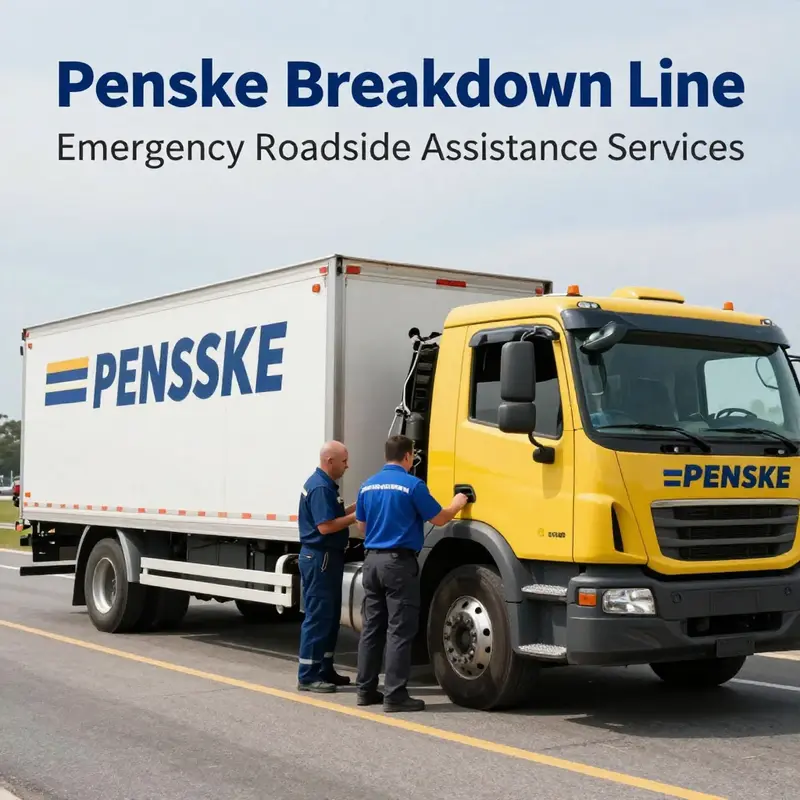
When a rental truck breaks down on a remote highway, assistance from the 24/7 breakdown line becomes a reliable safety net. The service connects drivers to a dispatch network of tow partners and repair facilities and aims to get you back on the road with minimal delay. The operator performs triage to assess immediacy, determine if a tow is needed, and map out the best route to resolution. A well coordinated process combines human support with digital updates to provide location, ETA, and status changes in real time. This transparency helps reduce stress for the driver and improves planning for the fleet operator. In practice, you relay your vehicle type, the issue, your location, and any safety concerns. Clear information accelerates the response and, if possible, allows for basic troubleshooting before a technician arrives. When the issue cannot be fixed roadside, a tow to a certified facility is arranged. The goal is to minimize downtime and preserve cargo while restoring mobility. The system also serves as a record for billing and performance review, supporting trust between customer and rental provider. For drivers, the 24/7 line is a dependable point of contact that simplifies communication and speeds recovery. If you want a concise overview, you can think of it as a coordinated mix of people, process, and digital tools created to keep goods moving and people on schedule.
Breakdown Line 2.0: Real-Time Tech and the Future of Fleet Roadside Support
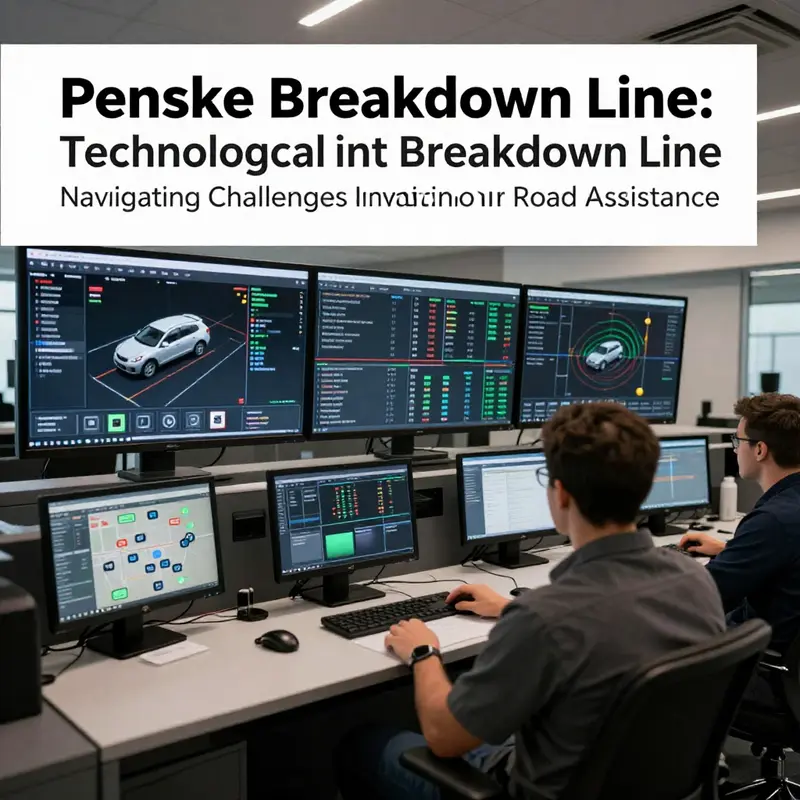
When a heavy truck sighs to a halt on a deserted highway, fleets feel the shock in their schedules, budgets, and commitments. A breakdown is not just a moment of mechanical failure; it is a moment of anticipation—of how quickly and smoothly help can arrive, how well—the service can be coordinated, and how little time the asset must spend waiting. In the past, roadside assistance was often a reactive process, a cascade of phone calls, guesswork about location, and a best-effort dispatch that could stretch into hours. Today, that experience is being rewritten by a breakdown line that behaves less like a queue and more like a guided, data-driven ecosystem. It is a living system that relies on real-time visibility, driver input, sensor data, and intelligent routing to transform downtime into a recoverable incident rather than a crippling delay. This shift is not a minor improvement; it represents a fundamental rethinking of how road support flows through a complex logistics network.
At the center of this transformation is a digital workflow that connects drivers, dispatchers, and technicians through a single, cohesive platform. The driver field reports a fault with a few taps, selecting from issue categories, attaching snapshots, and precisely marking the vehicle’s location with GPS. That single action does more than initiate a ticket; it seeds the breakdown line with context—recent maintenance history, current trip details, and any sensor-read clues that can help triage the problem before a tow truck or mobile repair unit even leaves the depot. What follows is not a static assignment but a living line that places the driver in a real-time queue for service, complete with status updates, ETA refinements, and a transparent path to resolution. By converting a phone call into an Event with living data, the service moves from a passive response to an active, data-informed engagement.
The real power behind this approach is the integration of real-time data streams. Telematics, location services, and vehicle fault codes feed into a dispatch cockpit that can see the spatial and temporal fabric of the roadside event. The nearest available technician is identified not by proximity alone but by an aggregate view that includes current workload, travel time to the breakdown, weather conditions, and road restrictions. The system can weigh multiple contingencies, such as whether a minor repair can be completed on-site or if a tow is more efficient, and then choose the option that minimizes total downtime for the fleet. This is not merely faster service; it is smarter service. The line becomes a dynamic tool for optimizing throughput, reducing deadhead miles, and aligning field capabilities with the realities of the moment. It brings a new discipline to dispatch—the ability to foresee, adjust, and finish the repair cycle with clinical precision rather than hopeful timing.
For fleet operators, the implications extend beyond a single breakdown. Downtime, while always costly, has a spectrum of consequences that ripple through schedule integrity, customer promises, and maintenance planning. When a fault is reported instantly and routed through a data-informed process, the truck can rejoin the cargo cycle with minimal disruption. This visibility also enables operators to identify patterns across routes and assets. A recurring issue on a particular stretch of highway, a specific piece of equipment in a subset of trucks, or a common fault code can become a predictive trigger. Maintenance teams can schedule preventative work before a failure becomes a roadside event, preempting costly repairs and the risk of unsafe stops. In this framework, the breakdown line becomes a lever for reliability rather than a last-ditch salvage path. The ability to see where and when problems tend to cluster turns reactive resilience into proactive risk management, transforming fleet health into a variable that can be steered with data-driven decisions.
The service design itself evolves with these capabilities. What appears to be a hotline effectively becomes a digitally mediated service system that blends remote triage, structured digital intake, and skilled field work. The driver’s initial input—backed by machine-readable fault data—sets the stage for triage that is informed yet adaptable. If the issue is something the driver can address with on-the-spot guidance, the system can walk them through checks and simple repairs, supported by practical on-screen prompts or video instructions. Should the scenario require on-site repair or towing, the dispatch logic surfaces the right technician with the right parts and the right timing, informed by current road conditions and the vehicle’s service history. The collaboration between the driver’s observation, the vehicle’s digital footprint, and the technician’s hands-on expertise creates a convergence of knowledge that accelerates the entire cycle.
This is also a story about trust and clarity on the road. A driver in a remote corridor does not want to guess when help will arrive, nor does a fleet want to gamble on an improvised fix. The breakdown line—operating as a transparent, data-rich pipeline—provides steady cadence: status updates, progressively refined ETAs, and a clear path from report to repair. Dispatchers gain a more predictable rhythm for planning, which helps them reallocate loads or adjust schedules with less scrambling. The driver experiences less anxiety about the unknown and more confidence that the system is working for them, not merely waiting for them to navigate the next step. In the end, the driver’s experience is buffered by the systematic, real-time nature of the service, turning a roadside incident into a manageable, trackable event rather than a battlefield of uncertainty.
Yet this transformation does not diminish the essential human touch. On the contrary, technology augments the technician’s effectiveness. The field professional arrives with a richer, pre-briefed context: the driver’s report, the vehicle’s fault codes, the maintenance history, and the operational priorities of the current trip. This data scaffold makes the on-site work more precise and efficient, reducing guesswork about parts and tools, and shortening the repair window. In some cases, digital guidance can enable a quick diagnostic or a preventative adjustment that keeps the truck moving rather than forcing a tow. In others, it ensures the repair is done right the first time, avoiding rework that consumes more time and miles. The result is a more resilient, responsive service ecosystem where the human and digital components reinforce each other rather than competing for attention.
From an industry perspective, the shift toward a tech-enabled breakdown line signals a broader rethinking of how road-based services fit into the modern supply chain. The line is a nerve center that pulls together multiple strands of knowledge: vehicle health, route planning, labor availability, weather, traffic, and customer commitments. It requires careful governance over data quality and privacy, as well as robust cybersecurity to protect sensitive vehicle and location information. It also invites ongoing interoperability—the system must talk to other fleet technologies, from route optimization engines to cargo-tracking dashboards and fuel-management tools—without creating data silos or conflicting priorities. The promise is not merely speed and transparency but a platform for continuous improvement. With every roadside event, the service learns which interventions deliver the fastest restoration of service, which combinations of parts and expertise are most effective, and how to scale best practices across geographies and fleet profiles.
For readers who want a practical glimpse into how this approach unfolds on the ground, consider the dedicated resource that chronicles the roadside service workflow, the digital intake, and the user-friendly interfaces that guide drivers and technicians through the process. It highlights how real-time reporting, transparent queuing, and driver-facing interfaces come together to deliver timely assistance on the highway, even in challenging conditions. Penske roadside service
As fleets continue to adopt and adapt these innovations, the road ahead becomes less uncertain. The breakdown line is no longer a safety net but a strategic asset that supports service levels in the face of volatility. The emphasis shifts from simply getting a truck back on the road to optimizing the entire break-fix cycle: preemptive, ready-for-service maintenance; rapid diagnostics; coordinated repair; and data-driven learning that informs future operations. The synergy of human expertise and digital visibility creates a resilient model capable of scaling across geographies, loads, and operating conditions. In such a system, downtime is not erased; it is measured, managed, and minimized with precision, empowering fleet operators to meet customer demands with reliability and consistency.
For those seeking a broader framework that situates this shift within the larger evolution of fleet management, the official research and insights released this year offer a comprehensive perspective. The material outlines how real-time data, integrated dispatch, and predictive analytics converge to redefine service delivery, uptime, and cost management across the logistics network. External resource: https://www.penske.com/fleet-insight-2026
Lifelines on the Road: How Penske’s Breakdown Line Is Redefining Mobile Support and Fleet Visibility
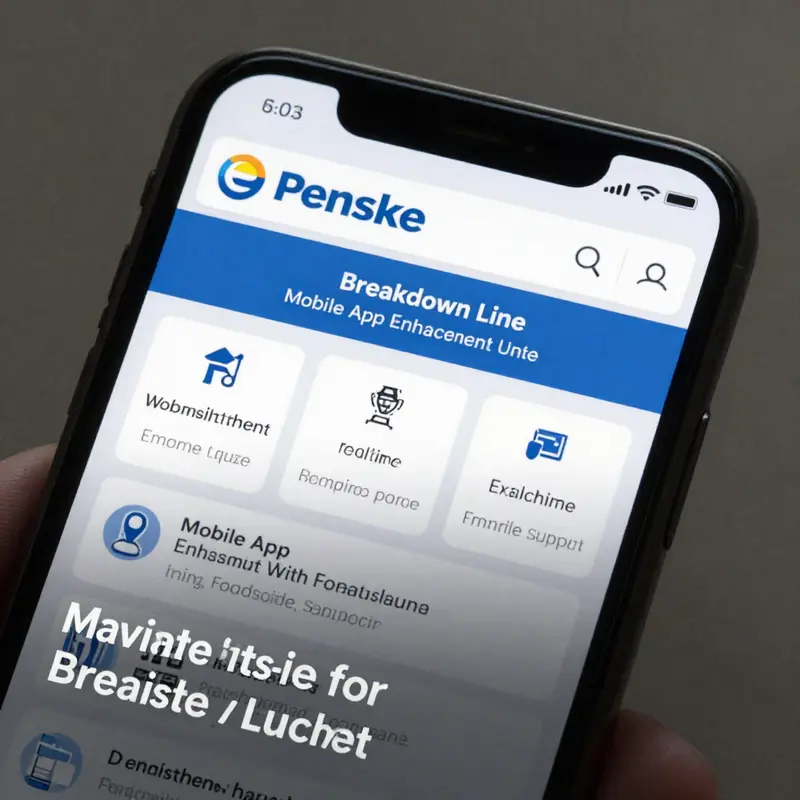
When a vehicle falters on a crowded highway or slips into a slow-motion stall on a rural byway, the moment stretches into an equation of urgency, clarity, and coordination. The Penske breakdown line, once a single access point for help, has grown into a sophisticated mobile ecosystem that stitches together drivers, service providers, and rental customers through a web of real-time data, smart alerts, and safety-oriented workflows. The evolution is not merely about getting a vehicle back on the road faster; it is about delivering dependable, transparent support that reduces downtime, lowers risk, and preserves the momentum of fleets that cannot afford to stand still. In the pages that follow, the thread of continuity links the immediate relief of roadside assistance with the longer arc of safer operations, better compliance, and more predictable outcomes for everyone involved. The shift rests on three pillars: seamless access through mobile apps, integrated reporting that aligns with safety standards, and a collaborative cadence that keeps all parties informed from the first call to the moment a technician signs off on a repair.\n\nThe first channel of this transformation is accessibility. On the surface, a 24/7 roadside assistance line remains the primary lifeline during a breakdown. The dedicated number serves as a single entry point for emergency help, locating the vehicle, and initiating a service response. But the real change emerges when this line is embedded within a broader digital fabric. The mobile-first approach ensures that the moment a driver encounters a fault—whether a brief electrical hiccup, a flat tire, or a more complex mechanical concern—the path to resolution is not a pause-filled process of relay calls. Instead, it is a streamlined sequence of status updates, location sharing, and accurate issue documentation that travels with the vehicle and the technician. This is where the integration of the electronic Driver Vehicle Inspection Report, or eDVIR, into the Penske Driver™ mobile app begins to matter in a practical sense. The vehicle inspection logic, once a paper trail or a separate workflow, now becomes an embedded routine that nudges drivers toward compliance while capturing defect codes, fuel levels, and load statuses in a format that is immediately accessible to service teams. The effect is twofold: it reduces the lag between problem identification and technician arrival, and it elevates safety by ensuring a standard that preempts recurring faults through better reporting. The eDVIR feature is not merely a data capture tool; it is a safety instrument that underpins trust with fleets, managers, and drivers alike, turning retrospective information into proactive risk management.\n\nOn the provider side, the Penske Service app remains the central cockpit for roadside operations. It offers an integrated view of active calls, which can be overwhelming when viewed from a single screen, yet the app organizes complexity into an intuitive workflow. A technician who receives a road call can immediately access critical details: the precise breakdown location, the unit history, and essential contact information for the driving team. What makes the experience stand apart is the ability to input real-time status updates during a call, creating a living record of progress that is instantly visible to everyone in the chain of response. This kind of visibility reduces the cognitive load on dispatchers and drivers alike, who no longer have to rely on fragmented messages or delayed callbacks. The centralization of road call listings consolidates all active incidents into one reliable pane, so no call slips through the cracks in the middle of a busy shift. Automated status updates, complete with estimated times of arrival (ETAs), give the waiting driver a realistic forecast of when help will arrive and what form the assistance will take, from on-site repairs to a swap-out of components if required. This level of transparency helps fleets plan around a recovery window, maintain adherence to service-level expectations, and preserve driving schedules that schedule managers depend on for downstream operations.\n\nReal-time GPS tracking takes the logistical layer a step further. With precise location data, service teams can optimize routing, anticipate terrain or traffic obstacles, and coordinate with drivers who may be stranded in unfamiliar or less accessible areas. Push notifications serve as the final piece of the coordination puzzle, alerting all parties—drivers, dispatchers, and technicians—about changes in call status, new ETA updates, or any cancellations. The flow from request to resolution becomes a dynamic relay rather than a sequence of disconnected steps. The upshot is a reduced cycle time, fewer phone interruptions, and a clearer sense of accountability for every party involved. This is not just about speed; it is about accuracy and confidence. When a driver sees a live ETA and a technician’s real-time progress, nerves ease, and the focus returns to getting the vehicle back on the road as safely and efficiently as possible.\n\nFor rental customers, the improvements are equally consequential, though the user experience centers on accessibility and self-service. The Penske Truck Rental app keeps roadside assistance within reach at any hour, empowering renters to request help instantly without waiting on a phone queue. Real-time updates follow every stage of the service request, from initiating the call to the arrival of assistance and the completion of the repair. This continuity matters in moments that feel disruptive more than technical. A stranded customer can verify that their fault has been logged properly, that the assigned technician is en route, and that there is a clear plan for the next steps. The app’s reservoir of helpful resources also includes practical loading guides for household moves, a nod to the broader role that Penske plays in mobility beyond simple vehicle provision. When problems arise, renters appreciate the direct line to customer support, which remains accessible via phone if they need human assistance outside the app flow. The combination of self-service convenience and guided human support creates a balanced support posture that respects the varied preferences of renters and fleet operators alike.\n\nThe broader design intent behind these enhancements is not merely operational efficiency; it is a deliberate alignment of safety, accountability, and customer experience. The integrated workflows foster a culture of proactive maintenance by giving drivers and technicians a shared, auditable record of what happened and what was done. The eDVIR component feeds into this culture by making inspections a continuous, trackable activity rather than a once-a-year checkbox. When a fault is logged with a precise description, mapped to a defect code, and linked to a vehicle’s inspection history, the potential for recurring issues diminishes. The data becomes a baseline for predictive maintenance rather than a collection of anecdotes. In practice, this means fewer unexpected breakdowns, shorter repair cycles, and more predictable uptime for fleets. The mobility of information also translates into better decision-making at the fleet level. Managers and operators can spot patterns from aggregated road-call data, identify chronic problem areas, and allocate resources to preventive programs that reduce the frequency and severity of breakdowns. All of this flows from a unified digital ecosystem that ties together roadside response, inspection discipline, and real-time visibility into every stage of a breakdown scenario.\n\nWithin this integrated system, the interplay between service providers and rental customers is particularly noteworthy. The road call report details become a shared reference point, allowing service technicians to communicate clearly with the customer about the scope of the repair, the ETA, and any recommendations for follow-up maintenance. The centralized road call listing gives fleet managers a macro view of field activity, enabling better scheduling, surge management, and contingency planning when multiple calls unfold in a single shift. Push notifications keep everyone aligned without requiring constant manual updates, reducing the friction that often accompanies the coordination of disparate actors who might otherwise be working in silos. The GPS layer, meanwhile, ensures that the operational heartbeat of roadside support is present in the real world—drivers can see where their help is headed, technicians can chart the most efficient course, and managers can measure response performance against the service-level expectations that underwrite contractual commitments.\n\nAs these technologies mature, one can envision a future where the breakdown line becomes a seamless extension of a fleet’s safety and reliability program. The eDVIR workflow, enhanced by driver participation, creates a continuous safety loop that informs both immediate repairs and long-term vehicle health strategies. The mobile app ecosystem lowers barriers to timely reporting and makes it easier for service providers to keep pace with the speed at which fleets operate today. And for rental customers, the experience translates into a stronger sense of control and assurance during moments of disruption. In other words, the breakdown line is gradually transforming from a reactive rescue system into a proactive, data-driven partner in fleet health and performance. This is a shift that reverberates beyond the roadside, shaping how fleets plan maintenance windows, how drivers approach pre-trip checks, and how operators thread safety, compliance, and efficiency into the daily rhythm of mobility.\n\nFor readers seeking a broader lens on these developments, a related overview of Penske’s roadside initiatives provides additional context and color about how the service experience is evolving in practice. See Penske Roadside for a concise look at the ongoing enhancements that tie together driver workflows, technician coordination, and customer-facing transparency. Penske Roadside\n\nExternal resource: for a deeper dive into the mobile app ecosystem fueling these changes, consult the App Store listing for the Penske Service app, which highlights the app’s capabilities in real-time status updates, driver-inspection integration, and support connectivity. App Store listing
The Breakdown Line as Fleet Lifeline: How Customer Support, Communication, and Safety Shape Reliability in Modern Trucking
When a vehicle falters on the road, the difference between a lost mile and a recovered route often hinges on a single lifeline: a breakdown line that can translate a moment of uncertainty into a coordinated, time-bound response. In fleets that move goods across states and borders, this lifeline is more than a number or a procedure; it is the visible face of a service promise. The breakdown line embodies a philosophy of readiness and clarity at the precise point where risk meets velocity. It is the channel through which a driver, a dispatcher, and a customer converge on a plan that minimizes downtime and preserves schedules. The value of this system becomes evident not only in the rescue of a single truck but in the resilience of the entire supply chain, where every delay can ripple through production lines, store shelves, and delivery commitments. In this context, the breakdown line is less about reacting to failure and more about engineering a reliable, transparent experience that keeps wheels turning, even when they hit an obstacle on the pavement.\n\nTo appreciate the function of a robust breakdown line, it helps to look at the orchestration behind the scenes. When a mechanical issue arises, the first aim is to establish immediate contact. A dedicated 24/7 roadside assistance channel acts as the gateway to help, ensuring that a driver can reach a dispatcher without delay, regardless of the hour or location. The speed of this connection matters as much as the accuracy of the information exchanged. In a high-stakes context, even a few minutes can influence the choice of repair options, the route rerouting, and the allocation of nearby service capabilities. The breakdown line, therefore, is designed to compress time and elevate clarity. Field teams use it to translate roadside uncertainty into a concrete sequence of steps, each with a defined owner and a precise deadline. This is the backbone of trust between the operator, the customer, and the technicians who come to the truck’s aid.\n\nTechnology is the quiet force behind that clarity. Modern fleets deploy an integrated technology suite to provide visibility across every link in the journey. A central platform enables real-time status updates, location tracking, and outcome forecasting so that customers are not left guessing about what happens next. The value of such systems goes beyond speed; it creates a shared situational awareness that informs decisions at the strategic level as well. When disruption is detected, the system can automatically flag the incident, notify the appropriate handlers, and surface the most viable repair options, be they on-site fixes or expedited recoveries. The result is a tighter feedback loop—one that converts a disruptive event into an opportunity to demonstrate responsiveness and accountability. In practice, this translates to fewer phone calls, fewer miscommunications, and a smoother flow of information from the moment the malfunction is identified to the moment the truck resumes its route.\n\nA critical layer of this capability lies in the approach to safety and the visible signals that govern on-road conduct during a disruption. The standard set of safety protocols is designed not only to protect people but to preserve the integrity of the operation and the perception of reliability. For instance, when a truck stalls on a curve or in an obstructed area, drivers are instructed to place warning signals at a safe distance to alert approaching traffic. The precise positioning—between 100 and 500 feet from the vehicle—serves as a simple, universal cue that reduces the risk of secondary incidents and keeps other road users informed. By codifying such practices, the breakdown line contributes to a culture of safety that is inseparable from the quality of customer communications. In the moment of a roadside emergency, this alignment between driver action, dispatcher guidance, and customer expectations reassures all parties that the situation is being managed with precision, not ambiguity.\n\nThe human element remains central to the efficiency of breakdown-line operations. Behind every automated alert is a team of professionals who interpret data, verify conditions, and articulate options in plain language. Customers who experience a breakdown are often managing a bundle of pressures—tight delivery windows, inventory risk, and the emotional weight of an unplanned halt. Clear communication helps convert those pressures into a shared plan. The best managers of breakdown-line operations recognize that speed without clarity is only half the solution. They cultivate a feedback culture that invites customers to speak up about what information matters most, whether it is the likely downtime, the preferred repair approach, or the expected arrival time of a technician. In turn, customer feedback becomes a lever for continuous improvement. Surveys and direct conversations reveal recurring gaps, from the cadence of updates to the accessibility of alternative arrangements during downtime. This feedback-driven loop becomes a core asset, guiding adjustments to processes, training, and technology integration so that the breakdown line evolves in step with customer needs.\n\nTechnology supports this adaptive capability by offering a living map of the disruption landscape. ClearChain-like toolsets enable teams to visualize the chain of events from the moment the breakdown is detected through the completion of the repair and the truck’s return to its route. With visibility across suppliers, service providers, and internal teams, managers can reallocate resources with surgical precision. A delay in one region can trigger a proactive reallocation of support in another, preserving service levels and maintaining customer confidence. The transparency afforded by such systems also reduces the cognitive load on drivers and dispatchers, who can rely on the system to surface the most appropriate next steps rather than juggling multiple ad hoc arrangements. In practice, this means fewer miscommunications, more consistent updates to customers, and a smoother path from incident to resolution. The end result is a more predictable experience for clients who depend on steady timing and dependable support.\n\nThis integrated approach to support hinges on a shared commitment to safety, accuracy, and empathy. When customers call in with questions about the status of a breakdown, they expect a coherent narrative rather than fragmented updates. The breakdown line is designed to deliver that coherence. Dispatchers translate the reality of a roadside incident into a concise, action-oriented brief: what happened, where it is, who is involved, what options are available, and when a decision is likely to be executed. The narrative is not just about solving a problem; it is about building trust through reliable, timely communication. By consistently delivering clear, actionable information, the organization demonstrates that it treats each breakdown as a disruption worth mitigating with care. This mindset—paired with the discipline of data-driven responsiveness—strengthens long-term relationships with customers who rely on freight movement as a backbone of their own operations.\n\nThe chapter of the story that unfolds after an incident is as important as the moment of breakdown itself. The breakdown line does not end with a rescue; it extends into post-event analysis, where data from the incident fuels improvements in routing, maintenance scheduling, and preventive care. Each breakdown becomes a data point in a larger effort to shrink downtime across the fleet. Customer feedback is transformed into concrete improvements, whether in how updates are delivered, how alternatives are presented, or how safety guidance is communicated under pressure. The loop closes when a customer experiences a smoother, more predictable response the next time a disruption occurs. This is the measure of a truly reliable breakdown line: not just how quickly help arrives, but how consistently the service helps clients hold to their commitments in the face of an unexpected roadblock.\n\nFor readers seeking practical anchors to the theory above, a hands-on resource can illuminate the pathways from incident detection to resolution. The online guidance that accompanies the breakdown-line ecosystem provides step-by-step expectations for drivers, operators, and customers. It outlines the responsibilities of each party, the cadence of updates, and the decision points that govern how a disruption is managed. The resource also reinforces the idea that the breakdown line is not a solitary function; it is a distributed capability that thrives when every stakeholder acts with transparency and accountability. This is why the integration of technology, safety protocols, and feedback mechanisms matters: it aligns people with process, data with discretion, and immediacy with reliability. The goal is simple yet powerful—minimize downtime while maximizing trust.\n\nFrom an industry perspective, the breakdown line represents a blueprint for how modern trucking networks respond to disruption in real time. It embodies a philosophy that safety and service are inseparable, that information is the most valuable currency in a crisis, and that customer relationships are built on steady, unwavering communication. When a truck falters, it is not just a mechanical issue to be fixed; it is a moment that tests a fleet’s capacity to coordinate under pressure, to reassure anxious customers, and to preserve the integrity of the supply chain. The best practices embedded in this approach are transferable across fleets and geographies, offering a path toward more resilient operations wherever the road may lead. For readers who want to explore a practical example, additional guidance on roadside procedures and customer engagement can be found through the Penske roadside resources, which contextualize the breakdown-line approach within broader fleet service standards. penske-roadside\n\nExternal reference: For a formal overview of official roadside assistance programs and safety protocols, see the external resource: https://www.penske.com/truck-leasing/roadside-assistance
Penske Breakdown Line: Real-Time Support, Data-Driven Resilience, and the Future of Fleet Management
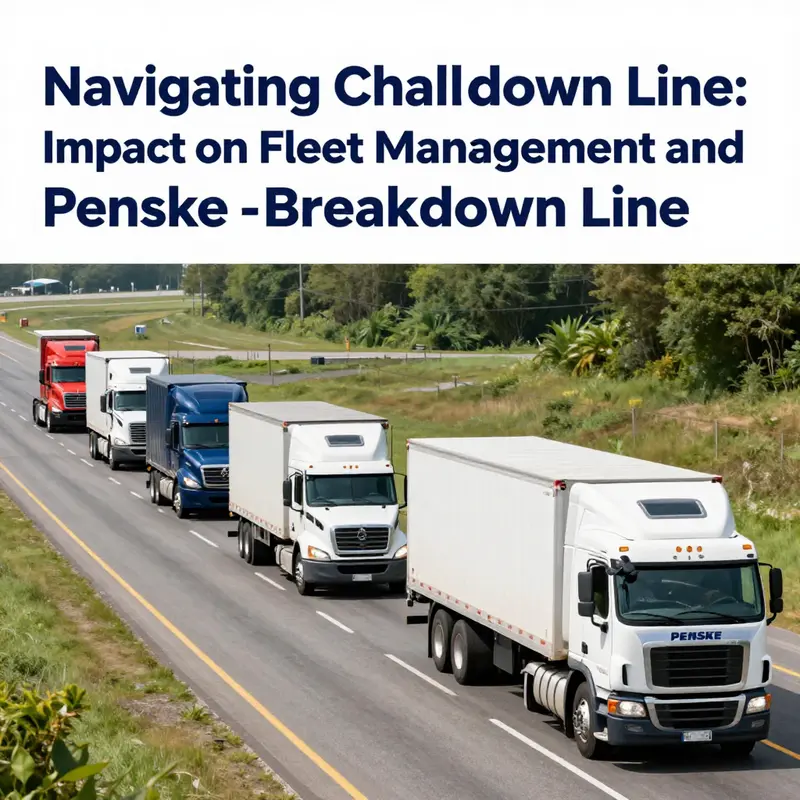
The road is a network of expectations, and for any fleet operator, a single breakdown can ripple across schedules, routes, and customer commitments. In this landscape, a robust breakdown line is not merely a safety feature; it is a strategic backbone that aligns people, processes, and technology into a continuous flow. The chapter you are reading traces how a leading fleet and logistics provider leverages a 24/7 roadside support framework, a companion service app for providers, and a rapidly expanding digital ecosystem to transform the way fleets withstand disruption, recover from it, and learn from it. It is not about a single fix but about a persistent, data-driven capability to keep goods moving with minimal friction, even when the unexpected appears on the horizon. The focal point is simple in intention but sweeping in impact: uptime is the currency of modern logistics, and every minute saved from downtime translates into tangible savings, improved safety, and stronger service levels for customers who demand reliability on a global scale. The toll-free lifeline—an around-the-clock roadside assistance channel—functions as the first contact point when a vehicle falters. The power of this contact lies not only in immediate dispatch but in the assurance it provides to drivers and dispatch teams alike. The frantic tempo of a breakdown is tempered by a system that can rapidly triage the issue, dispatch the appropriate resources, and begin collecting situational data before a technician arrives. The number itself becomes a conduit for experience—an intake that funnels the problem into a process designed to minimize idling, detours, and waiting time. In a fleet where every mile matters, that early, intelligent triage is a strategic advantage, one that grows more valuable as fleets scale and the complexity of the operation increases. The entire experience is enhanced by a companion service app designed for providers. The app transforms what used to be fragmented communication into a transparent, real-time dialogue. Dispatchers know the exact status and location of an incident as it unfolds; workshop teams can see upcoming maintenance windows and parts availability; drivers receive updates that correlate to ETA changes and route adjustments. This level of visibility isn’t merely convenience; it is a critical safety and efficiency tool. It reduces blind spots, accelerates decision-making, and aligns the entire ecosystem around a common, current understanding of what is happening on the road. The app’s presence in the ecosystem also acts as a catalyst for a broader digital strategy. When a provider can see the flow of information in real time, the organization gains the ability to measure response times, identify bottlenecks, and tune the service model accordingly. It becomes possible to reallocate resources dynamically, swap technicians, or reroute assistance in response to weather, traffic, or equipment availability. The effect is not a one-off improvement but a pattern of improved predictability. From there, the narrative moves into the realm of data-driven operations. The expansion of Fleet I.Q.—a platform that aggregates telematics data, maintenance histories, and vehicle health signals—marks a turning point in how fleets view the maintenance lifecycle. This initiative is a collaboration with a telematics ecosystem aiming to transform raw data into actionable insight. The aim is not merely to collect more data, but to illuminate the most important signals that drive uptime and cost efficiency. Real-time data streams from the road feed into analytics that help determine when a vehicle should be brought in for inspection, what parts are likely to fail next, and which routes or loads are most sensitive to a forthcoming issue. In practice, this means maintenance planning becomes proactive rather than reactive, and the burden of unplanned downtime is shifted from crisis management to strategic scheduling. The implications for fleet productivity are profound. When a vehicle reports a minor anomaly, the system can flag it for proactive maintenance before a breakdown occurs, reducing the risk of unscheduled downtime. This is a shift from a culture of firefighting to a culture of resilience. The real-world impact shows up in more reliable uptime, safer operations, and greater predictability in service levels. The path to this resilience is paved by on-board technology that brings real-time visibility into the cab and the yard. The onboard vehicle applications program—though the name itself is a mere label for the embedded intelligence—epitomizes a broader industry trend: turning the vehicle into a sensor-laden, decision-support asset. By interpreting data from the engine, transmission, brakes, and other critical systems, the fleet can optimize maintenance windows, route choices, and driver behavior in ways that reduce wear and energy consumption, while maintaining compliance with safety and regulatory standards. The human element remains essential, but it is supported by a layer of smart guidance. The synergy between human decision-makers and automated insights culminates in what the industry now views as a smarter approach to fleet management. AI, including generative AI, has become a central tool in navigating the operational complexity that accompanies large-scale logistics. The technology helps optimize routes, predict demand, harmonize schedules, and ensure compliance across multiple jurisdictions and customer requirements. In a landscape where as many as 55 percent of executives anticipate major supply chain disruptions by 2025, as highlighted by recent research, these capabilities are not optional luxuries; they are strategic imperatives. The AI layer augments human capabilities, offering scenario analyses, risk assessments, and optimization suggestions that enable dispatchers and planners to respond quickly and with confidence. The result is a more resilient operating model, one that can maintain service levels even when the external environment grows more volatile. The integration of advanced digital tools is not an isolated development but part of a cohesive vision for fleet management. A dedicated platform for inspections and documentation provides near-immediate access to vehicle condition reports, empowering maintenance teams to act quickly on flagged issues. This proactive approach translates into higher vehicle uptime and enhanced safety on the road. A disciplined, data-informed maintenance culture emerges, where inspections are not routine chores but triggers for targeted interventions that extend the life of assets and support reliable service delivery. The cumulative effect of these capabilities is the transformation of extensive data into practical, operational insight. The enterprise gains a powerful advantage: the ability to convert complex, noisy information into a crisp, actionable plan. This is the essence of the modern fleet operator’s strategic toolkit. It allows leaders to monitor performance with clarity, anticipate and mitigate risk, and allocate capital and resources where they will have the greatest impact. It also strengthens the organization’s ability to adapt to an evolving market, where the pressure to reduce costs while maintaining service quality continues to intensify. Taken together, these elements—round-the-clock support, real-time provider communication, data-driven maintenance, and AI-enhanced planning—constitute a comprehensive approach to fleet resilience. They illustrate a shift from viewing breakdowns as isolated incidents to seeing them as data-rich events that reveal insights about network design, maintenance practices, and operating patterns. In this framing, the breakdown line becomes an integrated capability that protects, informs, and accelerates the flow of goods. The practical outcomes are tangible: shorter response times to incidents, fewer unplanned downtime events, more consistent route performance, and a heightened ability to meet Customer obligations with precision. The organization behind this approach is committed to turning vast datasets into actionable insights that improve every link in the supply chain. The result is not merely incremental improvement but a reimagining of how fleet operations can be orchestrated at scale. It is a disciplined optimization process underpinned by a culture that treats uptime as a strategic objective, safety as a non-negotiable standard, and data as the engine that powers continual improvement. As this chapter closes, the broader implication becomes clear. The future of fleet management lies in the deliberate fusion of human judgment with digital intelligence, where real-time support systems and analytics platforms work in concert to anticipate problems, reduce downtime, and strengthen the reliability that customers rely on. This is the essence of the Penske breakdown line in practice: not a single feature to be deployed, but a coordinated capability set that anticipates risk, responds with speed, and learns to do better with every mile. For organizations navigating a landscape of rising disruption risk, this model offers a blueprint for resilience that is practical, scalable, and increasingly indispensable. To readers who want a more concrete sense of how this looks in the field, a closer look at the roadside support ecosystem and its real-time communications layer can provide valuable context. Penske Roadside offers a practical reference point for how such systems feel on the ground and how they integrate with the broader fleet operations framework. The broader literature on fleet intelligence and operational optimization further reinforces the idea that turning data into insight is not optional but essential. External sources recount how digital ecosystems are reshaping maintenance scheduling, route planning, and compliance management across the logistics sector. For those who wish to explore the wider landscape, an external perspective on Fleet I.Q. expansion highlights how advanced analytics platforms are being used to sharpen fleet performance and resilience in the face of disruption. External reference: Penske Expands Fleet I.Q.
Final thoughts
The Penske Breakdown Line is not just about providing emergency assistance; it represents a vital resource for business owners managing fleets and facing the unpredictability of vehicle breakdowns. By integrating advanced technology and efficient communication methods into their services, Penske enables businesses to minimize downtime and enhance their operational efficiency. This comprehensive support network is essential for any business relying on vehicles, ensuring they can focus on growth and success without the anxiety of unforeseen breakdowns.