
For business owners reliant on logistics and transportation, understanding the dimensions of trucks like the Penske Box Truck is vital. These dimensions not only define the truck’s cargo capacity but also influence how effectively goods are loaded and transported. This article explores the specific measurements of Penske box trucks, including a comprehensive analysis of internal and external dimensions, loading specifications, model variations, and practical applications in freight transport. By gaining insights into each of these elements, business owners will be better equipped to maximize their operations and ensure efficient shipping processes.
Inside the Dimensions: How Penske Box Truck Sizing Drives Efficiency and Planning
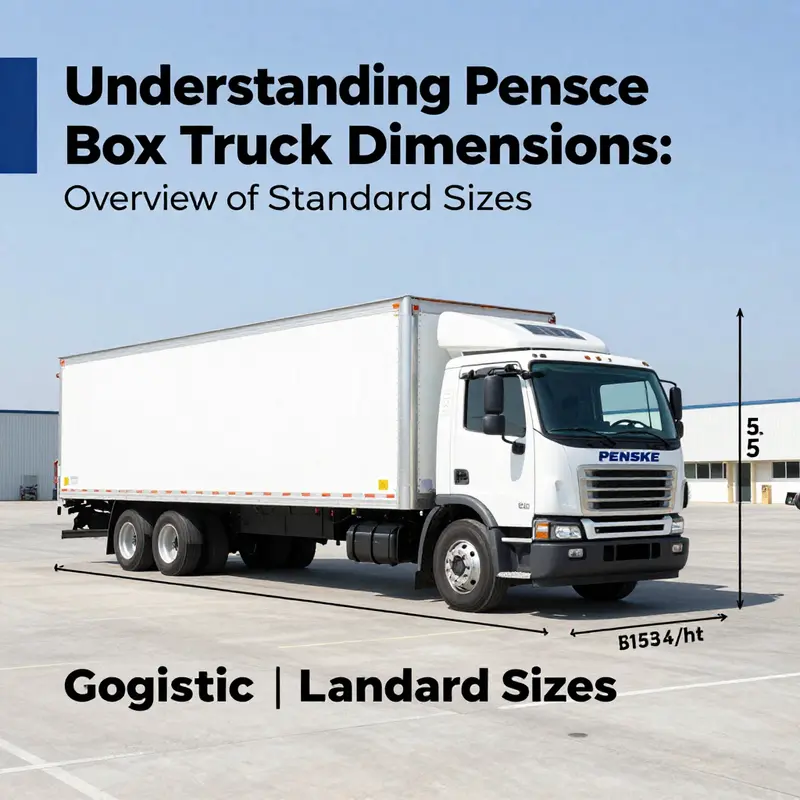
Dimensions are more than numbers; they are the skeleton that supports every move, every delivery, and every plan a business makes around freight. When a fleet manager opens the door to a Penske box truck, the first thing noticed is not the color or the decal, but the geometry of the space inside. The standard long-haul dry van most people rely on in North American freight is a 53-foot exterior trailer. Officially cited as a dry van box truck with an exterior length of 53 feet, the internal dimensions tell a different story. Inside, the usable length is about 48 feet, while the internal width sits near 98 inches and the internal height tops out around 108 inches. Those numbers translate into roughly 16.15 meters long externally, about 14.63 meters of usable cargo length, 2.49 meters in width, and 2.74 meters of vertical space. In practice, that translates to a cargo area that can accommodate multiple standard pallets—most commonly the 48-by-40-inch variety—with a generous margin for tie-downs, bulkheads, and the occasional obstruction like air curtains or overhead doors. By examining these dimensions, a planner begins to see how the truck’s geometry governs what can be loaded, how efficiently it can be loaded, and how it interacts with docks, ramps, and highways on a typical route.
Within the Penske fleet, however, the box-truck family does not end at the 53-foot box. The brand and its peers in the industry have cultivated a spectrum of sizes to match different job kinds and geographic challenges. The most common smaller option is the 26-foot box truck. This size pairs a practical interior width of about 8 feet with an interior height of roughly 7 feet 6 inches, creating a stall that is tall enough to stack and organize but compact enough to squeeze through urban canyons and tight loading bays. With an overall length near 26 feet, these vehicles are designed to balance cargo volume with maneuverability. The interior space is particularly well-suited to a broad range of freight—from electronics and retail stock to flat-pack furniture—because it offers enough room to arrange loads in stable configurations while keeping tire racks, rails, and doors accessible for quick, safe unloading.
For operations that require even greater nimbleness—whether due to city grid restrictions, narrow loading bays, or frequent curbside handoffs—Penske makes smaller box trucks available. The 16-foot and 18-foot models are popular among local movers and urban delivery fleets. The 16-foot variant, in particular, has an interior width of about 8 feet and an interior height around 7 feet, which makes it a practical choice for packages, small appliances, and other lightweight cargo. The 18-foot model broadens the cargo envelope slightly, maintaining the 8-foot width and a similar height, while extending the usable length to accommodate more items without sacrificing ease of handling on the road. Across these compact models, the mechanical integrity remains a core feature: durable construction, robust suspensions, and a chassis designed to tolerate the repetitive demands of stop-and-go operations. Weight capacities, while varying by configuration, generally fall in a range that supports 10,000 to 15,000 pounds of cargo, aligning with typical pending needs without overburdening the frame.
The practical implications of these dimensions become clear when planning a move, a delivery run, or a routine commercial shipment. The 53-foot box’s internal length of about 48 feet is a crucial factor in batching pallets along the trailer’s spine. A standard pallet, measuring 48 inches by 40 inches, presents a natural echo to the dimensions inside: two pallets across the width are a common, efficient arrangement given a 98-inch interior width. That layout yields a symmetrical, stable deck for securing loads with straps and load bars, while preserving enough clearance toward the doors for safe operations. Along the length, the 48-foot interior can be filled with a mix of pallets and boxed goods, oriented in several ways to maximize space. If pallets are positioned so the 48-inch side aligns with the trailer’s length, a single row can host 12 pallets along the lane (576 inches divided by 48 inches equals 12). With two pallets across the width, a typical layer could support quite a substantial number of pallets per layer. In practice, drivers and load planners also factor in the height of goods, the use of pallet collars, and the possibility of stacking, to reach optimal cubic capacity without compromising stability. The result is a usable volume near 3,500 cubic feet, a useful rule of thumb that helps teams forecast how many orders, fixtures, or components will fit without guessing.
Across the spectrum from 16-foot through 26-foot to 53-foot, the design intent is consistent: balance payload density with ease of access. A taller interior height, such as the 108 inches seen in larger Penske box trucks, gives shippers the option to stack more items higher or to utilize bulk storage strategies that reduce the need for multiple trips. Yet the height is not a universal advantage; taller interiors demand careful stacking, more securing devices, and a plan for overhead clearance at docks and bridges along the route. The measurements also intersect with regulatory realities. Box trucks are subject to highway dimension rules and weight limits that influence how the cargo is arranged, where it can be loaded and unloaded, and what permits or routes might be necessary for certain shipments. A low-clearance design—emphasized in the 26-foot and smaller models—helps smooth the process of docking, curbside loading, and site access, which reduces loading time and minimizes the risk of damage to goods or the vehicle itself.
Two ideas begin to crystallize when you consider these sizes side by side. First, cargo planning for a Penske box truck is a spatial problem more than a logistical guess. The exact interior dimensions determine how many pallets can be carried per trip, how heavy the load can be without compromising handling, and how easily a driver can maneuver into tight loading bays and through congested streets. Second, selecting the right size is a function of the type of freight and the typical route. For a business that moves a high volume of goods in a single, predictable pattern—think electronics, retail consignments, or bulk-based industrial shipments—the 26-foot option may provide the best balance of space and efficiency. If the operation involves urban deliveries with frequent curbside stops, the 16-foot or 18-foot models may be more suitable, allowing for faster loading and easier navigation through narrow streets. The provided specifications reinforce the practical framework behind these decisions: the 8-foot interior width on the smaller models and the 9-foot-plus interior height on larger ones offer a practical, reusable standard for securing loads while maintaining safe clearance during driving, docking, and conveying goods through elevators, ramps, and loading docks.
For those who need a tangible reference to how these numbers translate into real-world operations, a closer look at the 16-foot variant can be illuminating. It blends compact urban maneuverability with a generous interior for its size, making it a favorite for apartment moves, small business deliveries, and storefront stocking in dense neighborhoods. If you want to see a concise breakdown of how a 16-foot truck can be utilized in typical scenarios, you can explore the detailed specs and examples in the dedicated resource here: 16-foot-truck. This reference helps frame the discussion of dimensions by connecting the numbers to common tasks, such as loading furniture, household goods, or mixed freight, where the width and height constraints become practical constraints and opportunities at the same time.
As a chapter in a broader examination of box-truck dimensions, it’s worth noting the constant tension between maximizing cargo capacity and preserving accessibility. A larger interior volume promises more items per trip, but it also invites more complex loading sequences, stricter weight distribution, and longer docking times if the cargo cannot be loaded efficiently. Conversely, a smaller interior space may force a business to schedule more trips or to optimize palletization techniques, but it often translates into faster turnarounds, easier navigation, and lower fuel consumption per mile. The Penske lineup—spanning 16-, 18-, 26-, and 53-foot configurations—offers a practical spectrum to meet different risk tolerances, delivery cadences, and spatial constraints. Across all sizes, the consistent emphasis on durable construction, reliable mechanical performance, and adherence to highway regulations ensures that each model can handle the demands of its intended role without sacrificing safety or reliability. For planners, drivers, and dispatchers, the insight comes not from a single number but from understanding how the suite of dimensions interacts with cargo type, route structure, and loading discipline. It is the conversion of a set of figures into a coherent loading plan that keeps a fleet moving efficiently and a business meeting its service commitments.
External resource: https://www.penske.com/box-trucks
Penske Box Truck Dimensions: Inside Out—A Practical Guide to External Reach and Internal Space
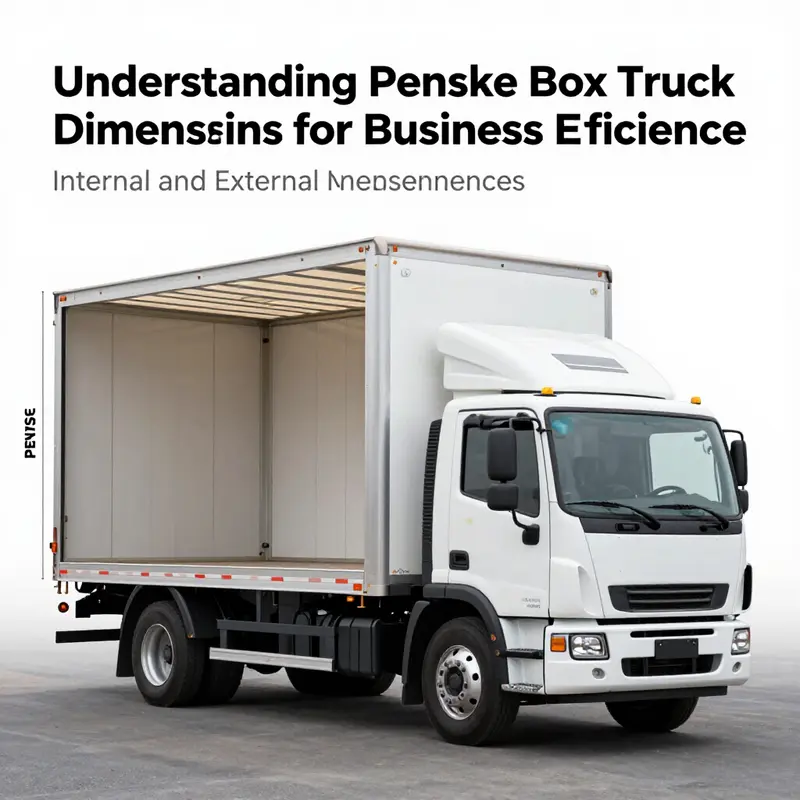
Dimensions shape decisions in every phase of freight movement, from planning and budgeting to loading and routing. For Penske box trucks, the choice of size is not just a matter of capacity; it translates into how you stack, secure, and maneuver cargo in real-world conditions. The chapter that follows ties together the practical realities of external footprint with the workable interior, illustrating how a well-chosen box truck supports efficient operations, reduces delays, and keeps cargo protected from gate to gate. When drivers and planners talk about a 26-foot box truck, they are talking about a sweet spot that balances access to urban streets with a solid cargo envelope that can handle a wide range of goods. The outside dimensions set the stage for how a vehicle negotiates city blocks, curb cuts, and loading docks, while the inside dimensions define what actually rides within that shell. In this sense, understanding both external and internal measurements becomes a core skill for anyone managing last-mile logistics, moving operations, or on-site warehousing tasks that hinge on flexible, reliable transportation.
The most common Penske box truck profile discussed in the technical literature is the 26-foot model. Externally, this truck presents a length of 26 feet, a width of 8 feet, and a height of 10 feet. These external numbers are standard across much of Penske’s rental fleet, providing a consistency that helps fleets plan routes, allocate permits, and estimate fuel usage with confidence. The overall length includes the cab area and the cargo compartment, a detail that matters when calculating turning radius, parking space needs, and street access. The stated height accounts for the roofline, including any mounted equipment such as air conditioning units that might sit atop the trailer. While manufacturers strive for uniformity, every model year can bring minor variations depending on options like extended roofs or specialized bodywork. Drivers therefore benefit from cross-checking the exact specs on the vehicle they pick up, especially when operating in environments with height or clearance constraints.
Inside the cargo volume, the usable space is the real workhorse of the truck. For a standard Penske 26-foot box, the interior length is roughly 24 feet. That measurement reflects the cab footprint and structural supports that intrude into the cargo area, leaving a practical working length that is shorter than the external shell. The interior width is about 7 feet 6 inches, or roughly 2.29 meters, and the interior height is also about 7 feet 6 inches. In metric terms, the usable interior dimensions translate to approximately 7.3 meters in length, 2.29 meters in width, and 2.29 meters in height. Those interior numbers yield a working volume that is often characterized as around 4,000 cubic feet, though exact capacity depends on the precise interior configuration and how the cargo is secured, stacked, and loaded. The difference between exterior and interior measurements highlights the structural realities of a box truck: walls, insulation, framing, and floor hardware all take up space that the load cannot occupy, even though the exterior appears capacious at first glance.
What makes these interior and exterior figures meaningful in practice is how they align with standard freight dimensions and loading techniques. A common pallet size in North American logistics is 48 inches by 40 inches. With the 26-foot box, the interior length permits about six pallets to line up along the length, assuming you orient the pallets in a typical longwise fashion. Across the width, the interior clearance supports two pallets side by side, given the approximate 7-foot-6-inch interior width. In theory, this arrangement yields a grid of roughly 12 pallets per layer. Height then governs how many such layers you can stack, a function of both the cargo’s height and the structural limits of the box and the vehicle’s GVWR (gross vehicle weight rating). In practice, most operations will not stack pallets to the ceiling; rather, they’ll optimize the mix of palletized goods and loose items to meet weight and height constraints while maintaining secure, stable loads. Securing cargo becomes an essential discipline here: the relatively modest interior height compared to some taller, dedicated freight solutions means drivers frequently rely on straps, nets, and load-locks to prevent shifting during transit. A well-planned tie-down strategy reduces the risk of movement on bends or sudden stops and protects against damage to goods and to the truck’s interior walls.
The discipline of loading a Penske 26-foot box also calls for a refined sense of routing and scheduling, especially when urban environments and dense neighborhoods are involved. The exterior dimensions, while manageable on most major arterials, still demand careful route planning. A 26-foot truck’s length is long enough to challenge narrow lanes, tight turns, and some loading docks that favor shorter, more nimble equipment. Operators must be mindful of nearby parked cars, curbside restrictions, and turn radii that can complicate maneuvers in older city cores or congested downtown districts. Yet the same footprint that poses urban challenges also translates into a highly practical option for regional moving operations, furniture routes, and general freight where a higher cargo capacity is essential without stepping up to the much larger 53-foot class of trailers. This latter option exists in Penske’s broader fleet as a standard long-haul platform, and it brings its own scale concerns, including the external length and the more expansive interior that follows. The 53-foot dry van, for instance, is widely used in long-haul trucking; its internal length sits around 48 feet, with a width of about 98 inches and an interior height of 108 inches. These dimensions show a more substantial envelope for cargo, but they also demand different road permissions, parking strategies, and loading logistics. The contrast between the 26-foot and the 53-foot configurations underscores a central theme: every job has its right tool, and the most effective choice aligns vehicle size with cargo profile, route geography, and loading discipline.
To connect the practicalities to a broader picture, it’s worth noting that Penske’s fleet spans a spectrum of sizes beyond the 26-foot model. Fleet managers who require even more room, or who need to operate across longer corridors of commerce, will scale up to larger box configurations or different body styles that offer extended lengths, varied interior widths, and higher ceilings. The key takeaway for readers and practitioners is the inseparable link between external footprint and interior usability. The exterior gives you a reliable envelope for planning permits, parking, and envelope compliance, while the interior determines how you physically organize, secure, and transport a given shipment. The interplay between these dimensions guides efficient loading, safer operations, and optimized route performance, turning box truck choice into a strategic lever rather than a mere procurement decision.
For readers curious about how a slightly smaller footprint changes the math, a related reference on Penske’s fleet dimensions can be informative. See the discussion of the Penske 22-foot truck dimensions to compare how a shorter exterior translates into different interior arrangements and pallet configurations. This side-by-side perspective helps illuminate the practical consequences of dimension choices in everyday logistics. Penske 22-foot truck dimensions
As a closing note, for those who want official, up-to-date specifications and model-year details, consult Penske’s own box-trucks information page. It serves as the definitive source for precise measurements, optional features, and any model-year variations that may affect both external and internal dimensions. External resource: https://www.penske.com/trucks/box-trucks. This authoritative reference complements the practical guidance offered here and supports planning, pricing, and compliance in real-world operations.
Inside the 53-Foot Dry Van: Dimensions, Capacity, and the Art of Loading
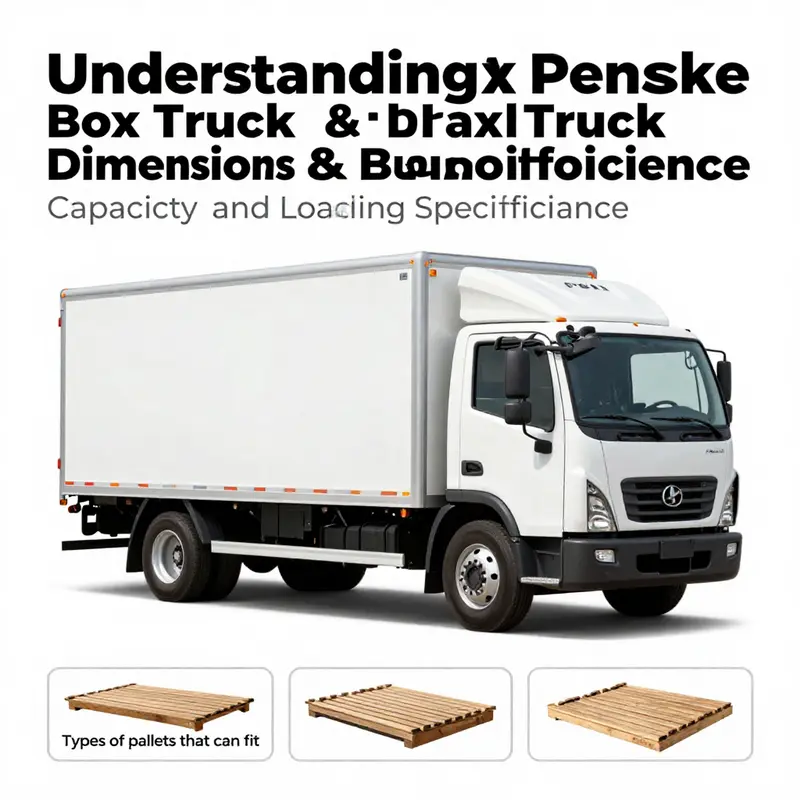
The geometry of a tractor-trailer is as practical as it is invisible to most hands-on shippers. When a box trailer wears its 53-foot exterior like a badge of long-haul capability, the real work happens inside where every inch of space matters. The exterior length is a standard, but the interior envelope—the length, width, and height—drives how goods move from dock to dock with speed, safety, and efficiency. In North American freight practice, this 53-foot dry van is the quiet backbone of routine deliveries, from electronics and packaged goods to furniture and retail assortments. The interior becomes a kind of three-dimensional puzzle, and solving that puzzle efficiently means understanding what the box affords and where its limits lie. Within this frame, the numbers matter not as abstract measures but as decisions about how to palletize, how to secure, and how to balance weight so that every mile counts rather than adds risk or delay.
The standard external footprint is straightforward: a full 53 feet in length, which translates into a generous interior length, typically about 48 feet. When the doors swing open, the space behind them reveals a long, narrow chamber whose width is fixed by the trailer’s construction. Internal width is commonly 98 inches, about 8 feet 2 inches, with internal height at 108 inches, just under 9 feet. These are not decorative numbers; they dictate how many pallets you can line up along the length, how many you can place across the width, and how tall stacks can rise before they challenge the air, the straps, and the driver’s line of sight. The width, in particular, balances the need for maneuverability with the practical reality of bulkier payloads. A common pallet size in North American logistics is the 48-by-40 inch footprint, and that translates into a few predictable packing patterns: two pallets across the width are typical, with extra space left for movement, securing straps, and occasional overhang allowances for fragile corners.
Along the 48-foot interior, pallets stacked in a two-across arrangement and extended lengthwise can accommodate a substantial number of units per layer. Roughly speaking, a single floor layer could hold around a dozen pallets when the length is utilized efficiently, given the pallet’s 48-inch dimension along the trailer’s length. When you multiply by the standard height of goods and by the number of layers you can safely stack, you begin to see why this chassis is so favored for steady, predictable freight. Yet space is never truly free. The interior height, nearly 9 feet, gives enough room for vertical stacking of goods that fit within that envelope, but it also constrains taller pieces that require careful bracing and clearance planning. The practical consequence is that warehouse teams and drivers must map each shipment against a ceiling of both physical clearance and load stability, so that weight does not concentrate in a single point or create a shift during transit.
Weight capacity, or payload potential, is another axis along which dimension translates into operational capability. In many fleets, the payload ceiling for a standard dry van in this class hovers around 30,000 pounds. This figure represents how much actual goods the trailer can carry, factoring in the weight of pallets, dunnage, and any temporary fixtures or climate-control equipment. It is important to distinguish payload from the vehicle’s gross vehicle weight rating (GVWR); the GVWR accounts for the total combined weight of truck, trailer, fuel, cargo, and crew. In practice, when you are loading toward that 30,000-pound payload, you are working within a carefully calculated limit designed to preserve braking, handling, and compliance with road limits across jurisdictions. The payload ceiling can come into play in several ways: a high-density consumer electronics shipment might fill the interior more quickly in terms of weight, whereas a lighter, bulky assortment could occupy a similar space but spread the weight over a larger footprint. The takeaway is that capacity, like dimensions, is a system constraint—space and mass must be managed together to achieve safe, economical transport.
Configurations of these box trailers expand what the space can do beyond pure volume. Some units are single-temperature, designed for dry goods and pallets that do not require climate control. Others are multi-temperature, equipped to transport sensitive items that demand climate integrity within the same journey. These climate-conscious boxes can accommodate electronics, packaged consumer goods, and perishable items with a controlled environment. The presence of refrigeration or temperature-controlled equipment introduces a trade-off: additional hardware contributes weight and consumes some of the interior volume that would otherwise hold payload. In practice, every tonne of insulation, coolant coils, or compressor adds a little friction to how much cargo can be loaded. The design emphasis remains on delivering reliable, uniform conditions along the length of the trailer while minimizing the impact on usable space. For operations that prioritize product integrity, the extra capability is a clear win, even if it reduces the maximum amount of cargo by a measurable margin.
Loading guidance for this class of trailers blends art and engineering. The apparent simplicity of sliding pallets onto a floor becomes a disciplined sequence of balance, restraint, and alignment. Because the interior width is slightly over eight feet, the two-across pallet arrangement becomes a practical standard, with the remaining space reserved for easy access by fore-and-aft movement of pallet jacks or forklifts when dock personnel are preparing shipments. The length of nearly 48 feet across the floor invites a long, orderly row of pallets, enabling a stable, low center of gravity when you place heavier pallets toward the trailer’s kingpin side and lighter, fragile items toward the doors. Load securement follows predictable logic: multiple anchor points along the walls provide durable attachment for straps and tie-downs, with dunnage used to fill voids and prevent shifting that can occur on rough pavement or sudden braking. The key objective is uniform weight distribution across axles and along the vehicle’s length, so wheels and suspension carry a balanced load rather than a lopsided push toward a single axle. This level of discipline matters most when road conditions deteriorate or when the vehicle negotiates curves at highway speeds, where a poorly secured load can cause certification concerns and safety risks.
The conversation about capacity and loading cannot ignore the practical impact of specialized equipment. Refrigeration units, for example, are heavy and bulky. They can crowd the interior and displace cargo that would otherwise occupy valuable space. The engineering challenge is to preserve thermal performance without sacrificing too much payload, a balance that fleets negotiate by selecting the appropriate model for the job, calibrating insulation, and carefully planning the mix of products. In that sense, dimensional advantage comes with a responsibility to optimize in practice: knowing what you can carry, and how securely you can transport it, within the constraints of the equipment you have chosen for a given lane or customer requirement.
When planning around these dimensions, it is also helpful to recognize how the box trailer fits within a broader family of equipment. Operators frequently compare variants to understand how length, width, and height shift capacity across sizes. For those curious about related dimensions, a related 22-foot variant offers a narrower footprint with proportionally different interior geometry, and a dedicated article explores its layout and load patterns. For a concise cross-size reference, you can consult the 22-foot truck dimensions article, which highlights how interior width and usable length scale when the chassis changes—insights that translate into smarter routing, packing, and asset utilization. This kind of cross-reference is valuable because dimension differences matter when you’re choosing between a loaner fleet, a rental option, or a long-term asset for a distribution network. See the 22-foot dimensions article for a compact comparison of interior width, potential pallet arrangements, and the practical implications of a shorter profile. Here is the link for quick reference: 22-foot truck dimensions.
The big picture this chapter builds toward is a clear, practice-ready awareness of how a 53-foot dry van’s exterior claims space and how its interior defends it. The numbers—53 feet externally, roughly 48 feet internally, about 98 inches wide and 108 inches high—are not abstract stats; they are the language of loading plans that keep shipments on schedule, secure, and compliant with road regulations. Understanding the synergy between these measurements and the payload limit around 30,000 pounds helps planners determine how many pallets can be loaded, how efficiently they can be stacked, and how to allocate space to accommodate climate-control equipment when it’s needed. In turn, this understanding supports better dock operations, fewer rejected shipments, and a more predictable cost-per-mile for fleets that rely on box trailers to move diverse goods across vast networks. The practical implication is simple: getting the most from a 53-foot trailer means reading its interior as carefully as its exterior, arranging products with a disciplined eye for balance, and knowing where the ceiling of space and weight lies so loading, transport, and unloading proceed smoothly from dock to destination.
External resource: https://www.penske.com/
Sizing the Route: How Penske Box Truck Dimensions Define Local Moves and Long-Haul Freight
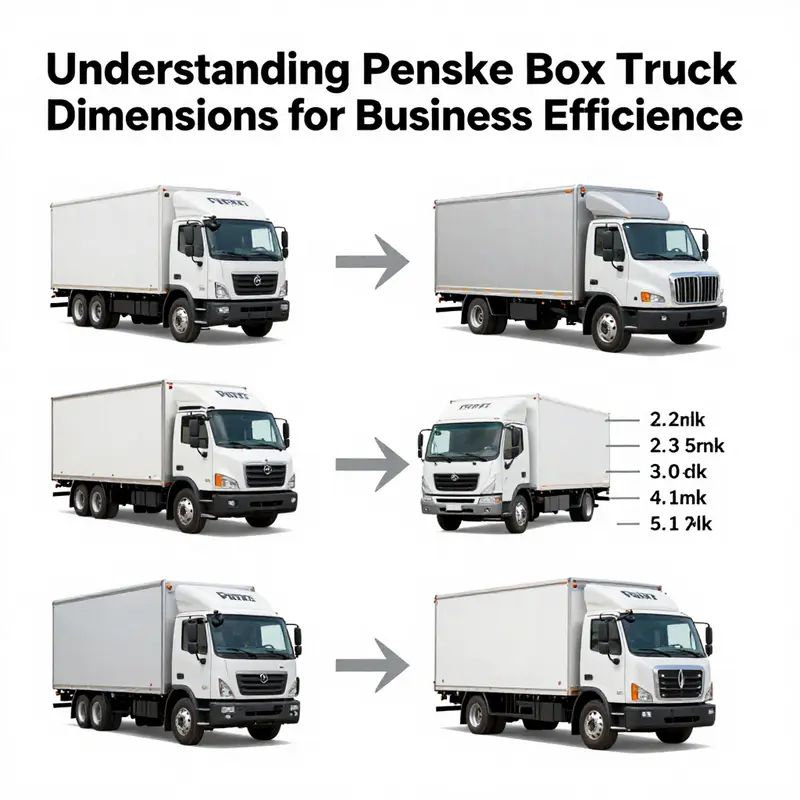
Box truck dimensions do more than describe a vehicle’s envelope; they shape every decision a shipper, dispatcher, and driver makes from first quote to last mile. When fleets consider a Penske box truck, they aren’t just choosing a chassis with a number on the side. They are selecting a loading philosophy, a parking plan, and a route strategy. The standard 53-foot dry van is the backbone of North American long-haul freight, but the Penske rental lineup covers a spectrum that spans tight city corridors and expansive regional lanes. Understanding how each model’s box translates into space, weight, and access helps explain why operators pick one size over another for a given job, and how that choice echoes through inventory control, scheduling reliability, and overall cost of service. The most familiar reference point remains the 53-foot dry van, a workhorse whose exterior measures align with the needs of high-volume shippers and cross-border corridors. The typical external length is 53 feet, about 16.15 meters, a dimension that keeps the trailer aligned with standard loading docks and pallet networks across the continent. Inside, the usable length shrinks to roughly 48 feet (about 14.63 meters). This interior length is what matters for how many pallets can ride together in a single deck without stacking, how long a freight lane can be, and how much maneuvering room is left for straps, tarps, and handcuts of stretch wrap. The internal width is 98 inches, just over 2.49 meters, and the interior height sits around 108 inches, or 2.74 meters. Taken together, these numbers map to a practical ceiling for what fits through standard dock doors, and they establish the baseline for calculating cubic capacity and payload in ordinary dry-box configurations. The volume is generous: on the order of 3,500 cubic feet for a typical long-haul dry van, but this is also bounded by axle weight limits and the vehicle’s total gross weight. In real terms, the box is both a container and a system for organizing space—space not only in the sense of length, height, and width, but also in the way pallets, shrink wrap, and case goods are arranged so that every inch is utilized and every load remains secure on the move. The standard dimensions anchor much of Penske’s fleet, yet the company also offers a range of other box sizes designed for different scopes of work. Among the most common alternatives are the 10-foot, 17-foot, and 26-foot box trucks, each with its own internal footprint and load-bearing characteristics. The 10-foot model provides an interior of roughly 9 feet 6 inches in length, 7 feet 2 inches in width, and 6 feet 3 inches in height. The payload range lands around 2,500 to 3,500 pounds, making it a practical choice for city deliveries, last-mile e-commerce, or small-business relocations where access is constrained and urgency is high. Its compact footprint enables entry into residential neighborhoods and even multi-story building zones that would challenge a larger fleet. The 17-foot variant slightly increases the interior space to about 16 feet 8 inches in length, still 7 feet 2 inches wide and 6 feet 3 inches high. Payload capacity climbs to roughly 4,000–5,000 pounds, and one widely valued feature for this size is the liftgate. The liftgate makes ground-level loading possible in locations without a loading dock, reducing the need for additional equipment or a ramp. For mid-sized moves—appliances, furnishings, or office relocations—the 17-foot truck represents a balance between agility and capacity, enabling efficient routes through urban centers while still accommodating a respectable volume of cargo. The 26-foot box truck embodies a different class of operation. Internally, it measures about 25 feet 10 inches in length, 8 feet in width, and 7 feet 10 inches in height. This model typically carries around 10,000 pounds of payload and can accommodate 12 to 14 standard pallets on a single deck, using the paleting layout common in retail replenishment and regional distribution. The 26-foot size is often paired with CDL requirements, reflecting its higher weight class and its role in longer intra-regional lanes or multi-stop routes where efficiency of loading and delivery becomes a decisive factor. It is the sweet spot for many shippers who need solid bulk capacity without stepping up to a full tractor-trailer, and it suits scenarios that involve quick turnarounds and multiple stops in a day. Finally, for long-haul, the 53-foot dry van trailer remains the backbone of intercity and interstate freight movements. Internally, the 53-foot box spans a generous 53 feet in length, with the same broad width of 8 feet (about 96 inches) and a height of roughly 8 feet 6 inches. The resulting cubic capacity approaches 3,500 cubic feet, providing ample room for dense freight, electronics, consumer goods, furniture, or packaged industrial products. Payload capacity can exceed 45,000 pounds, depending on vehicle weight, axle configuration, and compliance with statutory gross and axle limits. This is where the concept of “careful stacking and secure restraint” becomes a discipline. In long-haul operations, the win is not just about space but about balance, the distribution of weight along the trailer, and ensuring that heavier items sit over the axles to preserve steering control and braking efficiency. The breadth of offerings in Penske’s box truck lineup reflects the varied demands of the supply chain, from the hyper-local, door-to-door errands of a city fleet to the cross-country, dock-to-dock rhythm of a national distribution network. The liftgate feature, for instance, is frequently bundled with the mid-sized 17-foot and larger configurations to bridge gaps where docks are scarce or where a ramp cannot be improvised. In contrast, the smallest models deliberately lean toward minimal equipment to keep them nimble and economical in dense urban corridors. In practice, fleet planners weigh several factors when selecting a box size for a given assignment. Route length and frequency dominate the calculus, but so do dock infrastructure, clearance heights, and door widths. The ability to pass through a standard loading door without rearranging cargo is a daily constraint and often a decisive operational lever. Parking and maneuverability matter too. A 53-foot rig demands space for turning and safe staging at a dock, while a 10-foot or 17-foot truck can slot into tighter courtyards, residential streets, or garage-adjacent access points that larger trailers cannot. Then there is the question of pallet configuration and the number of pallets that can ride on a deck without violating weight restrictions. A 26-foot body, configured for single-deck pallets with careful chokers and straps, can typically accommodate 12 to 14 pallets—one of the most practical benchmarks for regional distribution and e-commerce replenishment. The classic 48-by-40-inch pallet size is the stocking unit here. Those pallets translate into stable, uniform payload sections that can be loaded in a straight line along the length of the box, enabling predictable stacking patterns and easier manual handling at the dock. The approach to loading also intersects with the vehicle’s door height and ceiling clearance. A box that stands at 108 inches tall inside can limit how tall stacks can be, especially when the cargo itself includes tall commodities such as showroom fixtures or high-density appliances. For urban moves—the type of work where a driver navigates tight streets and tight loading zones—the smaller models can sometimes outperform larger brethren simply because of their agility. When a job requires frequent short hops and a tight window for delivery windows, a 10- or 17-foot truck may be the better workhorse, reducing dwell time and allowing more trips per shift. Conversely, a cross-regional shipment, where weight and volume matter most, tilts the odds toward a 26-foot or 53-foot configuration, providing a larger deck and a heavier payload with fewer trips between warehouses. It’s not just about the one truck’s internal numbers but about the logistics calculus that binds them to a route blueprint. In the long view, Penske’s dimensioned fleet shapes not only the physical act of moving goods but also the economics of the move. The cost per mile, the number of trips per day, the time spent at each dock, and the utilization of liftgate or pallet handling equipment all hinge on the choice of box size. Fleet managers and small business operators alike use these dimensions as a kind of roadmap for match-making: which truck size aligns with the expected payload, the loading dock capabilities, and the customer’s delivery promise. For those seeking a broader sense of the dimension spectrum and how mid-range boxes compare to the largest and smallest offerings, a quick exploration of additional models provides useful context. The mid-range 22-foot family, for example, sits between the 17-foot and 26-foot configurations, offering a balance of cubic capacity and urban usability. For a detailed breakdown of the 22-foot variant, see Penske 22-foot truck dimensions. This slight widening of the box often translates into a modest lift in payload and pallet capacity while preserving the practicalities of street driving. If you want a direct, official snapshot of the dimensions and configurations available across Penske’s box truck lineup, the source of the most current figures remains the company’s own Box Truck Sizes & Features page. It presents the live inventory and the precise payload capacities, liftgate options, and door configurations that fleets rely on when planning a move. Detailed dimensions, load limits, and configurations can change with equipment upgrades, maintenance cycles, and regional availability, which is why operators continually cross-check the official fleet data before finalizing a rental or purchase. For those comparing options, the key takeaway is straightforward: the right box size is not just about how much cargo you can fit, but about how you can move it efficiently, within the constraints of the route, the dock, and the customer’s delivery window. In the end, dimension choice is the connective tissue between planning and execution. It links the truck bed to the pallet, the pallet to the dock, and the dock to the customer’s hands. The 53-foot standard remains a benchmark for scale, while the smaller siblings offer flexibility to navigate cities and demand variability with reliability. The best-fit decision rests on understanding the cargo mix, route density, and facility constraints, and aligning them with a truck size that can consistently deliver on time and within budget. External resource: For authoritative dimensions and fleet configurations, consult Penske’s Box Truck Sizes & Features page at https://www.penske.com/truck-rental/box-trucks.
The Geometry of Delivery: How Penske Box Truck Dimensions Shape Freight and Transportation
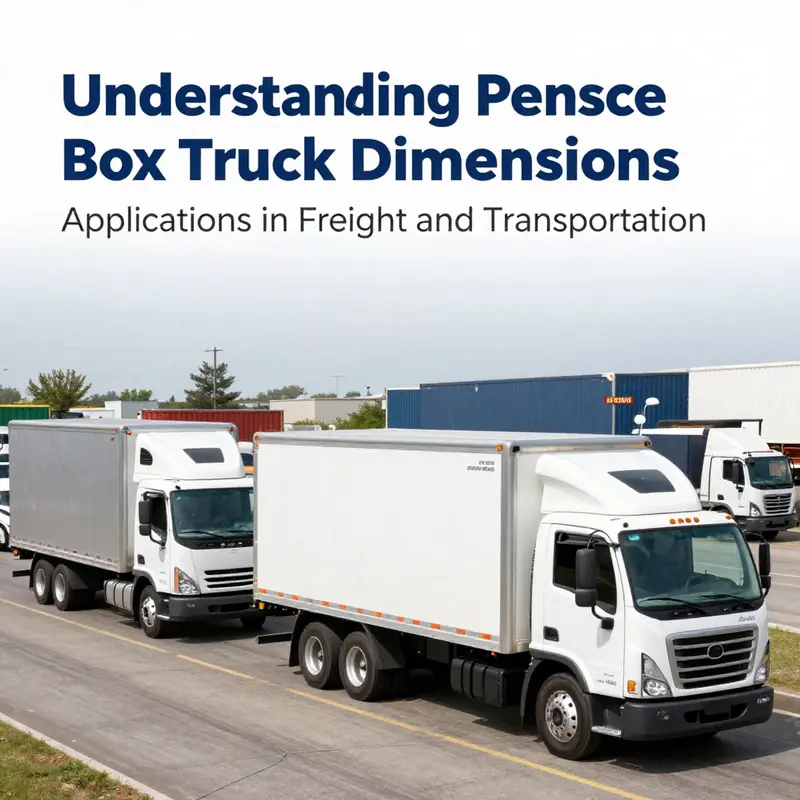
In the world of freight and transportation, the shape and size of the vehicle are not afterthoughts. They are the quiet constraints that determine what can be loaded, how quickly goods move, and where the truck can operate. Penske, a widely cited player in North American truck rental and logistics services, embodies this truth through a fleet that includes both long-haul workhorses and more compact workhorses designed for last-mile and regional movements. Among the defining measurements and design choices, the 53-foot dry van—Penske’s standard for intercity and long-distance freight—stands out as a benchmark. The official figures describe a trailer with an external length of 53 feet, approximately 16.15 meters, paired with an interior length of about 48 feet, or roughly 14.63 meters. The interior width measures 98 inches, about 2.49 meters, and the interior height is 108 inches, just over 2.74 meters. These dimensions, while technical, translate into practical capacity that business planners rely on when forecasting inventory flow, scheduling deliveries, and calculating the trades between full-truckload and less-than-truckload (LTL) strategies. They also shape the way shippers design pallet configurations, secure loads, and plan routes that maximize efficiency without compromising safety or compliance.
A standard box-truck interior width of 98 inches immediately creates the domino effect for pallet layout. The most common northamerican pallet measures—48 inches by 40 inches—prefer a footprint that fits two across the trailer width with a comfortable margin. In practice, two standard pallets can sit side by side across the width, occupying about 80 inches and leaving space for strapping, dunnage, or minor misalignment. When you look along the trailer’s length, the 48-foot interior length of usable space provides ample room for forward stowage, chocks, and the typical flow of goods. If you align pallets lengthwise with a 48-inch pallet length, you can potentially fit roughly twelve pallets in a single layer along the trailer’s length (12 × 48 inches = 576 inches, which matches the 48-foot interior). Put together, a single flexible layer could hold about 24 pallets (2 across by 12 along), giving shippers a strong sense of how much volume can be committed to a given trip. Of course, the actual number in any shipment depends on the exact pallet height, the nature of the goods, and the need for load securing. But the arithmetic is a powerful reminder of how interior geometry translates into practical capacity, influencing everything from inventory turns to delivery windows.
The interior height—108 inches, or about 2.74 meters—adds another dimension to the planning equation. When combined with pallet height and the vertical clearance required for securing devices, it sets a ceiling on how many tiers of pallets or stacked goods you can safely create within a single trailer. For context, a standard pallet height runs on the order of about 6 inches, though real-world goods can push this higher or lower depending on product type and packaging. If you stack pallets two-high under favorable conditions, you gain additional capacity without elongating the vehicle’s footprint. Yet in many freight operations, factors like goods stability, weight distribution, securing methods, and dock constraints guide a more conservative stacking approach. The mathematics of interior volume—48 feet in length, roughly 8.17 feet in width (98 inches), and 9 feet in height (108 inches)—yields a rough interior volume of about 3,500 cubic feet. More precise calculations place it near 3,528 cubic feet, a figure that helps logisticians compare the box van’s carrying potential against product dimensions and packaging schemes. This concrete sense of space underlines why some shipments are choreographed for full-truckload efficiency, while others are optimized through careful palletization and staging at distribution centers.
When we shift focus to Penske’s broader box-truck family, the contrast becomes even more instructive. The detailed results for this chapter highlight a different but commonly used model: the 26-foot box truck. Its dimensions—length about 26 feet, width 8 feet, height 8 feet, and interior volume near 1,700 cubic feet—illustrate how smaller footprints change the calculus of capacity. The 26-foot model can typically accommodate up to 12–14 standard pallets in a single layer, a reminder that smaller fleets offer nimble, localized service with a distinct trade-off in total cargo space. With a typical maximum gross vehicle weight (GVW) of about 26,000 pounds, these units often do not require a commercial driver’s license (CDL) to operate, a factor that reduces training costs and broadens the pool of available drivers. The liftgate option on many models further expands the practical reach of a Penske box truck, enabling efficient loading and unloading at non-dock facilities. Yet the compact form factor also encourages a different set of use cases—last-mile delivery, regional distribution, and mid-sized relocations—where proximity to customers and city driving dynamics determine success just as much as payload capacity.
The interplay between these dimensions and their applications is a central thread in freight planning. For long-haul or interstate movements, the 53-foot dry van—anchored by its 53-foot exterior and 48-foot interior length—offers a stable platform for full-truckload shipments and predictable routing across vast geographies. The robust interior width and height support decent pallet density and cargo variety, from consumer electronics to boxed furniture and packaged industrial goods. The enclosure’s weatherproof design protects goods from rain, snow, dust, and theft—an essential feature for sensitive or high-value cargo that travels across multiple weather fronts. For operations that require speed in urban environments, the smaller 26-foot box truck becomes a pivotal asset. Its shorter wheelbase and tighter turning radius, combined with the ability to carry a sizable pallet load, make it well suited for last-mile delivery, showroom replenishment, and event logistics where access is constrained and dock space is at a premium. In both cases, the option of a liftgate helps bridge the gap between dockless sites and standard loading bays, reducing labor and enabling safer, more efficient transfers of goods to and from the vehicle.
From an applications perspective, these dimensions shape how fleets plan routes, manage inventory, and coordinate with warehouses and retail partners. For e-commerce and retail fulfillment, the need to move multiple pallets efficiently is paramount. The proximity of the interior width to two across of pallets allows for stable, repeatable configurations, while the length supports a measured, modular approach to loading. The height constraint, while not prohibitive, invites careful consideration of pallet height, stacking rules, and load securing. Logistics teams often design configurations that balance density with accessibility: if a shipment requires frequent stops, a single-layer pallet arrangement might reduce the time spent on each stop and improve unloading speed. Conversely, a destination with a single, large item—such as a bulky appliance or a piece of modular furniture—could benefit from a higher stacking potential or even a specialized crate that sits comfortably within the footprint without compromising safety.
To illustrate the broader ecosystem, imagine a distribution operation that relies on Penske’s 53-foot trailers for regional to cross-country moves. The fleet’s exterior length provides the lever arm needed for long-haul efficiency, while the interior geometry ensures that palletized goods can be arranged in a reliable pattern across routes. Drivers and dock workers benefit from consistent dimensions—predictable in transit and predictable at handoff—reducing the cognitive load on teams planning block space at warehouses and forklifts operators at loading docks. The 26-foot models play a complementary role, quickly filling gaps in local demand, supporting urgent replenishment cycles, and enabling movers to service multiple storefronts within the same metropolitan area. Put differently, Penske’s dimensioned approach supports a spectrum of services, from the most expansive intercity deployments to the fastest, most nimble urban deliveries.
This chapter’s dimension-driven narrative also nods to practical load planning realities. The interior width of 98 inches makes two-across pallets feasible, provided the goods are well packaged and securely strapped. The length of 48 feet within the 53-foot exterior footprint is a reminder that trailers are designed with a practical margin for securing devices, tie-downs, and the inevitable variation in cargo measurements. The interior height, at 108 inches, sets a ceiling for vertical stacking and influences the selection of pallets, boxes, and crates. In real-world operations, these factors converge with other operational constraints—dock availability, trailer scheduling, and the physics of weight distribution—to determine an optimal loading plan. The liftgate feature, commonly available on Penske models, broadens the set of accessible loading sites and reduces the need for dock doors or forklifts, which in turn accelerates cycle times at shippers’ facilities. For managers weighing the economics of fleet size, these dimensions translate into tangible cost and service implications: more pallets per trip reduce the number of trips required for the same volume, while the ability to service tighter urban corridors expands the reach of a single driver.
For readers curious about adjacent sizes within the Penske family, a closely related footprint exists in the 22-foot category, which often sits between the compact 16-foot options and the larger 26-foot variants. For a detailed comparison of that smaller model, you can explore the Penske 22-foot truck dimensions page, which offers a concise look at how slightly different proportions—the shorter length and similar width and height—alter capacity and maneuverability. This dimension-driven perspective helps fleet operators tailor their vehicle mix to the specific demands of their markets and customers. Penske 22-foot truck dimensions.
The broader takeaway is simple: dimensions govern capability. They shape the speed and reliability of delivery, the efficiency of loading and unloading, and the feasibility of servicing certain routes and customers with a single vehicle. The Penske fleet exemplifies how thoughtful scale—balancing long-haul capacity with regional and urban flexibility—can unlock a wider set of service options while maintaining a consistent standard for safety, cargo protection, and driver ease. In an industry where every inch matters, the 53-foot dry van’s interior and exterior dialogue offers a reliable template for how space translates into performance. And the 26-foot box truck, with its own set of advantages, reinforces the principle that smaller does not mean less capable when dimensions are matched to the right operational context. The result is a fleet that can adapt to the realities of supply chains that demand speed, precision, and resilience across diverse geographies.
External resource: For official specifications and rental options related to Penske’s long-haul dry vans and smaller box trucks, see the Penske Truck Rental site. https://www.pensketruckrental.com/
Final thoughts
Mastering the dimensions of Penske box trucks is crucial for business owners who rely on logistics and transportation. From understanding the internal and external measurements to knowing how to effectively load and utilize the capacity of these vehicles, each element plays a significant role in ensuring efficient shipping operations. By leveraging this knowledge, businesses can enhance their freight transport strategies and maximize operational efficiency. It’s not just about the size of the truck; it’s about how those dimensions translate into smoother logistics, better organization, and ultimately greater success in meeting customer demands.