
For business owners relying on transportation, vehicle breakdowns can significantly disrupt operations and lead to financial loss. The Penske 24/7 Roadside Service stands as a reliable partner in the transportation landscape, providing swift assistance to mitigate unexpected issues, from mechanical failures to flat tires. This service not only safeguards the productivity of businesses but also enhances customer satisfaction by ensuring timely deliveries. In the following chapters, we will delve into the specifics of coverage and support offered by Penske’s service, explore the technological innovations driving these solutions, and assess the broader economic impact on the transportation sector, demonstrating how this service is invaluable for business continuity.
Beyond the Breakdown: How a Leading Rental Truck Provider’s 24/7 Roadside Service Keeps Fleets Moving

Roads don’t keep regular hours, and neither do the needs of a fleet that keeps shipments moving, teams deployed, and customers served. In the world of commercial rental, a 24/7 roadside service is more than a convenience; it is a fundamental part of business continuity. When a tire goes flat, a mechanical hiccup interrupts a schedule, or a fluid leak starts to trace a line across a parking lot, the ability to summon help quickly translates into less downtime, fewer delays, and safer journeys. This chapter explores the mechanics of that service, the kinds of issues it addresses, how renters access it, and the broader impact it has on operations, safety, and bottom lines. It also considers what makes a roadside support program truly reliable, how renters can maximize its value, and how the service fits into the larger ecosystem of a modern fleet program.
The first thing to understand is the role such a service plays in the flow of a rental relationship. A 24/7 roadside program is designed to act as a safety net, a rapid response system that can be activated at any hour and in any location within the service coverage area. It is not simply about replacing a tire or jump starting a stalled engine; it is about preserving momentum. When a truck is sitting idle, every minute matters. A well-functioning roadside service helps shift a mid-trip disruption from an endless waiting game to a structured process: diagnosis, dispatch, on-site support when possible, and safe handoff back to the road. In this sense, the program is as much about logistics and communication as it is about mechanics.
The types of issues that the service is equipped to handle reflect the practical realities of fleet operations. Flat tires are common on the road, and a reliable roadside partner can bring a spare tire, tools, and a technician to swap in a new one or arrange for a replacement wheel if needed. Mechanical issues—ranging from cooling system quirks and belt tension to electrical gremlins that surface in cold starts or long hauls—require trained technicians who can perform immediate diagnostics, acclimate the vehicle to safe operating parameters, and advise on the next steps. Fluid leaks, whether from the engine, transmission, or coolant systems, pose immediate safety concerns and environmental risks; a decisive response is essential to prevent escalating damage and to secure the scene for the driver, the vehicle, and the surrounding area. Each category of issue tests different facets of the roadside program: speed, technical competence, and the ability to assess whether on-site repair is feasible or if a tow is the safer option. The ability to triage in real time—distinguishing between a fixable on-site situation and a need for more extensive service—directly influences the cost to the renter and the ultimate downtime.
Beyond the obvious mechanical needs, roadside support also addresses operational realities that often accompany rental use. For fleet operators, being able to deploy a truck from a planned route or a job site hinges on predictable uptime. A 24/7 line exists precisely because emergencies do not respect business hours, but the value comes not only from being able to call for help, but from the efficiency of the response. A well-organized program will have a dispatch process that preserves the driver’s safety and dignity. The driver shares the nature of the issue, the vehicle location, and basic vehicle details, while the dispatcher coordinates with nearby service partners, confirms the expected arrival window, and communicates any road restrictions or hazards that might affect the repair plan. The human element is crucial. A calm, clear voice on the other end of the line, equipped with the right tools and processes, turns what could be a chaotic moment into a manageable sequence of events. Communication is the quiet backbone of reliability, ensuring that drivers are informed at every step, and that fleet managers receive timely updates that let them recalibrate schedules without guesswork.
Access to the service is designed to be straightforward, reinforcing the idea that speed is as important as quality. Renters typically initiate the process by contacting a dedicated roadside line. The interface is built to be accessible from the cab, from a fleet office, or from a field location, reflecting the reality that trips begin in diverse settings. The call center, dispatch system, and local service partners are positioned to work in concert. A few minutes of dialogue can establish the critical facts: whether there is an immediate safety concern, whether the vehicle can be moved, the current location, and whether a tow may be required. Even when the issue seems simple—say, a tire replacement—the on-site assessment determines if temporary mobility is possible or if the vehicle should be taken to a nearby service facility. The best programs include a thread of checks and confirmations that prevent miscommunication, such as confirming the vehicle’s make and model, rental agreement details, and any preexisting maintenance notes that could influence the repair approach. The net effect is a system that feels almost invisible to the driver while delivering a strong sense of security and continuity for the operation.
As with any service that operates at scale, there are coverage boundaries and eligibility criteria built into the program. These clauses define where the roadside network can operate, which vehicle categories are supported, and under what circumstances service will be provided free of charge or with a deductible or towing limit. The practical upshot for fleet managers is transparency: understanding how far the coverage extends, what kinds of incidents qualify, and how the costs, if any, are structured. In many programs, coverage is woven into the rental agreement for the duration of the contract or a specific rental period, with terms that may vary by vehicle type, geographic corridor, or the nature of the roadside event. The guideposts are designed to be straightforward enough for a busy driver to grasp, but nuanced enough to handle edge conditions—such as a breakdown occurring in a remote area, during a holiday, or while the vehicle is under a one-way rental where re-routing is necessary. For that reason, the official program documentation and the customer service team are the best sources for the precise details. A rental team will typically provide access to the full range of services and outline any exclusions, limits, or additional services that may apply, such as emergency fuel delivery or lockout assistance in extreme cases. The emphasis remains on reliability and safety, with the understanding that properly communicated expectations reduce stress and prevent the need for last-minute, costly substitutions.
The business implications of a robust 24/7 roadside program extend well beyond the moment of a breakdown. When fleets can count on rapid recovery from a road stop, they experience meaningful improvements in asset utilization, driver productivity, and schedule reliability. A well-timed intervention—whether it’s a quick tire swap or a controlled tow to a nearby shop—minimizes the total downtime a vehicle experiences. This, in turn, enhances the predictability of deliveries and service calls, which is the heartbeat of customer satisfaction in a logistics-driven economy. The value is not merely in the rescue itself but in the domino effect it creates: fewer delays, less wasted labor time, more accurate maintenance planning, and a clearer window for dispatching subsequent runs. For fleet leaders, the capability to monitor and communicate the status of a roadside event becomes a key data point in the broader performance dashboard. Each incident informs maintenance scheduling, route planning, and risk management strategies, guiding investments in tires, wheels, and emergency equipment. In that sense, 24/7 roadside support is not a standalone service; it is a connective tissue that links field realities with office-level analytics, shaping a more resilient fleet.
There is also a critical emphasis on safety that runs through every touchpoint of the service. A roadside event, even a seemingly minor one, can create hazards—stalled traffic near lanes of moving vehicles, a driver exposed to weather elements, or a vehicle blocking a shoulder. The most effective programs prioritize quick driver reassurance, swift site assessment, and adherence to safety protocols. Dispatchers coordinate with road authorities and local service partners to ensure that the vehicle is secured, that any necessary traffic control measures are in place, and that the driver is guided to a safe, well-lit location if a tow or staging area is required. The safety mindset is integrated into every step—from how a technician approaches the scene to the way the driver is advised to resume the journey. In practice, this means developing and maintaining a network of technicians who are trained not only in vehicle repair but also in the precise, careful execution of service in potentially challenging environments. The result is a service that can be trusted to handle not just the mechanical fix, but also the human and environmental factors that influence risk and recovery time.
For renters, the way to maximize the benefit of a 24/7 roadside service is to treat it as a strategic element of fleet operations rather than a last-resort option. Preparation helps, of course. Drivers should have on hand the rental agreement number, the vehicle identification details, and a brief description of the fault, which accelerates the triage step. It is prudent to record and share the location with the dispatcher, particularly if you are in a region with limited coverage or during hours when alternate routes might affect travel times. In addition, maintaining a small safety kit in the cab—reflective triangles, a reflective vest, a flashlight, and basic signaling devices—can ease the process for all parties and improve safety while awaiting assistance. A proactive approach to maintenance also pays dividends. Regular inspections, tire checks, and fluid level monitoring reduce the probability of a roadside incident and can lower the likelihood of an urgent call. When problems do arise, the ability to provide clear, concise information about the symptom, location, and any warning lights can shave minutes off the dispatch process and shorten the overall downtime. The culture of reliability around roadside assistance is as much about disciplined operations as it is about technical skill.
To connect this discussion to a broader conversation about roadside programs, the literature and industry resources emphasize that the best programs are easy to access, fast to deploy, and transparent in their terms. They also recognize that coverage needs evolve as fleets expand into new markets or as rental arrangements shift between one-way trips and round trips. This dynamic reality means the service must be adaptable, with a network of partners capable of meeting diverse needs—from urban cores to rural corridors, from routine tire changes to complex mechanical diagnostics. The goal is not to promise instant miracles but to deliver a consistent, credible pathway from problem to resolution. When a driver experiences a problem, they should feel that the system around them is competent, well coordinated, and committed to getting them back on the road with minimal disruption. That trust is built through a combination of accessibility, speed, technical competence, safety, and clear communication—an ecosystem that treats every roadside moment as a solvable challenge rather than an unscripted crisis.
From a narrative perspective, the story of 24/7 roadside service is a story about continuity in the face of uncertainty. It is about the way a fleet program translates a potentially chaotic event into a controlled sequence of steps, with a trained dispatcher guiding a technician to the right place, and a driver who understands that help is present even when the highway is unpredictable. The program’s impact can be felt not only in the relief of the driver and the comfort of the fleet manager but in the way it underpins business promises to customers. When a delivery window depends on a vehicle that had a tire issue or a mechanical anomaly, a reliable roadside response is the difference between meeting an SLA and missing it. In highly competitive markets, the ability to stand behind a service promise with a robust, 24/7 support mechanism becomes a differentiator, shaping not just operational performance but reputation and confidence among partners, drivers, and customers alike.
In closing, while the specific mechanics of any single program may vary, the core principles endure: readiness, rapid response, safety, and transparent communication. The 24/7 roadside service is a critical instrument in the orchestration of a modern rental fleet. It supports uptime, protects drivers, and helps organizations deliver on their commitments with fewer headaches and greater predictability. For readers who want to explore more about how roadside coverage is described and structured in practice, a helpful reference can be found at penske-roadside. For those seeking official, provider-level details about the policy terms, coverage boundaries, and how to access the service in real-world scenarios, consult the external resource linked here: Official roadside information.
Internal link reference for broader context: Penske Roadside
Technological Innovations in Penske 24/7 Roadside Service
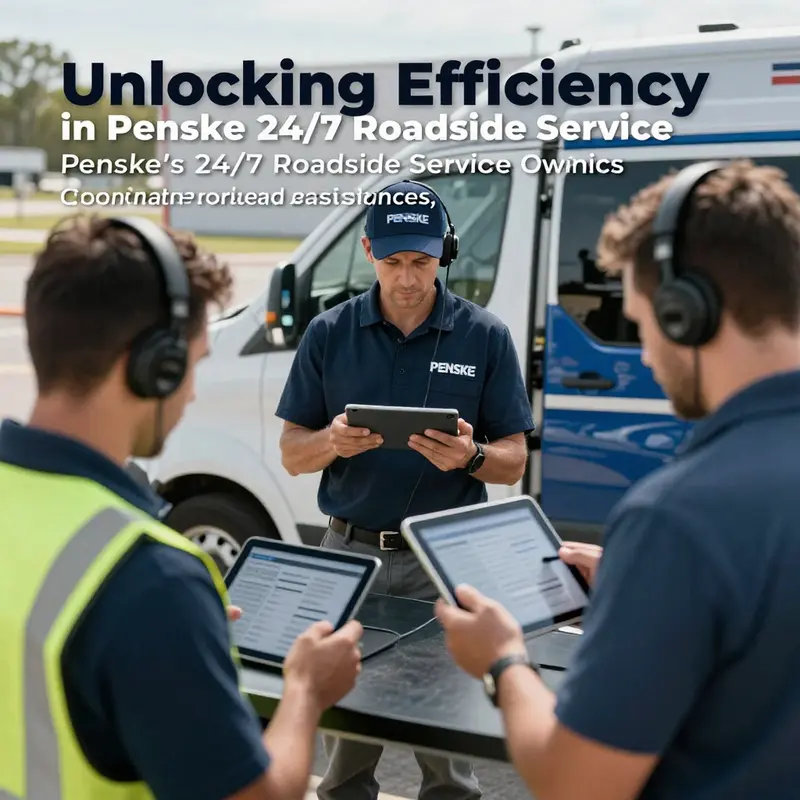
When fleets depend on dependable wheels, downtime becomes a hidden cost that erodes margins, schedules, and reputations. In the world of commercial moving and truck rental, Penske’s 24/7 roadside service operates as more than a safety net; it is a streamlined, technology-enabled nerve center that keeps operations moving even when the unexpected appears. The service is built to respond not just with speed but with precision, ensuring that every service event—whether a flat tire, a mechanical glitch, or a fluid leak—is managed in a way that minimizes downtime and preserves the rhythm of a customer’s day. The backbone of this capability is not a single tool but an interlocking set of digital practices that connect field technicians with dispatchers, maintenance teams, and customers in real time. What has emerged is a cohesive ecosystem where technology moves through every stage of a roadside call with the same discipline that governs a well-orchestrated logistics operation.
At the heart of this ecosystem is a field-oriented application designed for technicians in the moment of need. This mobile tool is not merely a digital notebook; it is a live channel for status, updates, and decision-making. From the moment a service call is activated, a technician can input real-time information about the situation directly from the roadside. The status updates flow into a centralized operations center, where dispatchers and managers can see, at a glance, where every service call stands. The immediacy of this data flow transforms a potentially opaque handoff into a transparent process. Customers benefit as well, receiving timely, accurate information about what to expect, when to expect it, and what steps are being taken to get them back on the road.
This real-time visibility does more than reassure customers. It sharpens dispatching and scheduling to a degree that static plans could never achieve. In a traditional model, a call might be logged, routed, and waited on, with updates arriving sporadically or not at all. With a field app feeding live data, the central operations team can adjust resources on the fly. If a tow needs to be dispatched to one location while a mechanic is being sent to another, the system can reallocate technicians and equipment with a few keystrokes, rerouting schedules to reduce back-and-forth and idle time. The goal is not merely speed but the intelligent allocation of skilled labor and assets. The result is fewer hours wasted on the road, fewer trips to duplicate service, and a more predictable experience for fleet managers who must plan disruptions around tight delivery windows.
The digital backbone also extends beyond the field. A centralized monitoring framework aggregates data from every roadside event, building a continuous feedback loop that informs maintenance teams, risk assessments, and future service design. Every update—whether a diagnostic alert from a mechanic, a confirmation of part arrival, or a customer-notified ETA—feeds the broader picture of fleet health. Over time, this accumulation reveals patterns that help Penske anticipate issues before they escalate. Parts availability, technician readiness, and distance-to-incident considerations are synthesized into guidance that improves response times and reduces the incidence of repeat calls for the same vehicle. In practical terms, this means fleets experience fewer disruptions and each disruption costs less in time and dollars.
Technology in Penske’s roadside service also embraces the power of data to improve decision-making. A robust telematics and analytics layer tunes every element of the response. Data about vehicle type, rental duration, geographic location, weather conditions, and historical service outcomes informs routing, prioritization, and resource deployment. When a vehicle in a high-traffic corridor requires assistance late at night, the system can weigh the likelihood of delays, the availability of nearby technicians, and the opportunity to consolidate calls in a single field operation. The outcome is a smarter, more resilient network that can adapt to the realities of road life—where traffic, roadwork, and supply chain pressures are constants.
The operational advantage of this technology is complemented by a focus on the human side of roadside service. Field technicians operate in environments that demand both technical skill and situational awareness. The mobile interface is designed to be intuitive, minimizing the cognitive load on technicians who must diagnose, decide, and document in real time under pressure. Clear prompts guide data entry, reducing the risk of miscommunication. This is crucial, because the customer-facing benefit is immediate and tangible: the technician can share a concise, accurate picture of the problem, the steps being taken, and the expected timeline. In tandem, the central office translates this information into updates that are conveyed through customer communications channels in a consistent, professional voice. The result is a service experience that feels reliable and proactive, even when the underlying situation is complex or fluid.
Transparency also extends to coverage. Penske’s roadside service is supported by a broad, digitally interconnected service network capable of responding around the clock. The combination of a dense field presence and a unified data platform means that an issue can be triaged quickly, even when the location is remote or challenging. This is not just about having spare tires or emergency parts on hand; it is about orchestrating a pattern of intervention that matches the operational realities of commercial fleets. When a breakdown occurs, the system negotiates the triage path: is it a quick fix that can be completed on-site, a partial repair that requires a mobile workshop, or a tow that moves the vehicle to a Penske partner facility? Each decision is guided by data—about parts availability, technician specialization, and proximity—so the chosen path is the most efficient one.
What makes these capabilities especially meaningful is their cumulative effect on customer experience. Fleets operate with a constant sense of risk: a day disrupted by a roadside incident can cascade into missed deadlines, driver hours-of-service concerns, and customer dissatisfaction. By delivering real-time updates, precise ETAs, and continuous visibility into every step of the service, Penske turns a moment of vulnerability into a controlled, manageable event. The field app and centralized monitoring work in concert to reduce the time vehicles spend out of service, safeguard drivers’ schedules, and protect the integrity of a customer’s delivery commitments. In practice, this means a fleet can recover from a setback with a minimal ripple, preserving confidence in the reliability of the rented equipment and the partnership that underpins it.
The architecture of this service is not static. It evolves with every roadside call. Feedback loops from technicians in the field inform software refinements, while performance metrics illuminate opportunities to optimize routes, standardize diagnostic protocols, and refine escalation procedures. The result is a living system that grows more capable as it processes more incidents, learns from near-misses, and codifies best practices into repeatable playbooks for the next call. In this sense, technology and human expertise reinforce each other. The app streamlines the on-site diagnostic workflow, but the wisdom of experience remains essential for interpreting ambiguous signals, prioritizing safety, and communicating with the customer with the clarity and empathy that real-time technology cannot replace.
From the customer’s vantage point, the experience is marked by two simultaneous truths: speed and clarity. Speed arises from the seamless integration of field actions with dispatch decisions, from the immediate capture of critical details to the rapid mobilization of the appropriate responders. Clarity arises from consistent, proactive communication—updates that explain what is happening, why it is necessary, and what the next steps will be. Together, these elements convert a potentially fraught moment into a managed, predictable process. For fleet operators, that predictability is not a luxury; it is a fundamental enabler of planning confidence. A shipment window remains intact not because the road is flawless, but because the roadside service makes the road workable, even when it is intermittently imperfect.
In the broader arc of Penske’s service strategy, technology acts as the connective tissue between rental management and maintenance discipline. The field app, the centralized monitoring framework, and the analytics layer together form a virtuoso suite that aligns service activity with the realities of modern logistics. This alignment supports not only individual service events but also the longer-term health of a fleet. Data-driven insights guide preventive maintenance decisions, inform partner prioritization, and support continuous improvement across the service network. The intent is not merely to fix problems as they arise but to lower the probability of problems arising in the first place, by smoothing the path from rental to repair, from road hazard to safe return, and from disruption to recovery.
The ecosystem is also designed to scale. As fleets expand their operations or move into new regions, the same digital framework absorbs new calls, new technicians, and new vehicles without sacrificing responsiveness. The geographic reach of the service matters as much as the speed of response. A digitally connected network ensures that even in less densely populated areas, a field technician can be located, parts can be synchronized, and status can be reported in real time. The result is a consistent standard of service that travels with the fleet, wherever it travels. In that sense, the technology is not just a tool for the present; it is an investment in future reliability, enabling Penske to maintain its promise of around-the-clock support while continuing to grow alongside customer needs.
For readers who want a succinct roadmap of how these innovations translate into day-to-day practice, consider the ongoing development of the service’s mobile and data platforms. The field app captures what the technician experiences—tool readings, diagnostics, asset identifiers, and on-site actions—while the operations center interprets that data to manage dispatch, forecast demand, and communicate with customers. The dual flow of information—up from the field and down from the command center—creates a dynamic circulation of knowledge that reduces uncertainty at every touchpoint. When an incident occurs, customers are not left in limbo; they are briefed with credible timelines and actionable information. When a vehicle returns to service, the post-incident data is folded into maintenance records and performance dashboards, completing the loop from disruption to learning. This is how technology reshapes the economics of roadside assistance, turning what used to be a kosten-intensive interruption into a managed, recoverable event that preserves overall efficiency.
The narrative of technological progress in 24/7 roadside service is not about spectacle or standalone features. It is about the disciplined integration of field capabilities with centralized oversight, powered by data that travels with the vehicle and returns with insight. It is about empowering technicians to act with confidence, speed, and safety, knowing that every decision is supported by real-time information and a robust support network. It is about delivering a service that fleets can rely on regardless of weather, time, or distance. And it is about a culture of continuous improvement, where every roadside call becomes a learning opportunity that informs future response strategies and reinforces the trust customers place in a partner that keeps moving, even when the road ahead is uncertain. In this sense, technological innovation is not a garnish on a service; it is the engine that drives the reliability, transparency, and efficiency that define Penske’s 24/7 roadside capability.
For readers seeking a broader context on how Penske translates technology into sustainable, scalable service, further details can be found in Penske’s Sustainability Technology Innovations resources. This external perspective provides a window into how digital tools and data-driven methods underpin not only roadside responsiveness but also broader commitments to efficiency and environmental stewardship. For a concise overview of Penske’s approach to around-the-clock assistance, you can explore the dedicated article at Penske’s roadside service resource hub: Penske 24 Hour Roadside Assistance.
External resource: https://www.penske.com/sustainability-technology-innovations
Always On the Road: How Penske’s 24/7 Roadside Service Keeps Freight Moving and Fuels Economic Stability
Beneath the hum of highway traffic and the cadence of dock doors closing, there is a quiet but relentless engine driving the economy forward: the assurance that a vehicle, a trailer, or a fleet can be back on the road almost as soon as a breakdown occurs. In the world of commercial moving and logistics, reliability is not a nice-to-have; it is the critical difference between a shipment arriving on time and a customer facing a costly delay, between a warehouse slot held with confidence and a scramble that disrupts an entire chain. Penske’s 24/7 roadside service sits at the core of that reliability. It is not merely a customer support line or a dispatch activity; it is a strategic capability that transforms uncertainty into continuity, a capability that reduces downtime, protects revenue streams, and ultimately contributes to a more stable and predictable transportation ecosystem. When fleets know they can access immediate assistance around the clock, the stakes of a minor mechanical issue are reframed. The risk that a minor tire problem or a fuel system warning becomes a major cost is mitigated by rapid response, clear escalation protocols, and a readiness built into a national network of technicians and mobile resources. This is the kind of infrastructure—operational rather than physical—that quietly underpins modern commerce and keeps the wheels of growth turning, even when the road ahead looks uncertain.
The service model behind a 24/7 roadside offering is simple in description yet intricate in execution. A fleet operator experiences a disruption, be it a flat tire, a mechanical fault, or a fluid leak, and reaches a single, trusted point of contact at any hour. The call is more than a request for help; it is a signal that a plan for recovery is instantly activated. Dispatch centers are staffed to triage a wide range of contingencies, prioritizing safety and speed, while tapping into a nationwide network of technicians and service partners who can arrive with the right tools and parts. The immediacy of this response matters; in many sectors, every hour of downtime correlates with missed deliveries, rescheduled routes, and labor costs that escalate as the clock ticks. In this sense, the 24/7 service is less about solving a one-off problem and more about stabilizing the rhythm of daily operations across a fleet.
A key component of the service is its accessibility. Customers can reach the support line at any time, and the promise of help is coupled with a pathway to resolution that respects both safety and efficiency. The availability of a rapid, dependable response enables fleet managers to make informed decisions under pressure rather than being forced into reactive measures. For operators whose business models hinge on time-sensitive deliveries, the ability to resume movement quickly after a breakdown can translate into tangible competitive advantages. It is not merely about getting a vehicle back on the road; it is about preserving the schedule, maintaining customer commitments, and safeguarding the financial performance of the fleet from the cascading costs of delays.
The value of continuous availability extends beyond the moment of a breakdown. It influences how fleets plan maintenance, allocate capital, and negotiate risk with partners. A 24/7 safety net allows operators to schedule preventive maintenance with greater confidence, knowing that unexpected events will be absorbed with minimal disruption. This, in turn, improves the utilization of each asset—the number of miles a truck accrues in a given period, the reliability of a trailer for back-to-back loads, and the predictability of a rental contract’s total cost of ownership. When fleets can rely on rapid interventions rather than enduring long repair cycles, their capital planning becomes more precise, their insurance exposure can be managed more predictably, and their ability to meet service-level agreements with customers strengthens. The ripple effects of reliable roadside support thus extend far beyond the immediate repair event; they contribute to a broader discipline of resilience in transportation planning.
From the perspective of the broader economy, the immediacy and dependability of 24/7 roadside assistance help stabilize supply chains during periods of stress. In high-demand environments—such as e-commerce surges, seasonal demand spikes, or disaster-related disruptions—the capacity to maintain throughput despite a hiccup in a single vehicle becomes a strategic enabler of continuity. When a shipment can be realigned, rerouted, or rescheduled with minimal latency, the entire network experiences less volatility. This steadiness supports manufacturing and distribution planning at a macro level, enabling manufacturers to operate with more accurate forecasts and retailers to honor promised delivery windows. The downstream effects include steadier consumer access to goods, fewer interruptions in production lines, and a more reliable flow of capital through logistics-intensive sectors. In short, the service helps keep the gears turning even when the road conditions are less than ideal.
To appreciate the practical texture of this contribution, consider the scenario of a regional distribution hub that handles high volumes of perishable goods. A minor mechanical fault on a trailer at the edge of the network could, if left unaddressed, trigger a cascade of delays: a late departure from a supplier, a missed gate time at a receiving facility, and a dash to re-sequence a dozen shipments to preserve freshness. The 24/7 roadside capability changes the calculus. A quick dispatch can resolve the fault on the highway or at a nearby service location, enabling the trailer to rejoin the scheduled movement with the least possible deviation from the plan. In industries where time is inherently tied to product quality, the speed and reliability of roadside response are not only a service advantage but a measure of operational discipline.
This continuity matters not just for the immediate customers of a rental and service provider but for the broader ecosystem of suppliers, carriers, and end customers who rely on the steady flow of goods. When fleets experience fewer unplanned idle periods, they require fewer backup assets, less overtime, and fewer expedited shipments to recover from delays. Labor costs associated with late deliveries—crew overtime, driver delays, and compensations for missed windows—tend to rise with downtime. A disciplined approach to roadside rescue reduces these hidden costs, helps crews stay productive within planned hours, and keeps the throughput that modern logistics networks demand. In that sense, the value of 24/7 roadside service is as much about cost containment and predictability as it is about speed and responsiveness. It is a capability that underpins stable operating margins in a field where margins are often tight and the demand for reliability is relentless.
Moreover, the psychological and procedural confidence that comes with round-the-clock support should not be underestimated. When fleet managers know they have a reliable partner standing by, they can approach operations with a greater margin for strategic experimentation. They may opt for more aggressive loading plans, faster turnaround times, or tighter driver scheduling because the risk of an unsolved breakdown has been materially diminished. The ripple effects in organizational behavior—greater willingness to optimize routes, to push for dynamic pricing, to absorb mild disruptions without panic—are often subtle, yet they accumulate into meaningful improvements in service levels and overall network performance. In this way, the 24/7 roadside service becomes a nerve center of resilience for the transportation economy, translating technical capability into managerial confidence and, ultimately, into tangible growth across industries that depend on timely, reliable movement of goods.
From a quantitative angle, the economic argument rests on the reduction of downtime and the retention of asset value. When a fleet remains on the move, it generates revenue faster and at a higher utilization rate. The cost of a breakdown is not simply the price of the repair or tire replacement; it encapsulates the lost mileage, the delayed jobs, the re-sequencing of loads, and the additional fuel consumed by detours or idling. A robust 24/7 response channel compresses this entire cost envelope. It does not eliminate maintenance, but it shifts the balance toward early, decisive intervention and rapid recovery. In a marketplace where rental terms may include limited free miles, variable insurance protections, and predictable maintenance fees, the ability to cap the true cost of an incident through expedited service adds a meaningful degree of financial flexibility for customers. They can budget with more confidence, anticipate spare capacity, and allocate capital toward growth rather than toward contingency reserves.
The broader economic logic also connects to the fundamental idea of infrastructure resilience. Transportation networks do not exist in isolation; they depend on the reliable functioning of a web of supporting services, many of which operate around the clock. The notion of reliability in logistics has moved beyond physical road quality and terminal efficiency to include the availability of rapid, competent support when things go wrong. In that sense, the 24/7 roadside capability is a modern form of infrastructure that prioritizes uptime and service continuity. It reduces the probability that a single breakdown will escalate into a systemic delay across multiple shipments and multiple actors. It helps ensure that the exchange of goods—the lifeblood of commerce—remains smooth and predictable, even when the road presents obstacles. This alignment of service capability with economic performance is not accidental; it represents a deliberate design choice that recognizes how critical reliability is to the functioning of complex, global supply chains.
For readers seeking a deeper perspective on how reliable infrastructure translates into economic growth in logistics, a useful external reference is the Brookings Institution’s exploration of the topic. It contextualizes the discussion of transportation reliability within a broader framework of how infrastructure quality and continuity underpin sustained economic activity. The ideas articulated there illuminate why a 24/7 roadside service matters beyond operational metrics and how it interacts with investment, productivity, and regional competitiveness. As fleets and shippers navigate a landscape of rising demand, volatile fuel prices, and evolving regulatory requirements, the capacity to maintain steady movement becomes a strategic asset that supports not only individual businesses but the communities they serve. External researchers emphasize that infrastructure reliability reduces the friction points in supply chains and lowers the barriers to trade, which in turn supports job creation and consumer access to goods across regions. The ecosystem effects are cumulative, reinforcing each other as service providers, carriers, and customers align around dependable, if sometimes invisible, support mechanisms that enable growth.
In this context, the 24/7 roadside service stands as a practical embodiment of resilience. It embodies a philosophy that value in transportation comes not only from the vehicles themselves but from the readiness to respond and recover with minimal disruption. It rewards reliability, not just speed, by offering a promise that, even in the face of unforeseen events, the road remains navigable, and the shipment remains viable. The narrative is not about heroic moments of repair but about a continuous, disciplined capability that reduces risk, stabilizes costs, and supports the rhythm of modern commerce. For operators who rely on rentals and on timely movement, that reliability is the best form of insurance: a clear pathway from disruption to recovery, a trusted partner who understands that every mile counts, and a network that stands by to keep the economy moving. This is how a 24/7 roadside service becomes more than a feature of a rental agreement; it becomes a foundational element of the transportation system’s health and its contribution to economic stability.
To illustrate how such a capability translates into everyday practice for fleets and drivers, consider the practical knowledge that operators often carry with them. A driver in a remote corridor is suddenly faced with a minor fault in a highway stretch that offers limited repair options. The assurance that there is a standard, reliable process to obtain help rapidly can ease the decision-making burden: whether to pull over safely, how to communicate an ETA to a dispatcher, and when to consider an alternate route or a local maintenance site. The decision framework is straightforward when the service is designed around speed, safety, and accessibility. It reduces the cognitive load on drivers and dispatchers alike, allowing them to focus on the core task of moving goods rather than managing a crisis. The effect is a calmer, more predictable operating environment that still respects the real-time demands of the market and the urgency of customer commitments.
In a broader sense, the service intersects with strategies around efficiency and scalability. For fleets expanding their operations or entering new markets, the capability to rely on 24/7 roadside support lowers the entry barriers associated with fleet growth. It becomes a lever for scale, enabling operators to extend their geographic footprint with less concern about the risks of outages or stranded assets. It also opens the door to more flexible financing options and insurance structures, since the residual risk associated with downtime is mitigated by a dependable rescue-and-recovery network. The result is a more agile, customer-responsive, and financially robust transportation posture, one that can adapt to changing conditions while maintaining the confidence of shippers and receivers who rely on timely movement of goods.
In sum, Penske’s 24/7 roadside service embodies a practical philosophy: reliability is a strategic asset, downtime is an expensive response to risk, and speed without safety is not a sustainable advantage. By providing immediate, capable, and scalable support, the service translates into real economic value for fleets and the broader logistics ecosystem. The channels through which value is delivered—fewer missed deliveries, steadier labor costs, better asset utilization, and enhanced capacity for growth—combine to form a narrative of resilience that aligns closely with contemporary understandings of how infrastructure and services underpin economic performance in logistics. This is not abstract theory but a lived experience for operators who see the road as their business frontier, where decisions are measured not only by today’s load but by the resilience and clarity with which tomorrow’s load can be moved. For readers curious about the practical texture of this service and its implications for their own operations, exploring the specific experiences of those who rely on 24/7 roadside support can offer a window into how a dependable rescue network translates into steady, measurable advantages in a crowded, competitive, and demanding market. See the dedicated resource on Penske’s 24-hour roadside assistance for more context and examples of how this capability functions in real-world scenarios.
Internal reference: Penske 24-hour roadside assistance
As a final note, the broader concept of reliability in infrastructure and services invites a wider lens on how these practices intersect with economic growth. The Brookings Institution’s analysis provides a useful complement to the operational narrative, placing the discussion of uptime and support within a framework that links robust logistics networks to productivity and regional development. The takeaway is that the value of 24/7 roadside service extends beyond the immediate customer or fleet; it contributes to the stability and growth of the transport backbone that underpins commerce and daily life. External resource: https://www.brookings.edu/research/how-reliable-infrastructure-supports-economic-growth-in-logistics/
Final thoughts
In a world where time is money, the Penske 24/7 Roadside Service emerges as a critical component for business owners relying on commercial transport. By providing comprehensive coverage, embracing innovative technology, and exhibiting a profound economic impact, this service not only safeguards business continuity but also enhances overall operational efficiency. Business owners can rest assured that support is just a call away with Penske, paving the way for smoother logistical operations and satisfied customers.