
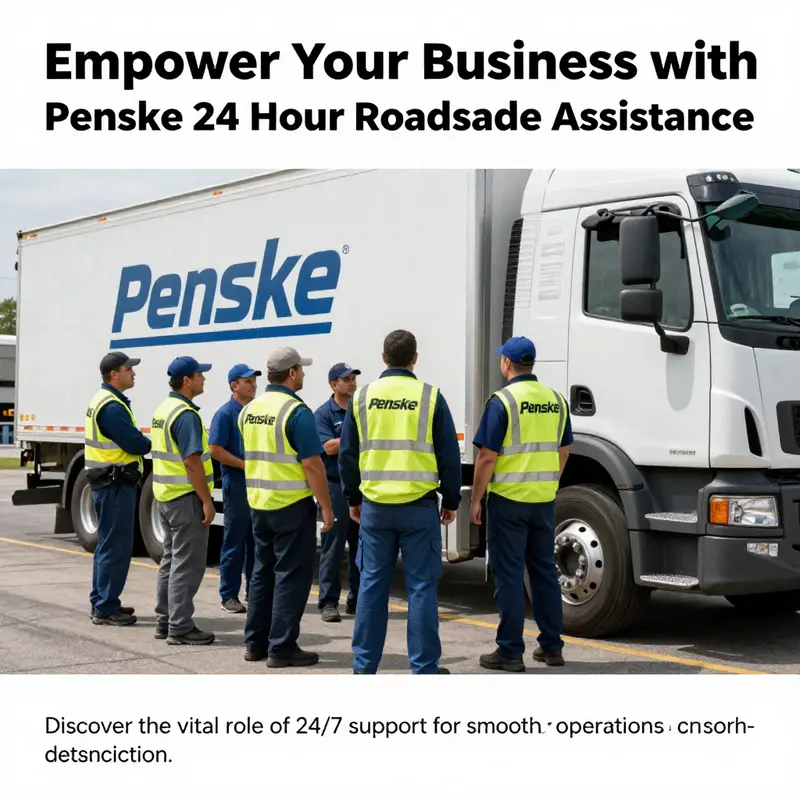
For business owners relying on rental vehicles, unexpected breakdowns can threaten not just operations, but customer trust as well. Penske Truck Rental’s 24-hour roadside assistance is designed to mitigate these risks by offering dependable support anytime, from flat tires to mechanical failures. This article delves into how these services operate, enhance customer experiences, serve as crucial lifelines in emergencies, and leverage technology to provide efficient solutions. Whether you require a rental for logistics, moving, or business travel, understanding Penske’s roadside assistance can help streamline your operation and safeguard your investments.
Penske’s Night-Shift Lifeline: A Deep Dive into 24-Hour Roadside Support for Rental Trucks

When a rental truck grinds to a halt on a quiet stretch of highway or in the middle of a busy urban corridor, the sound that follows is rarely the engine’s final note. It is the steady, reassuring ring of a 24/7 roadside assistance system waking up to restore momentum. This service, designed to protect uptime and safeguard the user’s schedule, operates as a well-oiled connective tissue between a frustrated driver and a network of technicians, tow operators, and supply partners who can repair, replace, or escort a vehicle back into service. The core promise is simple but powerful: minimize downtime and keep the project, the move, or the enterprise on track, no matter what hour it is. To understand how this works, it helps to look beyond the roadside scene and into the operational bones that support it. In the landscape of rental trucking, a dedicated, around-the-clock support line becomes the first contact point for a problem that could otherwise derail a day, a week, or a critical delivery window. The service is advertised as 24/7, 365 days a year, ready to respond to flat tires, mechanical failures, or fluid leaks with dispatch logic that prioritizes speed, clarity, and safety. It is not merely a call center; it is a carefully choreographed workflow that blends human judgment with a standardized protocol to ensure every escalation moves toward a concrete resolution. The effect on the renter is tangible. When the number on the roadside assistance card is dialed, a sense of contingency becomes a process. The driver, who may be under a tight deadline or navigating unfamiliar terrain, is handed a path back to reliability rather than being left to improvise. The service exists to bridge the gap between a breakdown and a return to service, and it does so by leaning on trained professionals who are fluent in the language of moving equipment, safety standards, and practical constraints of a rental fleet.
Accessibility is the first pillar of this capability. In Australia, where the service is actively marketed to equipment users, the primary touchpoint is a dedicated toll-free line that promises a direct line to someone who can mobilize help without delay. The ease of access matters as much as the technical competence behind the response. A renter facing a problem can pick up the phone and, within moments, be connected to a coordinator who can interpret symptoms, confirm the rental status, and determine whether on-site repair, towing, or a vehicle replacement is the fastest route back to operation. This immediacy is not merely about speed; it is about reducing the cognitive load on the driver who must decide whether to push through or stop and deal with a fault. When a support line exists, the driver can proceed with confidence that the root cause will be assessed by someone who can translate a mechanical symptom into a concrete action.
The breadth of issues that the service covers is also noteworthy. In the typical call, the coordinator collects essential context: the vehicle type, current location, the nature of the fault, and any safety concerns that might complicate a roadside fix. A flat tire may trigger a tire service or a replacement wheel option; a mechanical failure could prompt on-site diagnostics or a tow to a service facility; a fluid leak might require immediate containment and a check of fluid levels, cooling systems, or seals. The list of possible scenarios is broad by design, reflecting the realities of real-world usage where trucks traverse mixed terrain, endure varied weather, and operate under demanding schedules. The on-call professional is trained to evaluate the situation quickly, prioritize safety, and deploy the most appropriate response—whether that means dispatching a mechanic to the site, arranging a tow with a trusted local operator, or coordinating a temporary replacement vehicle to keep the move on track.
Behind the scenes, the operational structure is built for reliability. The roadside assistance team relies on centralized call centers, staffed by personnel who rotate shifts to guarantee uninterrupted coverage. These coordinators juggle multiple cases at once, maintaining a calm, methodical approach that keeps the customer informed while multiple moving parts—local service providers, dispatch lanes, and vehicle availability—are synchronized. The coordinators act as traffic controllers for a complex logistics network. They determine which local partners are closest to the customer, negotiate the details of the service level, and confirm the estimated times of arrival. In practice, this means a well-timed handoff from a call to a technician may occur within minutes, and the customer can receive updates along the way. The goal is not merely to fix a problem but to maintain a transparent stream of communication so the renter always feels informed and empowered to make the next decision.
The human dimension of the service is essential, too. Employee perspectives capture the realities of delivering a 24/7 operation. Positive notes about the role often highlight the sense of purpose, the security that comes with good pay and benefits, and the opportunity to work with well-maintained equipment that feels dependable. Yet, there are challenges that come with the territory. Long hours, non-flexible schedules, and the pressure of constant monitoring through tracking systems can weigh on those who staff these centers. The workload can be heavy, and the pace is relentless because delays ripple through the entire chain—from the driver’s schedule to the customer’s plans and the fleet’s availability. The organization emphasizes safety, reliability, and customer satisfaction as its north stars, and that commitment is reflected in regular training, process refinement, and a culture that values quick, accurate communication. The stories that circulate in and around the call centers—about difficult terrain, tight timelines, and surprising problem-solving victories—paint a nuanced portrait of what it takes to keep a 24-hour program functioning smoothly.
From the customer’s point of view, the promise of continuous coverage translates into a dependable safety net. The moment a vehicle stops, a mixture of relief and urgency can wash over the driver, but with the line ringing, the sense of being supported replaces the uncertainty of being stranded. The best outcomes are those where the problem is diagnosed accurately and resolved with minimal intrusion on the user’s schedule. Sometimes that means an on-site repair that lets the truck roll again after a quick diagnostic test; other times it means a tow to a nearby service center if the fault requires more time or specialized tools. In cases where an immediate fix isn’t possible, a replacement vehicle can be arranged to ensure that the project timeline remains intact. Each pathway is chosen with an eye toward safety, efficiency, and continuity of operations. The overarching message to renters is clear: you are not alone on the road, and your equipment’s uptime is treated with the seriousness it deserves.
The structure of the service also supports a broader commitment to safety and reliability. By coordinating with a network of trusted local providers, the center can scale responses without waiting for a single repair shop to become available. This flexibility is critical when roads are congested, weather is severe, or service windows are tight. The emphasis on local partnerships means the response is tailored to the geography and the specific vehicle involved, not a one-size-fits-all fix. In addition, the service keeps operational continuity in mind by considering the vehicle’s duty cycle, the urgency of the current assignment, and the driver’s duty hours. The result is a solution that respects both the renter’s needs and the constraints of safe, compliant operation. It is a reminder that roadside assistance is not merely about getting a truck back on the road, but about sustaining a reliable, responsible workflow that clients can count on day after day.
For readers who want to explore the service narrative from another angle, there is value in stepping into the routine materials that often accompany these programs. The practical side includes staying informed through accessible resources and reference points that help renters understand what to expect and how to prepare. The channels of information—official service pages, call center scripts, and manufacturer’s guidelines—work together to reduce confusion and set realistic expectations about response times, service levels, and potential costs. In some cases, renters appreciate having a single, consolidated resource they can consult before a trip, while in others the reassurance comes from speaking with a live person who can translate the situation into a concrete action plan. The balance between written guidance and real-time human support is a characteristic of a mature roadside program, one that recognizes that not every problem can be solved instantly, but nearly every problem can be managed with clear communication and a capable rescue network.
The practical implication of such a service for rental operations extends beyond incident resolution. For fleet managers, the presence of a robust 24/7 roadside support system translates into tighter control over maintenance planning, better risk management, and more accurate forecasting of downtime. It enables a data-informed approach to asset utilization, because every breakdown event can be analyzed for root causes, recurring patterns, and opportunities to improve design, maintenance schedules, or driver training. This broader efficiency is not about replacing the engineering discipline or the service provider’s talent; it is about recognizing that a dependable support backbone allows the fleet to operate with fewer surprises and more consistent performance. The renter, meanwhile, benefits from a smoother experience, a greater sense of predictability, and a confidence that help is just a call away, any time of day or night. In a world where schedules, routes, and urgent deliveries are interdependent, the value of uninterrupted access to roadside assistance becomes a strategic advantage as well as a practical comfort.
To connect this narrative back to practical steps a renter can take, consider the moment of contact itself as a protocol. A simple, calm explanation of the issue, a clear note of the vehicle’s location, and an acknowledgement of safety considerations can accelerate the response. The coordinators’ job is to interpret those cues and translate them into action—whether that action is a technician arriving on-site, a tow arranged to a service facility, or a replacement vehicle scheduled to pick up the work where the stopped unit left off. The sequence is designed to minimize back-and-forth, to reduce time spent diagnosing over the phone, and to preserve the driver’s focus on safety and navigation. In some cases, a quick on-site fix can spare the driver a longer interruption; in others, it becomes a staging moment that prioritizes a robust plan for getting back on track while maintaining compliance with road safety regulations. Across all these scenarios, the consistent thread is a shared commitment to reliable, transparent, and humane support—an anchor that keeps the renter’s project alive even when the first breakthrough seems distant.
For readers seeking practical context beyond the narrative, the service is often discussed in companion materials that illuminate the everyday realities of running a fleet. A relevant resource offers broader guidance on how roadside support integrates with routine operations, how to communicate expectations to drivers, and how to interpret the service as part of a larger customer experience strategy. Readers can explore the related material through a resource that covers roadside guidance in a structured, accessible way, providing a useful primer for those planning trips or managing fleets. If you want to see a concise overview that situates these ideas within the broader ecosystem of rental operations, you can visit the dedicated roadside support page for additional context. For ongoing reading, the linked material offers a complementary perspective that reinforces the themes discussed here, including the importance of rapid response, safety considerations, and the role of clear communication in restoring mobility.
In the end, the 24/7 roadside assistance program for rental trucks serves as more than a reactive service. It is a proactive component of risk management, a facilitator of operational continuity, and a tangible expression of customer care that recognizes the realities of moving goods under pressure. By coupling fast access with a disciplined, scalable response network, the program helps ensure that when a breakdown occurs, it does not become an excuse for delay but a moment in which support, competence, and coordination converge to restore momentum. The road is an unpredictable place, but the people and processes behind round-the-clock support keep the journey forward, even through the darkest hours. For those who live by schedules and depend on dependable equipment, that reliability is not a luxury; it is a core expectation—one that this kind of service aspires to meet every hour of every day. If you want to understand this topic from a practical, user-centered angle, you may also look into Penske roadside resources that expand on the on-the-ground reality of how such support lands in a driver’s hands. For more background, you can access detailed information about the 24-hour roadmap and its service commitments via the official resource where the program is described in depth. [Penske roadside](
https://larentaltrucks.com/blog/penske-roadside/). That reference can serve as a useful companion as you consider how uptime becomes a driver’s ally and a fleet manager’s differentiator on the road.
External reference for broader context: https://www.pensketruckrental.com/roadside-assistance
Round-the-Clock Roadside Support: Elevating Customer Experience in Commercial Truck Rentals

Around-the-clock roadside support transforms uptime from a promise into a measurable capability. For commercial truck rentals, disruption is not a single event but a cascade that can affect schedules, customer commitments, and margins. The 24/7 hotline becomes a single point of contact that connects drivers, dispatchers, and technicians to a coordinated response. Trained specialists triage issues, dispatch mobile units if needed, and expedite parts so that the fleet returns to service as quickly as possible. This service is designed to be fast, precise, and safe, with technicians equipped for heavy-duty trucks and trailers and adherent to safety standards on every job site.
Beyond speed, the value rests in uptime. Every minute out of service translates into missed deliveries and higher costs; round-the-clock support minimizes this risk by enabling rapid diagnosis, on-site repair or parts swap, and a seamless handoff back into operation. The result is less driver stress, higher trust with customers, and more predictable utilization and maintenance planning. The data generated from each intervention — fault codes, time-to-resolution, parts used — informs predictive maintenance and continuous improvement, helping fleets deploy parts more efficiently and schedule preventive work with confidence.
Finally, the service enhances safety and compliance. A professional roadside response reduces risk to drivers and other road users by following established protocols, using the right tools, and documenting the repair for the fleet records. When fleets see a dependable support channel as part of the rental experience, they view the partnership as proactive, resilient, and focused on long-term uptime and cost control.
A Lifeline on the Line: The Strategic Power of 24/7 Roadside Assistance for Fleet-Driven Logistics
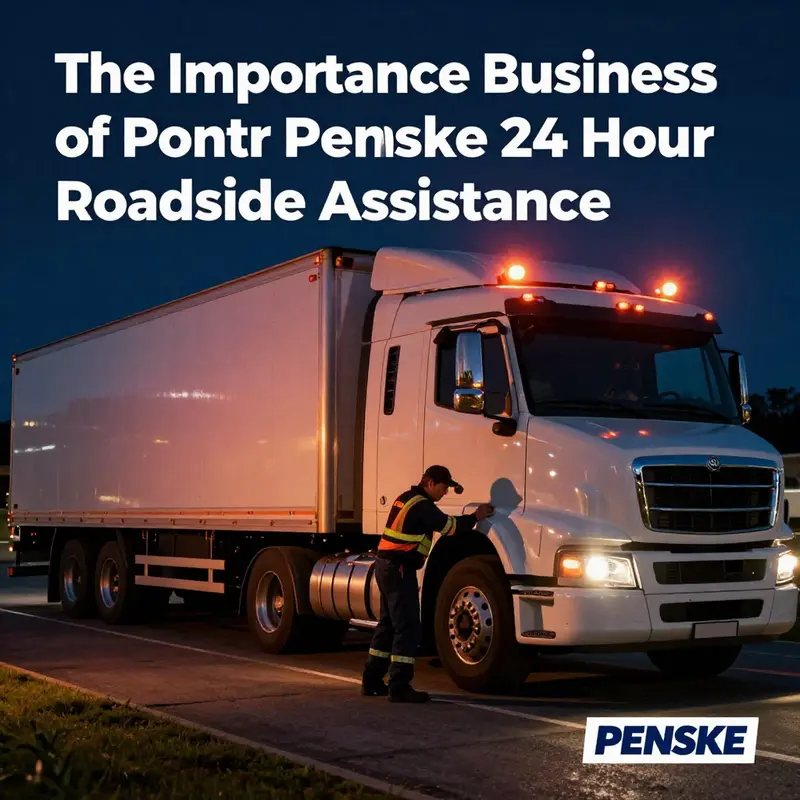
Night winds over a long stretch of highway blur into the hum of a fleet’s heartbeat. A delivery truck, eyes bright with headlights cutting through the dark, suddenly finds its rhythm broken by a flat tire. In moments like this, a decision is made that can ripple through a company’s schedules, customer promises, and even its bottom line: whether help will arrive promptly and keep the wheels turning. The service that ensures help isn’t far away, available at any hour, is more than a safety net. It is a strategic asset. The 24/7 roadside assistance that supports rental fleets operates as a critical anchor point in the modern logistics world. It steadies the line between a missed delivery and a successfully routed path, between downtime that compounds costs and a smooth recovery that preserves reliability. When a driver coordinates with a dedicated support line in the dead of night, they’re not just calling for a fix; they’re calling for a reliable relay that translates uncertainty into a concrete plan of action. And that plan is often executed by professionals who understand the local terrain, the rental equipment in use, and the urgent need to restore service with minimal disruption.
In fleets that move information as reliably as goods, uptime is the ultimate currency. Every minute a truck spends stranded on the shoulder is a minute that could have been spent delivering, reloading, or returning to service. The first moment of contact—the call to a 24/7 roadside support line—begins a chain of triage that converts a disruption into a sequence of precise, coordinated actions. A dispatcher surveys the situation, the location, the nature of the fault, and the driver’s safety. A technician or tow partner with the right diagnostic tools is dispatched, often with the flexibility to adjust to the weather, traffic, and terrain. The aim is not merely to fix a single issue but to restore the vehicle to productive operation as quickly as possible. This swift translation from problem to solution is where the value of round-the-clock assistance reveals itself: it compresses the window of lost time and minimizes the ripple effects of a single hiccup across a wider network of trips and commitments.
What makes such a service truly strategic is its responsiveness to a spectrum of emergencies, from the routine to the extreme. A flat tire might seem straightforward, yet on a highway at night, with the right equipment and the right lane, the fastest remedy isn’t just changing a tire; it’s ensuring the wheel is reattached with torque that meets spec, the spare is properly secured, and the road is navigated to safety at a pace that won’t compromise another vehicle. A mechanical fault can range from a sensor misread to a starter or electrical issue that resists a quick roadside workaround. Fluid leaks—common on older engines or systems with long hours in tough conditions—pose a dual challenge: stopping the leak long enough to reach a service bay and preventing a more dangerous situation along the way. In each scenario, the 24/7 line functions as a bridge to the right level of help, whether that means a mobile technician arriving with a diagnostic toolkit, a tow to a nearby service facility, or a relay into a staged plan that minimizes exposure to hazards and delays alike.
The human dimension surrounding this service is essential. Behind every call is a trained professional whose job is to listen, diagnose, and coordinate with parties that can actually intervene on the road. The operator becomes a navigator in a gray area where time, safety, and trust intersect. They translate a driver’s words into a map of options: on-site repair, parts delivery, or a controlled evacuation to a service yard. The reliability of that decision hinges on a blend of experience, precise data, and clear communication. The driver supplies specifics—vehicle type, mileage, current location, and the observed symptoms—while the dispatcher cross-references it with the available technicians, equipment, and the most efficient route to the incident. The result is a plan that can adapt as circumstances evolve, whether that means rerouting another truck to pick up the slack or waiting with a plan to minimize idle time until a substitute vehicle can take the load. In fleet operations, this is where the value of a 24/7 capability becomes a far-reaching advantage rather than a reactive service.
From a safety perspective, the constant availability of assistance elevates drivers’ confidence and reduces risk. Nighttime breakdowns are not just a mechanical hazard; they create psychological stress that can impact driver decisions to pull over in unsafe locations or to push a vehicle beyond its limits to reach a safer point. When help is only a phone call away, drivers can choose safer options, such as moving to a well-lit area, stopping in designated pull-offs, or temporarily suspending operations to seek the necessary fix. Fleet managers, too, gain a measurable safety impact. The knowledge that a vehicle can be serviced promptly reduces the temptation to navigate hazardous conditions or prolonged breakdowns in remote areas. The combination of immediate dispatch, professional guidance, and access to either on-site repairs or secure towing creates a safety net that protects drivers, cargo, and the integrity of the fleet’s schedule.
Operationally, the cycle of incident, communication, and action is a living example of how service design can transform risk into managed workflow. When a rental fleet enters service, the expectation becomes not only that the vehicle will perform but that support structures will respond with speed and accuracy when it falters. The 24/7 roadside system embodies this expectation in three core ways. First, it provides rapid triage—an assessment that quickly determines whether a fix on the roadside is feasible and safe or if the vehicle must be towed. Second, it ensures access to a network of mobile technicians and service partners who can reach a wide range of locations, including urban centers and stretches of interstate that demand consistent reliability. Third, it buffers operations from cascading delays by offering alternatives and contingency plans, such as alternative equipment or flexible delivery windows, that help preserve delivery commitments even when a hiccup occurs. In practice, this means a fleet manager can preserve a customer promise, maintain route integrity, and protect margins that depend on high utilization rates rather than extended downtime.
The practical impact of 24/7 roadside support becomes most evident when a disruption threatens a tight schedule. Consider a scenario in which a driver is transporting time-sensitive goods across state lines, and a mechanical fault arises just before a critical handoff. The driver’s first move is to contact the support line, and within minutes a triage process is underway. A technician is identified who can address the fault with the tools and replacement parts on hand, or an appropriate nearby service partner is alerted to reach the site, or a tow arrangement is made to move the vehicle to a certified service facility. Each option is weighed against the driver’s safety, the cargo’s risk profile, and the delivery timeline. The goal is never just a fixed problem but a reconfiguration of the route that minimizes disruption. This dynamic is what makes 24/7 roadside assistance an integral element of modern fleet strategy: it aligns the operational tempo with the real-world constraints fleets encounter, from unpredictable traffic to weather events and evolving customer expectations.
The optimization potential of this service extends beyond the moment of a breakdown. It builds resilience into the very fabric of the fleet’s operations. For fleet operators, the ability to respond calmly, quickly, and decisively to incidents means less time spent diagnosing issues in the field, fewer unnecessary returns to depots, and more consistent utilization of assets. The financial calculus becomes clearer when downtime is quantified not merely in time lost but in the costs associated with idle vehicles, missed deliveries, expedited freight, and customer churn. The 24/7 model reframes those costs by converting uncertainty into predictable, executable actions. Drivers gain access to a reliable playbook: call the number, provide location and symptom information, await dispatch, and follow the on-site or remote guidance that returns the vehicle to service. The efficiency gains accrue as a cumulative effect across the fleet, improving not just individual trips but the collective reliability of the fleet’s operations.
To maximize the benefits, some practices naturally emerge for drivers and fleet managers alike. Drivers should keep essential details readily accessible—rental agreement numbers, vehicle ID, license plate, and current location, along with a concise description of the symptoms. This minimizes the back-and-forth that can cost precious minutes in the field. Fleet managers can reinforce preparedness by integrating the roadside line into standard operating procedures, including clear escalation paths, expected response times, and documentation routines that capture incident details for post-incident reviews and maintenance planning. These reviews translate incidents into insights about the fleet’s reliability, informing decisions about preventive maintenance, parts stocking, and technician responsiveness in particular regions or routes where breakdowns have historically occurred. The cultural shift toward proactive maintenance and informed contingency planning is reinforced by the confidence that a robust 24/7 resource is always a partner in the process.
The availability of around-the-clock support also intersects with technology in meaningful ways. Dispatchers increasingly leverage location data, vehicle telematics, and real-time traffic information to optimize response. When a driver reports a problem, this data helps determine the fastest and safest way to bring assistance to the scene, whether that means a mobile repair or a tow to the nearest service facility. In addition, the experience of working with a dependable roadside partner can influence a company’s broader approach to equipment selection and fleet composition. If a particular rental provider’s 24/7 support is consistently efficient, it can tilt the calculus in favor of certain vehicle classes or configurations that are known to be easier to service in a given geography. Such considerations ripple outward, affecting procurement strategies, maintenance planning, and even the way drivers are trained to interact with roadside services.
For those who manage fleets with multiple locations or regional distributions, the geographic reach of a 24/7 roadside program matters. The ability to mobilize help quickly across a network of service partners reduces the friction of cross-regional operations. It translates into smoother cross-docking, more predictable transfer times, and a unified standard of assistance regardless of where a shipment originates or ends. In this light, the service becomes not only a safety feature but a strategic infrastructure—an invisible backbone that enables complex logistics to function with greater reliability. The driver’s experience, too, is affected. A calm, well-supported driver is more likely to make safer choices and to communicate clearly with dispatchers about changing conditions. The combined effect is a culture of reliability, where preparedness, rapid response, and continuous improvement drive performance.
As a reader moves from the moment of breakdown to the broader implications for fleet strategy, the value of 24/7 roadside assistance becomes clearer. It is a fulcrum where safety, efficiency, and service quality pivot around one constant: availability. The road, with its unpredictable events and evolving conditions, demands a support system that does not stop at dusk or yield to weather. In the absence of such a system, fleets bear the cost of uncertainty, and operators absorb the risk of delayed deliveries, driver fatigue, and suboptimal routing. With it, the fleet gains a reliable moderator of risk, a partner in crisis management, and a catalyst for continuous operational refinement.
For readers who want to explore further how this resource can support emergency scenarios and everyday operations alike, a closer look at the roadside resource page can offer practical insights into the scope of what is available and how to engage it effectively. See the penske-roadside page for a concise overview of the service’s reach and processes, including guidance on when to call and what information to have ready on arrival. The page helps translate the abstractions of uptime into concrete steps that drivers and fleet managers can implement today. penske-roadside.
In the broader narrative of fleet resilience, the 24/7 roadside assistance program stands as a model of service design that prioritizes speed, safety, and continuity. It is not merely a response mechanism; it is a strategic partner that harmonizes human expertise, logistical coordination, and the realities of operating in diverse environments. It offers a pathway from vulnerability to operational strength, allowing fleets to meet their commitments with confidence. The chapter of a dispatch log that begins with a roadside trouble report closes with a vehicle back in service, a driver resting safely, a customer informed, and a schedule preserved. That is the practical essence and the strategic power of 24/7 roadside assistance—a lifeline that keeps the line of business moving smoothly, even when the road is not.
External resource: For official details and the provider’s formal guidance on how 24/7 roadside assistance operates, see the external resource at https://www.penske.com/truck-rental/roadside-assistance.
Always On, Always There: The Tech-Driven Pulse Behind Penske’s 24/7 Roadside Assistance

A 24/7 roadside assistance service is more than a toll-free line or a dispatch desk; it is a living, data-driven system that stitches together people, vehicles, and infrastructure into a seamless safety net. In the world of heavy-duty rental fleets, where a single breakdown can derail a multi-day operation, the technology underpinning around-the-clock support matters as much as the human expertise behind it. The service remains a reliable promise—help will arrive, and it will arrive fast—but what makes that promise credible in practice is the sophisticated blend of telematics, mobile connectivity, and intelligent dispatch that translates a customer call into a controlled, efficient response. When a renter faces a flat tire, a mechanical hiccup, or fluid leakage, the experience should feel like a well-rehearsed choreography rather than a chaotic scramble. In this setting, technology does not merely support the process; it informs, accelerates, and clarifies every step, turning potential uncertainty into capable, measurable action.
The journey begins at the moment trouble is detected, reported, or anticipated. The rental ecosystem is designed to capture as much context as possible from the outset. A caller or app user provides basic details, and the system automatically logs the time, vehicle type, location, and the reported symptom. Behind the scenes, telematics devices embedded in the fleet continuously stream diagnostic data. Engine load, fuel pressure, brake status, battery health, and even subtle fluid readings find their way into a centralized operations hub. This flood of data is not overwhelming; it is curated through smart filters that highlight true emergencies and near-emergencies alike. The objective is to reduce response latency while ensuring accuracy in the initial assessment. The first layer of intelligence is triage: is this a tire issue that can be resolved roadside, a minor mechanical fault that can be addressed with a quick fix, or something more substantial requiring a tow or depot-assisted repair? A well-designed system can route these questions through an algorithm that weighs the fault description against historical patterns and real-time vehicle health metrics, surfacing a recommended course of action for the dispatcher. Yet the human element remains essential. The dispatcher reviews the data, confirms the recommended path, and then initiates the engagement with the nearest available technician or service vehicle. It is a synthesis of machine speed and human judgment, a dual engine propelling the response forward with both intuition and precision.
One of the most visible manifestations of this technological backbone is the mobile experience that accompanies the service. The renter’s smartphone becomes a window into the maintenance process, not just a channel for reporting issues. Real-time status updates replace the abstract promise of “assistance is on the way.” The user sees a sequence that feels tangible and trustworthy: request received, technician assigned, arrival ETA, on-scene progress, and final resolution. This transparency matters as much as speed. It creates a sense of control for the renter, who can coordinate with their own teams or customers while the roadside support team works locally to fix the truck. The mobile interface is designed for clarity under pressure. It prioritizes critical information—location coordinates, travel distance, and the anticipated time to service—over verbosity. In practice, these updates reduce the cognitive load on crews and renters alike, allowing everyone to make informed decisions without duplicating effort or chasing misaligned expectations. The flow is so smooth that the moment the driver taps the app to report a fault, the system transitions into a state where the status is both auditable and traceable in real time. If a delay occurs, the renter receives an explanation calibrated to the situation, a courtesy that preserves trust even when the road ahead proves uncertain.
The path from report to resolution also leans heavily on location intelligence. Global positioning, traffic data, and route optimization tools work in concert with the dispatch center to minimize delay. The nearest available technician is not just the closest by miles; the system evaluates ride-along factors such as current route activity, weather conditions, and the technician’s current load. If two service units could address a tire repair, the algorithm might choose the one with the least downtime contributed to the fleet’s schedule. In many cases, this means a roadside repair is accomplished on the first visit, a result that preserves the renter’s operations and reduces the overall cost of service. When a tow is unavoidable, the same technology helps ensure the tow process is efficient and safe, coordinating with the rider’s route and the destination depot’s capacity. The aim is not simply to move a truck from point A to point B, but to keep the fleet’s schedule intact and the customer’s business momentum uninterrupted.
The human–tech collaboration extends beyond the initial dispatch. The service relies on a robust ecosystem that includes remote diagnostics, repair-oriented data analytics, and predictive maintenance insights. Telematics sensors continuously report abnormal readings that might signal an impending failure if left unaddressed. Rather than waiting for a roadside event, the system can flag potential issues to the maintenance team, encouraging proactive interventions during scheduled downtimes or after-hours opportunities. In practice, technicians armed with diagnostic summaries prior to arrival can perform targeted, efficient repairs. This approach minimizes the time spent on the roadside and maximizes the time the fleet spends on the road. The result is a service experience that feels both intelligent and intimate—the renter experiences a calm, methodical process rather than a reactive scramble.
From a customer service perspective, the value of technology in 24/7 roadside assistance lies not only in speed and accuracy, but in the quality of communication. Real-time updates, ETA recalculations, and status explanations transform what could be a stressful interruption into a manageable event. The renter can decide how to engage with status updates: some prefer continuous notifications; others want a single, concise briefing when the technician is en route. The design of this communication is a deliberate choice, balancing the need for timely information with the goal of avoiding information overload. The result is an experience that feels transparent, respectful of the renter’s time, and aligned with the broader objective of uninterrupted mobility. Within this context, the service becomes a standard of reliability that elevates the entire rental relationship—from the moment the vehicle is selected to long after it returns to the depot.
A notable facet of the technology-enabled model is the integration of the roadside program with the wider fleet ecosystem. The service is not a standalone line; it is a node in a network that includes inventory management, scheduling, and customer relationship systems. When a breakdown occurs, the same systems that track vehicle availability also help determine the most efficient path to restoration. If a tire needs replacement, the system can check stock at nearby depots and arrange a wheel swap or tire repair with minimal disruption to the schedule. If a mechanical fault requires parts that are not immediately available on the roadside, the vehicle might be guided to the nearest repair facility that can complete the job; the passenger experience is preserved by ensuring a precise ETA and a transport plan that keeps the next leg of the journey on track. This level of integration demands a durable data architecture, with clean interfaces between telematics, mobile applications, dispatch systems, and depot operations. The payoff is not merely a faster response, but a smarter, more resilient service model that anticipates needs and reduces the likelihood of cascading delays.
The human voice remains essential in this technology-forward environment. A 24/7 operation cannot rely solely on automated routines or canned messages. Trained coordinators interpret complex situations, confirm safety considerations, and tailor responses to specific contexts. They can, for instance, adjust a plan mid-flight if weather shifts, if a driver’s schedule tightens, or if a safety precaution requires a different course of action. The best practice is to combine the precision of algorithms with the empathy and judgment of experienced professionals. This is where the service’s credibility is earned, and where renters perceive that the technology serves them rather than controlling them. The renter’s experience becomes a continuous narrative: a problem is identified, a plan is proposed, and the plan unfolds with real-time visibility and adaptable execution. When viewed through this lens, the 24/7 roadside support is less about a one-off fix and more about a living system that grows with renter needs, fleet dynamics, and the changing realities of modern road travel.
For readers exploring the practical dimensions of this capability, the service’s online resources offer a useful, neighborly guide to what to expect when trouble strikes. A well-structured roadside portal explains the steps, the expected timelines, and the kinds of assistance available, all framed by the same operational philosophy described above. In the context of the broader article, this chapter uses the Penske model to illustrate how a rental operation can transform a possible disruption into a controlled, transparent, and constructive experience. The emphasis is on speed, accuracy, and clarity—not just in the moment of need, but in how the system learns from each interaction to improve the next one. The result is a chain of continuous improvement, powered by data, connected by apps, and sustained by a workforce that values both efficiency and care. To see how these capabilities are presented to customers in a practical, navigable way, one can refer to the dedicated roadside hub on the brand’s site, which outlines the service’s scope and avenues for support. Penske Roadside.
As the fleet landscape evolves, these tech-enhanced responses are more than a feature; they are a defining capability that reshapes expectations. Customers come to rely on the assurance that help is not a distant promise but an active, responsive process they can follow and trust. The channel through which this trust is delivered—the combination of real-time visibility, rapid dispatch, and precise problem-solving—illustrates a broader shift in the industry toward operating models where transparency, responsiveness, and data-driven decision-making are not luxuries but baseline requirements. In other words, the 24/7 roadside service becomes a practical demonstration of modern fleet management in action. It is easy to see a single moment of breakdown; it is harder to recognize the sustained, systematic capability that makes such moments less disruptive and more manageable for everyone involved. This is the essence of the tech-driven approach: not merely reacting to breakdowns, but designing a workflow that anticipates, mitigates, and sustains movement under pressure.
The implications extend beyond the immediate repair or replacement of a part. They touch how fleets plan, how operations scale, and how customers assess value. A service built on connected devices, intelligent routing, and continuous communication creates a relational dynamic where customers feel supported, even when the road is rough. It also establishes a data-rich feedback loop in which every service interaction informs future practice—from the routing of emergency responders to the prioritization of spare parts stock at depots. This is a forward-looking model that acknowledges the unpredictable nature of road transport and treats reliability not as a static feature but as an evolving capability. By weaving together telemetry, mobile connectivity, and human expertise, the operation demonstrates how modern roadside assistance can be both fast and thoughtful, precise and adaptable—a true convergence of technology and service that keeps fleets moving and customers confident.
External resource: For additional context on how the coverage and structure of such services are presented and managed at the provider level, see the official roadside assistance overview at https://www.pensketruckrental.com/roadside-assistance.
Final thoughts
In conclusion, Penske’s 24-hour roadside assistance is not just a safety net for your rental vehicles; it is a strategic advantage for businesses aiming to maintain operational efficiency and customer satisfaction. The level of support provided reflects Penske’s commitment to its clients, ensuring that help is always available regardless of the circumstances. By embracing these services, businesses can navigate emergencies more effectively, resulting in reduced downtime and enhanced trust with clients. Equip your operations with Penske’s comprehensive support, and turn potential pitfalls into seamless solutions.