
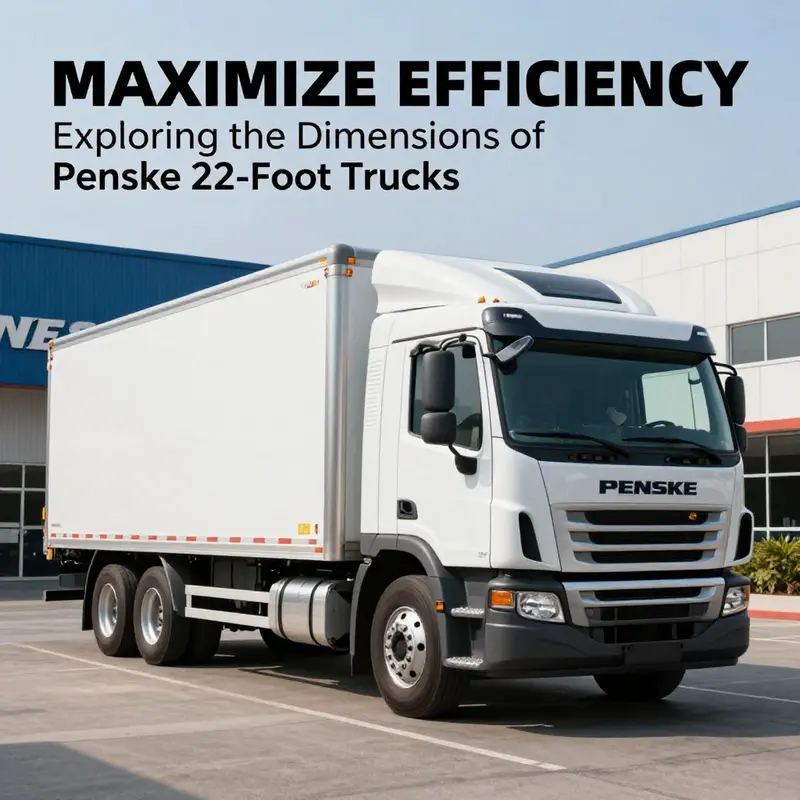
Understanding the dimensions of the Penske 22-foot truck is crucial for business owners to optimize their logistics and transportation strategies. In this article, we will delve into the interior dimensions that define the usable space, the exterior dimensions that impact maneuverability and parking, and insights regarding the truck’s capacity and typical usage scenarios. Every aspect of these dimensions plays a vital role in helping businesses make informed decisions when renting or purchasing trucks for their operations.
Inside the 22-Foot Moving Truck: A Practical Guide to Its Interior Dimensions and Cargo Geometry
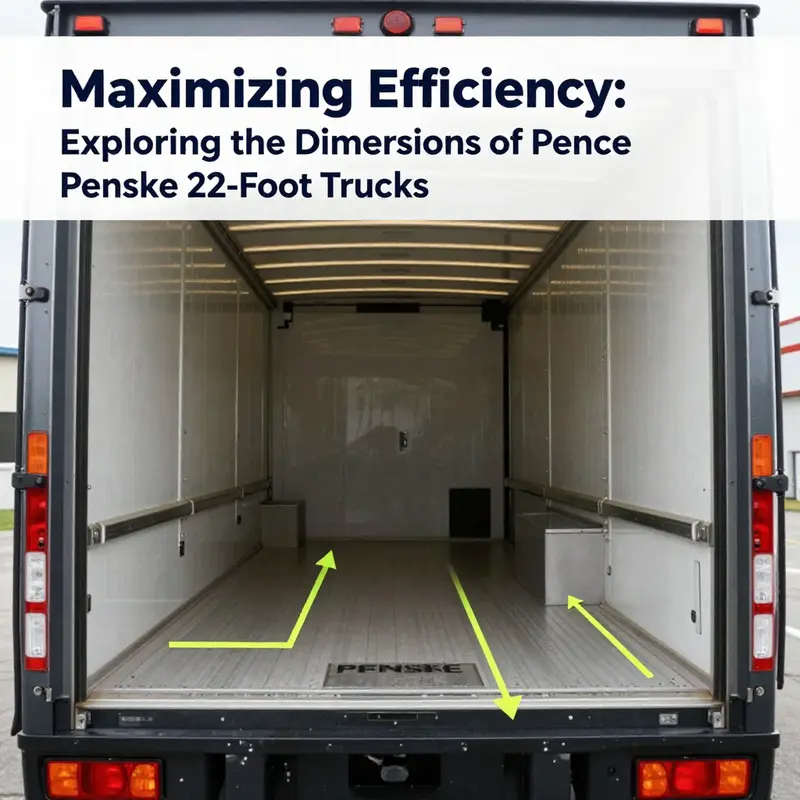
The interior of a 22-foot moving truck unfolds as a carefully designed workspace, a compact chamber where space is both constraint and resource. When you open the door and step inside, you enter a measured environment built to move belongings efficiently and safely. The space and its organization matter as much as the items you plan to carry. The interior becomes a dynamic coordinate system where every box, piece of furniture, and wardrobe box must be planned, oriented, and secured so the journey is smooth rather than a shuffle that ends in dented furniture or shifted weight. The dimensions themselves — how long the cargo floor is, how wide the aisles feel, how tall the ceiling looms — set the rules for packing, stacking, and maneuvering through doorways, ramps, and stairwells in origin and destination buildings.
From the outset, interior dimensions fall within a usable range that can vary by model year and configuration. In general terms, most 22-foot trucks provide an interior length around twenty feet to just over twenty-one feet. The width — the space you must navigate around pallets and furniture — typically falls around seven feet eight inches to about seven feet six inches, with exterior measurements sometimes rounded to ninety inches after wall thickness is accounted for. Height, the ceiling determining upright clearance, usually sits near seven feet five inches, with a margin of a few inches depending on the model and interior floor finish. Practically, these numbers translate to a cargo space that feels ample for a household move yet constrained enough to discipline packing so that every inch earns its keep.
This interior geometry creates a finite space with concrete constraints. The interior length is the most obvious limiter: it determines how many large pieces can lie lengthwise and whether a piano, sofa, or mattress can fit in a single orientation without disassembly. The width defines how widely items can be laid out side by side and how much room remains for safe passage along the sides. The height influences vertical stacking, tall wardrobes, and the need to tilt or disassemble items for passage. The walls, wheel wells, and arches intrude into the cargo space and must be factored into any plan. The exterior figure provides the rough outer envelope of the shell that houses this interior geometry, while walls and structural framing subtract a little space but provide anchors for securing cargo to anchor points and straps.
Loading space is not a blank canvas; it is a curated field where load planning, weight distribution, and accessibility converge. The standard approach begins with a mental floor plan: place the heaviest items on the floor near the cab to create a stable pivot during movement. Heavy appliances, large sofas, and dressers form a solid base that stays put during travel. From there, add lighter, modular goods, stacking toward the door so the entry remains open for last items and quick access if needed without unseating the entire stack.
When you measure interior volume, translate numbers into practical stacking rules. Treat the space as a three dimensional grid: length along the floor, width across the floor, and height from floor to ceiling. In a typical 22-foot truck, expect roughly twenty feet of floor length, with some models closer to twenty and others up to twenty-one depending on wheel well placement and configuration. Width commonly rests around seven feet eight inches to ninety inches, offering a corridor for maneuvering a doorway, mattress, or dresser. The height around seven feet five inches constrains tall items and vertical stacking, demanding thoughtful packing order and item orientation.
Importantly, interior numbers are not identical across all trucks sharing a nominal length. Exact interior length can vary by model year, presence of a lower cargo deck, or interior finishes. The width can be narrowed by wheel wells, reducing usable floor space by several inches in the mid zone. The height can differ due to ceiling liners, ducts, or roof contours. The practical takeaway is simple: treat these figures as a dependable baseline rather than a fixed rule, and measure the specific vehicle you will use when precise stacking is required.
To visualize how dimensions translate into real packing, consider the typical footprint of a standard moving pallet — the 40 by 48 inches that many boxes are arranged around. With a width around ninety inches, you can usually place two pallets side by side with full clearance, plus room to move between them. The aisle along the side walls is often just under a foot, enough to move a box with a dolly and reposition as you go. The reality is you will not always have the freedom to place two pallets side by side along the entire length. Wheel wells, tie-down anchors, and the door opening can create pockets of space that require creative placement—placing a bulky sofa at one end, a bed frame at another, and the smallest items in gaps where the structure allows.
The geometry of the internal cargo deck matters for loading techniques. In many trucks, the door height creates a threshold to clear when moving items in and out. If the ceiling height is around seven feet five inches, you may need to tilt furniture or disassemble pieces to fit through the doorway without dragging or scuffing walls. Wheel wells further complicate clearance, reminding you that a straight line from door to back wall is rarely realistic. The art of loading becomes a choreography of angles, orientation changes, and selective disassembly that respects interior geometry while maximizing space.
In practical terms, this interior geometry requires a clear plan, not just instinct. Start by listing major items and estimating their dimensions and weights. Convert those estimates into a plan for the cargo floor: identify which items must stay upright and which can be stacked. Map the path from the door to the far end of the truck, noting wheel wells, anchors, and where you can place heavy objects to anchor the load. Use modular packing strategies — crate-like groupings, uniform boxes for easier stacking, and grouping related items to minimize the distance each category travels within the truck as you unload. The fewer times you move an item to rearrange the stack, the more stable the load and the safer the drive.
When placing a heavy object, you orient how the entire stack will respond to movement. A misaligned base can ripple upward, causing shifts as the vehicle travels over road irregularities. Ground-level packing is critical: balance heavy pieces across the width to avoid tipping and secure the load to anchor points. The interior walls are not just barriers; they are support structures built to resist shifting in transit. Use the right number of anchors and proper strap tension to keep everything in place and protect floors, furniture, and walls. This is especially important for tall wardrobes and appliances that can catch wind in a moving truck if not restrained.
Beyond the basics of fit, interior dimensions affect time and energy on move day. A well-planned inside layout reduces trips between truck and home, saving energy and reducing injury risk. If you can stage items along a short corridor from the doorway, you can move one or two pieces at a time into the truck and secure them, rather than dragging everything through a narrow doorway in a single pass. This staged approach helps with stairwells and tight routes between ground-floor access and the truck. Understanding interior geometry helps anticipate bottlenecks before they appear—whether a doorway catches a corner of a mattress or a sofa requires tilting for passage.
The concept of predictability is that interior dimensions vary slightly from truck to truck, even within the same fleet. Plan with a reliable range and verify specs for the exact vehicle you will use. A quick check with the official site or a local location can confirm precise interior measurements. The goal is a reliable framework rather than a rigid rule, enabling you to adapt if you encounter a longer or shorter floor, different wheel wells, or a different number of anchor points.
When comparing interior dimensions across truck sizes, imagine the space as a finite, scalable template. A 22-foot truck offers a robust stage for a typical move, balancing volume with urban or suburban access. For smaller moves, space can feel generous when items are packed with care and grouped. Large items first, heavy items secured, and a consistent awareness of how space shifts as you load deeper into the cargo area will keep the plan practical. The difference between twenty and twenty-one feet could allow an extra mattress; the difference between seven feet eight inches and ninety inches of width determines stacking options; a height of seven feet five inches matters for wardrobe boxes and vertical clearance. For practical scale, compare different fleet options to see how interior space scales and where layout decisions shift with space. See the 16-foot truck dimensions for a contrasting reference.
As a closing perspective, the interior geometry of a 22-foot moving truck is not merely a mathematical curiosity; it is a practical partner in the move. It dictates how you prepare, what you bring, and how you secure every item so the ride is calm and the load secure. Study the space, and you will treat moving less as a test of strength and more as a test of spatial intelligence — the ability to translate measurements into a safe, efficient choreography of people, furniture, and boxes. In the right hands, interior numbers become an actionable plan rather than a mere specification. The plan begins with knowing the exact interior footprint of your truck, understanding how it can bend to accommodate belongings, and ending with the confidence that your cargo will arrive in the same condition it left, with your furniture and memories intact and ready for its new home.
Sizing Up the Road-Worthy Box: Exterior Dimensions and Real-World Specs of the 22-Foot Moving Truck
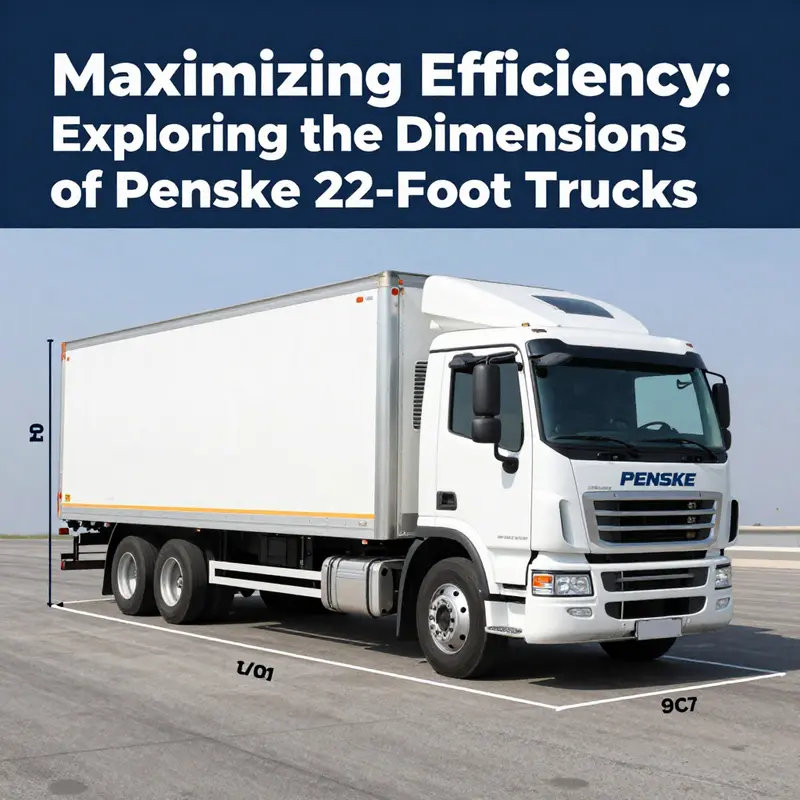
The box truck that sits at the heart of many household moves and small business relocations is defined by a simple idea: length, width, and height do more than describe a shape. They set boundaries for what you can carry, where you can park, and how you plan your route. A 22-foot moving truck embodies a delicate balance between available cargo space and the road manners that come with a vehicle of that size. On the exterior, the typical measurements begin with a length of about 22 feet, a width of roughly 8 feet, and a height around 8 feet 6 inches. These exterior numbers account for the walls, the cargo space, and the structural envelope that protects goods during transit. Inside, however, the usable space is slightly smaller in several key dimensions, because wall thickness, wheel wells, and interior panels nibble away at the total available room. The interior cargo length often runs a bit shorter than the exterior, commonly around 21 feet. The interior width sits near 7 feet 6 inches, or 90 inches, while the interior height is typically about 7 feet 4 inches, or 88 inches. Those interior measurements translate directly into how you arrange furniture, boxes, and appliances, and they influence how you maximize every cubic foot of storage. This interplay between exterior and interior dimensions shapes every move from initial planning to final staging at the destination. The exterior envelope, meanwhile, determines how much you can stack or side-load, and it governs the truck’s clearance in garages, loading docks, and tree-lined streets that form the arteries of everyday life. In practice, these numbers are not mere trivia; they map to real-world decisions about what you can fit, how you will load it, and how you will navigate ordinary roads and tight driveways with a vehicle of substantial, yet manageable, size. Readers who come to this topic from a broader interest in moving logistics will recognize that the 22-foot class is often favored for its balance: enough room to handle a full household or a compact business shipment, yet compact enough to remain practical on urban streets and smaller neighborhoods. Given the variability in model years and configurations, it is important to cross-check with official specifications for the exact vehicle you intend to rent or operate. The exterior dimensions are commonly cited as around 22 feet in length, about 8 feet in width, and roughly 8 feet 6 inches in height, while the interior measures hover near 21 feet of usable length, 90 inches of width, and 88 inches of standing height. This pairing of exterior and interior numbers is what makes the 22-foot truck the benchmark for a certain class of moving tasks, a benchmark that many households, students, and small businesses come to rely on when a rental truck is the chosen solution for transit, storage, or the occasional on-site staging job. A reliable starting point for most renters and operators is to assume a safe, conservative approach: plan around those interior numbers for loading configurations, then respect the exterior limits when directing the route, check clearances, and negotiate driveways and parking spaces. In this sense, the dimensions become a kind of practical physics, a set of constraints that guide everything from packing order to route selection, from dock loading to on-street maneuvering. For those who want a quick sense of the spacing before any loading begins, the interior length of roughly 21 feet is a helpful rule of thumb for how many large items can be arranged along the main corridor. The interior width of about 7 feet 6 inches helps determine how two large dressers or a sofa may be placed side by side, while the interior height of about 7 feet 4 inches informs the vertical clearance above stacked crates and palletized goods. When combined with the exterior figures, these measurements illuminate a common moving workflow: load the heaviest items first against the bulkhead, then fill in with smaller boxes and totes, using the walls, anchors, and overhead cleats to secure the cargo against shifting. In practical terms, that interior length is a reliable gauge of how many large pieces you can fit in a single run, but you must compensate for wheel wells, interior bulkheads, and the cab’s own space that simultaneously houses the driver and controls. The net effect is that the same truck can feel surprisingly different from one move to the next, depending on the configuration of the goods, how rigidly you pack, and how carefully you arrange the heavy items to maintain proper weight distribution. Beyond the basic dimensions, a few related specifications shape performance and usability in meaningful ways. The cargo space, for instance, is typically in the range of 1,300 to 1,500 cubic feet. That figure helps translate the linear measurements into an intuitive sense of capacity. If you imagine stacking typical household furniture—beds, dressers, wardrobes, a sofa, mattresses, and an assortment of boxes—the 1,300 to 1,500 cubic feet range is a practical envelope within which you can orchestrate a move without needing additional trips. Payload capacity is another critical dimension. With a capacity of up to about 8,000 pounds, depending on the exact model and configuration, the truck offers ample mass for a surprisingly large payload when the items are carefully distributed and properly secured. Weight distribution matters as much as raw numbers; uniformly spreading weight, avoiding high concentrations toward the rear axle, and anchoring heavy items to the bulkhead or to reinforced tie-down points all contribute to safer, steadier highway performance. The wheelbase, typically around 12 feet, also plays a practical role. A longer wheelbase generally improves stability when the vehicle is fully loaded, reducing the tendency to pitch or yaw over rough pavement. It can also influence maneuverability in tight spaces; a longer wheelbase tends to reduce the turning radius, but the bulkier footprint can make parking and door-wide turns more challenging in urban environments. The drive system is typically rear-wheel drive, a choice that brings predictable handling characteristics for loading heavy items and for maintaining traction when the truck is mostly empty or heavily loaded in the rear. The drivetrain, combined with automatic transmission options—commonly six- or ten-speed automatic—supports smooth acceleration and efficient cruising, particularly on longer moves where torque delivery and engine braking help maintain momentum with less gear hunting. The engine in this class is often a diesel powerplant in the range of 6.7 liters or similar, chosen for durability, torque, and the ability to sustain steady pulling power on hilly routes with heavier loads. This configuration supports consistent performance over a full day of loading, driving, and unloading, and it contributes to a predictable maintenance profile for fleet operators and rental customers alike. It is important to note that these figures, while representative, can vary slightly depending on the exact model year, configuration, or the presence of optional equipment. Even in the same class, a few inches here or there in exterior width or a handful of cubic feet of cargo space can shift how you plan loading, how you stack items, and even which driving tactics you employ on the road. Because of these subtle variations, the most reliable approach is to consult the official specifications for the exact truck you intend to rent or operate. The exterior dimensions are, in practice, a guide that helps you anticipate the envelope in which the truck will live on city streets and in suburban neighborhoods. The interior dimensions are the actual stage where your items will be placed, and they determine how efficiently you can use the available space. The interplay between exterior and interior dimensions also matters when considering access points like doors and ramps at both the origin and destination. A standard loading door on a 22-foot box truck is typically wide enough to accommodate bulky items, yet it will not accommodate every piece of furniture without some pre-planning. For example, a bulky wardrobe or a tall armoire may require disassembly or a specific angle of entry to pass through the doorway and into the cargo area. Likewise, stairwells, interior hallways, and elevator restrictions at apartment complexes or commercial buildings may constrain how you stage items within the truck. In those situations, the interior volume becomes a critical factor in determining whether you can navigate a single trip or need to split the move into additional legs. Packing strategy, in turn, benefits from understanding the dimensions in a more granular way. Start by reserving the bulkhead area for the heaviest items. Consider pieces like dressers, refrigerators, and mattresses—items that are bulky and dense—then work outward toward the lighter boxes and fragile goods. Use blankets or furniture pads to protect surfaces and to create friction that helps prevent shifting during transit. Tie-downs and cargo nets should anchor toward reinforced points along the interior walls and at the floor. Remember that any movement inside the cargo area can affect control of the vehicle; the more you minimize shifting, the safer the journey will be, particularly on winding roads or at high speeds. The dimensions also influence insurance considerations and risk management. A truck of this class is designed to be capable of transporting a sizeable cargo while maintaining a stable center of gravity when loaded correctly. But misloading, such as stacking heavy items high or securing lighter goods in a way that creates sudden shifts, can compromise stability. From a planning perspective, it is worth creating a simple manifest that lists each heavy item by weight and approximate footprint, then cross-check that against the payload capacity to ensure you are not overloading the rig. In addition to the core measurements, it helps to be aware of typical variances across model years. The exterior length may occasionally be listed as exactly 22 feet, but manufacturing tolerances and aftermarket equipment can nudge that figure slightly. The exterior width and height can also vary with design revisions, and interior clearances can be affected by the presence of additional cabinets or shelving installed by the rental company or by the customer. The recommended practice is to verify the precise dimensions with the local rental location or the official manufacturer specifications before planning a move. For readers who want a quick sense of how this truck size compares with other options, there is value in exploring related sizes. A 16-foot truck, for example, offers a smaller footprint and less interior volume, which can be advantageous on very narrow streets or for smaller moves. For a quick, browsable comparison, you can check out detailed information on the 16-foot truck page 16-foot truck. This contextualizes the 22-foot class as a capable middle ground between compact movers and larger, more cumbersome fleet vehicles. When planning a move or a shipment, a proactive approach to dimensions also includes considering garage clearance, driveway width, and any height restrictions in parking structures near your origin or destination. Measuring the doorway, the clearance of overhangs, and the height of any drive-through portals along the route can prevent last-minute scrapes, failed attempts to enter a loading bay, or the expensive step of backing out and reconfiguring a failed approach. The practical takeaway is that exterior dimensions set the outer boundaries of what you can physically bring to bear on a given site, while interior dimensions define what can actually be accommodated once those boundaries are engaged. The two sets of numbers work together to shape a move’s pace, cost, and risk profile. In practical terms, a well-informed mover treats these figures not as abstract data but as a toolkit for decision making. They influence how you plan your loading sequence, how you pack, and how you approach route planning and parking. They affect the choice of driving strategy on hilly terrain, the pacing of the trip to comply with road regulations and fuel usage, and the sequencing of stops at storage facilities or unloading docks. They also shape the way you estimate the number of trips required to complete the move, which in turn affects the overall cost and the level of disruption to everyday life. For operators who rely on the reliability of a diesel, automatic transmission, and rear-wheel-drive platform, these dimensions are part of a coherent system that supports predictable performance under a range of conditions. The combination of 22-foot length, around 8-foot width, and a tall exterior height culminates in a vehicle that can be maneuvered with care and loaded with purpose. In the end, the way you interpret and apply these numbers determines how smoothly the project unfolds from first thought to final placement. By keeping a clear picture of both exterior and interior dimensions in view, you sustain a sense of control over the inevitable uncertainty of moving day. The best practice is to treat the numbers as actionable constraints: design your packing plan around the interior space, verify access through doors and gates, and respect the exterior envelope when planning your route and parking. This approach converts the raw measurements into a reliable operating framework, ensuring you get the most value from a truck in this class without compromising safety, efficiency, or comfort. If you are curious to explore related options or compare with smaller sizes, consider following the internal reference that points to a closely related truck size page. It offers a helpful contrast that can sharpen your intuition about what works best for a given move. External resources can provide additional confirmation of the typical specifications and how they translate into real-world performance. For a definitive, up-to-date reference, readers may consult the official manufacturer specifications online. External resource: https://www.penske.com/
Sizing Up the 22-Foot Box: Capacity, Design, and the Everyday Edge of Penske’s Local-Move Fleet
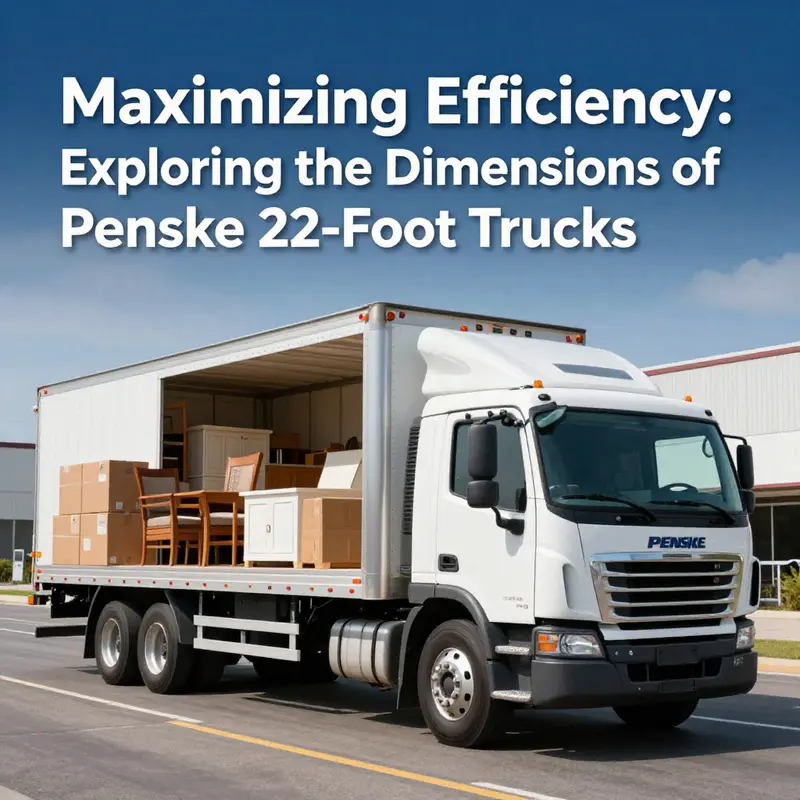
The 22-foot box truck sits in a special niche for customers who need more space than a compact mover offers but don’t want to wrestle with a full-sized tractor-trailer. In practice, it is a mid-size solution that emphasizes maneuverability as much as it does cargo capacity. When you approach the Penske 22-foot model, the numbers begin to tell a story about where this vehicle shines and where it requires careful planning. The interior length runs close to twenty-one feet, while the external envelope sets the boundaries so drivers can gauge parking, loading docks, and street clearance in dense urban settings. The interior width typically hovers around seven feet six inches, and the interior height runs near seven feet four inches. These measurements, while precise in general terms, still vary modestly by model year and specific configuration. The practical result is a box that feels spacious enough for an apartment-grade move or a small commercial shipment, yet compact enough to navigate city blocks, turn in tighter courtyards, and fit into standard loading docks where larger trucks simply cannot. Exterior dimensions account for the walls and framing around the cargo area, so planners, drivers, and customers often use the external size to estimate route restrictions, curbside access, and parking feasibility. Taken together, these dimensions create a vehicle that pairs a reasonable footprint with a cargo volume capable of supporting a broad set of everyday logistics tasks, especially when access points or delivery windows are constrained by time, traffic, or space.
In the context of the broader Penske fleet, the 22-foot box truck stands out for its balance. It is notably capable of handling household goods and small business shipments without the heavier fuel footprint or operating costs associated with larger trucks. The interior length, nearly 21 feet, translates into meaningful room for clothing racks, mattress sets, packed boxes, and furniture components. Yet because the truck is not as large as some long-haul models, it remains more nimble on narrow streets, around corners, and in parking lots that demand careful maneuvering. The width and height are fundamental for planning each move’s sequencing: how long a driveway is, whether a truck can back into a loading dock, and if a curbside drop-off point is feasible without blocking traffic. Those adjustments in space translate directly into practical outcomes for customers who value predictable loading times and straightforward navigation as much as capacity in the back of the truck.
Capacity and payload emerge as the next layer of the conversation. Penske specifies a maximum cargo capacity in the neighborhood of 10,000 pounds for the 22-foot box, which broadens its appeal across various freight types—from large items of furniture to electronics, from retail inventory to general goods. The emphasis here is not simply on the total weight the chassis can bear but on how that weight is distributed inside the cargo area. The internal space—roughly 12 feet in length when fully loaded—offers a robust canvas for packing configurations. Depending on how items are arranged, and how carefully the load is stacked, these dimensions can support as many as 120 medium-sized boxes. Of course, these figures assume efficient packing and the use of proofed packing methods that minimize voids and reduce shifting during transit. In practical terms, customers who plan to maximize the interior volume will often rely on standardized box dimensions, pallets, and a consistent stacking approach that keeps heavier items toward the axle centers for stability. The idea is to preserve handling safety while maximizing the usable cubic footage inside the cargo box, so that the actual number of boxes or pallets carried does not exceed safe limits or strain on the suspension.
One of the enduring advantages of the 22-foot model is its adaptability to different industries without forcing a trade-off between cost and range. Small businesses, contractors, and e-commerce operations frequently turn to this size for its balance of cargo space and cost efficiency. The truck can shuttle a sizable storefront restock or inventory delivery in a single trip, while still negotiating urban routes where a larger truck would be cumbersome or legally constrained. The same box that serves a downtown retailer well can also support a local move for a family upgrading to a larger residence, provided the packing job is organized and the loading sequence is planned in advance. In other words, the 22-foot Penske model isn’t just about raw space; it’s about the predictability and reliability of that space in practical terms—how many items can fit, how quickly they can be staged, and how stable the load remains through the drive. The liftgate, a standard feature on many configurations, is a crucial element of this efficiency. It reduces the physical effort required to get heavy boxes onto or off the truck, enabling a smoother workflow at curbside or within a dock environment. Liftgates excel when a crew is working with bulky furniture or electronics that would otherwise require more hands or specialized equipment. They also mitigate the risk of injury and damage during loading and unloading. However, it’s important to note that adding liftgate equipment or other auxiliary systems, such as refrigeration components, adds weight to the truck and can slightly reduce the maximum net cargo capacity. The balancing act between capacity and accessibility is a recurring theme for operators who want the most versatility from a single vehicle.
From a feature perspective, the 22-foot box truck is designed for practical utility in real-world moving and delivery scenarios. Beyond the liftgate, the box itself is engineered to protect goods from the elements, with reinforced sidewalls and a cargo floor that is built to tolerate repeated loading cycles and the impacts of heavy boxes or pallets. The interior is designed with tie-down points and reinforced floor areas to support proper securing methods, a critical aspect when moving items that could shift in transit. The design supports straightforward access for loading crews, and the cargo area is tall enough to accommodate stacked items that may require a certain degree of vertical organization, particularly when there is a mix of small boxes and taller items like clothing racks or mattress sets. The truck’s height, while not imposing for a typical loading dock, still matters when crossing under bridges or entering facilities with low clearance. These dimensions intertwine with the practicalities of route planning and site access, where a driver’s familiarity with local streets and loading docks can significantly influence the speed and safety of a job.
The environmental angle adds another layer to why the 22-foot model remains a compelling choice for many operators. Penske has been broadening its green fleet initiatives, recognizing that customers increasingly demand lower emissions and better fuel economy. A notable development from early 2026 is the partnership with City Harvest to launch a first-of-its-kind green refrigerated truck fleet. While refrigerated units are not standard on every 22-foot configuration, the move signals a broader industry trend toward cleaner, more efficient transport options, even among mid-size box trucks. For customers who rely on cold-chain transport to maintain product integrity, these developments are particularly meaningful, illustrating how the same box truck platform can evolve to meet evolving regulatory expectations and market needs. The shift toward greener fleets aligns with a broader emphasis on cost containment, as fuel prices fluctuate and customers push for more predictable operating expenses. In other words, the environmental considerations are not abstract; they directly influence how a business plans its logistics, selects vehicle configurations, and negotiates annual rental or lease terms with a provider.
When you factor in the practicalities of daily use, the 22-foot box truck becomes a tool for precise planning as much as for capacity. The interior layout supports straightforward loading sequences, but it also requires a methodical approach to stacking and securing items. For households, this means ensuring that fragile items are grouped by weight and height, with heavier pieces placed toward the vehicle’s center to minimize sway. For small businesses, it means benchmarking inventory placement against the truck’s footprint and securing goods with appropriate restraints, so that a sudden stop or a minor bump does not translate into product damage. The liftgate, while easing the physical load, invites a small but important consideration: the increased weight of the lift mechanism will reduce the net payload by a modest amount, and this must be accounted for in the truck’s center of gravity and weight distribution. Seasoned operators compensate by adjusting packing density, keeping the heaviest items toward the vehicle’s axle lines, and balancing the load to maintain stable handling. A well-planned approach to space within the 22-foot box yields fewer trips, lower labor costs, and a safer, more efficient transit that respects both time constraints and the customer’s expectations.
From a decision-making perspective, the essential questions for most buyers and renters revolve around how much cargo they need to move, what kind of items fill that cargo space, and how frequently they anticipate making trips with a similar configuration. The numbers—10,000 pounds of cargo capacity, roughly 12 feet of usable interior length when loaded, and the potential to carry around 120 medium-sized boxes—provide a practical framework. They enable a customer to sketch a packing plan, anticipate the number of trips, and decide whether a larger truck or a smaller one would more efficiently meet the job’s demands. The Penske 22-foot model thus serves as a reliable baseline within a spectrum of options. It accommodates many common moves and deliveries while maintaining a manageable footprint on the road, a characteristic that appeals to urban operators who must balance efficiency, cost, and access across diverse neighborhoods.
To ground these observations in practical action, consider a scenario familiar to many movers and small businesses: a downtown move that involves multiple flights of stairs for some heavy items, a front door with limited clearance, and a dock at a mixed-use building that requires curbside loading. In such a case, the 22-foot truck’s interior length and width permit a carefully staged loading sequence. Heavier furniture and appliance components can be placed toward the vehicle’s center for balance, while lighter, bulky items are distributed toward the rear to maximize space. The liftgate becomes a quiet ally, enabling easier unloading at the curb while reducing the risk of injury to crew members. At the same time, the height and width constraints mean that the driver must verify access routes before entering a neighborhood with restricted parking or low overhangs. This is where the practical wisdom of the operation becomes clear: the most effective use of the 22-foot box is not simply about the physical space within the cargo area, but about anticipating constraints in the route and designing a loading plan that minimizes time on the street and maximizes the time available for careful placement inside the vehicle.
For those who want to weave sustainability into the decision, the broader trend toward greener logistics offers a compelling incentive. Even as a mid-size box truck remains a relatively efficient option, operators have incentives to optimize engine torque, braking, and acceleration profiles to minimize fuel use during repeated short hops. The green initiatives announced in early 2026 suggest that fleets are evolving to meet modern expectations without sacrificing reliability. In this context, the Penske 22-foot model remains relevant because it can be configured with efficiency-minded options, including liftgates and, where appropriate, refrigeration units that are integrated in ways that minimize drag and weight penalties. The result is a vehicle that delivers practical cargo space and dependable performance without overcommitting to hardware that would escalate fuel costs or complicate maintenance. For customers who value eco-conscious choices alongside capacity and ease of use, this combination becomes a meaningful differentiator when selecting a rental or lease option.
The precise figures, however, are still best confirmed through official channels because model year revisions and available packages can produce small but meaningful variations. The general guidance—approximately 21 feet of interior length, 7 feet six inches in width, and 7 feet four inches in height, with exterior dimensions tweaked to accommodate wall thickness and structure—provides a robust baseline for planning. Yet to translate that baseline into a concrete loading plan or a route, customers should refer to the manufacturer’s specifications for the exact configuration they will rent. This is particularly important for those who anticipate stacking pallets or relying heavily on the liftgate, as those choices influence the final payload and handling characteristics. For a practical look at how driving efficiency figures into the rental choice, see Penske truck gas mileage.
The cross-cutting message here is that a single vehicle can serve multiple roles with the right approach. The Penske 22-foot box truck is not a one-trick tool; it is a versatile platform that supports household moves, local business deliveries, and mixed loads with a level of efficiency that keeps operating costs under control. It stands up to the traffic of urban centers, while remaining manageable for crews who may be newer to box-truck operations or who handle a high volume of recurring moves. The emphasis on practical space, reliable handling, and adaptable features creates a vehicle that can traverse the day with confidence, even when schedules tighten and access rules become more stringent. In the end, the value proposition is clear: the 22-foot box truck offers a reliable, flexible, and scalable solution for the everyday logistics tasks that make local moving and small-business delivery possible and cost-effective.
For those seeking the most precise specifications, the path forward remains straightforward. Consult the official Penske resources or reach out to a local Penske location to confirm the exact interior dimensions, payload, and available equipment for the specific model year and configuration you plan to rent. These conversations are not merely about numbers; they are about aligning the vehicle’s capabilities with the job’s realities—loading constraints, access limitations, and the kind of goods being moved. In many cases, a quick pre-move survey can identify a few adjustments that can dramatically improve speed and safety on move day, such as selecting a liftgate configuration if curbside loading is expected, or opting for additional tie-downs and shelving to secure a variegated inventory. The goal is to translate the broad capacity and dimension data into a concrete plan that reduces risk, minimizes delays, and delivers a smooth, predictable experience for customers and crews alike.
External resource: https://www.fueleconomy.gov
Final thoughts
The Penske 22-foot truck’s dimensions offer an ideal solution for businesses needing a balance between interior space and exterior maneuverability. By understanding both the interior and exterior dimensions, along with the truck’s typical use cases, business owners can make data-driven decisions to enhance their logistics operations. The right dimensions can mean the difference in efficiently moving goods, ensuring that your business operates smoothly and meets customer demands effectively.