
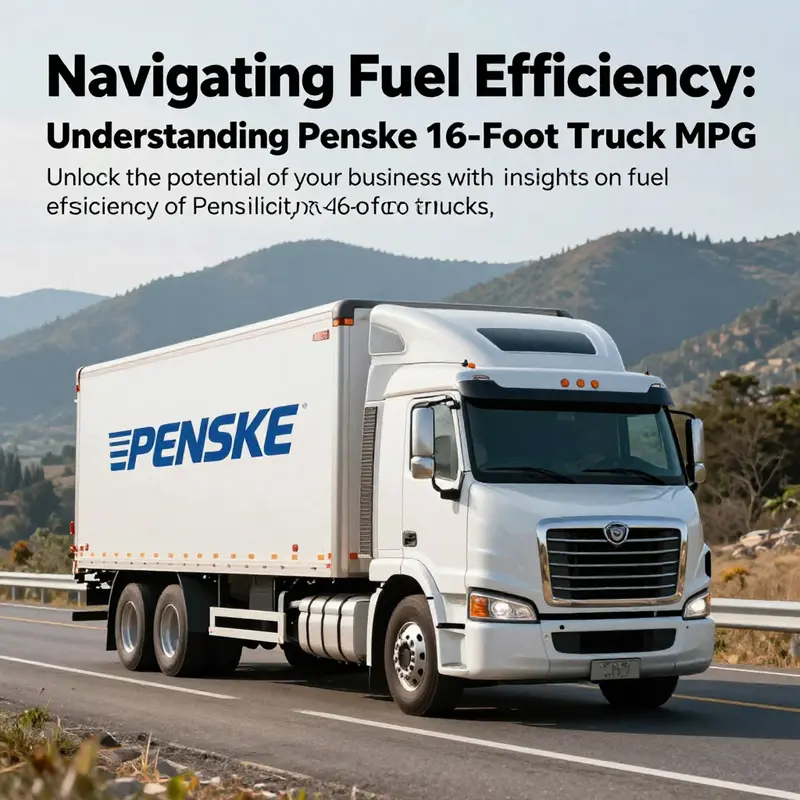
Fuel efficiency is a crucial aspect for any business owner considering rentals, especially with Penske’s 16-foot trucks. Understanding the mileage potential can save costs, optimize budgeting, and influence operational decisions. This article explores various dimensions of Penske 16-foot truck MPG, analyzing how fuel efficiency interacts with different factors and scenarios. From understanding its inherent MPG estimates to examining real-world experiences, business owners will find practical insights here that empower their decision-making in the logistics domain.
Miles Per Move: Demystifying MPG for the 16-Foot Moving Truck
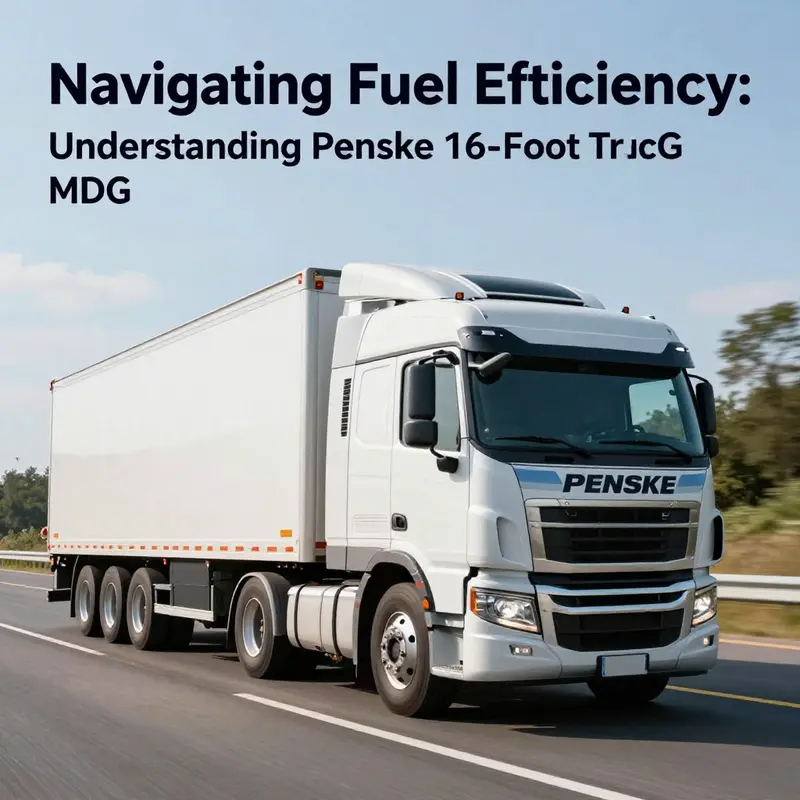
When you plan a move with a 16-foot rental truck, fuel economy becomes more than a number on a spec sheet. It translates directly into dollars saved, time gained, and a smoother journey from apartment or dorm to the new address. The way a small moving truck uses fuel hinges on a blend of engineering choices and real-world habits. For most 16-foot models, the core setup is a gasoline-powered engine paired with a relatively compact, purpose-built body designed to maximize cargo space while keeping weight within manageable limits. A typical gasoline version carries about 33 gallons of fuel, a capacity chosen to balance range with the practical realities of a local or regional move. Under moderate loading and normal driving conditions, this combination yields roughly 330 miles per tank, which comes out to about 10 miles per gallon. Those numbers are estimates, and the actual miles per gallon can drift depending on the weight you haul, the road you travel, and how carefully you handle the vehicle behind the wheel.
The contrast with larger, diesel-powered trucks is instructive but important. Diesel models that scale up to 22 or 26 feet in length often feature much larger fuel tanks—around 70 gallons—and the efficiency can edge upward toward 13 miles per gallon, enabling well over 500 miles per tank. Those figures reflect the broader efficiency benefits of diesel engines at highway speeds and when the vehicle is carrying heavier payloads across longer distances. Yet the 16-foot class, which is typically gasoline-powered, sits in a different efficiency band. The distance you can cover on a single fill is more modest, but the trade-off is a truck that is easier to maneuver in tight urban streets, easier to park in a crowded lot, and usually more affordable to rent on short-notice moves. With both sizes, the operating reality is that fuel economy isn’t a fixed label. It shifts with load, weather, and how you drive.
Crucially, the publicly released EPA ratings for a specific 16-foot rental truck aren’t always published in detail. That absence invites a practical approach: use closely related benchmarks to shape expectations without pretending there’s a one-size-fits-all guarantee. In real-life moves, most drivers see mpg around the 10-mile-per-gallon mark under typical loaded conditions, with meaningful drift as you add weight or push the truck into urban stop-and-go traffic. Driving style matters as much as the engine itself. The U.S. Department of Energy underscores this reality, noting that aggressive acceleration, extended idling, and high-speed cruising can shave fuel economy by as much as 30 percent. In other words, how you drive can be as decisive as what you drive.
With that in mind, there are concrete habits that reliably improve mpg for a 16-foot truck. Start with a calm, anticipatory pace. Accelerate smoothly rather than jolting away from a curb, and anticipate traffic flow so you avoid unnecessary braking and rapid throttle changes. On highways, maintain a steady speed where safe and legal. It’s tempting to push for perceived efficiency by squeezing out a few extra miles per hour, but the reality is the opposite: a modest, steady speed often yields better mpg than a faster, more erratic pace. Coasting into stops rather than waiting for the last possible moment to brake preserves momentum and reduces fuel use. If your route includes hills, try to keep momentum through shallow climbs and use gravity to recover on descents. Engine braking and careful throttle management help the engine stay in its efficient sweet spot, typically around mid-range RPMs, where combustion is most efficient for everyday movement rather than raw acceleration.
Many moves involve more than highway cruising. You’ll spend time circling a loading dock, navigating a residential street, and parking with only inches to spare. In these conditions, payload weight becomes a prominent lever for fuel use. Every extra 100 pounds adds a measurable drag to the drivetrain, demanding more power and, consequently, more fuel. To avoid that drag, pare unnecessary weight before you roll. Inspect the cargo area and remove items that aren’t essential for the move. The distribution of weight also matters: aim for a balanced load so the truck doesn’t labor more on one axle than the other. A well-distributed load reduces rolling resistance and helps the engine work efficiently across the route you must drive.
Tires, maintenance, and basic pre-trip checks are the quiet workhorses of fuel economy. Proper tire inflation not only promotes safety but also improves rolling resistance. Underinflated tires force the engine to work harder, which drains mpg over the course of a trip. A quick inspection—tires, fluids, lights, and a check that the fuel cap is secure—before departure sets the stage for steady performance. Routine engine maintenance plays its part too. A clean air filter, fresh spark plugs where applicable, and timely oil changes ensure the engine operates in its efficient range. When a vehicle marches through more than its share of stops and starts, the importance of a well-tuned system grows: a minor maintenance task can yield noticeable gains at the pump over the course of a long move.
There is also a practical logistics angle that can subtly improve miles per gallon over the course of a day or weekend move. Planning the most efficient route minimizes idle time and reduces the chance you’ll encounter congestion that can turn a smooth ride into a fuel-sapping slog. Agenda-driven staging—loading the heaviest items first, securing loose cargo, and using soft ties to prevent shifting—can prevent unnecessary work for the engine and the tires. The reverse is true as well: disorganization can make you spend more time idling as you search for a specific box or reconfigure the cargo area to fit something else. The smoother and more predictable your operation, the more consistent your mpg tends to be.
For those who want to translate this knowledge into actionable numbers, there are practical tools that bridge the gap between theory and real-world use. An internal reference point can be a fuel-mpg calculator that helps estimate consumption based on payload, route length, and expected driving conditions. This kind of tool anchors plans in reality rather than in optimistic assumptions, and it can be a valuable companion when you’re juggling a tight moving schedule. A concise, well-timed check of fuel forecasts alongside the route plan helps keep both time and cost in line with expectations. If you’re curious to see a straightforward breakdown that aligns with the broader industry benchmarks for this class of mover, you can explore a dedicated resource that distills mpg data for the 16-foot model and related sizes. It provides a grounded perspective on what to expect when you head out with an empty cab and a full trailer of belongings, as well as how the numbers shift when the truck is loaded to capacity. This kind of reference is not a sales pitch; it’s a checklist you can carry into the day of the move to calibrate what a reasonable mpg target looks like given your circumstances.
Ultimately, the take-away is practical: expect roughly 10 mpg under normal loaded conditions for a typical 16-foot gas-powered moving truck, but treat that as a baseline rather than a rule. Real-world mpg will vary based on load, terrain, weather, and how you drive. If you’re moving modestly and planning efficiently, you can often keep mpg closer to that baseline by embracing steady speeds, minimizing idle time, and refining your route and cargo strategy. If, on the other hand, you’re moving through a rugged route with lots of stops, heavy payload, or aggressive driving, you should anticipate a lower figure and adjust your planning accordingly. In either case, a balanced approach to loading, route planning, and driving technique is the most reliable way to translate fuel into forward momentum.
For a practical, concrete look at mpg specifics and related calculators, this resource provides a concise, approachable foundation that complements the mechanical realities discussed here. It’s a good companion to a fuel-efficiency guide that outlines the broader considerations each mover should weigh before departure. The goal isn’t to chase a perfect number but to align expectations with the realities of the day’s drive, the weight of the cargo, and the rhythm of the road. To dive deeper into the topic and see how a number-crunching approach translates into our moving plans, consider the following internal resource: truck mpg guide.
No matter which route you choose, the fundamental truth remains clear: mpg is not a fixed badge of honor on a rental truck. It’s a dynamic intersection of engineering design, cargo discipline, and the art of steady, thoughtful driving. Treat it as a daily partner rather than a distant statistic, and you’ll find that the miles stretch farther than you might expect. As you prepare for the move, pair your practical load planning with mindful driving habits, and you’ll turn the 16-foot truck into a surprisingly efficient ally on the road.
External resource: For an authoritative, manufacturer-facing perspective on fuel efficiency and best practices, consult the official fuel efficiency guide provided by the truck rental network: https://www.pensketruckleasing.com/fuel-efficiency-guide
null
null
Fuel in Motion: Reading 16-Foot Truck MPG Realistically Across Moving Scenarios
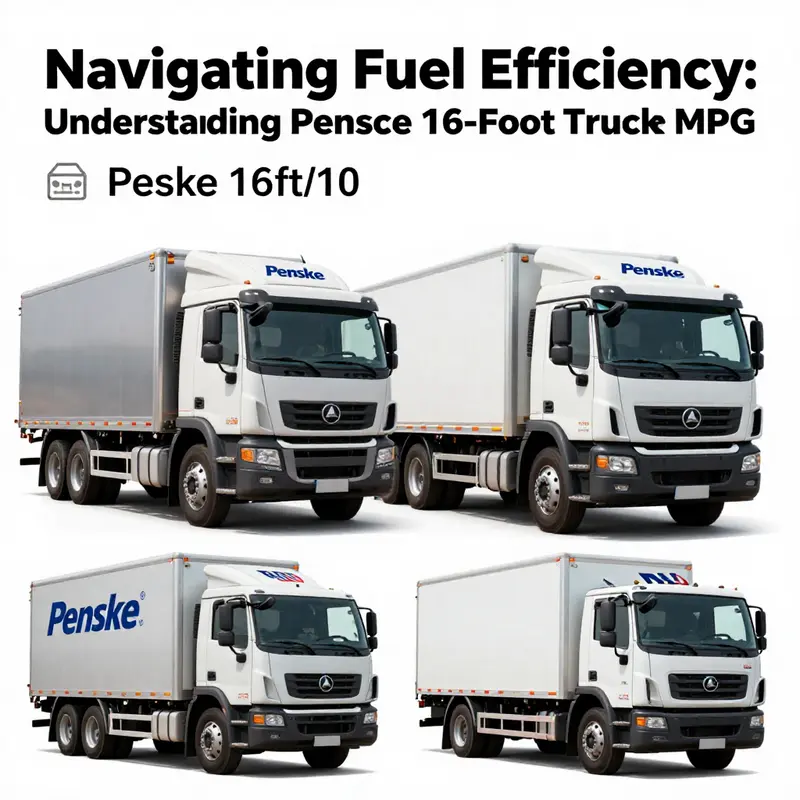
Planning a move hinges on more than just the route. It hinges on understanding what your 16-foot rental truck can really deliver in fuel economy once you load it, hit the highway, and start counting miles. The numbers you’ll see on glossy brochures rarely match the needle when you’re navigating hills, wind, city traffic, and a full cargo bay. In practice, fuel efficiency is a moving target shaped by weight, speed, and the conditions of the day. The conversation about miles per gallon for a 16-foot truck begins with a simple distinction: diesel-powered chassis versus gasoline-powered ones, and then it expands to how much you’re actually carrying and where you’re driving. In many rental operations, the diesel variant is presented as the more efficient choice for longer hauls or heavier loads, while the gasoline model often shows a higher echo in empty or light-load scenarios. But the truth lies not in the brochure but in the road, and a careful read of how these machines behave under load helps you plan cost and schedule with greater accuracy.
From a high level, the diesel-equipped 16-foot trucks tend to run with noticeably better efficiency per mile when you compare them to their gasoline-only counterparts under typical moving conditions. When a vehicle sits on a diesel platform, the engine is tuned for torque and long-haul endurance, achieving steadier power and a more favorable energy conversion in the same cargo footprint. The upshot is a more favorable miles-per-gallon under load, and a longer effective range per tank. Yet even here the story isn’t a single number. Real-world MPG depends on the cargo’s weight, the aerodynamics of a loaded box, and how aggressively you pace the journey. At highway speeds, a well-maintained diesel 16-foot truck often maintains a more consistent RPM window, reducing the energy wasted by frequent acceleration and braking. That translates into fewer trips to the gas pump during a long day on the road and a more predictable fuel budget for the move.
In the other corner, gasoline-powered 16-foot trucks generally deliver a higher-quoted efficiency in theory, especially when the box is empty. The empty, gas-only configuration can approach the 10 to 12 mpg range on paper, which sounds appealing for short hauls or client moves that aren’t loaded to the rails. The moment the cargo arrives, gravity and weight shift the math. Heavier loads pull the efficiency down, and the difference between a diesel and a gasoline unit tends to become more pronounced. Even with a lighter footprint, the latest gasoline engines fight to keep pace with the torque and sustained power of diesel, particularly when you’re negotiating long inclines or maintaining momentum with a bulky load.
To ground this in practical numbers, consider a typical 16-foot truck’s real-world footprint. Diesel-powered configurations, under normal operating loads, tend to hover in a broad range around the mid-to-high single digits miles per gallon—roughly 7 to 9 mpg. That band reflects a comfortable balance between payload, speed, and road proficiency. It also aligns with the observation that fuel economy tends to drop as the cargo grows heavier or as you push the engine to higher speeds and steeper grades. On long stretches with a full load, the efficiency advantage of diesel often shows up as more miles per gallon per gallon of fuel, translating into longer trips per tank and a bit less time spent refueling.
Gas-powered 16-foot trucks, when evaluated in the same context, frequently show a higher potential MPG when empty or with very light loads. Real-world scenarios, however, reveal a more nuanced picture. An empty gas-powered 16-foot truck might achieve roughly 10 to 12 mpg, but this is a scenario far from the full-load reality of most moves. Once cargo is loaded, the MPG can fall to the same neighborhood as the diesel—roughly in the 7 to 9 mpg range—depending on how much weight is pushed against the drivetrain. The moral here is not that one type is universally better; it’s that the advantage shifts with how you use the truck. If you’re planning a long-haul move with substantial cargo, diesel’s efficiency and range stability tend to win out. For a quick, light, or short move, a gasoline model could feel more economical, but the margin is slim once the box is loaded.
Another practical frame for judging MPG is the concept of range per tank. Gasoline 16-foot models—across generic holdings—can claim up to somewhere near 400 miles per tank on paper. In real-life terms, with a full load, you’re more likely to see a range that tracks the 300 to 330 miles mark. Those numbers matter because they shape your planning: the number of fuel stops, the time spent refueling, and the total trip time. With diesel, the same route typically yields more miles per tank, thanks to the energy density of diesel and the robustness of the diesel engine under a heavier workload. The true value shows up not solely in the miles per gallon but in the ability to sustain higher mileage between fuel stops, a feature often welcomed on longer, heavier moves.
Of course, fuel economy doesn’t live in a vacuum. The load’s weight, the shape of the cargo, and the environment all sculpt the journey. A full box imposes drag, and the wind resistance from a loaded back can shave a few tenths off your MPG, especially on gusty days. Hills and winding roads demand extra torque—an arena where diesel-powered units typically shine due to their strong torque curves. In city driving, stop-and-go conditions erase some efficiency benefits, while steady freeway cruising tends to magnify them. Tire inflation, maintenance history, and engine health also enter the equation. A well-tuned engine with properly inflated tires can outperform a neglected one, even if both trucks share the same chassis.
Given the variability, how should a mover approach this question during planning? Start by defining the move’s scope: how heavy is the cargo, what’s the expected distance, and what route will you take? If the cargo is heavy and the distance is long, lean toward the diesel option for a steadier range and fewer interruptions for fuel. If the move is short, the cargo light, and the route is straightforward, a gasoline model can deliver favorable results in the right conditions. In either case, the smart move is to estimate fuel costs with a cushion for variation. A simple method is to compute miles per gallon for your chosen configuration and multiply by the number of gallons needed for the trip. Then insert a realistic price per gallon to approximate fuel costs. For example, a 350-mile leg with a 7 mpg diesel setup would require about 50 gallons of fuel, and a mid-range price per gallon would yield a concrete fuel budget you can carry into the logistics plan. If the same distance is tackled with a gasoline unit at 10 mpg, you’ll need about 35 gallons for the trip, tightening the budget further but potentially increasing the number of stops depending on tank size. These calculations help you avoid surprises on the day of the move and keep your overall cost profile honest.
From a decision-making lens, it’s also helpful to consider the available information about tank ranges and fuel strategies from official resources. If you want a concise, official reference on how fuel ranges are presented and what factors influence the numbers, you can consult the fuel range guidance provided by the rental provider in question. This type of resource explains, in practical terms, how to interpret claimed range figures and how to translate them into a real-world plan. For movers who want to minimize the risk of running out of fuel mid-move, leaning on the guidance from these official resources provides a reliable compass for planning and budgeting. A quick reference, for those who want a tangible starting point, is the 16-foot truck page, which offers dimension and payload context that helps you gauge how much cargo you can carry before the weight begins to bite into efficiency. See the internal reference here: 16-foot-truck.
Importantly, these numbers are snapshots that shift with maintenance and practice. The vehicle you choose, the load you carry, and the distance you travel are the triad that determines fuel costs. If you’re preparing for a move that spans multiple days or involves challenging terrain, developing a fuel-savvy plan becomes part of the moving strategy. It’s not just about getting from point A to point B; it’s about doing so with predictable costs and a realistic timetable. The more accurately you model the fuel scenarios ahead of time, the fewer surprises you’ll face when you’re in the thick of the day’s tasks.
In the end, the MPG conversation for a 16-foot rental truck isn’t a single verdict. It’s a spectrum that widens or narrows according to cargo weight, driving style, and route. Diesel configurations tend to offer stronger efficiency under load and greater range per tank, which makes them a sensible choice for longer, heavier moves. Gasoline variants can perform admirably for lighter or shorter moves, especially on routes that stay mostly flat and where fuel stops can be scheduled with predictability. The guiding principle is to quantify your move clearly: map the miles, estimate the load, sketch the route, and calculate the fuel costs with a margin for the unknowns. Then, choose the truck type that aligns with the scale of your move and your tolerance for refueling stops. This approach turns a potentially opaque figure into a practical, actionable part of your moving plan.
External resource: For a current, official range guide and deeper guidance on fuel ranges, see Penske’s Fuel Range Guide: https://www.penske.com/truck-rental/fuel-range-guide
Fuel, Freight, and Finances: Decoding MPG for a Penske 16-Foot Moving Truck
Every move carries a math problem hidden in the miles, loads, and fuel gauge. The 16-foot box truck, a stalwart for small moves and light commercial jobs, sits at the intersection of space and efficiency. In practical terms, fuel efficiency, or MPG, is not just a number on a spec sheet. It is the hinge that can swing a move from manageable to costly. When you consider renting a Penske 16-foot truck, you are weighing the value of space against the cost of fuel, a balance that shifts with weight, speed, and distance. The most common engine configuration for these trucks is diesel, a choice that tilts MPG in favor of longer hauls and heavier loads. The general estimate for a diesel-powered Penske 16-foot truck, under typical moving conditions and with a full load, is roughly 7 to 9 miles per gallon. The idea is simple: diesel engines burn fuel more efficiently under load and at cruising speed, which matters once you start stacking furniture, boxes, and appliances into a confined box on a moving day. The real world, however, does not always honor averages. Load density, road grade, air resistance, and driving style all push MPG in one direction or another. And while the diesel variant often comes out ahead of its gasoline sibling, the gap narrows once you consider the full spectrum of moving conditions. For the most accurate, real-time data, it helps to consult the official rental guides and model-specific figures, then layer in your unique travel plan. If you want a concise, data-backed snapshot of MPG specifically for these trucks, a dedicated resource walks you through the typical ranges and the factors that move the needle: Penske truck MPG. See more here: Penske truck MPG. In the end, your best forecast comes from combining known ranges with a plan that anticipates fuel stops rather than avoids them entirely. The numbers below summarize what you can expect and why they matter for cost planning, route design, and loading strategy.
Fuel efficiency and range are often presented first in a vacuum, but their real power lies in the way they shape decisions about distance, timing, and money. When the truck runs on diesel, the typical MPG range is coupled with the load profile you carry. In other words, the more you load, the greater the drag and the higher the fuel per mile. The diesel option generally yields better mileage than gasoline, but the difference is not infinite. The trade-off centers on upfront rental cost and the economics of fuel consumption over the life of a move. A fundamental rule emerges: keep the truck within its efficient operating window and avoid pushing it to extremes of speed and weight. The longer you stay within this window, the more predictable your fuel costs become, which is essential for a moving budget that requires precision.
To ground the discussion in concrete figures, consider the following realities drawn from practical experience and the literature on these trucks. Gas-powered trucks, when empty, can push a maximum range of up to 396 miles per tank. This upper bound provides a useful benchmark for planning phase one of a move: short, apartment-to-apartment runs or tight neighborhoods where distances between fuel stops are smaller. Yet the picture shifts the moment the truck is loaded for a move. Real-world driving conditions typically reduce that range to approximately 300 to 330 miles. The drop is not trivial. It reflects the additional energy required to haul a heavier payload, navigate through traffic with more frequent starts and stops, and manage air resistance as the vehicle carries a bulkier profile. The impact on cost is direct: more frequent refueling translates into higher operating expenses, even if the per-mile fuel cost is modest.
Diesel-powered trucks bring their own advantages. They generally offer better fuel economy than their gasoline counterparts at similar loads, and they tend to deliver longer ranges. Longer range translates into fewer stops, less downtime, and the potential for lower cumulative fuel expenses on longer hauls. That said, diesel engines have their own set of considerations. The MPG range typically remains within the 7–9 miles per gallon band under normal operating loads for a Penske 16-foot truck, but the actual number can drift depending on how heavily you load the box, the route’s terrain, and the driving tempo. It is important to underscore that these figures are averages, not guarantees. A high-speed stretch on an open highway or a steep ascent can erode fuel efficiency just as a flat, steady glide on a windy day can preserve it. The upshot is that diesel offers a better baseline, but the traveler must still plan for the variability that any moving project invites.
Beyond the numbers, the decision to use a 16-foot model starts to feel less like a technical choice and more like a strategic one. This size is frequently described as balanced—large enough to handle a two-bedroom apartment’s essentials without overcommitting on vehicle handling or fuel costs, yet not so vast that maneuverability becomes unwieldy in urban streets and tight building corridors. For many moving scenarios, this balance translates into manageable driving fatigue and lower accident risk, which, in turn, reduces non-fuel costs like insurance, wear, and tear. In practice, the 16-foot box truck can be a practical middle ground for people who want to avoid a larger truck that can escalate fuel use and require more space to park and operate. For those working with smaller commercial tasks, the same logic applies: optimal MPG is a cornerstone of budgeting, but only when aligned with load planning, route optimization, and maintenance discipline.
Cost forecasting emerges as the most actionable thread weaving together MPG, range, and decision-making. When you build a forecast, you start with distance and an MPG estimate that reflects loaded and unloaded states. Fuel price volatility then becomes a second layer of risk. If you plan a move with a known distance, you can compute a baseline fuel cost by dividing the miles by the expected MPG and multiplying by the current fuel price. Add the rental rate, insurance, and any ancillary fees, and you begin to see the comprehensive cost picture. The math becomes more complex if you anticipate many refueling stops or if the trip involves hilly terrain or heavy city traffic. In those cases, the MPG assumption should be adjusted downward to account for the higher energy demand. The broader takeaway is simple: accurate cost forecasting hinges on realistic MPG inputs that reflect how you will actually drive the truck. Planning with this in mind helps ensure you do not underestimate fuel, which is often the second-largest line item after the rental itself.
A practical takeaway for anyone planning a move is to recognize the 16-foot model’s role as a capable, versatile tool rather than a miracle solution. Its value rests in the combination of space, ease of navigation, and predictable fuel behavior. For smaller residences—such as a two-bedroom apartment—the 16-foot box often represents a sweet spot where you can consolidate trips, minimize back-and-forth, and keep the total move within a reasonable time frame and cost. The MPG factor remains central to this calculus. Heavier loads and higher speeds eat into the miles-per-gallon, which means more fuel stops and more time spent behind the wheel. Slower, steady driving with proper load distribution helps maintain fuel efficiency and reduces wear on the vehicle, a practical win for both the purse and the schedule.
As you weigh options, the available references can serve as a helpful compass. For model-specific figures and the newest, most precise data, consult the Penske truck rental guides and fuel-related resources. The page that anchors this discussion, Penske’s MPG-focused guidance, provides a focused look at how MPG behaves across loading scenarios and distances, helping you map fuel costs to your route plans. Internal planning tools and calculators can translate those MPG ranges into dollar figures, giving you a concrete budget path. If you want to explore the MPG data further, you can visit the dedicated resource linked above.
In sum, the economic calculus of renting a Penske 16-foot truck centers on a few core truths. Diesel typically beats gas on fuel economy under load; empty ranges are generous but drop with weight. The diesel variant’s broader ranges can mean fewer refueling stops during longer moves, which can lower total fuel costs even if per-mile rates are modestly higher. For many moves, especially those involving a two-bedroom apartment or light commercial tasks, the 16-foot model offers an efficient blend of capacity and handling that keeps fuel waste in check. The most prudent planning step is to forecast costs with realistic MPG expectations that account for load, terrain, and driving behavior. When in doubt, compare the fuel estimates against rental costs and plan a route that minimizes unnecessary idling and stop-and-go driving. By framing the move through the lens of fuel economy, you can make choices that preserve your budget without compromising on space or safety. For further context on up-to-date, model-specific information, reference the official rental guide. External resource: https://www.penske.com/truck-rental
Fuel in Motion: Real-World MPG Dynamics of a 16-Foot Moving Truck Across City, Highway, and Load Conditions
The moving process places a practical, almost daily, demand on fuel efficiency that goes beyond sticker numbers and engine specs. A 16-foot truck, chosen for its balance of cargo capacity and maneuverability, becomes a moving classroom where weight, aerodynamics, road grade, and driving style teach you the bottom-line truth about miles per gallon. In the most common configurations of these trucks, fuel economy is not a fixed number but a moving target that shifts with the tempo of the move: the amount of furniture or boxes loaded inside, the density of traffic, the route you choose, and how consistently you maintain speeds on highway stretches. The data in front of us come from real-world observations across typical moving scenarios, offering a pragmatic picture of what to expect when your goal is to minimize fuel stops, maximize reliability, and keep a move within a sensible budget. The core takeaway is simple: fuel economy for a 16-foot moving truck is strongest when you plan for steadier driving and lighter loads, and weakest when you confront heavy payloads and urban stop-and-go rhythms. Readers who are planning a move should internalize this dynamic as a planning tool, not as a single, unchanging fact.
Across the spectrum of moving scenarios, the most reliable baseline is to think in terms of mpg under normal operating conditions. In gasoline-powered 16-foot trucks, the typical range is around 10 to 12 miles per gallon, with the precise figure nudging upward on long, uninterrupted highway stretches and dipping in dense urban corridors where idling, frequent stopping, and rapid acceleration dominate. This is not a hard law carved in stone; it is a practical estimate that reflects the way these trucks respond to the rhythm of a real move. In urban settings, where congestion forces continual braking and restarting, efficiency tends to cluster near the lower end of the range—around 10 mpg. The logic is straightforward: every stop requires downshifting, braking, and a fresh surge as you roll away from red lights or into a parking space. The drag of the cab and box, plus the weight of the cargo, magnifies the impact of those accelerations and decelerations. The more you can average a steady pace, the closer you inch toward the upper end of the mpg band.
On highways, where speeds remain more constant and the truck can leverage momentum over longer runs, the mpg typically climbs toward 11 or 12 miles per gallon. The efficiency gain comes from fewer stops, smoother throttle application, and often the use of cruise control to maintain a steady pace. Highway conditions also reduce the number of idling minutes, which matter more than many movers anticipate, because the engine is running but not contributing to forward momentum. In this sense, highway mileage is less an abstract statistic and more a window into the potential for a long, fuel-efficient haul. Yet even within highway runs, there is an important caveat: maintaining a consistent speed does not negate the impact of load. A fully packed 16-foot truck must still fight the added weight, which invariably drags mpg downward from the idealized figure. In such loaded scenarios, even on the open road, you may see mpg settle in the 9 to 10 range. The physics are simple. Extra mass requires extra energy to maintain velocity, especially on grades or when gusts of wind combine with weight to create opposing forces that the engine must overcome.
If your move involves a full cargo load—furniture, boxes, household goods—the real-world mpg can fall toward the lower end of the spectrum. The load not only adds static weight but also changes the truck’s handling characteristics. Turning radii and wind resistance interact with the box’s footprint, subtly altering aerodynamics. In practice, a heavily laden 16-foot truck will often land in the 9 to 10 mpg band, a mark that still holds relatively steady on highway segments but noticeably undercuts the empty-state efficiency we see on lighter runs. This is precisely why route planning and load management matter. An extra few trips to reconfigure a space or compact items more efficiently can translate into meaningful fuel savings over the course of a move. The lesson is not to minimize cargo space but to optimize how the space is used and balanced.
A point of nuance that frequently surfaces in discussions of fuel economy is the type of powertrain. The dataset this chapter leans on notes that many 16-foot trucks in rental fleets employ gasoline engines, and those engines deliver a predictable mpg profile. Nevertheless, there is literature and industry commentary suggesting diesel variants can offer superior efficiency and longer range in certain moving contexts. The difference hinges on several interacting factors: torque curves, engine efficiency at different RPM bands, and the way each powertrain handles payload and hills. When the truck is empty or lightly loaded, a gasoline engine’s efficiency is competitive, and highway mpg benefits from the smoother, steadier cruise. Yet as payload grows and miles accumulate, some operators report diesel-equipped units achieving lower or higher mpg depending on routing, terrain, and maintenance state. The bottom line for a moving consumer is to consult the specific unit’s data sheet and the rental provider’s fuel-range estimates for the exact vehicle one plans to drive. In the broader conversation, diesel variants can promise improved efficiency in some routes, but the benefit is not a universal guarantee and depends on real-world operating conditions.
For those who want a quick reference that distills these patterns, Penske truck gas mileage provides a concise overview of typical mpg ranges by scenario. It reinforces the idea that the moving truck’s fuel economy is a function of weight, speed, and distance, rather than a single constant figure. While the numbers can feel abstract when you’re staring at a packed cargo hold and a long distance, they become actionable when you translate them into fuel budgeting and route planning. This starts with a simple practice: estimate your cargo volume and weight, map your route to minimize backtracking, and then select a driving pace that aligns with fuel efficiency rather than merely pressing to arrive quickly. The practical implication is that moving is not just about logistics, it is a calibration exercise where fuel, time, and space must be optimized together.
Beyond the obvious urban-versus-highway dichotomy and the loaded-versus-empty comparison, there are additional factors that shape mpg in meaningful ways. Tire condition and pressure, alignment, and wheel bearings all contribute to rolling resistance. A well-maintained truck that rolls smoothly tends to shrink the gap between actual mpg and the idealized baseline. Wind direction and gusts can alter efficiency in dramatic ways, especially on longer corridors where even slight crosswinds become a steady drag. Road grade matters as well; a steep climb demands more energy, and the mpg will dip in those segments, with recovery possible on descents as gravity assists the momentum. Then there is driver behavior: aggressive acceleration, frequent gear changes, and extended idling can all erode fuel economy. A disciplined approach—anticipating stops, lifting off the accelerator earlier, and using the engine brake when suitable—can yield measurable gains over the course of a move.
This material also invites a broader planning mindset. Real-world fuel economy is about expectation management as much as it is about engine performance. If a move involves multiple loading and unloading stages across a single day or across several days, fuel planning should reflect the possibility of variable mpg. A single overnight, multi-stop move may experience a different mpg trajectory than a single, continuous interstate haul. In practice, this means building in contingencies in the move budget and using fuel-range estimates to inform decisions about route, timing, and even vehicle choice. Where possible, consolidating trips or choosing a route with fewer congested corridors can push mpg toward the higher end of the range, yielding not only lower fuel costs but also reduced wear and tear from start-stop cycles.
The numbers tell a story, but the story is best understood through the lens of planning, execution, and learning from each move. In the end, the 16-foot truck serves as a practical reminder that reliability and efficiency are inseparable. A well-planned move minimizes fuel stops, reduces the risk of running out or needing a last-minute emergency fill, and helps keep the schedule intact. The best approach blends a conservative load plan with a flexible driving strategy that honors the natural variability of mpg across urban and rural landscapes. In that blend lies the real-world value of knowing how mpg behaves in different scenarios and how to translate that knowledge into smarter, smoother moving experiences.
For readers seeking more structured fuel-range guidance from the provider, the official resource linked below offers a framework for estimating fuel needs based on vehicle specifications, route length, and typical driving conditions. It is a practical companion to the on-the-ground observations described above and can help transform rough estimates into actionable planning figures for a move. External reference: https://www.penske.com/truck-rental/fuel-range
In sum, the mileage you can expect from a 16-foot moving truck depends on how you move as much as on what you move. Urban stop-and-go will drain mpg toward 10, city blocks and tight parking spaces will squeeze every mile, and a highway corridor with a steady pace and a light cargo load can push you toward 11 or 12 mpg. Heavier loads will pull you back toward 9 or 10 mpg, but with careful planning and a calm driving rhythm, you can still traverse substantial distances between fuel stops. The framework is simple: know your load, plan for the route, drive with anticipation, and treat fuel as a finite resource you optimize rather than an unlimited cost. As you prepare for a move, carry this understanding into your route design, your packing strategy, and your daily driving habits. The result is not just a successful relocation but a smoother, more economical journey from origin to destination.
Final thoughts
The insights outlined in this article pave the way for informed decision-making for business owners venturing into logistics. Understanding the MPG of Penske 16-foot trucks, alongside the factors that influence it, is crucial for optimizing costs and operational efficiencies. As logistics play a vital role in success, having a solid grasp of these factors will empower you to make better choices for your business moving forward. Embrace the data and leverage the performance of Penske trucks to enhance your logistics strategy.