
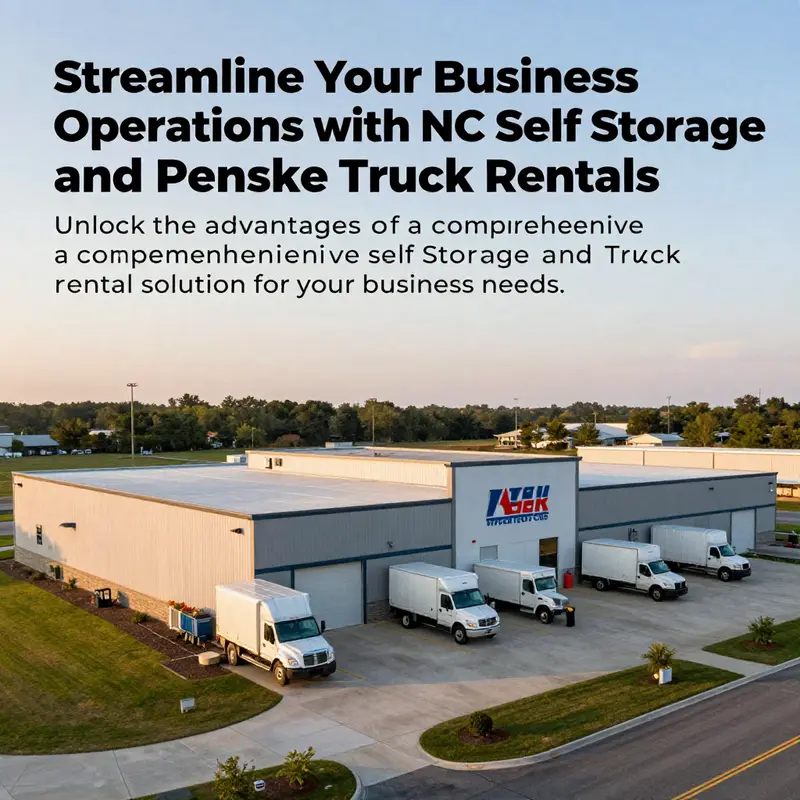
In today’s competitive business landscape, maintaining flexibility and efficiency is essential for success. Business owners often face challenges related to storage and transportation, especially during moving or transitioning phases. NC Self Storage and Penske Truck Rentals in Southern Pines, North Carolina, offer a synergistic solution designed to meet these needs head-on. This article delves into their services and features, exploring how combining storage can enhance business operations, streamline logistics, and improve customer experiences, while also addressing cost considerations. By the end, you’ll have a comprehensive understanding of how these services can bolster your business efficiency.
Coordinated Hands: How NC Self Storage and Penske Truck Rentals Streamline Moves, Storage, and Growth in Southern Pines
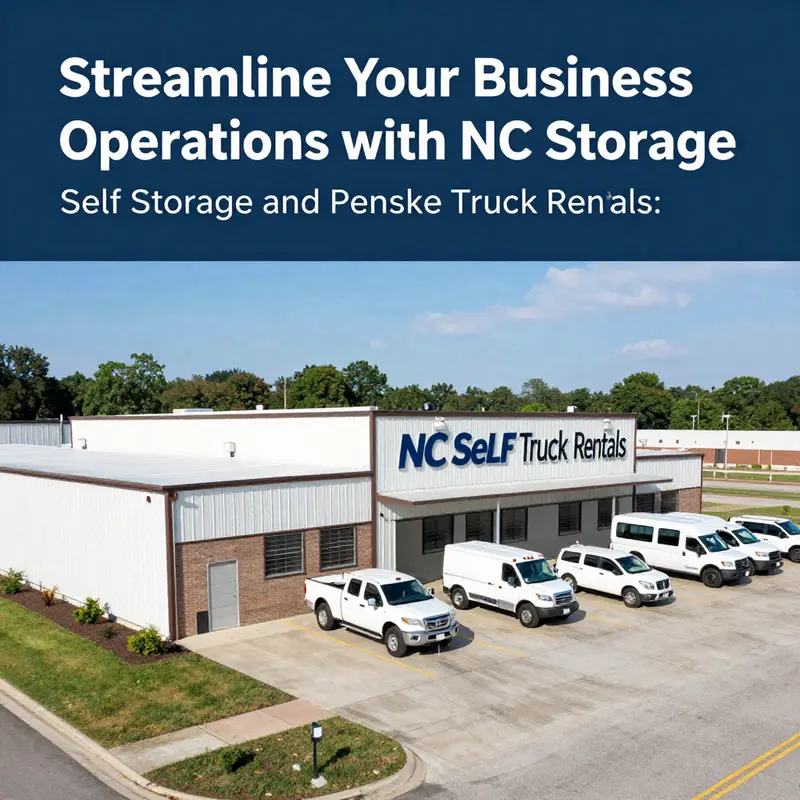
In Southern Pines, North Carolina, a careful blend of storage security and moving capability creates a practical, end-to-end solution for households and businesses navigating change. The facility at 209 Trimble Plant Rd sits at a crossroads of utility and reliability, designed to move people from one phase of life to the next with minimal friction. The site embodies a simple premise: a customer should not have to juggle multiple vendors to accomplish a single, meaningful task—store possessions today, move them tomorrow, or manage inventory without disruption. The architecture of the operation mirrors that premise. The self-storage units are climate-controlled, a feature that matters more than it might in milder climates because it protects fabrics, electronics, photographs, important documents, and business records from humidity swings that degrade materials over time. Humidity control and temperature stability are not mere luxuries in this setting; they are essential safeguards for items that customers plan to keep, renovate around, or simply bridge between living arrangements. The climate-controlled environment is paired with a drive-up accessibility design, enabling straightforward loading and unloading. In practical terms, this means clients do not have to wrestle with elevators, stairwells, or long hallways when they bring in or retrieve items. A single, direct path from vehicle to unit shortens the process, reduces the risk of incidental damage, and lowers the stress that often accompanies relocation projects. The facility emphasizes security and on-site management, with a staff ready to respond to questions about unit sizes, lease terms, or insurance options. The combination of 24/7 access and robust on-site oversight delivers a reassuring, almost anticipatory form of service. Customers can enter their units any time they need, which is increasingly important for people balancing work, family commitments, or business hours that don’t align with a traditional storage facility schedule. For many, the flexibility is as valuable as the security—the ability to stage a move, then pause storage while home renovations take shape, then pick up possessions again when the house is ready for occupancy.
The practical benefits of this setup extend beyond personal relocations. Small businesses, contractors, and seasonal operations can use the facility as a scalable inventory hub. A business in transition might store excess equipment during a downsizing, then pull items back for a critical project without disrupting normal operations. The service model acknowledges that storage and moving are not isolated tasks but interconnected activities that grow more efficient when coordinated under one roof. Flexible lease terms further reinforce this efficiency. Month-to-month arrangements provide agility for clients whose plans remain uncertain or prone to rapid change, while longer-term leases offer stability for those who need to guard inventory or preserve critical records through a transition period. The option to add publishing and packaging supplies on-site—an often-overlooked convenience—simplifies the logistics of packing, labeling, and organizing a move. Insurance options layered into the storage program extend the protective net, giving customers confidence that their belongings are safeguarded against unforeseen events, accidents, or theft. The customer experience in such a setting is designed to reduce the cognitive load of moving and storage, turning a potentially stressful process into a sequence of well-paced, predictable steps.
The relationship with Penske Truck Rentals amplifies this stability by providing a reliable, well-maintained fleet tailored to the tasks customers face. Penske’s approach to vehicle readiness emphasizes safety, reliability, and efficiency—critical considerations for both personal moves and business relocations. The fleet includes box trucks and step vans in sizes that accommodate a wide range of needs, from family-sized moves to mid-sized commercial relocations. Each vehicle benefits from regular maintenance, modern amenities, and features that support smooth operation on the road. GPS tracking and driver-assistance technologies contribute to safer journeys, a crucial factor when navigating unfamiliar routes or managing time-sensitive moves. The availability of insurance options tailored to different customer scenarios adds another layer of protection, helping clients manage risk as they transport belongings across town or across state lines.
Another core advantage is the accessibility and convenience that stem from the one-stop practicality of combining storage with rental trucks. When a client plans a move, they can reserve a Penske truck in conjunction with space at the NC Self Storage facility, creating a streamlined plan that minimizes the number of steps between loading and unloading. This integrated approach reduces the likelihood of miscommunication and logistical delays, which can otherwise derail even well-planned relocations. Consider the scenario of a homeowner preparing a residence for sale or a tenant awaiting new construction. A Penske truck can transport belongings to a temporary storage unit, where the climate-controlled environment protects items during a renovation. Later, as the project wraps up, the same customer can retrieve everything and transport it to the new location in a single, coordinated operation. The synergy is especially valuable for businesses managing inventory during a relocation, a seasonal surge, or a consolidation project. By aligning storage needs with flexible transportation options, the process becomes smoother, safer, and more predictable—a considerable competitive edge in markets where time and budget constraints frequently collide.
For customers who value guidance through the process, the on-site professionals at the Southern Pines facility provide hands-on support that blends knowledge with practical experience. They can help determine the right storage unit size based on the customer’s inventory, advise on climate control requirements for sensitive items, and review insurance options to ensure adequate coverage. The goal is not only to protect belongings but also to empower customers to plan more effectively. The team can discuss the nuances of lease terms, such as the difference between month-to-month arrangements and longer commitments, to help clients choose a configuration that aligns with their timelines and budgets. A key aspect of this guidance is the transparent communication around access hours, which in this setting extend beyond typical business hours, allowing for late-evening or weekend retrieval when life’s demands demand flexibility. The ability to plan with confidence—knowing that a storage unit is accessible and that a rental truck is ready when needed—transforms what might be a chaotic moment into a managed, controllable project.
From a design perspective, the combined service offering is also a testament to how physical space can be optimized for multi-purpose use. The storage facility is not just a place to tuck items away; it is a staging area for movement and a platform for inventory management. The climate-controlled units preserve the condition of stored goods, reducing the risk of deterioration or damage that could complicate later returns to customers or clients. The drive-up access feature eliminates unnecessary handling, lowering the chance of mishaps during loading and unloading and enabling more predictable timeframes. The Penske trucks, with their standardized maintenance schedules and clean, well-maintained interiors, complement this by providing a reliable, efficient means of transport. The alignment between the factors—environmental control, user-friendly access, maintenance-driven reliability, and flexible scheduling—creates a cohesive system that can adapt to shifting needs, whether a family is moving across town or a business is relocating to a new facility.
A practical illustration helps illustrate how this system functions in real life. A family planning a near-term move to a larger home in a nearby town can begin by renting a suitable storage unit to facilitate packing. As weekend work sessions accumulate and furniture is prepped, a Penske truck can shuttle items to the storage facility in manageable batches, with loading assistance and a clear plan for sequencing. When the old house is ready for sale, or the new home is prepared for occupancy, the same customer can shift from storing to transporting with a single, consistent point of contact. Businesses, too, benefit from this symmetry. Inventory can be organized in climate-controlled storage, then moved in staged shipments using Penske trucks when a relocation or consolidation is necessary. The predictability of costs—clear lease terms for storage and transparent pricing for truck rentals—helps managers forecast expenses with greater accuracy. And for those who are testing different configurations—perhaps swapping out shelving systems, reconfiguring warehouse layouts, or trialing a new distribution plan—the flexibility to adjust either storage space or vehicle allocation without complex procurement processes is a tangible advantage.
To reinforce the user experience, it helps to consider how customers interact with both components over the course of a project. The process often begins with an assessment of what needs to be moved or stored, followed by a careful planning session in which unit sizes are matched to inventory and the appropriate truck size is selected. Online account management, where available, adds another layer of convenience by letting clients review contracts, schedule access windows, or adjust bookings from a single dashboard. Packing supplies, added insurance options, and loading tools such as straps or moving dollies can be bundled into a single visit, minimizing the number of trips and the amount of coordination required. The goal is to keep friction at a minimum while maximizing control over the timeline and costs involved. The physical proximity of a storage facility to a Penske rental location is not a mere convenience; it is a strategic advantage that reduces travel time, saves fuel, and keeps the overall project on track. In practice, customers often appreciate the sense of continuity—moving from one stage to the next without leaving the same ecosystem, and returning to the same trusted team if additional questions or adjustments are needed.
From the customer’s vantage point, the decision to engage with these services is also a decision about risk management. The storage facility’s security features—secure access, on-site management, and climate-controlled environments—reduce the chances that stored items will be compromised by the elements or by unauthorized access. The truck rental component, with its emphasis on safety features, routine maintenance, and clear insurance options, reduces the risk associated with transportation. Taken together, these attributes translate into a smoother, more reliable move, an important consideration for families juggling school schedules, job changes, or healthcare needs. For business clients, the same logic applies to inventory protection, regulatory compliance, and the reliability of delivery or relocation timelines. In both cases, the value is not merely in the pieces of equipment or the individual unit; it is in the integration of storage and transport into a seamless, coordinated workflow that keeps projects on track and minds at ease. Within this framework, the customer—not the process—remains the central focus, and every operational choice is evaluated through that lens.
For readers who want to explore this integrated approach further, a visit to the storage-focused resources and the truck rental guidance can be remarkably informative. A practical, targeted entry point is a post dedicated to Penske storage, which outlines how storage and moving services can complement each other in real-world scenarios. This resource provides actionable tips on aligning storage duration with truck rental timelines, optimizing packing methods for different climate conditions, and planning a move with a clear, shared roadmap. Engaging with such content helps demystify the logistics and reveals how a combined service model can adapt to diverse needs, from short-term relocations to longer-term storage commitments.
Address and hours make the practicalities explicit. The facility’s address at 209 Trimble Plant Rd, Southern Pines, NC 28387 situates it within an accessible corridor that serves both local residents and nearby communities. The operating hours—Monday through Friday, 9:00 a.m. to 5:30 p.m.—align with typical work schedules while still accommodating after-work visits for planning or pickup. For customers who require flexible access, the 24/7 features of the storage units provide a safety valve, ensuring that essential items can be reached outside standard business hours if circumstances demand it. The Penske truck rental component complements this by supporting scheduling flexibility, including the possibility of one-way or multi-stop trips, as customers plan complex moves or staged relocations. The phone line (910) 693-0080 serves as a direct conduit to the on-site team, enabling real-time assistance for size selection, pricing, or scheduling needs. These operational details—address, hours, accessibility—ground the broader narrative of integrated storage and moving services in tangible, everyday practicality.
In sum, the NC Self Storage and Penske Truck Rentals ecosystem in Southern Pines exemplifies a holistic approach to relocation and inventory management. It is not merely a matter of having a storage unit and a rental truck; it is about having a coordinated system that reduces friction, enhances security, and provides scalable options for households and businesses alike. The climate-controlled environment protects valuable items, the 24/7 access accommodates shifting schedules, and the on-site team offers pragmatic guidance every step of the way. The Penske fleet adds a layer of reliability and safety for the transport phase, with maintenance, modern features, and clear insurance options that align with customer needs. When these elements come together, they create a practical, resilient solution for people who are moving, renovating, or reorganizing their lives—an approach that turns a potentially stressful transition into an opportunity for clarity, control, and confidence. For individuals who want to see how this integrated approach plays out in practical terms, a deeper dive into the Penske storage guidance provides concrete, actionable insights that can help plan a move with greater foresight and fewer surprises. The synergy is not only about convenience; it is about transforming a complex, multi-step process into a coherent workflow that respects both time and budget while preserving the integrity of treasured belongings. Penske storage is a good starting point for readers seeking to understand how the components of storage and transportation can align to meet a wide range of relocation needs. External resource: https://www.pensketruckrental.com
From Doorstep to Climate-Controlled Storage: Integrating a Southern Pines Move with a Trusted Truck Fleet
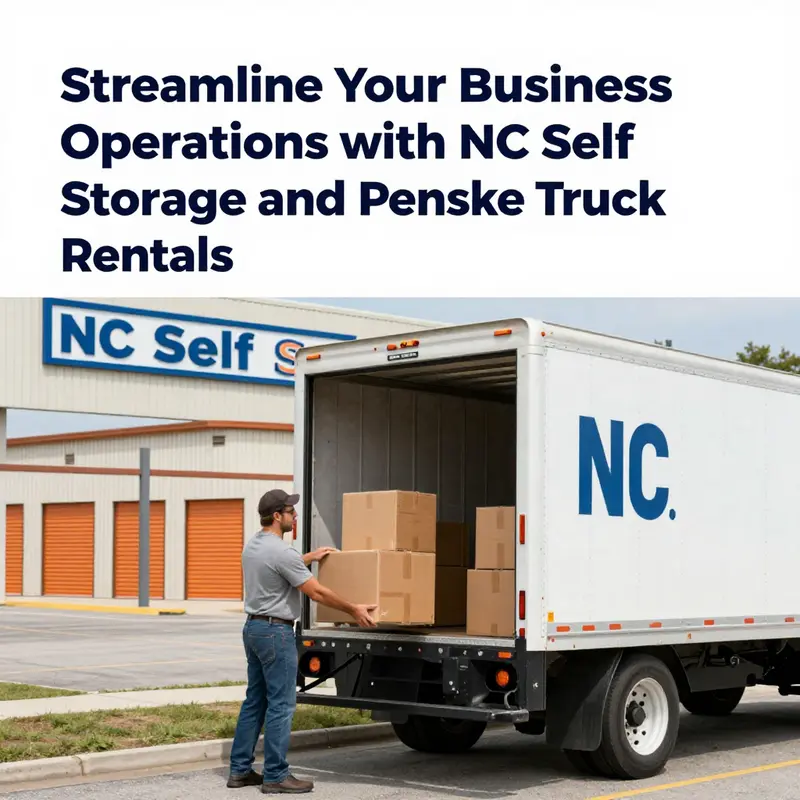
In Southern Pines, a quiet transformation is reshaping how people think about moving and storing their possessions. It isn’t just a warehouse or a fleet of rental trucks; it’s a holistic approach that ties the act of transporting items to the care of their long-term safety. The arrangement centers on a local self-storage center that offers climate-controlled units and a widely trusted truck rental service. The facility at 209 Trimble Plant Rd embodies a practical philosophy: reduce friction by marrying the precision of climate control with the reliability of a familiar, well-maintained fleet. The result is a move that is less about logistics and more about confidence—confidence that belongings will be protected from humidity, temperature fluctuations, and the incidental wear that can accompany an imperfect relocation. That confidence becomes especially valuable in a place where damp summers and cool, humid winters can test the integrity of both goods and plans. The story begins long before the truck doors roll down the driveway; it begins with a simple choice to combine storage with transportation into a single, coherent process. The climate-controlled storage units protect items that are sensitive to environment changes. Electronics, documents, textiles, and keepsakes all benefit from a steady climate that shields them from the variability of the weather outside and the rhythms of seasonal use. In a region where a storm can arrive without warning and humidity can creep into attic boxes, the appeal of a stable internal environment becomes clear. This isn’t merely about keeping items dry; it’s about maintaining the structure and function of what people choose to keep, whether those items are heirloom photographs, archival records, or sensitive equipment. When a move is conceived with storage in mind, the planning mindset shifts from “pack and move” to “pack, store, and retrieve with purpose.” A climate-controlled unit is more than a storage space; it is a temporary, carefully regulated environment that buys time and preserves value. The facility’s accessibility supports a nuanced approach to relocation. For many families, the move is staged—items are packed and moved into the unit first, while the home is being emptied, and later retrieved as walls come down and new rooms emerge. Businesses often adopt a similar cadence, using storage as a buffer between old and new offices or as a reserve for seasonal inventory. The ability to stage content in a controlled climate allows teams to optimize loading sequences, protect irreplaceable assets, and ensure that the transition from one space to another occurs with a measured, deliberate pace rather than a frantic sprint. The practical rhythm of this model is reinforced by the steps a typical move takes within the facility’s ecosystem. First, household or office inventories are reviewed to determine what needs the most protection and what can be stored temporarily. Sensitive items get the extra attention they deserve—proper packing, labeled containers, and a mapped storage plan that assigns dedicated spaces so items can be retrieved without sifting through rows of boxes. Then, when the time comes to relocate, a truck rental is integrated into the same logistical line. The advantage is immediate: you don’t have to coordinate between a separate rental company and a separate storage facility. You can book a truck, load at your origin, drive to the storage center, and place items into the appropriate units in one continuous chain of events. The process highlights the value of a one-stop solution. The phrase “one-stop” is not merely marketing; it reflects a practical economy of effort. When staff at the storage center are familiar with the truck rental process, they can guide customers toward the right sized vehicle, suggest loading sequences, and discuss delivery options that fit the customer’s schedule. That guidance reduces the typical back-and-forth that can occur when relying on two different vendors. The result is a smoother experience, with fewer miscommunications about truck sizes, loading capacities, or access hours. For many households, this translates into real time savings. The planning phase can be completed in a single conversation, with a clear, shared understanding of how long storage will be needed and whether the move will require partial or full relocation of contents. For small businesses, this seamless alignment can keep operations moving. A business relocation rarely aims for a perfect, instantaneous swap; instead, it pursues continuity. The ability to move equipment, furniture, and records into climate-controlled storage while offices are being redesigned or reconfigured reduces downtime. It enables managers to coordinate with fewer variables, so that critical workflows continue with minimal interruption. The reliability of the truck fleet is a cornerstone of this approach. The fleet is designed to cover a range of moving scales—from apartment-sized reconfigurations to more expansive commercial moves. Cleanliness and maintenance are emphasized, with inspection routines and service checks that reassure customers about the readiness of a vehicle before departure. A well-maintained truck is not merely a convenience; it is a safeguard against delays and discomfort on the road. The combination of climate-controlled storage and dependable truck rentals introduces a logistical clarity that is often missing in the early stages of planning a move. The customer can picture a steady sequence: pack, load, transport, and place items into storage in an orderly, measured manner. There is a certain elegance to this sequence, a way to strip away the anxiety that accompanies disassembly, relocation, and reassembly. When a move is mapped out with this integrated approach, the cognitive load on the customer drops noticeably. The planning conversations shift from “What do I need in this box?” to “Where does this box belong, and when can I retrieve it?” The staff’s role in this transition is crucial. They leverage a blend of customer service and practical knowledge. They can advise on the most efficient truck size for the tasks at hand, outline loading guidelines that protect fragile items, and offer a checklist that aligns with climate-control storage needs. They may also help clients think through long-term storage strategies, such as seasonal rotation, inventory timing for a business, or the sequencing of a staged move to minimize disruption. In this way, the partnership between storage and transport becomes a collaborative effort, not a transactional one. It is about creating a relationship in which customers feel supported every step of the way. The practical outcomes of such collaboration are reinforced by the tangible benefits of climate-controlled storage. Items that might otherwise degrade under heat and humidity remain stable, preserving value and functionality. Documents and electronics call for more than a dry environment; they require a regulated climate that mitigates condensation, mold risks, and warping. The ability to safeguard these assets during a move is often a deciding factor for families and businesses alike. The benefits extend beyond the preservation of physical goods. A move paired with reliable storage can reduce the psychological burden that typically accompanies relocations. When people know their possessions are safely stored in a controlled environment, they can focus on the human elements of the move—finding a new home, transitioning school enrollments, or settling employees into a new office culture—without being distracted by concern over whether everything will arrive intact. The synergy also has an economic dimension. Bundling storage with a truck rental creates a streamlined budget, reducing surprise charges that can appear when coordinating from multiple vendors. It helps customers forecast costs with greater accuracy, because the planning horizon is consolidated into a single, coherent plan. And because the service is local, customers can tap into hands-on support from a team that understands the weather patterns and seasonal demands of Southern Pines. The overall experience is shaped not only by the physical spaces and vehicles but also by accessibility. Access hours are aligned with typical daily routines, and the loading areas are designed to minimize the time vehicles spend parked in transitional spaces. The goal is to keep the move efficient, predictable, and, above all, safe. This is where the narrative of the integrated solution becomes a case study in thoughtful design. It is not about selling two separate services; it is about offering a practical platform where storage and transport coexist, each enhancing the other. For households with belongings that span decades of memories, for small businesses with delicate equipment, or for individuals orchestrating a life transition, the approach offers a cadence that feels steady, even when a move might otherwise feel chaotic. And while the specific address anchors the service in a place, the underlying idea travels beyond it: that physical possessions deserve care, that moving should honor time rather than erode it, and that a climate-controlled space can be more than a storage station—it can be a staging ground for a life’s next chapter. The synergy is reinforced by a culture of support that makes the service personable, not impersonal. Staff understand that every move is unique, shaped by the items involved, the timeline, and the emotional resonance of the transition. They listen first, then tailor recommendations for truck size, packing methods, and unit placement. They can describe the best way to protect electronics, or how to organize a room’s contents to facilitate an easy return to function, if needed. This approach—driven by a solution-oriented mindset and grounded in the practicalities of climate control and vehicle reliability—transforms what could be a series of disjointed steps into a coherent journey. It invites customers to imagine the process not as a one-off ordeal but as a carefully sequenced set of actions that culminate in a seamless transition to a new chapter. For those who want to learn more about how storage and transport intersect in practice, there is a practical resource that distills this concept into actionable guidance. The resource provides insights into choosing the right container size, planning loading sequences, and understanding when storage is the right option during a move. It’s a useful companion to the decisions families and businesses face when considering a combined storage-and-mtransport approach. To explore this perspective, readers can refer to the Penske Storage guide for a concise overview of the principles at play. The guide’s emphasis on planning, sizing, and efficiency dovetails with the real-world cadence described above, offering a bridge between theory and on-the-ground execution. For readers who want to see how a local facility embodies these principles, a quick look at the broader ecosystem reveals a consistent pattern: proximity matters, service quality matters, and climate-controlled environments coupled with well-maintained trucks create a robust framework for reliable moves. The geographic reality of Southern Pines makes this approach particularly meaningful. When weather dynamics impact travel time or the choice of storage solution, proximity becomes a practical advantage. A nearby center reduces wait times, lowers transportation costs, and makes last-minute adjustments more feasible. In the end, the chapter about combining climate-controlled storage with a dependable truck rental network in this part of North Carolina is a narrative about reducing risk and lifting the burden from customers. It is about turning a potentially stressful life moment into a well-orchestrated sequence that respects both the items being moved and the people who move them. The story is not just about two services working in tandem; it is about a culture of care, a commitment to maintenance and reliability, and a local footprint that understands the nuances of the climate and the needs of the community it serves. For those who want to dive deeper into practical considerations, a common question is whether to stage the move fully or to push toward a single, decisive day. The integrated model shines in either scenario: staging allows for careful packing and acclimation of items while maintaining access to storage; a single-day move can be efficient with the right truck size and a clear plan. The decision often hinges on the scale of the relocation and the item mix. But the overarching takeaway remains simple: in this Southern Pines context, the combination of climate-controlled storage and a reliable truck rental program creates a cohesive, confidence-building framework for both personal relocations and business transitions. It aligns with how people actually move in the modern era—carefully, deliberately, and with access to practical resources that keep every step aligned. To readers seeking a concrete sense of how such an integrated setup looks in practice, the next part of the broader article will connect the threads to real-life scenarios and the experiences of residents and small businesses who have navigated moves using this approach. This narrative, grounded in a single, accessible location, points to a larger pattern that could be replicated in other communities: when a storage center and a vehicle rental fleet understand each other, the move becomes easier to conceive, execute, and live with. For a practical glimpse into the philosophy behind the storage solution, readers are encouraged to explore related material on the Penske Storage resource page, which outlines how to plan, size, and execute efficient moves that leverage both storage and transport in harmony. Internal link: Penske Storage. External resource: https://www.ncselfstorage.com
Smoothing the Move in Southern Pines: A Seamless Duo of Storage and Truck Rentals
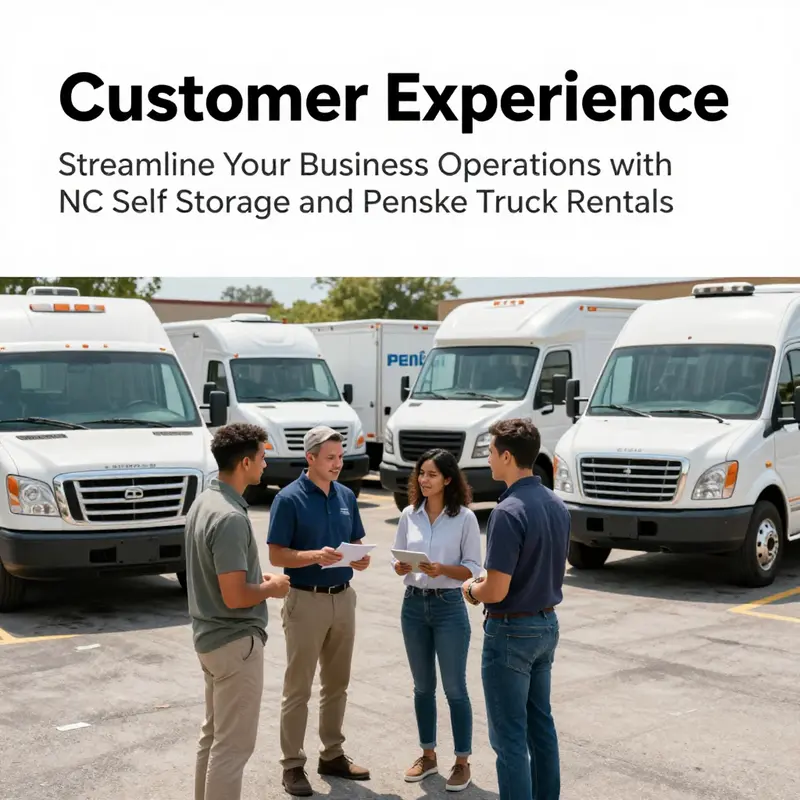
A move in Southern Pines begins not with boxes and tape alone, but with a quiet, practical rhythm that lets you breathe a little easier. Picture a late-spring morning, the sun warming Trimble Plant Road as you approach 209 Trimble Plant Rd, the little parking lot already finding its order. You’re not just renting storage space or a truck; you’re orchestrating a transition—one that feels manageable, almost simple, because the two services you need most often work in tandem. In this corner of North Carolina, NC Self Storage and Penske Truck Rentals have designed a workflow that respects your time, your items, and your nerves. The architecture of the facility itself reflects this philosophy: a well-planned, all-drive, direct-access layout that minimizes back-and-forth navigation. It’s a space built for the practicalities of moving, the kind of space that quietly announces, “You’ve got this.”
From the moment you walk through the doors, the scene reinforces the sense that you are not alone in the process. The climate-controlled units, paired with dehumidification, promise a stable environment for anything from family heirlooms stuffed in cedar chests to important documents that simply cannot be left to chance. This matters more than most people realize. The humidity in a place like the Sandhills region can cling to a move as tenaciously as the last box, and a temperature-controlled climate can be the difference between a smooth transition and a weekend of unwanted worry. The environment is designed to protect a spectrum of belongings, and the facility embodies the practical truth that good storage is not about keeping things out of sight but about keeping them in the same condition they were in when you packed them away. The on-site packing and moving supplies make this even more straightforward. There are sturdy boxes in a range of sizes, bubble wrap ready to cradle delicate items, tape that sticks reliably without tearing, and the labels and markers that help you track what goes where. Having these items in one place is a small kindness with outsized impact; it means you won’t chase down packing materials across town, juggling trips and timing windows. You can coordinate the entire process in one place, and that coherence matters when time is tight and plans can shift.
Yet the storage side of the equation is only half the story. The Penske Truck Rentals fleet brings a practical, scalable transportation option to this already sensible equation. Whether you’re moving a small apartment or a larger household, Penske’s range of truck sizes lets you tailor the vehicle to the actual load rather than the fear of it. The trucks are clean, well-maintained, and designed with loading in mind. A well-chosen truck reduces back-and-forth trips, which translates into real time saved and less wear on your back—and on your schedule. The road ahead through North Carolina is rarely a straight line in a moving plan, but a reliable truck rental can turn that uncertain stretch into a series of controlled steps: pack in your current home, move to a staging unit if needed, then shuttle to your new address with the pieces you’re ready to take in a single, organized journey. The beauty of the integrated approach is that it enables you to reorganize your plan as you go. If you decide to store a portion of your belongings temporarily at NC Self Storage while you book a later truck ride, you can still manage the move with precision and clarity. If you prefer a direct, all-at-once relocation, you can arrange the truck to drive straight from your home to your new doorstep, with a strategic stopover at the storage facility if you want to reconfigure or unload in stages. It’s about giving you options that align with how your life is unfolding at that moment.
The experience is not merely transactional. It’s about the sense of control that comes from having a single point of reference for both storage and transit. The on-site WiFi makes this control tangible. As you pack, you can pull up packing lists, verify inventory, or coordinate a timeline with family members who might be scattered across town. In a move, communication is as essential as the physical act of loading and unloading. The ability to stay connected while you orchestrate the day’s steps—checking a reservation, confirming a routing plan, or rapidly sharing a photo of a packed box with a friend who helps you label it—transforms a potentially chaotic day into a series of coordinated moments. The facility staff understands that your time is precious. They know that a single misstep—an order missing here, a supply overlooked there—can cascade into delays and frustration. Their approach emphasizes reliability and responsiveness, not just a transaction. The human touch in this blend is, in many ways, the most valuable asset. It’s the reassurance that comes from speaking with someone who can translate between storage and transport, who can help you optimize the sequence of actions, and who can suggest a practical route or a smarter packing approach based on the size of your home.
If you’re undertaking a more intricate move, the synergy is especially evident. You might begin by storing some items that you’re not ready to move right away—seasonal decorations, spare furniture, or containers of bulk goods. While the truck is being prepared for the later leg of the journey, you can concentrate on the tasks that require a ready-to-access space: labeling, wrapping, and organizing. The on-site supplies become a natural extension of this workflow: you can buy a box, seal it, and instantly place it into storage, creating a logical sequence that reduces the risk of misplacement or mislabeling. There’s a quiet efficiency in having a system that reduces the cognitive load associated with moving. When everything is organized with a clear plan in mind, the process of loading the truck becomes less about guesswork and more about deliberate, careful handling. It’s the difference between a plan that exists on a to-do list and a plan that becomes a smooth, executable operation.
A key feature of this integrated service is the presence of additional conveniences that often get overlooked but matter when you’re in the thick of a move. The on-site notary public services can be a practical lifeline for customers who need to execute important documents—lease agreements, powers of attorney, or other contracts—without leaving the facility. The ability to notarize documents in the same building where you’re packing and coordinating a truck rental can save you hours of back-and-forth appointments and travel. Similarly, the FedEx package drop-off capability is a small but meaningful convenience. Sometimes moving involves finalizing last-minute shipments—rebooking a return address, sending essential documents, or shipping a fragile, time-sensitive item to a new residence for safekeeping until you’re ready to move it. Having a drop-off option nearby means fewer trips to post offices and courier centers and more time to dedicate to the actual physical move.
The human-centered design of the space, the reliability of the services, and the practical superstructure that ties packing, storage, and transport into a single flow all contribute to a transformative effect on what can feel like an inherently stressful process. In such moments, the experience of a move shifts from being a sequence of isolated tasks to a coherent journey with a clear beginning and a well-marked path toward completion. The facility positions itself as a partner rather than a vendor, acknowledging that every move is a story with its own tempo and turning points. The staff’s willingness to adapt plans, offer prompts for best practices, and provide resources that align with the realities of your timeline helps you maintain momentum. It’s not about hurry; it’s about momentum—carrying you steadily forward with confidence.
For those who value a plan that respects the realities of modern life, this integrated approach delivers tangible, repeatable benefits. You can see the time saved in fewer trips, the reduced stress from having a single, trusted source for both storage and transport, and the peace of mind that comes from knowing that important documents can be handled on-site if needed. The method also opens doors to flexible relocation strategies. If your job or personal schedule requires you to vacate a home before you’ve found a permanent new address, you can park the truck near your current residence while you move items into storage. If, alternatively, you’re moving into a temporary housing situation before your long-term location is ready, you can stage your belongings in climate-controlled storage and then shuttle them in measured steps as new living arrangements take shape. The net effect is a relocation experience that remains within your control, even in the face of uncertainty.
The practical design elements deserve brief attention for their own merit. The all-drive direct-access design reduces the hassle of maneuvering large items through narrow corridors and long stairwells. It minimizes the back-and-forth you might otherwise experience when you’re trying to place bulky furniture in a storage unit or load it into a truck. This thoughtful layout translates into less physical strain and more safety for you and your family. Climate control, dehumidification, and the steady environment they create preserve not only your items but your sanity during a time when timing and conditions matter most. In average conditions, a winter move might seem straightforward, but in a climate where moisture and temperature swings are a factor, the stability of a climate-controlled unit becomes especially valuable. The influence extends to your emotional state: when you know your possessions are in a controlled environment and your moving plan is supported by a credible, organized system, you feel less overwhelmed, more focused, and ready to tackle the next steps with method.
The chapter’s central insight is this: a well-integrated approach to storage and transportation does not merely make a move easier; it reshapes the entire moving experience. It reframes moving from a stressful, high-stakes sprint into a durable, well-paced journey. The combined solution offers a practical ladder to climb from a temporary living situation to a new home with minimal friction. In a real sense, the space becomes an extension of your planning process, offering you places to stage, organize, and manage the physical movement of your life. For families with children, pets, or multiple work duties, the advantage is even clearer. You can coordinate the move in modular steps, giving yourself the luxury of time to adjust to the new environment while still ensuring your belongings are protected.
As you consider the next move or a relocation strategy, the value of this integrated system becomes more evident. It is not merely about moving items from point A to point B; it is about reconfiguring the logistics of daily life to accommodate change with grace. The synergy between NC Self Storage and Penske Truck Rentals offers a practical model for how service providers can collaborate to reduce friction for customers. It demonstrates that efficiency often begins with a shared understanding of customer needs and a mutual commitment to simplifying complex tasks. The result is a moving experience that feels less like an ordeal and more like a well-orchestrated plan that unfolds with predictable momentum. If you want a glimpse of how this looks in the real world, you can explore the Penske storage options further through one of their dedicated resources, which showcases how a coordinated storage-and-transport approach can be advantageous across a range of move types and timelines. Penske storage.
In sum, the Southern Pines setting offers more than scenic streets and a mild climate. It provides a practical framework within which modern moves can be executed with confidence. The combination of climate-controlled storage, accessible packing supplies, notary services, FedEx drop-offs, reliable truck rentals, and supportive staff creates a one-stop environment where preparation, transport, and transition align. It’s a holistic approach to relocation that respects your time, protects your belongings, and preserves your sense of control. For readers planning a local move, a temporary storage need while you search for a new home, or a longer-term relocation that might involve a mix of storage and transport, this model offers a robust blueprint for a smoother, more manageable experience.
External resources can complement this experience. To learn more about the broader storage options and how they fit into longer-term relocation strategies, you may consult the external resource at https://www.ncselfstorage.com, which provides additional context and options for folks navigating storage needs in the region.
Balancing Costs and Logistics: Practical Strategies for Using an NC Storage Facility and Local Truck Rentals
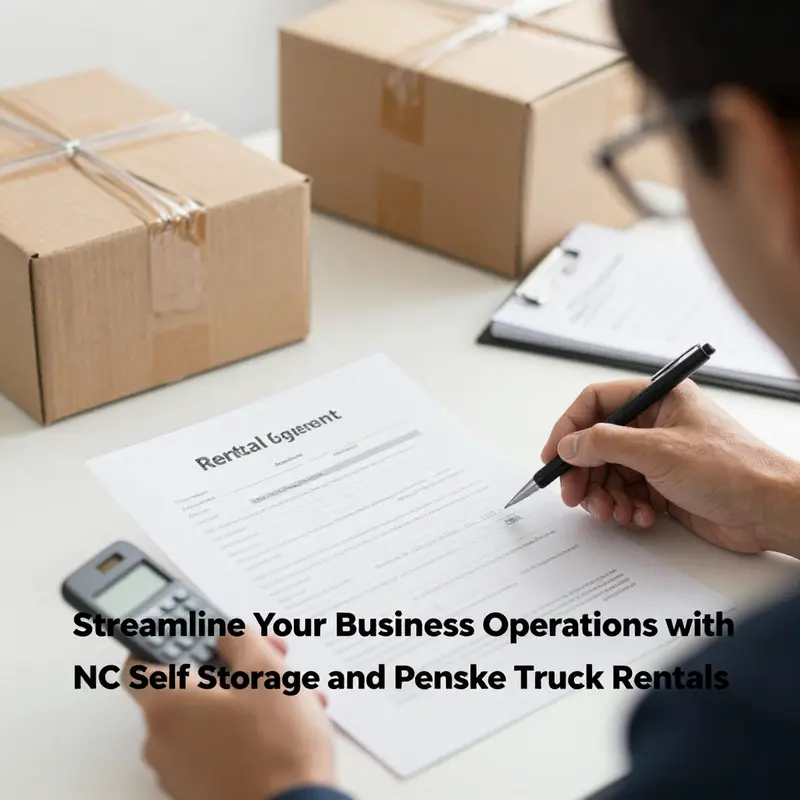
Balancing Costs and Logistics: Practical Strategies for Using an NC Storage Facility and Local Truck Rentals
When planning a move or arranging short- or long-term storage at a Southern Pines facility, costs and logistics lock together like two gears. One gear measures the monthly expense of space and environmental controls; the other measures the moving cost of vehicle size, fuel, insurance and time. Treating them as separate items creates hidden waste. Thinking of them as a single logistical problem reveals efficiencies: choose the right-sized storage unit and the right truck for the timeline, then sync scheduling, packing and transit to avoid idle charges and reduce handling.
Begin by mapping your needs to concrete cost drivers. Storage expenses are driven primarily by unit size, location within the facility, and environmental features. Units with climate control and dehumidification command higher rates because they protect sensitive goods. Units on ground level or drive-up accessible rows often cost more for convenience. Truck rental charges vary by vehicle dimensions and by time. Daily or weekly base rates interact with mileage fees and optional coverages. Optional equipment, like moving ramps or dollies, adds line items. Understanding how each line on the invoice accumulates helps you target savings without increasing risk to your belongings.
Timing matters. If your move happens during a peak period, both storage availability and truck rates increase. Plan weekdays when possible; weekdays tend to have more vehicle and facility availability and sometimes lower demand-based pricing than weekend windows. Booking early locks in a vehicle size and a storage unit, preventing last-minute upcharges for more convenient options. If you expect to store for multiple months, investigate discounts for extended commitments and compare month-to-month flexibility against pre-paid savings. A short-term overpay for convenience might still cost less overall if it eliminates multiple handling steps.
Choosing appropriately sized assets is the single most effective cost control technique. For storage, list the major items that require the most space: sofas, beds, appliances, and large office equipment. Stackable boxes and shelving reduce wasted vertical volume, but keep walkways for access. For truck selection, match the truck’s interior cubic footage to the volume of items being moved rather than to the number of rooms in your house. A modest misestimate can lead to renting a second vehicle or making multiple trips—both expensive. Use dimensional checklists and, if available, online calculators from reputable rental firms to estimate the right truck size.
Efficient packing and loading reduce both storage footprint and transport time. Disassemble furniture that can be taken apart. Wrap mattresses and upholstered pieces to avoid moisture exposure. Pack heavy items low and fragile items high. Load the truck with the heaviest items first and secure them to prevent shifting; this saves time at transfer and reduces the chance of damage that would increase replacement or repair costs. When moving into storage, plan the unit layout so that frequently needed items remain near the front. That minimizes labor and time when accessing stored belongings, and reduces the need to reorganize later.
Insurance and risk management are often treated as optional extras, but they influence total cost when the unexpected happens. Review the liability coverage included in your rental agreement and the facility’s policies on damage or theft. Facility climate control mitigates risk for humidity-sensitive belongings but does not replace insurance for transit incidents. Consider transit coverages or supplemental protection for high-value items during the move, then re-evaluate once items are safely stored. For long-term storage, evaluate whether an inventory of valuable items is maintained and whether your homeowner or renter policy extends to stored goods.
Fuel and roadside assistance form a paired expense for truck rentals. Estimate fuel using realistic miles and vehicle fuel-efficiency numbers rather than optimistic assumptions. Plan routes using up-to-date traffic patterns and identify rest points and fueling stops that avoid congested, high-price areas. If the rental includes 24/7 roadside assistance, factor that into your decision—relief from a breakdown or a flat tire might smooth a tight schedule and avoid costly tow or emergency service bills. If assistance is optional and you feel comfortable, weigh the cost against the moved value and the likelihood of problems on your planned route.
Read the rental and storage contracts with attention. Cancellation fees, grace periods for payments, late fees, and unit access rules change total cost and convenience. Some contracts include automatic renewals that can lock you into monthly charges; others offer pro-rated final months if you give notice. Documentation of unit condition on move-in and move-out prevents disputes. Likewise, rental truck agreements will specify fuel policies, permissible drivers and mileage terms. Confirm whether unlimited miles are offered or if mileage will be billed, and whether one-way rental fees apply if your move is not a round trip.
Integrating digital tools increases transparency and control. Use online reservation systems to compare truck sizes and storage unit options at the same time. Schedule pickup and move-in windows to align facility gate access and loading dock availability. Electronic invoices and reminders reduce the risk of missed payments and late fees. Tracking apps for vehicles and cloud notes for inventory lists ensure that both teams and solo movers have a synchronized plan. When multiple parties are involved, centralize communications so any change—delays, weather or unexpected volume—triggers an immediate update and mitigates overlapping charges.
Labor planning often determines how many hours you’ll actually pay for labor or how many friends you’ll need. Professional movers charge by the hour and will increase cost during traffic or difficult maneuvers. If you plan to use labor help, calculate how many professional hours are saved by efficient pre-packing and clear labeling. For do-it-yourself moves, rent or borrow appropriate dollies and tie-downs to reduce loading time and reduce the risk of injury, which can derail timelines and add unexpected medical or replacement costs.
Combine services where possible to lower handling costs. Many local hubs offer a bundled approach—vehicle rental plus storage space—which can streamline paperwork and provide discounted rates for combined usage. Even if you do not bundle, coordinate return times so that the rented vehicle is not sitting idle while you complete a later access to the storage unit. Aim to minimize double handling: every box that is moved twice increases labor time and risk of damage, and therefore cost.
Security and access influence value beyond monthly rates. Well-lit facilities with monitored access and robust locks deter theft. If you need frequent access, prioritize a unit with easier ingress rather than a cheaper, less accessible space; repeated time overhead can exceed the marginal cost savings of a cheaper unit. For seasonal storage, align climate control settings and unit placement with expected weather to avoid temperature-induced damage and unnecessary retrieval trips.
For businesses using temporary storage to manage inventory or equipment during transitions, treat the storage unit as an operational extension. Maintain clear labeling, an access log and regular audits. These steps reduce inefficiency from lost items and prevent paying for space that holds forgotten goods. Consider whether the storage location supports loading docks, forklift access or commercial hours that match business rhythms. Each operational mismatch can slow workflows and increase cumulative cost.
Finally, adopt a review cadence. Costs shift with demand, fuel prices and seasonal trends. Revisit rental patterns and storage usage every three to six months. Small changes—downsizing a unit, switching to a different vehicle size, adjusting insurance or modifying pickup windows—compound into meaningful savings over time. Use those reviews to renegotiate where possible or to plan moves outside peak periods.
If you want specifics on vehicle sizes, one-way options, roadside assistance and fuel estimators, an official truck rental resource compiles these details and can clarify what services are offered, including 24/7 support and vehicle dimensions: https://www.penske.com/truck-rental/.
For practical guidance on combining storage and truck use, the penske storage blog provides helpful advice on linkups between unit selection and transporting large items: https://larentaltrucks.com/blog/penske-storage/
Final thoughts
By understanding the services offered by NC Self Storage and Penske Truck Rentals and how they can work synergistically, business owners can make informed decisions that positively impact their operations. This integrated approach not only enhances storage and logistics efficiency but also provides significant cost benefits and improved customer experience. As you consider how to streamline your business processes, remember the potential of harnessing these combined services to support your growth and adaptability.