
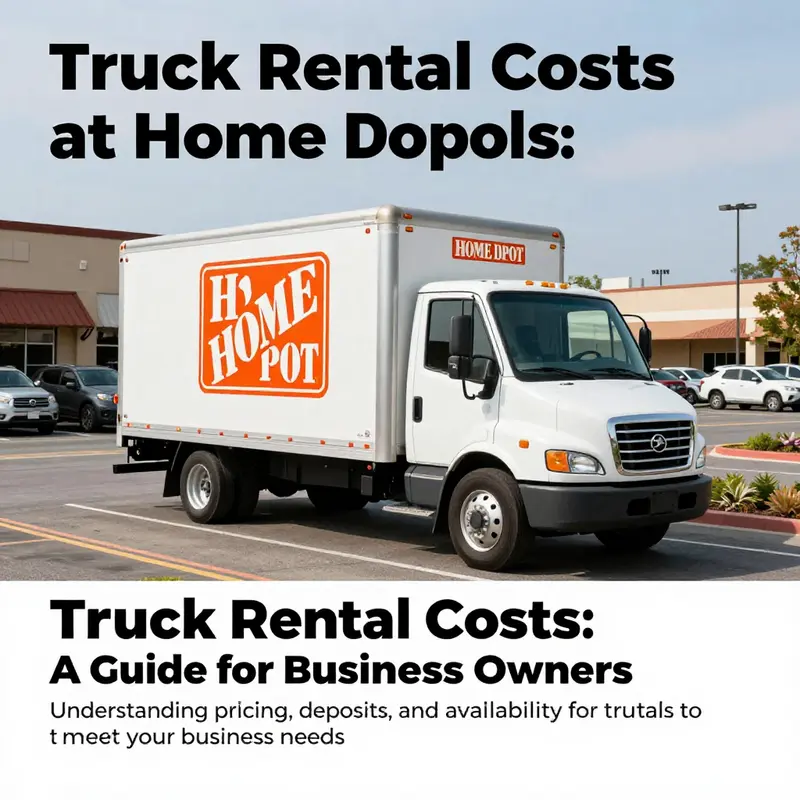
Renting a truck can be a crucial solution for business owners needing to transport equipment, materials, or inventory. Home Depot offers a straightforward and flexible truck rental service designed to meet such demands. Understanding how much a truck rental costs at Home Depot is paramount for budget-conscious business owners who seek efficient solutions. This article will explore the pricing structure, rental duration options, deposit requirements, and availability variations of truck rentals at Home Depot, providing you with a comprehensive overview of what to expect.
Decoding the Price Tag: A Deep Dive into Home Depot’s Truck Rental Pricing
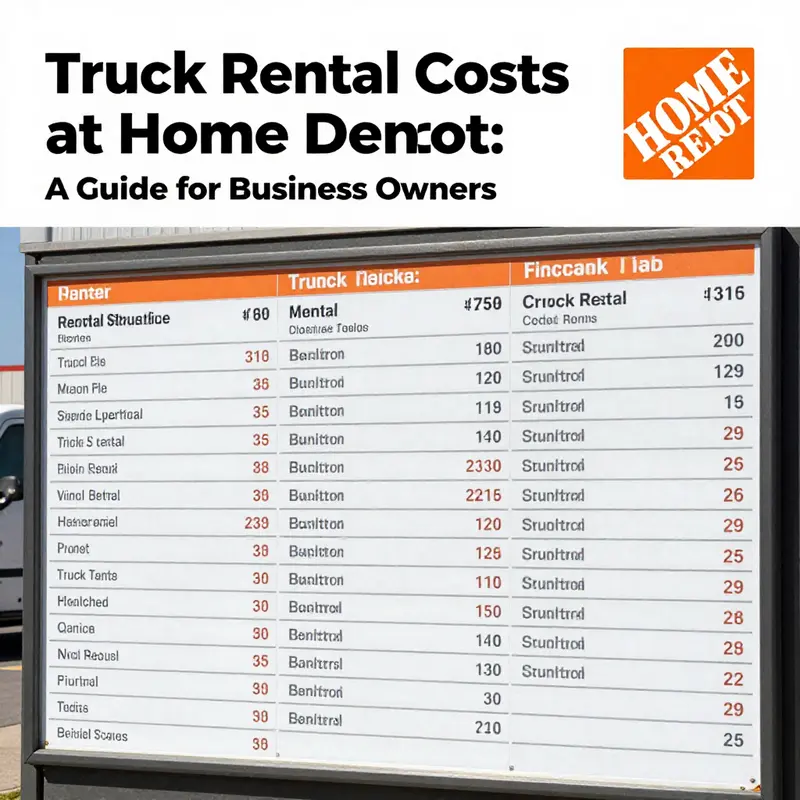
When you’re facing a move, a project, or a debris haul, the question isn’t just whether you need a truck—it’s how much it will cost to borrow one for the hours you actually need it. Home Depot’s truck rental program presents a straightforward promise: flexible options that scale with your time needs. Yet the numbers aren’t tied to a single flat rate. Instead, they hinge on vehicle type, duration, and location, with a refundable deposit that sits as a hold on your method of payment until the vehicle is back in good order. If you’re planning around a tight budget or a specific deadline, understanding the pricing structure clearly can save you from sticker shock and help you pick the option that makes the most sense for the job at hand. The pricing model is designed to accommodate everything from a quick, improvised haul to a full day of heavy lifting, and it does so with a few clear rules that, once understood, make the math approachable rather than mysterious. The core ingredients are simple: a base rate for the vehicle type, a per-interval charge that kicks in after an initial window, and a deposit that protects the rental company while the vehicle is in use. And while the exact figures can shift by location and availability, the general framework stays stable, giving you a reliable lens through which to estimate costs before you roll onto the lot.
At the heart of the pricing structure are the distinct vehicle categories offered for rent. Home Depot provides a spectrum of options designed to handle different kinds of work, from flatbed pickup trucks and cargo vans to larger box trucks. Each kind is priced to reflect its capacity and typical use case. For the smaller, more maneuverable options like pickup trucks and cargo vans, the entrance fee is a bit lower than it is for box trucks, and the incremental charges after the initial period are laid out in predictable steps. The larger box trucks begin with a higher entry price for the first stretch of time, acknowledging their greater payload and the extra effort involved in operating and returning a bigger vehicle. The upshot is that you can tailor your rental to the scale of your task without paying for more truck than you need, provided you’re mindful of the duration you’ll actually require.
The hourly logic is crisp and regular. For pickups and cargo vans, the first 75 minutes are billed at a base rate—specifically, the first 75 minutes are priced at a lower, entry-level amount. After that introductory period, the additional time is charged in 15-minute increments, a common structure that keeps the math simple and fair for short, pressing tasks. Specifically, after those first 75 minutes, you’ll see a charge of $8 for every additional 15-minute block. This means a move that lasts two hours, for example, would include the initial 75 minutes at the base rate plus four additional 15-minute blocks, each at $8. The total isn’t merely a sum of constant blocks; it’s the base for the vehicle type plus the precise duration you used. For box trucks, the same 75-minute rule applies, but with a higher opening rate reflecting the larger vehicle’s capacity and operational considerations. The math works the same: a higher initial charge for the first 75 minutes, followed by $8 for each extra quarter-hour.
Beyond the hourly cadence, the rental terms include a refundable deposit, a standard feature across rental work with large equipment. For Home Depot truck rentals, a deposit of $150 is required for every rental. The deposit acts as a security measure against damage or loss of key equipment, and it is returned after the vehicle has been safely driven back, inspected, and deemed to be in acceptable condition. It’s a straightforward hold on your payment method, not an extra charge, but it does tie up funds briefly until you’ve completed the rental and the vehicle passes the return check. If you’re planning a budget, you’ll want to remember to budget not just the hourly or interval-based charges, but also that refundable deposit—because it affects the cash flow while you’re using the truck.
The interplay between the vehicle type, duration, and the possibility of daily or weekly rental packages introduces a practical flexibility that is central to Home Depot’s model. The rental terms explicitly acknowledge that customers may need a truck for a single, in-and-out job, or for a more extended project that spans hours or days. For shorter, unplanned moves, the hourly rate structure offers immediate clarity: you pay for the time you actually use. For longer tasks, there are daily and weekly options that can yield better value, depending on the scope of the work and how many 24-hour cycles you’ll cover. The daily rate, typically designed for 24 hours of usage, and the weekly option, covering seven days, act as price anchors that can make a longer haul financially more predictable. Location, inventory, and availability, of course, can tint these figures, and the very latest numbers are best confirmed through the official Home Depot truck rental page or by a quick call to a local store. The practical takeaway is that daily and weekly packages can be cost-effective for extended jobs where the cost of hourly blocks would accumulate quickly, but they’re not a universal discount for every scenario. An accurate choice comes from comparing how many hours you’ll actually need the vehicle and estimating the total time under either the hourly regime or one of the bundled packages.
There is wisdom in planning ahead, but equally, there is value in recognizing the flexibility of the system. If your move or job is a last-minute sprint, the hourly framework makes it possible to secure a vehicle quickly and manage the time you need with transparent increments. If, however, you foresee a long haul, the daily or weekly options can normalize costs and spare you the anxiety of minute-by-minute accounting. The key to getting the best value is to map your project’s timeline with a realistic estimate of pickup, loading, transit, unloading, and return. If you’ve ever had to squeeze a back-and-forth haul into a single afternoon, you’ll recognize how the extra hours quickly add up. Conversely, if you know you’ll be at it for a full day, the daily rate can become a better deal than paying the hourly rate across two or more blocks. And if your assignment stretches across multiple days, the weekly rate might be the most economical choice, especially when the vehicle’s load and mileage are moderate but the time commitment is substantial.
To bring this into a more tangible frame, consider a couple of scenarios that illustrate how the pricing gradient works. A small-scale move using a pickup truck or cargo van might span two hours on a Saturday afternoon. The first 75 minutes would fall under the base rate for that vehicle type. The remaining 15 minutes would be billed as one 15-minute block at $8. If you add the refundable $150 deposit, your upfront outlay would reflect the base rate plus a small incremental charge, and you would receive the deposit back after the truck is returned in good condition. A longer operation, say a full workday with a box truck, would begin with the higher initial 75-minute rate associated with a box truck, followed by multiple 15-minute increments. If the day runs into a second 75-minute period (a long load, reorganization of a work site, or a series of runs between depot and destination), the charges would accumulate accordingly, while you still benefit from the predictability of a daily rate if you choose that option. The math is approachable: you multiply the number of 15-minute blocks by $8, add the initial 75-minute base, and then consider whether the daily or weekly package would yield a lower total for the same service window.
While the explicit numbers provide a powerful lens for planning, there is another practical dimension to pricing that is easy to overlook: location and availability. Home Depot’s truck rental pricing can vary by store and region, sometimes due to local demand, seasonal shifts, or differences in fleet inventory. Availability matters, too. A preferred truck type may be on a short buffer or out of service for a maintenance window, and that can influence the price you see when you arrive. This is not unusual in the world of vehicle rentals, but the key takeaway is straightforward. Before you lock in a plan, verify the current rates for your specific location and for the exact vehicle type you intend to use. The most reliable way to do this is to visit the official truck rental page or to call the local store. The page consolidates the offerings, but local storefronts often reflect the most accurate, up-to-the-minute pricing and any location-specific terms that could affect your total. In practice, you’ll want to compare the information you gather from the website with what you learn on the ground, so there are no surprises when you arrive with your moving crew.
For readers who want to drill down into vehicle specifics as they map their budget, there is a resource worth a moment of attention. A quick guide to a common truck size—such as the 16-foot truck—can help translate the pricing into a concrete expectation about what you’ll be renting and how it will feel to drive it around town. If you’re calculating the cost for a particular job, see our quick guide on the 16-foot truck. This internal reference can serve as a practical bridge between the abstract pricing grid and the real-world experience of loading, driving, and returning a truck in time and within a budget. The linked guide offers a compact size that many people associate with standard residential moves, and it helps anchor your expectations to a familiar vehicle category. The intention is not to overcomplicate the decision but to give you a dependable yardstick for planning, one that aligns with the structure described above and makes it easier to compare against daily or weekly bundles when the scale of the job warrants them.
As you weigh your options, keep in mind the deposit once more. The $150 refundable deposit travels with every rental and is a reminder of the commitment to return the vehicle in good condition. It’s essential to factor this into your overall cash flow calculation, especially if you’re coordinating multiple tasks or if your move has a tight schedule with several handoffs. If there are any incidental damages or if the vehicle is not returned in an acceptable condition, the deposit can be applied toward the remediation or offset the costs of any required repairs. In the vast majority of cases, customers recover the full deposit, but it’s prudent to adhere to the rental rules and return the truck as clean and intact as possible to ensure a smooth refund.
In sum, Home Depot’s truck rental pricing integrates a clear skeleton of vehicle-type baselines, duration-based charges, and a standard refundable deposit, all arranged to accommodate both last-minute needs and longer, more deliberate moving plans. The system rewards careful planning and honest assessment of how much time the vehicle will spend on the road and on site. It also invites renters to compare the value of hourly usage against bundled daily or weekly options, especially when the workload extends beyond a single short task. The bottom line is straightforward: identify the vehicle that matches your job, estimate the total hours or days you’ll need it, and compare the straightforward hourly increments against the convenience and potential savings of a daily or weekly package. And when in doubt, check the official page or speak with a local store to confirm the latest figures for your area. External resources can provide additional context for what other renters typically experience, while internal references—like the 16-foot truck guide—offer a quick, practical touchstone that helps you translate the numbers into real-world decisions.
External resource: https://www.homedepot.com/c/truck-rental
Internal reference (for readers seeking a size-specific quick guide): 16-foot-truck
Timelines and Tolls: Understanding Home Depot Truck Rental Durations and Costs
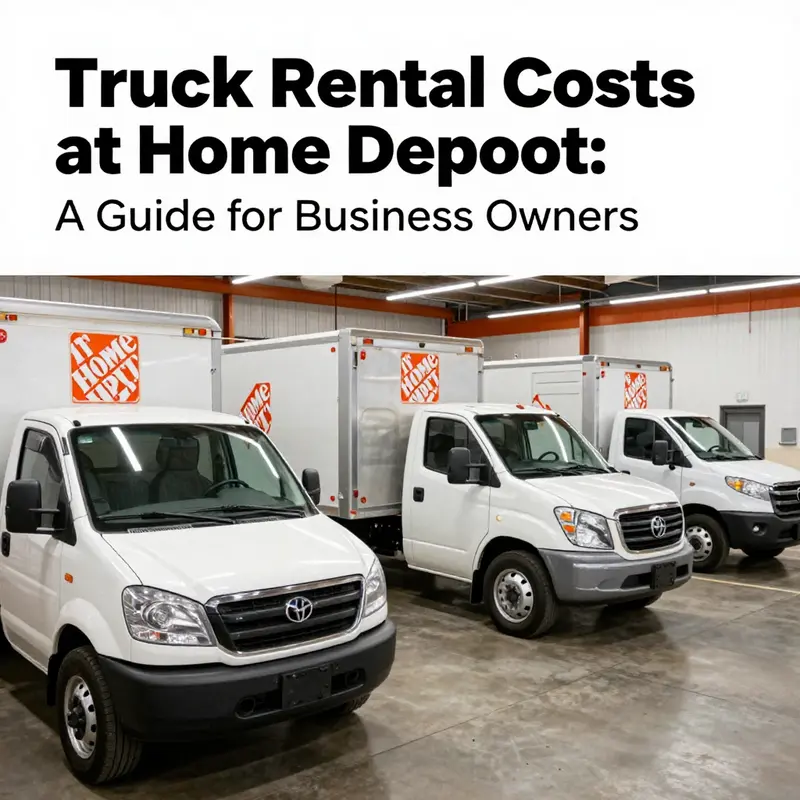
Planning a move or a big haul often comes down to how long you’ll need the truck, not just its size. Home Depot uses a tiered approach: a short starter window followed by hourly use, with daily and weekly options for longer projects. Start with a fixed 75-minute window to cover quick pickups and loading. The starter price is $19 for pickups and cargo vans and $29 for box trucks. After the starter window, you’re charged hourly: $39 per hour for pickups and cargo vans, and $49 per hour for box trucks. For longer jobs, a daily rate bundles the vehicle for a 24-hour period; exact daily pricing varies by vehicle type and location. A weekly rental for seven days is also available and tends to reduce the per-day cost. A deposit of $150 is required for all rentals and is generally refunded upon return in good condition, subject to store policies. Pricing can vary by location, demand, and inventory, so check the exact figures at your local store or on the official Home Depot truck rental page before booking. Larger trucks can be arranged through a Penske partnership, offering more power and capacity but using the same pricing logic: starter window plus hourly or daily rates, with the vehicle size affecting the base price. To estimate costs quickly: if you rent a box truck for 2 hours and 15 minutes total time after the initial 75 minutes, you pay the starter $29 plus roughly 1.83 hours at $49/hour, totaling about $118.67 before taxes, fees, and the deposit. Always confirm the current rates for your location and vehicle type, and remember to factor in fuel, mileage, and potential surcharges.
null
null
Availability in Real Time: Navigating Regional Variations and Fleet Realities in Home Depot Truck Rentals
To move a heavy load from one place to another, many customers look to rental trucks offered at big-box home stores. The Home Depot truck rental program presents a practical option, but availability isn’t uniform across the map. The fleet at a given location can be older or newer, and the dominant truck size can vary depending on local demand, season, and the size of the market served by that store. The most common vehicle is an 8-foot pickup truck—the size many first-time movers underestimate, but it is sturdy for small moves, small apartment transfers, or loading gear and bulky items that fit within an SUV. In select regions, a 12-foot box truck pops up, offering more cubic footage without the need for multiple trips, though its presence is intermittent and tied to regional demand and fleet rotations. In some communities, Home Depot aligns with nearby transportation partners to offer flatbed trailers for rent, which is a different rental category and can complement the truck options if you need to haul longer items, pallets, or machinery that require a flat deck.
However, pricing and deposit rules shape when and how often you choose to rent. The typical base rates you might see include a 75-minute rental at around $29, a full 24-hour rental for roughly $139, and a weekly rental for seven days near $973. These numbers are commonly cited, but it is crucial to know they are not guaranteed at every location or date. Taxes, insurance, and potential extra mileage charges can apply, and in some markets there may be seasonal surcharges. To secure the most accurate figure for your area, you should check the official Home Depot truck rental page or call your local store.
The rental process, however, comes with a caveat: there are no reservations in advance. If you plan to move on a specific day and want a particular truck type, you must check the store’s stock at the time you arrive or online on the day of rental. The absence of a nationwide reservation system means that demand flux and the way equipment is distributed across stores can influence whether your preferred vehicle is available. For many customers, this means a plan A and plan B—have a backup truck in mind or be flexible about the model and size. The Home Depot website hosts a Truck Rental tool that lets you search for real-time availability at nearby stores, which can save a trip if the truck you want is already assigned elsewhere or the store you hoped to use is temporarily out of stock.
Geography matters. Urban centers with dense housing and frequent moving activity often have a more limited, rotating fleet, while suburban outlets may stock different combinations of 8-foot and 12-foot options and periodic trailers. In some outlying areas, a small fleet may exist only sporadically, and you might encounter a longer wait time or a switch to a like-size alternative when you show up. That variability isn’t a sign of poor service; it is a reflection of how inventory is allocated across a network designed to serve a broad range of project sizes. If you know the scale of your move—what you plan to haul, how many rooms, and the timeline—you can better anticipate which truck size is more likely to be available at your local store. You might also gauge whether you should start with a rough inventory of the items you intend to move, measure your largest pieces, and map them onto the typical cubic footage of an 8-foot or 12-foot truck. For some readers, the difference between 8 feet and 12 feet in usable space can be the critical factor deciding whether a second trip will be necessary; for others, the constraint is not space but the turn radius and access to the driveway or street where you load.
To get a sense of what is most likely at your location, use the Truck Rental tool to check real-time availability. This online check won’t guarantee you have the exact model on the day you need it, but it sets expectations and helps you determine whether a backup option should be part of your planning. If the tool shows only an 8-foot pickup in stock at your store and you truly need more cargo space, you can prepare by modifying your loading plan, renting a trailer from a partner, or adjusting your moving window to a time when a larger truck might be rotated into the fleet. Consistency across the chain is improbable given the regional nature of the operation, and that isn’t a flaw—it’s a practical response to diverse customer needs, store hours, and the realities of fleet maintenance.
In practice, many renters find that the Day-of rental experience is straightforward if they come prepared. Bring a valid driver’s license, a credit or debit card, proof of insurance if required by the location, and any other documentation the store asks for, such as a second driver’s license for additional operators or an International Driving Permit if applicable. You will be asked to make a security deposit, typically around $150, before you can take the keys. The deposit policy serves to cover potential incidental damage, fuel charges, mileage beyond what you contracted, or late return fees. While $150 is a common baseline, the exact amount can vary by location, particularly in regions with different tax rates or insurance requirements. Always confirm the deposit with the store when you sign the rental agreement, because it can be different for a longer rental or for a particular truck type.
The physical handoff at the counter is usually quick if you have your items in a simple order and your chosen truck type is available. The agent will inspect the vehicle with you, noting any existing damage in a rental agreement and confirming fuel level. You will be given the chance to test-drive the truck around the parking lot, if you wish, to ensure there are no unusual noises and that the mirrors and controls work as expected. It is wise to take a few moments to map your route and your loading sequence, particularly if you are dealing with stairs, apartment complexes, or narrow driveways. On a practical level, you will want to plan for contingencies—traffic, unexpected weather, or last-minute changes in your moving plan that could alter the original schedule or require you to extend the rental.
For readers who want to dig deeper into the size options under this program, one side note worth following is the practical guide to 16-foot trucks. A quick online reference shows how a 16-foot box truck can balance cargo space with maneuverability, a consideration that matters when navigating tight city streets or a busy apartment complex. If you are curious about the nuances of that size, you can explore a focused resource that walks through dimensions, payload, and typical use cases. The link to that guide is provided here for easy reference: 16-foot truck guide. This level of detail helps you approximate how much you can fit and whether your items will fit in a single trip, reducing the risk of a second trip that adds time and cost.
As you finalize your plan, the overarching message is that Home Depot truck rentals offer real value for certain moving and haul projects, even though the exact mix of available vehicles shifts from store to store and day to day. The combination of widely available 8-foot pickups and the more capable but less common 12-foot box trucks provides flexibility for most small-to-medium moves. When larger scale needs arise, you may find yourself considering alternatives or complementary solutions, such as trailers offered through local partners. It is not hard to see why renters around cities and towns rely on this service for quick, cost-conscious moves or for loading bulky items from home improvement projects that would otherwise require more muscle or more vehicle space. The strategy is pragmatic: know what you want to accomplish, verify availability in real time, and be prepared with a backup plan if your preferred truck type is in short supply.
To keep the narrative grounded in practical terms, it is useful to restate the core friction points and practical steps. First, if you need a specific truck type, you should verify availability at the local store on the day of rental rather than assuming a reservation holds your vehicle for you. Second, remember that pricing and deposits vary by location and change with time, so you should verify the current numbers for your area using the Truck Rental tool or by calling the store directly. Third, the range of vehicle sizes you can expect to encounter is influenced by regional demand; the most common option is the 8-foot pickup, with more limited access to a 12-foot box truck in certain markets. Fourth, you should consider whether a flatbed trailer from a local partner might better suit your load than a box truck, especially if you need to carry longer items or irregular things that don’t fit neatly in a truck’s cargo area.
The real-world takeaway for anyone weighing the rental option is simple but meaningful: plan with information, not with hope. If you intend to move during a peak season, when many households are relocating, you should expect some variability in fleet availability across stores. If you are moving on a weekday and can book ahead through the real-time tool, you may still be able to align with a nearby store that has the ideal truck in stock. If you are moving on a weekend or during a busy period, be prepared to flex your plan, possibly choosing a slightly smaller truck or adjusting the timing to a window when a larger vehicle becomes available or the store’s allocation changes. The logistics of this approach appeal to practical movers who want reliability without complexity. It is a reminder that while there is no nationwide reservation system, real-time checks at the local level still deliver clarity and reduce the chances of arriving and finding nothing available.
For readers who want a concise takeaway about the regional variations and availability realities, consider this: the Home Depot truck rental program is regionally nuanced, fleets are dynamic, and the real-time status check is the best starting point. The absence of a national reservation policy does not undermine the value of the service; it simply reflects a model that prioritizes local stock and rapid turnover across stores. In any case, the ability to inspect, test, and drive a truck, combined with straightforward pricing and an upfront deposit, gives customers a predictable framework within which to plan. Whether you are moving a few pieces of furniture, taking a large household item to a new residence, or simply transporting equipment for a home improvement project, the decision to rent a truck from a home-improvement retailer becomes a question of timing, location, and the willingness to adapt. The real work is done in the moment when you check the day-of availability, confirm your ride, and proceed with your move with a plan that accounts for potential variances in stock.
While this chapter focuses on portability of trucks and the practical realities of availability, the broader article continues to explore the broader economics and planning considerations behind rental trucks. Financial clarity about the costs—hourly or daily rates, deposits, taxes, fees, and mileage charges—helps you structure a moving budget and compare options across providers. The bottom line remains consistent: while Home Depot offers competitive terms for short-term truck use, the precise inventory you’ll encounter depends on where you are and when you go. You should treat the real-time tool as your compass and the local store as your anchor. If your move is time-sensitive, you may also consider whether leveraging a local moving service along with a truck rental would yield better overall efficiency or value.
As you close the narrative on availability and regional variation, remember that your planning toolkit should include an up-to-date understanding of what is offered in your area. Check the Truck Rental page for the most current details. If you want to explore similar options from other providers or to compare unit sizes and costs more broadly, using the resources above can help you gauge whether a two-truck or a one-truck approach makes sense for your move, and what you might expect in terms of deposits and daily rates. In short, the availability story is not a single static chart; it is a dynamic map that responds to regional demand, store stock, and the rhythm of local moving cycles. When you bring that map into your planning, you set yourself up for a smoother, less stressful move and a clearer sense of how much you will spend overall.
External resource: https://www.homedepot.com/c/truck-rental
Final thoughts
Understanding the costs and requirements for truck rentals at Home Depot can save business owners both time and money. The rental structure, including pricing options and necessary deposits, provides a flexible solution tailored to different needs. Moreover, being aware of regional variations will help businesses plan their logistics more effectively. By leveraging Home Depot’s truck rental service, business owners can enhance their operational efficiency and ensure their transportation needs are seamlessly met.