
Budget truck rentals can serve a vital role in optimizing logistics and transportation for businesses of all sizes. As costs can vary significantly based on factors such as vehicle type, rental duration, and regional pricing strategies, understanding the landscape of truck rental expenses is essential for cost-effective decision-making. This guide delves into daily and monthly rental costs, factors influencing pricing, additional fees to be aware of, and strategic insights specifically tailored for business owners. By the end, you will have a comprehensive understanding of how much budget truck rental can impact your operational finances.
Decoding Daily Costs: How Budget Truck Rental Prices Add Up on a Move
Budget truck rental prices rarely sit in a single static number. They are a lattice of decisions that begin with the vehicle size and stretch through location, season, and how long you intend to keep the truck. To budget effectively, you must anchor your plan on the base daily rate while anticipating the adds that accumulate. The base rate is only the starting line; the finish line is a total that reflects miles traveled, insurance choices, and the practical realities of fuel or charging for electric models. If you’ve ever calculated a moving day budget and found the price ballooned, you’re not alone. The daily cost picture is complex enough to trip up even careful planners, yet clear enough once you separate the predictable pieces from the optional add-ons.
First, the base daily rate varies by truck size and by market. In many places, a compact 4.2-meter box truck—the kind that fits a one- or two-bedroom move—posts a base daily rate roughly in the mid-range. In smaller cities or during off-peak periods, you may see base rates around $150–$300 per day. In large metropolitan areas or during peak season, the same size truck can push toward $300–$500 per day, and premium or newer models may command even higher prices. If you’re considering electric or newer energy-efficient options, these often carry the advantage of lower daily rates in some markets, typically around $150–$250 per day, though the reality of battery range can limit long-distance use. These figures reflect current market dynamics across regions and illustrate why a single daily number rarely captures the full story of what you’ll actually pay.
Beyond the base rate, daily costs accumulate through several predictable channels. One of the most important is mileage. Many budget truck rental programs include a daily mileage allowance, but it’s rarely unlimited. A common range is 100–200 kilometers per day in many markets, with some carriers leaning toward a broader cap of up to 300 kilometers per day for certain vehicles or promotions. If you drive beyond that allowance, additional mileage fees apply. In practice, you’ll see excess mileage charged per kilometer, often in the $1–$2 per kilometer range. For moves in markets that quote per mile rather than per kilometer, the principle remains the same: you pay more for every mile beyond the included daily limit. The exact rate is market- and vehicle-dependent, but the concept is universal: plan for miles beyond what you estimate as necessary, because the incremental cost can quickly tilt a budget.
Insurance is another layer of daily cost that can quietly inflate the total if you don’t assess it upfront. Basic liability coverage is often included in the base rate, which is good for most simple moves. If you opt for more complete protection—sometimes framed as a collision damage waiver or similar coverage—the daily price rises. A typical range for enhanced coverage is $50–$100 per day, depending on the vehicle type, the level of protection, and the policy specifics offered by the rental provider. It’s worth noting that some moves carry additional considerations such as roadside assistance, which can appear as a line item on the bill even if it’s not strictly insurance. The goal is to align coverage with your risk tolerance and the value of the goods you’re transporting.
Fuel costs also shape the daily cost of operating a rental truck. Traditional gasoline-powered trucks are not known for high fuel efficiency, especially when you’re hauling heavy loads through hilly terrain or urban stop-and-go. The longer your trip, the more fuel will influence your total. If you’re renting an electric truck, you’ll hear about the advantage of lower per-day costs, yet you must account for charging time and access to reliable charging options along your route. In either case, a practical approach is to estimate fuel or electricity needs based on your expected mileage, route, and the vehicle’s efficiency rating. If you’re trying to keep the daily rate manageable, consider planning routes with fewer stops or flatter terrain where possible, but never at the expense of your timeline or safety.
There are additional, often overlooked, charges that can influence the daily total. Damages discovered after a trip begins can lead to damage charges, especially if you failed to document the vehicle’s condition before departure. A thorough pre-rental inspection and photograph-based proof of condition can prevent dispute-heavy charges for pre-existing damage. Late returns are another pitfall; some companies impose an overnight or after-hours return fee if you return the truck outside the agreed window. Finally, a sizable deposit is commonly required—often around $5,000—and you’ll typically see this fully or partially returned upon vehicle return, assuming there are no new damages or outstanding charges. These deposits are less a fee than a hold that protects the rental company, but they do tie up your cash during the rental period.
If you’re planning a short move, the daily framework tends to dominate your budgeting. For a small box truck, you might plot $150–$300 per day as a baseline, then factor in the daily mileage allowance and the potential for a small insurance add-on if you want extra protection. In more demanding urban moves, the daily rate can climb higher, but so might your scheduling flexibility—more compact trucks priced around $300–$500 per day can navigate dense urban environments more easily than larger models. The economics tilt toward economy when the move is short and the route is straightforward, especially if you can manage mileage and avoid late returns. Yet even for modest trips, the costs can swell because of hidden line items unless you’ve identified and planned for them.
For longer engagements, monthly terms become a meaningful consideration. The long-term math shifts in favor of leasing or renting a smaller, electric 4.2-meter box truck in a mid-tier city, where monthly rates might land around $3,000–$4,000 per month for the most efficient configurations. Medium-sized trucks, such as a 6-meter variant, often offer even lower monthly rates in the $1,500–$1,800 per month range, making them attractive for short-haul or recurring moves. High-end or specialty trucks can command premium monthly rates, in the $6,000–$7,000 per month class, reflecting their rarity and reliability. If your move is a one-off, a daily approach remains sensible; for ongoing needs or regular moves, a monthly rental can yield substantial savings as you spread the fixed costs across multiple trips. In all cases, confirm pricing with the local provider, as rates vary widely by region and demand season.
A practical, money-saving mindset emerges from negotiating with the rental provider and planning for the full lifecycle of the rental. Look for discounts tied to longer commitments, off-peak periods, or bundled insurance. Ask about mileage packages that fit your anticipated distance and inquire whether you can cancel or modify a reservation without punitive fees if your plans change. Being precise about your move’s timing and distance can help you lock in a favorable rate and avoid the most common cost pitfalls. And when you’re ready to visualize the path from daily rate to total cost, consider a simple scenario: a mid-sized 4.2-meter truck in a mid-tier city rented for a week with a moderate mileage plan, standard insurance, and careful timing around returns. Even with modest extras, a clear sense of the daily base rate combined with the mileage cap and insurance selection will illuminate the total you’re likely to owe, rather than allowing the final price to surprise you.
For readers seeking a concrete reference on a common truck size, a related post explores the specifics of a 16-foot box truck in more depth. You can explore that case here: https://larentaltrucks.com/blog/16-foot-box-truck-penske/.
Ultimately, budgeting for a Budget truck rental is about translating a dynamic daily rate into a reliable, move-ready plan. Start with the base daily cost for the truck size you need, add the mileage you expect to incur, factor in insurance and potential fuel or charging costs, and then account for the deposit and any return or late fees. The numbers may shift by city and season, but the framework remains consistent. With a clear budgeting approach, you can choose a truck that fits your move and your finances without compromising on safety or speed. And when you’re ready to compare rates in real time, you can visit the provider’s official site to see what’s available for your specific location and dates. For the most up-to-date, location-specific rates, consult Budget Truck Rental’s official site: https://www.budgettruckrental.com.
Budgeting Monthly: What Long-Term Truck Rental Really Costs
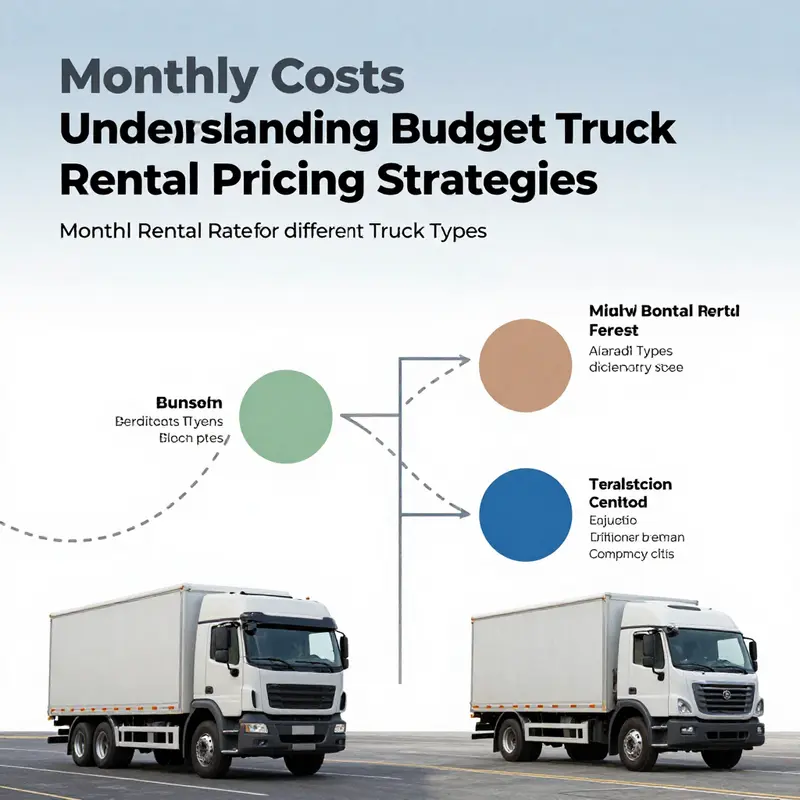
Understanding the true monthly price of a long-term truck rental requires looking beyond the base rate. Monthly invoices bundle the vehicle cost, permitted miles, insurance, fuel, deposits, taxes, and occasional surcharges. Each line item affects the effective monthly expense. This chapter walks through the components and gives practical examples you can use to budget accurately.
A few core variables determine the monthly number. First is the vehicle class. Smaller cargo vans and light-duty trucks typically carry lower monthly rents. Larger box trucks and specialized vehicles cost more. Second is the market. Urban centers with tight demand raise prices, while smaller cities often offer lower rates. Third is contract length. Longer commitments generally unlock monthly discounts. Finally, included mileage and insurance coverage shape the final bill.
Monthly base rates vary widely across regions. In some markets, small cargo vans and basic light trucks can rent for a few hundred dollars per month. Larger moving trucks, such as 24–26 foot units, may show monthly rates in a mid-hundreds range in certain markets. In contrast, in other regions the monthly rate for a standard small box truck commonly ranges from several thousand dollars. New-energy or electric trucks can sit between these bands, often cheaper because of subsidies and incentives.
A monthly rate often includes a mileage allowance. Typical allowances range from one thousand to two thousand miles per month. Exceeding this allowance usually leads to per-mile overage fees. These fees are commonly quoted per kilometer or per mile and stack quickly. For users with unpredictable routes, an unlimited mileage upgrade is sometimes available. If you expect heavy use, compare the cost of an unlimited option to projected overage fees. For more on mileage upgrades and their trade-offs, see an article about unlimited miles box truck rental.
Insurance is a major cost driver. Basic liability coverage may be included in the base rate. Comprehensive physical damage and loss protection typically cost extra. Monthly premiums vary by coverage level and by the renter’s history. For long-term contracts, insurers sometimes offer discounted monthly pricing versus short-term daily coverage. If you plan to operate the truck as a business vehicle, check whether your commercial policy covers rentals. Bundling coverage through the rental provider may be more convenient, but it is not always the cheapest option.
Fuel is not included in monthly fees. Fuel costs depend on vehicle type, load weight, and route. Diesel and gasoline trucks present different consumption patterns than electric trucks, which shift cost from fuel to electricity and potential charging fees. For long-haul work, calculate expected miles and multiply by an estimated fuel consumption rate. Add this to your monthly budget as a recurring operating expense.
Deposits and upfront holds also affect cash flow. Many rentals require a refundable deposit. Deposits range significantly, but a common practice is a multi-thousand-dollar hold. That money is returned, provided there is no damage and no outstanding fees. For budgeting, treat the deposit as a short-term cash outflow rather than a consumption cost, but plan for its impact on working capital.
Maintenance and routine servicing may or may not be included. Long-term leases sometimes include scheduled maintenance. Shorter monthly rentals usually place maintenance responsibility on the renter. Factor oil, tires, and wear-and-tear items into monthly forecasts if the contract excludes service. Unexpected repairs can spike costs, so examine roadside assistance and warranty terms when possible.
Taxes, registration, and local fees vary by jurisdiction. Some rentals include local taxes in the advertised monthly price. Others add taxes at checkout. If the truck crosses municipal or state lines, additional permits or tolls may apply. Permit fees are often a recurring or per-trip cost for commercial operations.
To compare short-term and long-term rates, convert monthly costs into a daily equivalent. Divide the monthly fee by 30 to get the per-day base. Then add daily estimates for insurance, fuel, and incremental maintenance. For example, a mid-tier monthly rate of $3,500 becomes about $116 per day. Adding $15 for insurance and $13 for fuel yields roughly $144 per day. This lets you judge whether a long-term contract beats repeated short-term rentals.
Here are three simple scenarios to illustrate total monthly costs. The names are generic to avoid brand mention. Scenario A: a light cargo van in a low-cost market. Base rent $250 per month. Included mileage 1,000 miles. Insurance add-on $120 per month. Fuel estimate $200 per month. Monthly total $570. Scenario B: a standard 4.2m box truck in a mid-tier city. Base rent $3,500 per month. Insurance $200. Fuel $400. Maintenance reserve $150. Monthly total $4,250. Scenario C: a larger specialized truck in a high-demand urban market. Base rent $6,500. Insurance $350. Fuel $700. Permits and taxes $200. Monthly total $7,750.
These scenarios show why understanding local conditions matters. A long-term agreement can be very cost-effective in one market and expensive in another. Always request a detailed quote that breaks each line item into monthly and per-mile charges. Ask whether discounts apply for commitments of six months or longer. Many providers reduce the monthly rate once you cross that threshold.
Negotiation strategies can trim monthly cost. Commit to a longer rental period. Request higher included mileage instead of a lower base rate. Bundle insurance and maintenance into a single monthly fee when that lowers the aggregated price. Consider newer electric models if local incentives or lower operating costs offer long-run savings. Finally, ask for reduced deposit or staged deposit returns, particularly if you can provide business credentials or proof of reliable driving history.
When comparing offers, create a simple worksheet. List base monthly rent, included mileage, per-mile overage, insurance, expected fuel, maintenance, deposit, and taxes. Compute the monthly total and the per-mile or per-day equivalent. This makes apples-to-apples comparisons possible. It also reveals whether optional upgrades are worth the extra monthly cost.
Long-term rentals often include better payment terms. Monthly billing, consolidated invoices, and potential tax benefits for businesses help with cash flow. Still, monitor total cost over time. Seasonal demand can alter market rates at renewal. Plan for renegotiation several months before contract expiration.
Accurate budgeting requires estimating use, comparing local offers, and clarifying contract terms. Focus on the two biggest variables: mileage and insurance. Those usually move the needle most. With a clear breakdown and a simple comparison tool, you can predict monthly expenses with confidence and choose the best long-term rental for your needs.
External resource for up-to-date pricing and contract details: https://www.budgettruckrental.com
null
null
Beyond the Daily Rate: Hidden Fees That Tell You How Much a Budget Truck Rental Really Costs
Understanding the full cost of a budget truck rental means looking past the headline daily or monthly rate. The quoted price often covers the vehicle itself and basic liability. It rarely covers everything. Additional fees can add a surprising percentage to your bill. This chapter walks through the typical extra charges, shows how they add up, and gives practical ways to limit their impact so your rental stays within budget.
Start with mileage charges. Many budget rentals include a daily mileage allowance. Common limits range from about 100–200 kilometers (60–125 miles) per day. Exceeding that allowance triggers per-mile fees. Those fees commonly fall between $0.25 and $1.00 per additional mile, or roughly $1–$2 per extra kilometer in markets quoted per kilometer. On a long move or a multi-stop commercial run, excess mileage alone can double your expected transport cost. If you expect to drive far, search for options with unlimited mileage or negotiate a higher flat-mileage allowance. For a closer look at unlimited mileage choices, see unlimited rental truck mileage.
Fuel and refueling rules form the next major line item. Some companies require the tank to be returned full. If you return it partially filled, the provider will refill it at a premium. That premium often runs between $3.50 and $5.00 per gallon, which can substantially exceed local pump prices. For diesel or alternative-fuel trucks, the refill fee may be even higher. Two practical steps reduce this charge: estimate fuel consumption before the trip, and keep receipts showing you refueled within a reasonable distance of return. If the rental includes a fuel prepay option, compare its cost to expected local prices. Prepay can be convenient, but it is rarely the cheapest choice for precise planners.
Insurance and protection options are where many renters see the largest unexpected jump. Basic liability is often included. Optional coverages like collision damage waiver, loss damage waiver, or comprehensive protection usually cost between $10 and $25 per day. These coverages can remove your direct financial exposure to damage or theft. If you carry commercial auto insurance or certain personal policies, you might already have sufficient coverage. Check your policies before buying daily waivers. Keep documentation in the vehicle. When optional protection is declined, be prepared for potentially large deductibles.
Tolls and permit charges are often passed through to you. Some rental companies track electronic toll tags and bill you for tolls plus an administrative processing fee. Processing fees vary, but expect a modest flat fee plus the toll amounts. If your route crosses multiple toll systems, ask whether the provider will issue a consolidated invoice. For moves that cross state or provincial lines, confirm whether any permits or special registration fees apply. Those charges vary by jurisdiction.
Delivery, pickup, and one-way fees add convenience at a cost. If you need the truck delivered to your origin, or picked up at a destination outside a depot, companies may apply a one-time service charge. Typical ranges are $50–$100, but distance and local labor costs can push that higher. One-way rentals between cities often carry a premium because companies rebalance their fleets. Budgeting for that premium is essential for accurate cost estimates.
Additional drivers, late returns, and deposits are operational charges that hit many renters. Adding an authorized driver often costs $10–$15 per day. That fee might be waived for household members in some locations, but do not assume a waiver. Late returns are punished with hourly or daily penalties. Fees often reach $50 per hour or a full extra day, depending on the provider and the delay. Deposits—held on a credit card—typically range in the thousands and are refundable after inspection. Understand the conditions for release and any circumstances that might trigger a charge against that deposit.
Cleaning, damage assessment, and wear-and-tear fees can be subtle. Light dirt is normally expected. Excessive interior cleaning, cigarette smoke remediation, or removal of spills often leads to cleaning charges. Damage beyond normal wear, like torn flooring, broken tie-downs, or dents, may incur repair fees. Some companies use flat rates for minor repairs and calculated costs for major work. Photograph the vehicle on pickup and on return. Keep time-stamped records to dispute inappropriate charges.
Roadside assistance and administrative fees deserve attention. Roadside assistance coverage might be included, optional, or bundled into protection packages. Buying it can be cheaper than paying out-of-pocket for a tow or service call. Administrative fees cover tasks like processing citations, accident paperwork, and registration changes. These fees are typically modest but add up when combined with other line items.
Cross-border and special-use fees apply in specific cases. Driving into another country often requires extra insurance, permits, and border processing fees. Using the truck to tow trailers or haul hazardous materials typically requires prior authorization and sometimes specialized permits. These special-use arrangements can dramatically raise daily rates and add per-mile surcharges. Always state your intended use when booking.
Taxes and government levies vary by jurisdiction and can increase the invoice by a fixed percent. Some places apply local surcharges for commercial vehicle rentals, while others tax the whole transaction. Make sure your quote includes taxes so you aren’t surprised by a higher final amount.
Putting the pieces together shows how quickly extras exceed expectations. A $200 daily rental can become $300 once mileage, fuel, protection, and a deposit are included. On a longer monthly lease, small daily protection fees multiply into substantial sums. The solution is not always finding the cheapest base rate. It is finding a transparent quote that bundles the services you need at a sensible price.
To limit fees, follow a few practical rules. Get an itemized quote in writing before you commit. Ask which fees are mandatory and which are optional. Verify mileage limits and compare unlimited-mileage options when traveling long distances. Photograph the vehicle thoroughly and keep fuel receipts. Confirm deposit amounts and the conditions for release. Check your existing insurance and credit-card protections to avoid buying redundant coverage. Finally, plan routes to minimize tolls and off-hour returns.
Being proactive often saves more than hunting for the lowest advertised rate. When you understand how each fee works, you can control many of them. That control brings clarity to the question, “how much is a budget truck rental?”—because the answer depends as much on your choices as on the base price.
For the detailed list of typical extra charges used in this chapter, see the rental provider fee page: https://www.budgettruckrental.com/fees
Pricing at the Edge: How Budget Truck Rentals Turn Demand Into Deals

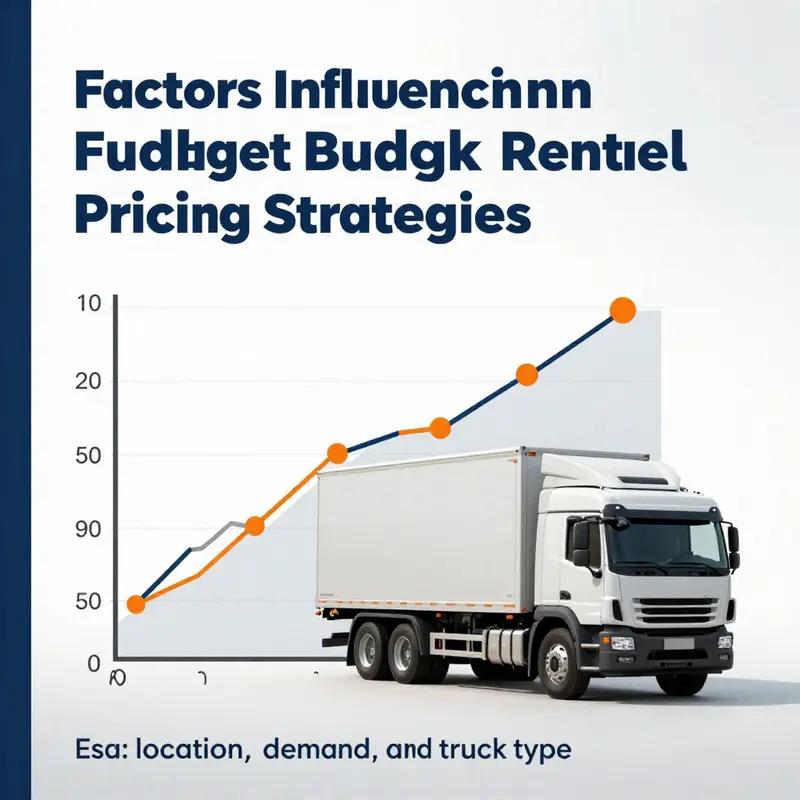
The price tag on a budget truck rental is rarely a fixed line read from a single chart. It climbs and falls with the same rhythms as the moving season, the week of the month when many households prefer to relocate, and the mile-by-mile math that keeps a small business fleet solvent. For anyone planning a move or coordinating logistics for a growing enterprise, understanding what drives the price—and how to navigate those drivers—offers a practical map through a landscape that often feels opaque. The data compiled in early 2026 reveal a spectrum of daily and monthly costs, shaped by vehicle size, energy source, location, and duration. These figures illuminate not just what a rental costs, but how operators price value and how customers can price their own needs in return.
At a glance, the smallest, most maneuverable options—compact box trucks and small vans—serve as the budget’s backbone for short-term use. Daily rates for these vehicles typically range from about $30 to $500, reflecting wide regional differences and vehicle condition. In major metropolitan hubs, peak seasons push daily rates toward the upper end, occasionally reaching $500 to $800 per day when demand surges. In contrast, in smaller markets or during off-peak periods, the same classes of trucks can be found for roughly $150 to $300 per day. These broad swings are not random; they mirror how demand concentrates around moves, the end of months when leases cycle, and the fiscal calendars of businesses that hire temporary fleets. A long-term perspective can yield startling contrasts: a four-and-a-half-meter electric box truck rented in a city with generous energy incentives might be priced around the equivalent of $13 per day if the vehicle is leased on a monthly basis. The anomaly lies not in the possibility but in the economy of scale—longer commitments often unlock lower daily costs that make large fleets viable for startups testing a new market or a seasonal business catching a window of opportunity.
As vehicles grow larger, the price ladder rises but not in a linear fashion. Light-duty box trucks, closer in size to a small moving van, typically command daily rates between $200 and $500 for standard models. Premium or newer models within this class push the ceiling higher, but even at the upper edge, the pricing remains a function of total cost of ownership and utilization. The electric or “new energy” category adds another layer here: while these trucks can offer enticing daily rates in the sense of lower operating expense, they come with practical constraints, notably battery range. The data show daily rates for electric variants generally landing in the $150 to $250 range, reflecting government incentives and the lower energy costs relative to diesel, balanced by the constraints of range and charging availability. This is where the pricing narrative shifts from pure speed to a blend of reliability and geography: in regions with robust charging grids and favorable incentives, electric boxes can tilt the total cost balance toward savings even if the upfront daily rate is similar to a conventional model.
Longer-term rentals crystallize the bargaining dynamic. For small box trucks, monthly costs span roughly $3,000 to $8,000, with regional variation driven by market demand, vehicle condition, and the presence of electric powertrains. In practice, a city like Shenzhen might see a small electric 4.2-meter box truck priced around $4,000 per month, while Hangzhou may edge higher for premium electric models. Chongqing presents a similar picture, slightly below or above the $4,000 mark for comparable 4.2-meter NEV fleets. When the vehicle category shifts toward medium-sized trucks—a configuration described as six meters with multiple axles—the monthly rental tends to settle in the lower range of a narrower band, roughly $1,500 to $1,800 per month, reflecting usage patterns and fleet turnover for short-haul tasks. For high-end or specialized vintage-like light trucks, monthly prices can reach $6,000 to $7,000, a reminder that some segments are priced for reliability and legacy capacity rather than volume, even when their practical utility for day-to-day moves is modest.
The price picture is further complicated by a suite of additional fees that can dramatically alter the bottom line if not anticipated. Insurance is the most common, with basic coverage usually included but full insurance adding roughly $50 to $100 per day. Mileage is a second critical variable: many contracts bundle a daily allowance—often 100 to 200 kilometers—and charge $1 to $2 per extra kilometer. For after-hours returns, a company may levy an overnight return fee in the $50 to $100 range, and a deposit, frequently around $5,000, is typical and refundable at lease end. These charges, while not the headline daily rate, can meaningfully affect what a rental costs over a given period and should be treated as part of the total cost of ownership. The interplay of these fees with base rates is where informed budgeting begins to matter most.
From a shopper’s or manager’s viewpoint, several pricing strategies shape what looks like a moving target and what looks like a stable cost. Dynamic pricing stands out as one of the most influential tools. Rates are adjusted in real time based on demand signals. When moving season peaks—summer months, weekends, or end-of-month transitions—rates tend to rise. Conversely, slow periods invite price reductions that encourage demand and fill capacity. The potential benefit to rental companies is clear: the ability to maximize revenue during peak windows without simultaneously depressing demand during slower intervals. A broader business study cited in industry discussions suggests dynamic pricing can lift revenues in the mid-teens percentage-wise without eroding overall volume, a finding that helps explain why some firms systematically adjust rates rather than lock them into a single price. This approach, however, carries with it the caveat that customers will respond to price signals, often by shopping more aggressively for the best total-cost scenario rather than the lowest daily rate alone.
Tiered pricing is another cornerstone of the budget-truck model. Basic rentals at the lower end typically involve a smaller vehicle with limited insurance. As customers opt for additional protections—such as unlimited mileage, multiple drivers, or full-coverage options—the price climbs, but so does value for the user who needs predictability or scale. This tiered structure allows rental companies to capture a broader spectrum of needs, from casual home movers to professional operators who rely on a fleet for time-sensitive tasks. It also creates upsell opportunities that can improve margin without alienating price-sensitive customers who only require the most basic service. Then there is promotional pricing: first-time user discounts, referral incentives, and seasonal campaigns that exert a powerful pull on decision-makers who are balancing cost with capacity. Data from consumer research confirms that a majority of buyers are swayed by promotions, and that initial discounts can help convert first-time users into repeat customers who appreciate the longer-term value gained from strategic budgeting.
No discussion of pricing would be complete without recognizing the importance of transparency. Shoppers increasingly expect upfront disclosure of all fees—daily rates, mileage charges, fuel, penalties, and any deposit requirements. In markets where pricing is opaque or where hidden fees surface only after the contract is signed, consumer trust erodes and reviews suffer. Industry observers frequently reference regulatory and consumer-protection expectations about pricing clarity, including remarks from authorities emphasizing the value of clear, itemized quotes. For buyers and managers negotiating terms, this means building a cost model that anticipates every line in the bill, from insurance to return windows, and comparing apples to apples across providers. When such transparency exists, it becomes easier to evaluate value alongside price, a critical factor for management teams overseeing fleets under budget constraints.
Against this backdrop, the practical act of budgeting for a rental hinges on a simple, disciplined approach: start with the duration and the vehicle class you need, then layer in anticipated miles, insurance levels, and any special services. For short-term moves, the best value often lies with a compact, possibly electric, box truck at a daily rate in the mid-range, coupled with a reasonable mileage allowance and a clear, low-fee policy. For ongoing operations or seasonal spikes, exploring a month-to-month leasing option in the middle of the fleet range can yield meaningful savings relative to daily rates while preserving flexibility. Finally, always factor in the deposit and the potential penalties for after-hours returns or excess wear, as these outlays can surprise if not planned for in the initial budget.
For readers who want to dig deeper into how pricing strategies shape rental choices, the topic extends beyond the numbers. Dynamic pricing, in particular, has garnered attention in business literature for its ability to align revenue with demand without sacrificing customer volume, a balancing act that informs both the traveler planning a move and the operations manager steering a small fleet. For a broader lens on how such pricing models are transforming the car and truck rental space, see a recent discussion in a leading business review. This external resource provides broader context to the micro-decisions described here and helps connect daily rental experiences with macroeconomic and strategic dynamics.
Internal link for readers exploring cost optimization: unlimited-miles-box-truck-rental. It points to practical considerations about mileage plans that often define the final price in real-world budgeting.
External resource for further reading: How Dynamic Pricing Is Transforming the Car and Truck Rental Industry – Harvard Business Review. This article situates the chapter’s themes within a wider debate about how price signals reflect demand, capacity, and customer behavior in dynamic markets. https://hbr.org/2023/04/how-dynamic-pricing-is-transforming-the-car-and-truck-rental-industry
Final thoughts
Understanding the nuanced landscape of budget truck rental pricing is crucial for business owners looking to optimize logistics expenses. By analyzing daily versus monthly rental costs, recognizing the influence of various factors on pricing, and being aware of additional fees, businesses can make informed decisions that align with their financial strategies. Ultimately, a clear grasp of these elements not only aids in immediate cost control but also promotes efficient long-term logistics planning and operational success.