
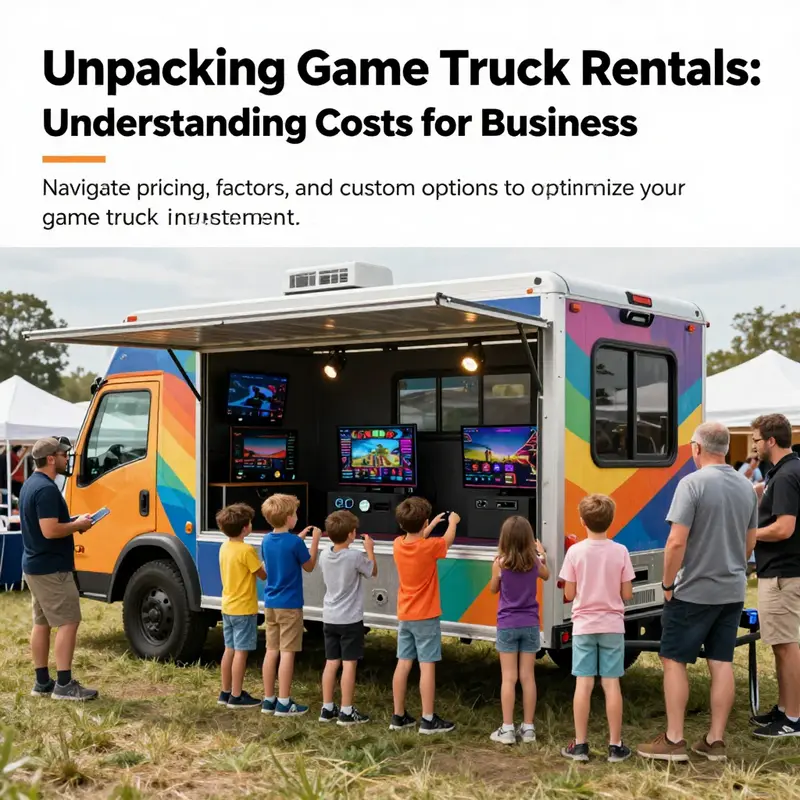
Game truck rentals have become a popular choice for business owners looking to enhance their events with interactive entertainment. Understanding how these rentals are priced is crucial for making informed financial decisions. This guide peels back the layers of game truck rental costs tailored for entrepreneurs. Covering the basic pricing structure, the factors influencing costs, and additional customization options, each chapter will equip you with the knowledge to leverage game trucks effectively for your business needs.
Behind the Wheels of Fun: Demystifying the Basic Pricing Structure for Game Truck Rentals
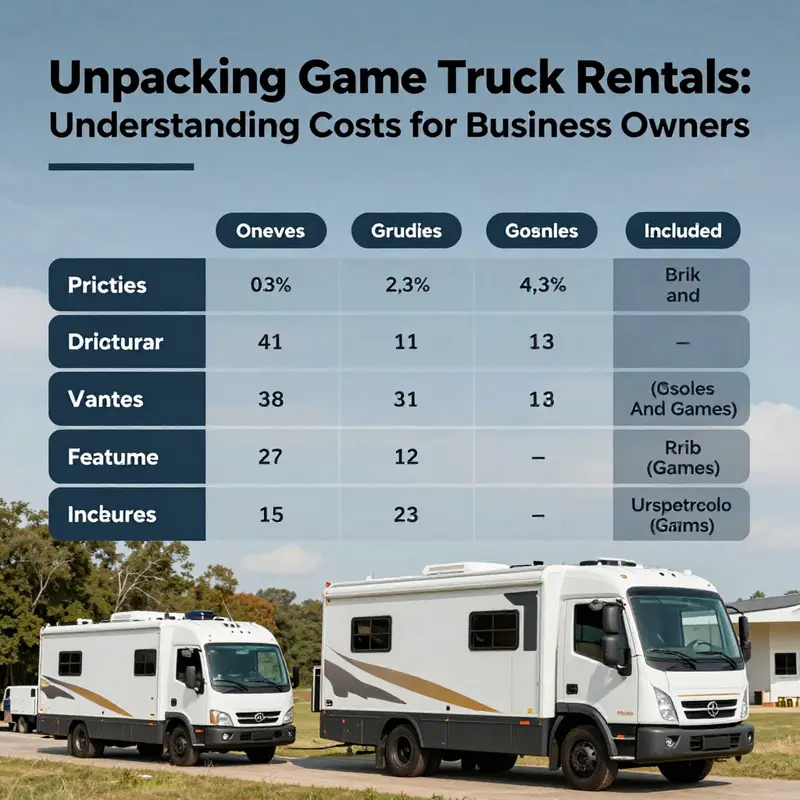
Every host planning a game night on a grand scale faces a practical question long before the first controller is handed to a guest: what will this cost, and what will you actually get for that price? The basic pricing structure for game truck rentals is designed to reflect a blend of location, duration, equipment, and service levels, but it can still feel opaque to first-time renters. The core idea is straightforward: you pay for access to a mobile gaming environment that arrives ready to go, with everything from the truck shell to the consoles and the game library in place. Yet beneath that straightforward premise lies a web of variables that can change the bottom line dramatically from one event to the next. Understanding these variables helps set realistic expectations and, just as important, helps you plan a budget that aligns with the experience you want to deliver.
Most families planning a birthday party, schools staging a fall festival, or organizations arranging a community celebration are drawn to the convenience and novelty of a game truck. Instead of a dozen separate rented items—projectors, sound systems, game consoles, interactive lighting—the truck bundles them into a single turnkey solution. The pricing reflects this consolidation. The basic rate structures you’ll encounter typically include an hourly option, a flat daily option, and a set of additional fees that cover the less-visible costs that accumulate when a mobile entertainment service travels, sets up, and supports a crowd throughout a window of time. At a glance, the numbers look simple: an hourly range, a daily range, and a handful of extras. But the practical impact of these numbers depends on your event’s specifics—where you are, how long you want the event to run, how many players you expect, and whether you want a staff member to operate the system or you’ll take on the management duties yourself.
Base hourly rates anchor most price discussions. In many markets, providers charge somewhere in the neighborhood of $100 to $250 per hour. The exact figure within that band hinges on several conditions. A bigger metro area often carries a higher rate than a rural town because labor, fuel, and venue-related costs are higher. A longer event typically earns a discount, a reflection of the business model that prioritizes volume and operational efficiency over piecemeal billing. The games included at the basic level also matter. A package built around a handful of popular titles and a couple of consoles will sit toward the lower end of the hourly range, while a richer library with newer releases, additional retro options, and a broader cast of peripherals nudges the price upward.
To illustrate how these numbers translate into a real budget, consider a typical 4- to 6-hour block in a mid-sized city. A basic game truck rental might be priced around $250 to $400 for that window. It’s worth noting that this estimate often assumes the truck arrives with a standard setup—two or three consoles, a curated library of games, and a staff member handling operation and supervision. If the event requires international travel within a reasonable radius, or if the host expects a more expansive entertainment environment with room-scale setups or high-end audio, the hourly rate can move toward the higher end of the spectrum or beyond. In contrast, a true budget-friendly option might come with fewer games, fewer consoles, and the expectation that a party host or a designated helper will oversee the play flow. The same 4- to 6-hour period could tilt toward the lower end if the provider is running a promotion, if the event is scheduled during a slow season, or if the client agrees to certain constraints on staffing or setup complexity.
Beyond the base hourly rate, several add-ons and fees can shape the final number. Travel distance is a frequent variable, especially for one-way trips where the truck must be delivered to the host and then possibly collected later. Some providers also charge for the time it takes to set up and teardown, which might extend beyond the official event window. Insurance is another chunk of cost that often appears in the small-print terms; it’s a standard precaution that protects both the client and the vendor in the unlikely event of damage or injury during a busy party setting. Then there are requests for customization—branding the truck with a school’s colors, including themed decorations, or adding food and beverage services, which are increasingly common at larger events. Each of these elements can be added to the base price or presented as a separate line item, and they frequently carry a premium that reflects the extra labor, travel, or equipment involved.
Some clients discover that the pricing becomes easier to navigate when separated into flat daily rates. In many markets, a flat daily rate may range from $600 to $1,200 and typically covers up to 8 hours of service. The advantage of a daily rate is the predictability it offers. If you’re planning a festival, a campus event, or a multi-venue expo, a flat rate can simplify budgeting by consolidating all the essential components into a single figure. These daily packages often include mileage within a defined radius, eliminating the need for separate travel charges if your event site is within the provider’s service area. For organizers who must juggle a tight timetable with multiple activities, the predictability of a flat-day price can be a decisive factor when choosing a partner for entertainment.
With both hourly and daily pricing structures, the value proposition rests on what the rental includes—equipment quality, game variety, and the degree of hands-on support. A basic package commonly features a few popular games, a couple of consoles, a suitable display arrangement, and on-site supervision to manage the setup and the maintenance of a safe, well-run play space. A more comprehensive experience expands the library, adds additional consoles, upgrades the sound and video environments, and introduces professional staff to coordinate gameplay, maintain order, and assist guests. The incremental cost of upgrading isn’t merely about more screens; it’s about the efficiency and confidence that come with trained operators who can troubleshoot, troubleshoot, and keep the event moving smoothly even with a dozen players jostling for space.
For hosts who want to optimize value, the path often involves balancing the package’s scope with the desired experience. If you’re hosting a 4-hour birthday party with a modest guest list, a lean setup with core games can deliver high fun at a lower price. If the goal is a public event with a large attendance, a robust catalog of titles, and a dedicated staff to manage queueing, game rotations, and safety, investing in a premium package makes sense. In negotiations, many vendors are open to tailoring a package to fit a budget while preserving the essence of the experience. It’s common to see the base rate preserved while some features are streamlined or swapped for alternatives that achieve a similar impact. This flexibility is where the pricing structure shows its true utility: it’s not a rigid price; it’s a framework for designing an event that’s feasible and memorable.
As with any rental decision, the most accurate pricing comes from direct quotes. Market dynamics and business models differ widely by region and by company. The best practice is to reach out to local providers with a clear outline of your event details—date, location, expected headcount, preferred setup, and any staffing needs. Providers can then present a tailored quote that reflects your exact circumstances and constraints. In doing so, you’ll often encounter a few practical guidance points that can help you compare apples to apples. For example, if you’re weighing two offers—one with a higher hourly rate but a shorter setup time and another with a lower rate but longer teardown—the difference in overall cost can be smaller than you expect once the time calculations are included. It’s also wise to discuss whether the quote includes taxes, gratuities, or service fees, and whether there are any minimums or maximums on the service window.
A useful side consideration is how much value you place on convenience. A well-staffed truck reduces the load on a host’s team, helps manage guest flow, and ensures safety standards are preserved in a dynamic environment. If you’re coordinating a large school event with multiple activities, having a dedicated operator who can rotate players, enforce safety rules, and keep the energy level high can transform a good event into a standout one. On the other hand, smaller gatherings with a hands-on, DIY approach may prefer a simpler package that emphasizes cost savings and flexibility. In both cases, you should expect to negotiate a price that reflects the scope and intensity of the service. The price is not merely a number; it’s a signal of the vendor’s commitment to delivering a smooth, engaging experience within your logistical constraints.
Because pricing is so sensitive to local market conditions, it is helpful to convert the numbers into a practical planning tool. Start with your event’s expected duration and the headcount. Translate that into the number of play stations you’ll need and whether you want a staffed, operator-assisted experience or a self-guided setup. Then map those requirements to the pricing structure’s components: base hourly or daily rates, travel fees, setup and teardown, insurance, and any special add-ons. Once you have a draft total, sanity-check the budget by comparing it against the value you expect to receive. If you’re prioritizing guest satisfaction and a seamless flow of activities, investing a little more in a premium package with robust support can yield dividends in time saved and in the quality of the guest experience.
If you want to explore how discounts or pricing strategies play into the broader rental ecosystem, you can read about cost-saving options such as Penske truck rental discounts. While that resource is focused on a different kind of mobile rental, the underlying principle—pricing influenced by length of use, distance, and additional services—offers a useful frame for thinking about your game truck needs. For more direct market insights on game truck pricing, a reliable starting point is EventPro’s Game Truck Rental Pricing Guide, which surveys typical costs across multiple U.S. markets and can serve as a benchmark as you gather local quotes. This external guide helps anchor your expectations and supports a more informed conversation with providers.
In short, the basic pricing structure for game truck rentals blends the predictability of hourly blocks or full-day packages with a set of variable charges that reflect location, logistics, and customization. The base rate gives you access to the core gaming environment, while add-ons and travel logistics determine whether you’re looking at a lean, budget-friendly option or a comprehensive, fully supported experience. The best strategy is to approach pricing as a collaborative design process: share your event goals, invite providers to propose tailored packages, and compare quotes not just on price but on the comprehensiveness of the experience, the reliability of staffing, and the ease of execution on the day.
External resource: https://www.eventpro.com/game-truck-rental-pricing-guide
Inside the Price Tag: How Game Truck Rental Costs Are Shaped by Location, Duration, and Service
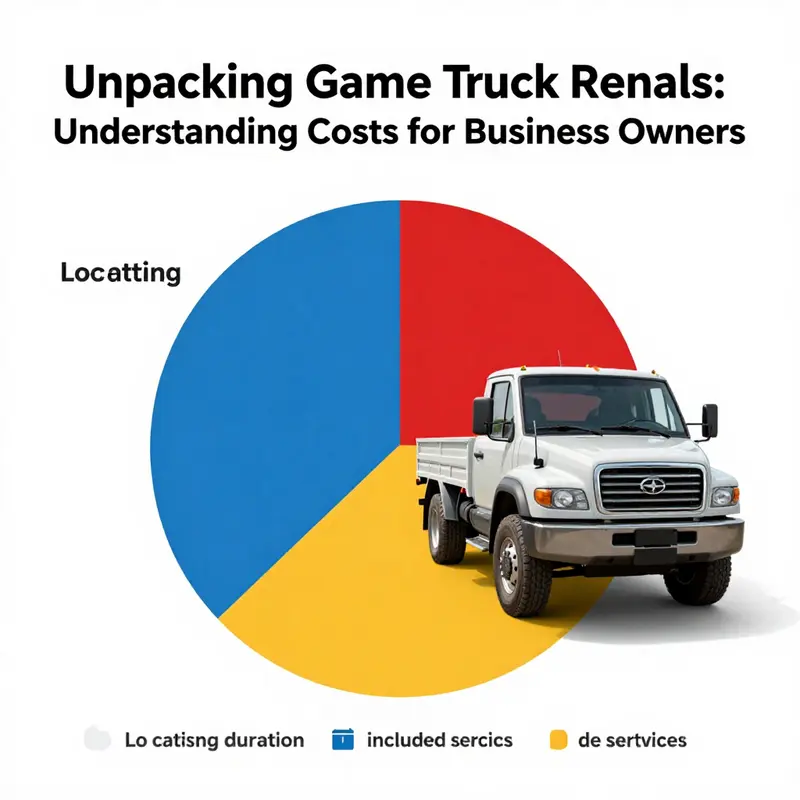
When you start planning a party, a school gathering, or a corporate event centered on arcade energy and interactive play, the question of price quickly follows. Game truck style entertainment, sometimes described as mobile arcade experiences, offers a unique blend of on site setup, built in screens, and a curated assortment of games. Yet the final price is not a single line item that can be read from a menu. It is the result of multiple moving parts that work together to deliver an experience. Understanding these moving parts helps you not only anticipate what you will pay, but also recognize opportunities to tailor the package to fit your budget without sacrificing the core entertainment value.
In practice, rental prices for these mobile arcades tend to fall in a broad band, with a rough starting point around a couple of hundred dollars and climbing toward several hundred for fuller, more feature rich setups. For a basic event that lasts a few hours, you might see numbers in the 250 to 400 range. If your event calls for a wider selection of games, more consoles, higher performance gear, and the presence of trained staff to manage the setup and gameplay, the price tends to land in the 500 to 700 range, and in some cases higher for peak demand periods or very elaborate packages. These figures reflect a snapshot from the market rather than a fixed price book. The final quote remains highly customized to your event details and location, and that customization is what makes the pricing landscape both flexible and sometimes a bit opaque to first timers.
To navigate this landscape wisely, it helps to see how the price tag is actually assembled. The cost structure can be thought of as a layered cake, where each layer adds a measurable bite to the total while also providing the value that guests experience during the event. The first layer is the type and features of the truck itself. A basic mobile arcade vehicle may come with a handful of classic consoles, a compact collection of popular games, and a straightforward interior setup designed for easy engagement. But many operators offer more elaborate configurations. Some trucks sport virtual reality stations, others boast multiple screens, larger storage for game libraries, or themed interiors that align with children’s parties or corporate events. The presence of these high end features does more than delight in the moment; it raises the cost because it requires more hardware, more power, better networking, and in some cases specialized maintenance. The difference between a lean, entry level setup and a VR enabled or multi room experience can be substantial, and the pricing reflects the value of the added immersion and engagement.
Next comes the duration of the rental. This is a straightforward driver of price, yet the nuance lies in how providers price time. A four to six hour window is common for many basic events, and it frequently includes the core setup, gameplay sessions, and a standard teardown. In this middle ground, daily or event pricing often proves more predictable for planners. Longer rentals, such as full day or extended multi day events, sometimes unlock discounted daily rates because the operator benefits from better time utilization and can spread labor and logistics over a longer period. Shorter time blocks, particularly those billed on an hourly basis, can carry higher hourly rates that add up quickly if a schedule runs over. This dynamic makes it worthwhile to think through the actual flow of the event—time for arrival and setup, time for guests to rotate through the trucks, time for any breaks or transitions—and to build a buffer into the plan so you don’t pay a premium for overruns.
Location and market demand also steer pricing. Urban centers and busy metro areas typically command higher prices than rural or less congested regions, simply because the demand for entertainment services tends to be stronger and more competitive. Seasonal peaks—summer, holidays, or local event seasons—also push prices upward as organizers seek to secure popular slots, sometimes at the expense of last minute flexibility. The same truck may have a different price tag in a major city versus a small town, reflecting a broader economic reality: the operator’s costs are not uniform across geographies, and supply and schedule pressure in a given location can tilt the quote in favor of the provider or the client based on timing and availability.
Travel distance and logistics introduce another layer of cost. If the truck must travel a long distance to reach the venue, delivery fees come into play. These charges offset fuel, driver time, and the wear and tear on equipment, and in some cases may require overnight accommodations for staff if the trip spans multiple days or ends late into the evening. When travel becomes a factor, the price is less about the time spent at the event and more about the broader logistics of getting the truck to and from the venue with reliable staffing. That is why some organizers find themselves negotiating a combination of mileage charges, per diem allowances for staff, and, if necessary, lodging arrangements when events cross regional lines or occur near travel hubs that demand overnight rest.
The level of service and staffing can be a decisive factor in the final price. Do you want the guests to operate the games themselves, or would you prefer a trained team to handle setup, gameplay, transitions between games, and general guest assistance? A self serve model with minimal staff typically costs less because labor is the main recurring expense for the operator. When a provider commits to a staffed experience, you should expect higher costs to cover the additional hands on deck, the expertise of event managers who schedule rotations, troubleshoot equipment on the fly, and ensure a smooth, engaging flow for attendees. For corporate events or birthday parties where the operator curates the event experience, run of show sequencing and guest engagement strategies may also be included, and those services naturally carry premium pricing. The result is a spectrum from do it yourself to fully managed experiences, with the price tag reflecting the degree of hands on management and technical sophistication involved.
Seasonal promotions and package deals are the open doors through which negotiators can extract real value. Many operators run promotions during off peak times or offer bundled packages that combine equipment, a certain number of games, and staffing at a single, simplified price. Seasonal discounts may also appear as promotional codes, or as a more generous rate for weekday bookings when demand is lower. The practical effect is that a quote can be significantly trimmed by recognizing and leveraging these promotions rather than accepting the first number that arrives in a contract. When you are vetting options, it pays to compare not just the base price, but the bundled value, the duration it covers, and what happens if your event runs longer than planned.
The final quote you receive will blend all of these components, and the result is highly personalized. Operators will ask for essential details such as event date, event length, location, guest count, and whether you require staff supervision. They may also probe for your preferred setup style, whether you want a VR experience or a classic arcade lineup, and the kind of networking or simultaneous gameplay you envision. With that information in hand, you can begin to map the cost against your priorities. If your priority is to wow a large group with a diverse set of games and an immersive environment, the price will naturally lean towards the higher end of the spectrum. If your goal is a compact party with a tight timeline and a lean game library, you can expect a more modest figure. In both cases, the essence of the value proposition remains intact: the truck brings entertainment and engagement to a defined space, and the price quantifies the scale and sophistication of that offering.
Even as you consider these layers, remember that the numbers you see are often starting points. Some operators provide add ons that can significantly alter the final price. Custom branding on the exterior of the truck, themed decorations aligned with a party motif, or complementary food and beverage arrangements can surge the bill. If your event requires a particular branding moment or a themed setup to align with your company or birthday party, anticipate a few extra dollars to fund those enhancements. On the other hand, you may discover options to pare back the event by dropping certain add ons or shortening the duration enough to stay within a target budget. The balancing act between desired spectacle and practical expense is where careful planning and proactive negotiation become essential.
To translate these insights into a practical plan, start with a clear picture of what you want guests to experience, then invite multiple providers to quote for the same scope of work. A well defined scope helps ensure apples to apples comparisons, which is critical because a simple price tag can mask differences in equipment quality, game libraries, staffing levels, and service guarantees. When you gather quotes, consider not only the nominal price but the total value delivered per dollar. A slightly higher price may yield more reliable performance, quicker setup, and fewer interruptions during the event—benefits that can translate into a more memorable experience for guests and a smoother overall operation for organizers.
If you want to get a sense of how broader truck rental pricing structures approach discounts and promotions outside the game truck niche, you can consider general pricing research and industry benchmarks. These external perspectives help illustrate that many equipment and mobility services share common pricing dynamics: base rates anchored by equipment quality, time based charges for the duration of use, location driven demand, and the value added by staff and service level. While the world of mobile arcade entertainment is not identical to general truck rental, the underlying economics are instructive when you plan a game truck experience.
Beyond the Base Price: Navigating Extra Costs and Customization in Game Truck Rentals
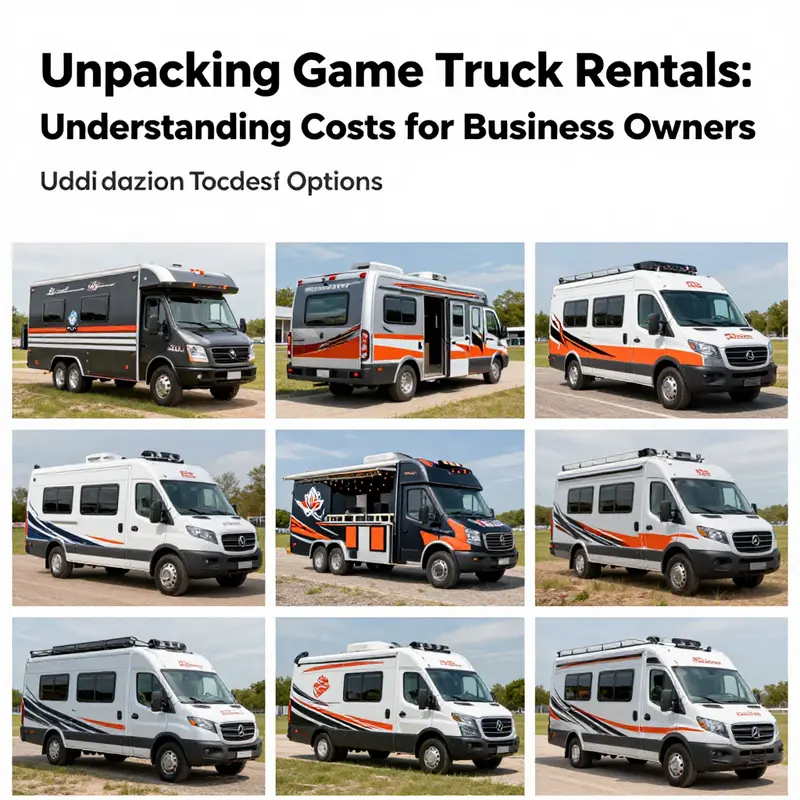
Choosing a game truck rental is more than agreeing to a price for a block of hours. It is an invitation to customize an experience, to tailor the setup to a specific crowd, and to balance the thrill of a mobile arcade with the practicalities of a budget. When you begin with a basic rental quote, you are looking at the surface price—the number that starts the conversation. But the deeper conversation—the one that determines whether the event feels effortless and polished or reactive and stressful—centers on two interwoven threads: customization options and additional costs. Understanding how these threads interact helps you design an event that is exactly what you want, without paying for parts you don’t need or overlooking charges that quietly sneak in. In this chapter, we will explore how providers structure their offerings, what kinds of personalization are typically available, and where extra fees most often appear. The goal is not to scare you away from the idea of a mobile gaming party, but to empower you to make informed choices that preserve both the fun and the value of the experience.
Customization options stand as the most obvious lever for shaping the party. They are the features that let you align the event with the age range of your guests, the venue, and the vibe you want to create. The most common customization is party duration. A 2-hour celebration can feel brisk and energetic, ideal for a busy afternoon or a compact gathering. A longer window—think 4 to 6 hours or even an all-day event—transforms the experience from a sprint into a festival, with time for rotations, larger groups, and multiple game modes. When a provider presents a menu of durations, the natural inclination is to pick the middle option that seems safest. Yet there is often more value hiding in the longer slots, especially if you anticipate a larger turnout or want to include a break for snacks, cake, or outdoor activities between gaming rounds. The key is to map the schedule to the guest flow: arrivals, introductions, a brief tutorial, a handful of short matches, a rotation system to include everyone, and a winding-down period that leaves room for photos and cake. A well-structured day can feel smooth and inclusive rather than chaotic, and customization is the mechanism that makes that possible.
Game selection is another cornerstone of personalization. Providers typically offer a library of titles that range from family-friendly picks to more intense multi-player experiences. The practical limit is the hardware and the time available, but most guests respond positively to a curated lineup that balances familiarity with a few surprise options. Personalization here is practical: you prioritize games that match your audience’s tastes, age range, and tolerance for competitive play. In some cases, providers can also accommodate special requests such as excluding specific genres or including a few evergreen favorites that most kids, teens, or adults will recognize. The ability to tailor the game catalog matters, because it influences engagement, reduces downtime between rounds, and increases the likelihood that more guests will actively participate rather than watch. The overarching idea is simple: a well-chosen game mix keeps energy high, reduces confusion, and makes the experience feel customized to your group rather than generic.
Beyond duration and game catalog, many services offer additions that can amplify the event’s theme or convenience. Themed decorations, branded backdrops, or a coordinated color palette can visually unify the setup with a birthday party or corporate event. Food and beverage services, even when limited to simple snacks and drinks, contribute to the overall atmosphere and can reduce the need for outside catering. Professional staff are a critical piece of the customization puzzle as well. On-site supervision ensures the equipment stays safe, guests are guided through the games, and the pacing remains lively. If you value a stress-free experience, the inclusion of trained staff to manage setup, operation, and cleanup becomes part of the customization suite. In practice, customization options are designed to deliver a turnkey experience: a tailored game lineup, a schedule that fits your timing, and a set of extras that can transform a good event into something memorable. They also function as a kind of insurance against fatigue for hosts and parents, who may be juggling many tasks behind the scenes while guests are absorbed in play.
All of these customization options exist within a framework of predictable structure. Providers typically group services into packages or bundles that bundle core equipment, supervision, and a baseline set of games. From there, you can add or subtract elements to reach your desired level of refinement. It is common for base pricing to include professional supervision, on-site setup, and post-event cleanup, which means many of the core logistics are handled without extra charges. The real advantage of customization is the ability to decide which elements are essential and which are optional, thereby controlling how the price scales with your ambitions. This is where transparency matters most. A reputable provider will walk you through what is included in the base price and what costs could be added for any extras. When you can see a clear line between what is essential and what is discretionary, it becomes easier to budget and to compare quotes from different vendors.
Budget considerations naturally follow from customization options. The first step is to estimate the core needs: how many guests you expect, the duration you’re comfortable, and the kind of atmosphere you want to create. With those anchors, you can explore the customization menu and map each option to a rough cost range. For example, choosing a longer duration increases the base price, but it may be more cost-effective than booking a separate entertainment option or paying for overtime after a shorter window. A broader game catalog tends to come with a higher price, but if you have a large audience with varied tastes, that broader catalog can increase participation and reduce the risk of downtime. The banner takeaway is straightforward: customization should enhance engagement without turning the event into a money pit. A careful review of what you gain from each customization choice versus what it costs helps you identify the sweet spot of value.
Speaking of value, it is worth acknowledging the scope and limits of what is typically included in base pricing. Reputable providers commonly include: professional supervision, equipment setup, and cleanup after the event. These inclusions are not trivial; they free hosts from technical tasks that can eat into the party’s momentum and add stress. They also offer a measure of reliability—an on-site technician who ensures controllers are charged, cables are secure, and the projector or screens are aligned. When you see a price tag that seems low, a prudent next step is to confirm whether those core services are covered. If a quote only lists the duration and a few game titles without mentioning supervision or setup, there is a real possibility of hidden costs waiting in the wings. Conversely, a higher quoted price may be justified if it includes premium features like dedicated staff coverage for the entire event, faster turnarounds between game sessions, or higher-end audiovisual equipment. The distinction often comes down to the level of service and confidence you want to bring to your planning.
Another factor shaping the total cost is travel. The need to move the truck to your venue, particularly when the location is a significant distance from the provider’s base, is a common explanation for additional charges. Travel fees can be structured in several ways: a flat distance-based fee, a per-mile rate, or a tiered system that reduces the price for shorter trips and scales up for longer journeys. When a venue is off the beaten path or in a rural area, the travel component can become a meaningful portion of the total. It is reasonable to expect travel costs to appear if the event site sits beyond a certain radius from the provider’s base. The key for planners is to request a transparent travel schedule and to ask whether travel time is billed in whole hours or fractions. Knowing how travel is calculated helps you anticipate the real cost and compare options more fairly.
Overtime is another practical consideration that can affect the final bill. The booked duration is a reliable predictor, but real events often require a cushion. A few additional minutes here and there during check-in, or a late-arriving group that pushes the schedule, can lead to overtime charges. Providers typically price overtime on an hourly basis, sometimes with a higher rate for the last hour or for holiday periods. The best approach is to build a buffer into your initial booking—ideally a half-hour to an hour—for contingencies while still staying within your overall budget. If you anticipate a tight schedule, ask for a clear overtime policy in advance and discuss potential alternatives, such as wrapping up sessions with a quick finale round that includes every guest. Knowing the overtime policy up front makes it easier to avoid sticker shock when the final bill arrives.
Finally, special requests and add-ons can quietly swell the total if you are not careful. Themed decorations, branding elements, or food and beverage delivery are common examples. Each of these extras has value for the right event, but they also come with a price tag. The trick is to evaluate whether the added ambiance genuinely enhances the guest experience or simply thickens the package with nonessential features. For instance, a tasteful branded backdrop might elevate photos and social sharing, while a simple, decorative touch may be sufficient for a smaller, more casual gathering. Food and beverage services—ranging from curated snack platters to beverages delivered to the venue—offer obvious convenience, but they also introduce liability, cleanup, and coordination considerations. If you choose these options, confirm how they are billed—whether as a one-time setup fee, a per-item cost, or a per-person charge—and whether the provider handles the service entirely or partners with a third party.
As you weigh customization against added costs, two guiding principles emerge. First, prioritize the elements that genuinely improve guest experience and participation. A longer session that keeps the group engaged, a well-curated game library that matches tastes, and a staff member who manages the flow can have a disproportionate impact on the evening’s tone. Second, insist on clarity and disclosure. A quote that itemizes every line item, from the base rate to travel, overtime, and add-ons, is not a luxury but a safeguard. It lets you compare apples to apples across providers and prevents surprises on the day of the event. A transparent process also invites constructive conversations with the vendor about alternatives. If a preferred option seems overpriced, there is often a corresponding alternative that delivers the same benefit at a lower cost, or a different combination of add-ons that achieves the same mood with less expense.
Putting this understanding into practice begins with careful needs assessment. Start with a guest estimate, a preferred duration, and an initial shortlist of games and activities that align with the group’s age range and energy level. From there, request a formal quote that explicitly lists what is included in the base price and what incurs extra charges. Ask about travel and overtime policies in precise terms: the distance threshold that triggers travel fees, how overtime is calculated, and whether overtime rates vary for weekends or holidays. If you are considering add-ons, request separate line items for each to understand the incremental impact on the total. When quotes arrive, compare them not just on the bottom line but on the services they promise to deliver. A quote that includes staff oversight, smooth setup, and reliable cleanup may well represent better value than a lower price that leaves these essentials to chance. In the end, the goal is a cohesive, well-managed event rather than a collection of disjointed elements that happen to occur under the same roof.
In the broader view of event planning, game truck rentals present an interesting case study in value and expectation management. Their pricing reflects both the tangible assets—the fleet, the screens, the controllers—and the intangible assets—the expertise of staff, the reliability of delivery, and the confidence of knowing the setup will run as expected. When you approach this decision with a plan for customization and a litmus test for cost, you create room not just for a successful party but for a memorable one. It is about matching hardware and software to the moment, and about translating a price into an experience that guests will remember long after the last high score has flashed on the screen. The final bill is a sum of choices, and the art of budgeting is the art of choosing wisely among those options, so the event feels smooth, responsive, and personal rather than generic and rushed. To that end, the most useful steps you can take are straightforward: define your must-haves, invite the vendor to tailor the package accordingly, insist on a transparent, itemized quote, and build in a sensible buffer for travel and potential overtime. With those steps in place, the act of renting a game truck becomes less about price alone and more about orchestrating a pulsating, inclusive, and well-paced celebration.
External resource for further reading: https://www.gametruckrentals.com/
Final thoughts
Understanding the financial landscape of game truck rentals enables business owners to make savvy choices that align with their event goals. By grasping the basic pricing structure, recognizing the influential factors, and exploring additional customization options, you’re better positioned to make the most of your investment. This knowledge not only enhances your operational efficiency but also boosts the overall experience for your clientele.