
As a business owner, navigating logistics often involves making crucial decisions about transportation options, including renting moving trucks. However, a lingering question remains: will your car insurance cover rental trucks? Understanding this topic is vital for ensuring you are adequately protected and can avoid unexpected expenses. The following chapters will unravel the specifics, from basic coverage limits of standard auto policies to commercial use restrictions and the importance of additional coverage options. We will also analyze credit card benefits related to truck rentals to provide a comprehensive understanding of your options. By the end, you’ll be equipped to make informed decisions about your truck rental insurance needs, safeguarding your business interests.
null
null
Beyond the Policy: Understanding Car Insurance and Rental Trucks for Commercial Moves
When you set out to move or transport a crew of equipment, the logical question often becomes whether your familiar car insurance will cover a rented moving truck. The short answer is rarely yes, at least not for the kind of truck you rent for a serious haul or for any commercial use. The longer answer requires a careful look at policy language, the distinction between personal and commercial responsibilities, and the practical steps you should take before you ever pull onto the street with a rented vehicle. The personal auto policy you carry for your sedan or SUV is built to protect a narrow set of risks—primarily the vehicle itself, its occupants, and the people you might collide with in private, noncommercial driving. When the vehicle in question grows from a family car to a heavy-duty moving truck, the risk calculus changes dramatically. A policy that might once have extended a modest amount of protection to your everyday car does not automatically lay the same safety net over a larger, heavier, and more commercially oriented vehicle that you only rent for a few days or weeks. This is why so many reviews of rental truck insurance begin with a careful caveat: check your current policy, and if you are planning to use a moving truck for a business purpose or for a sizable personal move, don’t assume coverage exists without verification.
To understand what protection may or may not come with a standard auto policy, it helps to unwind a few key distinctions. First, personal auto policies typically define what is and isn’t covered based on the type of vehicle. A regular passenger car or an SUV that seats a handful of people carries a different set of exclusions and limits than a large rental truck designed to haul furniture, appliances, or heavy equipment. Second, many insurers draw a clear line between private use and commercial use. If the truck is being used for a business-related task—moving crew, transporting merchandise, or delivering goods—the policy may explicitly exclude coverage or reduce the scope of protection. The upshot is that even if coverage exists for a car you own, that same policy may not step up to cover a rental truck used for moving or commercial work.
What this often translates to in practical terms is a need to budget for additional coverage. Rental companies understand the elevated risk of moving trucks and, in turn, commonly require customers to purchase supplemental insurance during the rental period. The most familiar form is a Collision Damage Waiver (CDW) or a similar loss-damage waiver. When you pay for a CDW, you are purchasing protection against damage to the rental truck itself, typically subject to a deductible. In some cases, the waiver also provides protection against theft or damage to contents within the truck, but this is not universal, and the specifics can vary by rental agency and policy. It is essential to read the terms closely rather than assuming broad blanket coverage.
Beyond the vehicle itself, there is also the matter of liability coverage. If you cause an accident, your personal auto policy may offer liability protection, but the degree to which that protection extends to a rental truck can be murky. Liability coverage is designed to shield you from injuring other people or damaging their property. With a larger vehicle, the potential for injury or property damage increases, and so do the limits insurers often require. Rental companies frequently supply or mandate higher liability limits when a truck is involved, and you may find that your personal policy, even when it exists, has little to say about these higher limits. It is not unusual for renters to discover that their primary concern—damage to the truck itself—is addressed by a CDW, while the broader question of liability protection for third parties is handled by a separate liability policy offered by the rental agency or through a credit card perk.
Another layer to consider is cargo coverage. When you rent a moving truck to haul your belongings, you are responsible for protecting those items in transit. Your standard auto policy does not automatically extend cargo coverage to transported goods in a rental truck, and many personal policies either exclude or limit cargo protection in rental contexts. If you are moving household items or equipment, you will want to know whether the rental agreement provides cargo protection or whether you must add a separate policy or rely on the rental company’s coverage for cargo. Even when a policy promises coverage for the truck itself, it may exclude cargo, leaving your belongings exposed to loss or damage if an accident occurs.
The practical steps to take begin with a thorough review of your current coverage. Start by locating your policy documents and any rider that pertains to non-owned or rented vehicles. Look for language about larger vehicles, business use, and exceptions for rental scenarios. If you have an agent or a claims contact, a quick call can often clarify quickly whether a rental truck is included in your coverage and under what conditions. The risk here is not merely a hypothetical one. Without explicit confirmation, you may face a gap that could leave you personally responsible for damages to the truck, other vehicles, or injured parties, along with potential loss of contents inside the truck.
If your policy does not extend to rental trucks or to commercial use, the rental agency will likely step in with its own add-on products. The CDW is the most widely recognized option, but it is not the only one. Some renters opt for a supplementary liability policy that provides broader protection in the event of third-party injuries or property damage. Others may choose non-owned vehicle insurance, which can cover scenarios where you drive a vehicle you do not own, though its applicability to rental trucks can vary. These supplemental products are designed to fill the gaps left by standard personal auto coverage when a large, heavy, or commercially used vehicle is involved. They also reflect the increased risk profile of moving trucks, which are more challenging to maneuver, heavier to stop, and capable of causing more extensive damage in a collision.
Of course, there is a broader ecosystem of risk management to consider. If you are moving as a private individual, you may still have a credit card that offers rental insurance benefits. Some cards extend coverage to rental cars and certain classes of vehicles when the rental is paid for with the card itself and when other criteria are met. However, credit card coverage is not universal, and it typically focuses on damage to the rental vehicle rather than liability or cargo. Even when card coverage exists, it often carries caps, deductible requirements, and exclusions that may not align with a moving truck used for business purposes. If you rely on a card’s rental benefits, be sure to read the terms closely and verify that moving trucks qualify under the card’s policy.
All of these considerations point to a simple, practical rule: before you rent a moving truck, talk to your insurer and read both the rental agreement and your policy with care. This is not a moment to rely on memory or assume that coverage will automatically follow you from your car to a truck. It is a moment to understand the exact coverage boundaries, the conditions for eligibility, and the financial exposure you would face if an incident occurred. The process is not overly burdensome, but it does require attention to detail. When you contact your insurer, bring specifics about the truck size you intend to rent, the planned use, the dates of the rental, and whether you anticipate any commercial activity beyond a personal move. This information helps the insurer determine if any endorsements are needed or if a separate policy is appropriate.
There is also value in reading the rental contract with a careful eye for exceptions and limitations. Rental agreements often include stipulations about what is covered and what is not, as well as the responsibilities of the renter during the rental period. You may encounter clauses that limit liability or restrict coverage for particular types of accidents, or that require you to comply with certain safety protocols, such as load-securing requirements or restrictions on the use of the vehicle for certain purposes. A quiet, well-documented understanding of these terms can prevent disputes if an incident occurs. In practice, you might discover that a protective add-on from the rental company is the simplest route to reliable coverage, especially if you need a straightforward, predictable protection plan for a short-term rental.
There is another layer of practical wisdom that often goes unstated. Small decisions made before the rental period begins can make a large difference when an accident occurs or when a claim is filed. For example, choosing a truck with a higher gross vehicle weight rating (GVWR) might entail different insurance requirements than a lighter model. Selecting a rental period that limits exposure to peak driving times or high-traffic days could influence the probability of an incident—an overlooked but real consideration when you weigh risk versus cost. Even the way you load the truck matters; overloading or improper securing can not only violate rental terms but also create risk that is more likely to trigger a coverage dispute with an insurer.
If you are new to this topic, a simple primer on the fundamentals can be found in introductory resources that discuss how coverage typically applies to rental vehicles. A short, accessible explainer can help frame the more detailed conversations you will have with your insurer and the rental agency. For readers who want a quick, non-technical entry point, consider a light reference post such as hello-world. This piece can serve as a gentle primer before you dive into the specifics of your own policy and rental contract.
As you weigh your options, the landscape becomes clearer: personal auto insurance is unlikely to be a one-stop solution for a rental truck used for moving or business purposes. You should expect to encounter guidance that directs you toward supplemental rental insurance, a possible credit-card-backed coverage, or a standalone commercial policy to fill the gaps. As you prepare, keep the focus on a clear understanding of what your policy includes, what the rental agreement promises, and what you want to be protected from. The goal is to move forward with confidence, knowing you have an appropriate safety net for the truck, the cargo, and the people who share the road with you.
External resource: For authoritative guidance on vehicle insurance coverage and policy limits, see the National Association of Insurance Commissioners at https://www.naic.org.
Bridging the Coverage Gap: Protecting Yourself When Renting a Moving Truck
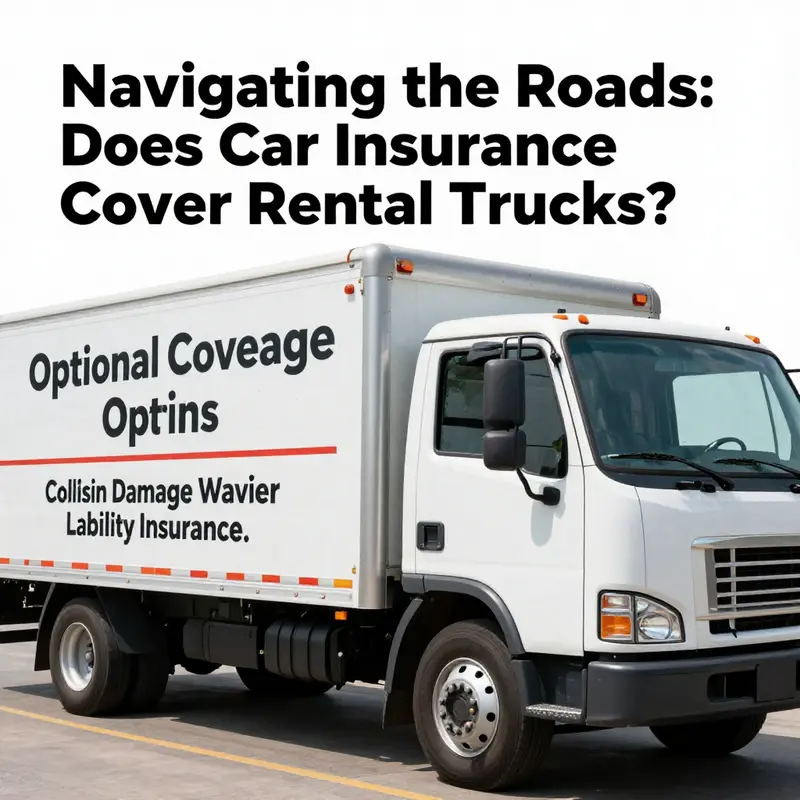
When the plan calls for moving a household or a sizable load, people often assume their ordinary car insurance will cover every mile and mishap. Yet the reality is more nuanced. A standard personal auto policy is designed around passenger cars and light-duty vehicles. It generally does not extend the same protections to large rental moving trucks, especially when those trucks are used for heavy hauling, commercial-style moves, or longer trips. So, even if you carry solid coverage on your own car, that policy is unlikely to travel with you in the form you expect when you step behind the wheel of a rental moving truck. The result can be a financial wake-up call if damage, theft, or liability events occur. The distinction matters because a moving truck is not simply a bigger version of a car; it operates under different risk profiles, different usage patterns, and different potential for cargo-related claims. The coverage gaps, left unaddressed, can turn ordinary moving stress into an unwelcome financial burden.
The core of the issue lies in what an auto policy typically protects and what rental vehicles can expose you to. Personal auto policies often include liability coverage for bodily injury and property damage, and some may offer limited protection for damage to a rental car. But heavy-duty moving trucks, particularly ones used for transporting furniture and boxes, fall into a different category. They are more likely to be treated as commercial or semi-commercial vehicles by insurers, and their high load weights, different suspension and braking dynamics, and unique cargo configurations change the risk calculus. In practical terms, your personal policy may not respond the moment the rental truck is involved in an accident, sustains cosmetic or structural damage, or faces theft while away from home base. If you rely solely on that policy, you could end up paying out of pocket for repairs, towing, or even liability claims that arise from injuries or property damage to others. This is not a hypothetical risk; it’s a concrete, frequently reported concern among people who rent moving trucks for remodeling, relocations, or community projects. The moving truck, in effect, becomes a distinct vehicle category with its own set of potential exposures.
To understand the breadth of the coverage gap, imagine a scenario where the moving truck is involved in a collision while negotiating a narrow urban street or a rural detour. The resulting repairs to the rental truck, plus any damage to items inside the cargo area, could quickly climb into the thousands. If other drivers are involved, there could be bodily injury claims and property damage costs beyond the rental vehicle itself. If the truck is stolen or vandalized during a stop, or if the rental company’s vehicle sustains theft while parked, those incidents must be addressed with appropriate protection in place. Your personal auto policy is not automatically designed to address these particular risks, and most lenders or rental agencies will require a clearer delineation of coverage before they allow you to operate the vehicle. In short, the insurance design that protects a typical car simply does not translate neatly onto a heavy-use rental moving truck, and assuming otherwise can create an uncomfortable blind spot when a move goes awry.
This is why the literature on moving truck rentals consistently highlights the importance of adding coverage. Rental companies frequently offer supplemental protections, such as a Collision Damage Waiver (CDW) or a Loss Damage Waiver (LDW). These add-ons are designed to limit or waive your responsibility for physical damage to the rental vehicle itself. In many moves, they prove invaluable, because the sticker price of a heavy-duty repair can be steep and the process of claiming through a personal policy can be slow or limited by policy exclusions. However, such waivers come with a price tag. It is not unusual to see daily rates for these protections in the range of twenty to thirty-five dollars, depending on the size of the truck, the rental duration, and the terms of the contract. That additional daily cost can accumulate quickly over a weekend move or a multi-day relocation project. The important takeaway is that while these add-ons can close the protectable gap, they also introduce a predictable, recurring expense that should be weighed against other potential protections you may already have.
The decision about whether to purchase rental-company coverage should start with a careful review of your existing protections. It is worth pulling your policy documents or calling your insurer to confirm exactly what is covered for rental trucks and under what conditions. Some personal auto policies extend limited coverage to rental cars, but those extensions often exclude commercial or heavy-haul vehicles. Others may exclude higher-deductible scenarios or limit coverage to accidents occurring in the same country, with little flexibility for out-of-network detours. Beyond the policy language, many insurers require that the insured vehicle be used strictly for non-commercial purposes; a moving truck used to relocate household goods can blur the line. The same scrutiny applies to theft coverage and comprehensive protection, which may be narrower for larger rental trucks or may exclude certain cargo forms or alterations to the vehicle. If you have any doubt, reach out directly to your insurer and request a formal written explanation or endorsement that clarifies whether your policy will respond if a rental truck is damaged, stolen, or involved in a liability incident during your move. A quick confirmation in writing can save you from a policy misinterpretation later on.
Credit cards can sometimes fill the gap, but they, too, come with conditions that must be met. Some premium travel or general-purpose credit cards offer rental-car insurance benefits that apply to a wide range of rental vehicles, but coverage is typically contingent on paying for the rental with the card and declining the rental company’s own insurance. In the realm of moving trucks, the questions become more intricate: does the card’s coverage apply to heavy, cargo-carrying rentals? Are there sub-limits or exclusions for commercial usage, for example, or for certain states or zip codes? And what about the claim process—how do you prove the vehicle’s value, the condition at pickup, and the manner of any damage? The answers depend on the card issuer, the specific card product, and the exact terms of the rental agreement. Some cards may provide secondary coverage that only pays after your primary auto policy responds, while others may be primary coverage that reduces your out-of-pocket exposure from the outset. The risk, of course, is assuming the card offers protection when, in fact, it does not, which could leave you without recourse when a claim is filed after a move.
If you do decide to rely on credit-card coverage, you should be mindful of certain practical steps. First, confirm with the issuer that the card indeed covers rental trucks of the size you’re renting. Second, ensure you meet every condition—pay the rental with the card, decline the rental company’s insurance, and keep copies of the rental agreement and your card benefits. Third, document the truck’s condition before you drive away and again upon return, noting any pre-existing damage and the cargo loading state. Fourth, if a claim arises, you’ll need to file promptly and provide the necessary documentation, including police reports for theft, if applicable, and repair estimates. These steps are not merely formalities; they streamline the claims process and minimize disputes about coverage scope.
To ground this guidance in practical, real-world considerations, you’ll find it useful to explore one practical overview of one-way moving truck rental considerations. For more on one-way moving truck rental, see one-way moving truck rental. This resource helps illuminate how coverage needs shift when you rent a truck for a distinct route, rather than a round trip. While the exact terms may differ by rental company and by location, the core idea remains: plan for coverage as part of the move, not as an afterthought. The cost of a rental, combined with the added protection, can be manageable when viewed as a single project expense rather than a series of isolated costs.
Beyond policy language and card benefits, there are other protections worth understanding. Some homeowners or renters insurance policies extend to certain types of cargo and incidents, but they rarely cover the physical vehicle of a rental moving truck or the cargo while it’s in transit. This means loading and unloading incidents, damaged cargo, or theft of items inside the truck could still fall outside the scope of your everyday homeowners policy. If you’re bringing valuable or irreplaceable items, you should account for the possibility that neither your auto policy nor your homeowners policy is sufficient on its own. In these cases, the rental agreement often provides the most direct route to predictable cost control through a CDW or LDW, coupled with careful cargo protection choices and a frank evaluation of risk.
A practical approach, therefore, is to treat the move as a two-layer protection exercise. The first layer is ensuring the vehicle itself—its body, its mechanical systems, and its tires—are guarded against the kinds of damage that occur during loading, driving, and unloading. The second layer focuses on what happens to the cargo you’re moving and any third-party liability that could arise from injuries or property damage to others. The rental company’s coverage, while sometimes more expensive, can deliver straightforward protection for the vehicle, while your own planning—through credit-card benefits and any applicable endorsements—can address the broader risk panorama. The interplay of these layers should be documented in advance, with clear indications of what each party covers and what remains your responsibility. This proactive, multi-layer approach helps avoid the trap of assuming that a single policy will automatically cover a complex, heavy-vehicle relocation project.
In practice, a move with a rental moving truck benefits from a calm, methodical preparation. Start by listing all potential risk scenarios: collision on a tight street, theft while stopped for groceries, cargo damage during loading or transport, and third-party liability if another vehicle or pedestrian is involved. Then map those scenarios to the protections you currently hold: your personal auto policy, any rental-car insurance you might purchase, and any credit-card protections that could apply. If a coverage gap surfaces, you can address it in a transparent, cost-aware manner rather than reacting to a claim with surprise bills. The goal isn’t to maximize insurance spend; it’s to align protection with actual risk, ensuring that when the move goes smoothly, you aren’t paying for protections you didn’t need, and when it doesn’t, you’re not financially exposed beyond reason.
The broader takeaway centers on awareness, documentation, and informed decision-making. Do your homework before you rent. Ask pointed questions about what is and isn’t covered for a moving truck. Confirm how a potential claim would be processed, including whether a deductible applies and what documentation is required. Verify that your anticipated use—such as driving through rough terrain, overnight storage, or long highway segments—fits within any policy or waiver limitations. And remember that for many people, the right choice is to combine mineral protections from multiple sources: a tailored CDW/LDW plan from the rental company, a careful review of personal auto policy terms, and the selective use of credit-card coverage when allowed and applicable. This layered approach helps ensure you’re not caught between competing terms or caught off guard by a stipulation you didn’t anticipate. It also makes it easier to communicate clearly with underwriters, rental agents, and the moving crew you’ve assembled, so there’s less room for misinterpretation when the unexpected occurs.
External resource: For a deeper dive into how credit cards interact with rental-car insurance for moving-truck scenarios, you can consult The New York Times guide on credit card rental car insurance for moving trucks at https://www.nytimes.com/2024/10/21/money/personal-finance/credit-card-rental-car-insurance-moving-trucks.html. This guide offers additional context on conditions, coverage limits, and practical claims considerations, which can help inform your decision-making as you plan a move.
Insurance for Rental Moving Trucks and the Card Safety Net
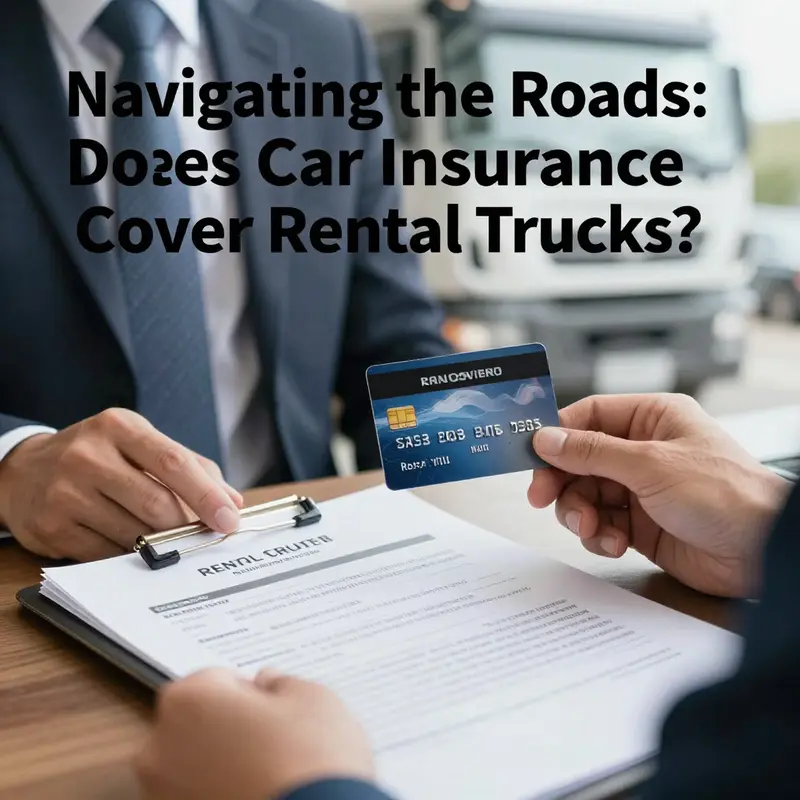
When planning a move with a rental moving truck, it is common to assume your existing car insurance will cover the truck. In reality, standard personal auto policies typically do not automatically extend to large moving trucks, especially those used for commercial purposes or long hauls. The practical result is that you should not rely on your everyday policy to protect you in a moving truck incident. The rental company usually offers a protection option such as a waiver that covers damage to the vehicle and sometimes cargo while in use. These waivers can reduce your exposure to large out of pocket costs but come with a daily price that adds up over time. Before declining the rental company option, compare it to the potential cost of your own coverage and any deductibles you would face if a loss occurred. Many people also have credit card protections that provide secondary rental car coverage when the rental is paid with the card and the rental company’s protections are declined. This secondary coverage can help with deductibles and certain other costs, but it often has restrictions and only applies after your primary auto policy has paid. It is essential to confirm with both your insurer and your card issuer whether these protections apply to moving trucks, and to understand any limits based on vehicle type, rental duration, or cargo value. A practical approach is to map out the move, estimate the number of rental days, the truck size, and the cargo value, then model three scenarios: rental company protection only, primary auto policy with secondary card coverage, and a combination if permitted. Document the truck and cargo before and after the move with photos, keep the rental agreement and payment records, and note any preexisting damage. If you plan to rely on card coverage, ensure you meet all conditions to avoid claim denials. By doing upfront diligence and balancing costs with risk, you can choose a protection plan that fits your move and budget. For further context, consult reputable resources that explain how rental protections interact with personal auto policies and credit card benefits, and always verify terms with your insurer and card issuer before you drive off with the moving truck.
Final thoughts
As you navigate the complexities of renting trucks for your business, understanding car insurance coverage is essential. Standard personal auto insurance policies typically do not extend to rental trucks, especially larger vehicles. This understanding emphasizes the need for additional coverage options offered by rental companies and the potential benefits provided by credit card protections. By being proactive and informed about your insurance choices, you can safeguard your business interests against unexpected costs. Assess your insurance policies, explore additional options, and leverage credit card benefits to ensure compliance and protect your livelihood during truck rentals.