
For business owners engaging in logistics or any form of transportation, understanding rental truck insurance is essential. Often, standard personal auto insurance excludes coverage for rental vehicles, especially larger trucks. This gap can expose your business to significant risk during vehicle rentals. Each chapter in this article will explore different aspects of rental truck insurance, starting with why it’s necessary, examining personal auto policy compatibility, evaluating credit card protections, and finally, reviewing available rental company options. By thoroughly understanding these areas, business owners can make informed decisions that safeguard their investments during vehicle rentals.
When Rental Truck Insurance Matters: A Practical Guide to Knowing What Coverage You Need
When rental truck insurance matters
Renting a truck for a move or a heavy haul raises a question you cannot afford to ignore: are you covered if something goes wrong? The short answer is often no. Standard personal auto policies frequently exclude rented trucks and trailers, or they limit coverage in ways that leave large gaps. What follows is a practical, step-by-step narrative to help you determine when rental truck insurance is necessary and which options make sense for your situation.
Start by understanding what your current policies actually cover. Many people assume their auto insurance mirrors rental car protections. That assumption is risky. Personal auto policies typically extend to rental cars for short trips, but they may exclude larger vehicles, commercial-style trucks, and cargo. Homeowners insurance sometimes offers limited liability coverage for a vehicle you rent for personal use, but it usually stops at liability and rarely pays for damage to the rental vehicle itself. If you plan to use the truck for any commercial purpose, these policies often do not apply at all.
Confirming your coverage requires a direct call to your insurer. Ask whether your auto policy covers rented trucks and for what types of losses. Clarify whether liability, collision, and comprehensive coverage extend to a rented box truck or pickup. Ask about coverage limits and deductibles. Request information on any exclusions for towing, cargo damage, or certain vehicle classes. Get the answers in writing, or take detailed notes. That information is your foundation for deciding whether to buy additional protections.
Credit card benefits can sometimes step in, but they are no panacea. Some cards offer rental vehicle coverage as a perk when you pay for the rental with the card. However, those benefits often exclude commercial or large truck rentals. Even when coverage applies, it may not protect the truck’s cargo or attached towing equipment. Before relying on credit card protection, read the card’s terms carefully. Confirm whether the coverage is primary or secondary. Primary coverage pays first; secondary coverage only pays what your personal policy does not. If the credit card benefit is secondary, it will trigger only after your personal insurer pays, which may complicate and delay claim resolution.
At the rental counter, staff will offer their own protection packages. Common options include collision waivers, loss damage waivers, and supplemental liability insurance. These waivers can relieve you of financial responsibility for damage to the rental vehicle, sometimes entirely. They can also reduce or eliminate your out-of-pocket costs if the truck is damaged or stolen. But they carry a premium cost. Rental companies rely on the very uncertainty you feel at the counter. They are motivated to sell you peace of mind. Evaluate their offers knowledgeably, not reflexively.
To weigh the rental company’s waivers, compare what they cover with what your existing policies cover. If your auto insurance fully covers collision and liability for the specific truck you will rent, and covers cargo if required, then the rental company’s waivers may duplicate coverage you already have. If, however, your policy excludes trucks of that size or excludes commercial use, the waivers can be valuable. Consider the waiver cost against the potential exposure. A high deductible on your personal policy can make the waiver appealing because it reduces immediate out-of-pocket cost in the event of a loss.
Liability exposure deserves special attention. Even if your insurer covers damage to the truck, their liability limits might be modest. An accident involving other vehicles or pedestrians can produce medical bills and legal claims that exceed basic coverage. Rental companies sometimes offer supplemental liability coverage with higher limits than standard auto policies. If you lack robust liability protection, the supplemental liability option can be a smart buy. It reduces your personal exposure to lawsuits and large settlements.
Cargo protection is another distinct consideration. If you are moving household goods, the furniture, electronics, and appliances inside that truck often receive no meaningful protection from your auto policy. Homeowners or renters insurance might offer some protection for your belongings in transit, but that protection can be limited by coverage types, sub-limits, and exclusions. If you are transporting high-value items or fragile goods, buying cargo insurance from the rental company or purchasing a separate mover’s cargo policy makes sense. Cargo protection covers loss or damage to items carried in the truck, which is different from covering the truck itself.
Towing equipment and trailers have their own rules. If you plan to tow a car or trailer, your personal auto policy might not cover damage to the towed vehicle or the towing apparatus. Rental companies offer protections for towed items and their hitches. If you will use a tow dolly or trailer, check whether the rental company’s coverage includes damage to that equipment and to the vehicle being towed. If your insurer does not extend coverage to towing, you should strongly consider the rental company’s protection for the added piece of mind.
The claims process is a practical factor in your decision. When an incident occurs, dealing with a single, rental-company-paid claim can be simpler than filing through your personal insurer. Using your policy may trigger a premium increase. It may also require paying a deductible and waiting for reimbursement. By contrast, a collision damage waiver can eliminate a deductible and reduce claims paperwork. That convenience has value, but it costs money up front. Ask rental staff how damage claims are handled, whether a hold will be placed on your payment card, and how long the hold will last.
State laws and minimum insurance requirements affect the landscape. Some states require rental companies to provide a minimal level of liability coverage. Those minimums may be far below what you need to protect your personal assets. Do not assume state requirements mean you are adequately covered. Check local minimums and compare them to your risk tolerance and financial exposure.
There are also common exclusions to watch for. Intentional acts, driving under the influence, driving on unpaved roads, and unauthorized drivers are typical exclusions. If you plan to drive through rugged terrain or allow another person to drive the truck, confirm how coverage changes. Ensure that any additional drivers are listed on the rental agreement and covered by your policy if you plan to rely on your insurer.
When deciding whether to accept the rental company’s waivers, use a simple checklist. First, confirm whether your auto or homeowners policy covers the specific rental vehicle. Second, check any applicable credit card coverage. Third, assess your liability limits and deductible size. Fourth, evaluate whether cargo or towing coverage is necessary. Fifth, estimate the cost of the rental company’s waivers against your potential out-of-pocket exposure. If the rental company’s coverage closes meaningful gaps in your protection, and if its cost is reasonable relative to your exposure, accept it.
Documentation matters before and during the rental. Walk around the vehicle with a staff member and note existing damage. Photograph every side, the interior, and the odometer. Keep the rental agreement, insurance documents, and any written statements in one place. In the event of a claim, these materials speed resolution and protect you from unfair charges. If an accident occurs, contact local authorities, obtain a police report, and notify your insurer promptly. Follow the rental company’s instructions for reporting damage, but do not sign away your rights.
Cost considerations influence many renters. If your move is short, and your potential liability is low, you might accept minimal coverage and rely on existing policies. If the trip is long, or you will cross state lines, a waiver and supplemental liability coverage become more attractive. For high-value cargo, buy cargo protection. For towing, secure separate coverage. The math is simple. Balance the cost of extra insurance against the financial hit you would take if the worst happens.
One tactical approach is to create a written summary of coverage before you reach the rental counter. Include your insurer’s written confirmation of coverage, credit card protection terms, and the rental company’s waiver cost. Present that summary at checkout. Sales staff will often remove duplicate offers when you demonstrate existing protection. If they attempt to upsell, ask for specifics in writing about what their coverage adds. Push for clarity rather than blanket assurances.
Finally, treat the rental as you would your own vehicle. Drive defensively. Inspect the truck’s braking, lights, and tires before you leave. Secure loads properly, use straps and moving blankets, and do not overload the vehicle. Avoid risky roads and inclement weather if possible. Insurance is important, but prevention is the cheapest form of protection.
For moving-specific guidance, you may find practical information on one-way moving truck rentals helpful when planning logistics and insurance needs. Refer to one-way moving truck rental options for details that can affect your coverage choices: https://larentaltrucks.com/blog/penske-one-way-moving-truck-rental/.
If you need a quick rule of thumb: do not assume full protection. Verify every policy, ask targeted questions, and compare costs calmly. When protection gaps remain, accept the rental company’s waivers to avoid severe financial exposure. When your existing coverage already fills those gaps, decline redundant options and save money. Either way, document everything and drive carefully.
For an authoritative overview of how personal policies interact with rental vehicle coverage, consult this external resource for complete details and examples: https://www.allstate.com/insurance/auto/rental-truck-insurance.
Do You Really Need Rental Truck Insurance? Weaving Protection into Every Mile of a Move
When you sign on for a rental truck, the decision about insurance feels like choosing a cushion before a fall. You want to be sure your move won’t become a financial catastrophe if something goes wrong, but you also want to avoid paying for coverage you don’t actually need. The truth is more nuanced than a simple yes or no. The kind of truck, how you plan to use it, and what your existing policies already cover all shape the answer. In the previous chapter, we pulled apart the limits of a typical personal auto policy when a rental truck enters the picture. Here we turn that examination into a practical framework you can apply as you prepare to rent, drive, and unload. The aim is not to scare you into buying every available shield but to illuminate where protection matters most and how to build a protection plan that fits your move and your budget.
The most immediate decision rests on vehicle damage coverage. A rental truck is, by design, a vehicle with a different risk profile from a sedan you own, a car you borrow for a weekend, or even a standard passenger truck. The vehicle itself is the target of potential damage—from a collision on a crowded urban street to a dent during a tight maneuver in a driveway, or even weather-related harm when a truck sits unused in a yard. Collision and comprehensive cover the truck itself. Collision coverage pays for damage from accidents, while comprehensive covers theft, vandalism, weather events, and other non-collision hazards. If you want the safety net that protects the truck you are driving, this is the core coverage you’ll be weighing at checkout. Without it, repairs to the rented vehicle can become your sole responsibility, regardless of fault, and the expenses can escalate quickly.
But the vehicle is only part of the risk. Liability protection—often labeled as third-party liability insurance—guards you when you cause damage to someone else or to their property. This is frequently a legal requirement in many jurisdictions and typically a central feature of any rental agreement. The reason is straightforward: no matter how careful you are, you cannot prevent every accident. Bodily injury and property damage claims can be financially devastating if you are found at fault and your limits are insufficient. Liability coverage acts as a backstop for legal costs, medical bills, and property repairs that exceed basic thresholds. It’s the kind of protection that feels abstract until the moment a claim is filed, at which point the numbers become anything but abstract.
If your rental truck carries passengers, or if you’re moving with friends, family, or colleagues along for the ride, Personal Injury Protection (PIP) or Medical Payments coverage becomes relevant. PIP is designed to cover medical expenses for you and others in the vehicle, regardless of fault, in states that require it or permit it. Medical payments coverage serves a similar purpose but with typically lower limits. The practical concern is simple: moving day is a busy time, and accidents can involve multiple people in close quarters. Having medical coverage attached to the rental vehicle reduces the risk of out-of-pocket medical bills that could otherwise linger long after the physical injuries are understood.
A further layer is Uninsured/Underinsured Motorist coverage. The reality is that not all drivers carry adequate insurance. In the event you’re involved in an accident with a motorist who lacks enough coverage to pay for the damage, this protection helps ensure you aren’t stuck with a bill that stretches beyond your own limits or your policy’s. It’s not flashy, but it is a practical shield for scenarios that occur more often than people expect, especially in areas with inconsistent coverage compliance or high traffic turnover.
These core protections can be procured in several ways, and the choice hinges on your risk tolerance, budget, and how you plan to use the truck. Rental companies typically offer bundled packages that include basic collision coverage, third-party liability, and sometimes LDW, which is a form of loss damage protection. The terminology can be confusing—the “loss damage waiver” or LDW, and the “collision damage waiver” or CDW, are designed to reduce your financial exposure if the truck is damaged or stolen. In practice, LDW often means you won’t pay the full repair bill up to a stated limit, whereas CDW focuses on damage to the rental vehicle itself. The payments associated with these waivers can be substantial, but they can also spare you from steep out-of-pocket costs in the event of a mishap. The key is to read the terms carefully. Some LDW plans waive the damage costs but still leave you responsible for certain fees or for damage that falls outside the contract’s exclusions. Others package in towing or indirect costs. The point is not to assume a universal rule but to understand the specific protections included in the plan you’re considering.
A practical rule of thumb is to prioritize third-party liability and vehicle damage coverage when you’re renting for a move. These coverages address what is most likely to arise in a rental scenario: damage to the truck itself and injury or property damage to others. In many cases, these two components alone can substantially reduce your potential exposure. If you already own a vehicle and have a robust personal auto policy, you may wonder whether you can leverage that policy for a rental truck. The friction here lies in policy language. Personal auto policies commonly exclude non-owned vehicles or vehicles used for commercial purposes. A policy may extend to rental cars in some limited circumstances, but trucks, especially larger rentables used for moving or cargo transport, frequently fall outside the standard extension. Even when there is an extension, it may not cover cargo damage, special equipment like towing gear, or the additional liability you assume when you haul belongings that aren’t yours or that you’re responsible for moving.
That is where the decision becomes sharper: if your current policy does extend to rental trucks, it’s essential to confirm limits, deductibles, and any cargo-related exclusions. If not, relying on your personal policy alone could leave the cargo, or even the truck, exposed. Cargo coverage—protection for the items you’re transporting—often falls outside typical auto policies. This means that even if your personal policy covers the rental truck itself, it may not protect your belongings if they are damaged or stolen in transit. For many renters, the most sensible path is to purchase coverage directly from the rental company—at least for the duration of the rental. The rental company’s offerings, while sometimes more expensive, are built around the realities of using a rented truck: the vehicle, its cargo, and the transfer of responsibility during loading, unloading, and driving through environments with unfamiliar traffic patterns and potential hazards.
Beyond the policy mechanics, the chapter’s practical tension centers on how this protection fits your use case. If you are moving items between residences or transporting furniture in a single trip, the risk profile differs from someone who uses a rental truck to shuttle equipment for a weekend job or to run a business operation that involves frequent vehicle use. In the latter case, a commercial auto policy is often more appropriate. Commercial coverage accounts for higher risk exposure associated with regular use and cargo transport. It also recognizes that the vehicle’s use is not merely personal or incidental. Misclassifying business use as personal use can lead to denied claims or canceled policies, especially if the insurer later discovers that the vehicle was employed for commercial purposes. The stakes are high enough that treating business use as incidental can undermine a claim when it matters most.
To build a protection strategy that truly aligns with your move, you should walk through a concise set of checks before you sign any insurance agreement. First, review your personal auto policy. Look for references to “non-owned vehicle” or “rental car” coverage and confirm whether trucks are included and up to what limit. Even if there is a line that suggests extension, don’t assume it applies to every rental situation. If the number in the policy seems uncertain, call your insurer and ask for a written confirmation. Second, examine the rental company’s insurance options. Do not assume these plans mirror what your personal policy would cover. LDW and other rental-specific protections are designed around the vehicle’s rental status and can fill gaps left by personal coverage. A key question to ask is whether cargo coverage is included or excluded and whether there’s a separate cargo insurance component you can add, especially if you’re moving valuables or fragile items. Third, audit the kind of move you’re undertaking. Are you driving a short route around town, or are you logging long distances over highways? Does the move involve loading heavy furniture, delicate electronics, or items with special handling requirements? If yes, you’ll want broader protections that address both the truck and the cargo. Fourth, if you run a business or use the truck in a commercial context, pursue a commercial auto policy. It’s not merely about satisfying regulatory requirements; it’s about aligning risk management with the realities of your task and protecting your assets in a way personal coverage cannot.
The right approach is neither reactionary nor excessive. It is a balanced view of what could happen, paired with a practical plan that covers the most likely scenarios. As you prepare to compare coverage options, you can use a simple framework: assess the vehicle’s protection needs first, then the cargo’s protections, and finally any liability concerns that could arise from the move. In doing so, you’ll find that the optimal insurance package tends to be a blend of coverage types rather than a single policy. The rental company’s plan and your extended personal policy can work together in some cases, but since overlaps can create gaps or redundancies, you’ll want to map out exactly what each policy covers and at what cost. Think of it as assembling a shield where the shield pieces interlock rather than overlap blindly. That mental model helps you avoid paying for double coverage or leaving a chink in the armor that can become a claim snag when you need protection most.
The practical steps to securing full protection are straightforward, even if the choices require careful attention. Start by reviewing your existing policy for non-owned vehicle coverage and any limitations around commercial use. Then contact your insurer to obtain a written confirmation of coverage for a rental truck used in a move, including any cargo exclusions and the status of towing or hitch equipment. Parallel to that, compare the rental company’s insurance options with a clear eye on deductibles and what they actually cover. If your budget allows, purchase the rental company’s coverage for third-party liability and vehicle damage, particularly if your cargo is valuable or the trip involves challenging driving conditions or urban routes with tight loading zones. If you anticipate regular use of rental trucks for business purposes, consider a commercial auto policy that reflects the higher risk profile and the predictable wear-and-tear that comes with frequent use. Always notify both your insurer and the rental company promptly after any incident to avoid misalignment in the claims process and to preserve as much coverage as possible.
In practice, many people discover that personal auto coverage provides limited or no protection for rental trucks, especially when cargo and commercial use are involved. The Bankrate-style reminder that “Most regular auto insurance policies do not cover truck or trailer rentals” resonates here, underscoring the importance of confirming coverage before hitting the road. If your current policy doesn’t extend to the rental truck, buying insurance through the rental provider is often the safest course. While it requires a careful price–protection trade-off, it minimizes the risk of unexpected bills following a mishap, a scenario with consequences that extend beyond the immediate repair costs. The decision is rarely purely financial, because the costs of liability, medical expenses, and cargo replacement can escalate quickly in a single incident. If you are moving household goods, even a minor collision can trigger a ripple effect of costs that threaten your budget. If you’re unsure where to begin, a pragmatic approach is to treat insurance as part of the moving plan rather than a separate add-on.
For readers who want a practical anchor while weighing terms, consider exploring resources that compare rental options and terms. A real-world example of a resource that can support your planning is the following moving-truck guide: moving-truck rental near me unlimited miles. It provides a framework for evaluating rental terms, the kinds of mileage options that influence risk exposure, and how different rental packages align with protection needs. Aligning the practical rental decision with insurance considerations makes the process less daunting and helps ensure you’re not paying for coverage you won’t use while still safeguarding against meaningful risk.
In sum, the question “do you need rental truck insurance?” has a nuance that depends on factors you can control: the vehicle, the cargo, the route, and the purpose of the rental. The safest, most sensible approach is to treat the rental truck as a significant liability and asset in one package. If your personal policy reasonably extends to rental cars but excludes non-owned trucks or cargo coverage, you’ll likely want to complement with rental company protections or a commercial policy. If your policy does extend to rental trucks with sufficient limits and cargo coverage, you’ll still want to confirm deductibles and any exclusions for commercially loaded cargo or specialized equipment. The best protection is practical, anchored in clarity about coverage gaps before you drive away. And that requires talking to the right people—your insurer, the rental company, and, when necessary, a commercial underwriter who can tailor a policy to your moving needs. With careful assessment, you can minimize surprises and keep your focus on the move itself rather than the financial aftershocks that can follow a single mishap.
External resource: https://www.iii.org/article/renting-a-vehicle
Credit Card Protections for Rental Truck Insurance: Reading the Fine Print Before You Rent
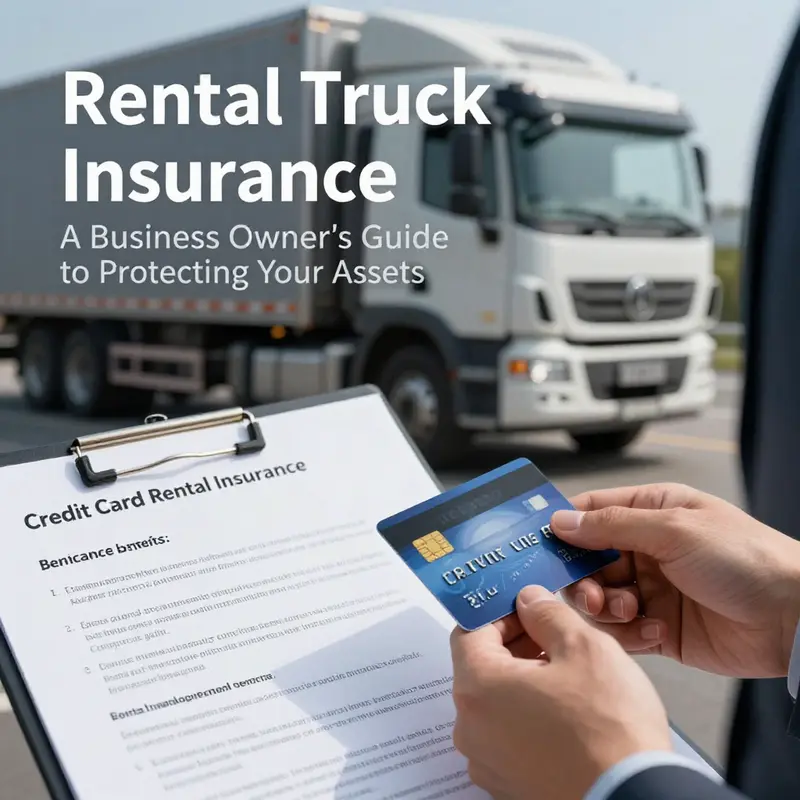
When you’re planning a move, the last thing you want is to complicate logistics with insurance gaps. A rental truck is a practical necessity for many households, but it also introduces questions about liability, damage, and recovery costs that aren’t part of everyday car ownership. The straightforward answer to whether you need rental truck insurance isn’t merely yes or no; it’s a careful assessment of what protections you already carry, what a rental company offers, and what special benefits your payment methods might provide. The core idea is simple: you should know where your protection starts and where it ends before you pull onto the street with a rented vehicle. In this context, credit card protections can be a helpful part of the answer, but they are not a blanket substitute for insurance purchased at the counter, nor are they a one-size-fits-all guarantee. Understanding the nuance can save you money and prevent a small misstep from turning a routine move into a costly setback.
The starting point is to recognize a fundamental gap common to many drivers. Personal auto policies are designed around owned or regularly driven vehicles. They commonly exclude rental trucks and trailers, especially the larger, heavier vehicles you might use for a move. That means if you’re involved in a collision or if the rented vehicle is damaged, your personal policy may not extend coverage to the rental truck in the way you expect. There can also be complications tied to liability, bodily injury, and the extent of damage coverage. In practical terms, relying solely on a personal policy can leave you exposed, particularly if the rental involves a vehicle large enough to alter risk calculations for the people you share the road with. Given that, rental truck insurance becomes more than a precaution; it’s a prudent hedge against the financial consequences of an accident or loss, especially when the stakes are high—heavy cargo, unfamiliar handling, and the tight margins of a tight moving schedule.
Beyond the personal policy, there are several routes to fill that protection gap. One route is to check whether your current auto coverage extends to rental vehicles. Some policies do offer limited extensions to rentals, but there’s typically a cap on what’s covered and specific conditions that must be met. It’s not enough to assume coverage exists; you need to confirm the exact terms, limits, and any exclusions. Another route is to consider credit card rental protections. Premium, travel-oriented cards often come with rental vehicle insurance benefits that can apply to trucks, but the terms vary widely between issuers and card tiers. Finally, rental companies themselves offer protection options at the counter, including collision damage waivers (CDW) and loss damage waivers (LDW). Each of these options has different implications for who pays what and when, and the cost can add up over the course of a move.
To navigate this landscape, it helps to think in terms of coverage types and who pays first when a claim arises. The card-based protections generally fall into two broad buckets: primary coverage and secondary coverage. Primary coverage acts as your first line of defense. If your rental is damaged or stolen, you file a claim directly with the card issuer’s coverage and the policy responds upfront, without your needing to involve your personal auto insurer first. This arrangement preserves your no-claim bonus and avoids potential rate increases in your regular auto policy. The appeal of primary coverage is clear: a smoother claims process and less risk of impacting your existing policy’s terms. Secondary coverage, by contrast, is layered on top of your existing coverage. It pays after your personal auto insurer has paid its portion, and it can come with geographic limitations. In practice, many cards offer secondary coverage that’s limited to certain regions, usually the United States and Canada, and some cards may not extend coverage to larger or commercial-type trucks. The way coverage interfaces with the rental itself—vehicle type, cargo, and miles driven—matters a great deal. It’s not unusual for a card to provide secondary coverage only for standard passenger vehicles and to exclude trucks entirely or restrict coverage to the insured person rather than the vehicle. The pattern that emerges is that the exact terms, qualifying rentals, and eligible vehicle types are all defined in the card’s benefits guide, which can be dense and specific.
Exclusions are a crucial reality to confront. Credit card rental coverage rarely includes several components that many renters assume are universal. Supplemental Liability Insurance (SLI), which covers injuries to others in an accident, is often sold separately by rental agencies and is frequently not part of the card’s offer. Similarly, Personal Accident Insurance (PAI) and Personal Effects Coverage (PEC)—which protect you’s personal well-being and belongings—are typically not included and may still be sold at the counter for high daily fees. If you need coverage beyond what the card offers, you’ll likely need to buy it from the rental agency or seek a separate standalone policy. Some cards also exclude coverage for commercial vehicles or larger trucks, which is particularly relevant when you’re renting a moving truck. The important point is to verify the specific vehicle type you intend to rent and confirm whether the card’s policy explicitly covers that category.
Another practical layer to consider is the eligibility and usage conditions that accompany card-based protections. In many programs, coverage requires you to pay for the full rental with the card, decline the rental agency’s insurance option (or certain coverages), and adhere to other conditions like renting a vehicle for a personal trip rather than for business use. The fine print can also require you to report the incident promptly, file the claim through the card issuer, and meet required deductibles or coverage limits. These conditions are not merely bureaucratic hurdles; failing to meet them can void the coverage precisely when you need it most. Because the coverage landscape is highly conditional, a careful, hands-on step-by-step verification is essential before you stand behind the wheel on a moving day.
The practical takeaway is that credit card protections can be a valuable part of your overall strategy, but they should be treated as one element within a layered approach to insurance. They may offer a meaningful layer of financial protection that helps you avoid double-paying for coverage, or they may provide a reliable first line of defense in the event of minor incidents. The decision to rely on credit card protection versus purchasing the rental company’s insurance comes down to your risk tolerance, the size and complexity of your move, and the specifics of the card’s policy. A straightforward rule of thumb is to compare the card’s terms with the rental company’s options side by side, examining the coverage scope, limits, deductibles, and exclusions. If the card’s coverage is primary and broad enough to handle the typical scenarios you anticipate, you may find it a cost-saving and efficient choice. If not, you might lean toward the rental agency’s protection and treat it as a predictable and transparent expense in your moving budget.
In evaluating your options, you should also consider how coverage interacts with your existing protections. If you have a comprehensive personal auto policy with an extended endorsement that includes rental vehicles, you may discover a useful overlap or a possibly higher limit that applies to a rental truck. The key is not to assume that coverage simply carries over. Call your insurer, request a written summary of what is covered when the vehicle is a rental truck, and pay attention to any exceptions related to higher payloads, trailer attachments, or commercial use. In parallel, contact your card issuer to request a copy of the benefits guide, and confirm whether the rental must be paid in full with the card, whether the coverage applies to trucks of a particular size or weight, and whether there are geographic or usage restrictions that could affect your eligibility. This two-pronged approach—policies from your insurer and terms from your card issuer—helps you map the coverage landscape with confidence rather than assumptions.
For readers who want to explore a neutral, non-brand-specific primer on how policy language shapes coverage in real-world rentals, a quick reference post can offer a friendly starting point. See the linked resource here: Hello World. It serves as a reminder that the way coverage is written matters as much as the coverage itself, and that taking the time to read the fine print can pay off when a moving truck is loaded with furniture and boxes instead of just a spare tire and jack.
With your groundwork complete, you’ll be better prepared to decide whether to rely on credit card protection, buy the rental company’s CDW/LDW, or blend both strategies. The key is to align your choice with the specifics of your move: the vehicle size, the cargo value, the distance you’re traveling, and the typical driving conditions you expect to encounter. If you’re transporting fragile or valuable items, you may want broader coverage or higher limits, even if it costs a bit more at checkout. If you’re moving locally with a smaller truck and a light load, primary card coverage might be sufficient, saving you time and potentially money. Either way, the goal is to secure a coherent, transparent safety net that kicks in when you need it, rather than discovering you’re uncovered after a crash, a theft, or a cargo loss.
In the end, rental truck insurance isn’t a single product to buy or ignore. It’s a layered system that combines your existing protections, the card-based benefits you may hold, and the rental agency’s own offerings. The most responsible approach is to map out each layer before you rent, confirm the details in writing when possible, and keep a record of the confirmations. This way, when you’re negotiating a move that already involves time crunches and logistical challenges, you’re not negotiating coverage on the fly. You’ll have clarity about what’s included, what’s excluded, and what you’re prepared to pay out of pocket in the event of a mishap. The result is a smoother, safer moving experience that respects both your budget and your peace of mind.
External resource for deeper context and official terms can be consulted to supplement this practical framework: https://www.chase.com/credit-cards/sapphire-reserve/benefits
Insuring the Miles: Navigating Rental Truck Insurance for a Safer, Smarter Move
Planning a move means weighing risk as well as cost. The rental truck you hire will carry your belongings, your timetable, and your peace of mind. Insurance is not a luxury but a practical tool that helps you manage the uncertainties of a move. The core reality is that rental trucks are not automatically covered by most auto policies, and that gap is one you can fill in several ways, each with its own limits, costs, and exclusions.
Start by confirming with your insurer whether your personal auto policy extends to a rental truck, and if so what the limits are and whether they apply to cargo and to liability. If coverage exists but with low limits, you may decide to supplement it with add on protection from the rental company or with a card benefit, depending on your risk tolerance and the value of your cargo.
Card benefits can be attractive but they are not universal. Many credit card protections exclude larger vehicles such as moving trucks and do not cover cargo. Call the issuer to verify precisely what is covered and for how long, and obtain written confirmation.
Rental companies themselves offer a range of protections. A damage waiver covers damage to the truck itself but may exclude tires, undercarriage, and other components. It does not automatically cover bodily injury or third party property damage. Supplemental liability insurance is designed to protect you against claims for bodily injury or property damage to others, often up to a high limit that exceeds a typical personal policy. You may also see add ons like cargo protection and personal effects coverage, and in some cases equipment like towing gear. Weigh the cost of these add ons against the actual risk to your move and your budget.
The practical takeaway is that there is no universal answer. If your current protections are solid for the vehicle and for some liability, you might opt for limited additional coverage. If you have fragile or valuable cargo or you are moving a long distance or through unfamiliar terrain, the rental options may offer greater certainty and simplicity. Read the policy documents carefully before signing and ask for printed limits and deductibles. Do not rely on a verbal summary alone.
For further guidance, you can consult consumer finance resources that discuss rental truck insurance and how it interacts with auto policies. For example, Bankrate provides a concise overview you can use to frame your questions when you speak with your insurer or rental agent. You might begin by asking what the policy does and does not cover, what the liability limits are, and whether cargo protection is included or available as an add on. See https://www.bankrate.com/insurance/car-insurance/rental-truck-insurance/ for more detail.
In summary, not every move requires the same level of protection. The safest approach is to audit your existing protections, obtain written confirmations, and only pay for what you need based on your move specifics and your risk tolerance. Insurance at the rental counter should align with your plan and your budget, not with the urgency to upsell. A measured approach reduces surprises, helps you stay on schedule, and keeps your move moving forward with confidence.
Final thoughts
In safeguarding your business against the risks associated with rental trucks, understanding the available insurance options is key. From evaluating whether your personal auto policy covers rental trucks to exploring credit card protections and rental company offerings, each step plays a crucial role. Ensuring proper coverage not only protects your assets but also promotes smoother operations in your logistics or transportation business. Therefore, always take the time to assess and secure the best rental truck insurance solution tailored for your needs.