
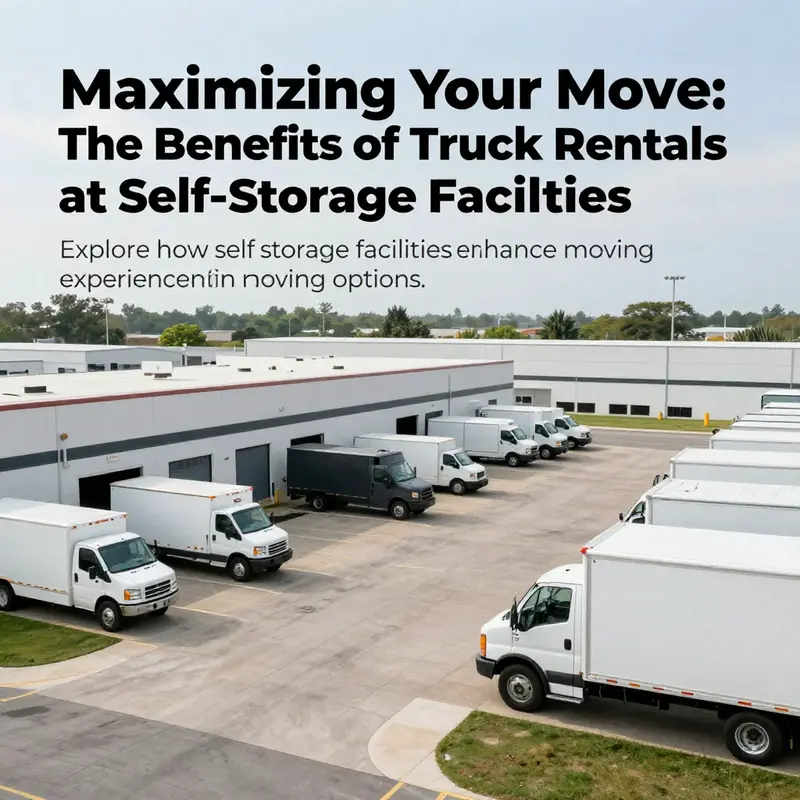
For business owners contemplating a move, the logistics can often feel overwhelming. Fortunately, self-storage facilities have evolved to offer more than just a place to stash your goods; many now provide moving truck rentals as well. This article will examine the role of self-storage facilities in providing truck rentals, delve into notable partnerships they have formed with rental companies, and highlight the myriad benefits for business owners looking to streamline their moving process. Each chapter will shed light on how these offerings can simplify and enhance your logistics and moving experience, ultimately making a substantial difference when you need to relocate.
Lockers, Lanes, and One-Stop Moves: How Self-Storage Centers Have Turned Truck Rentals into a Seamless Part of the Moving Experience
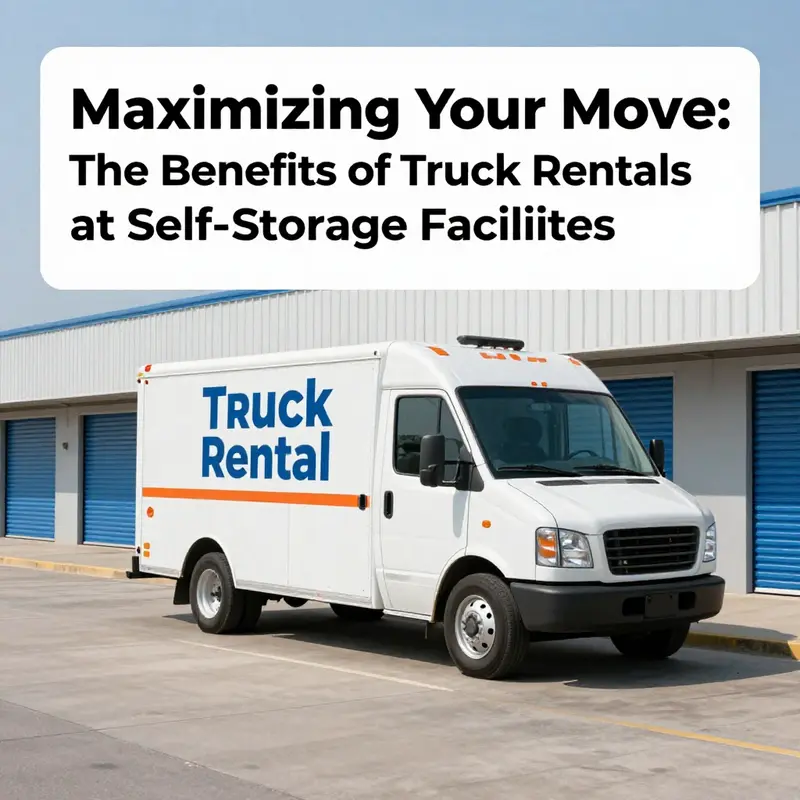
In the evolving landscape of personal mobility, the move itself has become a process that stretches beyond packing boxes and hauling furniture. It has grown into a coordinated sequence of tasks that demand timing, reliability, and a sense of control. Self-storage facilities, traditionally perceived as quiet warehouses for temporary belongings, have quietly retooled themselves as logistical hubs for do-it-yourself moves. The result is a subtle, practical shift in how people plan and execute relocations: instead of piecing together solutions from disparate vendors, many customers can now access storage space and moving trucks in a single visit, at a single location, with a single point of contact. This shift is not merely a convenience; it reflects a broader transformation in how communities think about space, time, and the tools that keep daily life moving smoothly. The core idea is simple: when you need to move, you want a clean, manageable arc from arrival to departure, and facilities that blend storage with transportation remove several friction points that historically turned moving into a logistical scramble.
The practical appeal of this integrated model rests on the realization that storage and transportation are two sides of the same moving equation. A customer may book a storage unit to stage belongings before a move, retrieve items to load into a truck, and then transport them to a new residence or another storage site—all within the same campus, if the facility offers truck rentals on-site or through a trusted partner. In many cases, the truck rental is not a standalone invitation but a coordinated service, scheduled to align with the customer’s access hours, loading bays, and unit availability. The convenience is magnified for those who are relocating across town or across state lines, where consistency of service, vehicle condition, and predictable pricing become valuable anchors in what can otherwise be a stressful process. A well-run on-site or partner-based truck rental operation reduces the cognitive load on customers. They do not have to navigate between multiple vendors, compare different insurance policies, or juggle varying mileage terms. They simply show up, pick a vehicle, load at a time that suits their schedule, and drive away with the assurance that the same organization overseeing their storage also stands behind the transportation arrangements.
From a customer-experience standpoint, the value is tangible long before the truck hits the road. The on-site truck option creates a familiar touchpoint—a campus that understands the individual rhythms of a move. Purchasing moving supplies, securing packing boxes, and arranging dollies or hand trucks can be integrated into one shopping trip. Small touches, like standardized loading equipment and clearly marked loading zones, create a sense of predictability. The facility staff, trained to support both storage access and vehicle handling, can guide customers through a streamlined process: reserve a truck, check out required moving equipment, confirm access times for the storage unit, and embark on the loading phase with a clear plan. The experience is designed to be calm rather than chaotic, goal-oriented rather than reactive. It is a practical application of the broader principle that modern retail and service centers increasingly aim to minimize the number of stops a customer must make to accomplish a complex task.
Operationally, integrating moving truck rentals demands thoughtful alignment of inventory, scheduling, and risk management. The facility must maintain a reliable fleet, or establish a dependable partnership with a truck rental provider, and ensure that vehicles are available when customers need them. This involves vehicle maintenance programs, routine inspections, and timely turnarounds between rentals. The on-site or partner operation must also enforce clear policies around fuel levels, mileage terms, and insurance coverage, balancing customer protection with the facility’s liability concerns. A well-managed program reduces the chance of last-minute cancellations or vehicle shortages, which can derail a move and undermine trust in the facility. For staff, this means cross-training in both storage access procedures and vehicle check-in/check-out processes, so a single staff member can walk a customer through the entire sequence—from unit access to vehicle handover and return. The result is a more resilient service ecosystem that can absorb fluctuations in demand, such as seasonal moves or last-minute relocations, without creating bottlenecks in the flow of people and goods.
A central facet of this integrated approach is the range of truck options and the accompanying accessories. Facilities often tailor their offerings to accommodate a spectrum of moving needs. For smaller apartments, compact or mid-size trucks can be the right fit, enabling efficient loading of a one- or two-bedroom residence. For larger households, cargo vans or larger box trucks may be the better choice, capable of transporting more substantial loads in fewer trips. The emphasis is on versatility and reliability rather than a one-size-fits-all solution. Beyond the vehicle itself, the presence of moving supplies—boxes, packing tape, markers, corner protectors, and dollies—within the same campus elevates the convenience factor. Customers can transition from storage preparation to loading with minimal backtracking, and the likelihood of misplacing essential materials drops when everything required for the move is readily available in one place.
The financial dimension of on-site or partner-based truck rentals at storage facilities is nuanced but navigable with clear terms. Pricing often reflects a blend of base rental rates, mileage charges, and potential addons such as insurance or roadside assistance. Some facilities implement time-based rentals, enabling customers to secure a truck for a half-day or full-day, with incremental charges for additional hours. Others adopt a mileage-focused model, which is particularly relevant for longer moves or cross-city relocations. In all cases, transparency is paramount; hidden fees or confusing caps can quickly erode the perceived value of an integrated service. From a consumer perspective, the cost comparison should consider the total cost of the move, which includes the transportation component and the storage period if the plan involves staging belongings before the final destination. When bundled with storage access, a customer can often realize a net saving by consolidating the project into one location and one rental policy.
Insurance and liability considerations are another essential thread in the fabric of integrated storage and truck rental offerings. The move involves valuable possessions, and customers rightly seek coverage for potential mishaps during loading, transit, or unloading. Facility-level policies or partner agreements typically outline what is insured, to what extent, and under which conditions. In many arrangements, customers can opt into additional coverage for extra peace of mind, while the facility ensures that the vehicles used are maintained to a standard that minimizes risk. A transparent approach to insurance helps build confidence. When a provider can articulate coverage boundaries and incident handling procedures clearly, customers feel protected rather than exposed to unexpected costs in the event of a minor mishap. This clarity also protects the facility by aligning expectations, reducing the likelihood of disputes after a move, and encouraging retention through reliable service.
The geographic dimension adds another layer to the value proposition. In regions with high turnover of renters and dense urban corridors, the convenience of on-site trucks aligns well with the realities of city living: parking constraints, traffic patterns, and the need to coordinate access hours around apartment moves or building restrictions. For customers relocating across state lines, the availability of a consistent, well-maintained vehicle across locations can simplify the logistical choreography. A single provider offering both storage and transportation can standardize processes, such as vehicle check-out, fuel management, and return protocols, across markets. This reduces cognitive load for customers who might otherwise contend with varying insurance terms, different vehicle classes, or inconsistent maintenance standards from multiple vendors.
From a broader industry perspective, the integration of truck rentals into the self-storage ecosystem reflects a shift toward ecosystem thinking in consumer services. The goal is not to maximize profit from a single service line but to maximize the lifetime value of a customer relationship by delivering a frictionless, trusted experience. When a storage facility can demonstrate reliability in access control, climate management, and vehicle operation, it sets a high baseline for the overall moving experience. This enhances the facility’s reputation and encourages customers to return for future storage needs or recommend the campus to others planning moves. The resulting network effect can strengthen the facility’s market position, as word-of-mouth referrals and repeat business become more likely when the end-to-end process is perceived as smooth and dependable.
For readers seeking a practical example of how the intersection of self-storage and truck rentals is described in the industry ecosystem, the NC self-storage and Penske truck rentals resource provides a concrete case study of how a facility can leverage a truck rental partner to deliver a unified service experience. This approach demonstrates how a do-it-yourself mover can navigate storage access, equipment checkout, loading, and transportation within a seamlessly connected framework. The resource highlights not only the operational benefits but also the customer-centric mindset that underpins successful implementations—the willingness to view moving as a coordinated service rather than a sequence of independent tasks. This mindset aligns with broader trends in retail and service design, where simplification, predictability, and speed of service increasingly determine consumer satisfaction and loyalty.
As with any service expansion, the success of on-site or partner-based truck rentals at self-storage facilities hinges on clear communication and continuous feedback loops. Facilities that solicit customer input, monitor utilization rates, and adjust truck inventory to match demand patterns tend to perform better. Feedback mechanisms help identify moments of friction, such as scheduling bottlenecks, misaligned pickup windows, or unexpected mileage charges, and allow for timely adjustments. In practice, this means regular reviews of rental terms, maintenance schedules, and the alignment between storage access hours and truck availability. A mature program also considers cross-promotional opportunities, where customers renting storage units might receive a discount on truck rental or related services, further reinforcing the bundled value proposition.
The integration of moving truck rentals into self-storage facilities also has implications for the workforce. Staff roles expand beyond managing unit access to encompassing vehicle check-in, safety briefings, and basic vehicle operation guidance. Training becomes a cornerstone of reliability: employees learn how to handle common questions about loading best practices, post-use vehicle inspection checklists, and the boundaries of responsibility should a load shift during transit. In turn, customers benefit from a confident, knowledgeable point of contact who can translate the language of storage into practical guidance for moving. The human element—trust, clear communication, and a problem-solving mindset—often proves as important as the physical truck itself in shaping the overall experience.
Looking ahead, the convergence of storage and transportation services carries implications for how cities grow and households relocate. The convenience of an integrated campus can lower the perceived cost of moving, encouraging more individuals to undertake relocations they might otherwise defer. It can democratize access to efficient moves by providing predictable schedules and reliable equipment within a neighborhood or community hub. At the same time, the model invites careful consideration of sustainability concerns. A well-managed fleet with fuel-efficient vehicles, route optimization, and responsible maintenance practices can minimize environmental impact, aligning with broader municipal goals around emissions and transportation efficiency. The on-site truck option thus becomes not just a customer convenience but a component of a more sustainable, streamlined urban moving workflow.
In sum, self-storage facilities that offer moving truck rentals—whether on-site or through carefully chosen partnerships—are doing more than selling space and wheels. They are curating end-to-end experiences for people in motion: a campus where access, equipment, and guidance converge to reduce the friction of moving. For many customers, this convergence translates into fewer trips to different stores, fewer phone calls to multiple vendors, and fewer moments of uncertainty about whether everything will fit or if there will be enough time to complete the move in one day. It is a practical response to how people actually move today—often under time constraints, often with limited bandwidth to coordinate every detail, and increasingly with the expectation that the moving process will be predictable and manageable rather than chaotic. And as long as the industry maintains transparent pricing, robust vehicle maintenance, and thoughtful customer support, the model promises to remain a robust, increasingly common part of the moving toolkit.
For readers who want to explore how these dynamics play out in real-world contexts, a representative example of the integration between storage and truck rentals can be found in regional discussions that describe partnerships and service design in practice. This kind of resource helps connect the theory of integrated services with the day-to-day realities faced by movers, storage customers, and facility staff alike.
External resource: https://www.selfstorage.org
Internal link: NC self-storage and Penske truck rentals
Moving In Sync: The Rise of Integrated Storage and Truck-Rental Partnerships
The process of moving, even when powered by a storage solution, often unfolds as a sequence of difficult choices, competing priorities, and a dozen little decisions that can make or break a day. For many households and small businesses, the path from “I need space” to “I’m in control of my belongings again” has long involved juggling multiple vendors, scheduling conflicts, and uncertain pricing. That friction is precisely what lends itself to a new kind of collaboration: partnerships that bundle self-storage access with moving truck rentals, offered through integrated platforms and retailer networks. In these arrangements, the storage facility becomes more than a cabinet for possessions; it becomes a logistics hub that can provide the vehicle, the space, and the coordination needed to move efficiently. The result is a more predictable, less stressful moving experience that aligns with a broader shift in consumer expectations—one where seamless digital transactions, transparent pricing, and guidance through complex tasks are the baseline rather than the exception. This chapter traces how these alliances have evolved, why they appeal to customers, and what they imply for the broader ecosystem of relocation and logistics, all while tying the arc of this trend to the enduring demand for convenience in a world that values time, certainty, and simplicity.
At the core of these partnerships is a straightforward premise: the moving process is easier when a customer can complete the critical steps in one flow. A self-storage facility that offers a moving truck on-site or via a trusted partner transforms a two- or three-step chore into a single, more manageable sequence. The consumer can search for available storage units and available trucks within the same footprint, compare rental terms, and see bundle discounts that reflect the value of the combined service. The logistics logic is elegant in its simplicity. If a household needs a unit for a month while staging a move, and also wants a truck to transport belongings from a previous home to the storage site, then why not present both needs through a single interface? The economics follow naturally: bundling can improve utilization of both the storage space and the fleet, unlocking cross-sell opportunities and reducing the administrative drag that often accompanies multi-vendor moves.
In practice, the arrangements work through a mix of on-site offerings and partner connections. Some facilities stock a limited fleet of box trucks or cargo vans for DIY movers, while others rely on partnerships with national or regional truck rental brands to supply the vehicle inventory accessible to customers. The common thread is a curated ecosystem where the storage provider and the truck-rental partner align their services around a shared booking experience. For the consumer, this means fewer separate inquiries, fewer miscommunications about dates and vehicle sizes, and less time spent reconciling insurance requirements and access windows. The effect is a more streamlined journey from first search to final handoff, with a clear sense of the day’s logistical rhythm rather than an assortment of disconnected steps.
A defining feature of these partnerships is the digital integration that underpins them. Do-it-yourself movers increasingly expect online booking platforms that surface a nearby storage location and a corresponding truck option, with the ability to reserve both in one session. Digital integration reduces the cognitive load of relocation planning: you do not need to map out a separate timeline for truck pickup and storage access, nor worry about whether you will find a truck available in the right size at the right time. Instead, you are guided through a cohesive path that aligns the two needs—storage and transport—within a single, user-centered interface. This is not simply about convenience; it is about reducing the risk of delay and misalignment, which can be costly in both time and money.
From the facility’s point of view, the convenience of such partnerships extends beyond pleasing customers. Integrating truck rental into a storage business creates a powerful cross-sell engine that improves occupancy rates and fleet utilization. When a customer arrives to rent a unit, the space is not just a static repository; it becomes a potential staging area for the move itself. That creates opportunities to offer the vehicle as part of the end-to-end relocation package, often with discounts that reward bundling. The incremental revenue generated by these bundled offerings can be meaningful in markets where occupancy levels are sensitive to seasonality and competitive pressure. The combined value proposition also helps facilities differentiate themselves in a crowded market. In this sense, the partnership is both a revenue strategy and a customer experience strategy, designed to turn a transactional interaction into a longer-handled relationship that extends beyond a single move.
The historical arc of this trend helps illuminate how quickly a new model can gain traction. An early and influential example occurred in the 2010s when a major truck rental brand teamed up with a storage-focused tech startup to create a more seamless do-it-yourself moving and storage experience. The collaboration highlighted how a well-orchestrated pairing could reduce the friction of relocation while expanding the addressable market for both parties. The model proved scalable: it could be adapted to markets with different density profiles, from high-traffic urban corridors to growing suburban neighborhoods where many households and small businesses are relocating. The key ingredients were a robust platform that could surface storage options alongside truck rentals, reliable capacity management to ensure trucks and units were available when customers needed them, and a pricing structure that acknowledged the value of convenience through bundling rather than charging in a piecemeal way.
This approach resonates with broader movements in retail and services that prize end-to-end solutions. Consumers are habituated to platforms that can orchestrate multiple services under one umbrella, even when those services involve different specialized providers. The relocation phase is particularly well-suited to this model because it is inherently multi-dimensional: it involves physical space, vehicle capacity, scheduling, insurance, and, often, delicate handling of belongings. A platform that can reconcile all of these elements in real time with transparent terms and a predictable price is, in effect, selling a guarantee of control over an often chaotic moment. The value proposition grows during peak moving seasons, when the demand for both trucks and storage units spikes. In those windows, customers are especially sensitive to the time saved and stress avoided by a single, integrated solution. For a storage provider, the seasonality translates into greater fleet visibility and a clearer signal about occupancy cycles, while for the truck rental partner, the same platform expands access to customers who might otherwise search for a van or a small truck in a scattered, less predictable way.
Central to the functionality of these partnerships is cross-platform data sharing. The ability to pool information about customer demand, vehicle availability, unit occupancy, and pricing elasticity creates a feedback loop that helps all participants optimize capacity and enhance service levels. Data sharing enables better inventory forecasting, which reduces the risk of overbooking or underservicing customers. It also opens the door to more informed marketing and retention strategies, such as targeted promotions tied to upcoming move dates, or bundled incentives that reward repeat customers who need a storage unit and a return truck in one contiguous timeline. The practical upshot is a more reliable service with a higher likelihood of meeting customers’ expectations at the moment they need it most.
The customer experience that emerges from these partnerships is, at its heart, a narrative of simplification. Imagine a household planning a move from a rental property into a new home in a few weeks. Instead of visiting several websites, calling multiple numbers, and juggling overlapping schedules, the customer enters a single channel that reveals nearby storage options, truck sizes, and available booking times. They can compare unit features—like climate control, unit height, and access hours—alongside truck dimensions, mileage terms, and insurance provisions, all within one coherent interface. The checkout blends both elements into a consolidated price, with any bundled discount automatically reflected in the final total. And because the platform manages the end-to-end process, the customer can switch between activities—loading, unloading, or pausing a move—without breaking the momentum. In a modern relocation, momentum is not trivial; it is the difference between a move that proceeds smoothly and one that becomes a cascade of delays and headaches.
For customers who value flexibility, the integrated model can also unlock more adaptive timelines. If a moving date slips or if a storage unit’s access window changes, the platform can shift the associated truck reservation with minimal friction, leveraging real-time inventory signals and policy-driven rules across partners. In this sense, the partnership becomes a capability, not a single service offering. It is a framework for adaptability that aligns with the unpredictable nature of real-world moves, where delays, weather, and unexpected life events can alter the plan. The reliability of the experience, then, rests on the quality of the underlying coordination—how quickly a platform can re-route a truck, how accurately it communicates policy terms in plain language, and how much trust the customer has that the bundled option will deliver on its promises.
As consumer expectations continue to tilt toward digital integration, the trend toward bundling storage and truck rentals is likely to accelerate. More facilities are experimenting with partnerships that go beyond a basic referral or a one-time discount. They are building full-stack experiences that tie in complementary services, such as packing materials, moving supplies, or even limited-access storage options that are specifically designed for staged moves. The digital layer that underpins these offerings becomes a strategic asset, enabling a facility to present a curated, personalized move plan to each customer. This personalization is not merely about one-size-fits-all pricing; it is about constructing a tailored sequence of steps that reflects each customer’s timeline, space needs, and budget. The result is a more predictable revenue stream for the facility and a more stable, lower-friction path for the customer.
The forward-looking view suggests that the bundling of truck rentals with self-storage will continue to evolve through deeper platform integrations, more sophisticated scheduling logic, and broader collaborations across the relocation ecosystem. Platforms may incorporate dynamic pricing, which adjusts vehicle and unit pricing based on anticipated demand, inventory availability, and historical patterns. They may also expand to include ancillary services like professional packing, moving labor, or insurance products that streamline risk management for customers. In markets where competition among storage providers is intense, those who can demonstrate a genuinely unified, end-to-end relocation experience will have a meaningful competitive edge. They will not merely offer space and a vehicle; they will offer a coherent move narrative, backed by data-driven optimizations and a commitment to reducing the cognitive load on the customer.
To connect the thread between these ideas and practical reality, consider how an integrated platform might work in a typical move-day scenario. A customer begins with a search for a storage unit that fits the anticipated volume of belongings and the desired access level. At the same time, the platform surfaces a truck option that matches the move’s distance and cargo type. The two selections are presented side by side, with a combined price that reflects the value of completing both tasks within a single session. The user can adjust the truck size, the unit size, or the duration of storage with a few taps, and the platform recalculates the bundle in real time. On the day of the move, the truck arrives within a window that the platform had forecast based on the customer’s plan, and the storage unit is prepped for easy loading. If the move overflows, the system can scale quickly by proposing a larger truck or by recommending additional packing services. If something changes—perhaps a delayed closing or a need to pause storage—the customer can modify terms within the same interface, preserving the continuity of the plan without booking a new set of vendors or negotiating new agreements.
This cohesive experience is not merely a convenience; it is a redefinition of how relocation services are delivered. It reframes the moving process as a coordinated service journey rather than a sequence of disjointed activities. It invites a rethinking of what a storage facility can be when it is braided with transportation capabilities and supported by a robust, consumer-friendly digital backbone. The social and economic implications are meaningful too. For customers, the reduction in time spent coordinating moves translates into lower stress and, potentially, fewer costly errors. For facilities and trucking partners, there is a path to higher utilization, stronger retention, and greater resilience in the face of seasonal demand cycles. For the relocation ecosystem at large, the model points toward an era where the line between storage and transport becomes permeable, enabling more flexible, adaptive, and cost-efficient relocation solutions.
Embedded within this narrative is a practical reminder: while the integrated model holds strong appeal, it is still essential to verify specifics with the chosen provider. Availability, unit size, truck capacity, insurance requirements, and access hours vary by location and partner. The most reliable way to confirm the precise terms is to contact the facility directly or consult the official website for the location in question. As consumer expectations continue to tilt toward seamless digital experiences, the continued refinement of these partnerships will likely hinge on how well platforms can harmonize inventory, pricing, and messaging across multiple partners while preserving a straightforward, transparent user experience. In this sense, the bundled storage-and-truck approach is less about a singular formula and more about a resilient framework that can adapt to the evolving needs of movers, renters, and small business owners who depend on practical, predictable relocation services.
For readers who want to explore a tangible example of how these integrations can be framed within a single ecosystem, a dedicated resource that highlights a storage-and-truck pairing model can serve as a useful reference point. See the online guide to a storage-and-truck integration page for a concrete illustration of how a platform surfaces storage locations alongside truck options, enabling bundled pricing and simplified checkout. penske-storage. This kind of resource helps illustrate how the concept translates into a real-world user journey, giving readers a sense of the interface, the decision points, and the incentives that encourage customers to choose an integrated solution.
As the relocation market continues to mature, the trajectory toward integrated storage and truck rental partnerships seems set to endure. The appeal to customers is clear: fewer vendors, less friction, and a clearer path from start to finish. The appeal to businesses is equally clear: more efficient use of assets, higher conversion from inquiry to booking, and the opportunity to develop deeper relationships with customers who move more than once. The challenge lies in maintaining a consistent quality across networks of partners, ensuring reliability, insurance coverage, and clear terms. Yet with continued investment in platform architecture, data sharing, and customer-centric design, the integrated model offers a compelling blueprint for how self-storage facilities and truck rental providers can collaborate to meet modern relocation needs. In a world that prizes speed, clarity, and convenience, moving in sync may well become the default approach for people who are constructing new chapters in their lives.
External resource: https://www.penske.com/news/press-releases/penske-truck-rental-and-sparefoot-team-together
Pack, Store, Move: How On-Site Truck Rentals Recast the Self-Storage Experience
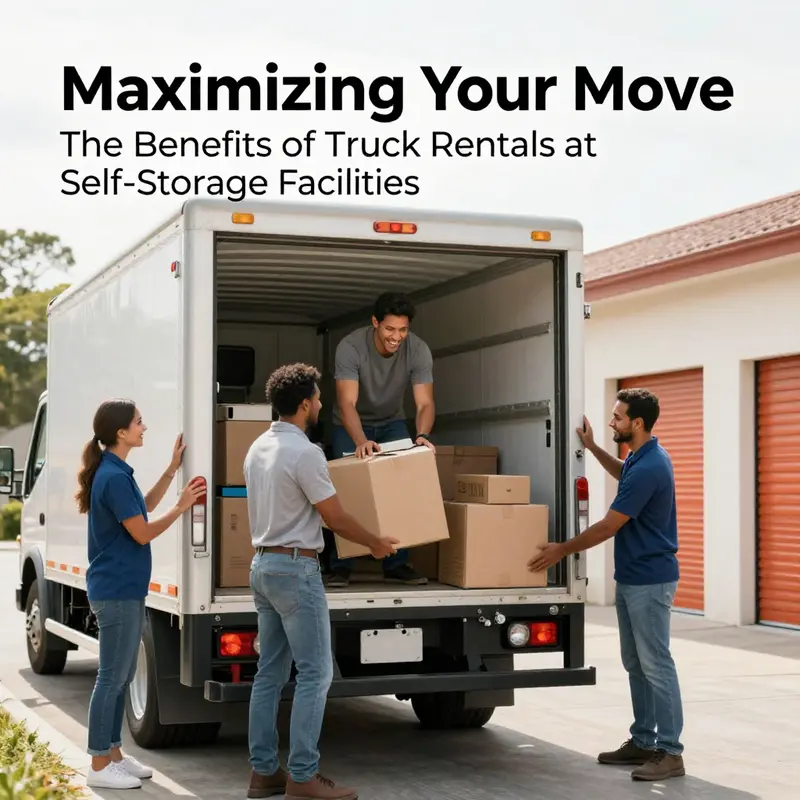
It is no longer enough to simply offer a space to keep belongings. In many markets, the logistics of moving have become part of the value proposition that self-storage facilities provide. The move-from-a-home-to-a-new-home puzzle is complicated enough without chasing a rental truck half a city away or coordinating a rental timeline with a separate vendor. What many facilities are discovering is that customers benefit when storage and transportation intersect in a single, streamlined workflow. The result is not just convenience; it is a cohesive system that reduces friction, lowers the risk of damage during transit, and creates a smoother rhythm for people and operations alike. Where a customer once had to shuttle between locations—packing materials in one place, storage units in another, and a rental truck elsewhere—today they can approach a single point of contact that can align a storage plan with a moving plan. The transformation is a practical rethinking of how space is used, how time is managed, and how the various pieces of a relocation come together.
The story begins with the everyday realities of the moving process. People move for many reasons: a new job, a change in family needs, or a shift in living arrangements that makes a larger or smaller space appropriate. Some moves are planned well in advance, while others are sudden, compressed by lease timings or renovation schedules. In either case, storage often enters the picture as a bridge. Belongings are consolidated into a storage unit while a new residence is found, or items are staged in a warehouse setting during a stretch of uncertainty. This bridging role makes storage increasingly central to how individuals experience relocation. When moving truck rentals join that bridge, the entire journey gains a new sense of coherence. A customer can time the loading, storage, and transport with a single calendar, a single team, and a single point of accountability. The value of that integration extends beyond mere convenience. It translates into fewer trips to multiple locations, reduced risk of miscommunication, and a more predictable budget.
A core driver of this shift is the recognition that the flow of a move is as important as the materials involved. People do not simply want more storage; they want less hassle. They want to avoid making multiple trips to a distant rental office, to struggle to coordinate a pickup with a moving date that may shift as a result of delays or unexpected setbacks, and to pay a premium for last-minute changes in plan. On-site or nearby truck rentals within the same campus or neighborhood reduce these pain points dramatically. The ability to switch from packing to loading to transporting without leaving the premises creates a streamlined sequence that feels almost inevitable once experienced. The synergy is not accidental. It is the result of deliberate partnerships between storage operators and truck rental providers, built on shared incentives: faster throughput, higher customer satisfaction, and improved utilization of physical space.
This integrated model supports a broad range of users. Homeowners who are selling and buying in different neighborhoods can move their belongings into a storage unit while they finalize a new home. Students relocating for a term or a summer internship can organize a compact move with a door-to-door rhythm that blends storage and transport into one service posture. Small businesses upgrading or downsizing their space often have tight schedules and fluctuating inventory needs. A facility that offers both storage and access to a moving truck can accommodate a variety of loads, from a few boxes to a full office relocation, with a level of coordination that reduces downtime and disruption. In each case, the user benefits from the ability to select a vehicle that matches the scale of the move, with features that support safety and efficiency during loading and unloading. The trucks available through these programs tend to cover a spectrum—from compact vans that fit a modest apartment’s contents to larger box trucks capable of handling a full household or small business relocation. This range is more than a convenience; it is a practical toolkit for managing space and time in real-world relocation scenarios.
The practical advantages unfold most clearly when we consider vehicle selection and rental flexibility. A facility partnering with a truck rental provider can offer a variety of vehicle types, each designed to optimize different kinds of moves. The selection often includes vehicles that are easy to maneuver in urban settings, with features like ramps to ease loading, tie-down points to secure goods, and secure cargo areas to minimize shifting during transit. The availability of multiple sizes means customers can tailor the move to the actual volume of belongings rather than guessing at needs from memory. Importantly, rental durations are designed to align with a customer’s schedule rather than forcing a standard, rigid window. Hourly access for a quick loading, daily rates for a multi-day project, or even weekly options for longer-term storage-to-move plans can be part of the package. This level of scheduling flexibility is especially valuable in markets where housing transactions run on tight timelines or where seasonal spikes in moving activity complicate planning.
Financial considerations are central to why this integrated approach is appealing. A moving truck is not merely a cost—it’s a capital decision about how you deploy resources during a relocation. For many households and small businesses, regulating cash flow and avoiding long-term debt are priorities. Renting a truck in conjunction with storage avoids the ongoing costs associated with vehicle ownership, including depreciation, insurance, maintenance, and fuel. In addition, the facility-based model can yield efficiency gains that translate into tangible savings. A customer who stores items during the transition, and who uses a nearby truck for the actual move, reduces the number of separate vendors to coordinate, which can lower administrative overhead, minimize miscommunications, and reduce the risk of delays caused by misaligned schedules. In markets where moving requires temporary staging or semi-permanent reallocation—such as during renovations or during interim periods between leases—these perceived savings compound as the project timeline unfolds. The financial calculus becomes a matter of aligning temporary asset use with the realities of real estate turnover: short-term access to transportation paired with secure storage creates a clean, predictable cost structure rather than a scattered one.
Beyond the pure mechanics of transport and storage, the integrated model opens doors to a broader spectrum of support services. Storage operators frequently supplement the core offering with a suite of packing materials, moving supplies, and practical assistance that helps customers accelerate their processes while reducing the risk of damage. Crew members who understand how items should be packed and secured can provide hands-on support with loading or unloading, making it easier to protect fragile goods and to optimize space within the truck and the storage unit alike. The presence of an on-site or nearby truck rental option often goes hand in hand with access to specialized equipment—dollies, moving straps, ramps, and tie-downs—that further shifts the experience from frenzied improvisation to disciplined execution. For many customers, this end-to-end convenience turns what could be a stressful, multi-vendor episode into an orderly sequence: plan, pack, place, and move within a single ecosystem. The time saved and the reduced cognitive load can be crucial during peak moving periods when the pressure to complete a relocation aligns with the desire to safeguard belongings.
A central question for customers evaluating these integrated services is how the coordination actually works in practice. In the best implementations, a storage facility that provides truck access has a dedicated operations framework to synchronize the moving timeline with the storage timeline. This synchronization involves proactive scheduling, clear communication, and flexible contingency planning. For example, when a storage unit is being repurposed as a transit hub for a move, the facility may offer a coordinated window for loading, a reserved truck pickup, and a temporary hold on a storage slot that corresponds to the move-in date at the destination. The goal is to minimize the gaps between stages—packing, loading, driving, unloading, and re-staging—so that the entire process can glide forward with as little interruption as possible. This orchestration is not a mere convenience; it is a management discipline that reduces the likelihood of errors, such as mismatched dates or insufficient space on the truck for a given load. By treating storage and transport as a single continuum, facilities can bring a level of confidence to moves that previously depended on the timing of multiple independent providers.
Safety and risk management are inseparable from this integrated approach. When a customer’s belongings are stacked, strapped, and transported under a unified plan, the chances of damage due to shifting loads, improper securing, or hurried handling shrink substantially. Truck rental partners bring standardized equipment and safety features that support safer loading practices, while the storage facility lends its own expertise in organizing and staging items for efficient flow. The result is a system where customers benefit from best practices designed to protect both people and possessions. It is not merely about avoiding damage; it is about creating a safer, more predictable experience for families, caretakers, and staff who manage these transitions every day. Training for staff and clear instructions for customers become part of the standard operating procedure, reinforcing a culture in which careful handling is the default rather than the exception.
One practical outcome of this integration is the ability to time the move to minimize downtime between spaces. In many relocations, even a few days of gap can create logistical headaches, especially when temporary housing, storage corridors, or staging areas are involved. By bringing truck access into the same ecosystem as storage, facilities can help customers align key milestones—move-out dates, storage expiration windows, and the availability of a new residence or office. The result is a smoother cash flow, a clearer plan, and a timeline that is less vulnerable to external disruptions. It also offers a sense of control that many customers find valuable when emotions are running high during a move. When people feel equipped to manage the steps in sequence, they experience less anxiety about the unknowns that may arise, from weather delays to scheduling conflicts with rental windows.
Despite the many benefits, readers should recognize that not every storage facility offers the same level of integrated truck access. Availability depends on local partnerships, the size of the operation, and the capacity of the facility’s loading bays and parking areas. Some facilities may provide on-site truck rental as a core feature, while others offer it as a nearby service via a partner network. In certain markets, the arrangement may be more ad hoc, with scheduled access during peak seasons or limited hours. Prospective customers are well served by confirming the specifics with the facility—whether the truck size options include the range from compact vans to larger vans or box trucks, the rental terms, and what other services accompany the truck rental. Asking about insurance coverage, level of assistance from staff, and the availability of loading equipment is also prudent. The goal is to map out a realistic flow that matches one’s own move profile, rather than assuming a one-size-fits-all approach.
In this context, the reference to a broader industry pattern becomes meaningful. The idea that a storage platform can host or coordinate a truck rental aligns with a broader trend toward platform-enabled logistics. When a storage operator collaborates with a truck rental partner, they create a more robust ecosystem where the customer experiences a single, predictable interaction point for multiple needs. The customer is not asked to chase a vendor for a truck, then chase another vendor for packing material, and another for storage space; instead, the experience is stitched together by the platform’s design. The practicality of this approach lies not just in convenience, but in the reliability it affords. When a move is broken into discrete, loosely connected steps, the risk of misalignment grows. When those steps are woven together into a single service experience, the probability of timely, secure, and complete execution improves markedly. For many households, this is the difference between a successful relocation and a disruptive, mid-move complication.
As readers reflect on their own relocation needs, it may be useful to consider the kinds of questions that reveal the true value of this integrated model. What are the truck sizes available, and what kinds of loads do they accommodate safely? How long can a truck be rented, and do terms flex for unusual timelines? What kinds of loading aids and safety equipment are included, and are staff available to assist with loading and unloading? How is storage space synchronized with the move timeline, and what happens if plans shift? What are the total costs when the truck rental is bundled with storage versus the costs of pursuing these services separately? And, crucially, how easily can a customer book, modify, or cancel arrangements if a moving window changes? These questions point to the practical realities that shape the customer experience and help distinguish facilities that merely offer space from those that deliver a genuinely integrated service.
In the broader conversation about reshaping relocation logistics, a concrete example from the field helps illuminate how these dynamics play out in practice without naming specific brands in the narrative. A typical, well-structured arrangement might see a storage facility partner with a truck rental provider to offer a curated fleet aligned with the facility’s geographic footprint and customer demand. A customer planning a transition could reserve a specific truck size and a time slot that corresponds to a packing window, with the option to load directly into the storage unit or transport loaded items to a new home. If the new home is not ready, items can remain securely stored, while the same truck—or a later one—returns for an onward leg of the journey. The approach reduces the number of moving highs and lows a customer experiences, replacing uncertainty with a predictable, end-to-end plan. It also creates a more resilient business model for the facility, one that can absorb peaks in demand by adjusting vehicle availability, staffing, and space allocation while preserving a smooth customer experience.
For readers who want to explore real-world examples of how this integration unfolds, a practical path is to look at how marketing and information about truck rental promotions are shared within the industry. A prominent resource in this space showcases the kinds of discounts, coupon codes, and bundled offers that customers frequently encounter when truck rental is tied to storage services. The promotion codes and dedicated channels illustrate how a well-orchestrated partnership can translate into tangible savings for households and small businesses during the cost-intensive moving season. While the exact terms and incentives vary by location and partner, the underlying pattern remains consistent: a cohesive service experience that dovetails transportation with storage, resulting in better planning, lower stress, and improved outcomes.
As this chapter looks toward the future, the momentum behind integrating truck rentals with self-storage is likely to intensify. With the increasing digitization of consumer-facing services, facilities are able to streamline scheduling, optimize inventory of vehicles, and offer dynamic pricing that reflects real-time demand. Customers can expect clearer, more transparent communications—receiving confirmations, reminders, and any necessary updates through a single platform rather than through a patchwork of emails and phone calls. The end-to-end experience becomes more than just convenient; it becomes a differentiator that can influence how people choose one storage provider over another when they are planning a move. In markets where housing turnover is brisk and seasonal demand for moving services spikes, this integrated capability is especially valuable. It lowers the barrier to relocation, supports smoother transitions, and ultimately helps people reclaim control over a process that can otherwise feel unruly and unpredictable.
In weaving together storage and moving capacity, facilities are not simply adding a new line item to their offerings. They are reframing what it means to manage space in the context of a life—how we organize belongings, how we move them, and how we recover time during a period of transition. The integrated model aligns with broader trends toward seamless, service-driven experiences that minimize friction and maximize reliability. For customers, that means fewer detours, less stress, and more certainty about when items will be packed, transported, and placed in their next space. For operators, it means higher utilization of vehicles and storage capacity, improved customer loyalty, and the ability to respond more nimbly to changing market conditions. In short, the combination of on-site or nearby truck rental with storage is reshaping a quintessential activity—moving—from a cluster of logistical chores into a consolidated, controlled, and ultimately more humane experience.
An important caveat remains: not all locations or providers can deliver the same level of integration. Availability depends on local partnerships, the size and layout of the facility, and the demand profile of the nearby population. Prospective customers should approach with a clear sense of their own needs—their time windows, the scale of the move, and any constraints such as stairs, elevators, or narrow access points that might affect loading. They should also inquire about what happens if a timeline shifts, whether the storage plan can absorb a temporary extension, and how costs might adjust in such scenarios. The goal is to identify a partner whose capacity and processes align with one’s relocation plan rather than forcing a fit that only partially works. When a facility and a truck rental partner are well synchronized, the experience feels almost invisible: a sequence of steps that flows smoothly from the first box to the last, with the promise that every phase is ready to support the next.
In closing, the integration of moving truck rentals with self-storage represents more than a convenience feature. It is a strategic simplification of relocation and a practical enhancement to how people manage space in transit. By reducing touchpoints, aligning scheduling, and expanding the toolbox of services available at the point of need, facilities are transforming a once-disjoint process into a unified, customer-centered experience. For readers planning a move, the takeaway is clear: prioritize providers that offer a cohesive solution where storage and transport converge. The payoff is measured not only in dollars saved or hours gained but in the lasting peace of mind that comes from knowing that every step—packing, storing, and moving—has a trusted partner watching over it.
External resource for further context on broader moving-truck offerings tied to storage services: https://www.uhaul.com
Internal reference for a formatted example of how truck-rental promotions are framed within storage partnerships: Penske truck rental promotion code.
Final thoughts
The evolution of self-storage facilities to include moving truck rentals demonstrates their commitment to meeting the needs of business owners. This added convenience not only simplifies logistics but also enhances the overall moving experience. By forming partnerships with truck rental companies, they are ensuring that businesses have access to necessary transportation and storage solutions in one location. As you plan your next move, consider utilizing a self-storage facility that offers truck rentals to streamline your process and reduce potential stressors. Embrace the ease of moving with integrated services designed for your business needs.