
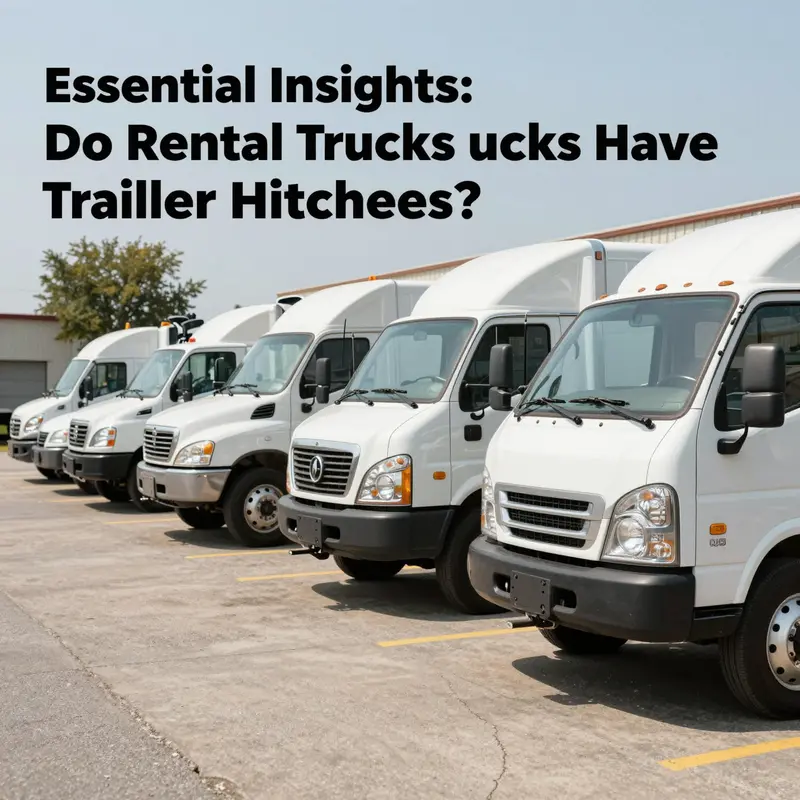
For business owners seeking reliable transportation solutions, the question of whether rental trucks come equipped with trailer hitches is pivotal. These hitches play a crucial role in enabling the towing of trailers, equipment, or cargo, essential for various business operations. Understanding the availability of hitches on rental trucks, their towing capacities, and the various types can significantly impact your logistics planning. This article will dive deep into these aspects, providing a comprehensive overview that will arm you with the knowledge to make informed decisions when renting trucks for your business needs.
Tow-Ready on the Move: Understanding Trailer Hitches on Rental Trucks
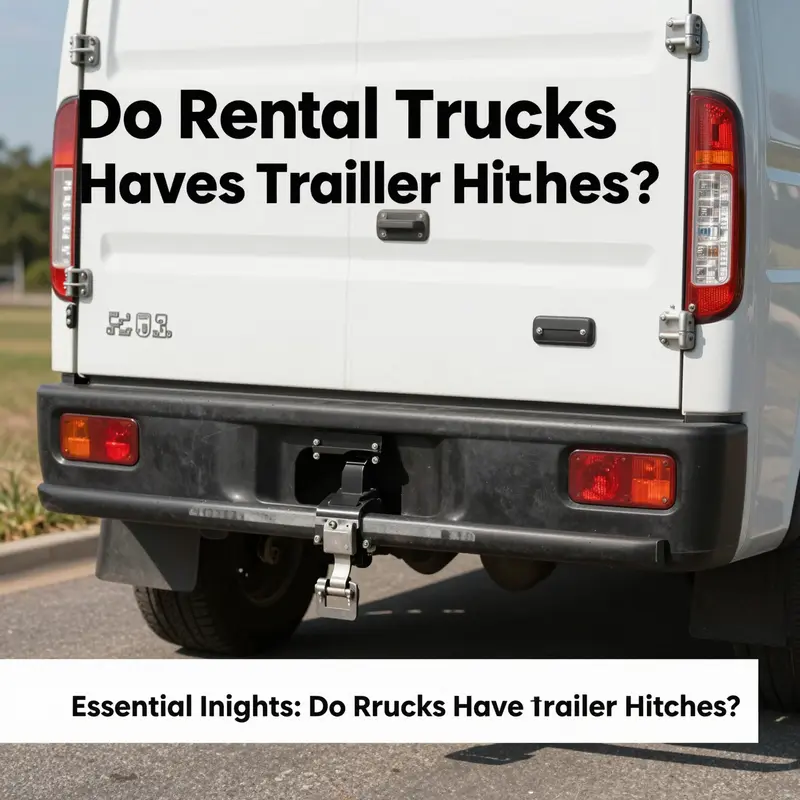
Many rental fleets place a hitch on pickup-style trucks, allowing you to tow trailers within the vehicle’s rated limits. The exact capacity varies by model, but a common figure for light- to mid-duty rentals is around 6,000 pounds gross trailer weight. The hitch typically includes a receiver, a ball mount (often 2 inches in diameter), safety chains, and a wiring harness to power trailer lights and brakes. Before towing, verify the specific truck’s towing rating and the trailer’s weight, tongue weight, and braking needs. Check that the trailer lights function and that the hitch, ball, and connections are secure. If you expect higher-capacity towing, ask whether weight-distribution hitches, sway control, or an integrated brake controller are available, since these are not universal.
Plan your load with tongue weight in mind; too little tongue weight can cause sway, too much can overload the hitch or rear suspension. Always use safety chains crossed under the coupler. Ensure tires are inflated and that the trailer brakes are working if required. Remember that towing changes handling: give more space, wider turns, and longer stopping distances. If crossing state lines, review local regulations on trailer weight and lighting.
For a concise setup, ask the rental agent for a quick hitch walkthrough before departure to confirm hitch, wiring, and safety components are ready.
Hitch Hidden in the Hire: A Thorough Look at Trailer Hitches and Towing on Rental Trucks
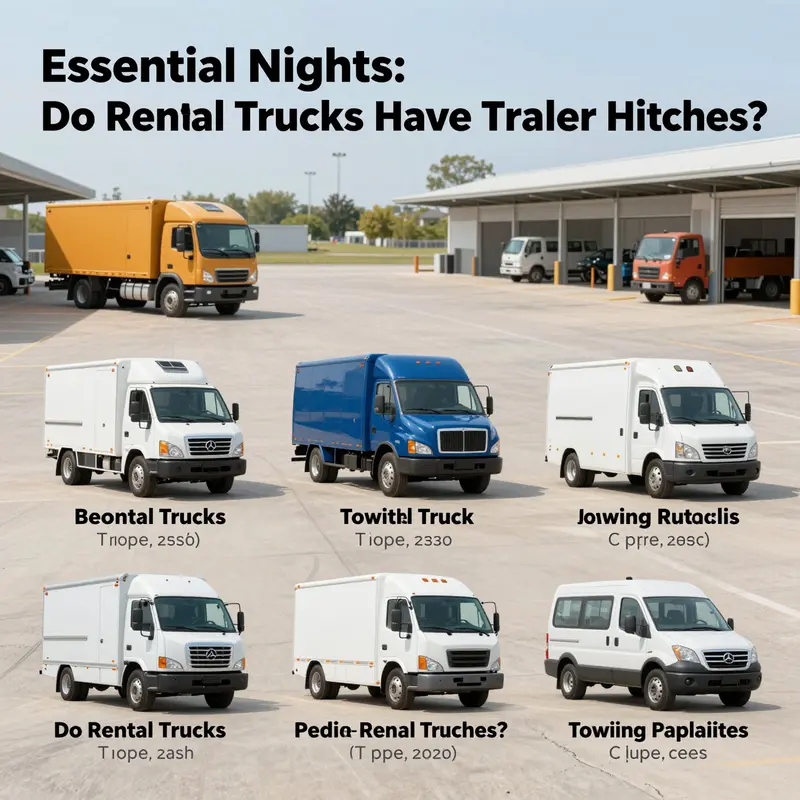
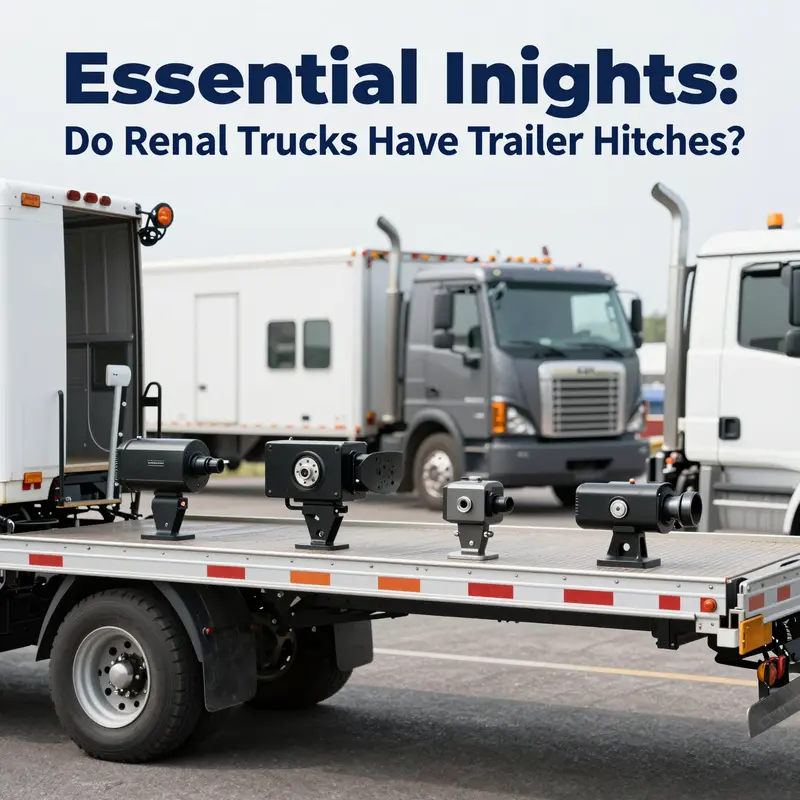
When you rent a truck to move a new apartment, load up a garage full of tools, or haul a trailer to a camping spot, a question often sits at the back of your mind: do rental trucks come with trailer hitches, and if so, how much can they tow? The answer hinges on a practical mix of design, safety standards, and the limits set by the manufacturer of the truck itself. The hitch is more than a simple accessory; it is a critical interface between the vehicle and whatever you plan to haul. In many rental fleets, the hitch is included as standard equipment on the truck, tucked into a profile that blends into the vehicle’s design while still delivering a reliable connection point for a trailer. This inclusion is not universal, but it is common enough that for most standard moving tasks, you can expect to find a hitch ready to use. The towing capacity, however, tells a different part of the story. It is not only about whether a hitch exists but about what the combined weight of the trailer, its cargo, and the vehicle itself can safely bear during a trip. Across the industry, you will find a spectrum of capacities, often expressed as a maximum towing weight, and in many cases, the published number hovers around several thousand pounds. For context, a typical pickup-style rental truck might be listed with a towing rating in the vicinity of 5,000 to 6,000 pounds. This range is contingent on the specific truck model, drivetrain configuration, and the equipment installed. The takeaway is clear: yes, hitch-enabled towing is a built-in capability for many rental trucks, but the actual limit is dictated by the truck’s design and the trailer’s demand. To navigate this landscape with confidence, it helps to understand the common hitch types and how they align with different towing tasks. The most prevalent is the standard receiver hitch, which provides a straightforward coupling point for a range of trailers from utility trailers to small campers or equipment haulers. This hitch type emphasizes compatibility and ease of use, making it a robust workhorse for everyday moving and light-to-moderate towing. For scenarios where height alignment becomes a concern or where sway can threaten control on the road, adjustable trailer hitches enter the mix. They address common alignment gaps between the hitch and the trailer coupler, a frequent challenge when towing campers or higher-profile trailers. Some adjustable systems also incorporate sway control technology. This feature dampens the side-to-side motion that can arise when wind gusts or road irregularities interact with the trailer’s momentum, helping to stabilize the pair during transit and reduce the risk of a dangerous sway. A rarer, heavier-duty option is the fifth-wheel hitch, typically mounted in the truck bed above the rear axle. It offers superior stability and load control for large trailers or specialized agricultural and commercial setups. Availability of fifth-wheel configurations can vary by rental fleet and model, with heavier units more often appearing in fleets designed for demanding tasks. When you plan to move or to transport a trailer, the hitch type matters because it governs how you connect, how you balance the load, and how you manage steering and braking. The hitch type also interacts with the trailer’s own requirements. A standard hitch can accommodate many smaller trailers with relatively modest tongue weights, while an adjustable or sway-controlled hitch can improve handling on longer trips or when towing trailers that experience dynamic forces in wind or at highway speeds. The most fundamental consideration, though, is not the hitch alone but the overall capacity: the towing limit and the vehicle’s payload capacity must align with the intended load. The towing maximum represents the limit on the trailer’s weight behind the truck, while the payload capacity speaks to the total weight of people, cargo, and gear that the truck can carry in its cab and payload area. Both numbers are essential because exceeding either can compromise control, braking effectiveness, and overall safety. To navigate these constraints, a practical rule of thumb is to start with the published towing capacity for the specific truck model you’ve rented and then subtract the weight of everything you plan to carry in the cab, bed, and any other cargo space. It is not unusual for the payload rating to constrain what you can tow, especially when loading both people and cargo. In real-world terms, this means a 6,000-pound towing capacity is not a universal guarantee; it is a ceiling constrained by what the truck itself can legally and safely handle given its weight distribution, engine performance, and braking system. A careful assessment that includes trailer weight, cargo load, and passengers will often reveal that you can tow a modest trailer at the limit, or you may be more comfortable staying well under that limit for added safety margins. It is also important to remember that trailers themselves have weight ratings, including tongue weight—the load the trailer exerts at the hitch—and gross trailer weight. If the tongue weight is excessive relative to the hitch’s rating or if the trailer’s braking system is inadequate for the load, performance can degrade rapidly, especially during braking or on grades. Even when the hitch and towing capacity align, you should not overlook essential equipment and safety practices. A tow setup should include proper lighting, brake connections, and safety chains in case a connection fails. Trailers with electric or hydraulic braking require compatible wiring, and some jurisdictions have laws that require trailers to have functioning lights and brakes for highway operation. In practice, renters should confirm that the truck they select includes a hitch and that the hitch is rated for the intended trailer. It may be possible to choose a truck with a higher-capacity hitch or to add optional equipment if the rental location offers it, especially for larger trailers or specialized loads. It is worth noting that some rental fleets advertise hitch-ready configurations as standard equipment, while others may offer the hitch as an add-on or require a specific model to access this feature. If you anticipate regular towing during a move or for a work-related task, it is prudent to ask at the rental counter about the exact hitch type, its maximum tongue weight, and the overall towing rating for the specific truck you intend to rent. A few practical steps can help ensure a smooth, safe towing experience. First, check the trailer’s weight and ensure it does not exceed the truck’s towing limit after accounting for cargo and passengers. Second, confirm the hitch is securely fastened and compatible with the trailer coupler. Third, inspect the wiring harness, lights, and braking connections to ensure every signal is functioning. Fourth, consider adding a sway-control device for longer trips or trailers with a higher wind exposure, since stability translates directly to safer handling. Fifth, confirm whether the rental provider requires or recommends a brake controller for heavier trailers, since some trailers rely on the truck’s braking system to operate safely and predictably. Finally, plan the route with attention to elevation changes and potential traffic conditions that can affect braking and acceleration when towing. The bigger picture here is that hitch availability and towing capacity are two sides of the same coin. A truck may come with a hitch, but the safe and legal limit to what you pull depends on the combination of the truck’s design, the hitch’s rating, and the trailer’s characteristics. Because fleets and models differ, it is unwise to make assumptions based on a quick glance at the rack. A short conversation with the rental provider, plus a careful read of the vehicle’s manual or the fleet’s specification sheet, can save you from overloading a rental truck and risking loss of control on the highway. For readers who want to explore more about hitch options and how adjustable hitch systems work in practice, there is a broader industry overview that details performance, composition, and best practices for adjustable trailer hitches. This external resource offers a structured look at how these components influence stability and control in a towing setup, especially when crossing different road conditions and speeds. Trailer hitch installation provides a practical, hands-on sense of what to expect when connecting a trailer to a rental truck and how the installation process complements safety considerations. In total, rental trucks that include a hitch are designed to support a range of towing scenarios, but successful towing demands more than just a hitch. It requires a clear understanding of the vehicle’s limits, careful weight management, proper equipment, and disciplined driving. With those pieces in place, many renters find that a rental truck does more than carry cargo—it enables them to move with confidence, knowing that the hitch, the trailer, and the driver share a common discipline for safety and efficiency on the road. External reference: for a broader look at adjustable hitch options and best practices, see the industry overview at https://www.hitchguide.com/best-adjustable-trailer-hitch-overview.
null
null
Tow-Ready Rentals: Navigating Trailer Hitches, Capacity, and Policy Limits

When people plan a move or a weekend haul using a rental truck, a common question surfaces early: do these trucks come with trailer hitches, and if so, what does that really mean for what you can tow and how you tow it? The straightforward answer is yes, many rental trucks do come with pre-installed hitches, especially the pickup-style models that framing moves and cargo-haul tasks typically demand. The hitch, in this context, is more than a simple accessory; it is a critical connector between the truck and whatever you attach behind it — a cargo trailer, a small utility trailer, a camper, or even a car that needs to be transported on a dolly. The practical question, however, is not merely whether a hitch exists, but what kind of hitch it is, how much weight it can pull, and what rules govern its use. These considerations matter because they shape your planning, your safety, and the overall cost and ease of your move or haul. A chapter like this does not exist to complicate the process, but to illuminate the real-world implications of hitch availability in rental trucks and to help renters move with confidence and clarity.
The reality of hitch-equipped trucks varies by company, by model, and by the specific rental agreement you sign. In the case of the most recognizable rental-truck providers, some pickup rentals are explicitly designed for towing and include a hitch with a defined towing capacity. For example, certain models are built to accommodate trailers and campers up to a substantial limit, often described in the hundreds or even thousands of pounds. These capacities are not universal across all rental trucks or all rental locations. They are characteristics tied to the particular vehicle platform and configuration you choose when you book. Thus, if towing is part of your plan, you should treat the hitch as a feature you need to verify rather than assume. A quick confirmation before you finalize the rental can save you time, money, and the frustration of discovering a mismatch after you arrive to pick up your vehicle.
The hitch itself is only the beginning of the conversation. The capacity the hitch can handle depends on several factors beyond the hitch hardware. The trailer’s weight, including its cargo, must be within the hitch’s rated towing capacity, and it must also respect the Gross Vehicle Weight Rating (GVWR) and Gross Combined Weight Rating (GCWR) of the truck you have rented. The GVWR represents the total permissible weight of the vehicle when it is loaded, including passengers, cargo, and the tongue weight of the trailer. The GCWR, a broader measure, accounts for the weight of the tow vehicle plus the weight of the trailer and its payload. If you exceed either figure, you risk tire blowouts, brake failure, steering loss, or more subtle issues like uneven wear and suspension stress. In other words, the hitch is not a free pass to tow everything you can physically lift; the vehicle behind the hitch must stay within the manufacturer’s guidelines for safe operation. This is precisely why the towing capacity of the truck and the hitch are not interchangeable terms. They work together, but they do not automatically grant a limitless towing capability.
Within this framework, the specifics matter. Take the example of a popular pickup-truck rental program where the towing capacity designated for a typical hitch-equipped truck can reach up to 6,000 pounds. That figure is a ceiling for the combination of vehicle and trailer — it is not a free permit to attach any load of that weight without careful calculation. A 6,000-pound limit could cover many trailers, including some utility trailers loaded with household goods, certain types of travel trailers or campers designed for light towing, and car trailers carrying a single vehicle with the proper equipment. Yet the same truck may be less capable when the loaded trailer is proportionally heavier due to equipment like ladders, tools, and other bulky items. Even if the hitch itself is rated to tow 6,000 pounds, the truck’s own weight ratings can impose lower limits, especially when the vehicle is near its maximum gross weight after adding passengers, cargo, and the trailer. Understanding this distinction is the essential first step when you consider towing with a rental truck.
The presence of a hitch also raises a set of practical questions that renters tend to overlook in the rush of booking. Is the hitch type a standard two-inch receiver? Or does it require a specific accessory, such as a ball mount, a coupler, or a particular ball size? Does the electrical connection needed to power trailer lights and brakes conform to a common standard like a 4- or 7-pin plug, or does the model rely on a separate harness that must be rented or installed? These details matter because they affect how smoothly you can connect a trailer and whether you will need additional equipment, tools, or safety devices. The truth is that while many rental trucks are designed to be ready for towing, the level of readiness is not uniform. The hitch may be pre-installed and paired with a standard tow package in some instances, while in others you may have to request a hitch component or confirm its presence during vehicle pickup. It is not unusual for renters to discover that a seemingly simple step — the hitch, or the ability to tow a trailer — depends on the exact truck model, its trim, and the location from which you rent.
Another layer of consideration concerns the rental agreement itself. Even when a hitch is present, there are often explicit towing restrictions embedded in the contract. The maximum towing weight is typically stated in the agreement, and it might come with caveats about the trailer type that can be towed. For example, some terms restrict towing of certain trailer types or require additional insurance when towing with a rental truck. The insurance question is not merely a policy line; it has real financial implications. If you tow beyond the stated limits or tow an inadequate trailer type, you may trigger exclusions or higher premiums, or you may face penalties if an accident occurs and the insurance coverage is found lacking due to noncompliance with the signed terms. The purpose of these rules is not to complicate your move; they exist to prevent situations where a rental truck is put in a high-risk towing scenario without the right equipment, supervision, or coverage.
To navigate these realities without being surprised, a practical mindset is essential. Before you book, call or visit the rental location to confirm two things: first, that the pickup truck you plan to rent actually includes a hitch and what type of hitch it is; second, the exact towing capacity for that specific vehicle, including the gross weight limits you must stay within for both the trailer and the combined vehicle. Asking for an in-person demonstration or a quick inspection of the hitch at pickup can be invaluable. If you are planning to tow a trailer, bring along information about the trailer’s GVWR, its tongue load, and the type of hitch coupler it requires. A rental agent can verify whether your trailer’s specifications align with the truck’s capabilities and whether any modifications or accessories are necessary to comply with safety standards. In addition to the hitch itself, you should think about the full towing setup: brakes, surge or electric brake controllers, lighting and wiring, safety chains, load-distribution devices, and anti-sway mechanisms. Each component plays a role in safe towing and has its own set of installation considerations. Some rental fleets may offer optional add-ons or on-site installation assistance for these items, which can make a substantial difference if you are new to towing or if the trailer you plan to haul is unfamiliar to you.
The pool of constraints can also include geographic factors and rental styles. Local versus one-way rentals can carry different terms for towing, including coverage on cross-state trips, road restrictions, or the availability of roadside assistance tailored to towing scenarios. If you are undertaking a move that involves long distances or crossing state lines, you should be extra diligent about understanding the policy language that governs towing in those contexts. The last thing you want is to discover on the morning of your move that your chosen route includes restrictions on towing or that your trailer requires equipment not available in the truck’s hitch package. A careful, proactive approach reduces the chance of encountering a breakdown or a costly surprise mid-move.
Even with a hitch and the capacity to tow, the practical path to a successful tow is anchored in preparation and prudent decision-making. A key step is the pre-tow checklist, a habit that generous movers and renters cultivate to smooth the process. Inspect the hitch for any signs of wear, corrosion, or looseness, and verify that the ball mount is properly secured and lubricated. Confirm that the hitch is properly attached to the receiver, with the locking pin in place, and ensure the tongue weight of the trailer is correctly distributed so the load is balanced between the hitch and the truck’s suspension. Connect the electrical harness, verify all trailer lights work in sync with the truck’s lighting system, and confirm that brake lights, turn signals, and running lights respond as expected. If your trailer has brakes, verify the presence and function of the brake controller, and confirm that the trailer’s brakes engage in a controlled manner when you test-tow in a safe environment. In many cases, a dry run in a parking lot or a quiet side street helps you practice hitching, backing up with a trailer, and performing the basic turns necessary to navigate your first mile safely.
The safety narrative around towing with a rental truck should also include a sober assessment of risk and responsibility. Even when the hitch and capacity align with your needs, towing adds complexity to your driving. The vehicle’s braking distance increases, acceleration is affected by the weight behind you, and cornering requires more space and anticipation. Driving a rental truck with a trailer is not the same as driving a car or a standard box truck; it demands a new set of habits and heightened awareness of blind spots, sway, and the trailer’s potential to create dangerous momentum if it starts to swing or if a tire fails in the trailer. For many renters, the simplest path to peace of mind is to pair towing with a partner who has experience or to consider one of the rental companies that offer additional guidance, training resources, or roadside assistance geared toward trailer towing. These services can be especially valuable when you are dealing with larger trailers, unfamiliar hitch configurations, or routes that include hills, narrow streets, or urban environments where precision is critical.
To ground these reflections in practical terms, it helps to anchor the discussion with concrete, real-world guidance. Confirming the hitch type and towing capacity should be your immediate action when you are choosing a rental truck. If you discover a hitch is present but the capacity is below what you need for your trailer, explore alternatives within the same rental fleet, such as a heavier-duty truck or a different model that better aligns with the trailer’s weight and the route you plan to take. If no hitch is present, you may need to adjust your plan to either rent a tow-dolly or a larger vehicle designed for trailer towing, depending on what you intend to haul. In some cases, you may even find that a moving-service option or a one-way rental with a dedicated tow package better matches your requirements. The aim is not to chase the illusion of a universal, hitch-ready solution but to approach towing with honest awareness of the equipment you have and the limits it imposes.
For readers who want to explore hitch-related topics in greater depth or see hands-on information about installing or upgrading hitch components, there is value in turning to practical guides and reference materials. These resources can offer step-by-step illustrations for hitch installation, compatibility checks, and standard safety practices that apply whether you are renting or own a trailer-towing vehicle. A targeted resource on hitch installation can be especially helpful for renters who are planning to add a hitch to a vehicle they frequently use for towing or for those who want to understand the hardware in greater detail before renting a truck. The following internal resource provides a focused look at hitch installation that complements this chapter’s overview and aims to empower renters with actionable knowledge: Penske trailer hitch installation.
The broader context for all of these considerations is the shared goal of safe, efficient, and cost-conscious moving. The hitch is a practical enabler, not a guarantee, and it is the renter’s responsibility to ensure compatibility between the trailer, the hitch, and the truck’s own weight and performance characteristics. With careful due diligence, you can determine whether a hitch-equipped rental truck meets your needs, whether your trailer falls within the permitted weight range, and whether the rental terms align with your intended usage. If all the pieces fit, towing with a rental truck can be a smooth extension of your moving plan, offering flexibility and cost advantages that other moving options may not provide. If they do not fit, you gain clarity that helps you pivot to alternatives that preserve safety, protect your investment, and keep your move on track rather than bogged down in surprise charges, policy gaps, or equipment mismatches.
In closing, the hitch is a gateway, not a guarantee. It signals capability, but capability has boundaries. The most important practice is to approach each rental with a disciplined, informed preview: confirm the hitch’s presence and specification, verify the trailer’s weight and type against those specifications, review the rental agreement for towing-related terms and insurance implications, and prepare the vehicle-trailer duo with a careful pre-tow check and a safety-forward driving plan. When you do this, you not only safeguard your equipment and cargo but also preserve your time, your budget, and your confidence as you navigate the complexity of towing with a rental truck. The chapter you just read is part of a broader conversation about how rental trucks function in the real world — a conversation that includes the practicalities of weight limits, the mechanics of hitch connections, and the policy boundaries that shape every towing decision. By approaching towing with clarity, you can optimize your move, reduce risk, and keep your plans aligned with what your rental truck can genuinely handle.
External resource: https://www.uhaul.com/trucks/
Final thoughts
Understanding whether rental trucks have trailer hitches, alongside their towing capacities and hitch types, is crucial for optimizing your business’s transportation strategies. Being informed about these aspects ensures you select the right truck that fits your operational needs, allowing for efficient logistics management. As you make your truck rental decisions, keep in mind the unique requirements of your business to maximize efficiency and productivity.