
When it comes to using rental moving trucks for your business, understanding weigh station requirements is vital to ensure compliance and avoid delays. Whether you’re moving for a corporate relocation or a client service, clarity on regulations will empower you in decision-making. The first chapter will delve into the weight regulations that influence whether you’ll need to stop at weigh stations. Following this, the second chapter will outline state-specific regulations that vary greatly across the country, ensuring you know what to expect in different jurisdictions. Lastly, the third chapter will clarify the important distinction between commercial and non-commercial usage of these vehicles, which can significantly alter your obligations. Together, these chapters will equip you with the knowledge and confidence to navigate the logistics of using rental trucks in your business.
Weigh Stations on the Move: Decoding When Rental Moving Trucks Must Stop
The question often begins with a stereotype of highway prompts: the flash of a weight station sign, a scale slowly rising beneath the tires, and a driver wondering whether a rental moving truck will be asked to halt. In practice, the sight of a weigh station is less a universal obstacle than a regulatory check that depends on what is being driven, what it weighs, and how it is being used. For many people renting a moving truck to relocate to a new home, the routine is to fill the cab with boxes and furniture, point the wheels toward the next state line, and keep moving. Yet beneath that straightforward weekend task lies a framework of rules that can change with weight, cargo type, and the specific jurisdiction you are passing through. The idea that a rental moving truck automatically dodges weigh stations is appealing, but it is not an unbreakable rule. The general principle hinges on weight, then on the classification of the journey, then on the specifics of state law, all of which can align in different ways depending on the route you take and the scale you encounter.
At the core of the discussion is a simple but crucial threshold. In federal terms, any commercial vehicle with a total weight exceeding a certain limit is subject to weigh-station regulations. The commonly referenced benchmark is 10,000 pounds. When a vehicle’s gross weight, including cargo, crosses that line, the vehicle enters a category that is typically regulated for safety, compliance, and enforcement purposes. But the way that threshold is applied to rental moving trucks depends on how the trip is framed: is the truck being used in a personal, non-commercial move, or is it being used in a way that resembles a commercial service, perhaps with a fee-based assistance or labor component? It is this distinction—between personal-use transport and commercial transportation—that often shapes whether a weigh station inspection is likely or necessary.
To understand why, it helps to step back from the numbers and consider how different layers of regulation interact. The federal baseline is designed to ensure that vehicles operating on major highways meet safety standards and that drivers have appropriate licensing and credentials. This baseline applies to commercial operations and to heavy vehicles that move freight as part of a business model. However, many states recognize a meaningful difference between a private individual moving personal possessions and a for-hire carrier delivering goods for pay. In practice, many consumer-grade rental moving trucks are treated as personal-use vehicles for regulatory purposes. That designation can shield a typical household moving truck from the heavier, more burdensome weigh-station requirements that apply to overtly commercial fleets. The practical upshot is that on most trips, drivers of rental moving trucks will not be required to stop at weigh stations purely because of the truck’s weight, provided the actual use stays within the personal-use domain and the total weight remains below the pertinent threshold.
Even so, the landscape is not a simple binary. The weight threshold serves as the first gate, but state rules can carve out exceptions that shift the expectation. Some states maintain exemptions for what they call non-commercial transport—home moves undertaken by individuals or families without a fee-based service component. In those places, the classification nudges toward the personal-use lane, and weigh-station stops become less likely for typical moves that stay under the 10,000-pound threshold. Yet other states are more aggressive in their approach, insisting that any heavy vehicle used on state highways—whether rented or owned—meets certain conditions and may be subject to inspection regardless of whether the vehicle is used for strictly personal relocation. The real-world takeaway is that blanket assurances are rare. The safest and most practical stance is to verify the rules for each state you will traverse before departure, especially if your route weaves through multiple jurisdictions with different interpretations of the same weight facts.
The nuance deepens when you consider how weight interacts with cargo. A rental moving truck’s weight is not just about the vehicle’s curb weight; it is the combination of the vehicle plus all cargo and any equipment loaded inside. The payload capacity of a given truck model provides a practical ceiling for what can be safely transported. For instance, a small, 10-foot or 12-foot moving truck—sized for compact moves—often carries a payload of a few thousand pounds, whereas a larger 26-foot model can accommodate far more. The numbers can be surprising: a 10-foot truck might offer a payload around 2,850 pounds, while the larger 26-foot variant can reach payloads around 12,800 pounds. These figures matter not primarily as a regulation trigger in every state, but as a warning about safety and long-term performance. Exceeding the truck’s rated payload can degrade handling, lead to mechanical strain, increase the risk of tire failure, and complicate any roadside incident investigation. While a passenger vehicle can often shrug off a near-capacity load without incident, a moving truck faces each mile with a higher stakes calculus because of its design, frame, and braking system, all of which are calibrated for a specific weight envelope.
Those payload figures also illuminate the practical reality of crossing weigh-station thresholds. If you have a relatively light load—enough to fill a medium-size box truck but not enough to push the total weight past 10,000 pounds—the default expectation in many jurisdictions is that you won’t trigger a weigh-station stop simply by virtue of weight. If instead the total weight edges toward or surpasses that threshold, the regulations become more clearly relevant, especially in states with stricter enforcement regimes for commercial vehicles. Then, the question becomes not just whether you are renting a truck, but whether the move itself qualifies as commercial transportation. If a move is packaged as a service, or if the rental is used in conjunction with fee-based labor, some states may interpret that trip as commercial even if the weight stays under the threshold. The distinction matters because commercial vehicles are the typical focus of weigh-station inspections and enforcement activity.
This layered complexity is precisely why one should not rely on a single rule of thumb. It is not uncommon for drivers to encounter weigh-station activity that appears routine—perhaps a routine inspection or a brief stop for paperwork—yet the underlying reason could be a weight check, a compliance inquiry, or a credentials verification. For a renter, the potential consequences of an unexpected stop are not merely a delay. There could be a need to adjust cargo, confirm registration details, or present documentation about the vehicle’s use and weight. And on the rare occasions when a stop triggers a heavier inspection, the process can become a distraction from the move itself, with potential timing impacts and added stress. That is why informed planning matters as much as the actual weight you carry.
The practical upshot, therefore, is a two-part approach to this issue. First, know the weight envelope of your specific rental truck. Vehicles of different sizes—ranging from compact to large—carry different payload limits. Understanding what your payload capacity is helps you plan the packing strategy with a clear view of how much you can safely load. Second, anticipate state-specific rules and align your plan accordingly. Even if you do not expect to encounter weigh-station requirements based on the weight alone, some states may still have exemptions that apply to “non-commercial” moves. Yet other states may apply a broader interpretation in certain corridors or for certain vehicle types. In short, plan as if you might encounter a weigh station, but do so with the confidence that for most typical personal-home moves, you are under the regime that would require such a stop.
To put it in more precise terms, the differentiation between personal-use and commercial-use moves is often the hinge point. If your rental truck is used in a manner that resembles a fee-based service—such as providing labor or facilitating a professional moving operation as part of the transaction—the vehicle may be treated as a commercial vehicle for regulatory purposes, even if the actual weight is modest. Conversely, if you are simply transporting your own belongings from one residence to another in a straightforward move, the classification leans toward non-commercial. In those circumstances, weigh-station stops are less likely to be mandated by weight alone, though they are never completely ruled out by law. Enforcement can still occur for other reasons—like safety violations, improper licensing, or documentation irregularities—so it is important to maintain compliance on all fronts, not only the weight dimension.
Behind these scenarios lies a practical method to minimize risk and avoid surprises. Before setting out, take a few minutes to confirm the regulatory posture of each state you will pass through. A quick check of the state highway patrol or transportation department websites can provide online tools or guidance about whether commercial vehicle rules apply to you, and what exemptions might exist for non-commercial home moves. This proactive step is especially valuable for cross-state trips that travel through several jurisdictions with differing definitions or thresholds. The goal is not to create a bureaucratic burden but to ensure that your move proceeds smoothly, with a clear understanding of what is expected at weigh stations, if you encounter them at all. In addition, keeping good records of the truck’s payload capacity, the list of items loaded, and the intended use of the vehicle can simplify any potential questions that arise at a weigh station or during a roadside encounter.
From a traveler’s perspective, the actual experience at a weigh station can vary. In many cases, a driver will be asked to pull into a designated lane, present driver’s license and vehicle registration, and allow a quick assessment to ensure the vehicle’s weight and configuration align with the posted regulations. If the weight is within non-commercial limits and the use is purely a personal relocation, the interaction may involve little more than a routine check and a brief conversation about the cargo. If weight is a concern, the scale will reveal whether the truck is within limits, and the officer may direct the driver to offload or redistribute cargo to comply with the weight requirements. The important thing for renters to remember is that the process is not designed to trip people up, but to safeguard road safety, protect infrastructure, and ensure that moving vehicles behave predictably on busy corridors. When you manage your packing with this awareness, you are less likely to encounter a surprise stop or a negative escalation.
An essential element of preparedness is to familiarize yourself with how to calculate weight load and how to adjust it when necessary. The payload capacity figures are a vital guide, but the actual weight on the scale depends on the items carried, their packaging efficiency, and how much non-cargo weight the truck itself bears. If you are unsure, a rough but practical rule is to aim for a buffer below the maximum payload so you retain control over the distribution of weight across axles, which contributes to safer handling and more predictable braking. The balance between weight distribution and cargo security is more than a matter of compliance; it is a matter of road safety. Heavy, concentrated loads can create steering challenges and abrupt braking demands, especially in windy conditions or on grades. The clearer you are about how weight is distributed, the better you will manage unexpected changes in road grade or weather.
In parallel with the weight-centric view, there is a larger question about how to plan a move that minimizes the likelihood of delays due to inspections or regulations. A practical approach blends foresight with flexibility. When mapping a route, consider the potential for weigh-station stops, especially if your path crosses corridors known for heightened enforcement in certain hours or seasons. If possible, choose times when traffic is lighter and weigh stations are less congested, reducing the chance of a lengthy hold. If you do encounter a weigh station and questions arise, the most productive stance is to cooperate, provide the requested documentation, and proceed with the plan once cleared. It is also wise to carry a simple set of documents that can facilitate quick verification: vehicle registration, driver’s license, proof of insurance, and a concise inventory of items loaded. Keeping those items accessible avoids delays and demonstrates a proactive approach to compliance that is appreciated by authorities and by the driver’s own schedule.
For readers who want a quick point of reference about the capacities of different moving trucks, there is a straightforward way to examine the spread between small and large models. A compact truck offers substantial flexibility for tight urban moves, while a larger model opens more possibilities for a full-service relocation. An accessible way to explore these differences is to consult a dedicated guide that maps payload capacities across common sizes. For instance, you can explore a concise guide specifically focused on the 16-foot truck to understand how much you can safely carry in that size category. This resource can help you make a better-informed packing plan before you load the first box. 16-foot-truck provides a detailed overview of typical payload capacities, interior space, and practical packing considerations, offering readers a practical lens through which to view the weight questions that loom over weigh-station decisions.
It is worth noting that while the weight threshold is a useful anchor, the broader regulatory ecosystem invites ongoing vigilance. States periodically adjust nuances around exemptions, documentation requirements, and enforcement priorities. The most reliable way to stay current is to monitor official state transportation pages and to consult a trusted resource when planning a cross-state move. The overarching purpose of these rules is not to impede personal residence moves or to create bureaucratic snags for individuals relocating their homes; rather, the rules aim to maintain highway safety, ensure that heavy vehicles operate within safe weight ranges, and support the integrity of road infrastructure for all users. By approaching a move with an informed mindset—acknowledging the weight envelope, recognizing the non-commercial exception in many circumstances, and preparing for a possible but uncommon weigh-station encounter—you can navigate the process with confidence and calm, even if a weigh station is on your route.
Finally, the broader takeaway is that rental movers operate within a regulatory landscape designed to adapt to the realities of highway traffic. In many cases, a household move with a rental truck will not trigger weigh-station stops on the basis of weight alone, particularly when the total weight stays under the commonly cited threshold and the use remains strictly personal. When weight and use align with non-commercial criteria, the road ahead is largely unimpeded. Yet the possibility of an inspection or a required adjustment remains a possibility that conscientious movers should acknowledge. By understanding the weight limits, the potential exemptions, and the practical steps for safe packing and routing, anyone planning a move can approach weigh stations as a standard part of the journey rather than as a baffling obstacle. The moving process benefits from a mindset that combines respect for the letter of the law with practical, science-informed packing choices, clear inventory management, and a willingness to verify state-specific rules before departure.
External resource: https://www.uhaul.com/moving-truck-weight-capacity/
Weigh Stations and Rental Moving Trucks: A State-by-State Guide to When Your Move Must Stop
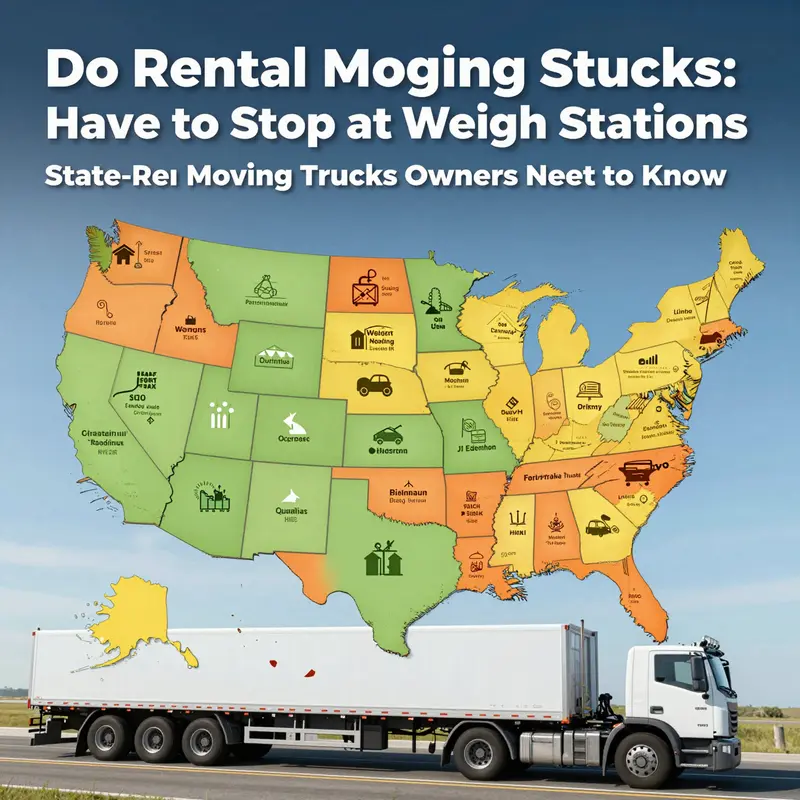
The road carries a steady layer of expectations for anyone moving across a state line or just down the block. Among those expectations, weigh stations stand out as quiet sentinels that remind drivers there are rules beyond the speed limit. For rental moving trucks, the question is not only about speed but about responsibility: will a truck rented for a move be required to halt at a weigh station? The answer rests on a blend of weight, purpose, and jurisdiction. To understand why, it helps to start with what weigh stations do and how their authority is defined in the broader framework of commercial vehicle safety. Weigh stations are not arbitrary checkpoints. They are part of a system designed to prevent overweight vehicles from traveling on highways, where extra weight can accelerate wear on pavement and, more importantly, raise safety risks. The control point is the vehicle’s registered weight, not merely its appearance or the brand of rental. In practice, the decision to stop is determined by the vehicle’s Gross Vehicle Weight Rating (GVWR) and by how the state classifies the vehicle’s use during the trip. The GVWR is a specification that appears on the vehicle’s official paperwork and in the manufacturer’s documentation. It represents the maximum loaded weight the vehicle is designed to carry safely, including passengers, cargo, fuel, and the vehicle itself. When a rental truck is heavier than 10,000 pounds, the line between private transport and commercial operation begins to blur, and weigh station rules become more likely to apply. The federal baseline provides a framework that states can adapt, and the practical outcome for most moving truck renters hinges on whether the state treats the move as a commercial transportation activity or as a private household relocation. The federal stance does not automatically require every rental truck to stop; instead, it obligates states to enforce weight and safety rules for heavier commercial vehicles. That distinction—who regulates what and under what conditions—creates the variability that drivers encounter on a cross-country move. If the truck’s total weight, including cargo, pushes past the 10,000-pound threshold, the probability increases that a weigh station stop will be required. In many states, this threshold is written with a simple arithmetic line: GVWR above 10,000 pounds triggers matierial compliance with weigh station checks when the vehicle is operating as a commercial vehicle, or when the weight class places it into a category that state authorities treat with heightened scrutiny. But weight is not the sole determinant. The purpose of the trip strongly matters as well. If a rental truck is used in a purely private move, some states offer exemptions for non-commercial transport. These exemptions recognize the ordinary household relocation as a legitimate activity not driven by cargo-for-hare intentions. Yet exemptions are not universal. The driver must be prepared to demonstrate the nature of the move and the vehicle’s use if challenged by law enforcement or highway patrol personnel. It is here that practical caution becomes essential. The best practice is to verify the specific rules for each state you will traverse before departure. State regulations can change, and the enforcement tone can shift with the season, road construction, or even local policy tweaks. In the era of digital government portals, many state transportation departments and highway patrol agencies publish weigh station guidelines or provide online tools to clarify whether a given truck should stop. A quick search can confirm whether your rental truck’s GVWR and intended use place it under or over a state’s weigh station threshold. To appreciate how this plays out in practice, consider the weight-centric framework that appears in several state profiles. In California, for example, the rule commonly cited is that any commercial motor vehicle with a GVWR over 10,000 pounds must stop at weigh stations, unless a specific exemption applies under either federal or state law. The emphasis here is on the commercial classification. In Texas, the standard is unequivocal for vehicles with a GVWR of 10,001 pounds or more: they must stop at weigh stations, regardless of whether the move is personal or commercial. Florida introduces a nuance that can pleasantly ease the burden for individuals moving privately: rental trucks exceeding 10,000 pounds must stop at weigh stations only if they are being used in a commercial capacity. When the move is private, the requirement can be waived. New York presents a different stance still, applying the GVWR threshold to require stops even when the rental is used for non-commercial purposes. The common thread across these examples is weight plus use. If a truck’s weight places it near or above 10,000 pounds, the question becomes, what is the vehicle’s use? Is it a hire-based service or a private relocation? While these state policies define the floor and the ceiling for weigh station compliance, they do not create a universal rule that applies in every jurisdiction. States may implement exemptions or nuanced interpretation of what counts as commercial activity, and some exemptions hinge on the driver’s ability to convey the move’s nature when encountered by enforcement personnel. The practical implication for a moving day is straightforward: know the weight of the truck you rent, consider the cargo you will carry, and plan your route with weigh stations in mind. A move that looks light on paper can become heavy in practice if cabinets, boxes, or furniture push the total weight past the threshold. In other words, the door to weigh station compliance opens more readily when the total mass of the vehicle and its cargo pushes beyond 10,000 pounds. Yet weight alone does not seal the fate of a stop. The rental’s employment model matters; if a move is charged as a professional service, the default assumption may tilt toward weighing-in, especially in states with stricter enforcement. For private moves, states may allow relief from weigh station stops, but even then the driver carries responsibility for understanding and proving the move’s nature when questioned. This is not a guessing game. It is a matter of preparedness. Before heading out, drivers should consult their state or provincial transportation websites for the most current guidance, and they should be ready to present documentation that clarifies whether the move is private or commercial. The documentation might include rental agreement language, the nature of the move as a household relocation, and any relevant state exemptions. The nuance here is not only about whether a truck will stop; it is about how a driver negotiates the checkpoint with professionalism and compliance. If a weigh station request arises, the most straightforward approach is to comply, provide the necessary documents, and answer questions with clarity. The goal is not to challenge the regulator but to demonstrate an understanding of the rules and a commitment to safety. The consequence of noncompliance can include fines and penalties, along with delays that complicate a move’s timing. These are not merely bureaucratic inconveniences; they are disruptions that affect schedules, rental terms, and potentially the move itself. The decision to stop or not, therefore, hinges on a confluence of factors: the GVWR of the rental truck, the actual loaded weight, the vehicle’s use, and the jurisdiction through which the vehicle travels. It is a layered calculation rather than a single check. The practical wisdom is to prepare, check, and plan. Preparing means knowing your truck’s GVWR and keeping a rough tally of the cargo weight as you pack. Checking means using state resources to confirm whether your route requires a stop at weigh stations for vehicles in your weight class and use category. Planning means mapping out which states you will cross and noting their weigh station rules, speed cameras, and tolls. The more careful the planning, the less likely a stop will become a surprise and the more smoothly a move will proceed. For those who want to minimize friction, a concrete step is to review the weight category early in the booking process. When you book a moving truck, you typically receive a sheet that lists the GVWR of the truck. If you discover the GVWR is at or above 10,001 pounds, you can anticipate weigh station checks as part of a standard protocol in several states. If, on the other hand, the GVWR is lower, exemptions may apply in some jurisdictions, particularly for private moves. It is, however, essential to verify this through official channels rather than relying on general impressions. Because state rules shift, the best approach is to treat weigh station compliance as a routine part of cross-state travel for heavy rental trucks, rather than a potential exception. The narrative around rental trucks and weigh stations also intersects with broader safety and insurance considerations. State regulators emphasize safe operation, proper loading, and vehicle maintenance as prerequisites for lawful travel. A vehicle that is heavier than it should be, or one that is loaded unevenly and insecurely, raises concerns that can prompt scrutiny at weigh stations, regardless of whether the truck is rented or owned. From that perspective, the weigh station encounter becomes an opportunity to demonstrate sound practices: secure cargo, verify tire load, confirm that the vehicle is not overloaded, and ensure that the vehicle’s own systems—brakes, lights, and mirrors—are in good working order. A responsible move uses these checks as a reminder to drivers to slow down, assess, and correct when necessary. It is worth noting that weight and use are the two levers that most strongly influence weigh station interaction. A truck with a high GVWR that is loaded lightly may still be subject to regulation if the state defines its use as commercial. Conversely, a lighter truck used for a fully private household move might pass through a weigh station without incident if the state provides exemptions and the driver can demonstrate the non-commercial nature of the transport. The complexity of these rules means that a one-size-fits-all answer does not exist. The only universal safeguard is proactive verification. Before stepping onto the highway, many movers take a moment to review the route and the relevant weigh station requirements for each state. In practice, this becomes a simple, methodical checklist: confirm GVWR, confirm use, confirm the route, and confirm the regulations of each state along the way. The real-world impact is tangible. When a driver knows the state’s stance, the move becomes more predictable, the time at weigh stations more manageable, and the overall experience less uncertain. If you are looking for a practical anchor, you can consult broader references that compile departmental guidance and enforcement practices. For readers who want to see how weight-based regulation translates into everyday driving, consider exploring a dedicated guide to truck weight classifications and regulatory thresholds. An easy entry point for learning more is the internal resource related to moving trucks and weight considerations: 16-foot truck. This page provides context about truck sizes often encountered in residential moves and can help in estimating whether your chosen rental falls into the regulated weight category for weigh stations across various states. While it does not replace official state guidance, it serves as a practical companion that sharpens your sense of the trucks you rent and the limits you must respect. Of course, every move has its own rhythm, and weather, road conditions, and delivery windows can also influence how testy a weigh station stop can feel. The bottom line remains clear: weight and use drive the decision, but preparation makes the outcome predictable. If the rented truck is above the critical threshold and used for hire, plan for weigh station stops as a likely part of the journey. If it is used for a private household move and the state allows exemptions, you still should be prepared to present explanation and documentation to authorities if requested. Across the landscape, this practical approach helps keep moving plans intact while respecting the safety and regulatory frameworks that weigh stations represent. In the end, the question—do rental moving trucks have to stop at weigh stations? hinges on a careful reading of weight, purpose, and jurisdiction. The most reliable path is to verify state-by-state requirements before departure, remain ready to present the move’s nature when asked, and treat weigh stations as a standard element of responsible travel rather than as an obstacle to be avoided at all costs. External resources and official guidance can offer contemporaneous clarity as rules shift. For additional context on the civilian safety framework that underpins these rules, see the external resource: https://www.cvsa.org/.
Weight, Use, and the Road: When Rental Moving Trucks Must Stop at Weigh Stations
On moving day the road feels like a long, blank page waiting for your plans to be written across it. The truck you’ve rented sits in the driveway, ready to carry your life from one apartment to another, and weigh stations loom as quiet checkpoints along the route. The way these scales affect your day often comes down to a handful of practical truths rather than a set of rigid, one-size-fits-all rules. The question, Do rental moving trucks have to stop at weigh stations? depends on two core ideas: the weight of the vehicle and its cargo, and how the move is classified in the eyes of the law. Those two pieces of information—weight and use—form a framework that makes weigh stations predictable rather than mysterious, even as state-by-state differences add texture to the picture. When you understand how weight informs regulation and how use informs enforcement, you can plan with confidence, avoid delays, and keep the move moving forward rather than stalling at a highway stop you didn’t anticipate.
The central weight threshold that sits beneath most weigh-station conversations is simple in concept, though the details prove more nuanced in practice. In broad terms, a vehicle that is considered commercial—one used to transport goods for hire or for a business—falls under a safety and weight regime that includes weigh-station checks. The commonly cited benchmark, around 10,000 pounds, acts as a rough line in the sand. If the truck’s total weight, including cargo, approaches or exceeds that threshold, weigh stations can demand a check. But the line is not universally drawn in the same ink across every state. The federal framework provides a baseline, but each state’s transportation department or highway patrol may add layers or exceptions that can change how the rule is applied on a particular journey.
The weight story, however, is the most tangible to a mover who has just booked a rental truck and is about to load it with dishes, boxes, and furniture. Gross vehicle weight rating, or GVWR, is the manufacturer’s ceiling for what the truck ought to carry, including its own weight, fuel, passengers, and cargo. When you pull onto a highway with a loaded vehicle, you’re measuring not just the payload but the total mass the machine is handling on the road. If the GVWR of the rental truck plus your cargo stays below that approximate 10,000 pounds, many states will not require a weigh-station stop on a personal move. If the loaded weight climbs toward or beyond that line, or if the truck’s design accommodates heavy payloads, the probability of a stop increases. Yet even this is not a universal guarantee that you’ll be summoned to the scale. The actual regulation depends on the route, the governing state, and the specific operation you are conducting.
Here the distinction between commercial and non-commercial use sharpens the point. A rental truck used strictly for a personal, non-commercial move—a household relocation without any business purpose—can be exempt in many states if the weight remains under the threshold. The move is not a business operation; the cargo comprises household goods, and the transaction isn’t framed as a service performed for a client for compensation. The moment the operation steps outside those boundaries—if you’re moving items for someone else as a paid service, if you’re helping a friend move for compensation, or if you’re in effect operating a moving service—the vehicle may be treated as commercial. In those cases, weigh-station rules kick in as part of the broader commercial vehicle regulatory scheme, regardless of whether the truck is rented or owned. The practical implication is straightforward: the same vehicle can be non-commercial on one trip and commercial on another, depending on how you’re using it that day.
This distinction between commercial and non-commercial use is not just a philosophical exercise. It translates into real enforcement practices on the road. If you are moving your own belongings for your own household, and your loaded weight remains under the threshold, a weigh-station stop may be unnecessary. If, however, you’re delivering goods for hire or transporting items as part of a business venture, the check becomes more likely, and the rules governing the stop can be stricter, with expectations around permits, documentation, and cargo-securement standards. In this sense, the rental status of the truck is a backdrop rather than the principal determinant. The purpose of the journey frames the regulatory stage, while the actual weight provides the plot twist that can propel you toward or away from the scale.
State-by-state variations add another layer to the narrative. Some jurisdictions maintain explicit exemptions for non-commercial home moves, providing clear paths to continue a trip without a weigh-station interruption as long as the weight stays within a defined range. Others apply a broader net, treating heavy vehicles as subject to weigh-station procedures even in private relocation scenarios if the GVWR, or the loaded mass, reaches a particular threshold. Enforcement practice can also vary with time of day, traffic levels, or even the perception of the load’s distribution. A well-secured, evenly distributed cargo can help avoid unnecessary scrutiny simply because it communicates care for safety and compliance. Conversely, a vehicle that appears overloaded, with items packed high or tied down with makeshift methods, may invite closer inspection, regardless of the stated use. The safety logic is clear: ensure you’re not exceeding the vehicle’s own capabilities; ensure you can demonstrate that the load is secure and properly distributed; and be prepared to present documentation if the state requires it.
If you’re planning a move that crosses multiple states, the prudent approach is to map the route in advance and review weigh-station rules for each state you’ll traverse. Some states publish online tools to help travelers check whether a weigh-station stop is required for a given truck, weight, and purpose. While the online check is not a substitute for common-sense planning, it does reduce the risk of an unexpected interruption. A few hours spent reviewing the weight thresholds and the non-commercial exemptions in each state pays dividends in the confidence you bring to the moving day. The goal is not to become rules-obsessed but to align expectations with the landscape you’ll actually travel through. This alignment helps you plan fueling breaks, rest stops, and loading reorganizations in ways that minimize friction at the scales. The bottom line is that you should verify the specific weight limits and use classifications for the states you’ll pass through before departing, then carry the confirmation with you in case you’re asked to show evidence of compliance at a weigh station.
Weight calculations are an essential tool in this planning. An empty rental truck has a defined mass, and every item you load adds to the total. You will likely be able to locate the GVWR on the truck’s door jamb or in your rental agreement. When you are calculating, you can start with the unloaded weight, add the approximate weight of the items you intend to move, and then factor in fuel. Fatigue for the driver is another consideration; the driving range could be affected by extra weight that increases fuel consumption, which in turn changes your route planning. A quick, honest inventory of expected cargo—boxes, furniture, appliances, mattresses, and miscellaneous items—combined with a rough weight estimate (for example, a standard box can weigh anywhere from 25 to 50 pounds depending on contents), provides a credible forecast of whether you’re likely to tip the scales. If your estimates show you will be near or above 10,000 pounds loaded weight, plan for a weigh-station stop as a plausible part of the day’s itinerary. If your numbers look safe, you may still encounter a weigh station as a routine checkpoint, but the odds of being required to stop drop when the numbers are convincingly within range.
A practical mindset for the road is to treat the scale as a safety checkpoint rather than a hurdle. The safety features behind weigh stations are not punitive in intent; they are about ensuring that heavy vehicles maneuver safely, that loads are secured, and that heavier vehicles do not impose disproportionate stress on road infrastructure. When you approach the scale prepared, you have a smoother experience. If you’re asked to weigh, you’ll know what information you should present: your driver’s license, vehicle registration, proof of insurance, and a clear explanation of the cargo. You’ll also be ready to demonstrate that the load is properly secured and distributed to minimize dynamic shifting on the road. The better you communicate and the more you can show that you’ve taken safety into account, the more quickly the inspection can proceed—or, in some cases, the faster you’ll be cleared to continue.
For those who want a concrete picture of the kinds of truck configurations you’re likely to encounter, a common scenario involves trucks in the 16-foot range. A 16-foot truck is a mainstay for small-to-medium moves and provides a meaningful reference point for thinking about space and weight. If you want to visualize what such a vehicle offers in terms of cargo capacity, you can explore a practical guide that covers dimensions, payload estimates, and maneuverability for a typical 16-foot truck. This resource gives a sense of how much you can safely load without exceeding the weight limits that would trigger weigh-station checks, and it helps you calibrate your packing strategy to maximize safety and efficiency: 16-foot-truck. By correlating the actual cargo you plan to carry with the truck’s capacity, you can construct a more accurate plan for loading, driving, and fitting the move into the day’s schedule. It’s a small step, but it makes a big difference when the route involves long stretches of highway with multiple weigh stations.
The question of whether rental moving trucks must stop at weigh stations ultimately returns to the same practical answer: not automatically, but certainly not unreasonably ruled out either. It is not solely the rental status that matters; it is the combination of weight and intended use. If you are moving your own household goods and you can demonstrate that the loaded weight remains under the threshold, many states will allow you to pass without a weigh-station stop. If you rent a truck for a commercial move or perform any service for a fee, expect the regulation to work in favor of compliance and interdicts that can require a stop. If the move straddles both worlds—personal in one leg and commercial in another—expect the route-specific rules to apply, which means you may encounter weigh-station procedures at some points along the journey but not at others. The real-world takeaway is that you should treat weight as a live variable and use as a second variable that shifts the likelihood of a weigh-station encounter. If you do that, you keep the plan flexible rather than reactive, and you preserve the momentum of your move even when a scale appears on the horizon.
In the end, you do not need to fear weigh stations. You do need to prepare for them. Start by confirming the truck’s GVWR and your expected cargo weight. Then assess whether your move is clearly personal or could be interpreted as commercial, and check the state rules for any exemptions or thresholds that could apply along your route. Finally, keep the essential documents handy, maintain safe load practices, and approach the scale with a cooperative attitude. If you approach the situation with the right information and a calm, informed mindset, weigh-station stops can become routine maintenance rather than dramatic interruptions. The road remains open, and your move can stay on track through careful planning and a clear understanding of how weight and use shape weigh-station requirements.
For readers seeking a final orientation that anchors this discussion in authoritative guidance, the federal framework provides the backbone, while state authorities interpret it at street level. The federal perspective helps you understand why weight and use matter, while state rules determine when and how you will be tested at the scale. When in doubt, consult the appropriate transportation authority resources and plan accordingly. In addition to this grounding, a practical check you can perform before departure is to review the truck’s weight rating against your cargo estimate and to confirm whether your intended use would be treated as commercial anywhere along the route. The goal is to make the journey predictable, to minimize delays, and to ensure that you’re compliant where required without turning weigh-station stops into the defining moment of your move.
External resource: https://www.fmcsa.dot.gov
Final thoughts
Understanding weigh station regulations is essential for business owners utilizing rental moving trucks. By grasping the weight thresholds, state specifications, and the distinction between commercial and non-commercial use, you can effectively navigate this aspect of your logistics operations. With the right knowledge, you can avoid potential penalties and streamline your moving processes, allowing you to focus on what matters most: serving your clients efficiently.