
For business owners utilizing Penske rental trucks, understanding weigh station regulations is crucial for successful operations. This article delves into the importance of compliance with weighing regulations, the implications of weight restrictions on rental truck operations, and best practices for managing these requirements effectively. By addressing these factors, business owners can ensure safe and legal transport while optimizing their logistics strategy.
Carrying the Load: Weigh Station Rules for Rental Trucks
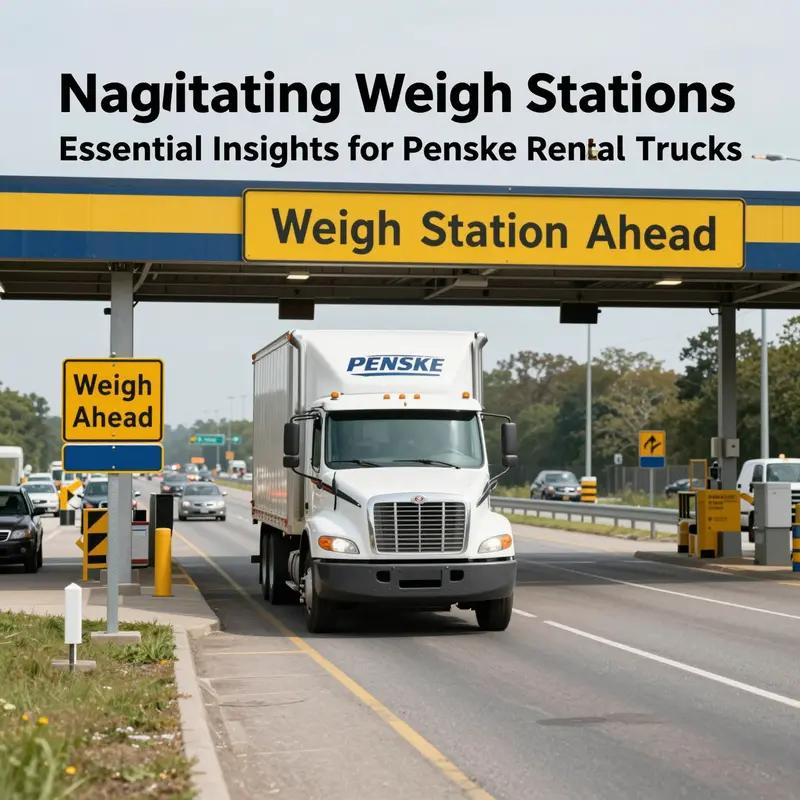
Weigh stations stand as quiet sentinels along the highway, a steady reminder that every mile loaded with cargo carries responsibility. They are safety checkpoints, not punishments, designed to protect road safety, bridge integrity, and fair competition among carriers. For anyone renting a moving truck, understanding weigh station expectations matters as much as choosing the right vehicle. The key question is whether rental trucks have to stop at weigh stations. The answer depends on weight, jurisdiction, and how the vehicle is loaded and operated. The core principle is weight: most places use the gross vehicle weight, or GVW, which includes the vehicle, fuel, cargo, and passengers. When that total exceeds a defined limit, inspectors step in to verify compliance.
Across many states and provinces, a common threshold appears around 10,000 pounds for smaller commercial trucks. If the GVW stays at or below the limit, weigh stations may use screening technology or simple scale checks to confirm weight. If the vehicle exceeds the threshold or triggers an alert, it will be directed to stop for inspection. This approach aims to protect tires, brakes, and road surfaces, while ensuring fair competition.
Rental fleets publish GVW ratings for each truck size, and renters should plan their load to stay within limits. The GVW shifts with loading and fuel use, so the same truck can be within limits at departure but exceed them mid trip if heavy cargo is added. If weight is within the threshold, some stations use weigh-in-motion or screening that allows passage; otherwise the driver will be asked to stop and may need documentation and a basic vehicle inspection.
Practical steps before the trip include verifying the truck’s GVW rating, planning load distribution, weighing items if possible, securing cargo, and keeping fuel within reasonable levels. Check for weigh station signs and route restrictions, and plan to avoid unnecessary stops while staying compliant. When in doubt, consult the rental provider safety resources before starting.
Cross-border considerations: in the United States the general principle is to stop or be screened when the GVW exceeds the state threshold, with regional variation. In Canada weight enforcement mirrors safety goals but thresholds and procedures differ by province and road type. Always approach weigh stations as enforceable checkpoints and verify that the loaded vehicle remains within limits for the planned route. The aim is to prevent overload, protect tires and braking systems, and preserve road infrastructure.
Authorities provide guidance through federal and provincial safety resources. The underlying idea is simple: operate within weight limits for your vehicle class and configuration. While details vary by jurisdiction, the intent remains to safeguard roads and drivers. Renters should expect context specific guidance from official sources and, if available, the rental provider guidelines.
For those who want to verify the latest context, the FMCSA site offers authoritative information on weigh station enforcement, weight thresholds, and related safety mandates. Accessing that information helps renters align practices with current standards that govern heavy vehicles on national networks. For authoritative guidance, consult the FMCSA site: https://www.fmcsa.dot.gov.
Weight Limits on the Move: How Weigh Stations Shape Penske Rental Truck Operations
Weigh stations are not a mere formality in the fleet world; they are a practical gatekeeper for safety, road integrity, and liability management. When a rental truck rolls up to a weigh station, it is not just a vehicle that happens to be heavy. It carries a payload that, if miscalculated or misdistributed, can tilt the balance between safe travel and an unlucky breakdown, a costly claim, or a closure of a lane while responders sort out a roadside incident. For Penske Truck Rental, as for any operator of heavy, commercially used moving equipment, the rules surrounding weight are not optional add-ons; they are core to how the trucks are designed, how customers plan their moves, and how both the renter and the company interact with the law. This is not a simple matter of “do we have to stop?” but a broader conversation about why weight restrictions exist, how they are calculated, and what it means for the customer who rents a truck, loads it, and sets out to relocate a chapter of their life within a single afternoon or a long-haul weekend.
From the outset, weight restrictions are rooted in a combination of federal and state regulations, engineering realities, and the practical experience of maintaining a fleet that must perform across diverse road networks. The gross vehicle weight rating, GVWR, defines the maximum allowed total weight of the truck when loaded, including the vehicle itself and any cargo, fuel, and accessories. Every Penske model has a published GVWR and a payload capacity that work in concert to provide a safety margin that protects tires, axles, brakes, and suspension from overstress. When a customer tallies up a moving day, the numbers are not abstract. They translate directly into how much furniture, boxes, and packing material can ride in the cab, the back, and the trailer, if one is used. The rule of thumb is simple in its logic but precise in its application: exceed the GVWR, and you are flirting with the chance of mechanical failure or regulatory trouble. Exceed it repeatedly, and you escalate risk not only for the renter but for others on the road who depend on predictable braking performance, tire grip, and steering response.
The practical implications of weight limits extend beyond the mathematics of a scale. An underpowered distribution can lead to compromised handling, particularly during emergency maneuvers, while an overloaded axle can cause runaway tire wear, uneven braking, and, in the worst case, tire blowouts. These are not hypothetical hazards; they are well-documented safety concerns in fleets that routinely move heavy goods. In a rental context, the stakes are higher in one sense because the renter may be unfamiliar with the nuanced boundaries of the truck’s capability. Penske recognizes this and translates it into customer-facing tools and procedures. Before a move begins, operators and customers alike consult loading guides and calculators designed to help estimate the weight of cargo and packing materials. The aim is to prevent overloading, distribute weight evenly, and avoid scenarios where a single heavy item or a handful of dense boxes distort the vehicle’s balance.
The customer experience hinges on transparency and foresight. Penske’s guidance emphasizes the practical steps a renter should take to stay within limits: know the truck’s GVWR and payload capacity, weigh items before loading, understand the tare weight of the truck, and factor in fuel, propane tanks, and any added accessories that contribute to overall mass. The process is not merely a countdown to a weigh station stop; it is a disciplined approach to planning that keeps the journey smooth, protects the rented asset, and minimizes risk during transit. When customers ask whether a Penske rental truck has to stop at weigh stations, the answer is typically yes, with caveats. In many jurisdictions, commercial vehicles—including rental trucks—are subject to weigh station inspections or routine stops as part of standard traffic management. This requirement aligns with a broader system intended to prevent overloading and to ensure that heavy vehicles operating on public roads do not compromise safety or infrastructure.
The regulatory landscape across the United States and Canada is structured but nuanced. While the core premise remains consistent—that heavy vehicles must adhere to weight limits—the specific thresholds, inspection triggers, and enforcement practices vary by state, province, and even by highway segment. The accounting logic behind this is straightforward: heavier loads exert more force on pavement, increase the risk of tire and brake failures, and raise the potential for road damage. Weigh stations exist to monitor these forces, verify compliance with local limits, and provide a consistent mechanism for authorities to intervene when a vehicle appears to be operating outside accepted parameters. For Penske, this implies that regardless of whether a truck is rented or owned, the vehicle’s weight profile must be within permitted bounds for the route it is traveling. In practice, this means that customers must consider not only the total weight but also how that weight is distributed across axles, because axle-specific limits play a crucial role in a vehicle’s overall compliance.
There is a practical rhythm to this compliance. A renter might estimate their cargo weight, reference the loading guidance Penske provides, and plan an itinerary that anticipates potential scale checks along the way. If a route includes sections known for stringent enforcement or if the truck is approaching a high-traffic weigh station corridor, the driver might be more inclined to pull in and obtain a weight verification. In many cases, such checks are routine, but they are also an opportunity to correct loading or distribution before moving onto the highway. The role of the 24/7 roadside assistance program becomes particularly meaningful here. If a renter encounters a loading discrepancy or a scale-related concern, the support team can guide them to adjust the load or locate a nearby facility that can assist with safe rebalancing. The value of this service is not merely about fixing a problem; it is about preserving the renter’s schedule while safeguarding the truck and the road network from preventable risk.
Beyond the immediate safety considerations, weight compliance also carries implications for insurance and liability. Rental agreements typically spell out that damage resulting from improper loading or overloading may exceed coverage. This is a pragmatic reminder that the journey a renter embarks on is not insulated from financial risk should the weight limits be ignored or misinterpreted. The combination of GVWR awareness, payload planning, and proper loading discipline becomes a form of risk management that protects all parties, from the truck operator to the renter and the highway system itself. It also reinforces the educational role of the rental company, which aims to empower customers with clear, actionable guidance so that the experience of moving does not become overshadowed by preventable complications.
A practical thread running through this topic is the integrated support ecosystem around the Penske rental experience. The company not only publishes model-specific specs but also offers a suite of tools designed to help customers estimate weight and plan loading. When a renter searches for how much a given truck can carry, they are guided to use these resources to arrive at a conservative, safe estimate. The loading guides take into account the truck’s interior dimensions, tie-down points, and potential equipment such as dollies or moving blankets that add to the mass. The approach is conservative by design, recognizing that the customer’s goal is a smooth move rather than a last-minute scramble at a weigh station. This proactive stance helps minimize the risk of overweight violations that could trigger an inspection, fines, or a roadside stop that disrupts the move and creates a ripple effect in the renter’s timeline.
From a safety culture perspective, the weight discipline embodies a broader principle: the vehicle is a tool that must be used within its safe operating envelope. Overloading does not merely strain the truck; it alters steering response, increases stopping distances, and reduces the margin for error in adverse conditions. The consequence of neglecting weight limits is not limited to a single incident; it can cascade into tire failure, brake overheating, suspension damage, and even a catastrophic failure that jeopardizes other road users. For renters who may be new to moving trucks, the potential consequences can be daunting, but that is precisely why the guidance is so explicit. It is not designed to deter customers but to ensure that their experience remains positive, their cargo arrives intact, and their personal timelines stay on track.
The customer journey from planning to loading to hitting the road becomes a test of how well a rental company translates regulation into actionable practice. A critical link in that chain is the availability of clear, model-specific loading guidance and calculators that help estimate weight with the level of precision required for safety and compliance. When a customer uses these tools and errs on the side of underestimation, the risk is minimal; when the weight calculation is off in the other direction, the consequences can be significant enough to warrant a weigh station stop, a review of the load distribution, or an adjustment to the route. The goal is not to trap customers in bureaucratic formality but to embed a shared understanding: weight limits exist to protect people, vehicles, and infrastructure, and compliance is a cornerstone of a reliable moving experience.
An additional layer of practicality comes into play when a renter recognizes that weight management is not a one-time calculation but a dynamic process. As loading proceeds, the distribution of weight across the truck can shift. A heavy item placed near the rear, for instance, may alter handling characteristics in ways that a casual estimate would miss. This is why a careful approach to loading, ballast, and securing cargo matters so much. It also explains why the 24/7 roadside assistance service can be a crucial safety net. If a renter detects that a load shift or a strap failure threatens to push the weight distribution out of spec, they can seek timely guidance and support. The combination of pre-move planning, on-the-road monitoring, and responsive support creates a continuous loop of safety and readiness that aligns with a fleet operator’s obligations to the road and to the customer’s moving timeline.
The regulatory and safety narrative also reinforces a broader truth about cross-border moving. US and Canadian road authorities share a common objective: prevent overweight operations that could compromise safety or the highway network. While the specifics of weight limits, inspections, and fines differ by jurisdiction, the shared principle is uniform: respect the weight envelope, distribute loads responsibly, and prepare for inspections as part of routine travel for commercial vehicles. Penske’s communications toward customers reflect this reality. The company communicates that regardless of whether a truck is leased or owned, the weight constraints apply to ensure safety and to align with insurance expectations. The renter who seeks to understand these dimensions is not just complying with a rule; they are participating in a system designed to reduce risk and improve predictability on moving days.
The practical takeaway for a reader who plans to rent a Penske truck and move a household or office is simple in structure but requires careful execution. Start by identifying the truck’s GVWR and payload capacity. Then compile a realistic weight estimate for every item that will be loaded, including moving supplies, boxes, and any equipment such as dollies or straps. Don’t forget to factor in fuel and any extra features of the rental—as these contribute to overall mass. Use the loading guides and calculators provided by the rental company to validate your estimates and plan how the weight will be distributed along the vehicle’s axles. If the calculation flags a potential overweight scenario, adjust the plan before setting out. Redistribution of items can often bring the load within limits without sacrificing the move’s efficiency. If a weighing event occurs en route, follow guidance from the roadside assistance team to address any issues quickly and safely. In the end, the goal is a move that is not only legally compliant but also safer and smoother for everyone involved.
This approach has broader implications beyond the immediate move. It reinforces a culture of responsibility around heavy-vehicle use and highlights how regulatory infrastructure, vehicle design, and customer behavior intersect in everyday practice. The weigh station is not an adversary; it is a checkpoint that reflects a standard of care that helps preserve road quality and safety on busy moving days. The renter who internalizes this perspective is less likely to encounter friction at scale, less likely to face unexpected delays, and more likely to complete a relocation with confidence and clarity. The weight conversation, therefore, transcends the numbers on a scale; it is a narrative about planning, safety, and the practical realities of moving with a truck that has its own precise limits and a built-in system of checks and balances.
For readers who want to explore the practical side more deeply, the chapter’s guidance connects to a broader ecosystem of support and information that a rental provider makes available. In addition to the standard loading guides, many renters find value in roadside resources that discuss what to do in the event of a loading or weight-related issue and how to coordinate with service teams that understand the unique needs of rental equipment. These resources emphasize that safety is not a single decision at the loading dock but a continuous set of choices from planning to unloading. The conversation about weigh stations, GVWR, and payload becomes a holistic view of how a rental truck operates within a larger transportation system and how customers can participate in that system with awareness, preparation, and practical tools.
As a closing reflection, consider the broader purpose of weight restrictions in the rental context. They serve to protect people, equipment, and infrastructure, but they also protect the customer’s investment. A well-planned load reduces the chance of mechanical trouble that could derail a move and avoids situations where insurance coverage might be called into question due to improper loading. The chain of responsibility extends from the factory floor where the truck is built to the loading dock where items are staged, to the weigh station where the vehicle’s performance is verified, to the highway where miles are logged. Each link in that chain depends on accurate information, thoughtful preparation, and timely assistance when deviations occur. In the end, the question isn’t simply whether a Penske rental truck must stop at weigh stations; it’s how weight-aware planning, supported by a comprehensive service network, enables a safer, smoother, and more predictable move for every customer.
For those who want to learn more about the practical, on-the-ground aspects of this topic, see the company’s roadside resources and guidance, which offer actionable steps for loading, securing, and managing weight during a move. This ongoing support helps ensure that a rental truck remains within its safe operating envelope from the moment the keys are handed over until the last box is unloaded and the vehicle is returned. By integrating regulatory awareness with user-friendly tools and responsive assistance, the Penske rental experience turns a potentially intimidating weight conversation into a confident, well-planned journey.
External reference and further context: https://www.pensketruckrental.com
Internal resource reference: Penske Roadside
On the Scale: Navigating Weigh Stations While Renting Penske Trucks
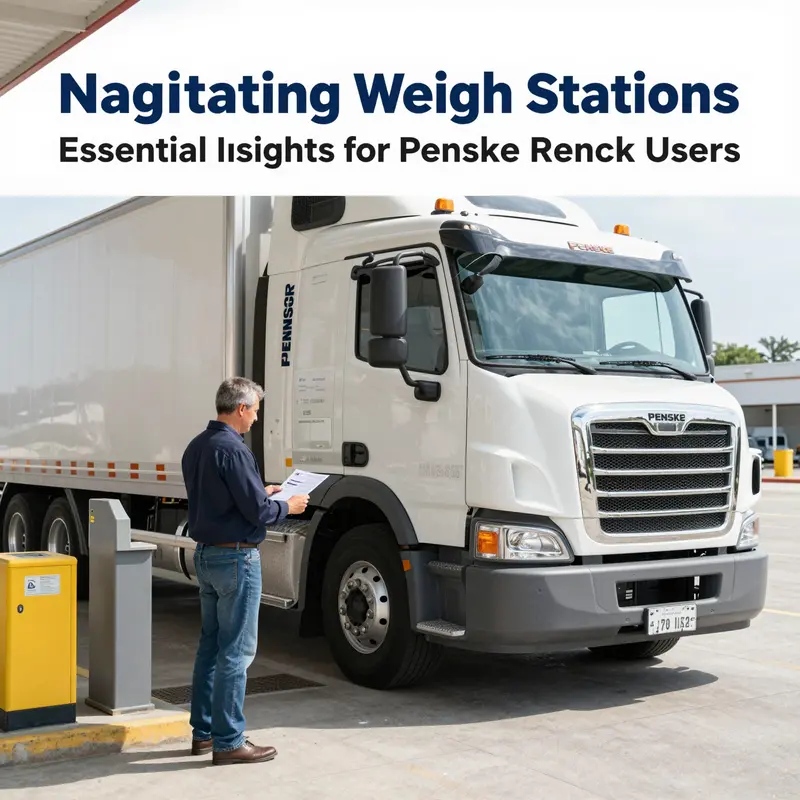
Weigh stations are a persistent feature of the modern road system, quiet sentinels that slowly measure the weight of trucks crossing into their gaze. For some drivers, they are a routine checkpoint; for others, a potential delay that triggers a cascade of questions about safety, compliance, and the practical realities of moving freight with a rental fleet. The question at the center of this chapter—do Penske rental trucks have to stop at weigh stations?—is not simply yes or no. It is a doorway into how weight regulations are applied in everyday trucking, how rental vehicles are integrated into those rules, and how drivers can navigate the process with confidence, accuracy, and a minimum of friction. In the United States and Canada, where freight movement across borders is a constant, weigh stations play a critical role in preserving road safety and infrastructure integrity. They ensure that heavy vehicles do not exceed the limits that can compromise tire life, braking performance, and highway wear. For anyone renting a Penske truck, the same rules apply to the borrowed vehicle as to a fleet-owned truck: the vehicle is subject to the same inspection regimes, the same scales, and the same penalties when weight limits are exceeded. Yet the rental dynamic adds layers of responsibility and practical considerations that deserve careful attention. The following discussion threads together the regulatory logic of weigh stations with the lived experience of renting and operating Penske trucks, weaving a guide that aims to demystify the stop, not merely to justify it.
From the outset, the central concept is weight, but not weight in abstraction. Weight is a measurable, enforceable parameter that interacts with a truck’s design, its cargo, and the road on which it travels. Gross Vehicle Weight (GVW), typically defined as the combined weight of the vehicle and its cargo at a given moment, is the plan against which a fleet’s compliance is tested. The related metric, Gross Vehicle Weight Rating (GVWR), is the maximum permissible GVW assigned by the manufacturer, a ceiling that must not be exceeded. The practical implication for a Penske rental is straightforward: the truck’s payload must be managed so that the GVW remains within legal limits for every segment of the journey. If a trip requires heavy payloads or long distances on routes with strict weight limits, the driver’s attention to payload distribution becomes a daily responsibility. The rental agreement itself is silent on function only in the sense that it does not waive the need to comply with weight regulations. Instead, it makes clear that the operator of the vehicle bears responsibility for safe, lawful operation, which includes the possibility of inspection and weighing at designated points along the route.
The mechanics of weigh stations are not arcane. A truck approaches a scale, often a wide, flat platform embedded in the pavement, and the vehicle is weighed in a controlled manner. Often, the process identifies by license plate and vehicle identification number, cross-referencing weight readings with the vehicle’s registered specifications. If the combined total threatens to exceed state or provincial limits, the officer may request a closer look at the vehicle, the cargo, or both. In some cases, a truck may be directed into a separate lane for more detailed inspection, including checks for securement of cargo, condition of tires, and compliance with other regulatory requirements like permits or axle weight distributions. The penalties for overweight violations can be severe, including fines, trip detours, or temporary suspensions of operation. Even when a truck is rented, the same consequences apply; the vehicle is not exempt from enforcement simply because it is not fleet-owned. The customer, in possession of the rental agreement and the keys to the truck, is the party responsible for the vehicle’s operation at the moment of inspection. It is this alignment of accountability that makes weigh station stops a routine operational practice rather than a burden of compliance.
Penske Truck Leasing and similar rental providers signify this reality in their communications with customers, underscoring that the vehicle’s status—as rented or owned—does not alter the obligation to stop when required by law. The fleet is built to standard specifications, and the bodies of the trucks—box configurations, typical payload capacities, and axles—reflect common commercial-use patterns. Yet every rental is paired with a moment of decision at the roadside: should the truck pull into the scale now, or might the route permit a different option later? The answer hinges on what the truck is carrying and where it is going, a dynamic that makes weigh station stops an expected, not exceptional, aspect of daily operation. The broader context, of course, is road safety and the preservation of roadways for future generations of users. Heavier trucks exert more stress on bridges, cause greater pavement fatigue, and demand longer stopping distances. Weigh stations, therefore, are not punitive outposts but rather preventive infrastructure—places where a driver can recalibrate a journey to stay within the bounds of safety and legality.
For the Penske rental experience, this translates into a practical set of expectations and routines. First, there is awareness. Regardless of whether the vehicle is rented for a local move, a cross-country relocation, or a one-way trip, the traveler should be aware that weigh station requirements exist and that regulations vary by jurisdiction. Some jurisdictions have explicit thresholds that trigger a weigh-in, while others rely on a more discretionary approach tied to observed loading or axle weights. The driver might not know the exact weight of every component in advance, but the knowledge that a scale exists and that compliance can be checked at any time is enough to inform careful loading practices. Second, there is documentation. A standard rental document, along with a valid driver’s license and, if applicable, a commercial driver’s license (CDL), should accompany the operator. When a weigh station is encountered, presenting the rental agreement can confirm the vehicle’s identity and its intended use, a helpful backdrop for officers who may request information about the vehicle’s origin and purpose. The exact requirements can differ from state to state or province to province, so having a plan to show documentation calmly and efficiently is part of the professional approach to driving rented equipment.
Route planning emerges as a third pillar of good practice. The simplest way to approach weigh stations is to anticipate them. If you are unsure whether a selected route includes mandatory weigh stations, you have a few reliable channels: you can contact Penske customer service for guidance on routes that might pass through states or provinces with stringent weigh requirements, or consult official transportation websites for the jurisdictions you will traverse. This planning is not about avoiding weigh stations; it is about ensuring you are prepared for the process, understand what information may be requested, and know where to park or how to navigate lanes when the scale comes into view. In practice, drivers often keep up-to-date route planning as part of their ongoing safety and compliance checklist, reinforcing the idea that rental trucks are not passive tools but part of a regulated system that requires active, informed participation.
When you actually reach a weigh station, the experience typically follows a pattern, even if the specifics vary. Signs indicate the approach to the scale, the instructions from the officer or automated system may be displayed, and the lane assignments often become clear very quickly. A calm, cooperative approach usually yields the best outcome. The driver should respond to signals as trained, slow the vehicle as directed, and prepare to present the necessary documentation if requested. The scale itself may deliver a readout that reflects the vehicle’s current weight, and the vehicle’s registration and payload data will be checked against the weight result. If the weight is within limits, the process is straightforward: the driver completes the necessary steps at the station and returns to the road. If the weight is too high, the operator must address the overweight condition in a manner that is compliant with local rules. This might involve unloading some cargo, redistributing the payload within the cargo area, or, in some situations, adjusting the trip plan to offload at a later stop or to transfer some items to a different vehicle. The important principle remains constant: the resolution must not compromise safety or legality, and the driver is expected to manage the situation responsibly, with the rental vehicle and its cargo.
One of the questions that often arises in this context concerns the practicalities of a rental vehicle, where the payload may be combined with a front cab and slightly different loading features compared with a fleet-owned truck. The Penske rental model is designed so that operators borrow a vehicle that has its own tested and documented weight characteristics. Yet the responsibilities of loading and securing cargo do not shift with ownership. The driver must ensure that payload distribution does not create an overweight condition, that all cargo is secured to prevent movement during transit, and that the overall vehicle remains within safe operating limits. A solid loading plan is an essential companion to the weigh station stop. It helps prevent overweight conditions from arising in the first place, reducing the risk of delays and fines. The driver should check that heavier items are placed over the axles that bear the most load, avoid stacking items so high that they obstruct rear visibility or access to the rear doors, and use tie-downs with proper tension to stabilize the cargo. These practices, while seemingly mundane, are fundamental to ensuring that a rental truck remains within the intended weight envelope and maintains safe handling on the road.
Documentation and compliance, however, extend beyond the vehicle and its cargo. Some jurisdictions require drivers to carry certain permits or to display specific markings on their vehicle, especially if the load involves special categories such as hazardous materials or oversized freight. While Penske rental trucks are typically configured for general freight, it is prudent to be aware of the terms of the rental agreement and any jurisdictional specifics that might apply to the route. The rental experience includes a degree of trust: the operator is entrusted with a vehicle that meets defined safety standards and is expected to operate within regulatory boundaries. The station stop thus becomes a moment of mutual accountability between the driver, the rental company, and the enforcing authority. It is not a moment of suspicion, but a moment of alignment—an opportunity to verify that all elements that influence safety are in proper order.
The cross-border dimension adds another layer of complexity, especially for trips that begin in one country and end in another. In North America, weight regulation aims to harmonize safety objectives across networks that are deeply interconnected by commerce, yet the details can differ. The weight thresholds may vary by jurisdiction, as may the emphasis on certain aspects of the inspection, such as axle weights, tire conditions, or the securement of cargo. For a Penske rental, this means that a single trip can involve crossing multiple weigh-station regimes, each with its own expectations and procedures. Drivers heading into cross-border territories should be prepared for the possibility of encountering weigh stations in multiple jurisdictions and should have the documentation and loading plans that satisfy each. Route planning that anticipates these differences is not about rigidity; it is about preparedness. It is about recognizing that the road network is a mosaic of rules and that compliance is a form of travel literacy, built through practice and attention.
In practice, the best approach for Penske rental customers is embedded in a few core habits. First, load with intention, not just capacity. Understand the payload limits of the trunk and the cargo area and plan the distribution so that the loaded weight approaches but does not cross the safe envelope. Second, treat weigh station stops as standard operational checks, not as exceptions. Expect to encounter signage, follow directions, and present the required documents when asked. Third, use route planning as a pro-active tool, leveraging available resources to map out weigh station-heavy corridors or to identify times that may reduce delays. Fourth, keep safety at the center of every move. Proper loading, secure cargo, and a calm, professional demeanor at the scale contribute not only to compliance but to overall safety on the road. Finally, lean on official resources when in doubt. Penske provides safety and operational tips to guide customers through common situations, and there is value in consulting these resources as part of a comprehensive safety culture around rental driving. In this sense, the weigh station is not a barrier to movement but a checkpoint that reinforces the shared responsibility of rental operators, driving professionals, and regulatory authorities.
To bring this conversation full circle, consider the practical realities of a typical Penske rental trip that might involve a long haul across state lines. The driver loads a standardized box truck with a payload that respects the truck’s GVWR, checks the cargo to ensure proper distribution, and begins a journey that will likely include at least one weigh station stop along the way. The route is planned with knowledge of where those weigh stations are located, and the driver knows that a scale encounter could happen at any time. As the truck approaches the weigh station, the driver observes the posted instructions, reduces speed, and prepares the necessary documents. If the scale reads within limits, the process is quick, the driver receives the go-ahead, and the journey continues. If it does not, the driver has a clear set of steps to take: unload and redistribute the cargo, adjust the load within safe limits, and reattempt weighing after recalculating the payload. Either outcome reinforces the principle that the rental vehicle is not exempt from the physics of weight distribution and the regulations designed to govern it.
In addition to the mechanics of stopping at weigh stations, there is a broader cultural component to the Penske rental experience that deserves recognition. The company emphasizes safety and security, encouraging drivers to follow best practices and to consult official safety resources when needed. This emphasis resonates with the transportation community, which views weigh stations not as hurdles but as legitimate components of a nationwide safety framework. A driver who respects the process—who plans, documents, loads carefully, and responds to weigh station signals with composure—enters a professional flow that reduces risk for themselves, their passengers, and the traveling public. The rental experience then becomes more than a transaction; it becomes participation in a well-established system of standards and shared responsibility.
As a closing reflection, it is worth noting that the knowledge that Penske rental trucks are subject to weigh station requirements is, in itself, a constructive denominator for planning. It invites drivers to think ahead, to verify legitimate weight limits, to carry the right documents, and to approach the journey with a mindset that prioritizes safety and compliance over speed. It invites fleet operators and rental customers alike to acknowledge that a well-timed stop at a weigh station can be a straightforward, non-disruptive part of a successful move. And it invites all readers to consider the broader practice of driving rental trucks with the same vigilance and respect that characterized professional trucking for decades. For those who want to deepen their understanding or verify the latest guidance, a practical touchstone is to consult the roadside safety and security resources offered by Penske—resources that reflect a broader industry commitment to safe, compliant operation and to the ongoing education of drivers who rely on rental equipment to move people and goods from one place to another.
For readers seeking further context on roadside safety and operational guidance, see the Penske Roadside resource for practical tips and checklists that support safe and efficient moves. Penske Roadside.
External resource: To broaden your understanding of safety tips and best practices for summer moves and the broader context of truck safety, you can consult the official guidance provided by the Penske Truck Leasing Safety & Security team at https://www.pensketruckleasing.com/safety-security-tips-for-your-summer-move.
Final thoughts
Understanding weigh station requirements is not just a regulatory obligation but a crucial aspect of operational efficiency for business owners renting Penske trucks. Regularly stopping to comply with weight regulations safeguards against potential fines and enhances road safety. By employing best practices and being aware of weight restrictions, you can ensure a smoother rental experience. This commitment not only reflects well on your business practices but significantly contributes to safe and efficient logistics management.