
For business owners in need of cost-effective transportation solutions, understanding the capabilities of budget rental trucks equipped with tow hitches is crucial. This knowledge not only assists in making informed rental decisions but also optimizes logistical operations. The following chapters will provide an in-depth overview, exploring the availability of tow hitches in budget rental trucks, their towing capacities, the cost implications of integrating them into your business model, and essential guidelines for safe usage. By the end, you’ll have a comprehensive understanding that will empower your operational strategies in a budget-conscious manner.
Tow Hitch Realities on Budget Rental Trucks: Availability, Limits, and Practical Guidance
When planning a move or a quick job that involves pulling a small trailer, the question of whether budget rental trucks come with tow hitches often arises. The short answer is nuanced: hitch availability varies by truck model, location, and rental policy. In many fleets, a 2-inch receiver hitch is present on some trucks, but it is not guaranteed across the entire budget segment. The decision to include a hitch or to offer it as an add-on depends on the vehicle’s design, the services offered at a given branch, and the demand in a particular region. The practical takeaway is simple: do not assume a hitch is there until you confirm the exact truck you will drive and the branch you will visit. This matters because even when a hitch is present, the vehicle’s towing capability is intentionally limited. Budget trucks that are optimized for everyday cargo transport typically do not feature heavy-duty towing gear, and their electrical harnesses, wiring, and braking systems are not engineered for sustained, heavy trailer use. As a result, the towing option often comes with strict weight restrictions and usage limitations that are baked into the rental agreement rather than being a universal, all-access feature. The fragmentation across fleets means that some locations may offer the hitch as part of the standard package on certain models, while others may list it as an optional add-on with an additional daily fee. In high-demand areas—near lakes, RV parks, or construction zones—branches may be more flexible about towed loads, but that flexibility typically comes with caveats, fees, and clear boundaries. This variability is why the essential first step is to verify the exact truck and the local branch’s policy before you book. The online vehicle specifications and the local branch call are your best sources for accurate information, and any decision about towing should hinge on those specifics rather than on general assumptions. The reality is that hitch availability is not a universal fixture; it can be present on some trucks, limited by model year, or restricted by the branch’s stock, and it is always subject to the rental agreement’s terms and conditions. For travelers who anticipate regular towing needs, this means budgeting extra time for confirmation and planning, and considering alternatives if towing with a budget truck is not reliably supported. A careful approach also helps avoid the frustration of showing up with a trailer that cannot be hooked up or, worse, discovering that a supposed hitch was never installed or is not misused according to policy. Beyond the mechanics of the hitch itself, operators and renters should mind the parameters that govern any towed load. The typical guidance for budget trucks centers on smaller, light-to-medium trailers and light-duty caravans. The tongue weight—the vertical force transmitted from the trailer tongue to the hitch—tends to be restricted to a relatively modest range. In most budget-style trucks, the combined limits are commonly stated as a few hundred pounds, often cited around 500 to 1,000 pounds for both tongue weight and the trailer’s gross weight. This means a trailer that is too heavy, or a load that shifts unexpectedly, can overwhelm the vehicle’s hitch and powertrain, especially on banks, grades, or long pulls where acceleration and braking demand more from the engine and transmission. It also means that items with significant inertia, such as metal equipment or a loaded utility trailer, may not be appropriate for towing with these vehicles. For those who need to tow more substantial loads, the safer, smarter path is to either rent a truck designed for higher towing capacity or to arrange an alternative solution that reduces the demand on the budget truck. It is essential to understand that even when a hitch is listed as available, there are usually restrictions on using it for commercial towing, heavy-duty applications, or continuous, long-distance hauling. The rental agreement itself will spell out which trailer types are allowed, whether a weight limit applies to the load or to each axle, and any prohibitions against using the hitch for certain purposes. In practice, many renters discover that the hitch is designed to support small utility trailers, light boat trailers, or campers of limited size and weight, rather than large, fully loaded caravans or industrial equipment. The line between permissible use and prohibited use can be subtle, and it often hinges on the exact model, the equipment installed at the branch, and the terms negotiated at rental. Because of this, it makes sense to treat hitch availability as a contingent feature rather than a guaranteed amenity. If you want to maximize your chances of towing with a budget truck, there are practical steps you can take. Start by visiting the rental company’s site to view the specific specifications of the truck you intend to drive. Many sites display a “towing” or “hitch” section that lists whether a receiver hitch is included, what size it is, and what weight limits apply. If the online specs are unclear, call the local branch and ask for the exact truck’s towing capabilities, the presence of a wiring harness, and whether a tow-capable option exists for the model you’ll rent. It’s also wise to ask about any required equipment you must provide, such as a compatible trailer wiring harness or a brake controller, and whether the branch can supply those items or if you must source them elsewhere. If you find that your preferred branch cannot accommodate your trailer, keep the option of a different vehicle in mind. Some renters choose to move light loads with a budget truck that is not intended for towing by relying on a tow dolly or a small, compatible trailer. A tow dolly can simplify certain moves by allowing you to tow a smaller axle with the front wheels off the ground, reducing the load on the hitch and simplifying maneuvering. For a deeper dive into how hitch installation is handled and what it entails, you can consult a practical guide on trailer hitch installation, which provides step-by-step context and cautions on safety and compatibility. This resource illustrates how mounting points, wiring, and hardware interlock to support a safe tow, and it can be especially helpful if you are coordinating a rental with a trailer. You can explore this topic here: trailer hitch installation. While the specific content of that guide is beyond the scope of this chapter, the general idea is to understand how hitch hardware is selected, installed, and tested before towing begins. It is not enough to assume that simply attaching a trailer to a ball and backing up will suffice; a proper setup often requires secure mounting, correct electrical connections for brakes and lights, and a wiring harness that matches the trailer’s circuits. Any deviation from proper installation increases the risk of electrical failures, hitch failure, or trailer detachment, with potentially serious safety and liability consequences. The practical takeaway is clear: even when a budget truck can tow, you should approach towing with caution, verify all equipment, and adhere strictly to the rental agreement’s limits and instructions. If towing is central to your plans, consider whether a different rental option better matches your payload and safety needs. That might mean selecting a truck with a higher towing rating or arranging a dedicated moving service that includes a trailer and professional handling. For those who want a concrete external reference that codifies towing policies in the rental industry, see the towing guidance published by a major national rental provider, which outlines general rules about hitch availability, restrictions, and how to verify compatibility with your trailer. This external resource helps anchor the practical steps described above in official guidance and can be a useful checklist as you plan a move. As you prepare, remember that the exact conditions you encounter will depend on the branch, the truck model, and the timing of your rental. The bottom line is that hitch availability on budget rental trucks is not a given and should never be assumed. Confirm with the local branch, read the vehicle specifications carefully, and plan for the limits that come with these economical vehicles. This approach reduces surprises on pickup day and ensures you adhere to safety and regulatory requirements while pursuing your moving or towing goals. For further context about towing policies in practice, you may also consult the broader towing information from rental providers, which offers official guidance and examples of permitted uses. external: https://www.enterprise.com/en/rent-a-car/faq/towing.html
Budget Tow Hitches: Understanding What Light-Duty Rental Trucks Can Safely Tow
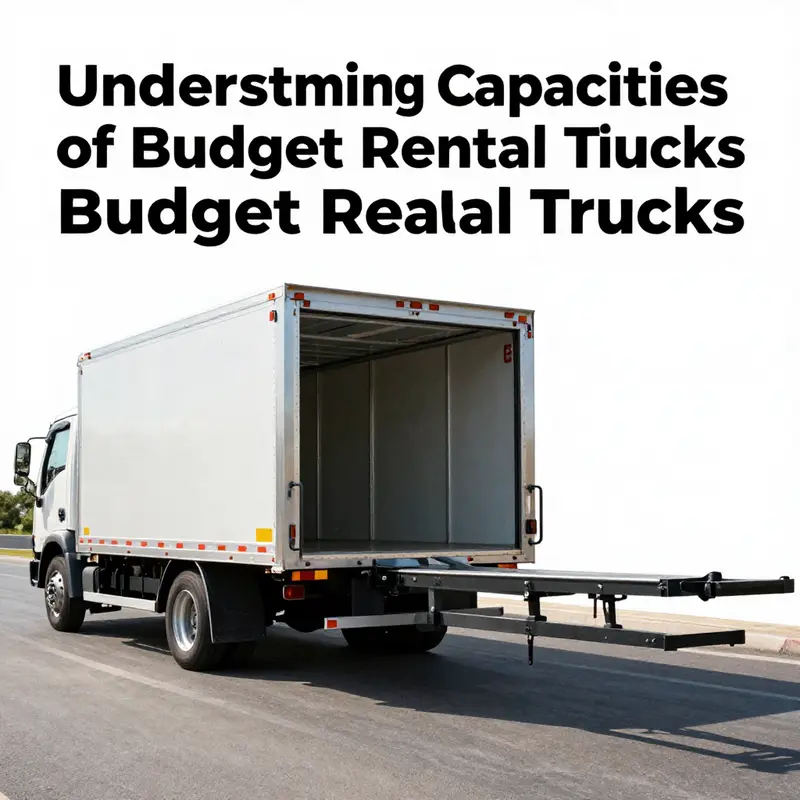
When you rent a budget truck with the intent to tow, you enter a space where convenience and caution must walk hand in hand. The presence of a tow hitch on many budget rental fleets sounds simple enough: you’ve got a receiver, you connect a trailer, and off you go. But the reality behind that hitch is more nuanced. Not all hitches are created equal, and not every rental truck that carries a receiver hitch is prepared to haul the same weight. The habit of assuming that a preinstalled hitch automatically translates to “you can tow anything you want” is where missteps begin. In practice, these trucks provide a practical, cost-effective towing option for light trailers, utility trailers, and small campers—loads that stay within the vehicle’s design limits. The deeper you go, the more you realize that towing with a budget rental truck is a careful negotiation between hardware, ratings, and the responsibilities of safe operation.
Across the fleets that customers encounter, a 2-inch receiver hitch is the common thread. This standard size is widely compatible with a range of light-duty trailers and accessories, but it also hints at the scale of what the vehicle was designed to handle. The hitch—often already installed and included in the base rental rate—comes with a practical pair of guardrails: a limit on tongue weight and a ceiling on trailer weight. In typical utility-style trucks, that ceiling sits in the broad band of roughly 500 to 1,000 pounds of combined tongue weight and gross trailer weight. Those numbers are a practical reminder that the hitch is a feature for light loads, not a universal pass to tow heavy equipment or large, high-dynamic trailers. When you see those limits spelled out in the rental agreement or the vehicle placard, treat them as nonnegotiable boundaries for safety, legality, and insurance protection.
The daily rental price usually covers the basics, including the hitch in many cases. Still, there are important caveats. Some fleets will add charges if you want a more specialized towing setup—such as a gooseneck or a fifth-wheel hitch—because those configurations require different hardware, different installation considerations, and different levels of control. In budgeting terms, that means the “included” towing feature can become a variable from one rental to the next. The safest course is to read the agreement in full before booking and to confirm the exact towing equipment that accompanies the truck you select. The agreement should specify the hitch rating, the trailer weight limits, and whether any towing equipment beyond the standard setup is available in the fleet. This level of clarity helps prevent overreaching into a trailer load that the rental vehicle is not prepared to handle.
To move from the general to the concrete, it helps to understand how the capacity grows with the size and power of the truck itself. In smaller budget options—compact pickups or light-duty models—the towing capacity commonly falls into a range close to 3,500 to 6,000 pounds. That range is enough to pull small trailers, utility trailers, or compact campers that are engineered to be lighter and easier on the drivetrain. It also means that the trailer’s gross vehicle weight rating, the trailer’s own weight, and the tongue weight must be considered together with the vehicle’s capabilities. In practical terms, you should be asking not just, “Can I attach this trailer?” but, “Is the combination of my trailer and payload within the vehicle’s documented limits?” The safety margin matters because the towing system on these trucks is designed for modest loads, not for large caravans or heavy equipment.
When you consider the larger end of the budget truck spectrum—the full-size pickups that many fleets offer—the range broadens significantly. These trucks can deliver towing capacities from roughly 7,000 up to 14,000 pounds, depending on the exact configuration. The key here is to reinforce that those numbers aren’t universal across the same model line; they are highly sensitive to the engine choice, transmission, axle ratio, and whether the truck has a factory tow package or other towing enhancements. The manufacturer’s specifications, often visible on the vehicle’s placard near the driver’s door or in the rental documentation, are the final authority. It’s crucial to cross-check the specific truck you’re driving, because a seemingly similar model at a different trim level can carry a different GCWR and a different recommended hitch setup. The same caution applies if you’re tempted to push a trailer near the top end of the stated capacity. Exceeding these thresholds invites a cascade of risks—from overheating and brake wear to a compromised steering response and potentially catastrophic failure under highway conditions.
A useful way to frame the constraints is by looking at the GCWR—the Gross Combined Weight Rating. This rating captures the maximum allowable weight of the tow vehicle plus the trailer and payload combined. It is the single, definitive guardrail that ensures the vehicle’s drivetrain, suspension, and braking system stay within safe operating limits. The upper limit presented by GCWR can be surprisingly easy to surpass if you haven’t accounted for trailer weight, cargo inside the trailer, and any equipment you’re carrying in the truck bed as part of the load. The moral is simple: never hitch a trailer and then assume you’re below the limit without verifying both the trailer’s weight and the truck’s GVWR (the vehicle’s own weight plus its cargo capacity) and the gross combination. The placard on the door frame is the reliable quick check, while the rental agreement provides the formal confirmation. If your plan involves a larger trailer or a heavier cargo, you’ll likely need a vehicle with a higher GCWR, and possibly a different class of rental truck altogether.
Beyond the numbers, the practicalities of towing with a budget rental truck hinge on compatibility and the mechanical preparedness of the rig. The hitch itself must be rated for the load you intend to pull, and the trailer coupler must match the hitch ball size and weight rating. Electrical connections for brake lights, turn signals, and running lights have to be secure, with proper grounding. Trailer brakes may be required if the trailer’s weight exceeds a certain threshold, and this is often a legal requirement depending on local laws and the configuration of the towing package on the vehicle. The maintenance status of the hitch, the wiring harness, and the trailer’s own braking system are all variables that influence whether a given trip can be completed safely. It’s tempting to treat towing as a purely mechanical task, but in truth it is a dynamic interaction of vehicle capability, trailer design, and driver judgment. Respect for the limits, and an honest assessment of the trailer’s weight and load distribution, can preserve both equipment and occupant safety.
One practical consequence of all these considerations is the need for accurate load planning. Tongue weight matters just as much as the trailer’s gross weight. Tongue weight—the portion of the trailer’s weight that is transmitted to the hitch—affects steering, braking, and the stability of the hitch connection. If tongue weight is too light, the trailer can sway; if too heavy, it can overload the hitch and rear suspension. Aligning trailer hitch height with the trailer’s coupler height is another small adjustment that pays big dividends in control. The chain arrangements, safety chains, and electrical connections all contribute to a secure, compliant towing setup. In the end, the goal is smooth, predictable handling that preserves steering feel and braking responsiveness.
To further ground these concepts in practical know-how, consider the example of the typical hitch-equipped rental truck in the budget tier. For smaller hauls, the capacity range is enough for utility trailers or small enclosed trailers that carry personal effects or tools for a modest move. For people who need to move a little more weight—perhaps a larger load of furniture or a heavier cargo box—the upper end of the small-to-mid-size spectrum and the mid-size trucks become relevant. The critical actions remain constant: check the vehicle’s towing spec placard, confirm the rental agreement’s terms, and ensure that trailer weight and cargo do not push the system beyond its GCWR. If you’re uncertain, err on the side of caution and choose a truck with a higher rating or consider a different fleet option that explicitly supports the weight you plan to tow.
For readers who want a deeper, hands-on view of hitch systems and how to verify compatibility, there is a resource that walks through installation considerations and rating verification. You can explore a detailed guide on trailer hitch installation here: Penske trailer hitch installation. This practical reference can help you understand how to assess ratings, install correctly, and recognize when a hitch is appropriate for your load. It’s a useful companion to the rental agreement and placard information, serving as a bridge between the policy language and the real-world checks a driver should perform before departure.
In the end, budgeting for a budget rental truck with a tow hitch means balancing simple access with careful due diligence. The hitch exists to enable light, practical hauling, not to unlock a window to heavy duty towing. The distinction matters not only for safety and legal compliance but also for how you plan a move or a trip with a trailer in tow. When you remain within the published limits, you’ll find the experience sensible and the operation predictable. When you push beyond them, you risk mechanical stresses, warranty questions, and hazardous situations on the road. The responsible approach is to know the numbers, verify the hardware, and respect the limits—so that the hitch can do its job as a cooperative partner on a well-planned journey.
External reference: for a broader sense of official specifications and how they translate to real-world towing performance on popular light-duty pickups, see the manufacturer’s vehicle specifications. https://www.ford.com/vehicles/trucks/f-150/specs/
Tow Hitches on Budget Trucks: Balancing Convenience, Capacity, and Cost
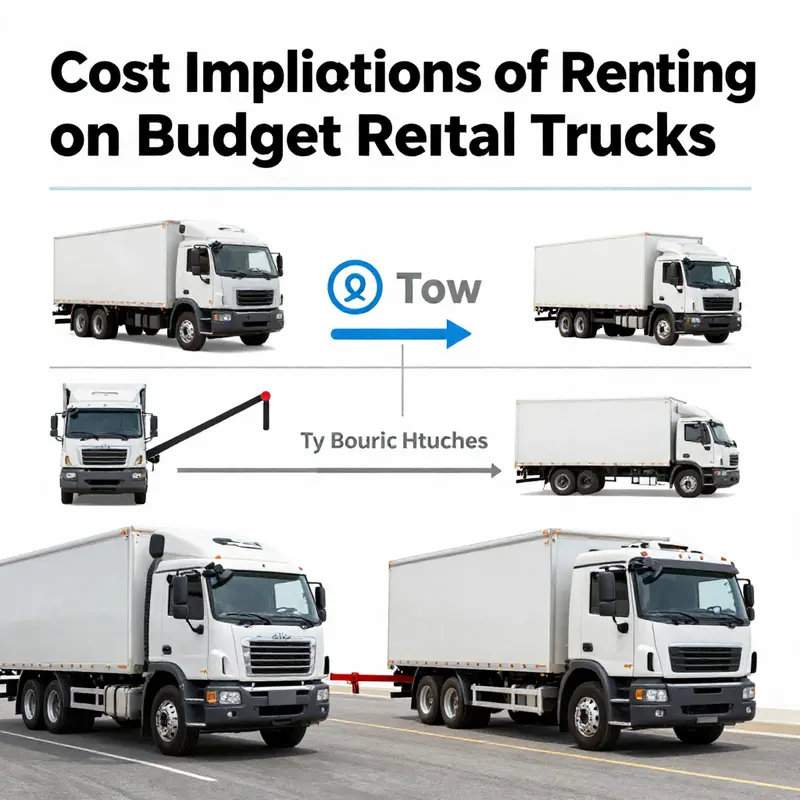
When planning a move or a project that needs a budget rental truck, the question of a tow hitch quickly moves from curiosity to practicality. A hitch is not simply a gadget to attach a trailer; it is a tool that changes how you plan a trip, what you can tow, and how you manage risk on the road. In many budget fleets, a receiver hitch is indeed present as standard equipment. The setup most often takes the form of a 2-inch receiver, which accommodates small trailers, utility trailers, or car dollies used for short moves. Yet visibility of a hitch at the back of the truck does not translate into an invitation to tow heavy loads or to treat towing as a no-brain part of your journey. The towing system on budget trucks is intentionally designed for light-duty tasks. The practical implication is that both tongue weight and gross trailer weight capacities typically sit in a modest range, commonly around 500 to 1,000 pounds. Those numbers are a ceiling, not a target, and they shape every decision you make downstream—from the trailer you select to the speed at which you travel over long distances. Properly interpreting these limits is the first step toward a safe and economical use of a budget rental truck with a hitch.
The hitch’s inclusion often comes with a mix of expectations. In some cases, it is advertised as part of the base rental or appears as standard equipment across a broad class of trucks. In others, it may be listed as an optional add-on, accompanied by a modest daily surcharge or a one-time fee. Either way, it is essential to confirm the exact configuration before you finalize your booking. A hitch that is pre-installed and documented in the vehicle specifications can simplify your planning, but it does not waive the other realities of towing with a budget vehicle. If your project involves anything beyond a light trailer—such as a larger utility trailer that carries heavy gear, a small camper, or equipment with substantial tongue weight—there is a strong likelihood that the truck’s rating will fall short. It is in those moments that the simple act of checking the written towing capacity becomes a smart, protective step rather than a perfunctory one.
Beyond the hardware itself, the economic picture grows more nuanced when you consider the total cost of using a budget truck with a hitch. The daily rental price is the obvious line item, yet it is only the opening act. Industry perspectives suggest a wide spectrum: thirty to about one hundred fifty dollars per day, with the precise figure influenced by rental duration, distance, location, and demand. The presence of a hitch can nudge the rate upward because it signals the inclusion of more specialized equipment and a slightly heightened liability profile. Even when the hitch is billed as part of the base rate, additional costs can accumulate rapidly if you stretch the rental over many days or cover substantial mileage. The usual suspects—mileage overages, fuel costs, insurance add-ons, and possible damage waivers—tend to pile up in a towing scenario. When towing is involved, insurers and rental agencies often reassess risk, which can translate into higher premium charges or more stringent terms about what is permitted with the trailer attached.
Cost containment in this space, therefore, hinges on foresight. It means estimating the trailer you intend to pull, comparing the trailer’s weight plus cargo to the hitch and truck rating, and then aligning those numbers with the rental agreement’s language about liability and coverage. If you plan to tow, you also must consider the insurance landscape: you may need extra coverage that explicitly addresses towing, or you might find that your existing policy partially covers trailer use, with conditions about drivers, load configurations, and distance. The consequence of overlooking these facets is not just a surprise bill; it can be a safety risk and a legal risk if the load is not secured properly or the trailer’s lights and braking system are not integrated correctly with the truck’s electrical system. The hitch is a bridge between convenience and responsibility, and respecting that boundary matters as much as the mechanical fit of the trailer itself.
Compatibility remains a practical heartbeat of the decision. Budget trucks with a hitch can accommodate light trailers, car dollies, and small campers, but they do not function as substitutes for full-size tow vehicles or heavy-duty tow rigs. The physics of towing—stability, braking efficiency, steering response, and the ability to manage sway—do not magically scale with a lower price point. As load weight increases, the demand placed on the truck’s brakes, transmission, and overall drivetrain grows correspondingly. This is why the oft-cited capacity figures—typically 500 to 1,000 pounds for tongue weight and gross trailer weight—should be treated as guardrails. They are the guardrails that keep your move predictable and on track, particularly when you are navigating unfamiliar routes, urban traffic, or long highway stretches. The margin for error shrinks as the trailer’s length, weight, and braking requirements rise, and it can become a source of frustration or danger if the plan ignores these thresholds.
You also need to pay attention to the practical details that may vary from unit to unit within a budget fleet. Some trucks might offer a straightforward, conventional hitch setup suitable for trailers that sit within the 500–1,000 pound envelope. Others may include additional hitching options—such as wiring harnesses or brake controllers—that integrate with specific trailer configurations. It is important to understand that gooseneck or fifth-wheel hitch configurations are less common on budget trucks and often unavailable altogether; if your plan requires such a setup, you should adjust expectations and consider alternative arrangements. Read the vehicle specifications closely and confirm with the rental desk or the online listing before you reserve. The specifics matter not just for safety, but for ensuring that you can legally and properly tow the trailer on your chosen route.
For anyone who wants a more tactile sense of how these pieces fit together, consider the hitch installation resource that delves into the nuts and bolts of how a hitch can be integrated on rental fleets. This reference, while brand-focused in its framing, offers practical insights into the compatibility checks, wiring considerations, and safety checks you should perform before you hook anything up. penske-trailer-hitch-installation. It serves as a useful prompt to review the details you’ll encounter in your rental agreement and to picture the install process in real-world terms, even if your exact truck and policy differ.
In the end, the decision to rent a budget truck with a hitch comes down to a balanced assessment of need, capacity, and cost. If your trailer is light, your route is straightforward, and you approach the task with a clear plan for fuels, distances, and insurance, a hitch-equipped budget truck can deliver both convenience and efficiency. The savings on vehicle procurement and the reduced logistics of securing a separate towing vehicle can be compelling. However, if the trailer load approaches or exceeds the stated limits, or if your move involves complex maneuvers, steep grades, or extended highway travel, it may be wiser to opt for a vehicle designed for heavier towing or to restructure the plan so that the trailer is moved via a more appropriate arrangement. Doing so not only protects the truck and trailer but also safeguards the people sharing the road with you. For a broader view of how rental costs stack up against what you actually pay, you can review external guidance such as the analysis of truck rental price versus cost, which highlights how base rates, mileage charges, and insurance interact in the total, real-world cost of a rental experience: https://www.uhaul.com/truck-rentals/rental-costs/.
Tow or Not: Real-World Tradeoffs of Budget Rental Trucks With Built-In Hitches
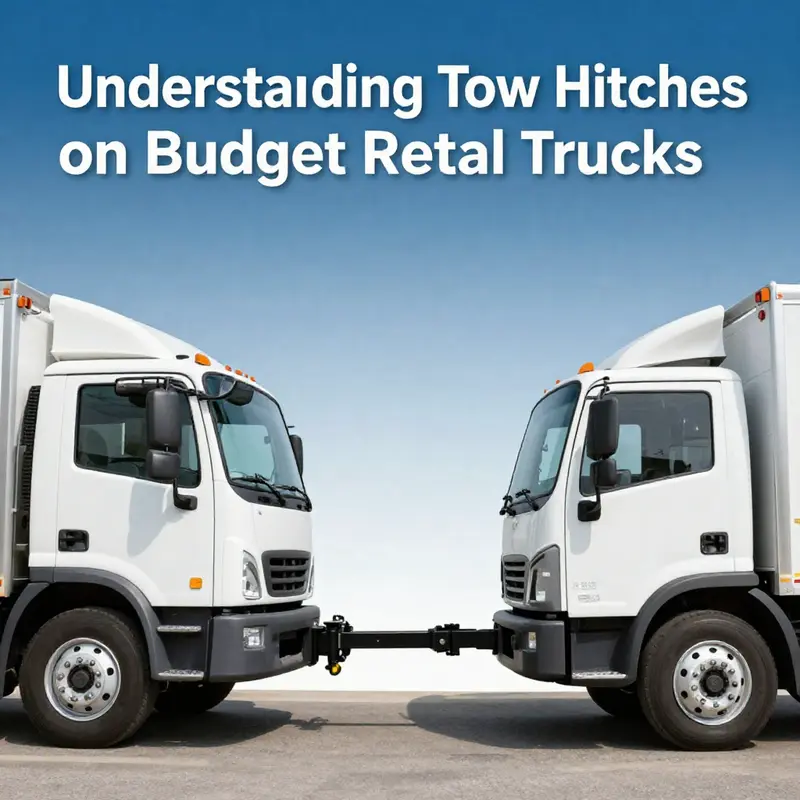
Do budget rental trucks come with tow hitches? The short answer is: it depends. The longer, more practical answer is that the fleet you rent from often offers two broad configurations, and your choice hinges on how you plan to use the truck. The distinction between trucks with and without a tow hitch shapes cost, safety, and the range of tasks you can complete in a single rental period. It also reframes planning, because towing introduces a set of constraints that simply don’t apply to hitch-free models. In this chapter, I’ll walk through the two pathways in a way that connects the everyday needs of moving, hauling, or light-duty towing to the realities of budget fleets. The aim is to help you decide which configuration aligns with your schedule, your budget, and your tolerance for risk, while keeping the discussion grounded in how these trucks perform in the real world, not just on paper. The core takeaway is straightforward: if you anticipate towing anything beyond a minor load, a hitch-equipped option becomes more than a convenience; it becomes a practical necessity that streamlines logistics, improves safety, and reduces surprises on the road.
For many people, the no-hitch option represents a lean, efficient starting point. These trucks are typically chosen when the primary task is to move boxes, appliances, or furniture within a local area. The absence of a hitch means fewer moving parts to manage, simpler operation, and often lower daily rental rates. The driving experience is straightforward, with less equipment to inspect during pickup and return. The payload rating on hitch-free trucks still matters, of course. They usually handle moderate loads well, making them a sensible choice for short moves or quick, routine transporting tasks where towing simply isn’t part of the plan. While the payload range can be broad across budget fleets, the key practical limit is that you cannot connect a trailer. If your project involves using a dolly, a utility trailer for small gear, or any kind of trailer, you’ll need to pivot to a hitch-equipped model or another solution. This approach tends to yield lower fuel usage on average and fewer complications during loading, hitching, and unhitching. It also avoids the extra checks required to ensure trailer compatibility with the vehicle’s electrical system, braking interface, and steering dynamics when a hitch is involved.
On the other side of the spectrum are trucks that come with a built-in tow hitch. The presence of a hitch expands the vehicle’s utility beyond simply transporting cargo. It enables a range of light-to-moderate towing tasks, such as pulling small trailers, utility trailers, or light campers. This added capability matters in a few concrete ways. First, it reduces the friction of coordinating a separate trailer rental or a hitch installation. If the plan is to move items that require a trailer, the hitch-equipped truck keeps everything in one place—one vehicle, one driver, one plan. Second, having a factory-installed or factory-approved hitch can simplify safety checks and compliance discussions with the rental company, because the hitch and the towing system have already been aligned with the vehicle’s electrical and braking setup. Third, the ability to tow expands the scope of what you can accomplish in a single trip. You might haul a trailer with packing supplies, a small boat, or a lightly loaded equipment trailer for a weekend project. However, it is important to keep expectations realistic: budget-hitch systems are designed for lighter-duty towing. They are not a substitute for heavy-duty commercial towing gear or for very large trailers. The typical capacity range reflects this balance. You will often see a broad spectrum that allows lighter loads with reasonable margins for safety, but it does not equate to the high-end capacities found in dedicated tow vehicles. The lesson here is not to overstate the hitch’s power, but to align your trailer’s weight, tongue weight, and overall gross vehicle weight with the charted limits of the rental truck you choose.
As with any mechanical installation, the hitch introduces additional maintenance considerations. It adds a point where hardware can loosen, electrical connections may need attention, and the hitch itself must be kept clear of corrosion and damage. These factors influence the overall cost profile. While the base rental rate may be higher for a hitch-equipped vehicle, the premium can be offset by the savings from not renting a separate hitch or from avoiding the hassles of arranging a separate trailer. In some cases, the hitch is included as standard equipment at no extra charge, but in others, there may be a small upgrade fee or a narrow constraint on the hitch’s use. The exact terms depend on the fleet, the location, and the specific model. The practical implication for renters is clear: always review the vehicle’s towing specifications before booking, including tongue weight and gross trailer weight limits, and confirm how these limits interact with your intended load. It is not enough to see a hitch icon on the vehicle; you must verify the payload rating and the trailer type you plan to connect. If in doubt, ask for the official specification sheet so you don’t rely on memory or assumptions when you hit the road.
The decision framework for choosing between hitch-free and hitch-equipped options is ultimately about fit and risk management. If the task is a short-distance move with no trailer, the hitch-free truck is typically the most economical and straightforward choice. It minimizes complexity and tends to reduce the risk of hitch-related mistakes during a tight pickup window. For those whose plans include towing, the built-in hitch becomes a strategic enabler. It consolidates logistics, improves confidence on the road, and ensures you can connect safely to a trailer that matches the vehicle’s allowed weight. Yet this choice should be rooted in precise calculations: know the trailer’s weight, the tongue weight, and how the trailer’s weight distribution affects braking and steering. The driving dynamics change when a trailer is attached, and the vehicle’s response to acceleration, braking, and cornering must be anticipated. Additionally, it is essential to check regulatory guidelines that govern trailer towing in the jurisdiction where you’ll be driving. In practice, that means ensuring that the trailer is properly registered, that you hold any necessary endorsements if required, and that your insurance or rental agreement covers towing activities. These are not mere formalities; they reflect the responsibility that comes with towing a load on public roads.
To make this more concrete, consider how you would approach a typical rental day with either configuration. With a hitch-free truck, you map a route that minimizes the chances of needing a trailer or extra equipment. You allocate time for loading and securing items, verify that pallets or boxes fit through doors and into the cargo space, and plan rest stops with a focus on reliability and efficiency. You choose a route that avoids any need to back up with a trailer, which can be the trickiest portion of a move. In contrast, with a hitch-equipped truck, you establish a plan for hitching and unhooking, securing the trailer, and distributing the load so that the hitch does not incur undue strain. You account for the additional length and weight, which can influence fuel economy and maneuverability in congested areas. You also confirm that the trailer’s lights, brakes, and brake-away systems function in accord with local requirements. The result is a more complex but more capable travel plan—one that can dramatically simplify the execution of a multi-stop move or a project that requires on-site hauling of equipment.
An important practical note emerges from these considerations: always verify the exact specifications before you book. Fleet configurations vary by location and by model year. The rental agreement should spell out the hitch type, towing limits, and any restrictions on trailer compatibility. If your trailer weighs more than a few thousand pounds, or if you anticipate towing a larger camper or boat, consider whether the budget truck’s towing rating is appropriate for the trip or if a higher-capacity option belongs on your list. This isn’t about fear or risk aversion; it’s about aligning your plan with a realistic assessment of what the vehicle can safely handle and what the law requires.
In sum, the budget rental landscape offers two distinct paths, each with its own value proposition. The no-hitch option prioritizes simplicity and cost efficiency for straightforward transporting. The hitch-equipped option expands capabilities, enabling light towing and reducing the need for separate trailers or hitch installations, while demanding careful attention to weight limits, safety checks, and regulatory compliance. The most satisfying choice is the one that faithfully supports your task, respects safety standards, and fits within your budget. If you want deeper guidance on hitch options and installation details, you can explore a practical reference here: Trailer Hitch Installation. For broader policy and specification guidance, you can consult official fleet resources that cover towing guidelines and equipment standards. External resource: https://www.enterpriserentacar.com/rental-trucks
Tow Hitch Realities: Towing with a Budget Rental Truck
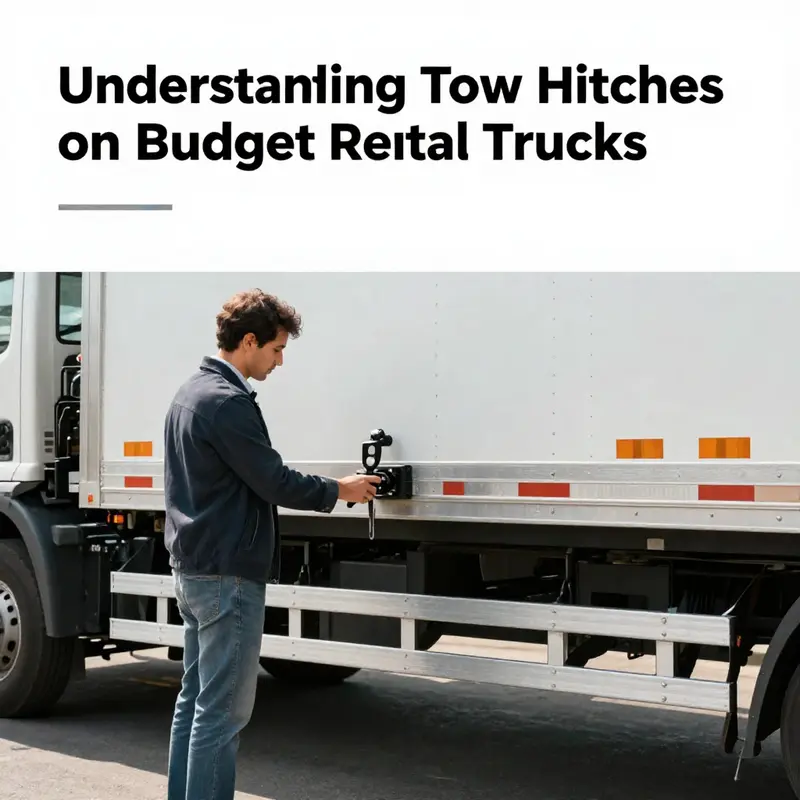
Budget rental trucks often come with a built-in 2-inch hitch that supports light-duty towing. This means you can haul small trailers or utility trailers within the truck’s rated limits, but not treat it as a heavy-tow workhorse. Before towing, check the rental agreement for explicit weight limits, verify the hitch size and class, and ensure the trailer’s coupler matches the receiver. Do a thorough pre-trip inspection: lights, brakes, tires, and safety chains. Maintain extra following distance, drive smoothly, and plan for wider turns and increased stopping distances. If the trailer’s weight or configuration approaches the limits, consider a different vehicle or a lighter load. In short, use the built-in hitch for light towing only and stay within documented limits for safety and compliance.
Final thoughts
Understanding the mechanics of budget rental trucks equipped with tow hitches provides significant benefits for business owners. With essential insights into availability, towing capacities, financial implications, and best practices for hitch usage, you’re better positioned to make informed decisions that enhance operational efficiency. Whether you’re towing equipment, trailers, or other loads, leveraging the benefits of rental trucks can optimize your logistics and streamline your efforts.