
For business owners leveraging budget rental trucks for logistics or relocation, understanding weigh station regulations is essential. Although these trucks are generally classified as personal-use vehicles, specifics about size, weight, and state laws can determine whether a stop at a weigh station is required. This guide will explore how vehicle weight impacts regulations, highlight state-specific differences in laws regarding weigh stations, and examine the technological advances that facilitate smoother transit. Each chapter elucidates critical aspects that every rental truck user must consider when planning their journey.
Weight, Stops, and the Open Road: Navigating Weigh Stations with Rental Moving Trucks
Weigh stations are a familiar checkpoint for travelers with a heavy load. Their purpose is to protect road infrastructure and ensure a level playing field among carriers. For rental moving trucks used for personal moves, the question of whether you must stop at weigh stations hinges on weight and location, not on intent. The weight thresholds and enforcement vary by state, by route, and by axle configuration. In many places a vehicle that approaches or exceeds about 10,000 pounds gross weight enters a regime where commercial vehicle regulations can apply. This is not a universal rule, but a common threshold used to trigger more scrutiny. The key for renters is to know the weight you will carry and how weight is calculated on the road.
GVWR is the starting point. The gross vehicle weight rating is listed on the vehicle placard and tells you the maximum weight the vehicle should safely carry, including fuel and passengers, but excluding the burden of the road. When you load furniture, boxes, and appliances, you add to the truck’s curb weight. The sum is the loaded weight. If you cross into commercial thresholds in your state, weigh stations may require inspection or stopping. Some states require stops for any vehicle above a certain weight, while others rely on a general sense of whether the load is for hire, regardless of the vehicle use. The practical takeaway is that heavy rental moving trucks can be subject to weigh station rules even if you are moving personally. The remedy is to know the likely loaded weight before you depart and to plan a route that avoids unnecessary delays if possible.
Modern weigh stations increasingly use weigh in motion, which screens trucks at low speeds as they pass through the facility. WIM can speed through traffic that is clearly within limits, but it is not a guarantee that a truck will pass without a stop. If there is any concern about overweight cargo or uneven distribution, an officer may direct a stop for a full static weighing. When a stop is required, the process may involve a scale, a truck-to-trailer calculation, and possible fines or delays depending on the state. Some jurisdictions also deploy portable scales to check specific axles rather than the entire vehicle; such targeted checks take time and can affect plans.
Weight distribution matters as much as total weight. An overload on a single axle or uneven front and rear distribution can trigger detentions even if the total weight is within the legal limit. Proper loading means securing items, using tiedowns, and keeping heavier items low and centered to minimize shifting during transit. Small shifts can cause the system to flag a vehicle.
Before departure, verify the GVWR on the rental agreement and the vehicle placard. Estimate payload by adding furniture, boxes, and equipment to the truck’s curb weight, then compare the loaded weight to the GVWR and any route limits. Don’t forget the weight of fuel; even a few extra gallons add up on longer moves. If you are uncertain, contact the rental company for guidance. In some areas you may also check with the state department of transportation for allowances on weight and route restrictions. Federal guidance is available from agencies such as FMCSA and can serve as a general benchmark, but state rules vary widely.
Consider a typical interstate move. You pull onto the highway with a 16 foot truck loaded with household goods. If the loaded weight is near the threshold, a weigh station officer will assess the gross weight, the load distribution, and the vehicle configuration. A green light from WIM could keep you moving, but a overweight signal could require a stop for weighing. In such times, a prepared renter who has verified GVWR, tallied payload, and mapped routes will experience fewer surprises and a shorter delay.
Ultimately weigh stations exist to protect infrastructure and to ensure fairness among all movers. The same technology that guards roads also helps minimize delays for compliant vehicles, but it does not guarantee a pass. The takeaway is to plan ahead, know your numbers, and be prepared to adjust your route or schedule if a stop is required.
Weighing the Miles: How Vehicle Size and Weight Shape Weigh-Station Obligations for Budget Rental Trucks
When a plan for moving unfolds, the question of weigh stations often drifts to the edge of practicality rather than the center of concern. Yet for anyone renting a Budget truck or any similar moving workhorse, the possibility of encountering a weigh station on a long interstate route is not purely hypothetical. Weigh stations exist to enforce weight limits and safety standards on commercial corridors, where larger trucks haul heavy loads across state lines. A rented truck used for a personal move can still fall squarely under those rules if its size and weight align with or exceed regulatory thresholds. The result is a paradox of convenience and compliance: a vehicle hired for a short, private purpose may still become a subject of federal and state inspection, simply because it weighs enough to trigger the boat anchor of regulation.
The core factor is weight, or more precisely, the gross vehicle weight rating, GVWR. In most jurisdictions, commercial vehicle regulations apply to anything with a GVWR over 10,000 pounds. That threshold is widely cited as the line that separates routine passenger-mvehicle operations from the world of regulated commercial traffic. It’s not a judgment about how the truck is used, at least not at the moment a weigh station counts axles and wheels. If a Budget rental truck skews past that limit, it may be treated as a commercial vehicle for the purposes of weigh-station protocols, regardless of whether the rider is moving household goods or simply transporting furniture from a dormitory to a new apartment.
To be sure, rental fleets vary. A handful of moving trucks in the common mid-size range push up toward or past the 10,000-pound mark in GVWR, especially as you move from compact 12-foot variants to longer 16-foot or larger configurations that households often need for efficient moves. That is why the line between “personal use” and “commercial vehicle” can blur when a rental unit carries a heavy payload. The distinction matters because it shapes both the likelihood of encountering a weigh station and the obligations that follow. Even when a vehicle is rented for private purposes, the weight-based regulatory framework remains a practical reality so long as the vehicle’s GVWR meets or exceeds the threshold.
The regulatory picture is further nuanced by the fact that rules differ by state. Some jurisdictions enforce weigh-station requirements based on weight alone, effectively treating any vehicle above 10,000 pounds as subject to commercial inspection when a weigh station is open. Others layer in considerations about the vehicle’s use, its route, and whether it is engaged in interstate commerce. A driver navigating through multiple states may suddenly cross from a regime that treats the truck as a private mover to one that adheres to stricter commercial standards along certain corridors. That variability underscores a critical point: before any cross-state move, it is wise to verify weight-based obligations not only with the rental company but with the transportation department of each state along the route.
Technology inside modern weigh stations adds another dimension to the conversation. Weigh-In-Motion (WIM) systems are increasingly common, designed to identify overweight or noncompliant vehicles as they pass through at modest speeds. If a Budget rental truck’s weight sits below the regulatory threshold, a WIM system can screen the vehicle without forcing a full stop, reducing delays for non-commercial movers. But the effectiveness of WIM depends on the actual weight carried at the moment, the distribution of that weight, and how the station is configured. A heavy load that pushes the vehicle over the limit will still trigger a conventional stop and inspection, even if the truck is otherwise a personal-use rental. Static scales at traditional weigh stations, by contrast, require the truck to stop so authorities can measure weight on the scales and compare it to the GVWR and axle load limits.
This photo of the regulatory landscape—weight thresholds, state-specific twists, and the cadence of weigh stations—can be difficult to navigate in real time. It is precisely the kind of gray area that can catch an unprepared driver by surprise. The safest path is a combination of pre-trip planning and on-route flexibility. Begin with the rental agreement, which often contains information about the truck’s GVWR and recommended payload limits. Then consult the regulations in the states you will traverse. This dual-check process lowers the risk of an unplanned stop and the risk of penalties for non-compliance. In practice, this means that if you know your truck’s GVWR sits above 10,000 pounds, you should assume you may be required to stop at weigh stations when you encounter them on open routes. If you are hovering near that threshold, prepare for the possibility of a straightforward stop to be weighed and documented.
We should also acknowledge the practical realities of moving with a Budget rental truck. Even if the math keeps you under a strict 10,000-pound threshold, the actual payload—boxes, furniture, and other goods—varies. A small miscalculation at packing time can push weight over the limit while you are en route. In such cases, the importance of accurate loading, even distribution, and careful weight management becomes evident. A well-balanced load can help keep axle weights within bound and avoid a weigh-station stop that could become time-consuming, especially on busy travel days or during peak moving seasons. The stress of a long drive can be compounded by an unanticipated inspection, so practical weight management is not merely a regulatory concern but a moving-day efficiency tactic.
Given these dynamics, drivers should not rely on assumptions or shortcuts. It is tempting to assume that a personal-use move with a rental truck will never cross the line into commercial regulation. But the weight-based framework is not about intent; it is about the physical facts of the vehicle and its load. If the GVWR of the truck in your driveway sits above the threshold, the risk of weigh-station interaction increases. That is especially true in states with longstanding rules that align commercial and private-use vehicle weight thresholds. The key takeaway is clear: weight, more than ownership status, governs weigh-station obligations, and a Budget rental truck is not automatically exempt simply because the trip is private or domestic. The prudent approach is to verify, prepare, and stay flexible on route.
For those who want a concise sense of typical truck specifications and how they relate to weigh-station obligations, consider the practical reality of common moving trucks. A standard 16-foot or larger rental truck often carries a GVWR that sits at or above the 10,000-pound line, especially when fully loaded with boxes, appliances, and furniture. Size matters because it correlates with the potential payload and, in turn, with the likelihood of triggering commercial-vehicle rules on the road. This is not a suggestion to avoid regulation, but a reminder to align expectations with regulatory reality. If your move involves a truck near or above the threshold, plan for weigh-station stops on open routes and budget the extra time those inspections may require. The actual experience can vary by state and by the day’s traffic, but the underlying rule remains consistent: heavier trucks have more checkpoints.
To ground this discussion in practical terms, many drivers benefit from a quick reference to vehicle size and weight as it relates to typical moving needs. A quick understanding of the 16-foot truck, for instance, provides a reliable gauge for what you might realistically expect on a route that includes interstates and commercial corridors. If you want a concise overview of that vehicle size, you can consult a general guide here: 16-foot truck overview. This resource offers a snapshot of the common dimensions, load capacity, and payload expectations that often determine how the truck will perform on the highway and how it interacts with weigh stations in practice.
Even with that understanding, the moral of the story remains consistent across states and routes: weight governs weigh-station obligations more than ownership structure. If your truck’s GVWR comfortably sits below the threshold, you may experience little to no interruption from weigh stations, especially if the vehicle travels with a lighter payload. If your GVWR edge-weights above the threshold or if the route is known to have stricter enforcement, a weigh-station stop can be an efficient, routine procedure rather than a punitive ordeal. In either case, the responsible choice is to carry current vehicle documentation, ensure the rental agreement and insurance coverage are aligned with your route, and approach each weigh station as a procedural checkpoint rather than a tense encounter.
Planning a heavy mover’s journey also requires an awareness of the broader regulatory ecosystem and a readiness to adapt. If a weigh station is encountered, the driver should be prepared to present standard documentation: driver’s license, vehicle registration, proof of insurance, and perhaps a copy of the rental agreement that confirms the vehicle’s GVWR. These documents help speed the inspection and minimize delays. If any discrepancies arise—unexpected weight, missing documents, or questions about the payload—the driver should follow the station’s directions and remain patient. The goal is not to evade the process but to complete it efficiently and in compliance with the law. The more prepared a driver is, the more streamlining is possible, even in the event of a station stop.
In sum, the question of whether Budget rental trucks have to stop at weigh stations is not answered by a simple yes or no. It hinges on the truck’s GVWR, the payload, and the specific regulatory regime of the route. The weight threshold of 10,000 pounds is a practical line in the sand, but state-specific variations and technological screening add layers to the experience. For many moves, a budget rental truck will pass through weigh stations without incident; for others, a stop is a procedural necessity. The best approach is to anticipate, verify, and adapt: confirm the truck’s GVWR before you hit the road, understand the weight implications of your planned load, and check the regulations of the states you will traverse. Keep the route flexible enough to accommodate potential stops, and approach any weigh-station encounter with calm compliance. Doing so protects you, the vehicle, and the smooth progression of your move, turning a potential delay into a routine, well-managed step on the road to a new home.
As you map out the move, remember that the broader picture is more than just a single stop or a single truck. It is a system that balances highway safety, weight regulation, and practical mobility for people who are shifting homes. This balance is what helps ensure that even a Budget rental truck, loaded with memories and belongings, travels safely and legally from one address to another. If you need a quick, digestible reference on typical truck sizes for moving duties, consider visiting the internal resource linked above for a concise overview. And for those who want to drill deeper into the regulatory framework, an external resource provides detailed guidance on weigh stations and the rules that govern them: Understanding weigh stations and their function in commercial vehicle regulation is explained here. https://www.hdsti.com/understanding-weigh-stations
Weights on the Road: How State Variability Shapes Weigh-Station Requirements for Budget Rental Trucks
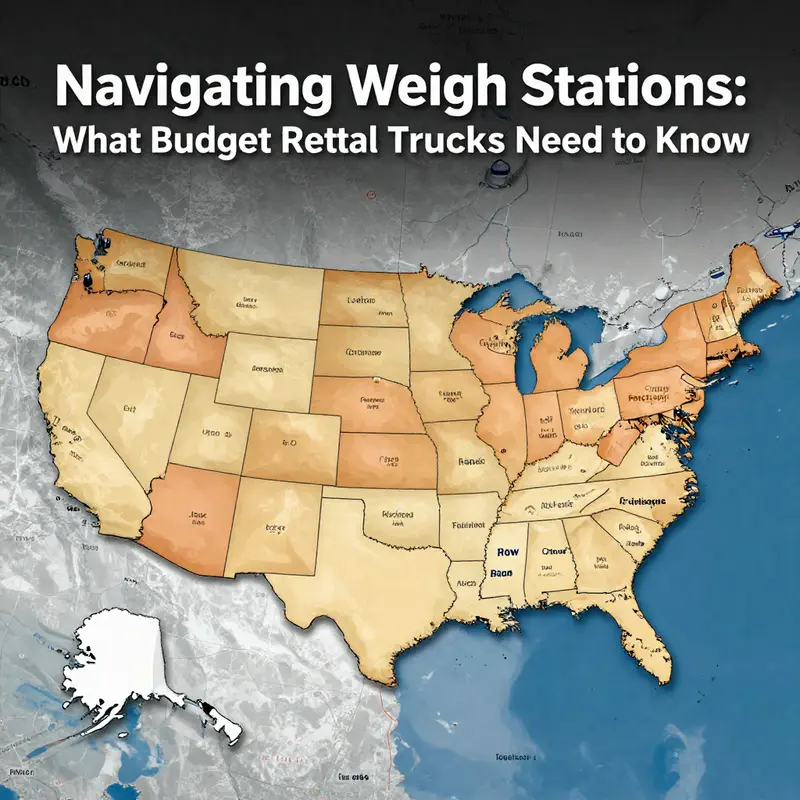
Across the United States, the pace of a moving day can feel like a sprint through a landscape of rules rather than a straight highway. Weigh stations stand as tangible reminders that every mile traveled with a heavy rental truck intersects with more than just a destination and a clock. They are gatekeepers of safety and highway infrastructure, built to enforce weight limits and commercial-motor-vehicle standards. The twist, and what makes this topic so counterintuitive for many travelers, is that the answer to whether a budget rental truck must stop at a weigh station is not a single yes or no. It is a careful, state-by-state interpretation of definitions, weights, and the purpose of the trip. In practice, whether a given rental truck must halt while crossing state lines depends on how the vehicle is defined in law, what weight it carries, and how the state interprets “commercial” versus “personal use.” The result is a patchwork that can surprise even seasoned movers who assume a rental truck is always treated like a private automobile on the highway.
At the heart of the matter is weight. Many jurisdictions anchor weigh-station rules to a threshold—often around a gross vehicle weight rating of 10,000 pounds. Vehicles that exceed this threshold are usually treated like commercial motor vehicles and must comply with the corresponding regulations. The wording matters because it is not simply about the vehicle’s ownership. A rental truck can meet or exceed that limit regardless of who is behind the wheel, and if the trip itself is framed as commercial freight or as a business operation, the state may reclassify the vehicle for purposes of weigh-station compliance. In other words, a household-move scenario could still trigger commercial-vehicle obligations if the vehicle’s weight crosses the threshold and the operation is treated as commercial in the eyes of the state. Conversely, if the weight sits below that line, or if the state views the use as truly personal transport, the vehicle might pass through without a full stop because weigh-in-motion (WIM) systems and other technologies can screen vehicles at low speed for weight compliance.
What makes this topic murky is that no single rule governs all crossings. Each state decides how it defines a commercial vehicle, and a budget or any rental truck becomes a question of use as well as heft. In some states, the rental status itself does not automatically provoke weigh-station obligations; instead, the state looks at whether the truck is carrying cargo beyond a certain weight or whether the operation enters the state as part of interstate commerce. In others, the act of moving cargo, even with a temporary rental, can place the vehicle under uniform safety and weight regulations designed to protect highway infrastructure. The practical upshot is that a move that spans multiple states might involve weigh stations in some states and a clean pass through others, depending on how heavy the truck is and where it’s traveling.
The weight of the truck is not the only factor. The vehicle’s gross vehicle weight rating, or GVWR, is a key specification that many states use to determine whether a truck should be treated as a commercial vehicle. A truck with a GVWR over a certain threshold is more likely to be subject to weigh-station stops, even if the truck is leased for a temporary move and used for personal purposes. States can differ in how they apply the GVWR threshold to rental or temporary vehicles, and some have nuanced exemptions for short-term rentals or for vehicles primarily used to transport people rather than cargo. In practice, this means that the same rental truck could be treated differently depending on whether the trip is judged as transporting household goods versus transporting commercial freight, or simply whether the weight crosses a legal limit. The result is a reality where moving families should not assume a universal exemption; they should prepare for weigh-station encounters in states with strict commercial-vehicle enforcement when the weight threshold is approached.
The landscape is further complicated by enforcement variability. States across the Union differ in how aggressively they deploy weigh stations, whether they rely on full stops or WIM, and how they train inspectors to handle rental vehicles. A growing number of jurisdictions have pursued WIM-based screening as a way to maintain safety without imposing excessive delay on non-pertinent traffic. The Washington State Joint Transportation Committee, for instance, has evaluated WIM’s efficiency while maintaining safety outcomes, signaling a direction many states are pursuing. Yet even with WIM, a truck that exceeds the weight limit will be diverted to a traditional scale for a manual or more thorough inspection. That possibility persists across borders and remains a practical reality for any traveler who rents a truck heavy enough to approach the weight threshold or who crosses multiple states in quick succession.
For drivers planning a move that may involve weigh stations, a few practical considerations emerge from this mosaic of rules. First, know the weight of the truck you’re renting, and understand the vehicle’s GVWR as listed in your rental agreement or on the vehicle placard. If the vehicle’s weight sits at or above the 10,000-pound threshold, be prepared for the possibility of a weigh-station stop in states with strict commercial-vehicle enforcement and in states that apply a uniform approach to all carriers. Second, review the rental agreement with particular attention to how the vehicle is categorized for regulatory purposes and whether any exemptions apply to short-term or household-use scenarios. This is not merely a formality; it can influence what documentation you may need to present at a weigh station and how your route might be planned.
Third, if you are crossing state lines with a heavy rental truck, it is wise to consult the transportation department websites of the states you will traverse. These agencies publish the criteria that trigger weigh-station stops, including any nuances tied to GVWR, cargo type, and interstate commerce status. In parallel, contact the rental company to confirm how they classify the vehicle for regulatory compliance and whether there are any state-specific considerations for weigh-station encounters. A quick call or online check can prevent delays and help you plan a smoother route. In some cases, the company’s guidance may reflect standard policy rather than an exhaustive interpretation of every state’s law, so combining vendor information with official state resources is the most robust approach.
The reality for many moving-day travelers is that the question doesn’t require a single yes or no. It requires preparation, a clear understanding of weight and use, and a willingness to adapt as you move through different jurisdictions. The variability across states means that what holds true at one border may not hold at the next. A traveler who is aware of this divergence—from Florida’s CVISN framework to Ohio’s emphasis on uniform safety and weight regulations—will be better positioned to make informed decisions when approaching weigh stations. The practical upshot is not to abandon the idea of weigh stations as a potential checkpoint but to treat the trip as a carefully planned journey that accommodates possible stops, possible screenings, and the occasional brief delay. This approach keeps the moving process safer, more predictable, and less stressful when the road ahead holds weigh-screens, scales, and the inherent uncertainties of multi-state travel.
To anchor this understanding with a concrete, user-friendly resource, consider exploring the detailed overview of truck weight considerations and size-related regulatory distinctions that accompany moving-day planning. For a concise reference on typical moving-truck sizes and related considerations, you can explore a focused guide on a “16-foot truck” within moving truck content, which provides context on vehicle dimensions and weight considerations in a practical, traveler-friendly format. See the internal resource here: 16-foot-truck.
As a final note, the key takeaway is that the obligation to stop at a weigh station for a budget or other rental truck is not uniform across the country. It hinges on state-specific definitions of commercial vehicles, the truck’s weight, and how the journey is framed from a regulatory perspective. When planning a multi-state move, the prudent path is to verify weight and usage definitions with both the rental company and the state transportation department for the states you will cross. In practice, this means checking weight ratings, understanding whether a state applies weigh-in-motion screening or requires a full stop, and preparing for either outcome. The goal is not to stumble into a weigh station unprepared but to navigate these regulations with clarity and awareness, ensuring a smoother crossing from start to finish.
External resource: For authoritative details on state commercial vehicle regulations and weigh-station expectations, see the Florida Department of Highway Safety and Motor Vehicles page on Commercial Vehicle Regulations at https://www.flhsmv.gov/vehicles/commercial-vehicles/.
On the Scale: Do Heavy-Duty Moving Rentals Always Stop at Weigh Stations?
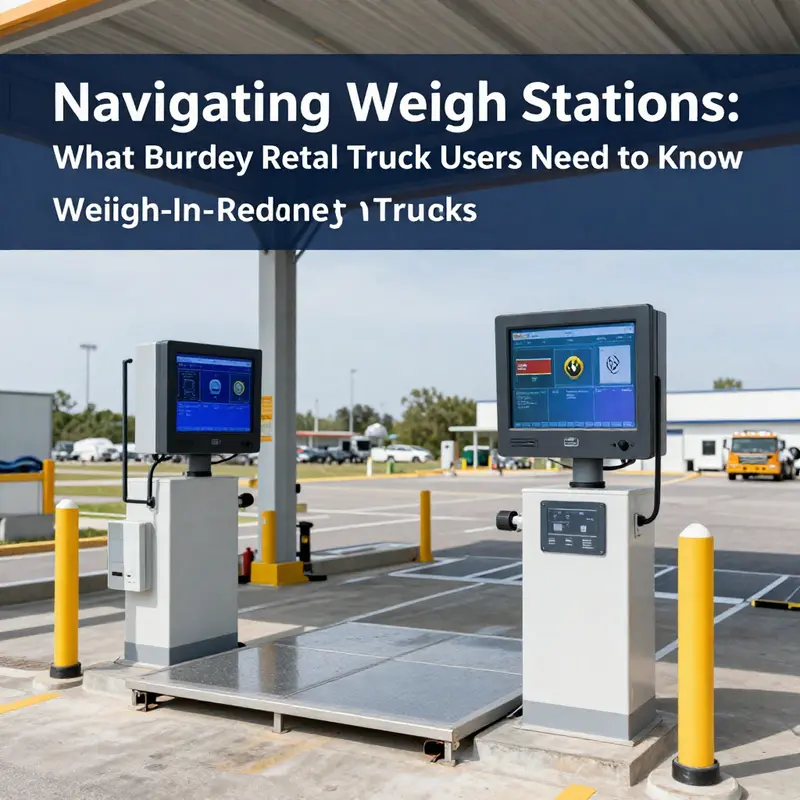
When moving with a heavy-duty rental truck, weight and regulation intersect on the open road. Weigh stations exist to monitor vehicle weight and safety, not to trap drivers. Whether you must stop depends on the truck’s GVWR, how the vehicle is used, and the laws of the states you travel through. Many rental trucks have GVWRs that place them near commercial thresholds, but enforcement varies. Some states require stops for clearly commercial operations, while others use weigh-in-motion (WIM) to screen non-commercial traffic and minimize delays. If weight is within legal limits and the vehicle’s configuration aligns with exemptions, you may pass through with minimal disruption; if overweight or misclassified, a stop or inspection can occur.
To prepare, review your rental agreement for GVWR and typical empty weight; ask the rental company how the vehicle will be treated on your route; carry documentation of the vehicle’s specs and trip purpose. When possible, opt for a truck with a GVWR that leaves a margin for non-commercial use, and plan routes through states that use WIM screening to reduce stops. Regulations can vary by state, so verify ahead of time.
Rely on clear information and avoid assuming exemption. WIM technology generally speeds throughput for compliant vehicles, but it does not replace good pre-trip planning. A smoother journey comes from choosing the right vehicle, understanding weight limits, and coordinating with the rental provider about expectations on your route. On the move, be prepared to present registration, insurance, and any notes about the vehicle’s GVWR and permitted use if requested at a weigh station.
For readers seeking more context, the broader discussion covers how weigh stations operate, what counts as interstate commerce, and how modern screening technologies influence the travel of rental fleets. External resources on weigh-station technology can provide deeper background on traffic flow, safety, and the balance between compliance and convenience.
Final thoughts
Understanding the regulatory landscape around weigh stations helps business owners make informed decisions when using budget rental trucks. With particular emphasis on the vehicle’s weight and the variability of state laws, businesses can navigate their logistics without unexpected delays. Staying informed on technological advancements also illuminates how modern practices can simplify compliance. By equipping oneself with this knowledge, you can ensure smooth transportation experiences that drive your business forward.