
Understanding whether you can use a rental truck for towing is crucial for business owners looking to transport goods or equipment. It’s essential not only for proper logistics management but also for compliance with regulations. This article covers four critical aspects of rental truck towing: the necessary towing capacity, the legal implications you must consider, the equipment required for safe towing, and the policies outlined in rental agreements. By diving into each chapter, business owners will glean insights into making informed decisions regarding their towing needs.
Towing with a Rented Vehicle: Decoding Capacity, Compliance, and Safe Practice
When you consider moving or transporting heavy gear, the question often shifts from “Can I do this?” to “Am I allowed and able to do this safely with a rental truck?” The reality is more nuanced than a simple yes or no. A rental truck can tow, but only when the vehicle chosen has enough pulling power, the right equipment, and the legal permissions to do the work. This chapter unpacks what that means in practical terms, so you can plan with clarity rather than guesswork.
At the heart of every towing decision lies towing capacity. This figure represents the maximum weight a vehicle can safely pull, and it is not a guideline to be treated lightly. It is a ceiling, not a target. The weight involved in towing includes the trailer itself plus all cargo and any loads on the trailer. Exceeding this limit compromises braking, steering, suspension, and overall control, and it can lead to catastrophic outcomes such as brake fade, trailer sway, or loss of control in curves and at highway speeds. In plain terms, capacity is about keeping momentum, balance, and stopping power in a safe, predictable range.
To navigate capacity correctly, you need to translate the numbers you find in the rental agreement or vehicle specifications into real-world limits. Towing capacity can vary widely between rental trucks. Some smaller, lighter-duty trucks may be rated for around 860 kg (about 1,900 lb) of trailer weight. On the other end of the spectrum, larger, more capable trucks can handle several thousand pounds. In some cases, the upper end can approach roughly 9,000 pounds (around 4,082 kg) when equipped with the right drivetrain, transmission, and towing package. Those extremes illustrate why you cannot assume your rental truck is interchangeable with any other vehicle when towing heavy loads. Always verify the exact figure for the specific truck you plan to drive and tow with.
Beyond the raw pulling power, the way a truck is built and equipped can meaningfully shift its effective capacity. The engine type matters: a more robust engine typically supports higher towing loads, especially when combined with a transmission that can handle heavy duty use. The transmission itself is a key limiter; some automatics tolerate higher tow weights, while manuals may have different limitations based on gear ratios and torque characteristics. The axle ratio matters too, because a higher ratio can improve start-up performance and on-grade torque, which affects the practical capacity when pulling a fully laden trailer up a hill. Finally, a dedicated towing package—often including a heavy-duty radiator, upgraded cooling, reinforced suspension, a higher-capacity alternator, and sometimes integrated trailer wiring and braking support—can meaningfully increase the safe towing limit. In other words, capacity is not merely a number on a placard; it is the outcome of a combination of components working together.
But capacity is not the only concern. When you plan to tow, you must also confirm that your license class covers the task. License requirements vary by jurisdiction and can hinge on the combined weight of the vehicle and trailer as well as the trailer’s type. In many regions, a standard car license suffices for lighter tows—often up to a certain total weight threshold, with typical examples ranging into several thousand kilograms including the trailer and cargo. For heavier tows, a higher-class license or a special endorsement is commonly required. Some places even specify separate classifications for driving light trailers versus heavy combinations. The practical takeaway is simple: before you head to the rental desk, check your local regulations and ensure your license aligns with the weight category you intend to tow. It is not enough to be comfortable behind the wheel; you must also be legally authorized to tow that load.
Rental agreements add another layer of consideration. Rental companies do not automatically assume every driver will tow; many require that the truck be specifically designed for towing. They may insist on an appropriate license, a towing endorsement, and sometimes a separate insurance endorsement for towing. The contract can also place limits on the weight you are allowed to tow and the types of trailers you may pull. Reading the terms carefully before you sign the rental agreement is a non-negotiable step. If you are uncertain, ask for a clear explanation of any clause that touches on towing, insurance, or liability. The risk of assuming a blanket “yes, you can tow” without confirming the policy is financial and ergonomic as well as legal: you could be personally responsible for damages, which can be substantial under a worst-case scenario.
All this underscores a fundamental principle: a rental truck can be suitable for towing only if the vehicle’s power, its equipment, and the operator’s license align with the task at hand. The process is about diligence and verification as much as about the act of towing itself. A practical starting point is to determine your trailer’s weight and the total weight you would carry on the trailer. If your trailer weighs 2,000 pounds and you expect to load it with cargo totaling 1,500 pounds, your trailer’s gross weight would be around 3,500 pounds. If the rental truck’s stated towing capacity safely exceeds that number—and if the tongue weight, which is the downward force the trailer exerts on the hitch, falls within the truck’s recommended range—you are on a much more solid footing.
A few concrete cautions help translate theory into safer practice. First, remember that the tongue weight is not a minor figure; it directly affects handling, steering response, and braking stability. If the tongue weight is too light, trailer sway can become a persistent hazard; if it is too heavy, it can overload the hitch and suspension, reduce steering control, and increase the risk of tire or brake failure. The rule of thumb is to cite manufacturer recommendations for tongue weight, typically a small percentage of the trailer’s total weight, and to ensure the coupling hardware—hitch ball or receiver—matches the trailer’s coupler. The electrical connection must be secure; if the trailer’s lights or brakes fail, you risk both theft of liability and a dangerous situation on the road. For heavier trailers—the ones that approach or exceed a couple thousand pounds—the trailer’s own braking system becomes critical. In many jurisdictions, a trailer with substantial weight requires its own braking system and a functional brake signal to be legally operable on highways.
The practical steps to take before driving off with a trailer are straightforward but essential. Start by confirming the truck you rent has the necessary towing capacity for your intended load. Then check the exact hitch type and the compatibility of the electrical wiring harness. Verify safety chains are in place and properly crossed under the tongue to catch the trailer in the unlikely event of a hitch failure. Make a habit of weighing your setup before you leave the lot, using either a certified scale or the trailer’s own data plate combined with an accurate cargo estimate. If your trailer’s weight and cargo push the combined weight beyond the truck’s limit, you must either reduce cargo, choose a more capable rental option, or reconsider towing altogether.
In practice, this means a careful alignment of several factors: the truck’s base rating, the trailer’s weight, the cargo inside, the tongue weight, and the braking and lighting systems. It also means clear communication with the rental agent. A reliable approach is to discuss your towing plan with the agent and request a vehicle that is clearly rated for the weight you intend to tow. If your trip involves a long highway segment or steep grades, consider whether the truck’s cooling capacity, transmission cooling, and overall drive dynamics could be taxed by the task. The goal is to arrive at a plan where safety margins are understood and respected, not a plan where the margin is a guess.
For readers who want a quick anchor in the broader landscape of moving equipment, it can help to reference a generic moving-truck resource to visualize the range of vehicles commonly used for these tasks. A practical anchor point is this widely accessible guide page about a standard moving truck, which provides a neutral overview of size, weight, and typical capabilities without tying to a specific brand. See: 16 moving truck reference.
As you map these considerations to a real-world move, keep in mind the underlying question: can you use a rental truck for towing? The honest answer is yes, but only when you respect capacity, wear the proper gear, and meet licensing and contractual requirements. There is no substitute for taking the time to verify each element—the truck’s rated capacity, the trailer’s weight, tongue weight, the presence of a braking system on the trailer if required, and the legal permissions you hold. If any one of these pillars is uncertain, the safer option is not to proceed with towing using that rental truck. Instead, reconfigure your plan—either by choosing a lighter trailer, moving cargo in stages, or selecting a larger, purpose-built towing vehicle from the rental fleet.
Ultimately, towing with a rental truck is about responsible decision-making. It is about leveraging the right tools, following the rules, and always prioritizing control and stability on the road. When done thoughtfully, it can be a practical solution that keeps your move or transport efficient without compromising safety. For broader context on the term itself, you can consult a reputable dictionary resource that defines towing capacity and related terms, which helps clarify the language behind these decisions: https://dictionary.cambridge.org/dictionary/english/towing-capacity
null
null
Tow-Ready on a Rental: Navigating Capacity, Gear, and Licensing for Safe Towing with a Rental Truck
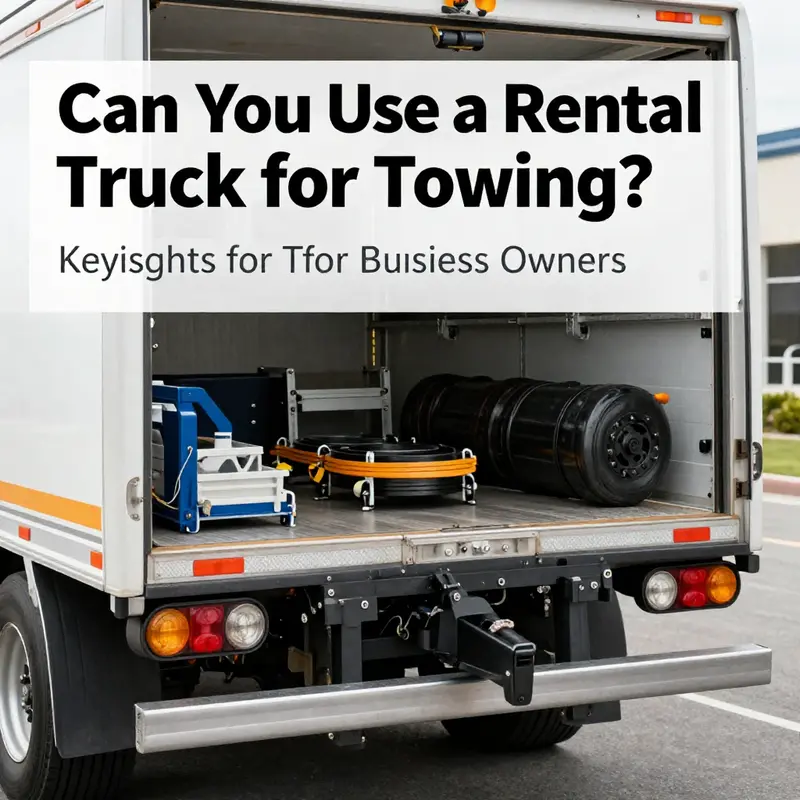
Towing with a rental truck is a practical solution for moving a heavy trailer, car trailer, or small camper after a move or road trip. Yet it is not a matter of simply hooking up and pulling away. The safer, smarter path demands alignment of three pillars: vehicle capacity, the right towing equipment, and the license and legal authority to tow. When these elements fit, a rental can be a capable platform for safe towing; when they don’t, the risk of brake fade, sway, or loss of control rises quickly. The conversation about towing with a rental truck centers on how to ensure each pillar stands firm before you ever turn the key.
Capacity is the clean starting line. Every towable load adds weight to the truck, and the combination of those weights determines whether the task is within the vehicle’s engineering envelope. Technically, this means confirming the truck’s Gross Combined Weight Rating (GCWR) is greater than the total weight of the truck plus the trailer and its cargo. The GCWR is a limit that protects the truck’s engine, transmission, brakes, and frame from overwork. Exceeding this limit is not merely a rough guideline; it raises the odds of brake overheating, steering instability, and, in worst cases, a complete loss of control. Within that framework, payload and tongue weight must also be considered. The tongue weight—the downward pull the trailer’s coupler exerts on the hitch—should fall within the truck’s preferred range. If the tongue weight is too light, the trailer can wander; if it’s too heavy, it shifts weight away from the truck’s front tires, reducing steering feel and braking effectiveness.
Beyond overall weight, the equipment that makes towing possible is equally critical. A certified hitch is not optional; it must be rated for the trailer’s tongue weight and gross trailer weight. The hitch should be securely fastened and inspected before departure, with hardware that hasn’t loosened during a prior move or long drive. Modern trailers rely on electrical connections to coordinate lights and brakes with the tow vehicle. Ensure a compatible electrical connection—typically a 4‑way, 5‑way, or 7‑way harness—that matches the trailer’s wiring. This is not a cosmetic precaution; it is a legal and safety requirement. For heavier trailers, you’ll want a functional braking system on the trailer itself, and the rental truck should have a brake controller that can synchronize the trailer brakes with the truck’s braking system. When the trailer’s weight crosses certain thresholds (often around 750 kg or 1650 lbs in common regulations), a working trailer brake system becomes essential to maintain control and stopping distance.
Equally important is the condition of the tires and the overall load distribution. Tires on both the rental truck and the trailer should have adequate tread depth and be inflated to the pressures recommended for those combined loads. Underinflation invites heat buildup and blowouts, while overloading tires wears them unevenly and invites a loss of grip in unpredictable weather. Load distribution matters as well; the cargo should sit low and centered with a stable center of gravity near the trailer’s axle. An overhung or variegated weight distribution can induce sway, especially on curves or at highway speeds. The goal is to minimize dynamic forces that push the trailer in front of or behind the tow vehicle and to keep the combined profile steady in wind or rough pavement.
The driver’s credentials and responsibilities are the third axis of safety. Licensing isn’t just about legality; it’s about your ability to manage a vehicle and trailer that handles differently from a standard car or light truck. In many regions, a regular car license can permit towing a small trailer, but heavier trailers demand higher-class licenses. If the total weight of the vehicle plus trailer approaches or exceeds several thousand kilograms, a specialized license or endorsement is typically required. The landscape varies by jurisdiction, so verify local regulations and ensure your license covers towing with a rental truck. The rental company may also have explicit terms about who may tow and what endorsements or certificates are necessary. It is common for rental agreements to require a towing endorsement or a proof that you have the proper license, in addition to a specific “towing” insurance endorsement added to your policy. Reading the contract carefully and asking questions before driving away can prevent disputes or coverage gaps during a move.
Even when all the technical boxes are checked, the practicalities of actually towing should be treated with respect. The hook-up process deserves attention beyond the moment you connect the trailer. Before you leave, walk around both vehicle and trailer to check the hitch, safety chains, electrical plugs, and latching of any couplers. Confirm that the lighting on the trailer mirrors the truck’s signals, brake lights, and turn indicators. If the trailer has brakes, test them in a safe area to see that the brake controller in the truck engages the trailer brakes smoothly and predictably. Tire pressures should be rechecked after loading, since weight shifts can alter the required inflation. During the drive, plan routes with gentler descents and fewer sharp curves when possible, increase following distance, and anticipate longer stopping distances. The combined weight of the rig makes every change in speed or lane position more consequential than it would be with a lighter vehicle.
The decision to tow with a rental truck should not be taken lightly, and it should never be based on a best‑effort guess about capacity or legally ambiguous grounds. The equipment should be verified, the weight properly distributed, and the appropriate licensing in place. The rental agreement itself often contains critical caveats about towing. Some fleets only permit towing with trucks that are specifically designed for it—typically larger pickups with high towing ratings—and only when the renter holds the proper license. Others may require an insurance endorsement or a one‑time safety briefing before towing. When you check these terms up front, you avoid surprises at the time of pickup or, worse, far from the rental facility.
As you prepare to tow, a practical reminder: your objectives are steady control, predictable braking, and a trailer that behaves like an extension of the tow vehicle rather than a separate, independent unit. This starts with selecting the right trailer for the truck’s capacity, but it also depends on your diligence in inspecting components and confirming compliance with licensing and rental terms. A careful approach reduces the chance of tire blowouts, brake fade, or dangerous sway developing at highway speed. It also provides a clearer path to handling a real‑world challenge—like a sudden lane closure, crosswinds, or a long downgrade—without compromising safety on the road.
For drivers who want a more technical orientation on hitch systems and their integration with rental fleets, there is focused guidance available. See the detailed guidance on hitch installation and compatibility here: Penske trailer hitch installation. This resource emphasizes selecting the right hitch style for the trailer’s weight class, ensuring proper mounting clearance, and confirming secure attachment before departure. While the specifics may differ across fleets, the core principle remains the same: a properly matched hitch and a secure connection are non‑negotiable foundations for safe towing with a rental truck.
With all these elements aligned, towing with a rental truck becomes a question of disciplined preparation and vigilant operation. The goal is not to maximize speed or payload but to maintain a stable, controllable combination that protects you, your passengers, and other road users. It is a mindset that treats towing as a coordinated system—one where weight, mechanics, and human judgment come together in precise balance. When that balance exists, the rental truck can serve as a capable, efficient platform for transporting a trailer or caravan to its destination without compromising safety. If any one piece fails the test—capacity, equipment, or licensing—the prudent choice is to reconfigure the plan, select a more appropriate vehicle, or arrange an alternative transport method.
For further reading on safe towing practices, consult the authoritative guidance from the national safety authority: https://www.nhtsa.gov/vehicle-towing-safety.
Tow-Ready or Not: Navigating Rental Truck Policies Before You Hitch Up
When you rent a truck with the intention of towing, the act is never as simple as hitching a trailer and rolling away. The moment you sign a rental agreement, you step into a framework that governs what you can do with that vehicle, how far you can go, and under what conditions you carry liability for any mishap. The question in bold relief—can you use a rental truck for towing?—deserves a careful answer: yes, but only if you align the truck’s power, the equipment attached to it, and the legal permissions you hold with the precise terms of the rental contract and the local rules that apply. This is less a matter of possibility and more a matter of fit, consent, and documented responsibility. To begin, you must view towing as a dual obligation: the mechanical capability of the vehicle to pull a weight safely, and the legal authority to do so without invalidating warranties, insurance, or the rental agreement itself. The practical path through this forest starts with capacity, moves through licensing, and culminates in a clear-eyed assessment of the rental terms you’re agreeing to before you ever turn the key toward a trailer hitch.
Capacity and equipment sit at the top of the checklist. The truck you rent must be able to handle the trailer’s total weight, which includes the trailer’s own weight plus the cargo you intend to carry. This total weight is what the vehicle’s towing capacity must exceed. It is not enough for the payload of the truck to be high; the specific towing rating, usually listed in the manual or data plate, must be clearly greater than the trailer’s gross weight. In addition, the rig needs the right hardware: a certified hitch that matches the trailer’s coupler, a compatible electrical connection for brake lights and signals, and safety chains to secure the trailer should the hitch fail. For trailers over a light threshold—often around 750 kilograms (about 1650 pounds)—a functioning braking system on the trailer is typically required. The science of weight distribution matters too. The combined weight of the trailer and its load should not overwhelm the truck’s curb weight, and the tongue weight—the downward force of the trailer on the hitch—must fall within the towing system’s recommended range. These details matter not as trivia but as the difference between a controlled, predictable pull and a dangerous, unstable setup on the highway.
License and legality firm up the second pillar. Your driver’s license must authorize you to operate a vehicle with a trailer attached. The exact class needed varies by jurisdiction, but the pattern is common: standard car licenses cover smaller trailers or light-towed loads; heavier scenarios require higher-class licenses or special endorsements. In some places, a basic license suffices for trailers up to a certain weight, while larger or more complex setups demand a separate category that validates your ability to manage the added braking, acceleration, and maneuvering demands. The system is designed to ensure that drivers bring appropriate training and experience to the table, because towing introduces a new layer of risk for which the vehicle’s systems must be prepared. If your license doesn’t match the weight you plan to tow, you’ll be unable to legally operate the rental truck in that configuration, and attempting it could complicate insurance or warranty claims—and, more importantly, place others at risk.
Rental agreements are the map and the gate. The terms of the contract can either open the door to towing or slam it shut. Many rental units—especially standard passenger vans or light-duty trucks—explicitly prohibit towing unless you’re in a special program or have the vehicle upgraded for towing and the renter has met proof-of-eligibility requirements. The reasons are straightforward: towing introduces mechanical strain on the drivetrain, suspension, and cooling systems that can precipitate expensive damage or degrade safety. Breaching the agreement can void warranties, complicate insurance coverage, and leave you financially liable for repairs if the vehicle is damaged while towing. Yet there are clearly marked exceptions. Some fleets offer tow-ready or work truck packages designed for towing boats, equipment, or small trailers. These vehicles are intentionally reinforced in areas like the suspension, cooling, and sometimes the electrical system, and they typically carry explicit usage restrictions. Even in these cases, the rental agreement usually requires you to declare your towing intention upfront and may cap trailer weight, speed, and duration of use. If you see language that sounds like a straight no without any qualification, you are likely looking at a standard option that does not permit towing.
Given this landscape, the prudent mover should approach the rental desk with a plan built on two negotiations: the vehicle you actually need, and the policy that governs it. Before you pick up the keys, ask direct questions: Does this model permit towing under the current terms? Is there a tow-ready option available, and what does it cost? What is the maximum trailer weight allowed, and are there speed or distance restrictions? Will the policy require a towing endorsement or an additional insurance rider? And what liabilities apply if something goes wrong—does the rental cover any towing-related damage, or would you be responsible for all repairs? The answers will not only determine whether you can tow, but also whether you are protected if damages occur or if your trailer requires braking, lights, and other safety features that the rental may not automatically supply.
To bridge the policy gap with practical know-how, consider how a tow-ready package or a work-truck option typically changes the equation. These fleets are often engineered for the duty at hand. They may come with reinforced suspensions, upgraded cooling, and more robust drivetrains, all of which are designed to carry the extra burden of a trailer. Yet even these enhanced machines operate under tight rules. The renter must disclose the towing plan, accept limits on trailer weight, and comply with the manufacturer’s and rental company’s guidelines for use. The goal is not to obscure risk but to allocate it to a configuration that can manage it safely. If you do decide to pursue towing with a rental truck, pay attention to the tiny print about end-user responsibilities, maintenance expectations, and the consequences of noncompliance. The risk of denied insurance claims or unexpected charges can hinge on a single omitted disclosure, or on failing to meet a stated weight limit.
From a risk management perspective, the agreement often functions as a liability shield as well as a policy memo. When a renter agrees to tow, the contract may require a towing-specific endorsement, additional liability coverage, or a supplemental driver who meets the licensing requirements. The documentation serves as evidence that you understood the added risk and accepted the responsibilities that accompany it. The broader takeaway is straightforward: you generally cannot use a standard rental truck for towing unless the agreement explicitly permits it. If towing is part of your plan, you owe it to yourself to read every line closely, ask clarifying questions, and document the approvals in writing. If you are told that towing is outside the official policy or is allowed only under certain conditions, you should treat that as the final word on the matter and adjust your plan accordingly.
For a practical reference on how to approach hitch setup and to reinforce the legitimacy of a towing plan when approved, you can consult detailed guidance on hitch installation and related equipment—such as the resource Penske trailer hitch installation. This kind of guidance helps clarify the expectations around the hardware that attaches the trailer to the truck, the electrical connections, and the safety checks that must be in place before departure. While this link points to a brand-specific resource, the underlying principle applies broadly: proper hitch selection, secure attachment, and correct wiring are non-negotiables for safe towing and for maintaining the integrity of the rental agreement.
Even with explicit permission, there is a disciplined way to approach the towing task. Start with a precise calculation of the total weight you expect to haul. Break it down into trailer weight, cargo weight, and any additional ballast or equipment. Compare that sum to the vehicle’s maximum towing capacity. Then verify the hitch and electrical harness are rated for that load, ensuring the electrical system can handle brake and signal requirements without overloading. Check the trailer’s braking system, especially for heavier loads, and confirm that the trailer’s brakes are functioning properly when connected to the vehicle. Inspect safety chains, wheel chocks, and load distribution. Confirm that your route, weather, and travel time align with the limits imposed by the rental agreement and the vehicle’s design tolerances. If all these checks align, towing becomes a controlled, manageable operation rather than an exercise in improvisation. If any link in the chain seems uncertain, the safer choice is to adjust either the load or the plan, or to pursue a vehicle designed specifically for towing outside the rental network.
In closing, the path to towing with a rental truck is navigable but narrow. It requires three aligned elements: a truck with appropriate towing capacity and equipment, a driver with the right license or endorsement, and an explicit, well-understood rental policy that permits towing under stated conditions. The temptation to improvise can tempt danger, and memory alone is not a substitute for the documented terms that govern the rental. Treat the agreement as a contract that binds your plan to your safety obligations, and approach every mile with the intention of maintaining full control over weight, speed, and braking. If you walk through capacity, licensing, and policy with honesty and care, you’ll reduce the risk of costly surprises and ensure your tow—whether for a move, a project, or a late-night haul—unfolds as smoothly as possible. For further reassurance, keep open lines of communication with the rental provider and document any approvals in writing before you set out. That kind of diligence is the best ally when your journey involves pulling a trailer behind a rented vehicle, because it keeps you within the law, within the warranty, and within your own safety margins on the road ahead.
External reference for official terms: https://www.uhaul.com/rental-agreements/.
Final thoughts
Using a rental truck for towing can be a practical solution for many businesses, provided you understand the essential capacity, legalities, equipment requirements, and rental policies that come into play. Ensuring that your rental truck meets these criteria is vital to minimizing risks and legal issues while maximizing operational efficiency. Equip yourself with the knowledge gathered from each chapter, and you’ll be prepared to navigate towing with your rental truck successfully.