
For business owners needing the flexibility to tow equipment or trailers, understanding the towing capabilities of Enterprise rental trucks is crucial. Rental trucks can be a valuable resource for those involved in logistics, moving services, or any business where transporting larger items is necessary. However, as a business owner, it’s essential to navigate the rules and restrictions surrounding towing with these trucks. This article breaks down important elements you need to consider, including towing capabilities, restrictions, best practices, and insurance considerations. Each chapter will offer vital insights to help you make informed decisions about towing while utilizing Enterprise rental trucks.
How to Know If Your Enterprise Rental Truck Can Tow: Capacities, Checks, and Safe Practices
Understanding whether a rented truck can tow requires more than a quick yes or no. Policies vary by location and by vehicle. Some rental trucks include a hitch and clear towing permissions. Others expressly forbid towing in the rental agreement. Before you hitch anything, you must confirm practical capacity, contractual permission, and safe setup.
Start by checking the rental agreement and asking the branch directly. The agreement often states whether towing is allowed. Some branches will permit towing on certain models. Others will not. Phone or email the rental location to confirm permitted trailers, weight limits, and any required equipment. A brief conversation can save you from fines, damage charges, or voided insurance.
Next, identify the truck model and its towing limits. Towing capacity varies widely. Smaller trucks and many box trucks are not designed for towing. Other pickup-style rentals can handle moderate loads. The truck’s exact towing capacity is listed on the vehicle’s information label and in the owner’s manual. That number is your legal and mechanical limit. Do not interpret general estimates as your truck’s limit. Always use the number on the specific vehicle.
Understand the difference between towing capacity and payload. Towing capacity is the maximum weight a vehicle can pull behind it. Payload is the weight the truck itself can carry in its bed or cargo area. Both matter. If you load the truck heavily and attach a trailer, you may exceed the vehicle’s gross combined weight rating, or GCWR. GCWR is the maximum combined weight of truck, cargo, passengers, and trailer. Exceeding it stresses brakes and drivetrain. It increases stopping distances and risks mechanical failure.
Check the hitch and mounting hardware. Even if a truck is rated to tow, it must have the correct hitch. Rental trucks with tow permissions will usually come with a hitch installed. If no hitch exists, do not attach one yourself. Improper or aftermarket installations can be unsafe and may violate the rental contract. Confirm the hitch class and ensure it matches your trailer’s coupler and weight. A mismatch can slip, break, or damage the truck.
Calculate tongue weight and trailer distribution. Tongue weight is the downward force the trailer exerts on the hitch. It should usually be 10 to 15 percent of the loaded trailer weight for conventional trailers. Too little tongue weight causes trailer sway. Too much places excessive load on the truck’s rear axle. Use a scale or a tongue weight gauge to measure. Adjust cargo placement inside the trailer to achieve proper balance.
Verify braking compatibility and legal requirements. Many regions require trailers above a certain weight to have their own brakes. The rental truck may not provide a trailer brake controller. If your trailer requires electric or hydraulic brakes, ensure the truck is equipped with a compatible controller or plan a different solution. Failure to have required trailer brakes can be illegal and unsafe.
Confirm insurance coverage before you depart. Rental agreements often include liability protections, but these protections can exclude towing. Personal auto insurance or separate towing coverage might be necessary. Ask the rental agent about their policy for towing and request documentation. If you plan to tow a vehicle or a valuable load, consider adding supplemental coverage. It reduces risk if something goes wrong.
Inspect tires, lights, and suspension. Before towing, check tire pressures on both the truck and the trailer. Overloaded tires heat up and can fail. Verify that all lights work. Trailer brake lights, turn signals, and running lights must be visible. Ensure the truck’s suspension and shocks are in good condition. Worn components can reduce control and increase sway risks.
Prepare for hitching and unhitching. Use the proper hitch pin and safety chains. Cross the safety chains under the coupler. This helps cradle the trailer tongue should the coupler fail. Attach the breakaway cable for trailers with electric brakes. Test the trailer lights and brakes at low speed in a safe area before getting on the highway. Confirm the trailer is level when connected and that the load is secured tightly.
Drive with care and adapt your behavior. Towing changes vehicle dynamics. Acceleration will be slower. Stopping distances will increase. Turning requires wider arcs. When passing or merging, allow more space. Keep speeds down on curves and when descending steep grades. Use lower gears to help control speed and reduce brake wear. Expect a different center of gravity and plan maneuvers accordingly.
Monitor trailer sway and know how to correct it. Sway can start from wind, passing vehicles, or improper loading. If sway occurs, lightly ease off the accelerator. Do not brake suddenly, as that may worsen the sway. If the trailer has a sway control device, engage it per instructions. Pull over safely if you cannot regain control. Re-distribute cargo and check hitch connections before resuming.
Be mindful of weight distribution during loading. Place heavy items low and centered over the trailer axle. Keep heavier cargo slightly forward of the axle to maintain correct tongue weight. Secure items with straps and blocks. Shifting cargo can suddenly change balance. Tie down everything to prevent movement during transit.
Plan routes with towing in mind. Avoid narrow or steep roads when possible. Check for low clearances and tight turns. Some urban routes have restrictions on towed loads. Long downhill stretches require careful speed management. Consider alternate routes to minimize risk and stress on the vehicle.
Review roadside assistance and support options. Rental companies often include some form of roadside help for mechanical failures. Confirm whether the assistance covers issues arising from towing. If the rental’s assistance excludes towing incidents, arrange separate emergency coverage. Being prepared reduces panic during a breakdown.
Address parking and storage needs in advance. Parking a truck with a trailer requires more room. Some rental locations restrict returning a vehicle with a trailer attached. Confirm drop-off instructions with the branch. If you must return the trailer separately, clarify where and how to leave both units safely.
Understand legal and local regulations. Towing laws vary by state and municipality. These laws govern trailer lighting, brakes, width, and towing speed limits. Familiarize yourself with local rules along your route. Violating towing laws can lead to citations or impoundment.
If you plan to haul a vehicle, verify the proper equipment is available. A car carrier or dolly may be required. If you rent extras like a dolly from another company, ensure compatibility with the truck’s hitch and towing capacity. For insight on car transport options, see information about Penske car carrier approaches and compatibility. https://larentaltrucks.com/blog/car-carrier-penske/
When in doubt, pick a different solution. If the rental truck’s limits are unclear, or if your trailer load approaches its maximums, consider hiring a professional towing service or a rental that explicitly supports towing. Professionals have gear rated for the job and insurance tailored to towing operations.
Finally, document everything at pickup. Take photos of the truck’s condition and the hitch area. Keep a copy of the rental terms that mention towing. Note any statements from the branch about permissions or restrictions. Documentation helps resolve disputes if damage occurs or questions arise.
Following these steps ensures you make a safe, compliant choice when towing with a rental truck. Confirm permissions with the rental location. Verify the truck’s towing capacity on the vehicle label. Use the right hitch and safety gear. Balance loads correctly and secure proper brakes and insurance. Drive deliberately and monitor the trailer’s behavior. If any red flags appear, stop and reassess. Taking these precautions protects you, the rental vehicle, and everyone on the road.
For the most current vehicle specifications and available models, consult the rental company’s official vehicle listings at the provided resource. https://www.enterprise.com/en/vehicles.html
Tow Power and Policy: Navigating Enterprise Rental Truck Towing Rules with Care
When planning a move, a road trip, or a haul that needs a trailer, you may find yourself wondering if an Enterprise rental truck can tow. The honest answer is nuanced: you can tow with some rentals, but not all, and the ability to tow hinges on the exact truck you rent, the branch you pick, and the terms written in your rental agreement. The thinking that towing is simply a matter of attaching a trailer to any box or pickup-sized rental truck is a misconception. Towing requires the right equipment, the right hitch setup, and a policy that clearly permits it. To move from curiosity to action, start by treating the rental agreement as a technical manual. Read the clauses that mention towing, weight limits, and required equipment. Towing is not universally permitted, and a quick glance at the contract can save you from costly violations and penalties later. The policy can vary by location because individual branches supervise their fleets and services. Some locations maintain a subset of trucks that are designed or modified for towing, while others rely on standard cargo movers that carry no towing permissions at all. The difference is not just about the truck’s inherent design; it also concerns the legal and insurance framework that governs each rental. The branch you choose matters, and so does the model you select. If your plan includes pulling a trailer, a boat trailer, or a small utility trailer, you’ll likely need a hitch-installed or confirmed as part of the rental package. In practice, the towing capacity comes down to the vehicle’s maximum towing limit, a figure that appears in the owner’s manual or on a manufacturer’s placard inside the driver’s door jamb. It’s that simple on the surface, yet it carries weighty implications. Exceeding the GCWR—the gross combined weight rating that accounts for the truck, cargo, passengers, and trailer—means compromising braking, steering, and overall safety. The consequences can be severe: reduced control, increased stopping distances, tire blowouts, or damage to the transmission and frame. For this reason, the policy layers safety and liability into every calculation. If you plan to tow, you should ensure your load stays within the maximum towing capacity and that the trailer’s weight, including its contents, doesn’t push the combined weight past the GCWR. Even when the weight is within limits, there are checks that you must respect to keep yourself protected and compliant. A towing setup is not a mere add-on; it is a coordinated system. The truck must be equipped with a hitch and the appropriate wiring harness for trailer lights. Some branches require that an approved technician install the hitch on-site, while others may permit a pre-installed hitch that was verified by Enterprise or an authorized professional. The specifics matter, and they change from one rental to the next. If you’re tempted to buy or improvise a hitch on your own, pause. Independent installation without branch approval can breach the rental agreement and void any related insurance protections. Even a hitch that seems straightforward can interact with the vehicle’s electrical system, trailer brake signals, and the truck’s stability controls in unexpected ways. Insurance coverage is another critical layer. The standard rental policy often includes liability protection that covers towing under typical circumstances, yet it is essential to confirm how far that coverage extends to trailers and towing operations. If you intend to tow heavy loads or drive long distances, discuss your plan with the local branch to determine whether additional coverage is advisable or necessary. The aim is clarity before you roll. You should also consider the nature of the load you plan to tow. Enterprise generally permits towing for a range of trailer types, but large or specialized trailers—such as certain bulky RV configurations, boats with significant water ballast, or heavy commercial trailers—may require special permission, a higher deposit, or added fees. The idea is to prevent misuse and to protect the vehicle, the trailer, and surrounding traffic from unpredictable dynamics. The key is to confirm the exact permissions for your particular rental, not rely on a general assumption about what is possible with a box truck. This is where local knowledge becomes indispensable. A phone call to your chosen Enterprise location can clear up most ambiguities: you can verify whether the specific truck you intend to rent supports towing, learn about any weight limits, and discover whether a hitch installation service is required or available on-site. In many cases, the branch will be able to confirm the maximum towing capacity for the vehicle, the permissible trailer types, and any necessary safety equipment. It is also wise to confirm how the rental office handles the towing setup. Some branches may require that you use a staff-installed hitch, ensure the wiring harness is compatible with your trailer lights, and verify that the trailer brakes and dampening are functioning properly before your trip. The conversation should also cover the requirements for securing the load. Proper tie-downs, correctly rated straps, and appropriate distribution of weight across the trailer are essential to prevent shifting cargo, which could affect handling on the highway or during a stop. The hitch is only as good as the hardware that connects it and the way cargo is secured. If your plan includes towing, you’ll want to perform a pre-trip inspection that includes the hitch, the hitch ball size, the wiring, the trailer’s tires and lights, and the braking system if the trailer has brakes. Safety and compliance do not end at the door of the rental counter. You must understand and follow local laws governing towing. Speed limits for trailers, mandatory brake lights, licensing requirements for trailers, and even the rules around cross-border towing can differ from one jurisdiction to another. In practice, you should assume that the rules adapt to the road you’re on, and you should plan routes that minimize risk, such as avoiding steep grades, busy urban corridors, and high-wind stretches if your trailer configuration makes those conditions more challenging. The practical approach, then, is to treat the towing plan as a moving part of your overall trip rather than a separate task. If towing is permissible and you have the proper equipment, you’ll still want to consider whether your existing auto insurance covers towing operations. This topic can be surprisingly nuanced, and it may require a rider or endorsement to your policy. When in doubt, talk to the insurance representative at your branch, not only to confirm coverage but also to understand how deductibles, liability limits, and any exclusions apply to trailer towing. The aim is not to disarm your plans but to ensure you can complete the job safely and legally without surprises at the toll booth or on the highway. If you intend to tow a trailer only occasionally, your needs may be different from those of someone who tows frequently or for a long distance. Infrequent towing may be manageable with a standard hitch and basic wiring harness, provided the branch confirms compatibility and the GCWR is not exceeded. Regular or heavy-duty towing, on the other hand, may require more comprehensive arrangements, including enhanced insurance, a certified hitch installation, and perhaps a different truck model within the Enterprise lineup that is explicitly designated for towing tasks. In every case, the starting point remains the same: verify with the renting location. This prevents miscommunication and ensures you are not relying on a generic guideline that does not apply to your specific vehicle. The policy is nuanced and designed to account for safety, liability, and the realities of mobile hauling. For readers exploring practical examples, consider how a towing scenario would contend with weight distribution, braking, and handling on a windy day or when traveling through uneven terrain. The physics behind towing—how momentum, tongue weight, and trailer sway interact with the truck’s own mass and suspension—remains constant, even as the exact rules change by location. A responsible plan uses both the policy language and practical checks: confirm the vehicle’s towing capacity, ensure proper hitch installation, verify wiring and lights, respect GCWR, secure the load correctly, confirm insurance coverage, and comply with local laws. If you decide to proceed, document the agreement in writing and keep notes of any instructions you receive from the rental staff. It can save time and minimize disputes should questions arise during or after the rental period. For a concise illustration of how towing configurations are treated in similar rental fleets, you may explore related guidance on tow-dolly setups, which provide a useful bridge between standard trailers and more demanding hauling arrangements. This resource offers a clear look at the practical aspects of towing with rental equipment. Penske truck rental tow dolly. While the details differ between brands, the core ideas—hitch compatibility, weight limits, and proper safety procedures—resonate across fleets. Finally, the most authoritative and up-to-date reference for Enterprise towing policies remains the official policy published by the company. To consult their current guidance directly, visit the Enterprise Rent-A-Car towing information page. External resource: https://www.enterprise.com/en/rent-a-car/faq/towing.html
Tow It Right: Navigating What Enterprise Trucks Can Haul and How to Do It Safely
Towing with an Enterprise rental truck is not an automatic yes, and it’s not a universal no either. The simple fact is that towing permissions are not built into every rental contract, and even when a truck has a hitch or the appearance of capability, the real rule is the one written in your specific agreement and the policies of the branch you rent from. To steer clear of surprises, you need to treat towing as a conditional operation: confirm the exact vehicle, confirm the location’s terms, and then follow a meticulous set of safety steps that protect you, your payload, and the rental company’s equipment. In practice, the answer hinges on three realities: the type of truck you’re renting, the branch’s towing policy, and the overall towing capacity of the rig you choose. Most standard Enterprise rental trucks—think 15‑foot and 26‑foot box configurations—are not designed for towing, and they may explicitly forbid towing in the rental contract. Yet there are exceptions. Some Enterprise locations offer trucks built with towing in mind, part of the broader Enterprise Truck Rental lineup, which may include models equipped with a tow hitch and the capacity to haul a trailer, boat, or small utility trailer—provided the load stays within the vehicle’s maximum towing capacity. The practical takeaway is straightforward but not always convenient: before you assume anything, review the rental agreement with care, contact the specific pickup location, and verify whether towing is permitted on that particular vehicle and under what weight limits. This is not a process to rush in the middle of your move or trip; it’s a gatekeeping step that saves you from getting stranded or facing penalties after you’ve hit the road. When you call the branch, ask directly about towing permissions, required equipment, and any constraints tied to the trailer or load. If you’re told towing is allowed, request the precise maximum towing capacity for the truck you’re renting, and ask for a written note or confirmation you can reference later. The vehicle owner’s manual or the manufacturer’s placard inside the driver’s door jamb will typically list the towing limit, but the rental office should be your primary source for policy and any location-specific rules. The larger framework is that insurance coverage and liability come into play whenever a trailer, boat, or heavy load is attached to a rental truck. Even if the vehicle can physically tow a trailer, the rental agreement may require additional insurance, modifications to your coverage, or the purchase of a trailer brake controller or other equipment to ensure safety and compliance on the road. In short, the decision to tow begins with a careful, line-by-line verification of terms rather than a guess in the driveway. Once you have clear permission, the next layer of diligence is to understand the actual towing capacity and how it applies to your planned load. The typical figure you’ll encounter with many standard rental trucks is a maximum towing capacity around 5,000 pounds, though this is not universal. Different models and production years can alter that threshold significantly. Always cross-check with the vehicle’s manual or the information provided by the rental office. A tempting but risky assumption is to rely on the truck’s gross vehicle weight rating (GVWR) or the advertised towing figure of a similar-looking model. Do not do this. The only correct number is the one tied to the exact truck you’re driving, and that number governs both the safety and legality of your towing operation. With permission and capacity verified, the stage is set for a disciplined, safety-centered approach to towing. A thorough pre-tow inspection becomes essential, not optional theater. You want to verify that the hitch you intend to use is rated for the weight you expect to haul. If the trailer demands a brake controller, make sure you have one installed and functioning before you leave the driveway. Check that all lights on both the truck and the trailer—tail, brake, signal, and turn indicators—are wired correctly and flashing in sync. Safety chains should be properly crossed and secured, with the chain lengths adjusted to prevent the trailer from dropping to the ground if a connection fails. This is also the moment to confirm your hitch setup matches the trailer’s coupler and the tongue weight distribution is within the hitch’s harmonic range. While this sounds technical, the logic is simple: a secure, properly connected hitch minimizes sway, improves braking, and reduces the risk of a runaway trailer. If you’re unsure about any component, ask for professional guidance from the rental location. On the road, your priorities shift toward sound driving practices that acknowledge the added length, weight, and momentum of a trailer. Practice in a safe, open area before venturing onto public streets—especially when backing up with a trailer. Maneuvering becomes a learned skill rather than an instinctive reflex. Take it slow, use wide turns, and give yourself extra space for lane changes. Load distribution in the trailer plays a critical role in stability. Distribute weight evenly from side to side and ensure that the load is secured to prevent shifting during acceleration, braking, or cornering. Keeping the center of gravity as low as possible enhances stability, so avoid stacking items high or leaving loose objects unsecured. If you’re hauling a heavier payload, consider how braking dynamics change. Some heavier trailers require a trailer brake controller to coordinate braking between the truck and trailer. If a controller is required, install it and test it at low speed in a controlled setting before attempting highway runs. The goal is to avoid a late braking scenario where the trailer’s inertia compounds the truck’s stopping distance. In addition to equipment and technique, safe towing hinges on disciplined driving. Allow extra stopping distance, reduce speed on curves and hills, and anticipate the need for wider turning radii. Weather and road conditions become more influential when a trailer is in tow, so monitor forecasts and adjust plans accordingly. Wet or icy pavement, gusty crosswinds, or uneven surfaces can magnify trailer sway and reduce overall traction. The safest course is to maintain conservative speeds and margin for emergencies. It’s also wise to stay mindful of local laws and any licensing requirements that relate to towing with a rental vehicle. Even with a permitted setup, you may need to meet specific registration or insurance stipulations, and you should verify that your policy extends to towing operations. If you have questions about coverage, ask the rental agent and, if necessary, consult your own insurer before you depart. The practical result of this careful approach is a towing experience that respects the terms of your rental agreement, honors the capacity limits of the truck, and prioritizes safety for you and others on the road. The process is not about bending rules to fit a plan; it’s about aligning a legitimate capability with a responsible, well-prepared operation. If you do encounter a situation where towing is allowed but the load is uncomfortably close to the limit, err on the side of caution. It’s sometimes wiser to rent a larger truck specifically designed for heavier towing than to push a smaller vehicle past its safe threshold. In addition to the checks and practices described above, you can tap practical, hands-on resources as you prepare. For instance, if you’re seeking actionable guidance on hitch installation practices while using rental trucks, you can refer to practical how-to content that translates well to rental contexts Penske trailer hitch installation guide. This kind of resource can help you visualize the physical setup, understand common compatibility issues, and anticipate the time required for a secure hookup. While the Penske guide is not a substitute for your Enterprise rental agreement, it offers a useful, widely applicable reference for the mechanics of hitch assembly, connections, and safety checks you’ll perform regardless of the brand you rent. When you return to the core question—can you tow with an Enterprise rental truck? The honest, grounded answer is: only with explicit permission for the exact vehicle you rent, and only within the stated weight limits, equipped with the appropriate towing apparatus, and accompanied by a cautious, compliant approach to operation. This pathway protects you from liability, preserves the vehicle and trailer, and keeps you moving toward your destination with fewer disturbances. If you’re in the planning phase of a move or a trip that requires towing, start with a direct conversation at the rental desk. Verify the truck model, confirm the branch’s towing policy, obtain the maximum towing capacity, and document the conditions in writing if possible. Plan your load with attention to weight distribution and securing methods, and prepare for the extra attention towing demands demand on driving technique and braking. The stance of towing responsibly is not merely about safety; it’s about respecting the rental agreement, the vehicle’s design limits, and the community of drivers sharing the road with you. For more detailed guidance on towing safely with a rental truck, refer to the official enterprise towing guidelines as you finalize plans and prepare for the journey ahead: https://www.enterprise.com/en/travel/towing-guidelines.html
Tow It Right: Navigating Insurance, Safety, and Rules When Using a Rental Truck for Towing
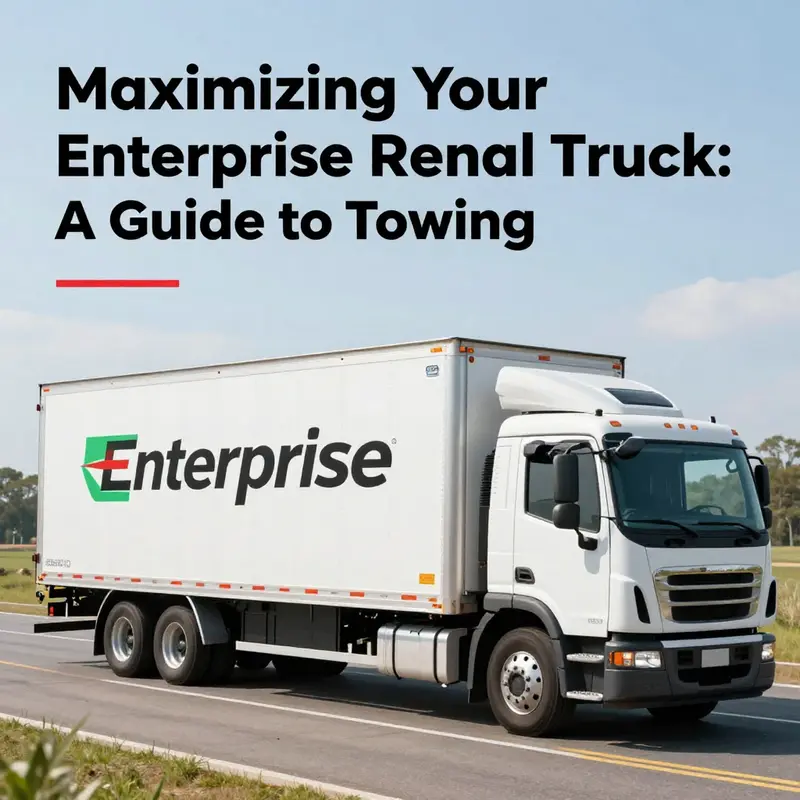
Towing with a rental truck can be a practical solution for moving a boat, a trailer, or a second vehicle, but it is not a blanket permission that comes with every truck rental. The reality is that whether you can tow—and how much you can tow—depends on the exact truck you rent, the branch you use, and the terms written into your rental agreement. In practice, many standard moving box trucks are not designed for towing at all and carry explicit prohibitions in their contracts. Yet some rental fleets include models or configurations specifically built to support towing, often with a hitch already installed and a stated maximum towing capacity. The critical takeaway is simple: never assume towing is allowed without first verifying the specifics for your vehicle and location. The agreement, the vehicle’s placard in the driver’s door jamb, and a quick conversation with the rental office will reveal the field you’re in and the limits you must honor. This careful check is not just about avoiding a price tag from a denied claim or a denied coverage event; it’s about preventing a dangerous situation on the road that could jeopardize your safety and the safety of others. If you’re unsure, treat the matter as if your ability to tow depends on a precise, documented authorization rather than an assumption you’ll be able to work around once you’re on the highway. The stakes are high in this area, because the vehicle you’re driving bears those added responsibilities, and your insurance and the law respond accordingly when a load is involved. For this reason, a deliberate, informed approach to towing is essential from the moment you pick the truck up.
To make sense of what you’re asking the rental provider to allow, start with a clear picture of the rental car or truck you’ve chosen. You’ll need to confirm the type of vehicle, the exact model, and the accompanying towing accessories in the fleet—hitch availability, hitch class, and whether a ball mount is included or required to be rented separately. The maximum towing capacity is a number not to be ignored; it is the total weight you can pull safely without compromising control, braking, or stability. This figure is not a rough target; it’s a hard specification tied to the engine, transmission, cooling system, axle design, and brake setup of the particular truck model. The vehicle owner’s manual or the manufacturer’s placard inside the driver’s door frame will usually list the capacity in pounds. If you’re towing, you’ll also need to know the gross combined weight rating (GCWR) for the combination of truck, trailer, and load. Exceeding either the towing capacity or GCWR is not just risky—it can void insurance coverage and leave you personally responsible for damages and injuries. It’s not enough to rely on a general sense of “it should be fine.” The precise numbers and the conditions under which they apply are non-negotiable.
If you do discover that towing is permitted for the exact truck you’re renting, there are practical steps that align safety with compliance. Start with the rental agreement itself. Read it carefully for any clauses that pertain to towing, weight limits, required equipment, and the responsibilities you assume as a renter. It’s common for the contract to require the use of a proper tow hitch, safety chains, and functional lights on the trailer. Some locations may also demand a specific hitch type or a weight distribution hitch for larger trailers. In the absence of explicit language permitting towing, do not proceed toward towing. The same caution applies to any modifications you might be considering, such as adding a hitch or security devices after pickup; changes can invalidate the terms of the rental and complicate insurance coverage.
The next critical step is a direct conversation with the branch staff. Calling ahead or stopping by the rental office to confirm towing permissions, weight limits, and required equipment helps prevent the last‑minute surprises that disrupt a move. The staff can verify the current fleet configuration at that location, confirm whether a tow hitch is installed or available for rental, and tell you whether a trailer of your intended type—boat trailer, utility trailer, or car dolly—fits within the truck’s stated limits. A direct confirmation also provides a written trail for insurance and liability purposes should any question arise after you’ve hooked up the trailer. In addition, local regulations and road rules can differ from one county to the next. A policy that applies in one jurisdiction may be void in another if a tow is involved and if local licensing, inspection, or lighting requirements differ. The more proactive you are in gathering this information, the smoother and safer your towing experience will be.
Insurance considerations sit at the heart of safety when towing with a rental truck. The typical framework is built around three core protections: liability, comprehensive, and collision. If you carry full coverage auto insurance on your personal vehicle, you may wonder whether it extends to a rental truck or whether you need additional coverage specifically for towing. The reality is nuanced. Some personal auto policies extend to rental vehicles, but not always for every use case, and not always for towing operations. Even when coverage exists, you may encounter exclusions or restrictions related to towing a trailer or pulling loads that push the vehicle beyond its normal operating profile. It is not uncommon for insurers to differentiate between standard vehicle use and towing operations, particularly when an attached trailer is involved. Careful verification with your insurer is essential. If you decide you need extra protection, the rental company may offer optional supplemental liability insurance (SLI), which can provide additional coverage beyond your existing policy. While SLI can help, it does not automatically seal every gap in coverage; you still need to understand what is and isn’t covered, especially for trailer damage, damage to other vehicles, and bodily injury liabilities arising from towing incidents.
A separate, crucial caveat is the towing capacity restriction. If you exceed the truck’s specified capacity, you risk not only mechanical failure but also a potential insurance problem. In some cases, exceeding the recommended load can void insurance coverage or complicate any claim arising from an accident. This is not merely theoretical—the policy designs and the terms of coverage assume the vehicle is utilized within its intended purpose and within safe operating limits. Under these circumstances, the burden of proof on the renter can shift to showing that a higher load or improper hitch configuration did not contribute to an incident. Given the potential for large out-of-pocket costs, a conservative approach is wise: do not push the equipment beyond its documented limits, and ensure your trailer, the load, and the hitch all align with the manufacturer’s advice and the rental agreement.
From a safety perspective, the everyday mechanics of towing demand deliberate preparation. Load security is non-negotiable. The towed load must be properly secured, evenly distributed, and within the truck’s payload and towing limits. The hitch, safety chains, and breakaway device—if applicable—must be properly installed and compatible with the trailer. The choice of hitch is not cosmetic; it determines how well the trailer communicates with the truck’s control systems. An inappropriate hitch or a missing safety chain can transform a routine trip into a dangerous event in stop-and-go traffic or on the highway. Regular checks become your ongoing safety routine: tire pressures on both the truck and the trailer, brake responsiveness, and functional lighting all the way through the wiring harness and trailer lights. A single faulty light or uneven tire pressure can surprise you in a dark toll booth or on a long stretch of highway where visibility matters as much as momentum.
But the most powerful safeguard is risk awareness. Towing inherently changes the dynamics of braking and steering, extending stopping distances and increasing the likelihood of sway if the load is off-balance. The risk multipliers multiply with speed, road grade, and weather. The vehicle’s stability control system may engage more frequently, and you may need to plan longer routes with safer, lower-speed segments when possible. Understanding these dynamics before you depart makes the difference between a controlled, confident drive and a scenario that can escalate into a hazardous situation. This is why the alignment between the rental agreement, the vehicle’s specifications, and the actual towed load matters more than the desire to complete a move quickly. The goal is to arrive with the same integrity with which you started, and that requires disciplined planning, honest assessment of your towing configuration, and a willingness to adjust the plan if any piece of the equation doesn’t meet the safety and legal thresholds.
If you’re seeking practical, hands-on guidance for the mechanical side of towing, there are resources that walk through hitch selection, installation, and safety checks. Even in the absence of the specific brand context here, you can pursue a reliable, neutral reference that focuses on the mechanics of hitch installation and secure attachment. For readers who want a concrete checklist and visual steps, this guide on trailer hitch installation provides an accessible path to ensure you have the correct hardware, properly aligned connections, and secure, tested setups before starting a tow. This kind of resource complements the rental agreement and the vehicle’s manual, giving you a tactile understanding of what it takes to attach and monitor a trailer safely.
When all the pieces align—clear authorization, documented capacities, appropriate insurance coverage, and meticulous safety practices—the act of towing with a rental truck can be a safe, manageable operation. But the key is to approach the task with a cautious mindset and a readiness to pause if anything in the chain is uncertain. It is not just about compliance; it is about the responsibility you bear for your own safety and the safety of everyone who shares the road with you. In practice, that means when you pick up the truck, you proceed with a checklist that confirms: the exact vehicle model and its towing capacity, the hitch type and any required safety equipment, the trailer’s weight and load distribution, the status of brakes and lights, and written confirmation from the rental location that towing is permitted for that vehicle and at that load level. Only then should you take to the road.
For those who want a quick, actionable reference embedded in the flow of this chapter, consider this practical note: if you need to install or verify hitch equipment, consult a reliable guide on trailer hitch installation. It can bridge the gap between policy and practice by giving you a concrete sense of what to look for, how to set up the hitch correctly, and what signs of improper installation to watch for. trailer hitch installation guide. The combination of policy clarity from the rental agreement, your insurer’s terms, and the hands-on knowledge from a hitch guide creates a robust foundation for a towing plan that is both safe and compliant.
As you finalize your preparations, keep one guiding principle in mind: towing with a rental truck is a conditional arrangement. It depends on the vehicle, the location, and the explicit permissions in writing. Treat it with the gravity it deserves, and you’ll be able to move forward with confidence instead of uncertainty. When in doubt, pause, verify, and seek written confirmation. The effort you invest up front will translate into a smoother journey and a much lower risk of complications on the road. If you want to explore further formal guidance on insurance considerations directly related to rental arrangements, you can consult the official insurance information page of the rental provider. This external resource compiles the core protections and exclusions you should understand before you tow, helping you map out where your current coverage fits and where it may fall short. official insurance information
Final thoughts
Navigating the realm of towing with Enterprise rental trucks can be straightforward once you are equipped with the right knowledge and resources. As a business owner, it is essential to understand both the capabilities and limitations of your rental options to avoid complications during transport. By familiarizing yourself with the specific towing policies, implementing best practices for safe hauling, and ensuring proper insurance coverage, you can leverage Enterprise rental trucks effectively for your logistical needs. Understanding these factors can help streamline operations and enhance the efficiency of your business.