
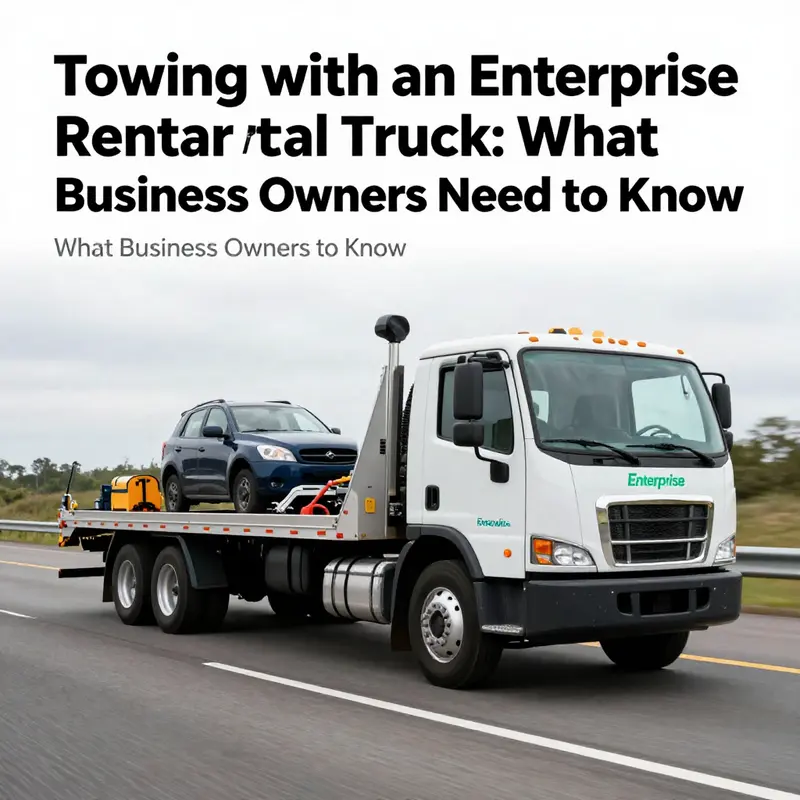
For business owners needing to transport goods, renting a truck can be a practical solution. However, if your logistics require towing, you must ensure the Enterprise rental truck you’ve chosen is equipped and authorized for such a task. This article delves into essential information about towing with an Enterprise rental truck, covering important aspects like towing capacity, necessary equipment, legal obligations, and specific policies you must follow. Each chapter will provide a vital piece of the puzzle to help you make informed decisions as you plan your rental.
Tow-Ready Choices: Towing with an Enterprise Rental Truck
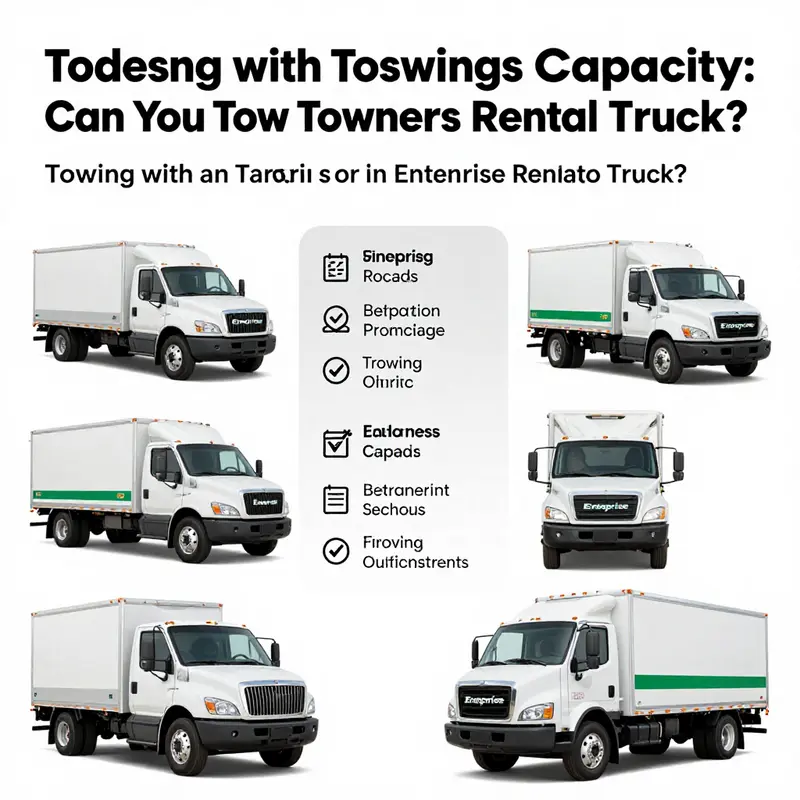
Tow with an Enterprise rental truck is not automatic. You can tow only with models that are explicitly approved for towing, and only if you meet the vehicle specifications and the rental agreement requirements. The towing capacity (GTW) and payload determine what you can pull, and you must verify the exact vehicle configuration before committing. When in doubt, ask for the specification sheet or confirm details with a rental agent.
Equipping the truck for towing is essential. A proper hitch receiver and a wired electrical connector are typically required, and you may need to rent or arrange installation of these accessories. Without the correct hitch and wiring, towing is unsafe and may be prohibited by the policy. Always verify with the agent that the correct equipment is present and compatible with your trailer.
Weight limits matter. Do not exceed the GTW or the truck’s payload. Overloading affects braking, cooling, and control, and can void insurance. Check the trailer’s loaded weight and compare it to the truck’s rated capacity before you tow.
The rental agreement often requires written permission to tow and may restrict which trailers are covered. Make sure your towing is authorized in writing, with the exact truck and trailer details, before you hook up. Be aware of local laws about brake systems, lights, safety chains, and endorsements, and plan a route that remains within legal and safety limits.
Preparation is the key. Inspect the hitch, ensure proper weight distribution, test lights and brakes, and plan for contingencies. If your load might push the limits, consider a different vehicle or multiple trips. For further guidance, review the official hitch installation resources from the rental provider and general safety practices for towing with rental fleets.
Tow-Ready on the Open Road: Equipment, Protocols, and Practical Wisdom for Enterprise Rental Trucks
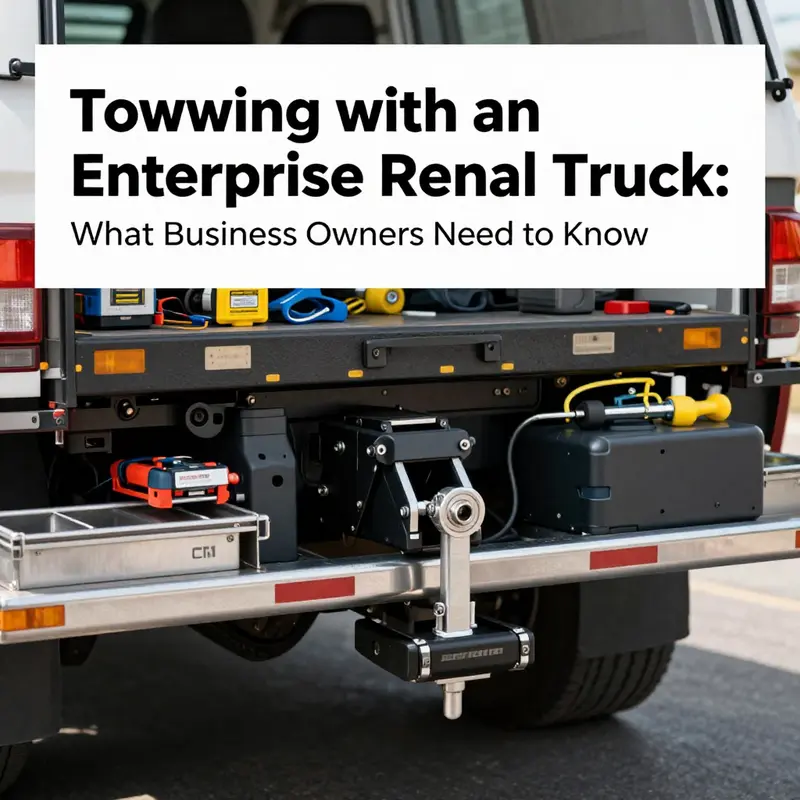
Tow readiness begins well before you hook a trailer to a rental truck. It starts with understanding that not every Enterprise rental truck is built to tow, and even among those that are, there are strict limits and responsibilities. The core idea is simple: you may tow with an Enterprise rental truck only if the specific vehicle you rent is rated for towing, and you follow the rules set by the rental agreement and by local law. This chapter walks through the practical, safety driven approach to towing with an Enterprise rental truck, weaving together the hardware you need, the checks you perform, and the mindset you bring to the road. The goal is not just to complete a move or a haul, but to do so safely, legally, and with peace of mind that your insurance and your passengers remain protected. First, the crux of capability lies in the vehicle itself. Rental trucks vary in their towing capacity, sometimes dramatically from one model to the next. The sticker on the door, the vehicle’s manual, or the rental agreement will specify the maximum gross trailer weight (GTW) and the payload capacity. These numbers dictate what you can tow and how large a trailer or towed load you can carry. It’s not enough to see the word “towable” in a brochure or assume a heavier truck means you’re good to go. You must confirm that the exact truck you rent has a hitch and is rated for the load you plan to pull. If a hitch is present, you still need to verify its weight rating (the receiver and the attached ball or bar), and ensure the trailer’s weight does not exceed both GTW and the payload allotted to the truck. The difference between a hitch that can snap under stress and one that smoothly handles a heavy load is a few hundred pounds on a long highway, and the consequence can be unsafe or financially catastrophic. Alongside the vehicle’s inherent capacity, a critical set of equipment turns a capable truck into a towing system. The basic kit begins with a tow hitch—a receiver hitch that matches the vehicle’s capacity. The common sizes are 2-inch and 2.5-inch receivers, but some trucks use a 3-inch interface. The equipment you need extends beyond the hitch. A compatible tow bar or trailer hitch ball must be used, matched to the trailer coupler. The alliance of hammer and hook, ball and socket, is what keeps the trailer attached under braking, acceleration, and wind shear. To synchronize the truck’s electrical system with the trailer’s lighting, you’ll require a wiring harness. The harness ensures that the trailer’s brake lights, turn signals, and running lights communicate correctly with the truck’s system. In many cases, rental companies offer this as an add‑on; in other cases you bring your own compatible harness. Either way, a functional lighting connection is non‑negotiable for visibility and legality on the road. Safety chains are more than a suggestion; they are a last line of defense if the hitch fails. The standard practice is to cross the chains beneath the trailer tongue and anchor them to secure points on the tow vehicle. This configuration creates a mechanical backup that keeps the trailer from detaching and drifting suddenly into another lane. In combination with proper hitch assembly and reliable electrical connections, safety chains dramatically reduce the risk of runaway trailers, which are among the most dangerous scenarios on the highway. A stabilizer bar or sway control device can further reduce trailer sway, particularly when the load is heavy or the trailer is long. By dampening oscillations that can arise from gusts of wind, uneven pavement, or abrupt steering inputs, sway control helps preserve steering feel and control, which is essential when negotiating curves or passing through a crosswind corridor. Beyond the hitch, wiring, and chains, there are practical tools and checks that support a safe tow. Wheel chocks remain indispensable while you’re coupling the trailer and again once it’s parked at the destination. They prevent the truck and trailer from moving unexpectedly as you align and secure components. A tire pressure gauge helps ensure that both the truck and the trailer tires are inflated to the recommended levels; improper inflation can cause tire failure, affect braking performance, and undermine stability. These smaller items might seem peripheral, but they are part of a thorough pre-tow ritual. A simple checklist can save a lot of trouble: verify hitch and ball size, inspect the receiver for wear, confirm the electrical plug is clean and undamaged, test the trailer lights in a safe area, and confirm the trailer brakes engage as they should when you apply the vehicle’s brake pedal. This is not merely about compliance; it’s about predictable performance and avoiding unexpected breakdowns on the road. The human element is equally important. Towing with an enterprise rental truck demands awareness that your driving technique must adapt to the combined mass of vehicle and trailer. You will encounter longer stopping distances, altered acceleration, and revised cornering dynamics. The added leverage of a trailer magnifies how momentum is transferred to the tow vehicle. Gentle acceleration and deceleration, smooth lane changes, and increased following distance become essential habits. At highway speeds, trailer sway can surprise even experienced drivers. If you notice sway developing, ease off the throttle gently, avoid abrupt steering, and gradually reduce speed to regain stability. If sway persists, stop in a safe place to reassess and resecure the load. These are not inconveniences; they are safety protocols that protect you, other drivers, and the cargo you are transporting. Before you ever pull away, there is a critical contractual layer that governs towing with a rental truck. Enterprise, like other rental companies, requires explicit permission for towing in most cases. The rental agreement will often specify that the trailer must be properly registered and insured, and that towing a trailer not covered by the policy could void insurance coverage. This is where a conversation with the rental agent matters. If you anticipate towing, discuss the intended load, trailer type, and required equipment well in advance. This ensures you receive the correct vehicle, confirms that the necessary hitch and harness are available, and clarifies any insurance or liability concerns. Without this clarity, you risk a policy gap that could complicate claims in the event of an accident or loss. Local laws add another layer that cannot be overlooked. The regulatory environment for towing is a patchwork of rules that vary by jurisdiction. Many regions require that trailers have brakes, lights, and safety chains, while some places require a licensing endorsement or a particular class for towing a heavier setup. The standards for weight distribution, braking responsiveness, and lighting can differ not only by country or state but also by the type and length of the trailer. A responsible tow plan includes a quick legal scan of the jurisdiction you’ll be driving through, a review of the trailer’s compliance, and ensuring your paperwork, including insurance and registration, aligns with the governing rules. A practical, working approach to the equipment and rules can help you move from plan to execution with confidence. Start by choosing the right vehicle in the Enterprise fleet. Confirm its towing capacity and verify the hitch is compatible with your intended load. If the hitch is not installed, or if the vehicle is not rated for towing, select a different model from the fleet or adjust your plan to a suitable trailer. Once you have the right truck, gather or confirm the essential equipment: a compatible tow hitch, a matching ball or bar, a functional wiring harness, safety chains, a stabilizer or sway control device if your load is susceptible to sway, wheel chocks, and a tire pressure gauge. Then perform a pre-tow inspection at the pickup site. Check the hitch connections, test the electrical system, verify lighting on the trailer, inspect tire condition and inflation, and secure all loose gear. From there, the partnership with the rental company continues as you prepare for the road. Enterprise typically provides guidelines and recommendations, but the customer bears responsibility for ensuring all equipment is properly installed and inspected prior to use. This means you should not assume installation is complete simply because the parts are in the box. Take the time to fit and secure each component, confirm all connections, and test the setup in a controlled environment before venturing onto busy streets or highways. If you have any doubts about the compatibility of a component, or if you encounter a mismatch between the trailer and the hitch, pause and seek guidance. The cost of a moment’s hesitation is negligible next to the risk of a misalignment that could cause a severe accident or damage. In the end, towing with an Enterprise rental truck is a coordinated blend of correct equipment, lawful compliance, and disciplined driving. The equipment supports the physics of towing, the laws protect the public, and the driver’s behavior shapes the actual safety outcomes. It’s a combined discipline, not a single action. As you plan, you should remember that some towing tasks require specialized tools or professional setup. If the load is heavy, unusually long, or involves a high center of gravity, there may be a point at which a professional trailer installer or a specialized towing service becomes the prudent choice. This is not about avoiding responsibility; it is about choosing the safest and most reliable path for the cargo and the people sharing the road with you. For drivers who want to explore further and refine their understanding of tow hardware and setup, a deeper dive into hitch installation offerings can be illuminating. For a detailed look at how hitches are installed and how to match components for reliable towing, see Penske Trailer Hitch Installation. This resource, while not Enterprise-specific, provides practical insights into the precision necessary for a secure hitch connection and could complement your preparation before you pick up a rental truck. As you reflect on the road ahead, keep one overarching principle in view: preparation today reduces risk tomorrow. By confirming your vehicle’s towing capability, securing the right equipment, adhering to weight limits, and respecting legal obligations, you turn a potential challenge into a controlled and safe operation. This mindset transforms towing from a clerical task into a competent, confident, and responsible part of your moving or hauling plan. In that spirit, your Enterprise rental experience becomes not merely about borrowing a truck but about exercising stewardship of a vehicle‑and‑trailer combination that carries people, belongings, and a meaningful part of your daily life. If you want a practical starting point to verify hitch options, weight ratings, and installation considerations, consider consulting the enterprise towing and hauling guidelines and speaking with a rental agent who can tailor advice to the exact truck you intend to rent. External resource: https://www.enterprise.com/en/rental-vehicles/towing-and-hauling.html
null
null
Tow-Ready or Not: Navigating Towing Rules and Realities When Renting a Truck for Your Move
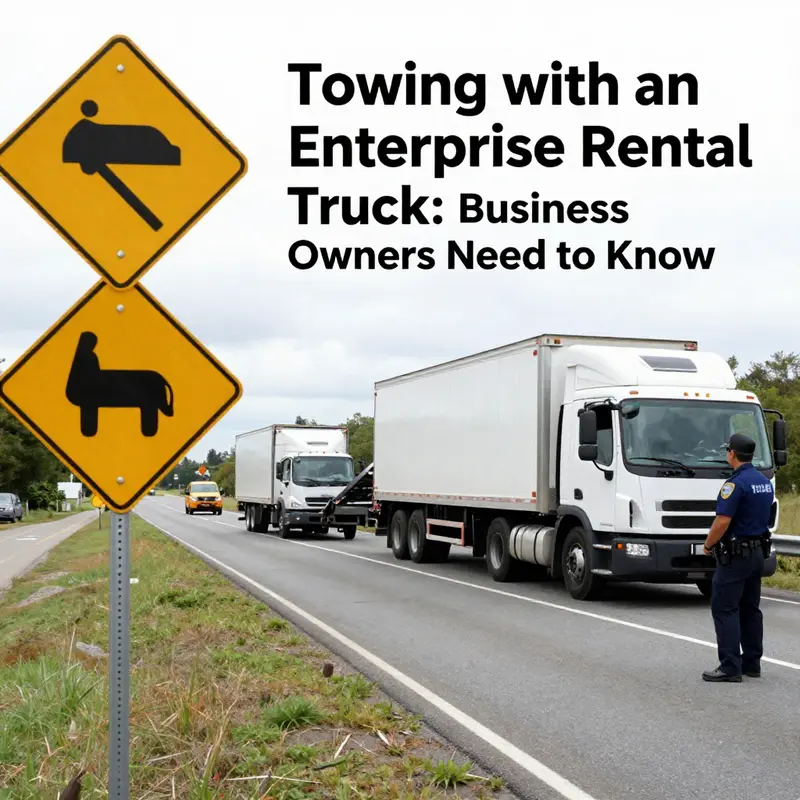
Moving day can feel like a quiet test of nerves, especially when plans involve pulling a trailer behind a rental truck. The short version is simple but crucial: yes, you can tow with a rental truck, but only if the exact vehicle you rent is designed and approved for towing, and only if you follow the rental agreement and local laws to the letter. The longer version unfolds a careful sequence of checks, practical steps, and safety considerations that protect you, your cargo, and everyone on the road. The core idea is straightforward: not every truck is tow-capable, and even when it is, towing is bound by fixed limits and precise hardware requirements. To put it plainly, towing responsibly with a rental truck means verifying capability, equipping the vehicle properly, respecting weight limits, honoring the rental terms, and complying with the law. The middle part of the story is where most plans go astray, and the consequences can range from expensive repairs to insurance complications or worse. When you’re planning a move or a haul that involves a trailer or other load, the first obligation is to confirm, in advance, that your rental truck has a towing capacity and the necessary hookups. This is not a matter of personal confidence or a rough approximation. The manufacturer’s specifications define the maximum Gross Trailer Weight, the payload the truck can carry, and the compatibility of towing hardware such as a hitch receiver and an electrical connector. You will encounter this information in the vehicle specifications provided by the rental company or, in many cases, within the rental agreement itself. If the truck you choose does not clearly indicate towing capabilities, you should not assume it can tow. The rental process often presents trucks with a range of features, and a “tow-ready” label on a page or a sticker on the dash does not automatically guarantee that every trailer, dolly, or load you plan to haul is permitted. The safest approach is to ask for confirmation in writing that the specific vehicle you plan to rent is approved for towing. This is especially important if your itinerary includes a larger trailer, a car dolly, or any equipment that alters the vehicle’s stability and braking requirements. The responsibility for safe towing begins with the vehicle, but it is only the starting point. Once you have a tow-capable truck, you must also ensure that the trailer itself is properly configured and compliant with the law. Brakes, lights, safety chains, and weight distribution all matter when you connect the trailer to the hitch. In many jurisdictions, the trailer must have functioning brakes and lighting, and the vehicle must be equipped with the correct wiring harness to deliver power to those lights and brakes. It sounds technical, and it is, but it is not optional. Failure to meet these requirements can lead to traffic tickets, failed inspections, or insurance gaps in the event of an incident. Weight distribution is equally critical. Exceeding the truck’s maximum towing capacity—or the trailer’s Gross Trailer Weight (GTW)—can undermine steering, braking, and stability. The payload capacity of the truck also matters because it represents the combined weight of the trailer hitch, passengers, cargo, and any gear stored inside the truck during towing. The rental agreement will specify the permissible load limits, and those limits are not negotiable. Pushing beyond them is dangerous, illegal in many places, and almost certainly a fast track to damage and liability. The tension between convenience and safety is where many towing plans go wrong. Enthusiasm for a single-vehicle solution can tempt people to overlook the details of the agreement or to assume the policy will bend to a busy schedule. But the rental contract is not a suggestion; it is a binding document that defines what is permitted, what requires authorization, and how charges are assessed if something goes off the rails. This is true even if the truck in question is marketed as a “tow-capable” model. The moment you decide to tow, you enter a formal regime that may include prior written authorization, a possible surcharge, and specific insurance implications. Some rental locations offer vehicles that are equipped for towing, such as certain trucks and SUVs, but even then the operator must obtain permission before towing any trailer or load. The authorization is not a formality; it is a prerequisite that ensures the vehicle, the load, and the destination meet the governing safety and liability standards. If you anticipate requiring towing, it is prudent to contact the rental location in advance to confirm tow-capable options and to learn about any procedures or surcharges. Surcharges can manifest as a daily equipment fee, an adjustment to insurance terms, or a permit requirement depending on the jurisdiction. These fees are real and frequently overlooked by customers who assume that an all-purpose truck can handle any trailer. The reality is more nuanced: a truck may be able to pull a light trailer, but that does not automatically authorize heavier weights or more complex loads. The specific combination of the truck model, the hitch setup, the trailer’s weight, the braking requirements, and the road laws in the travel area all determine what is permissible. The best practice is to treat towing as a staged process rather than a single decision at pickup. Start by identifying your essential compatibility questions: Does the truck have a clearly stated towing capacity? Is the hitch receiver compatible with the trailer hitch and wiring harness required for your load? Are you within the payload limits when you account for all cargo inside the cab and on the trailer? Then proceed to secure written authorization from the rental company, confirming the trailer type, weight, and any special installation requirements. The importance of equipment safety cannot be overstated. Any towing setup must include properly installed and certified hardware. An improperly installed hitch or a non-compliant wiring connection can create dangerous conditions on the road and jeopardize insurance coverage. The safety of your trailer’s connections—hitch, electrical, and safety chains—must be verified before departure. If you do not already own appropriate towing gear, you will typically need to rent it through the rental company or a reputable supplier. This often includes a hitch kit, wiring harness, and sometimes a brake controller when the configuration requires more advanced braking systems. The goal is not to improvise a solution on moving day; it is to confirm that every component has the correct rating, installation, and certification. The consequences of bypassing this step can be severe, including the potential exclusion of insurance coverage for towing-related incidents, charges for vehicle damage, or even a policy denial that leaves you financially exposed. In practice, what this means for most renters is a careful, measured approach from pickup to drop-off. The vehicle you rent must be identified as tow-ready in the sense of having the appropriate capacity and hardware. If it is, you still need explicit permission to tow. If it isn’t, the plan must be revised to avoid towing entirely or to switch to a vehicle that is clearly approved for the intended load. The overarching rule is straightforward: never exceed the manufacturer’s stated towing capacity, never exceed the payload limits, and never assume compliance without written confirmation. These aren’t mere formalities; they are the bulletproof framework that supports a safe, legal, and financially sensible towing arrangement. For readers who want practical guidance on the mechanical side, there is a straightforward resource that walks you through the basic hitch setup and safety checks, offering a grounded, experience-based look at how to approach the hardware side without getting overwhelmed by jargon. You can explore a concise, accessible guide on trailer hitch installation to help inform your prep work before you arrive at the rental counter. trailer hitch installation guide.
In summary, towing with a rental truck is possible but constrained by a triad of conditions: vehicle capability, proper equipment, and strict adherence to the rental agreement and local laws. The vehicle must be specified as tow-capable, fitted with the correct hitch and wiring, and loaded within the maximum Gross Trailer Weight and payload limits. You must obtain explicit authorization to tow, and you must ensure that the trailer complies with all safety and regulatory requirements. If you follow these steps, towing with a rental truck can be a smooth part of a well-planned move. If you are unsure about any part of the process, contact the local rental location before you finalize your plans. They can confirm availability, outline the procedures, and spell out any potential charges associated with towing. For the official policy from the rental carrier, refer to the policy page on towing and hauling as part of the rental agreement terms. External resource: https://www.enterprise.com/en/rent-a-car/policies/towing-hauling.html
Final thoughts
Renting a truck from Enterprise can be an effective solution for transporting goods, especially when towing is involved. However, understanding the limitations and requirements associated with towing is crucial for business owners. By confirming your rental truck’s towing capacity, ensuring you have the right equipment, adhering to legal regulations, and carefully following your rental agreement, you can minimize risks and enhance your operational efficiency. Preparation in these areas will not only ensure compliance but also foster a smooth logistics process for your business.