
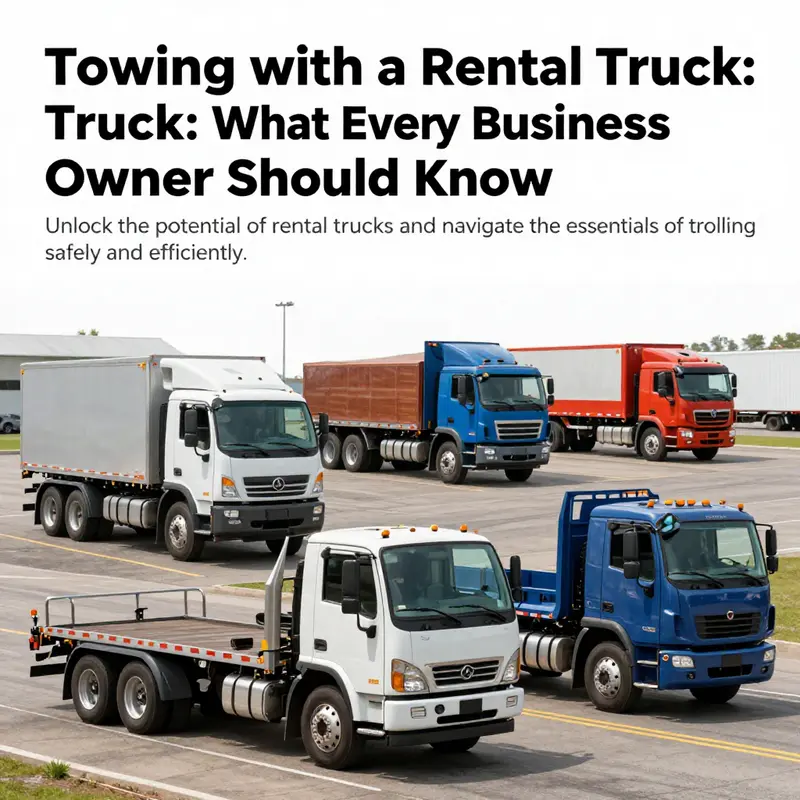
For business owners looking to streamline their operations, understanding the logistics of towing with a rental truck can be invaluable. Whether you’re transporting equipment, moving inventory, or assisting with business relocations, the ability to tow can enhance your operational efficiency. However, towing with a rental truck comes with a host of considerations, including the rental agreement, vehicle specifications, safety protocols, and insurance implications. This article delves into these aspects to provide a comprehensive understanding of towing with rental trucks, ensuring you make informed decisions that align with your business needs.
Tow It Wise: A Practical Guide to Towing with a Rental Truck
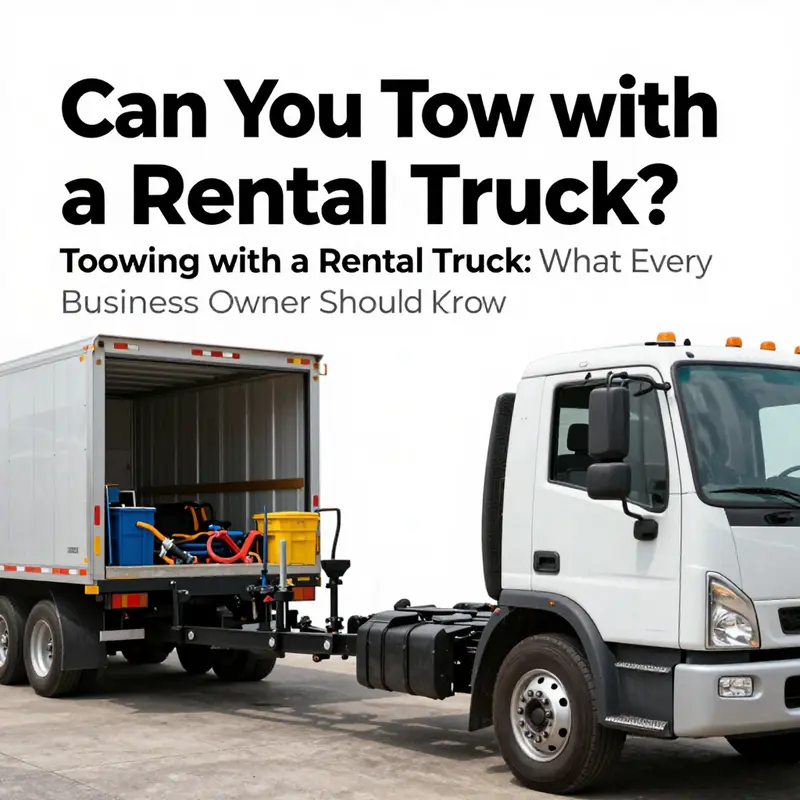
Tow It Wise: A Practical Guide to Towing with a Rental Truck
When a rental truck seems like the most convenient way to move gear, furniture, or a trailer, the question of towing often follows closely behind. The answer isn’t a simple yes or no. In many cases, you can tow with a rental truck, but success hinges on knowing the rules, respecting the vehicle’s limits, and preparing carefully. This isn’t about finding a loophole; it’s about planning a move or haul that keeps people and property safe while staying within legal and insurer-approved boundaries. The core idea is straightforward: towing is permitted on many rental trucks, but only if you match the task to what the truck can actually handle and you follow the fine print in the rental agreement.
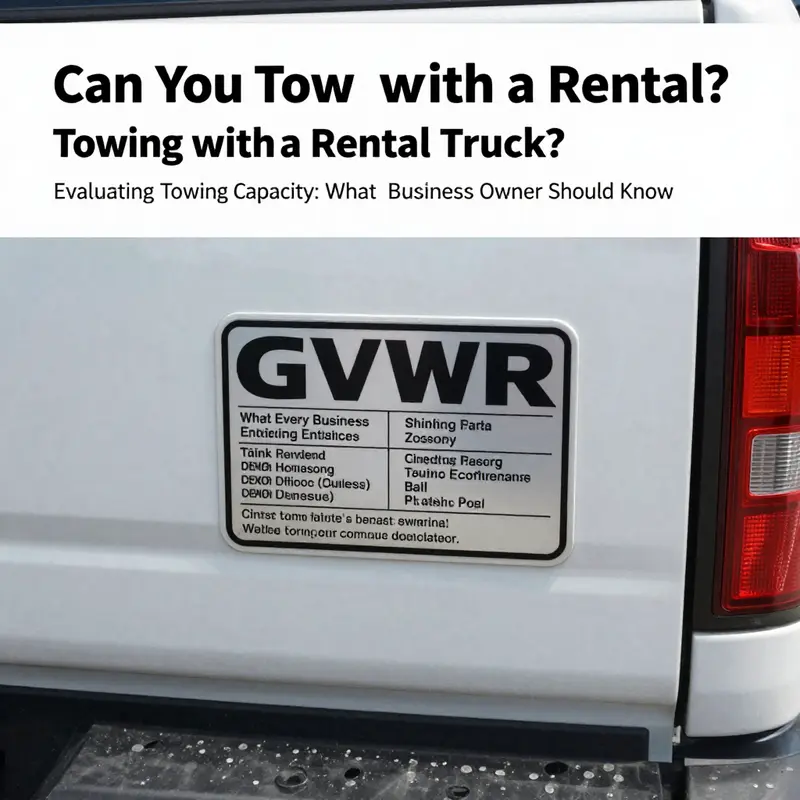
The most critical piece of the puzzle is the towing capacity. Vehicle makers publish this as the Gross Vehicle Weight Rating (GVWR) and the associated maximum towing capacity. In plain terms, GVWR is the total weight the truck is rated to carry safely, including passengers, cargo, fuel, and the trailer’s own weight. The towing capacity tells you how much weight the hitch can pull behind the truck. The numbers aren’t universal across all rental models; they vary model to model and year to year. To avoid costly mistakes, you should locate these specifications before you even attach a trailer. The information is typically found in the truck’s manual or on a label near the driver’s door frame. If you’re unsure, call the rental desk and ask for the exact model’s towing limits before you commit to a trailer.
Another essential concept is “tow-rated.” A tow-rated rental truck has the appropriate chassis, brakes, and engine power to handle the load you intend to pull. It isn’t enough for a truck to be able to move with a hitch attached; the vehicle must be equipped to manage the combined weight and the dynamics of towing. When you book, confirm that the rental package includes a compatible hitch and the necessary wiring for the trailer. While many rental fleets can supply these accessories, they should be requested in advance, and you should verify the wiring functions—especially the brake lights, turn signals, and backup lights for the trailer. Absent proper wiring, you risk signaling malfunctions, which can create dangerous situations on the road and complicate insurance coverage.
Weight is a practical measure you cannot bypass. The total weight is the trailer’s own weight (often called the dry weight) plus everything loaded into it, and it must be kept at or below the truck’s stated towing limit. It’s easy to underestimate if you don’t factor in items like spare hardware, propane tanks, or personal gear that might ride in the trailer. A thorough approach means you calculate the trailer’s empty weight, add the cargo’s weight, and compare that sum to the truck’s maximum towing capacity. If the numbers don’t align, choose a lighter trailer, pare down the load, or select a larger tow-capable vehicle if available through the rental provider.
The type of trailer matters as well. Rental trucks tend to be paired with light- to medium-duty trailers—smaller utility trailers, car trailers with modest tongue weights, or small enclosed trailers. They are not typically suited to heavy, high-tow loads such as large boats, heavy construction equipment, or industrial cargo. The trailer’s own balance and hitch setup influence handling, braking, and stability on the road. If you’re unfamiliar with proper hitching, it’s worth requesting a brief, hands-on walkthrough from the rental agent. A small misstep—like an ill-fitted hitch, a loose coupler, or a trailer that isn’t level—can create unsafe conditions long before you leave the parking lot.
Insurance is another layer that deserves careful attention. Some rental agreements include towing under the standard policy, while others exclude towing or require an additional rider or fee. Policies vary widely, and what looks like a simple extension of your rental can carry hidden exclusions if a towing incident occurs. Before you hit the road, confirm coverage for towing and ask about any required endorsements or surcharges. If the policy has restrictions, you’ll want to address them upfront so you’re not surprised by a denial of claim should something go wrong. It’s also wise to understand the local and state regulations governing towing in the areas you’ll travel through. Laws differ by jurisdiction and can affect everything from permit requirements to lighting and braking obligations for the trailer.
Preparation is the backbone of a safe towing experience with a rental truck. Start with a clear alignment between the vehicle’s specifications and your planned load. Double-check the truck’s towing capacity and verify the exact hitch type and ball size that the trailer requires. Ensure you have the necessary safety equipment: proper hitch safety chains, functioning trailer lights, and an electrical connector that matches the trailer’s system. Before you depart, perform a comprehensive safety check. Look for any signs of wear on the hitch, verify that the trailer is loaded with heavier items toward the front to maintain tongue weight within recommended limits, and test the trailer’s lights while the trailer is hitched to the truck. It’s a simple sequence, but it pays off by catching issues that could become hazards on the highway.
The practical workflow often unfolds like this: you identify a trailer that fits within the vehicle’s documented towing capacity, you request a hitch and wiring package from the rental desk, and you confirm the trailer’s weight and cargo balance. You then perform a pre-tow inspection, including lighting, brakes (where applicable), and the hitch’s security. Only after these checks do you sign off on the rental agreement’s towing terms and proceed. At every step, you should be mindful of how the load will behave on the road. For example, a trailer adds significant length and a different center of gravity, which affects braking distances, acceleration, and lane discipline. Plan for longer stopping distances and some extra space when changing lanes or negotiating curves.
If you’re taking a longer move or anticipate frequent stops, consider choosing a trailer that’s lighter or a truck with a bit more towing headroom. A compact setup, such as a smaller trailer with a lighter load, is often easier to manage and safer for first-time tower drivers. For readers who are curious about specific vehicle sizes, a practical reference is the 16-foot truck guide, which outlines typical capacities and performance characteristics for one of the more commonly rented trucks. You can explore that guide here: 16-foot truck guide.
The decision to tow with a rental truck should be grounded in a careful assessment of weight, capacity, and local requirements rather than in optimism about a “few extra pounds.” It’s tempting to push a little beyond what seems reasonable when moving something heavy, but the consequences extend beyond mechanical wear. Overloading can void insurance, increase the risk of tire blowouts, cause overheating, and compromise braking performance. On the road, even if the truck handles the trailer at low speeds, the real test comes with sudden stops, emergency maneuvers, or long grades where the combination may struggle. The safest approach is to keep the load within the published limits and to err on the side of caution if you’re unsure about any factor.
In sum, towing with a rental truck is a feasible option for many tasks, provided you stay within the vehicle’s towing capacity, verify that the truck is tow-rated, and complete a thorough safety and load preparation routine. The key steps—check the rental agreement, confirm capacity, balance weight, ensure proper hitching and wiring, and verify insurance coverage—form a simple, effective checklist. When you follow this framework, you’re not just moving; you’re moving with confidence and minimizing risk for yourself and others on the road. If you want a practical, step-by-step reference on how to approach rental trucks for towing in general, you can consult a broader practical guide on the topic via a reputable external resource.
External resource: https://www.carinterior.com/how-to-rent-a-pickup-truck-for-towing/
Tow Ready: Navigating Towing with a Rental Truck Through Capacity, Specifications, and Caution
Towing with a rental truck is not a universal do-it-yourself option, but it is a legitimate possibility when you approach it with the right mindset. The idea that a moving truck is simply a larger cargo box is convenient, yet incomplete. Towing introduces a separate set of demands—weight, balance, braking, steering, and legal constraints—that can push a vehicle beyond its comfort zone if you treat it as an incidental add-on. The decision to tow should begin with clarity about the truck’s capacity and the trailer you intend to pull. It should also hinge on a straightforward check of the rental agreement and any supplementary policies the rental provider may require. In short, towing with a rental truck is possible, but it demands careful verification, disciplined calculations, and a respect for the vehicle’s limits to keep yourself and others safe on the road.
The first step in this process is to understand the core numbers that govern safe towing: the Gross Vehicle Weight Rating (GVWR) and the Gross Combined Weight Rating (GCWR). The GVWR marks the maximum weight the truck can carry, counting everything the truck itself weighs plus the payload you add—people, gear, and cargo inside the cab and cargo area. The GCWR, on the other hand, is the ceiling for the total weight of the vehicle and the trailer it tows. When you pull a trailer, you are effectively adding a second “vehicle” to the equation. If the GCWR is exceeded, the consequences can be expensive in the form of mechanical damage, unpredictable handling, and, potentially, compromised insurance coverage. The relevant numbers are usually visible on the door jamb placard or the owner’s manual. If you can’t locate them there, a quick call to the rental location can clarify which models are tow-rated and what their exact limits are.
Rental trucks come in a spectrum of capabilities. Most daily rental fleets feature light- to mid-range tow options, suitable for small utility trailers, bike trailers, or modest campers. These trucks are engineered to handle lighter to medium weight profiles, and they will differ in suspension stiffness, engine torque, and transmission design. The more you push toward the upper end of a truck’s stated towing capacity, the more critical it becomes to ensure your trailer weight, plus its cargo, stays within the specified limits. As you plan, you must account for every ounce of load in the trailer and the trailer’s own weight, commonly referred to as the dry weight. For instance, a trailer with a dry weight of 2,000 pounds and 1,000 pounds of cargo is heavier than a trailer that sits at 1,000 pounds with 1,500 pounds of cargo. In both cases, the combined weight matters, and it must not exceed the truck’s stated towing capacity.
Another essential factor is the trailer type. Rental fleets are generally equipped to handle light- to moderate-duty trailers, including small utility trailers and some camper trailers. They are typically not optimized for very heavy or specialized loads, such as full-sized boats or bulky commercial equipment. The mismatch between a heavy trailer and a comparatively small tow vehicle often manifests as excessive tongue weight, towing instability, or excessive sway, especially in crosswinds or at highway speeds. The hitch system you use is part of this equation too. A proper hitch—matched to the trailer’s weight—and, if necessary, a weight-distributing hitch can help distribute the load more evenly between the trailer and the tow vehicle, improving handling and braking performance. If a trailer requires a more sophisticated hitch than the truck’s standard equipment provides, you should not improvise a solution at the last minute. Confirm the hitch type and compatibility before you set out.
Insurance and the legal framework surrounding towing add layers of complexity that are easy to overlook when the goal is simply to save money or time. Many rental agreements include explicit language about towing. Some fleets require an endorsement or additional coverage for towing, and some may exclude certain kinds of trailers or loads altogether. It is not enough to assume your personal auto policy or the standard rental insurance will automatically cover towing-related incidents. The safest approach is to speak directly with the rental location about the need for any extra coverage or rider, and to obtain written confirmation of what is and isn’t covered. If you’re towing, you want to avoid discovering, after an incident, that your policy excludes the very scenario you faced on the road.
The practical steps to prepare for towing begin with a clear plan, then move into measurement, equipment, and checks. Start by verifying with the rental location that you have access to a tow-rated model. This is especially important because not every truck in the fleet is designed to haul a trailer. If you’re unsure, request a tow-rated model, such as a pickup configured with a heavier-duty drivetrain, reinforced suspension, and a near-terminal awareness of trailer dynamics. You may encounter a model designation that indicates stronger components and higher towing capacity. If the rental location confirms, proceed to gather the exact towing capacity from the owner’s manual or the manufacturer’s placard; compare that number to the trailer’s weight total, including the weight of the trailer itself. As you tally the trailer’s weight and cargo, keep a careful ledger of each element: the dry trailer weight, the load you intend to place inside, and any extra equipment attached to the tongue. Tongue weight should be accounted for as part of the overall weight distribution; neglecting it can skew the balance and impair steering response, especially during cornering or emergency maneuvers.
With the numbers in hand, you can assess whether a given trailer is a safe match for the rental truck. If the GCWR is approached or exceeded, you’ll need to re-evaluate your plan—either by selecting a lighter trailer, unloading some cargo, or choosing a different towing option. The decision to downsize should also consider the trailer’s use and the duration of the trip. A trailer that is within the weight limits for a short trip may still pose risks over long distances, in windy conditions, or on steep grades. In those cases, adjusting the load distribution and driving approach can make a meaningful difference. Always err on the side of conservative loading and smoother driving to reduce heat buildup in the transmission and brakes, which can occur when you push a vehicle beyond its normal operating envelope.
Before you depart, perform a thorough safety check that encompasses the hitch and the trailer connection, the braking system (if the trailer has its own brakes), and the tail and brake lights. A functional lighting system is essential for visibility, while properly wired brakes improve stopping power and reduce the risk of trailer sway. If you are new to towing, consider practicing in a safe, open area to get a feel for how the truck handles with the added trailer. Practice braking, accelerating, turning, and reversing with the trailer attached to build familiarity while maintaining a margin of safety.
The policy framework around towing also invites practical considerations about routes, road conditions, and the trip’s scope. If you anticipate long highway stretches, mountainous terrain, or heavy traffic, you’ll want to plan alternative routes or allow extra time. Strong crosswinds, rain, or ice can magnify the stresses on the tow setup, so you should adjust speed accordingly and maintain a greater following distance. In addition to adhering to speed limits and load limits, you will benefit from using a loading plan that prioritizes even weight distribution and avoids sharp changes in direction at high speed. The process is not glamorous, but it pays dividends in control and confidence.
For readers who want to explore towing options beyond the most straightforward arrangements, there are specialized towing aids and configurations worth considering. A tow dolly, for example, can be a practical alternative for certain types of loads and trailers, especially when the weight distribution or hitch compatibility presents a challenge. If you are curious about how such setups work and whether they might be a fit for a rental-truck scenario, you can explore a dedicated discussion on that topic through one of the resources keyed to towing with rental trucks. For a concise overview that ties into the broader conversation about towing with rental fleets, you can refer to the article linked here: penske-truck-rental-tow-dolly. While the exact model vocabulary may differ across fleets, the core concepts—weight management, hitch compatibility, and safety—remain constant and are discussed in practical terms in that resource.
As you finalize plans, it’s also prudent to confirm the exact terms with the rental company, including any weight limits beyond the generic capacity and any restrictions on the trailer type or its use. Some trips—such as those involving a heavy boat or a bulky construction trailer—may not be allowed for a standard rental, even if the truck itself is capable. The stakes are not merely about compliance; they include personal safety, the safety of other road users, and the long-term consequences of any incident that could affect insurance coverage and liability.
In closing, towing with a rental truck is a viable option when you treat it as a carefully calculated, regulated activity rather than a casual add-on. The bedrock of success is a clear understanding of the GVWR and GCWR, a precise tally of trailer weight and payload, and a plan grounded in safety, insurance clarity, and adherence to the rental agreement. If you can confirm a tow-rated model, verify the exact towing capacity, and align the trailer weight with those limits, you place yourself in a strong position to complete your move or transport with confidence. The process rewards patience and diligence more than speed. And when in doubt, seek a lighter trailer, adjust the load, or consider alternative transportation options that keep you within safe operating parameters. For a deeper dive into specific towing configurations and how they relate to rental fleets, the linked resource above provides a complementary perspective, while a broader external reference on fleet guidelines and vehicle specifications is available here: https://www.enterprise.com/en/rental-vehicles/trucks.html.
Tow Safely with a Rental Truck: Reading the Contract, Respecting Capacity, and Real-World Cautions
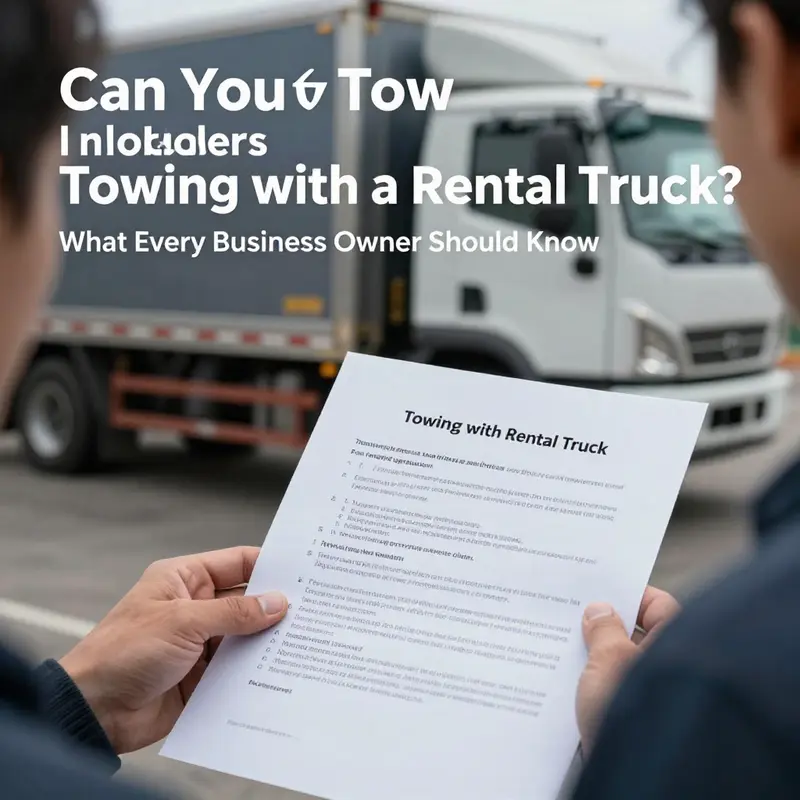
Tow work is a practical necessity for many moves, renovations, and one-off logistical needs. The short answer to whether you can tow with a rental truck is generally yes, but the long answer is that success rests on reading the contract carefully, knowing the truck’s limits, and planning the load with discipline. This chapter builds a narrative around those practical truths, weaving together the rules baked into the rental agreement with the physics of towing and the realities of everyday use. It is not merely a technical checklist but a mindset: towing is feasible when you respect a vehicle’s design, the trailer you hook up, and the insurance protections that accompany the rental. In that sense, the act of towing becomes a controlled negotiation between the renter, the vehicle, and the road ahead, rather than a dare you take with borrowed power.
The heart of the matter is the vehicle’s GVWR, or gross vehicle weight rating, and the corresponding maximum towing capacity. This specification is the ceiling that protects the truck’s drivetrain, transmission, brakes, and cooling system from overwork and overheating. Exceeding the limit can accelerate wear, invite mechanical failure, and void insurance coverage that would otherwise shield you from liability. The GVWR is usually listed in the truck’s manual or on a sticker inside the driver’s door frame. When you consider towing, you’re not just weighing a trailer; you are weighing the combination: the truck itself plus the trailer and everything you load into it. If the sum of the trailer’s dry weight, its cargo, and any extra cargo on the truckbed exceeds the towing capacity, you are simply asking for trouble. This is a common pitfall for first-timers who assume the truck “looks big enough” and forget the math beneath the hood.
To navigate this safely, the contract itself matters as much as the metal. Rental agreements typically spell out what kinds of trailers are permitted and any weight thresholds or restrictions. The policy is more than a legal shield for the company; it is a safety map for you, directing what is allowed and what isn’t in the field. Before you sign or before you head out, read the towing clause with a careful eye. If you intend to tow a trailer that weighs near or above the truck’s limit, you should request a tow-rated model in advance—often a ¾-ton or 1-ton configuration—because these are designed with higher towing envelopes, more robust cooling, and beefier electrical systems. The effort to plan ahead can prevent a last-minute swap that could derail your trip or, worse, compromise safety.
Alongside the vehicle’s rating, the weight of the load itself demands scrupulous accounting. You must account for the trailer’s dry weight and the weight of its contents, plus any cargo you intend to carry in the truck bed. In practice, this means checking the trailer’s own rating and the combined towing limit. It also means planning for distribution and braking: some trailers come with their own brakes, while others are effectively unbraked and rely on the truck’s braking system and hitch to manage the load. If you are towing a relatively light trailer with modest cargo, a light-to-medium payload may be within reach. If your plan involves a large utility trailer, a boat, or heavy equipment, the math becomes more delicate—and the need for a higher-grading hitch and more powerful setup becomes non-negotiable.
Trailer type matters as well. The rental fleet is typically designed for light-duty towing. Small utility trailers, bike trailers, or compact campers may be well within the safe zone for many rental trucks. Large, high-draw loads—such as sizable boats or commercial-grade equipment—often exceed what a standard rental truck is built to handle. The trailer itself matters; a heavier trailer increases the overall combination weight, and different trailer types impose different stresses on the hitch and the frame. If you’re uncertain, the safest course is to pivot toward a tow-dedicated, higher-capacity model or to arrange alternative transportation. The goal is not to prove a point about stiffness or bravado but to ensure traction, control, and reliability across the distance you must cover.
Insurance sits at the edge of this landscape as a practical confirmation of risk management. Some rental policies automatically extend coverage to towing incidents, while others require an add-on or may exclude certain towing activities. It is common for renters to discover gaps in coverage if they tow outside the contract’s boundaries or if the load exceeds the stated limits. If you arrive at a destination with a heavier-than-expected load or encounter a problem on the road, having a clear understanding of whether your policy covers towing-related incidents can mean the difference between a manageable setback and a costly crisis. The simplest move is to confirm coverage directly with the rental agency before you sign and again before you hit the road, especially if you are planning to tow a trailer for the first time or you are mounting unfamiliar equipment onto the hitch.
With these guardrails in place, preparation becomes both more straightforward and more principled. Begin with a direct inquiry at the rental location about tow-rated models. If the staff can confirm the availability of a ¾-ton or 1-ton truck configured for towing, you have dramatically increased your odds of staying within the safe zone. Ask for a model that has a dedicated tow package or reinforced drivetrain cooling, and verify that the hitch and wiring harness are appropriate for the trailer you intend to pull. A tow-rated model is not a luxury; it is a practical prerequisite for anything approaching serious towing work. You may also want to verify the hitch type and ensure you have the correct ball size and electrical connection. These are details that appear small on the surface but can cause large headaches during a trip if mismatched.
The reality, then, is that towing with a rental truck is feasible and often economical, but it requires disciplined attention to the agreement and a sober assessment of the truck’s capabilities. If your plans are modest—light trailer, small cargo, or short distances—a standard rental truck can be adequate and efficient. If your move involves heavier cargo or more demanding towing conditions, you should pursue a higher-capacity truck or a specialized trailer rental rather than attempting to push a standard model beyond its limits. It is a matter of balancing convenience with responsibility, convenience with safety, and convenience with the enduring demands of the road.
To bring this into a practical frame, consider the step-by-step approach that many renters find helpful. First, contact the rental location directly and request a tow-rated model suitable for the anticipated load. Ensure the trailer type aligns with the truck’s capability. Second, calculate the total weight by summing the trailer’s dry weight, its cargo, and any items placed on the truck bed. Compare this total to the truck’s stated towing capacity in the manual or on the door frame. Third, review the insurance implications and verify any exclusions or extra fees tied to towing. Fourth, inspect the equipment before departure: tires, lights, brakes on the trailer, and the integrity of the hitch and wiring. Fifth, test-drive with a lighter load in a safe area to gauge braking response and steering behavior, paying attention to how the combination behaves under acceleration, deceleration, and cornering. If any aspect feels uncertain, pause and seek guidance from the rental staff rather than proceeding with a plan that pushes the limits.
For readers who want a concrete, industry-facing reference, consider exploring a practical guide dedicated to towing with rental trucks that discusses towing a trailer and related considerations. The resource underscores the importance of confirming towing capabilities and limitations before signing the rental agreement, and it reinforces that exceeding those terms may void insurance coverage or incur penalties. In other words, the safest path forward is to anchor every decision in the contract and the truck’s official specifications, not in the impression that “it looks like it should work.” This aligns with the broader theme of responsible moving and the stewardship of your own safety and the safety of others on the road. If you are contemplating a trailer move in the near future, this is not merely a compliance exercise but a practical readiness routine you can fall back on when plans change or weather concerns arise.
In addition to the general principles, a quick, concrete tip can save you time and trouble: when towing, the hitch, trailer brakes (if present), and lighting must perform in unison. A miswired or mismatched connection can lead to trailer sway, brake failure, or inefficient signaling to other drivers, which raises risk for you and others on the highway. Maintaining proper load distribution, ensuring that the trailer’s wheels are properly inflated, and confirming that the spare tire and essential tools travel with you are small acts of preparation that pay dividends in performance and safety.
As you navigate the decision to tow with a rental truck, keep this frame in view: towing is permissible and often practical when you respect the contract, align with the vehicle’s design, and manage the weight with precision. The road rewards preparedness, and the company, you, and others share in the responsibility to uphold it. If you want a concise, field-tested guide to specific towing configurations and dolly configurations tied to rental trucks, you can explore a resource dedicated to towing accessories and hitch setups. penske-truck-rental-tow-dolly provides a focused look at how to approach more specialized towing scenarios with a rental truck, while still keeping the emphasis on safety and compliance at the forefront.
Lastly, for those who want to cross-check broader guidelines, refer to the official guidance from industry peers and manufacturers, which emphasizes verifying towing capabilities and staying within stated limits. The core message is consistent: never exceed the stated towing capacity, never assume a rental truck can handle any trailer type or weight, and never skip the contract review. This is not mere formality; it is the foundation that makes towing with a rental truck a practical, reliable option rather than an unpredictable gamble on the highway.
External resource: For a formal, policy-oriented guide to renting a pickup truck for towing and to understand the mechanics of towing within an organized framework, see Enterprise Rent-A-Car’s How to Rent a Pickup Truck to Tow a Trailer guide. It offers a structured overview of tow-rated models, load considerations, and the role of the rental agreement in shaping your towing plan. https://www.enterpriserentacar.com/rental-truck-towing-guide
Tow Safe with a Rental Truck: Navigating Capacity, Connections, and Compliance
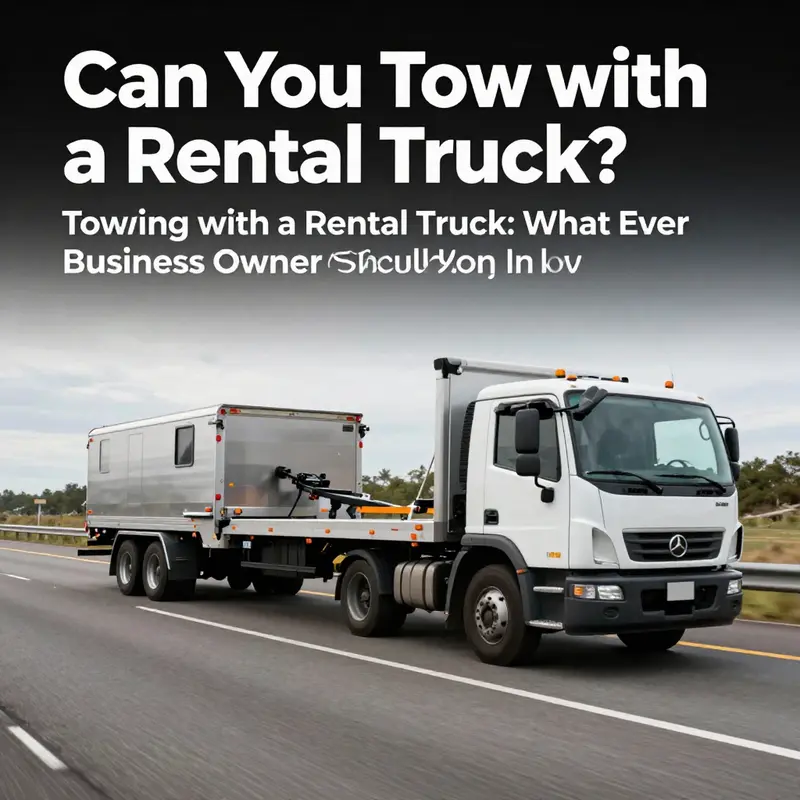
When a move comes with a long to-do list, the thought of towing a trailer with a rental truck can be both convenient and unnerving. The short answer is yes: you can tow with many rental trucks, but only if you treat the task as a careful partnership between your vehicle’s limits, the trailer you choose, and the legal and safety rules that govern it. The rental agreement itself is your first guidepost. It won’t just spell out whether towing is allowed; it will spell out what kinds of loads and which trailer types are permissible, and it will flag any restrictions that could change from one location to the next. This is not a step to skim. A few minutes spent reading the terms can prevent a costly overstep that could void insurance or lead to a roadside shutdown in the middle of a move.
The core concept to anchor your planning around is the towing capacity, often expressed as the vehicle’s towing rating or a combination of ratings like the GVWR (Gross Vehicle Weight Rating) for the truck and the GCWR (Gross Combination Weight Rating) which covers the weight of the truck plus the trailer and its cargo. These numbers aren’t merely numbers; they are safety thresholds. Exceeding them can strain the engine, the transmission, the brakes, and the tires, and it can void insurance coverage if the rental company deems the operation negligent. The towing capacity isn’t always printed in bold on the truck’s sales sheet; it’s usually found in the vehicle’s manual, on a sticker inside the driver’s door frame, or in the rental agreement supplement that accompanies your pickup. Your responsibility is to confirm that the capacity matches the weight of your intended trailer and its contents before you sign.
To know what you’re asking the truck to do, you must calculate the weight carefully. Start with the trailer’s own dry weight and add the weight of whatever you’ll carry inside it. Then add the weight of any equipment, fuel, and cargo that you’ll bring along inside the truck itself if that weight is charged or counted toward the GVWR. The rule is simple: the total should never exceed the truck’s stated towing capacity. If you’re unsure how to weigh the trailer or estimate its haul, most trailer rental outlets provide a weight sheet or calculator to help you quantify this precisely. A miscalculation here isn’t just a misstep; it’s a risk to safety and to your financial protection should something go wrong on the road.
Trailer type matters, too. Rental trucks are typically paired with light- to medium-duty trailers, capable of carrying simple loads like small utility trailers, furniture dollies, or modest camping setups. They are usually not intended for heavy-duty transports such as large boats or bulky commercial equipment. If your plan involves an unusual or heavy trailer, you’ll want to verify not only the weight limit but the hitch type, the trailer’s braking arrangement, and whether the truck’s chassis and cooling system can handle sustained towing at highway speeds.
Hitch compatibility may seem technical, but it is essential for safety. The trailer’s coupler must match the hitch ball size on the rental truck, commonly 2 inches or 2 5/16 inches, and the trailer’s hitch must fit the truck’s receiver. Incompatible hardware is more than an inconvenience; it’s a real risk of detachment in transit. Before you pull away, confirm the hitch is properly installed, securely fastened, and compatible with the trailer’s coupler. If you’re unsure, pause the process and request a professional check from the rental location. To minimize risk, you can also reference practical guidance on hitch installation and compatibility, such as Penske trailer hitch installation, which offers a straightforward overview of choosing the right hardware and ensuring sound connections.
Beyond the hitch, the condition of the system is nonnegotiable. Tires on both the truck and the trailer should be in good shape, with tread adequate for wet or uneven pavement and tires inflated to the manufacturer’s recommended pressures. A tire with a nail, sidewall crack, or a bulge is not something to gamble with on a long tow. Trailer lights must work—brake lights, turn signals, and rear running lights should all illuminate in tandem with the truck’s signals. If any light is dim or nonfunctional, fix it before you depart or delay the move until a repair can be arranged. Your mirrors deserve attention too. The extra length behind the truck creates blind spots, so adjust the side mirrors to reflect the trailer’s full width clearly, and consider adding auxiliary mirrors if your view remains limited.
The safety chains are a small line of defense that should never be omitted. Crisscross the chains under the trailer tongue so that if the hitch fails, the trailer is caught by the chains as a last line of support. This simple step can prevent a dangerous spill onto the roadway and buys you critical time to pull over safely. Another key safety aspect concerns braking. Some light trailers have their own brakes; others rely on the truck’s brakes alone. If the trailer has electric brakes, you may need a brake controller installed in the tow vehicle. The rental truck may not come with this feature by default, especially for lighter trailers. If your setup requires a brake controller, confirm whether it’s included, whether you’ll need to rent or install one, and how to calibrate it for a smooth stop. These checks aren’t cosmetic; they affect control, stopping distance, and the comfort and safety of everyone on the road.
Insurance considerations deserve a clear-eyed assessment before you roll out. Some rental insurance policies include towing incidents, while others exclude them or require a supplemental rider for towing-related events. If your existing coverage could apply to a tow in a rental scenario, obtain written confirmation from the rental company and your insurer. If there’s any doubt, consider purchasing supplemental coverage offered by the rental company. It’s a prudent precaution that can spare you from steep out-of-pocket costs in the event of a mishap, especially when you’re coordinating unfamiliar equipment and unfamiliar routes.
Driving with a trailer attached also requires adjustments in technique. A trailer changes your vehicle’s braking dynamics, steering response, and acceleration. You’ll need more distance to stop and a wider turning radius to navigate corners. Maintain steady acceleration and deceleration, anticipate the sway that can occur at highway speeds, and avoid abrupt lane changes. If you’re new to towing, a short practice drive in a safe area can help you feel how the truck handles with an attached trailer before you hit busier roads. Weather and road conditions further amplify risk. Rain-slick pavement or sudden crosswinds demand slower speeds, careful lane positioning, and a heightened awareness of how the trailer follows the truck’s movements.
Alongside practical precautions, it helps to be aware of local and state rules surrounding towing. Some jurisdictions require trailer brakes beyond a certain weight, others impose specific speed limits for towed units, and some places restrict certain routes for heavy tows. Knowing these constraints in advance can save you from fines or stranded moments on the road. In practice, the most reliable path is to arrange the tow only after you’ve confirmed the truck’s rated capacity, the trailer’s weight, and the intended route complies with local rules.
The path to a successful tow with a rental truck is a path of prevention and clarity. Start with the rental agreement, verify the capacity and the trailer type, then check hitch compatibility, tire conditions, lighting, and safety chains. Confirm insurance coverage and any supplemental protections if you need them. Prepare the trailer and truck with enough time for a thorough pre-trip inspection, including a quick test drive to confirm everything behaves as it should. If you’re curious about the specifics of hitch installation or want a tangible resource to guide you through the mechanics, you can consult a dedicated guide like the Penske trailer hitch installation resource linked above.
Finally, while this chapter avoids turning every technical detail into a lecture, it’s important to remember that towing with a rental truck is not a one-size-fits-all task. Every model, every trailer, and every road presents unique variables. The safest approach is cautious planning, precise weight calculations, and a willingness to adjust plans if any element doesn’t align with the truck’s specifications or the law. If you feel uncertain at any point, pause, reassess, and seek guidance from the rental location or a towing professional. In the end, the question isn’t just whether a rental truck can tow; it’s whether the tow is aligned with the vehicle’s limits, the trailer’s demands, and the journey’s safety for everyone on the road. For further safety guidelines on towing, see the AAA towing guide for rental vehicles: https://www.aa.com/vehicle-rental/towing-guide
Tow Power on a Rental Truck: Navigating Capacity, Coverage, and Compliance
Many people wonder if a rental truck can tow a trailer or a second vehicle, especially when moving a household full of gear or trying to transport a boat for a weekend excursion. The practical answer is often yes, but the real story lies in the details—the truck’s capacity, the trailer you plan to pull, and, crucially, the insurance terms that come with the rental. When you approach towing with a rental truck as a single, connected system—truck, hitch, trailer, cargo, and the conditions of your insurance—you start to see a complex puzzle rather than a simple yes or no. The way you read the rental agreement, the specifications listed in the vehicle documentation, and the policies tied to coverage can all shape not just safety, but whether a claim would be honored if something goes wrong.
The first critical move is to read the rental contract with care. Every rental agreement is a contract of use that sets the boundaries for towing. Some agreements explicitly permit towing certain kinds of trailers or loads, while others restrict towing altogether or place strict limits on weight, speed, or distance. The terms may also specify the type of hitch or the kind of trailer allowed, and they may require you to report a towing plan in advance. If you are planning to tow, treat the document as a map. It will tell you where you can go and what could happen if you push beyond the lines. It is not enough to assume that towing is allowed in a general sense. You have to confirm and keep a copy of written authorization if possible, so you are not left guessing when you are on the road or filing a claim after an incident.
Beyond the contract, the most visible restraint is the truck’s towing capacity, usually described by the GVWR—Gross Vehicle Weight Rating—and the maximum trailer pull rating. The numbers live on the truck’s door frame sticker or in the manual, and they tell you the upper bound of what the vehicle is engineered to carry safely. In practical terms, this means you must add the trailer’s weight (the dry weight) to everything you intend to load into it, then ensure that total does not exceed what the truck can legally and safely haul. Exceeding this limit is not merely a risk of mechanical strain; it can void insurance coverage and leave you financially exposed for damage to the truck or for injuries and damages you might cause on the road. A corollary to capacity is the trailer type. Rental trucks tend to be configured for light- to moderate-duty towing—small utility trailers, typical dollies for vehicles, or camper trailers of limited size. They are generally not designed to tow heavy boats, oversized equipment, or commercial-scale trailers. Pushing a heavy load behind a moving truck can invite poor handling, diminished braking performance, and an increased chance of sway or jackknifing, especially if the trailer is longer or wider than the truck is meant to handle.
Insurance treatment is the other half of the equation and often the most confusing part. Personal auto insurance is frequently not extended to rental trucks—particularly when the vehicle is used to tow a trailer or another vehicle. That means if a collision occurs while you are towing, your standard auto policy might not provide coverage for the rental truck or the towed load. It is common for rental companies to offer additional insurance options designed to address gaps in coverage. A Loss Damage Waiver (LDW) can protect the rental vehicle from damage, while Supplemental Liability Insurance can provide third party liability protection. But even these add ons are not guaranteed to cover every towing scenario. Many policies carry exclusions for towing related incidents, or they may require you to meet certain conditions to qualify for coverage. The result can be a zigzag of caveats: coverage that applies only if you tow within stated limits, or coverage that excludes certain trailer configurations, or additional premiums required for towing specific protection. The prudent move is to review both the rental agreement and the insurance policy details side by side before you hitch anything up. If anything is unclear, ask for confirmation in writing. This can save you hours of dispute and a pile of out of pocket costs later.
A growing number of people naturally assume their existing liability or collision coverage will transfer to a rental truck when towing. Yet the reality is more nuanced. When you are using a rental vehicle as a towing platform, if an accident happens, the insurer may scrutinize whether you were compliant with the rental agreement, whether the vehicle’s capacity was respected, and whether the towing setup itself met safety standards. Any deviation—loading beyond capacity, using an incompatible hitch, or towing a trailer type not approved by the contract—can become a ground for claim denial or substantial deductions in settlement. This risk underscores the need for meticulous preparation. It is not enough to check the numbers; you must also verify that the physical setup aligns with the insurance terms. That means confirming the correct hitch, ensuring the trailer’s brakes and lights work, verifying that the tow connection is secure, and confirming that the trailer is safely loaded without overhanging cargo or uneven weight distribution that could destabilize the vehicle.
In practical terms, plan ahead with a methodical approach. Start by weighing the trailer and its cargo to determine the total load. Subtract the trailer’s own weight from the truck’s rated towing capacity to see how much payload remains for cargo and gear. If you are near the limit, reconsider the plan. It may be wiser to rearrange items or to split the load into multiple trips with a lighter trailer. When you choose a trailer, prefer lighter, well rated options and avoid makeshift configurations that could compromise braking performance or steering control. If you must tow a vehicle, a tow dolly or trailer with appropriate tie-downs, lighting, and braking is essential, and you should confirm with the rental company that this is an approved configuration. A quick check of the hitch and electrical connections before departure can save you from a roadside stop that could turn into a towing nightmare or a dispute about coverage.
The human element matters as well. Talk to the rental agent or the fleet supervisor about your towing plans. Ask for explicit confirmation that towing is permitted for your specific truck, and request a written statement about the coverage for towing incidents under the LDW and liability policies. Ensure you know what the policy excludes—whether it covers towing related accidents, damaged trailers, or third party liability when towing a trailer with a rental truck. If there is any doubt or ambiguity, consider a different vehicle or different trailer arrangement, or purchase the most comprehensive coverage the rental company offers for towing related risks.
For readers who want a practical, hands on resource to support hitch decisions, there are helpful installation guides and best practice references that detail how to set up towing equipment safely. A commonly referenced guide on hitch installation covers the steps, hardware checks, and safety considerations for attaching a trailer to a rental truck. You can explore a detailed walkthrough here: penske trailer hitch installation. This resource provides a concrete sense of the hardware and connection standards that work with many rental trucks and trailers, reinforcing the idea that a careful, properly equipped setup is a cornerstone of safe towing. Treat such guides as practical companions to the formal requirements in the rental agreement, not as substitutes for them.
In the end, the decision to tow with a rental truck is about balancing capability, safety, and coverage. It requires you to know your truck’s GVWR and towing limits, to respect the weight of the trailer and its cargo, and to understand precisely what your insurance will cover if something goes wrong. The risk of non compliance is not just a theoretical problem; it can translate into denied claims, out of pocket expenses, or liability beyond what you anticipated. If the plan involves towing, proceed with a conservative, well documented approach: verify permission, verify weight, verify equipment, and verify coverage. The road is smoother when the legal and the insured align, and the odds of a successful move or trip improve when you treat towing as a well planned operation rather than an afterthought.
For further reading on rental truck insurance and towing coverage, see the Insurance Information Institute’s detailed guide on rental truck insurance and what you need to know. It provides a broader, industry wide perspective on how coverage often works in practice and where gaps tend to appear in real world scenarios: https://www.iii.org/article/rental-truck-insurance-what-you-need-to-know
Final thoughts
In conclusion, towing with a rental truck involves several critical factors that business owners must navigate carefully. By understanding the basics of towing permissions, evaluating vehicle capacities, ensuring compliance with rental agreements, adhering to safety practices, and recognizing the insurance implications, businesses can operate their rental vehicles effectively and safely. Knowledge is key to maximizing utility while minimizing risks associated with towing. Ultimately, this comprehensive understanding empowers business owners to make informed decisions that enhance their logistic operations.