
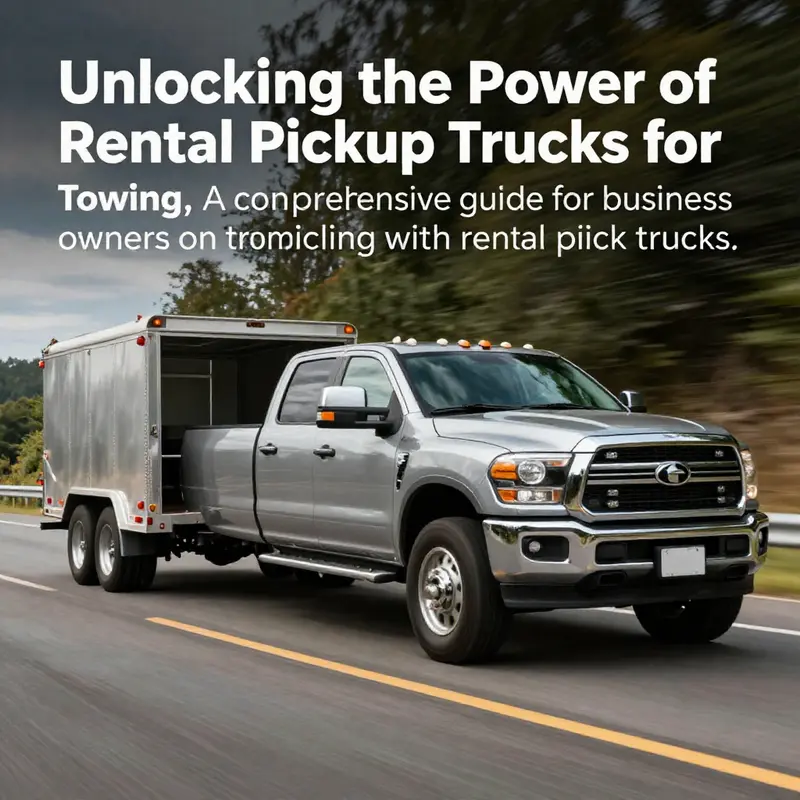
For business owners looking to transport equipment or goods efficiently, understanding the nuances of towing with a rental pickup truck is essential. Whether you plan on hauling trailers, tools, or other materials, ensuring you are well-informed about the requirements and capabilities of rental trucks will save you time, money, and hassle. This article will delve into crucial aspects, from understanding if your rental truck is suitable for towing to navigating legal requirements and ensuring safety. Each chapter will build on this foundation, equipping you with the necessary knowledge to make informed decisions that support your business needs.
Tow It Right: A Practical Guide to Towing with a Rental Pickup Truck
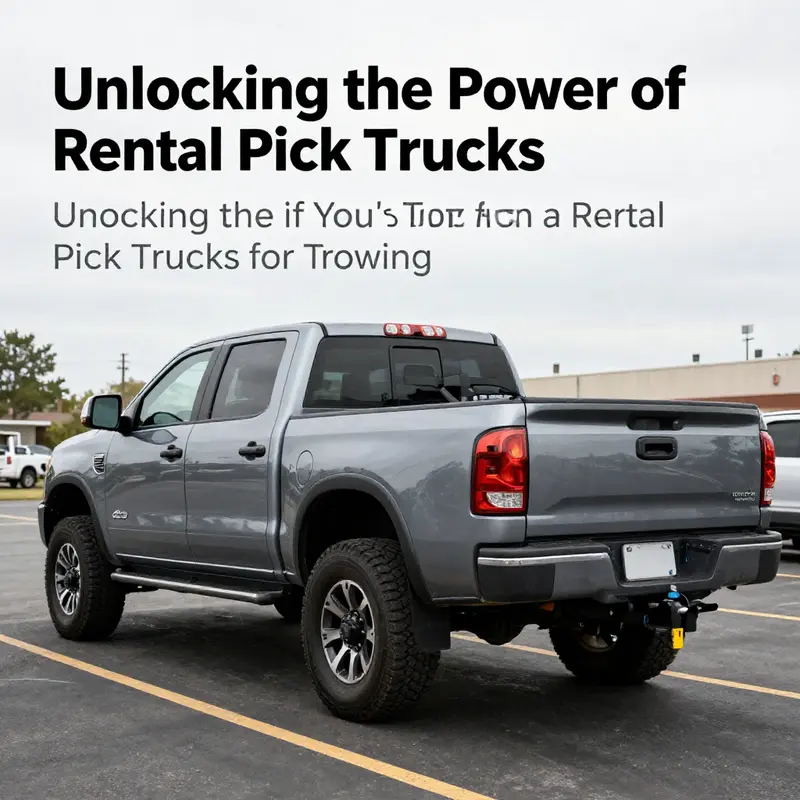
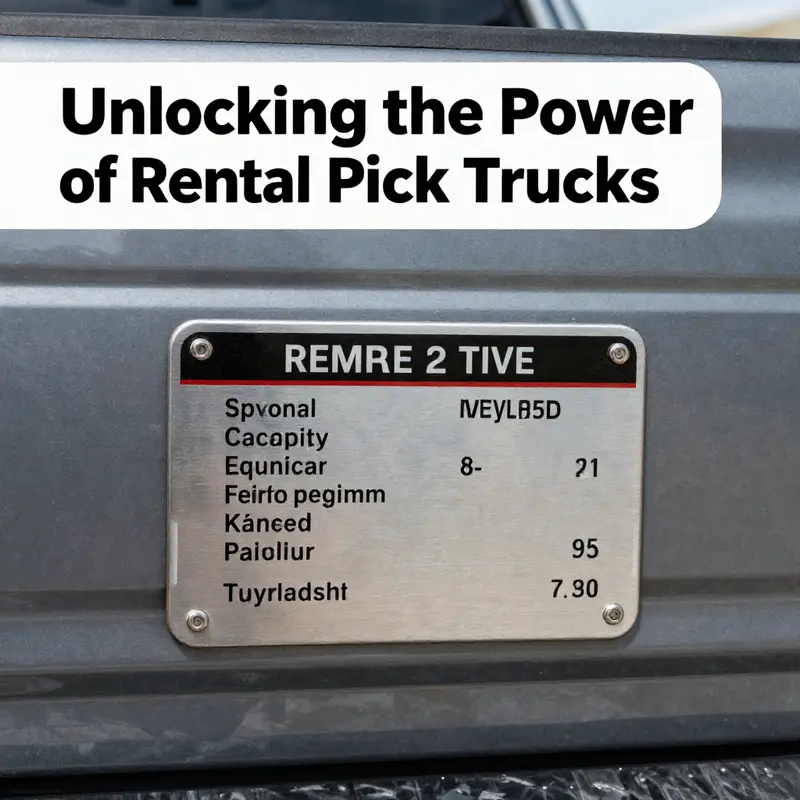
Towing with a rental pickup truck is not as simple as hitching a trailer to any borrowed vehicle and taking off. It’s a practical option for moving a small trailer, a boat, or a utility load, but it only works when the truck you rent is rated for towing, properly equipped, and used in a way that respects governing rules and road safety. The core idea is straightforward: you can tow if the truck’s specifications line up with the trailer’s weight, and if you follow the rental company’s policies and the law. Everything else flows from that reality, so the first question is almost always, what can this particular rental truck handle? You find the answer in two places at once: the vehicle’s documentation and the rental agreement. The placard on the driver’s door jamb or the vehicle specification sheet will tell you the towing capacity—the maximum gross trailer weight the truck is designed to pull. It’s a ceiling set by engineering decisions in the engine, transmission, suspension, and braking system. Exceed it, and you invite mechanical failure, loss of control, or a dangerous brake scenario on the highway. The combined weight of the truck and trailer matters too, because the truck has a total weight rating that can be exceeded if you push beyond the trailer’s weight, cargo, and tongue weight. This is why a careful pre-rental check matters more than a casual assumption after you sign the papers.
Beyond pure numbers, the rental company’s policies shape what you’re allowed to do with that truck. Some fleets welcome towing but require extra insurance, a waiver, or even a brief training to ensure you understand the risks. Others may restrict towing entirely or limit it to certain trailer types. Reading the rental agreement is not a formality; it’s your safety net to avoid surprises on the roadside. If a policy isn’t crystal clear, a quick call to the rental desk can save time, money, and potential liability later. In the same spirit, double-check the trailer hitch situation. Most rental trucks come with a factory-installed receiver hitch, commonly 1.25 inches or 2 inches in diameter, but configurations vary. The hitch must be compatible with your trailer’s ball mount and safety chains, and the electrical wiring for trailer lights must be functional. If the truck you select lacks the proper hitch, you may need to rent one or buy a compatible hitch kit and wiring separately. A moment of clarity here prevents a long, frustrating day on the highway.
Weight becomes the practical nemesis of any towing plan. Tongue weight—the downward force the trailer exerts on the hitch—matters as much as the trailer’s overall weight. The tongue weight is typically a portion of the trailer’s gross weight, and getting it wrong can tilt the entire setup toward sway, brake failure, or poor steering response. The rule of thumb found in safety literature often emphasizes that the combination should stay within the truck’s towing capacity and the trailer’s own weight limits, but the exact mix depends on the gear and the load. Overloading a lighter truck is an easy trap to fall into when the trailer looks manageable in a quiet parking lot and seems less daunting on the highway. What seems reasonable in a driveway can become a hazard in traffic if the tongue weight or the trailer’s load distribution is off. A cautious approach is to treat every trip as a weight budgeting exercise: confirm the trailer’s GVWR (gross vehicle weight rating) and the tongue weight, compare them to the truck’s rated towing capacity, and allocate cargo so that the combined weight stays comfortably within manufacturer recommendations.
In practice, the path to safe towing with a rental pickup begins with a straightforward triad: hitch, weights, and awareness. The hitch must be correctly sized for the trailer and the truck, and the electrical system must illuminate trailer lamps and function with the vehicle’s lights. A stabilizing or sway-control hitch can be essential when towing larger or more awkward trailers, and some loads demand a weight-distributing hitch to keep the truck’s axles balanced and the trailer tracking properly through curves. If a buyer’s guide or rental catalog suggests a weight-distributing hitch for heavier loads, you’ll probably need to arrange that separately through the rental company or an accessory retailer. The moment you recognize that the truck’s equipment is not aligned with the trailer you intend to tow, pause and reconfigure rather than proceed and risk a dangerous situation.
The license question can be a surprisingly thorny one, but the core message is simple: ensure your license covers the weight you’re towing. In many places, towing a trailer requires a specific license category or endorsement, especially when the combined vehicle-trailer weight exceeds a threshold. The common reality in the United States and Canada is that you must confirm your license aligns with the trailer’s weight and the combination’s total. If you’re planning to tow a heavier trailer, you may need a more advanced license class; for lighter to moderate loads, a basic license might suffice, provided the weight of the truck and trailer does not surpass regulatory limits. The key is to verify the license classification before you leave the lot, not after you’ve hit the road and encounter a law enforcement stop or an inspection.
Even with the right truck and the right license, the actual driving demands respect for the trailer’s presence. The extra mass behind you means longer stopping distances, altered steering feel, and a need for broader turn radii. When you’re towing, every maneuver—accelerating, braking, and cornering—requires additional headroom. Road conditions, weather, and terrain amplify these effects, so the prudent driver plans routes that avoid abrupt lane changes, steep descents, or highway drafts. A careful pre-trip inspection is a nonnegotiable first step: tires should have adequate tread and pressure, brakes should respond smoothly, lights must illuminate and signals should function, and the hitch connection should be secure and free of movement. Inside the trailer, distribute weight consistently and consider a 60/40 front-to-rear balance to reduce sway and encourage stable tracking. A trailer brake controller is essential if the trailer’s braking system is not electrically tied to the truck’s brakes, and in cases where it isn’t, the control should be adjusted to match the load so that the trailer brakes engage smoothly and predictably.
The realities of towing also demand a practical, methodical approach to planning. Before you rent, map the journey and estimate how much you’ll be hauling, how long it will take, and the road types you’ll encounter. If a trailer adds significant length, you’ll need more room for lane changes and passing, and you’ll have to account for the effect on fuel economy. The combination’s performance on hills or high-speed stretches should be considered, particularly if the trailer is heavy enough to tax the towing capacity on uphill segments. A conservative mindset helps; avoid pushing the truck beyond its limits and allow extra time for braking and turning. If you discover that your trailer requires a hitch or an electrical setup that isn’t in place, consult a quick installation guide or the rental desk for the appropriate add-ons. In some cases, you might find a simple, pre-assembled hitch kit or wiring harness available at the rental location, but in other scenarios, you’ll need to arrange them through a separate supplier. The bottom line is that towing with a rental pickup truck is feasible, but safety and compliance hinge on accurate specifications, proper equipment, and disciplined driving.
For readers who want a concise procedural touchstone, the following steps crystallize the workflow: confirm the truck’s towing capacity and the trailer’s GVWR, verify the rental agreement’s towing provisions, ensure hitch compatibility and wiring, check your license category, perform a thorough pre-trip inspection, balance the load with attention to tongue weight, and drive with caution, leaving ample stopping distance and space for maneuvering. If you encounter any ambiguity about a hitch or an adapter, it’s perfectly reasonable to pause and seek clarification from the rental company or a trusted mechanic before you embark. The safety logic here is straightforward: a well-matched pairing of the vehicle and trailer, combined with informed operation, minimizes risk and preserves both the rental investment and the people sharing the road with you on the trip.
To support those who prefer a hands-on reference, a quick insider tip can be a practical bridge to action. If you discover your rental truck lacks a suitable hitch or needs a different hitching configuration, the dedicated installation guide for trailer fittings can be a helpful companion penske-trailer-hitch-installation. This resource offers a grounded look at compatible hitch types, weight considerations, and secure wiring practices, enabling you to approach the rental desk with clear questions and a plan. And while the journey might start with a simple rental, the responsibility you carry on the road depends on prudent choices from the first mile to the last.
As a final note, the safety framework underpinning these considerations is not merely bureaucratic hygiene. It reflects established practice and evidence from leading safety authorities. The National Highway Traffic Safety Administration and other reputable sources emphasize the crucial role of correct equipment, weight management, proper licensing, and deliberate driving when towing. Those guidelines remain the backbone of any towing decision involving a rental pickup truck. For readers seeking a broader safety context beyond the rental desk, consult the official towing and trailer safety resources to see how the rules translate into real-world scenarios and trajectories on diverse road conditions. External resources provide a broader map of what safety looks like when you’re towing behind a borrowed truck. In short, towing with a rental pickup truck is a viable option for the right load, but it only works when you treat the truck, trailer, and road as a single, carefully engineered system that you’re privileged to control for a short time—not a free pass to stretch beyond safe limits.
External resource: https://www.nhtsa.gov/vehicle-towing-and-trailer-safety
null
null
null
null
Tow Power, Not Trouble: Mastering Safety and Weight When Towing with a Rental Pickup Truck
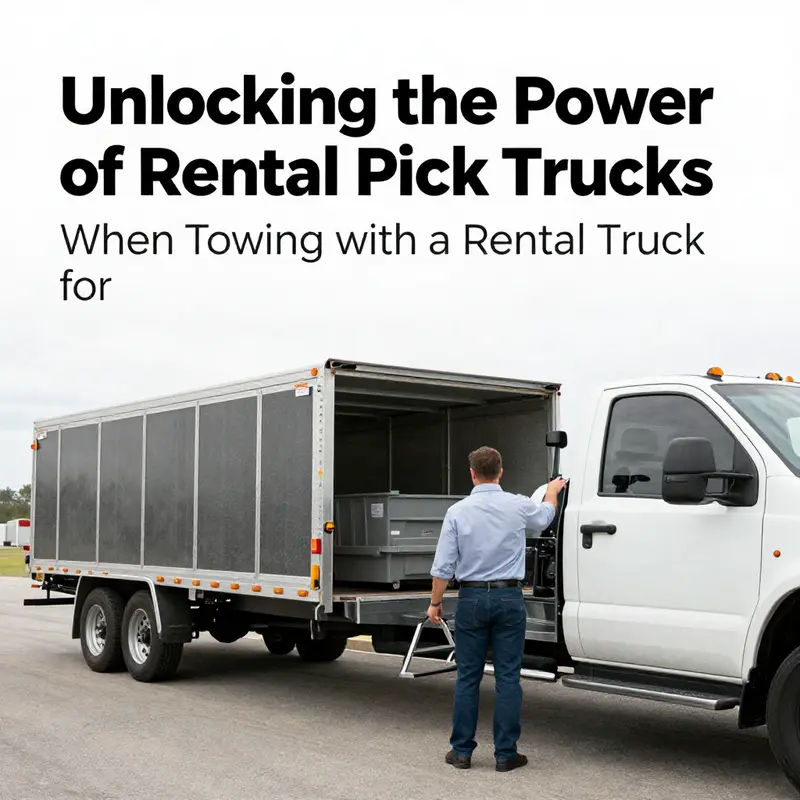
Towing with a rental pickup truck is not a shortcut to a quick hitch-and-go solution. It is a temporary tool that requires the same discipline you would apply to a owned vehicle, with a few extra checks because you are borrowing the right to pull a trailer for a short period. The core of safe towing with a rental is straightforward: know the truck’s limits, equip it correctly, stay within legal licensing boundaries, and maintain vigilance from the moment you pick up the keys to the moment the last strap is loosened after return. This chapter threads together the practicalities of capacity, weight management, and hands-on safety into a single narrative that keeps you and everyone around you out of harm’s way while preserving the life of the rental itself. The first step is practical and nonnegotiable: confirm the truck’s towing capacity and payload in the rental agreement and on the vehicle placard or specification sheet. These numbers tell you the ceiling for the trailer itself and for anything you put inside the truck bed. The towing capacity typically refers to the maximum weight the hitch can pull, while payload is the weight the cab can carry while still performing safely. When you read the numbers, treat them as boundaries, not targets. If your trailer weighs more than the stated limit, or if the combined weight of the truck, trailer, and cargo would push the load beyond the GVWR, you are courting mechanical failure. It may be tempting to push a little beyond the limit for a one-time move, but the consequences—brake fade, overheated clutches, or steering instability—rarely justify the risk. If there is any ambiguity, call the rental agency and ask for exact specifications. The placard inside the driver’s door jamb is your friend here, and so is the vehicle manual, which explains the interplay between towing capacity, payload, and the tongue weight that the hitch must support under various configurations. Closely tied to capacity is the question of equipment. A rental truck must have a factory-installed hitch receiver in the correct class and the proper electrical wiring for trailer lights. Some rental outfits list these features as supported options, and others do not include them at all, leaving you to rent a kit or purchase the components separately. If you discover a missing hitch or wiring kit at pickup, you should either delay the tow or adjust the plan to rent the necessary gear from a nearby outlet. A stabilizing hitch system or sway control becomes particularly important when you expect a long, lightly loaded trailer or a tall, windy day. The goal is to keep the trailer from trying to shepherd the vehicle or to snap the hitch under sudden gusts or rapid maneuvers. In many ways, the physics of towing with a rental truck become visible only when you attempt a precise turn or a sudden stop. For licensing, the rules are not universal; they vary by country and jurisdiction. In several places, you may need a Class C1 license for trailers under a certain weight and a higher category for heavier combinations. Some regions even require a separate endorsement or a specific certification for towing a trailer beyond a defined GVWR. The most reliable approach is to check local requirements before you rent and again before you hit the road. You want to avoid the situation where the truck is physically capable of towing a load but your license is not. If you are unsure, contact the licensing authority in advance. Weight limits are not suggestions; they are the backbone of safe control. Exceeding the truck’s maximum towing capacity, the trailer’s GVWR, or the combined weight of truck and trailer pushes the system into a margin where braking efficiency drops and steering becomes progressively more demanding. The law of physics does not bargain with your intentions. On the road, the consequences of overloading can manifest as longer stopping distances, reduced traction, and a greater risk of trailer sway in crosswinds. A well-managed weight plan begins with the trailer’s own weight and its cargo. Distribution matters as much as total mass: the heavier items should sit low and near the trailer axle to keep the front and rear balance within a safe range. A common guideline to aim for is a 60/40 split, front to rear, to help keep the hitch pressure manageable and to ensure the trailer’s tongue weight remains adequate for steering and braking. The broader takeaway is that the numbers are not just paperwork; they are a map of how your vehicle will respond under acceleration, deceleration, and cornering. When you plan the load, you must also account for the trailer’s own dynamic weight shifts during start, stop, and braking. That dynamic load is why a weight distribution strategy is paired with a proper hitch setup, correct electrical connections, and, if needed, a brake controller for the trailer. A practical reminder is to secure the load so that shifts during motion are minimal. Tie-downs should be snug but not so tight that they compress the cargo; straps should bite evenly across the items, with anchors that reduce movement during bumps and curves. Safety chains are nonnegotiable: they provide a critical backup if a hitch fails or spacing loosens under stress. The simplest way to affirm they are there and correctly connected is to do a quick walk-around before you leave the lot. Look for even clearance between the hitch and the trailer, verify the chain angles, and ensure the chains have enough slack to avoid binding when turning. If you anticipate difficult loading scenarios—heavy items in the back, a non-functional vehicle, or a trailer with a high center of gravity—a winch system is worth considering. A winch allows safer loading and unloading, reducing the risk of strains or injuries and lessening the dependence on gravity or manual ramps. It is easy to underestimate how much the extra weight and wind resistance add to the stopping distance and steering effort. The pre-trip inspection becomes not a ritual but a preventive safeguard. Check tires for tread wear and proper inflation on both the truck and the trailer; inspect brakes and lights, including trailer brake lights, turn signals, and running lights; ensure the hitch is secure and the safety chains are correctly linked. Verify that the wiring harness is solid, connectors are clean, and that the trailer lights illuminate in synchronization with the truck’s lights. A short test drive in a safe area can reveal issues that a static inspection cannot, such as a sluggish response to steering inputs or unusual vibrations from the hitch area. When loading or unloading, a practical step is to distribute weight so that the heavier items sit low and as close to the axle as possible. This approach helps maintain stability and reduces the likelihood of trailer sway. If you are new to towing with a rental truck, the learning curve can be steep, but it follows a predictable path: know the limits, equip properly, secure the load, and drive with measured caution. The driving discipline changes in subtle ways: increase following distance, anticipate longer braking times, and make wider turns to accommodate the trailer. Avoid abrupt maneuvers, and plan your route to minimize busy corridors or high-wax roads where traction might be compromised. Be mindful of wind gusts and passing trucks that can create a dangerous gust, especially with a larger or taller trailer. A practical mindset is to check and re-check the connections, the weight balance, and the weather forecast before departure. If any doubt arises about the suitability of the truck for your intended load, do not push ahead. The safer choice is to swap trailers, adjust the load, or choose a different vehicle that can more predictably handle the weight and length of your tow. For readers seeking a concise, path-tested resource on nuanced safety practices and equipment checks, a reputable rental safety tips resource offers a condensed, actionable checklist that complements this discussion. The chapter’s emphasis remains unchanged: safety and weight management are not bureaucratic hurdles; they are the practical tools that turn a rental into a reliable bridge between your destination and your plan. To explore a focused, hands-on reference on hitching and towing considerations, you can consult a tow dolly guide here: penske-truck-rental-tow-dolly. And for deeper, externally validated safety practices, see a trusted rental safety tips resource on vehicle towing, which reinforces the essential steps discussed here: rental safety tips. Keeping these elements in balance—capacity, equipment, licensing, weight distribution, and vigilant operation—will help you complete your move with confidence and calm, rather than with regret and repair bills.
Tow Policies and Gear: Understanding How Rental Pickup Trucks Can Tow
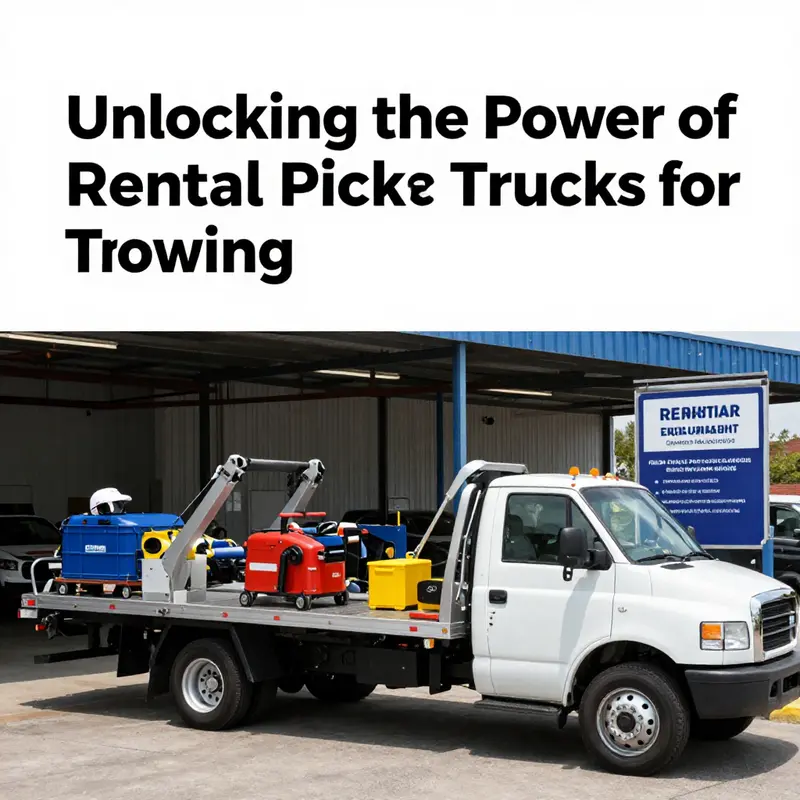
Towing with a rental pickup truck is not a guaranteed feature of every rental agreement. The appeal is clear: you get a versatile vehicle, sometimes a trailer, and the convenience of a one-way move or a quick haul without owning a heavy-duty truck. The reality, though, is that you can tow with a rental pickup only when the truck is properly rated and equipped, and when you follow a disciplined process of planning, compliance, and safety. The decision hinges on three intertwined elements: the truck’s towing capacity, the vehicle’s payload capacity, and the trailer’s weight and characteristics. The towing capacity is the maximum gross trailer weight the truck can pull safely. The payload is what the truck can carry inside—passengers, cargo, hitch hardware, and any added equipment. The trailer’s weight and GVWR set the ceiling for what you attach and how you maneuver it. If any of these figures are ignored, you risk overheating brakes, tire failure, and a loss of control that can endanger you and others on the road. The first step is concrete: pull out the rental agreement and the vehicle’s specification sheet, and compare them side by side. The placard inside the driver’s door jamb is often the most reliable source for the exact numbers on that particular unit. If the information isn’t readily available, ask the rental agent to pull the VIN-specific specs. Relying on generic model figures invites misjudgment and creates avoidable risk, especially when you’re dealing with a trailer that adds significant mass and dynamic forces to the equation.
Equipment availability is the second pillar. A stout, factory-installed hitch receiver is non-negotiable if towing is your goal. In practice, hitch classes range from I to IV, and not all rental trucks arrive with the right hitch or wiring in place. Many rental outfits require you to rent or purchase the necessary equipment at the counter. If the trailer uses electric brakes, a compatible brake controller may be required, and not every location stocks these controllers as a standard add-on. Lighting is essential as well—the trailer lights must synchronize with the truck’s system to ensure visibility and compliance. The reality is simple: a rental pickup can tow only if the unit is equipped for towing, and if the needed hitch, wiring, and safety devices are available and in good working order. Before you take to the road, confirm that the wiring harness matches the trailer, the fuses are intact, and the electrical connection is secure. If you’re unsure, don’t guess; verify with a staff member, and test the lights and signals at a safe, quiet area before you start.
The third pillar, and perhaps the most important, is licensing and regulatory compliance. In many regions, towing a trailer requirements extend beyond a standard driver’s license. Class C1 licenses in some areas cover trailers under certain weight thresholds, while heavier trailers or combinations may require Class B or another specialized endorsement. It’s not enough to be legally permitted to operate a vehicle; you must be licensed to tow the specific load you plan to carry. If you’ll be crossing borders or driving in unfamiliar jurisdictions, check local rules and ensure your license and insurance are compatible with the trailer’s weight and type. A misstep here can invalidate rental coverage and put you at legal risk if you’re stopped or involved in an incident. The prudent approach is to verify your license category against the planned trailer’s GVWR and to confirm any endorsements needed for the trip. If there’s any doubt, contact the rental company and, if necessary, arrange alternative transportation that keeps you in full compliance.
Policy landscapes vary among providers, and the nuance matters as much as the numbers. In general terms, one widely known rental network supplies pickup trucks and trailers and allows towing so long as the trailer’s weight stays within the truck’s stated capacity. They typically add liability insurance requirements when towing, to reflect the added risk. Other networks are more restrictive: you must explicitly request towing equipment, and there may be an extra fee for a hitch, a ball mount, wiring, or even a brake controller. In practice, the towing capacity you’re allowed to use is not a universal figure for the brand but a function of the exact truck model, its configuration, and whether it includes a towing package. Insurance requirements may be stricter when you’re towing, sometimes necessitating proof of your own coverage or purchasing supplemental protection from the rental company. The core message is straightforward: read the towing guidelines in the rental agreement, confirm the vehicle’s actual capacity, and understand how the company prices and covers towing risk.
Equipment availability, too, can be a moving target. The major players generally offer essential towing accessories—trailer hitches, trailer balls, and wiring harnesses—often at an extra cost. Some locations may stock optional upgrades such as heavy-duty hitches or electric brake controllers, particularly for larger trailers. Because stock can vary by branch, season, or regional demand, it pays to call ahead or check local inventory before you pick up. The takeaway is practical: you want to know that the gear you need will be on hand when you arrive, not after you’ve loaded up your cargo and discovered a missing component. This is not merely about equipment; it’s about ensuring that your load is secure, your lights work, and your control systems respond as expected.
From a safety lens, the towing lifecycle is a sequence of checks, not a single action. A prudent approach begins with a thorough pre-trip inspection. Inspect tires, brakes, lights, and the hitch connection. Trailer weight distribution matters; aim for roughly 60 percent of the load toward the front of the trailer and 40 percent toward the back, while accommodating the trailer’s own geometry and the truck’s handling quirks. If your trailer uses electric brakes, confirm the brake controller is calibrated and compatible with the trailer’s demand. And because towing increases stopping distances and reduces agility, plan for longer braking distances, smoother lane changes, and careful speed management. The process should feel deliberate rather than hurried, because the consequences of rushing a hitch connection or neglecting a light circuit can be serious.
The practical scenarios you may face vary with load and distance. A light trailer on a short trip is far more forgiving than a heavy trailer on a long highway haul. If your plan involves delicate items, or routes through unfamiliar terrain, you may want to lean on more specialized solutions—such as a flatbed option or a professional towing service—to avoid unnecessary wear on the rental unit and to minimize risk. If you pursue towing with a rental truck, treat it as a temporary setup rather than a long-term strategy, and ensure that every connection, chain, and strap is secure. On move day, it’s wise to test the setup in a controlled, quiet space before venturing into traffic. Confirm that all lights, brakes, and signals operate as intended, and double-check that the trailer is firmly attached.
In guiding the reader toward practical steps, a few clear recommendations emerge. First, confirm the truck’s exact towing and payload ratings in the rental agreement and verify that the trailer you intend to haul does not exceed those limits. Second, ensure the vehicle is equipped with a compatible hitch and wiring, and secure any required brake controller or sway stabilization device if the load demands it. Third, educate yourself on the licensing and insurance requirements specific to your jurisdiction and rental agreement—do not assume universal coverage or qualification. Fourth, communicate with the rental branch about equipment availability and pricing, and request written confirmation of towing capabilities for your specific unit. And fifth, when in doubt, consider alternatives that minimize risk to the vehicle’s drivetrain, tires, and brakes—such as a dedicated tow service or a different type of trailer that aligns more cleanly with the truck’s capabilities.
For readers who want a practical, hands-on point of reference on hitch setup, you’ll find targeted guidance at Penske’s trailer hitch installation resource. It provides step-by-step considerations that complement the policy and equipment discussions above, helping you approach hitching with greater confidence. See: Penske trailer hitch installation.
External resource: https://www.aaa.com/automotive/towing-safety-guide
Final thoughts
In summary, towing with a rental pickup truck can be a practical solution for business owners needing to transport goods efficiently. By understanding key specifications, legal requirements, safety protocols, and rental policies, you can ensure a successful towing experience. Always verify your truck’s capacities and ensure you’ve the right equipment and licenses. Being well-prepared not only strengthens your operational capabilities but also safeguards your business interests.