
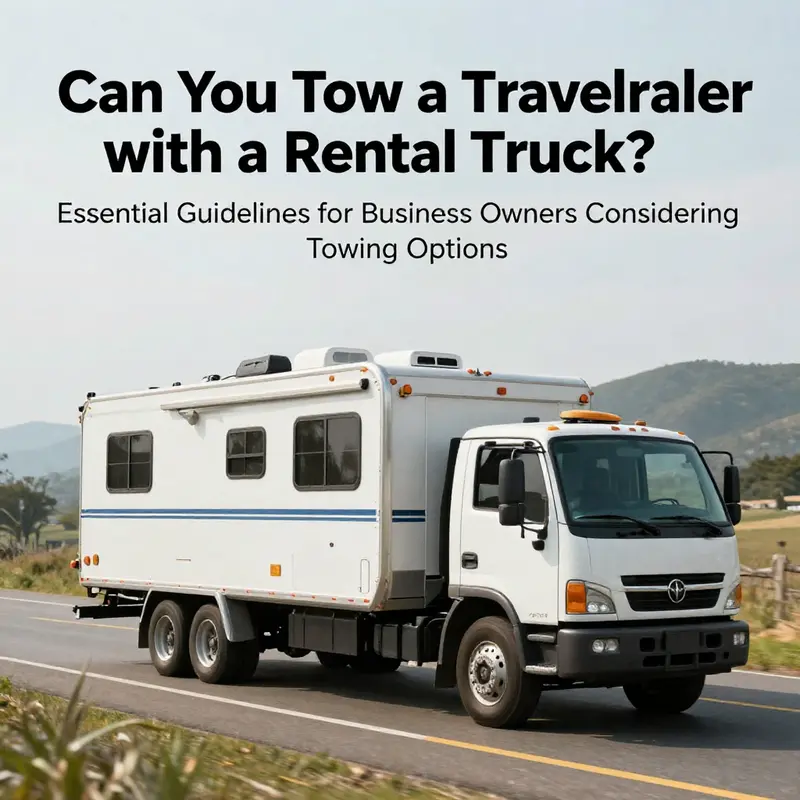
For business owners looking to tow a travel trailer using a rental truck, understanding the complexities involved is paramount. Whether for transporting goods, mobile offices, or event setups, the ability to tow effectively can significantly impact your operations. This guide delves deeply into assessing the required towing capacities, understanding rental company policies, meeting equipment needs, and prioritizing safety throughout the towing process. Navigate these facets with confidence as you learn how to utilize rental trucks for your travel trailer requirements effectively.
Weight as the Real Test: Safely Tow a Travel Trailer with a Rental Truck by Respecting GCWR
Towing a travel trailer with a rental truck can be a practical solution for a move or a road trip, but safety hinges on more than just the truck’s advertised towing capacity. The real governing limit is the Gross Combined Weight Rating (GCWR), the manufacturer’s upper bound for the total weight the truck can safely handle when the engine is running, the driver is aboard, the fuel is in the tank, and the trailer is attached. This single number encapsulates both the truck’s own mass and the load it is allowed to pull, and it acts as the ultimate safety threshold. Focusing only on the “maximum towing capacity” can give a false sense of security. The GCWR accounts for all weight the vehicle must control under real driving conditions, including hills, emergency maneuvers, and the inevitable weight of passengers and cargo in the cab. When you’re planning to hitch a fully loaded travel trailer to a rental truck, the GCWR becomes the compass that keeps the entire operation within safe limits and within the rental agreement’s boundaries.
To understand how to translate this into a practical plan, imagine the process as a careful balance of weights rather than a simple number check. The concept begins with locating the GCWR on the truck’s certification label or in the owner’s manual. It is not the same as the truck’s curb weight or its stated towing capacity. The GCWR represents the absolute maximum weight the combination of truck, trailer, passengers, cargo, and fuel can safely exceed while still maintaining predictable steering, braking, and control. Access to this information is non-negotiable because it anchors every subsequent calculation about whether towing is even advisable in a given scenario. When you have the GCWR in hand, you begin to translate weight into a real-world plan that prioritizes control and safety over convenience or cost savings.
The next step in the chain is weighing the trailer itself in its fully loaded state. Dry weight or GVWR figures from the manufacturer can be misleading because they exclude fluids, water, propane, groceries, clothing, tools, and other gear you intend to carry. The most accurate method is to weigh the trailer at a certified public scale after it’s packed and loaded for the trip. This yields the actual combined weight you will be pulling, which is what matters for the GCWR calculation. It’s not unusual for a fully loaded trailer to weigh several thousand pounds more than its advertised “dry” or base weight. Knowing this figure with precision means you won’t guess your payload and risk pushing the truck past its safe limit.
With your trailer’s actual weight in hand, you turn to the rental truck’s curb weight—the vehicle’s empty mass without people or cargo. The curb weight sits alongside the number for GCWR and the weight of your party to establish the first part of the total. It’s essential not to confuse curb weight with gross vehicle weight or any other figure on the spec sheet. The curb weight serves as the baseline for determining how much additional mass you can add before you reach the GCWR. Once you know the curb weight, you can begin building the total load in the truck. Add the weight of all passengers, luggage, and fuel inside the cab, and then add the fully loaded trailer’s actual weight. If the sum equals or exceeds the GCWR, you’ve crossed the safety boundary, and towing is ill-advised—if not outright unsafe.
The calculation itself is straightforward in principle but demands diligence in practice. Start by identifying the GCWR from the truck’s documentation. Then weigh the trailer when fully loaded, accounting for water tanks, propane, fuel, and all gear. Determine the truck’s curb weight from the certification label or the manual. Next, add the weight of people, fuel, and cargo in the truck. Finally, sum this total with the trailer’s actual weight. The moment the total meets or surpasses the GCWR, you must either reduce weight, choose a different vehicle, or reconsider towing altogether. The math is simple, but the implications are profound: a momentary misstep can translate into reduced braking ability, compromised steering, increased sway, and, in the worst-case scenario, a loss of control on the highway. The message here is clear—GCWR is not a recommendation to exceed; it is a boundary to respect.
Even when the numbers line up, other factors must be weighed with equal seriousness. Tongue weight—the downward force the trailer exerts on the hitch—matters greatly for stability. A general rule of thumb is that tongue weight should be about 10 to 15 percent of the trailer’s total weight. If the tongue weight is too light, the trailer can sway; if it’s too heavy, it can pry the rear of the truck upward and alter steering dynamics. The hitch and receiver capacity must also be matched to the trailer’s needs. Some rental trucks ship with a generic hitch receiver that may not be appropriate for heavier trailers or for certain hitch configurations. If the receiver or hitch components aren’t rated for the expected tongue load, a catastrophic failure could occur. The engine and transmission deserve attention as well; a high-tume tow places greater demand on the powertrain, and that demand increases on grades or during rapid accelerations. A truck with a robust engine and transmission is less likely to struggle under heavy loads, which translates into better control and shorter stopping distances.
These technical considerations are never merely abstract numbers. They translate into real-world practices that protect you, your passengers, and other road users. The practical takeaway is that a rental truck with a high towing rating is not automatically suitable for every travel trailer. The GCWR is the true ceiling, and the actual feasibility of towing rests on how the combined weights interact with that ceiling. This is why, when you plan to tow, you should approach the rental process with a disciplined, weight-conscious mindset. It’s not enough to know what the truck can tow; you must know what the truck can safely pull when all the other loads and variables are factored in.
The decision-making process also intersects with rental-company policies, which can add a layer of complexity beyond the physics. Many rental firms have nuanced rules about towing. Some require an additional insurance add-on for towing activities. Others limit towing to specific trailer types or total weight classes, or prohibit towing without explicit prior approval. These policies are designed to mitigate risk for both the renter and the company and may reflect the insurer’s risk appetite for heavy loads, long hauls, or unfamiliar equipment. A responsible approach is to contact the rental company directly to confirm that towing is allowed for your particular trailer, verify whether any extra fees or insurance coverages apply, and understand any restrictions about trailer types or maximum weight. This is a step that many overlook but can save a lot of trouble later, including disputes, coverage gaps, and disputes about responsibility in the event of an incident.
To make the discussion more practical, consider a scenario that reflects how these calculations play out in the field. Suppose the truck’s GCWR is 26,000 pounds. The truck’s curb weight is 8,000 pounds. You and your passengers weigh 400 pounds, and you’re carrying 30 gallons of fuel in the tank (approximately 200 pounds, depending on fuel), plus luggage and gear inside the cab totaling another 600 pounds. That puts the in-truck total at around 9,200 pounds. If your fully loaded travel trailer weighs 17,000 pounds, the combined total would be 26,200 pounds, which slightly exceeds the GCWR. In this case, towing would be outside safe limits, and the conclusion should be not to tow with that configuration. If, however, the trailer weighs 16,000 pounds with all gear, the total would be 25,200 pounds—within the GCWR, but you would still want to verify tongue weight, hitch rating, and braking performance under variable conditions. If the tongue weight for the trailer is 1,800 pounds (which is about 11.3 percent of the trailer’s weight), this sits within the recommended range and would contribute to stability rather than undermine it. Yet a high tongue load combined with a marginal GCWR could still pose problems, especially on grades or in crosswinds. In other words, each element interacts with the others, and the whole system must be evaluated as a single engineering problem, not a collection of independent numbers.
The process of evaluation, then, becomes a shared responsibility among you, the trailer owner, and the rental company. You should verify the GCWR and curb weight on the truck you plan to rent, weigh the trailer in its loaded state, and perform the combined-weight calculation with care. If you’re uncertain about the trailer’s actual weight or the truck’s weight ratings, seek professional weighing services and, if possible, test the setup in a controlled environment before venturing onto public roads. It’s wise to practice backing up and maneuvering with the trailer in a safe, open space to develop familiarity with the vehicle’s handling characteristics. Practice helps you become sensitive to trailer sway, the effect of wind, and how small steering adjustments affect the combination’s stability. It also gives you a clearer sense of how much space you’ll need for turns, lane changes, and braking in various conditions.
Visualization can aid understanding. Picture the truck and trailer as a single, tall, heavy vehicle with a long wheelbase. The mass distribution matters. If the tongue weight is too light, the trailer can oscillate side to side and become difficult to control. If the tongue weight is too heavy, the rear of the truck may squat, affecting suspension, steering, and braking feel. The hitch design matters too; ensure the receiver and hitch ball are correct for both the truck and trailer and that the wiring harness is fully compatible with the trailer’s lights and braking signals. Even a well-chosen hitch system can fail if wiring is poor, brakes are out of adjustment on the trailer, or tires are underinflated on either vehicle. Tire condition and proper inflation are critical because a tire blowout at highway speeds multiplies risk. Always inspect tires, brakes, and lights before departure, and carry a road-safe toolkit and emergency gear as a precautionary measure.
In this context, the practical approach to decision-making involves more than raw numbers. It requires a careful assessment of risk, a clear understanding of the rental agreement, and a readiness to adjust plans if any element shows signs of potential failure. The internal policy review is as important as the mathematics. If you find the GCWR is within range but are unsure about the trailer’s weight or the condition of the hitch and vehicle systems, pause the plan and consult with the rental company or a professional technician. Some operators may offer alternatives—smaller trailers, lighter cargo configurations, or even different vehicle types—that better align with safety margins and insurance coverage. The aim is not to push the envelope but to establish a towing setup that you can trust across long stretches of highway and varied terrain.
To connect practical guidance with hands-on resources, consider a common practical reference: a guide that discusses towing setups and hitch configurations, including the role of tow accessories and installation considerations. This resource offers real-world guidance on how to pair a rental truck with a trailer, including how to think about weight distribution and hitch selection. For readers who want to explore related setup options, a linked guide such as this can provide a concrete starting point. As you continue your planning, you might also explore a practical, scenario-based discussion of towing with rental equipment and how to approach it safely in different driving environments. This approach keeps the focus on responsible decision-making rather than on pushing the limits of equipment. To further support a seamless planning process, you can also consult a dedicated resource that walks through the operational steps of hitch installation and setup, which can help ensure that all components are correctly aligned before you hit the road. penske-truck-rental-tow-dolly offers insights into related towing setups and may help you conceptualize how different configurations influence weight distribution and control during transit.
Ultimately, the safety framework boils down to a straightforward rule: the GCWR is the ultimate safety threshold. Every calculation you perform should confirm that the total combined weight—truck plus trailer plus all in-cab and in-trailer loads—does not exceed that limit. If the combined weight fits under GCWR, you still proceed with caution, ensuring tongue weight, receiver capacity, engine strain, braking performance, and handling characteristics are within acceptable ranges. If any factor is out of bounds, the responsible choice is to adjust the plan—reduce cargo, switch to a lighter trailer, or pick a different vehicle altogether. In the end, safety is the quiet work of careful numbers, meticulous checks, and a willingness to revise plans when the math or the feel of the vehicle indicates risk. This balanced approach aligns with best practices for towing a travel trailer using a rental truck and helps ensure that your journey remains comfortable, controlled, and safe for everyone on the road.
External resource: https://www.nhtsa.gov/
null
null
Equipping the Right Gear: A Practical Guide to Towing a Travel Trailer with a Rental Truck
Choosing to tow a travel trailer with a rental truck comes with a clear responsibility: respect for weight, capacity, and the rules that govern the rental experience. The decision should be grounded in a careful assessment of the truck’s pulling power, the trailer’s actual weight, and the policies of the rental company. It is tempting to assume that any sturdy-looking truck can handle a travel trailer, but the math behind towing is unforgiving. The tire and axle load ratings, the engine cooling system, and the transmission’s heat tolerance all play a role in safe, predictable handling. Before you ever back onto the street with a trailer in tow, you must verify that the rental vehicle’s towing capacity meets or exceeds the gross trailer weight, including the weight of cargo, fluids, and passengers. This is not a guesswork scenario; it is a precise check that prevents underestimating the load and protecting both your investment and public safety.
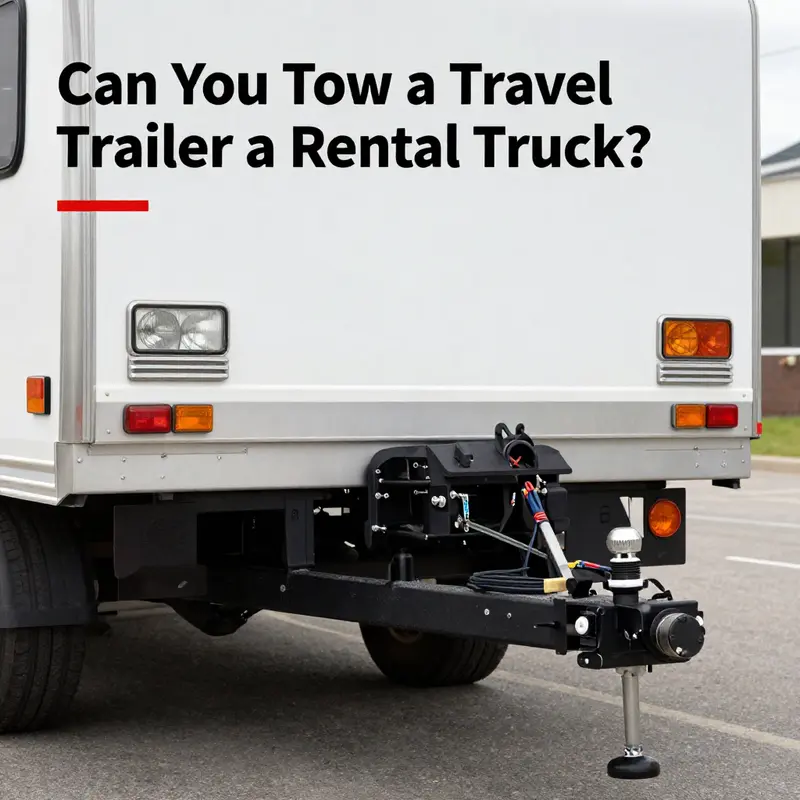
The core of equipment readiness revolves around what attaches the trailer to the truck and how that attachment communicates with the truck’s electrical system. A properly rated hitch receiver is not a nice-to-have; it is the primary interface that must be compatible with the trailer’s coupler. In many cases, rental agencies offer hitch accessories or installation services as add-ons, so you should confirm availability and fitment when you reserve the truck. The hitch ball, sized typically at 2 inches or 2-5/16 inches, must match the trailer’s coupler. Even a small mismatch here can create dangerous latching behavior or improper load transfer. The electrical connection is equally critical. The trailer’s brake lights, turn signals, and running lights rely on a functional wiring harness that corresponds to the truck’s electrical system. Depending on the trailer, you may need a simple 4-way connector or a more complex 7-way connector. A degraded or corroded connector can leave you with nonfunctional lights, creating a safety hazard and a legal risk for you as the operator.
Beyond the basic hitch and wiring, there is a practical layer that is often overlooked but worth attention: weight distribution. For lighter trailers, standard equipment can suffice, but once a trailer moves beyond about 5,000 pounds, a weight distribution system becomes a strong recommendation. This device redistributes tongue weight, reducing the tendency for the trailer’s hitch to push the rear of the tow vehicle upward while lifting the front wheels too little. It smooths out steering, improves braking response, and stabilizes the overall feel of the rig. If your trailer is larger or loaded heavily, this is one of those steps that transforms a potentially twitchy towing experience into a controlled and predictable operation. When considering weight distribution, you should understand how it changes the dynamics of braking and steering, and you should practice with the system engaged to learn how it alters the feel of acceleration, cornering, and lane changes.
The towing package, when included as part of the rental, is another factor that deserves close scrutiny. Some rental trucks come with a factory-installed towing package that includes reinforced suspension, enhanced cooling for the powertrain, and transmission protection designed for heavier loads. Others may require you to add towing hardware or to select a vehicle configured for towing from the rental counter. The presence or absence of such a package can materially affect the truck’s thermal performance during a long tow, the availability of maintenance features, and the comfort of the ride for everyone in the vehicle. It is not unusual for a rental agreement to specify weight limits that differ from the base vehicle’s generic ratings. You should verify both the vehicle’s stated towing capacity and any company-specific policies related to towed loads, especially if your trip includes mountain grades, extended highway runs, or frequent stop-and-go traffic in urban areas.
In the end, the decision to tow begins with information gathering. You should confirm that the rental vehicle’s maximum towing capacity is at least equal to the trailer’s GTW, which includes all cargo, fluids, and passengers. Then you must gather the right equipment: a properly rated hitch receiver that matches your trailer’s coupler, a compatible hitch ball, and a functioning electrical harness. If you are approaching this task with uncertain weight figures, the path to safety is simple—weigh the fully loaded trailer before you tow. Do not rely on manufacturer estimates; actual loaded weight can vary due to equipment, water, fuel, and even the gear stowed inside the trailer. Weighing the trailer gives you a concrete number to compare against the truck’s capacity and helps prevent overloading, which can threaten braking performance and steering control as you move down the road.
This preparation also includes a practical check of operational safety practices before you depart. Practice maneuvers in a safe, open space rather than attempting formal lane changes or tight turns on public roads. Backing up with a trailer requires a different set of cues from normal driving, including the anticipation of wheel paths, the need to oversteer slightly to align the trailer’s path, and the use of spotters if the space is constrained. You should verify tire pressures on both the truck and the trailer, ensure that the brakes respond correctly to the tow vehicle’s signals, and test the coupling and safety chains. Safety chains remain a critical backup if the hitch fails; they should be cross-connected under the coupler to catch the trailer if the primary connection gives way. The alignment of electrical connections, including brake command signals, is essential for predictable signaling to other drivers and for compliance with traffic laws that govern light usage on towed loads.
As you consider the practicalities, you may wonder about available resources that can guide your choices. If you want a concrete reference on hitch installation specifics and how to verify compatibility, you can consult a dedicated guide that walks through the hitch installation process step by step. This resource emphasizes correct hitch size, the right ball type, and the attention needed to the air gaps and secure fasteners that hold the assembly in place. You can find this information under a dedicated guide titled Trailer Hitch Installation Guide, which provides a detailed look at the hardware and procedures involved. It is worth noting that a well-fitted hitch not only supports safe towing but also contributes to the stability of the trailer, reduces wear on the tow vehicle’s suspension, and minimizes the risk of detachment.
An important part of this chapter arises from the need to navigate rental company policies. Each rental company has its own rules about who can tow, what kind of trailers are allowed, and what insurance or coverage is required in case of an incident. Some may require an explicit endorsement for towing, a separate insurance add-on, or a specific trailer size limit. Others may prohibit certain classes of trailers or heavy loads altogether without prior approval. The best approach is to review the rental agreement, ask questions well before you plan to tow, and obtain written confirmation of any special conditions. It may also be necessary to provide information about the trailer’s weight, its dimensions, the route you intend to take, and any obstacles such as tunnels or bridges with height restrictions that could influence the trip. This due diligence has a direct impact on your liability exposure and the terms of your rental, and it is an essential part of planning a responsible move.
The weight of everything you haul matters as a practical matter, but so does the way you distribute that weight. The goal of proper loading is to ensure that the trailer’s tongue weight and the truck’s rear axle load are within the safe ranges for both vehicles. If the tongue weight is too light, you can experience sway; if it is too heavy, you may overload the tow vehicle and raise the risk of tire blowouts or brake overheating. When you load the trailer, distribute heavier items toward the front and center, rather than toward the ends, and distribute the cargo evenly side to side. This careful balance is part of the art of safe towing, one that becomes second nature with experience and patience. If your trailer is equipped with a built-in load distribution mechanism, you should learn how to use it correctly, including the adjustments that align with weight changes as you hike up grades or descend declines. In all instances, you must monitor tire pressures and braking performance and be prepared to adjust your speed to accommodate the weight you are pulling, especially when you encounter steep grades or inclement weather.
The scope of preparation extends to a consideration of local laws and road rules. Some regions have explicit stipulations about towing that exceed general safety norms, including requirements for lighting, braking systems, and route restrictions. Understanding these rules ahead of time can prevent fines and ensure that you stay compliant as you travel. The practical upshot is that your readiness to tow with a rental truck rests on a blend of correctly sized hardware, verified weight considerations, and a solid grasp of the policies that govern your rental agreement. It is about turning a rental into a capable, confident tool for travel rather than a source of stress on the road. When you bring together the right equipment, the right weight checks, and the right policy confirmations, you set the stage for a towing experience that honors safety, comfort, and predictability.
Finally, the process is iterative rather than static. As you progress through the planning stages, you should revisit every assumption: the trailer’s actual weight after loading, the potential need for a weight distribution system, the availability of a towing package, and the rental company’s guidelines. This iterative approach is not a sign of indecision; it is a disciplined practice that improves outcomes, reduces risk, and keeps you focused on the journey ahead rather than on avoidable contingencies. If you want a concise reference for hitch-related details without leaving the article, you can explore the Trailer Hitch Installation Guide to deepen your understanding of how the hardware functions in real-world scenarios. This resource can be found at https://larentaltrucks.com/blog/penske-trailer-hitch-installation/
In sum, towing a travel trailer with a rental truck is feasible and practical when you approach it with a clear checklist: confirm towing capacity, verify and acquire the proper hitch and wiring, consider a weight distribution system for heavier loads, understand the rental company’s policies, weigh and inspect the trailer, and practice safe handling before you hit the road. For those who want to deepen their understanding of the safety considerations that accompany travel trailer towing, it is beneficial to consult authoritative resources that discuss the broader safety framework and best practices. This focus on safety is not an afterthought; it is the foundation that makes the entire endeavor reliable and enjoyable, especially when roads and weather present additional challenges. As you plan, remember that a well-prepared tow begins with the right gear, a careful weight check, and a clear awareness of the policies that govern your rental experience. To stay informed about general safety guidelines and updates, you can refer to external resources that provide broad, standardized recommendations for travel trailer towing. For authoritative safety guidelines, see Travel Trailer Towing Safety at BTS: https://www.bts.gov/content/travel-trailer-towing-safety
Tow It Right: Safety-First Lessons for Towing a Travel Trailer with a Rental Truck
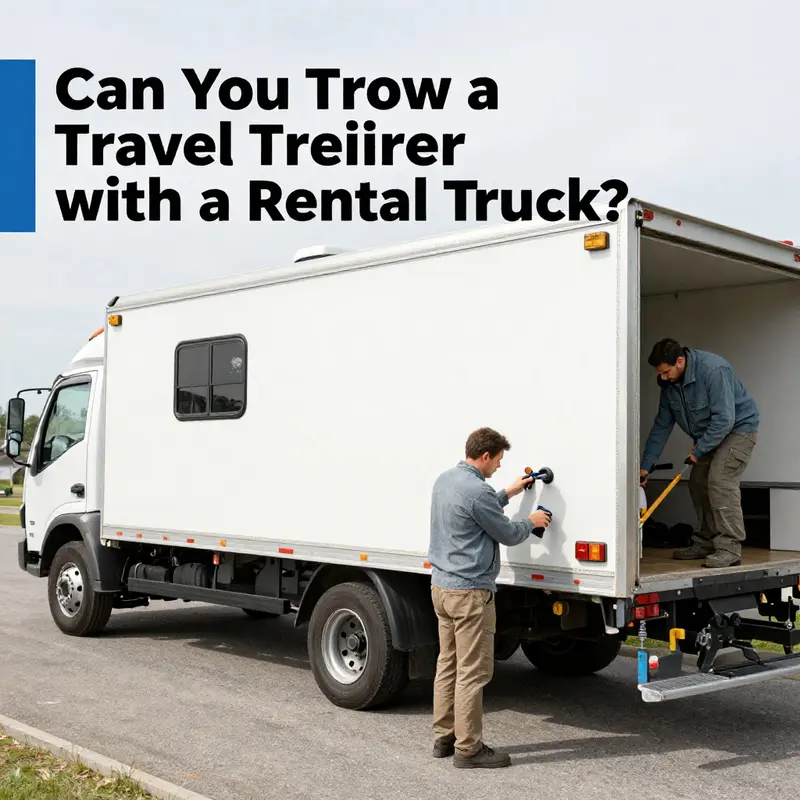
Towing a travel trailer with a rental truck offers a practical solution for larger moves, camping trips, or spontaneous road adventures. Yet the flexibility of a rental truck comes with responsibilities. The same vehicle that helps you move a sofa or a week’s worth of gear must be treated with the respect you give a dedicated tow vehicle. The aim is not merely to reach your destination, but to reach it safely, smoothly, and with the trailer in a state that makes the journey predictable for you and for everyone else on the road. The core of safety in this scenario is a careful, methodical approach that starts before you ever pull away from the curb. It involves verifying how the machine is rated, understanding the trailer’s weight, ensuring you have the right equipment, and adopting driving and loading practices that reduce risk. When these pieces align, towing a travel trailer with a rental truck can be a straightforward, dependable experience that minimizes stress and maximizes confidence on the long route ahead.
The first and most critical step is to verify the vehicle’s ratings and the trailer’s weight. A rental truck is only as capable as its listed towing capacity and the vehicle’s GVWR—the gross vehicle weight rating. The gross trailer weight, or GTW, includes everything inside the trailer: cargo, added fluids, and even passengers who happen to be riding inside the trailer’s living space in a pinch. You want the GTW to sit at or below the truck’s maximum towing capacity, and you must not ignore the GVWR of the truck itself. Exceeding either specification can stress the engine, transmission, brakes, and suspension. It can also reduce braking efficiency and steering control, which compounds risk in every mile. This is not a matter of “pushing through”—it is a matter of safeguarding the entire trip.
Beyond numbers, don’t rely on assumptions or outdated estimates. Manufacturer figures can vary by trim level, axle configuration, and even the presence of options that affect weight. A loaded trailer is heavier than a dry estimate; liquids, propane, batteries, and furniture all contribute to GTW. To ensure accuracy, physically weigh the fully loaded trailer before you tow. Use a public scale or a portable scale service if available. The goal is to confirm a precise weight anytime you change the trailer’s contents. When the numbers are confirmed, compare them to the truck’s rated towing capacity, and do not proceed if there is any doubt about margin. A small overage can translate into overheating brakes, reduced control, and potential failure in a critical moment.
Equally important is understanding and complying with rental company policies. Not every rental outfit accepts towing without approval, and those that do may impose additional charges, insurance requirements, or restrictions on trailer type and GTW. Some agencies require a special towing endorsement, while others prohibit certain hitch configurations or trailer sizes entirely. Before booking or picking up the truck, read the terms carefully and ask questions of a human representative if anything is unclear. It is not sufficient to assume “it should be fine.” Documentation of approval, any associated waivers, and the exact weight class permitted offers you a concrete framework for a safe journey.
Equipment readiness is the practical backbone of safe towing. At a minimum, you need a hitch with the appropriate receiver size, a compatible trailer ball, and a wiring harness that matches both the truck and the trailer. Most rental trucks come equipped with a hitch receiver, but you may need to provide or rent a trailer ball and an electrical connector that fits the trailer’s wiring. In addition to the hard components, you should carry safe, dependable safety chains, properly rated tires, and a functioning brake controller if your trailer demands one. Verify that the hitch ball size matches the trailer coupler, and that the safety chains are crossed under the trailer in the correct pattern. A cross-under arrangement ensures that should the hitch fail, the trailer remains connected to the tow vehicle long enough for you to regain control. Also confirm that the hitch is lubricated so it engages smoothly, minimizing the chance of binding or rough handling during acceleration and braking.
Weight awareness is the thread that weaves equipment readiness and safe driving into a coherent practice. The tongue weight—the force the trailer hitch exerts downward on the hitch ball—needs careful attention. A trailer that is too tongue-heavy can push the front wheels of the tow vehicle, altering steering and braking characteristics. Conversely, a trailer that is too light in the tongue can cause trailer sway, which destabilizes the vehicle and trailer together. The rule of thumb is to distribute weight evenly and maintain a realistic tongue weight proportion. Heavier items should be placed low and toward the front of the trailer to keep the center of gravity where you want it: low and forward. This helps prevent abrupt shift during braking and reduces the chance of sway, especially on gusty days or when crossing bridges and overpasses where wind forces are amplified. It is tempting to load more into the trailer to compensate for a smaller truck, but that shortcut often backfires by stressing the tow rig and the hitch.
Once you have verified ratings and prepared the trailer, practice becomes an essential, though often overlooked, safety activity. Spend time in an empty parking lot or a quiet section of road practicing backing up with the trailer, making wide turns, and performing gentle lane changes. The longer the trailer, the more pronounced the blind spots and the sway dynamics can be. Practicing in a controlled environment helps you develop the muscle memory required for smooth operation on real roads. During practice, keep your speed slow, particularly in the first miles of the trip, and avoid sudden throttle input, sharp steering, or hard braking. Trailer sway can emerge from a combination of wind, speed, and uneven road surfaces, so learned control is the best antidote.
Safety chains are not decorative. They are part of a redundancy system that can keep the trailer anchored to the tow vehicle if the ball disconnects or the hitch fails. Ensure the safety chains form a loose “X” under the hitch, not a tight cross or a straight line. The idea is to allow a small amount of slack for articulation while still catching the trailer if the hitch pulls away. Check the wiring harness for every light: brake lights, turn signals, and tail lights must operate in perfect synchrony with the tow vehicle’s signals. A non-working light system not only creates confusion for drivers behind you, it can also invite police attention and fines in some jurisdictions. Tire pressure should be checked both on the truck and the trailer, because mismatched pressures can cause heat buildup and blowouts under load. Brakes must be tested; if the trailer uses electric brakes, confirm the brake controller is properly configured to deliver the correct amount of braking force when you depress the pedal.
As you prepare to depart, consider the local regulatory landscape. A tow setup often triggers specific lighting requirements, additional mirrors, and even speed restrictions in certain areas. Some regions require extended mirror systems or auxiliary brake lamps for trailers of a certain length. Knowing these rules ahead of time helps you avoid tickets and a stressful roadside encounter. The combination of proper equipment, weight control, and compliance with local rules creates a chain of safety that extends beyond your own vehicle, informing the experience of other road users who share the journey with you.
A practical note on the hitch and installation is worth weaving into this narrative without becoming a manual. If you want a deeper dive into the nuts and bolts of hitch installation—how to select the right ball, how to secure the hitch, and how to verify alignment—there are installation guides available that cover the common configurations and the critical safety checks. For readers who want a concise, image-supported walkthrough, see a dedicated trailer hitch installation guide that walks you through the exact steps and cautions, including necessary safety precautions and torque specifications. This resource helps you verify that the hitch system is mounted correctly, which is the first line of defense against mishaps on the road.
In addition to the mechanical and regulatory aspects, there is a humane, human element to towing a travel trailer with a rental truck. It is about planning around the truck’s performance envelope. The heavier the trailer, the more time you need for braking and steering adjustments. The added length of the rig means you’ll require more time for lane changes, merging, and negotiating curves. This is not a thrill ride; it is a long, steady, deliberate process that rewards preparation and restraint. On the road, give yourself extra stopping distance, and extend the following distance behind the vehicle in front of you. The standard six-second rule is a starting point; on a long, loaded tow, you may want to add several more seconds to accommodate heavier braking and wind gusts. Use your mirrors frequently to monitor the trailer’s movement and be aware of the subtle cues that indicate sway, such as a slight wag or a pull toward one side. If sway begins, ease off the throttle, gently steer into the direction of the trailer’s swing, and allow time for the trailer to stabilize before resuming speed. In moments of wind, anticipate gusts by reducing speed modestly well before you encounter a crosswind; abrupt corrections can worsen the problem.
Another practical layer is the distribution of payload within the trailer. Even distribution helps keep the trailer tracking smoothly behind the truck. Place heavier items toward the bottom and closer to the trailer’s tongue to manage tongue weight effectively. When loading, periodically check the trailer’s balance by testing the feel of the hitch while the truck is stationary and then when it’s in motion, paying attention to any unusual pulling sensations or changes in steering effort. If you notice any imbalance—such as one side rising or a change in the resistance when turning—adjust the load and recheck the balance. A well-balanced load reduces the likelihood of swaying tendencies on the highway and simplifies handling in windy conditions.
Alongside weight and balance, the importance of routine checks cannot be overstated. Before every leg of the journey, perform a quick walk-around: tires, wheels, lug nuts, hitch connection, safety chains, lights, and battery condition (if applicable). Even a short detour to a gas station for a walk-around inspection can prevent a late-night breakdown far from home. Keep emergency supplies on board—a basic toolkit, spare fuses, a flashlight, and a first-aid kit. Know your route, including rest stops that can accommodate a vehicle and trailer combination of your size. Whenever possible, plan to avoid highly congested corridors, roads with sharp grades, or known construction zones that demand frequent lane changes. If you anticipate heavy traffic, give yourself extra margin and choose a route that offers gentler grades and more opportunities to pull over safely if you need a break.
In the spirit of practical, responsible planning, let this guidance be a reminder that safety is a continuous discipline rather than a one-time checklist. The journey is as much about the choices you make behind the wheel as it is about the engine’s loudness or the trailer’s gleam. To stay aligned with best practices, consult reliable safety resources and rely on the information gathered from the rental company and the trailer’s own weight data. The goal is not to minimize the challenge but to demystify it—breaking the task into a sequence of measurable steps and applying steady, disciplined behavior at every mile.
If you want a concise, actionable improvement path that frames these ideas around practical steps, you can explore hitch-specific guidance that covers the most common installation and compatibility concerns. This resource helps ensure that the mechanical interface between truck and trailer is solid, verified, and ready for the road. Trailer hitch installation guide.
Outside of the mechanical and procedural concerns, there is a larger caveat: you should always respect the limits of the rental vehicle and the equipment it tows. While a rental truck can be an excellent tool for moving a travel trailer, it is not a long-term replacement for purpose-built tow vehicles in every scenario. If the trailer’s weight, length, or required setup exceeds what the truck can safely handle, or if the rental company’s policies restrict the arrangement, the correct decision is to adjust plans accordingly. Consider using a vehicle with a higher capacity, or arrange for a dedicated trailer towing unit, especially for longer trips or routes with challenging terrain. In those moments, the peace of mind that comes with proper equipment, accurate weight data, and policy compliance makes a real difference in both safety and enjoyment.
For readers seeking a broader safety framework beyond the specifics of hitching and weight, the National Highway Traffic Safety Administration provides comprehensive guidance on towing safety that complements the practical steps outlined here. This external resource covers best practices, common hazards, and strategic reminders that apply to any towing scenario, including using a rental truck. You can consult their official towing safety materials for additional depth and context as you prepare for your journey: https://www.nhtsa.gov/vehicle-safety/towing
Final thoughts
Towing a travel trailer with a rental truck can be an excellent solution for business owners seeking flexible and efficient transportation options. By carefully assessing towing capacity, understanding the specific policies of rental companies, ensuring all necessary equipment is in place, and following safety practices, you can ensure a smooth and successful towing experience. Embrace these guidelines to turn your mobility needs into a seamless and effective logistics strategy that supports your business goals.