
For business owners looking to maximize their operational efficiency, the ability to tow trailers using budget rental trucks can be a game changer. Whether you are transporting equipment for a job site, moving goods for a clients, or managing logistics for an event, understanding the capabilities of rental trucks is crucial. This article covers essential aspects such as towing capacity, navigating rental agreements, essential equipment, and safety regulations. By the end, you will be well-prepared to determine if using a budget rental truck for towing suits your business needs.
Towable Truths: How to Read Towing Capacity and Use a Budget Rental Truck Safely
Planning to move or transport gear with a budget rental truck can feel approachable at first. The idea of hitching a trailer and hitting the road seems simple enough until you realize that the numbers behind towing capacity, the rental agreement, and the gear you bring along all interact to determine whether your plan is safe and legal. This chapter digs into the practical meaning of towing capacity, clarifies how it differs from what the truck can carry in its bed, and shows how to read the rental terms without getting tripped up by fine print. The goal is to help you approach a trailer tow with the same care you would bring to any major purchase or journey, so your trip stays smooth and compliant rather than turning into a roadside headache. You want a setup that works well for the weight you intend to pull and that aligns with the rules the rental company enforces, because the fine line between capability and risk can hinge on a single overlooked detail.
Towing capacity is not a single, simple number you can eyeball from the outside. It is a ceiling defined by the integration of the engine, transmission, drivetrain, chassis, and suspension. In practical terms, it tells you the maximum weight the vehicle can pull behind it, including the weight of the trailer itself and everything loaded on it. This is why you do not treat towing capacity as a rough guess but as a hard specification that must be matched to your trailer and its cargo. A common misunderstanding is to conflate towing capacity with payload capacity. Payload is the weight the truck can carry inside the cab and in the bed, not the weight it can pull. You might read that a truck can carry a payload of, say, 1,500 pounds and yet tow a trailer rated much higher. The mismatch can create an unsafe situation if you do not verify the exact numbers for your specific rental vehicle and trailer combination. The takeaway is clear: know both figures, and ensure the trailer and its contents stay within the towing capacity while keeping payload within the truck’s own limits for passengers and gear.
When you start comparing options, understand that the same model of truck can present different towing capacities depending on how it is equipped. Optional towing packages modify the baseline capability by altering axle ratios, cooling systems, transmission tuning, and sometimes the availability of an engine or drivetrain upgrade. A vehicle may be offered with a heavy duty towing package that raises the practical limit if you also select the right axle ratio and transmission settings. In real-world terms, this means one budget truck, configured with the right towing package, can handle a heavier trailer than another unit of the same model that lacks those enhancements. It is tempting to assume a budget pickup is sufficient for a straightforward trailer, but the actual towing capacity must be verified for the exact truck you rent. This is why you must inspect the documented ratings in the rental agreement and, if needed, ask a staffer to confirm the specific truck’s towing limits before you sign.
The rental agreement itself is a document you should read with the same care you apply to a lease or a contract for a major purchase. It will typically spell out whether towing is allowed at all, the maximum allowable towing capacity, and any required add-ons for liability coverage. Some deals may require you to purchase a separate tow package or to meet insurance requirements that go beyond your standard coverage. It is not unusual for the agreement to mandate certain safety equipment, such as a properly rated hitch and, in some cases, a trailer brake controller or other braking aids. These requirements exist for a good reason: improper equipment can compromise handling, increase stopping distances, and put you at risk for damage to the vehicle, the trailer, and other road users. Reading the fine print upfront saves you from later surprises, and it gives you a clearer picture of the total cost and the responsibilities you assume when you tow a trailer with a rental truck.
Equipment readiness is another piece of the puzzle. Even if the truck has the towing capacity on paper, you might need a hitch that can withstand the trailer’s weight and a safety chain setup that keeps the connection secure. More weight typically means a stronger hitch and a more robust electrical connection. A basic rental truck may not come with a hitch installed, and you will likely have to rent or purchase one separately. The hitch you choose must be rated for the weight of your trailer, and safety chains should be attached in a cross pattern to catch the trailer if the hitch fails. The electrical plug and wiring must be compatible with the trailer’s lights and braking system, so you stay visible to other drivers and compliant with road rules. If your load is heavy enough to require a brake controller on the trailer, confirm whether the rental truck supports it and, if so, ensure you have the controller and know how to use it before you depart.
As you weigh whether a budget rental truck can handle your trailer, you should also consider the practical limits of your own licensing and driving experience. Licensing restrictions can apply to heavier trailers, and even if the truck can physically tow the load, you might be limited by the class of license you hold. It is essential to verify what your local regulations require for towing certain weights and configurations. This isn’t a legalist concern but a safety and accountability one; failing to meet licensing requirements can lead to fines, insurance complications, and serious safety risks on the road. The goal is not to overstate a plan but to confirm from the outset that every piece—vehicle, trailer, equipment, insurance, and license—aligns with what is legally permitted and practically safe.
For most moves and light to medium duty uses, a budget rental truck with the right towing setup can be adequate, but only if the total weight of trailer and cargo stays within the truck’s stated towing capacity and you follow the rental agreement to the letter. Start by weighing the trailer itself and the heaviest cargo you plan to haul. Add the tongue weight of the trailer, the riders and gear you might carry inside the cab, and the weight of any hitch, cargo inside the trailer, and hitch accessories. Then compare that sum to the vehicle’s stated towing capacity. It is a straightforward arithmetic check, but it has real consequences. If you exceed the capacity, you risk mechanical failure, poor handling, reduced braking effectiveness, and greater risk of a rollover in extreme conditions. If the capacity is barely adequate, you still must consider factors such as wind, road grade, and how the weight shifts during braking and cornering. All these variables underscore why careful planning matters far more than a quick, hopeful calculation.
An important practical pointer is to seek out a vehicle that can offer some headroom above your calculated load. If the trailer is heavy or if you anticipate adding gear along the way, choosing a truck with a higher capacity or a heftier towing package can provide a margin that improves safety and comfort on the road. This is not about choosing the strongest truck available but about choosing one that aligns with your actual use case and that matches the trailer you intend to tow. It is also worth noting that some rental options allow you to tailor packages for towing, including better cooling for sustained highway runs or stiffer suspension tuning to handle the trailer’s sway. If you expect to tow in challenging conditions—long grades, windy days, or uneven terrain—quele past experiences show that margin matters, and a higher rating can translate into noticeably steadier handling.
Equipment and knowledge feed into each other. Learning how to properly hitch a trailer, connect the electrical system, and secure the load reduces the chance of problems on the road. A reliable, rated hitch is indispensable, as is a tie-down system that can secure varied cargo without shifting. A robust chain setup prevents the trailer from detaching if a component fails, preserving control and stability. The electrical connection is what keeps tail lights, brake lights, and turn signals synchronized with the towing vehicle, which is critical for visibility and safety, particularly in heavy traffic or dim lighting. Training yourself to verify these connections during a pre-trip inspection—lights, brakes, tires, and alignment—adds an extra layer of safety that is well worth the time. In practice, a brief check before you depart is a small investment for peace of mind on a long drive.
If you want to explore practical hitch setup and installation details, you can consult resources that walk through the process step by step. For a direct, actionable guide, see Penske Trailer Hitch Installation. The guidance there can help you assess whether your chosen rental option includes a hitch, what kind you need, and how to secure it properly before you start moving. This reference is particularly useful when you are coordinating trailer compatibility with a budget truck that may not come preloaded with all the components you need. By coupling this practical knowledge with the rental agreement and capacity checks, you build a robust plan that minimizes risk and maximizes confidence on the road. Penske Trailer Hitch Installation
Finally, a word about the broader limits of knowledge and the value of due diligence. The concept of towing capacity is a technical specification that has real consequences for safety, legality, and the overall experience of moving or transporting. It is tempting to rely on a rough estimate or a friendly salesman reaction, but the safest course is to insist on precise figures for the exact truck you plan to rent and the exact trailer you intend to tow. If the numbers do not align with your plan, consider alternatives such as choosing a different rental window, selecting a larger or better equipped vehicle, or adjusting the trailer load to stay within limits. If a one way rental, a different vendor with the appropriate towing options, or even a non towing approach becomes the cleaner choice, it can prevent a suboptimal trip and preserve your safety along the way. In this journey, the steps are straightforward, yet their execution matters. Confirm the towing capacity, read the rental terms, ensure proper equipment, and verify licensing requirements. Then proceed with a plan that respects all limits and prioritizes safety above convenience.
For a concise reference, you can consult authoritative resources that discuss towing capacity more formally. A reliable definition helps ensure you interpret vehicle specifications accurately and do not conflate payload with towing capacity when planning your trailer move. For more on the exact term, see the Cambridge English Dictionary entry on towing capacity: https://dictionary.cambridge.org/dictionary/english/towing-capacity. This resource reinforces the understanding that capacity is a constraint you must respect, not a number you can ignore when planning a tow with a budget rental truck.
Tow with Purpose: Reading the Fine Print Before Towing with a Budget Rental Truck
Towing a trailer with a budget rental truck can be practical if you plan around two core constraints: the truck’s actual towing capacity and the rental terms. When you approach with a measured mindset, you move from a wish to tow to a clear plan focused on safety, legality, and cost. The main idea is simple: verify that the truck can handle the trailer weight, then confirm that the rental agreement permits that use under the conditions you will meet. Ignoring either piece risks overloading, voided insurance, or surprise charges that could derail a move.
To avoid ambiguity, identify the trailer total weight and compare it to the truck’s official towing capacity. The capacity is a protective limit for momentum, braking, and stability, and it is not a target to beat. In practice, budget trucks often sit in a range from around 6,000 pounds up to the mid teens, depending on model and year. The exact figure must come from the specific truck you rent. If the trailer weight approaches or exceeds the truck’s capacity, towing becomes unsafe and not permitted by the rental terms.
The rental agreement is a map of enforceable rules. It states whether towing is allowed at all, and it will usually set a maximum trailer weight that relates to the vehicle in use. Some contracts reference the vehicle’s GVWR, which is the maximum allowed combined weight, so ensure the contract permits a weight at least equal to your trailer. If the cap is lower, you cannot tow with that vehicle even if you believe your rig can handle more. The risk is not just a policy violation but potential loss of coverage.
Most rental providers require you to carry safety equipment and sometimes to purchase extra insurance or a tow package that expands liability coverage. You may need a properly rated hitch, safety chains, a functioning brake controller for certain trailers, and properly installed trailer lights. The hitch may not be included in the price, so plan to rent or acquire a suitable hitch and the correct ball size. Predeparture checks are essential to confirm proper connections and braking functionality.
Even with a strong rating, verify the hardware is compatible with the trailer and the vehicle electrical system. The trailer should have working brakes, lights, and secure coupling. There may be restrictions on trailer type, permissible routes, or geographic regions, plus limits on distance or miles while towing. These policy nuances reflect risk management and fleet variations by market. Plan your route and budget accordingly.
Draw a precise inventory of the trailer weight, cargo weight, and how you will distribute the load inside the trailer and vehicle. The dynamics change as weight shifts, affecting handling and stability. Factor in how hitch weight changes as you load and how that influences steering and braking. A careful loading sequence, heavier items toward the front of the trailer and balanced distribution, supports safer towing.
The reliable path is to verify capacity, confirm towing permission in the contract, and assemble the required safety gear before you leave the lot. The friction points are mismatched capacity, unclear policy language, missing hitch hardware, or overlooked insurance. Treat those as testable facts to confirm ahead of signing.
For a concrete aid, consult a step by step guide on hitch installation and trailer connections. See a practical guide on trailer hitch installation for diagrams, weight ranges, and torque guidance to align hardware with your trailer. You can also review policy language again for the exact terms at the counter or in the rental agreement.
Towing with a budget rental truck is feasible when you plan around safety, compliance, and accountability. Verify the vehicle’s rating, read the contract carefully, assemble the right hitch and safety gear, and respect any route or trailer type restrictions. When you do, the move becomes predictable, affordable, and safer on the road.
External resource: https://www.enterpriserentacar.com/rental-car-information/towing-policy
Essential Equipment for Towing a Trailer with a Budget Rental Truck
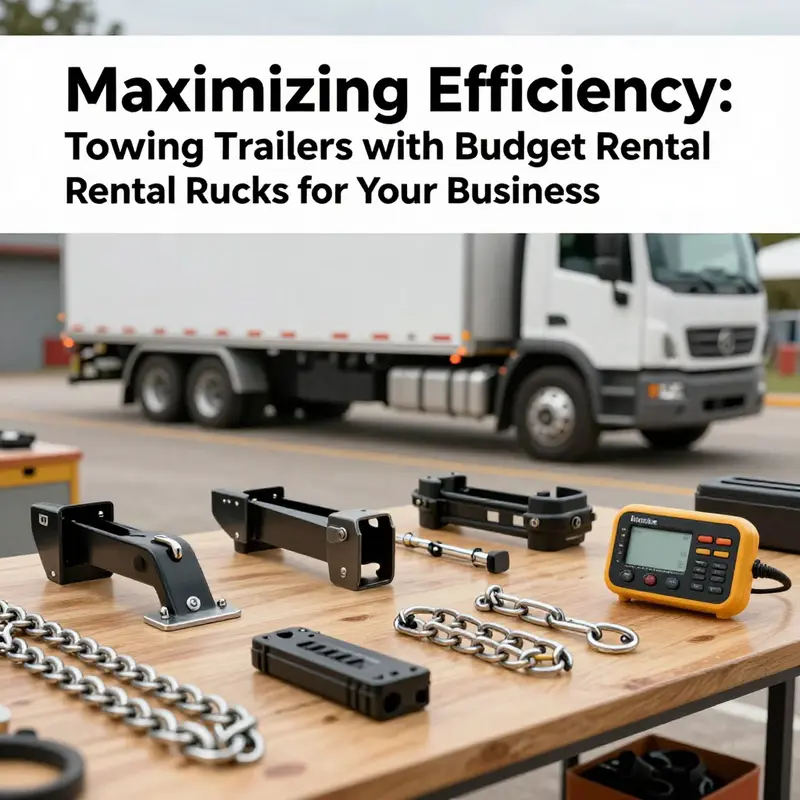
Towing a trailer with a budget rental truck opens up possibilities for moving, camping, or hauling equipment, but it isn’t a matter of simply hitching up and leaving. The decision hinges on two core realities: the truck’s actual towing capacity and the rental agreement’s terms. If either of these are overlooked, you risk damage to the vehicle, a failure in the hitch system, or a dangerous road incident. The chapter that follows offers a detailed, practical guide to the essential gear you should have on hand, the checks you should run, and the planning necessary to tow safely and legally with a budget rental truck.
First, quantify what the truck should carry. The critical figure is the gross trailer weight, or GTW, which combines the trailer’s weight with everything you load into it. Compare GTW to the truck’s stated towing capacity, and stay well under that ceiling. Budget rental fleets vary widely; one model may pull a heavy utility trailer, while another may cap towing altogether. The safest rule is to treat the tow as a load that behaves differently than the truck alone, adding stress to the engine, transmission, brakes, cooling system, and tires. If there is any doubt about capacity, double-check with the rental counter before you sign the paperwork and again when you pick up the vehicle. The cost of a wrong move is not only mechanical wear but the risk of a roadside emergency in bad weather or heavy traffic.
Assuming towing is allowed and the capacity is adequate, the next step is to install or arrange a properly rated hitch. Not every budget rental truck arrives with a hitch installed, and some fleets require you to fit one on site and to rent the appropriate ball mount and hitch hardware. The hitch must be rated for at least the gross trailer weight and should include a secure pin, lock, and safety hardware. The ball size matters as well; common trailer couplers use a 1-1/4 inch, a 1-1/2 inch, or a 2-inch ball. The shank and ball must fit snugly with no excessive wobble, and the overall assembly should be free of rust, cracks, or deformation. Take time to verify that the hitch is firmly seated in the receiver, that all bolts are tight, and that there is no visible misalignment. If you are unsure about installation, ask for a demonstration or refer to the rental company’s guidance to avoid a last-minute misstep in the parking lot.
Beyond the hitch, a proper wiring harness is essential. The trailer’s lights communicate with drivers behind you and with your own brake system, so each function must be reliable: tail lights, brake lights, turn signals, and, in some cases, electric brakes. Some budget trucks provide the necessary harness, but others do not, so you may need to rent or buy a harness that matches both the truck’s electrical system and the trailer’s wiring. A poor connection or a bad ground can render lights inoperative or cause flickering, which is a safety hazard at dusk or in rain. Once the harness is attached, test all functions in a controlled environment—lights on, signals flashing, and brakes engaging—before hitting the road. A thorough test saves time and reduces the chances of a late-night stop to troubleshoot a wiring fault.
Safety chains form the second line of defense in case the hitch fails. The chains are designed to connect the trailer to the tow vehicle and to bear at least the trailer’s weight if the primary connection gives way. They should be crossed under the tongue and attached to the truck frame with proper hooks or clevises. The chain length should allow full movement of the trailer with the truck’s steering and suspension while not letting the coupler rest on the hitch. Chains must be free of kinks and fraying, and they should be inspected before every trip. They are not optional in many jurisdictions; they are a legal requirement in most places and a standard safety practice everywhere you tow.
For heavier or unbalanced loads, a tongue weight distribution (TWD) system can markedly improve stability. These devices share the trailer’s tongue weight between the trailer and the tow vehicle, reducing rear-end sag and improving steering control and braking response. They are especially valuable when the trailer pushes on the back of the truck during braking or when the tongue sits low, lifting the rear wheels. Not all rental packages include TWD, but you can often rent or purchase one for future trips. If you anticipate long highway drives or frequent loads with a heavy tongue, a distribution hitch helps keep the vehicle’s handling predictable and reduces sway.
Along with the hitch and its hardware, pay attention to the tires on both the truck and the trailer. Tire pressure is a major factor in towing safety and efficiency. A compact tire pressure gauge lets you verify inflation prior to departure and during stops. An accompanying portable air compressor keeps tires topped up as needed. Ensure the trailer tires match the recommended pressure in the owner’s manual or the tire placard, and check for wear, cuts, or sidewall bulges. The trailer’s braking system, if it has electric brakes, should be wired to your vehicle’s brake controller or the truck’s electronic system. If the truck lacks a brake controller, you must address this before towing; some rental fleets require you to rent or enable an external controller. Correct tire pressure helps not only with safety but with fuel economy and overall stability on the highway.
A basic toolkit can prevent a roadside pull-over that costs time and nerves. A modest set of wrenches, pliers, and screwdrivers covers latching hardware, hitch clamps, and electrical connectors. A spare fuse kit and a printed or digital guide to your specific rental model shorten the odds of a call to roadside assistance. Bring a flashlight, a tape measure, and a marker to label what you disconnect and reconnect during hitching. A small amount of threadlocker can keep bolts from loosening after rough roads. These tools won’t turn you into a professional tow tech, but they will empower you to handle small adjustments and alignments without turning a trip into a labor list.
Before you drive away, complete a thorough pre-trip check that considers both the truck and the trailer. Confirm the hitch ball is locked, the safety pin is in place, and the locks engage. Ensure the safety chains are properly crossed and connected, and check the hitch’s stability by a gentle shake. Confirm the wiring is connected and test the lights again. Balance the load so it sits just behind the axle of the trailer to maintain steerability while keeping the tongue weight in a safe range. If the cargo is heavy, distribute weight toward the trailer’s axles to avoid pinching the truck’s rear suspension. Finally, verify the overall length and height of the rig to ensure routes, bridges, and parking structures can accommodate the larger footprint. A careful pre-trip audit pays dividends on the road and reduces the chances of an unexpected stop.
Another important consideration is the rental agreement’s insurance and liability provisions. Some companies require a dedicated tow package or additional insurance to cover towing operations. Others restrict towing to certain vehicle configurations or to certain trailers. The terms may also define who is responsible for maintenance, who handles accidents, and what happens if the hitch or wiring fails on the highway. Read the contract in detail and request a written confirmation of any allowances, limits, and extra charges before you sign. This is not a mere formality; it protects you when a claim arises and clarifies what is expected during the rental period, especially if you encounter a road situation that requires a temporary deviation from the usual plan.
For many people, the practical reality is that towing a trailer with a budget rental truck works best when you stay conservative in your weight, checklists in hand, and practice in a controlled environment first. A short test run in a large empty lot offers invaluable insights into how the combination behaves in turns, lane changes, and braking. You learn how the trailer adds length to your vehicle, how wind affects sway, and how far you must adjust your speed to maintain a safe stopping distance. With a measured approach, you gain confidence, and the risk of incidents declines. The result is a smoother experience that keeps you and others on the road safer while also preserving the rental truck’s mechanical integrity.
For a hands-on, practical reference during the trip, consider consulting a dedicated hitch installation guide. The link below provides step-by-step instructions and safety considerations to complement what you’ve prepared here: Penske trailer hitch installation.
Finally, for regulatory and safety standards that govern towing across jurisdictions, the U.S. Department of Transportation offers guidelines and resources that help you stay compliant on the road. These standards cover proper lighting, brake responsiveness, and safe load management, among other considerations. See https://www.dot.gov for authoritative guidance as you finalize plans and gear up for the trip.
Tow Safely on a Budget: Safety Rules and Best Practices for Towing with a Budget-Friendly Rental Truck
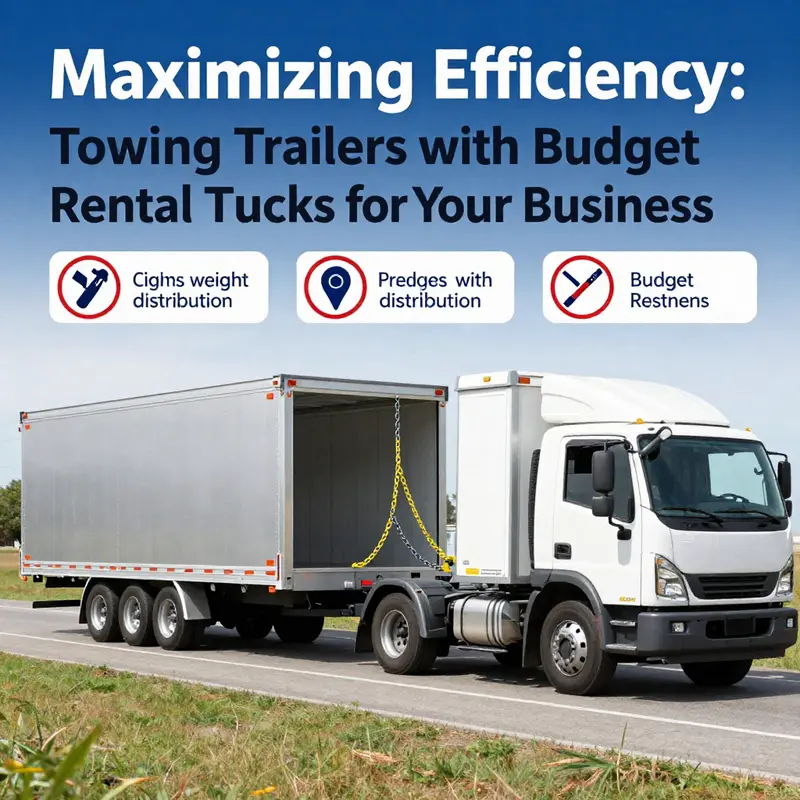
Towing a trailer with a budget-friendly rental truck is not a matter of simply hitching up and hitting the road. It requires careful attention to safety regulations, the specifics of the rental agreement, and a disciplined approach to equipment and driving. When done correctly, you can move a trailer with a cost-conscious vehicle without compromising safety or legality. When done carelessly, you risk accidents, fines, and damage that can far exceed any savings. This chapter binds those realities into a practical, flowing narrative that helps you prepare, verify, and execute a towing plan with confidence, even when you are working within a tight budget.\n\nThe first and most crucial step is to confirm that towing is permitted and that the truck and its towing capacity meet the trailer weight. Rental agreements vary widely, and even trucks that can technically pull a trailer may have restrictions about what types of trailers, how much weight, and under what conditions towing is allowed. Scan the fine print for explicit language about towing, weight limits, and required equipment. Some agreements also require you to purchase additional liability coverage or a specific tow package. The temptation to sidestep these terms for convenience can void insurance and shift fault in a worst-case scenario. A careful read is not just prudent; it is essential.\n\nBeyond the agreement, you must verify the truck’s towing capacity. Capacity figures are not generic estimates; they’re the ceiling for the total weight you can safely haul. This includes the weight of the trailer itself plus all cargo inside it. The vehicle’s capacity appears in the owner’s manual, on a placard inside the driver’s door frame, or in the manufacturer’s specs. Because rental fleets can vary, don’t rely on memory or secondhand advice. If the numbers don’t line up with your trailer’s loaded weight, you must choose a lighter trailer, redistribute cargo, or switch to a different vehicle. Overloading the truck can cause brake failure, steering trouble, and longer stopping distances. It also invites legal penalties if you are pulled over or involved in an incident.\n\nEquipment readiness is the next gatekeeper. Even with adequate capacity, you will need the proper hitch and safety devices rated for your trailer’s weight. A basic rental truck may not arrive with a hitch installed, or it may have only a generic setup. In many cases, you will need to rent or install a receiver hitch and a hitch ball rated for the trailer, along with safety chains and an electrical connector for the lights and brakes. If your trailer has electric brakes, you may also need a trailer brake controller that interfaces with the truck’s electrical system. Skipping or improvising on these components is not a safety shortcut; it is a risk that can negate insurance coverage and create a dangerous towing situation.\n\nEven when the truck can technically tow the trailer, the hitch and connection must be correctly matched to both the trailer and the truck. The maximum weight rating of the hitch, the ball size, and the rated capacity of the receiver must align with the trailer’s gross weight and tongue weight. Small misalignments can lead to hitch failure or insecure connections on the road. Always confirm that the hitch is properly installed and that safety chains are securely crossed and clipped to the trailer frame. A chain that is too short or a knot that does not meet industry standards is not a cosmetic detail; it is a critical safety precaution that keeps the trailer from detaching during a sudden stop or a sharp turn.\n\nWith the legal and mechanical basics covered, the next layer is pre-trip preparation. Perform a thorough inspection of both the truck and the trailer before departure. Check tire pressures and tread depth on both vehicles. Underinflated tires can cause overheating, blowouts, and steering instability, especially with the added leverage and momentum of a trailer. Inspect all lights—brake, turn signal, and running lights—because misfires here can confuse other drivers as much as a physical brake failure can endanger you. Confirm that the hitch remains firmly attached and that the safety chains maintain a proper cross-connection pattern to the truck’s frame. If the trailer has its own braking system, verify that its brakes are functioning and synchronized with the towing vehicle’s braking response, so you are not relying on a single, shared stopping mechanism.\n\nLoad distribution matters as much as the hitch. An unevenly loaded trailer can sway, become unstable in crosswinds, or induce oversteer. Distribute weight evenly from side to side and from front to back in the trailer. Secure all cargo to prevent shifting during transit. Use tie-downs, straps, and tarps that won’t loosen under vibration. A trailer that carries shifting or loose cargo can instantly throw the vehicle’s balance off, affecting braking and steering control. If your trailer has a ramp or a cargo area with high sides, ensure that items won’t catch on openings while the trailer is in motion. The goal is to keep the payload as immovable as possible so the trailer acts as a predictable extension of the vehicle.\n\nDriving with a trailer demands a shift in technique and awareness. Start with a practical rehearsal—drive around a vacant lot or a quiet street with the trailer attached until you are comfortable with the added length and reduced maneuverability. Trailers change your turning radius, requiring wider arcs and more space for lane changes. Your following distance should be longer than with a conventional vehicle; you will need extra distance for braking and for the trailer’s tendency to push the vehicle forward when you slow down. Avoid abrupt accelerations, hard braking, and sudden steering inputs. Gentle, steady actions reduce sway and improve overall control. On upgrades to your route, watch for entry ramps with tight curves and strong crosswinds, which can catch an attached trailer off guard.\n\nSpeed management is a recurring theme. Many trailers are stable at highway speeds, but wind gusts, passing trucks, or uneven road surfaces can impose destabilizing forces. If you are venturing into gusty conditions or storm front movement, reduce speed even further and increase following distance. In rain or snow, the need for smooth inputs becomes even more critical. The stopping distance grows with the trailer in tow, and the load transfers weight in unpredictable ways when braking. If you encounter slippery surfaces, scale back speed, anticipate longer stopping distances, and plan extra time for safe arrival.\n\nInsurance coverage and liability require careful due diligence. Some rental agreements expose you to gaps in liability or require additional coverage when towing. Confirm with the rental provider whether standard insurance extends to towing a trailer, if there are conditions about weight limits, or if you must enroll in a separate add-on. Document the coverage details and keep a record in your vehicle. This is not about fear but about clarity: you want to understand exactly what is protected and what is not in the event of damage or an accident involving the trailer.\n\nBeyond the mechanics and the regulatory basics, there is a broader safety framework supported by official guidance. The Federal Motor Carrier Safety Administration offers comprehensive recommendations for both commercial and private towing operations. While some content targets commercial operators, the underlying safety principles would apply to anyone towing a trailer with a rental truck. You can consult official guidance for deeper understanding and updated standards.\n\nTo connect practical steps with broader knowledge, consider agricultural or logistical considerations that sharpen risk awareness and decision making on the road. Before you set out, map your route with an eye toward road quality, bridge restrictions, and weight limits on specific road segments. Some routes may impose height or width restrictions that you could inadvertently exceed with a trailer attached. If you must travel through unfamiliar areas, study the route in advance, identify safe pull-off points for rest or emergencies, and plan overnight stops that accommodate longer parking and safe maneuvering space. The cost savings of a budget-friendly truck can quickly evaporate if you are forced to detour around a tunnel, a narrow overpass, or a low clearance bridge.\n\nIf you need more practical detail on coupling and hitch compatibility, you can explore a dedicated hitch installation guide that complements this chapter. For example, you can refer to this internal resource: Penske trailer hitch installation guide. It offers a deeper look at how to select the right hitch, ball size, and mounting practices to ensure a secure connection between the truck and the trailer. While the example is tied to a specific fleet context, the principles translate to any budget-friendly rental setup and help you avoid common compatibility errors.\n\nThe final piece is mindset and preparation. Towing on a budget is about disciplined planning as much as it is about the gear. Start with a careful assessment of your trailer’s weight and the truck’s capacity. Validate every piece of equipment before you depart, and don’t assume that a quick visual check is enough. Double-check connections, lights, and brakes at every stop along the way. If you encounter a fault that you can’t resolve in the field, it is wiser to pause the journey and arrange professional help than to press forward with a compromised system. This approach pays dividends in safety, compliance, and peace of mind, especially when the road ahead includes unfamiliar terrain, weather challenges, or high-traffic corridors.\n\nAs you progress through the journey, keep your expectations realistic. A budget-friendly rental truck can be a valuable ally for a move or a temporary haul, but it is not a substitute for meticulous preparation. The trailer is a dynamic load, and the vehicle is a dynamic platform. Respect the compounding effects of weight, momentum, and inertia. Respect the rules that govern the road, and respect the limits encoded in the rental agreement and the vehicle’s specifications. With these guardrails in place, you can achieve a safe, compliant, and efficient tow that delivers the value you anticipated without sacrificing safety or reliability.\n\nTo close this chapter, remember that the most effective practice is a proactive one: confirm towing permissions and capacity, perform a thorough pre-trip check, distribute weight carefully, drive with patience and room to maneuver, and verify insurance and compliance in advance. The combination of careful planning, proper equipment, and steady driving makes towing with a budget-friendly rental truck a feasible and responsible option for a wide range of moving and hauling tasks. For further guidance on hitch compatibility and installation, you can refer to the internal resource linked above, and for broader safety standards, consult the official federal guidance. This approach ensures you stay on the right side of safety, legality, and common sense as you navigate the road with a trailer in tow. Official guidance can be found at the following external resource: https://www.fmcsa.dot.gov/
Final thoughts
Towing a trailer with a budget rental truck can provide significant advantages for business owners, especially those in logistics or event planning. By clearly understanding the truck’s towing capacity, reviewing rental agreements, ensuring you have the right equipment, and adhering to safety regulations, businesses can utilize this flexible transportation method effectively. Ensuring compliance and preparedness can maximize operational efficiency while minimizing risks.