
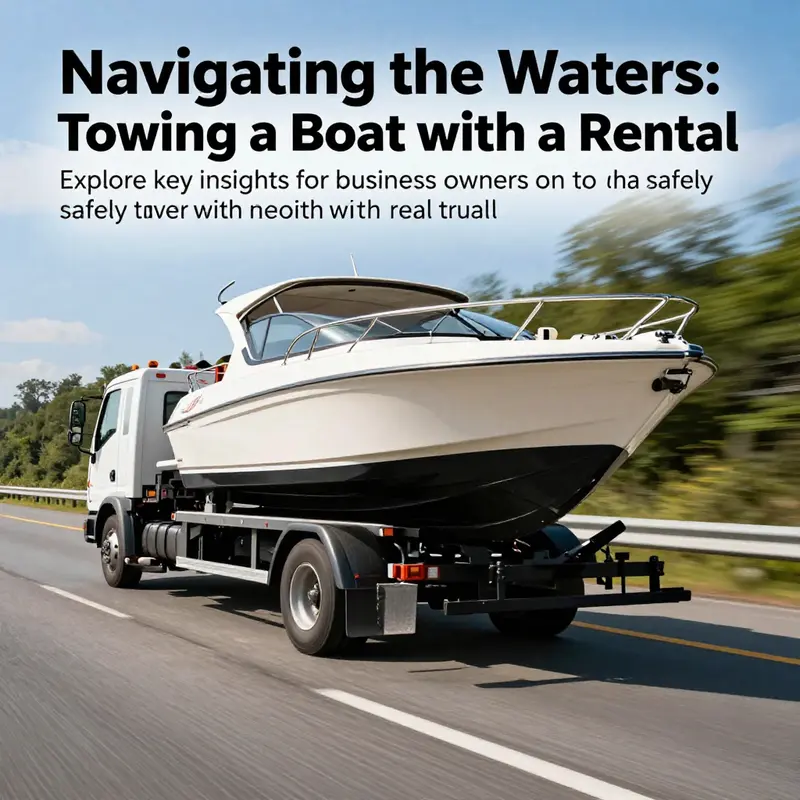
For business owners looking to transport boats efficiently using a rental truck, understanding the nuances of towing is essential. Ensuring the truck’s towing capacity, adhering to legal and safety regulations, and being aware of rental company policies are all critical components to a successful towing experience. Each chapter will delve deeper into these important aspects, equipping you with the knowledge needed to make informed decisions and maintain safety while towing.
Tow with Confidence: Safely Hauling a Boat Using a Rental Truck
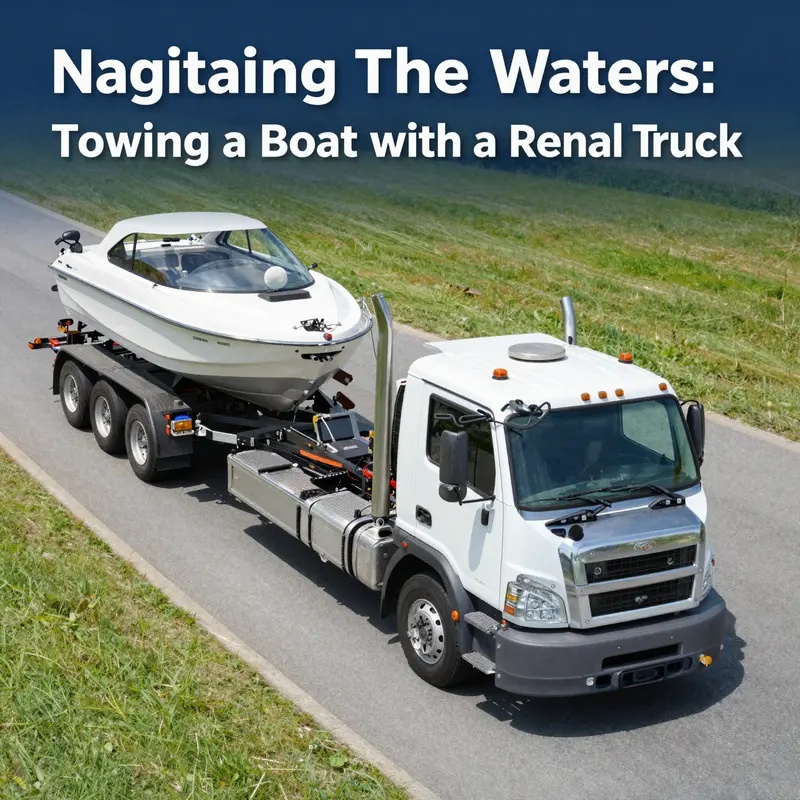
Hauling a boat with a rental truck can be a practical solution for weekend trips, relocation, or visiting a new launch site. Yet it is a task that demands respect for weight, balance, and the rules that govern the road. The idea sounds straightforward: pick up the truck, attach a trailer, slide the boat onto the trailer, and head out. In reality, success rests on a careful, deliberate approach that starts with the numbers on the spec sheet and ends with a smooth, controlled drive. The core question isn’t whether you can do it; it’s how safely you can do it while staying within the limits set by the truck maker, the trailer, and the law. Getting it right means the journey is safer for you, your passengers, other drivers, and the people who rely on those waterways you’re headed toward. It also means you protect your boat and trailer from unnecessary wear and tear that could lead to costly repairs or risky situations down the line.
To begin with, the idea of capacity is not a single figure you memorize from a brochure. Towing capacity is the maximum weight a vehicle can pull safely, and it is a function of several interlocking systems. The engine’s power provides the force to move weight, but it is the transmission, braking system, suspension, and frame strength that determine whether that force translates into controlled, predictable motion on the highway. When you rent a truck, those factors remain the same, but you must translate them into a practical, responsible load calculation. For your boat, you must account not only for the hull itself but also the trailer, any gear that lives on the boat, and fuel, water, and tackle that you’ll carry for the trip. The dry weight of the boat is only the starting point; the wet weight—the water in tanks and any gear loaded aboard—can push the total well beyond what you might expect from the catalog specification. In short, you are balancing physics with planning and a dash of common sense. The number you need to know is whether the truck’s stated towing capacity exceeds the actual weight you intend to haul, but the practical truth is that this calculation is only meaningful when you also verify the trailer’s contribution to that load.
The trailer, too, plays a central role in the equation. A boat trailer is not a simple appendage; it is a weight-bearing system designed to support both the boat and its own structural demands. The trailer has something called a gross vehicle weight rating, or GVWR, which indicates the maximum combined weight of the trailer and the load it carries. When you pair a boat and trailer with a rental truck, you must ensure that the trailer’s GVWR remains higher than the combined weight of boat plus trailer plus gear. If the trailer is undersized for the load, you will have a mismatch that can manifest as trailer sway, poor braking response, or even tire or axle failure. This is not a theoretical concern: proper matching of the trailer rating to the boat and the truck’s ability to handle the load is fundamental to safe towing. The process starts with a careful weight estimate that includes the boat’s weight with fuel, water, and gear, the trailer’s own weight, and any additional items such as life jackets, spare parts, and equipment you intend to carry. It also means understanding the tongue weight—the downward force the boat and trailer apply to the hitch—which is a crucial part of maintaining stable steering and braking performance. A realistic approach to tongue weight helps ensure that the truck’s suspension responds as designed, keeping both the steering feel and braking response within safe, predictable ranges.
If you are thinking about the hitch and wiring, you are already moving from theory into practiced safety. The truck must be equipped with the correct hitch receiver, commonly 2 inches or 2.5 inches, and a functional electrical connection that powers the trailer’s lights. The electrical connection is not merely a courtesy; it is a legal and safety obligation. The trailer’s brake lights, turn signals, and running lights must all synchronize with the tow vehicle so that other drivers can anticipate your actions. The absence or malfunction of lights can lead to dangerous misunderstandings on the road and may also breach rental agreements and local laws. Beyond the lights, you must ensure that safety chains are correctly arranged and that the breakaway cable, if your trailer is equipped with electric brakes, will activate should the hitch disengage. The hitch mechanism itself deserves careful attention: a reliable connection is the backbone of a safe towing setup. This is where the practical knowledge of hitch installation becomes invaluable, and it is worth taking time to understand the exact hardware you will be using. For hands-on guidance on the hitch, you can refer to a detailed resource such as the hitch installation guide available at penske-trailer-hitch-installation. That resource, while specific in its own way, embodies the careful step-by-step thinking you should apply before you ever back toward a ramp with a boat in tow. The goal is to ensure that every joint, every connection, and every fastener remains secure throughout the trip, from the moment you hitch up at the marina to the moment you park the boat at your destination.
Rental companies, too, set the stage for safe towing, and understanding their rules can save you from unwelcome surprises. The contract you sign is more than a formality; it is a roadmap that defines what you can do, where you can go, and what kind of protection you are expected to carry. Some rental outfits require you to purchase additional insurance or confirm liability limits specific to towing. Others may restrict the distance you can travel with a trailer or even prohibit certain routes or regions. A few may have maintenance expectations, such as prohibiting towing boats over certain road conditions or in severe weather. The prudent approach is to study the rental agreement carefully before you leave the lot and to ask questions about any policy you do not fully understand. If you anticipate crossing into unfamiliar territories or varying road conditions, raise those questions with staff upfront. Their experience with the local fleet and the common routes can save you from an otherwise avoidable misstep. The aim is not to trap yourself in a bureaucratic loop but to confirm practical constraints in advance so you can plan a trip that stays compliant and safe.
Even with the capacity and the legalities squared away, the act of driving with a towed boat is a different kind of driving. You must anticipate the trailer’s response, not just the truck’s. A trailer does not behave like a second car; it is a dynamic extension that reacts to road conditions, wind, and vehicle input with a different lag. The extended length changes your turning radius, and the added mass requires more stopping distance. Sway—the oscillation of the trailer from side to side due to wind gusts, passing trucks, or abrupt steering inputs—can start subtly and escalate quickly if you push the limits. The best way to counter sway is to practice before you hit the highway, and the safest practice ground is a large, empty parking lot where you can simulate starts, stops, lane changes, and gentle curves. The goal of practice is not just to learn to drive with a trailer but to ingrained muscle memory for safe reaction in the moment. A calm, measured approach pays dividends. Be mindful of your speed, give yourself ample following distance, and use lower gears when ascending hills to keep the transmission from hunting for gears at critical moments. If the weather turns inclement, postpone the trip or choose a shorter route that keeps you away from high-wind corridors and heavy traffic.
Besides the driving technique, the pre-trip inspection is your best safeguard against surprise failures. Before you leave, you should conduct a thorough check of the towing setup. Inspect the hitch connection for tightness and security, confirm the safety chains are crossed and attached to solid anchor points, and ensure the equivalence of the electrical harness between truck and trailer. Check the trailer tires for proper inflation and tread, and verify that the wheel bearings have been lubricated and show no signs of overheating. Inspect the boat’s condition on the trailer: ensure the boat is strapped securely, and that any loose equipment is stowed to prevent shifting weight during transit. It is also wise to confirm the boat’s ballast and weight distribution within the hull and to ensure that any water ballast or fuel not in use for the drive is secured in a way that cannot spill during transit. These are not ceremonial checks; they are core safety practices that reduce the risk of a roadside incident and protect the investment you have made in both the rental and the boat.
Weight distribution within the tow setup deserves particular attention. The goal is to achieve a sensible tongue weight—enough downward force on the hitch to maintain stability but not so much that it causes excessive weight transfer to the rear axle of the truck. Overloading the tongue can compress the rear suspension, reduce traction on the driving wheels, and degrade steering feedback. On the other hand, too little tongue weight increases the risk of trailer sway and reduces the efficiency of braking, particularly in a sudden stop. A balanced approach means loading gear up front on the boat or trailer to press the hitch downward without pushing the boat’s weight significantly rearward. It also means balancing heavier items such as batteries, anchors, and tools to improve overall stability. If your boat carries heavy equipment on deck, consider relocating some items into the boat’s interior or onto a secured rack so the trailer’s load remains within the recommended range. The more precise you are about weight distribution, the more predictable your vehicle’s handling will be in require conditions. A well-distributed load also helps in avoiding overheating of the brakes, which can be a danger when hauling longer distances or through mountainous terrain that demands sustained braking.
The safety margin you apply is not a luxury; it is a practical shield against miscalculation. Even with the numbers lining up on the spec sheet, conditions on the road can slide the plan toward risk. Winds can buffet exposed sides of the trailer; roadside debris or rain can affect traction; a sudden evasive maneuver by another driver can test your ability to respond without losing control. Maintaining a margin between the truck’s capacity and the actual load reduces the odds that you will encounter a braking fade, a tire blowout, or a swerving trailer. If at any point you suspect the load might be too heavy, or if the trailer does not track straight behind you, it is time to re-evaluate. It is better to terminate a trip before it begins than to press on and confront a hazardous situation on the road. A careful, research-based approach keeps your goal—safely moving the boat from one place to another—within reach and within the realm of responsible planning.
There is also a broader, governance-informed layer to the undertaking. The Federal Motor Carrier Safety Administration, while often associated with commercial operations, provides public-facing guidelines that illuminate safe towing concepts for private operators too. Consult authoritative resources that discuss weight distribution, vehicle inspection standards, and the educational materials that help both commercial and private operators build safer driving habits. These resources reinforce the idea that towing is not simply a matter of power and speed but of disciplined preparation and adherence to defined safety practices. You can find guidelines and educational materials designed for both commercial and private vehicle operators on the FMCSA website: https://www.fmcsa.dot.gov. The guidance there underscores the importance of understanding how weight, braking, and steering interact in real-world conditions, and it offers tools and publications to help you plan, inspect, and operate more safely when towing a boat with a rental truck.
As you prepare to rent, load, and tow, remember that the destination matters as much as the journey. If the destination is a marina, a lake, or a riverfront launch, you will likely move through traffic patterns that include confident drivers who respect shared space and slower, more deliberate speeds in tow zones, as well as drivers who may be less patient with the extra length and weight of a boat on a trailer. Your role is to maintain situational awareness, anticipate the actions of nearby vehicles, and navigate with the kind of calm that helps you respond to conditions rather than react to them. You will have more to think about than a typical trip: the coupling, the electrical circuit, the boat’s acceleration and deceleration characteristics, and the dynamic behavior of the trailer in crosswinds. The goal is to keep momentum steady, avoid abrupt inputs, and assume that other drivers may misjudge your stopping distance. This approach is not about fear but about preparedness, a disciplined mindset that prioritizes safety, legality, and respect for the equipment you have rented and the vessel you are transporting.
In this ongoing conversation about towing a boat with a rental truck, practical steps and best practices come together to form a sensible routine. It starts with a clear weight calculation that includes the boat, trailer, fuel, and gear; it continues with a properly rated hitch and a working wiring system; it remains grounded in the rental company’s rules and the road-law reality of what is permissible and safe. It includes a deliberate, methodical pre-trip inspection and a candid assessment of weather and road conditions. It also requires a disciplined driving approach, with attention to tongue weight, weight distribution, and the trailer’s response to steering and braking inputs. And when in doubt, it is wise to pause, re-check, and consult the documented guidance that exists to support safe towing. The road is shared, the lake is a shared resource, and your careful preparation helps ensure that your trip is a success for everyone involved, from fellow motorists to fellow boaters who may be at the launch waiting for your arrival. The practice of towing a boat with a rental truck, when done thoughtfully, becomes more than a practical necessity; it becomes a reminder of the careful balance between power, control, and responsibility that defines good seamanship on land as well as on water.
Ultimately, the transition from planning to execution hinges on honoring the layered realities of weight, hitching, and safe operation. The math matters, yes, but so does the mindset. If you respect the numbers, the equipment, and the rules, you can approach the road with confidence rather than trepidation. The respect you show for the truck, the trailer, and the boat translates into a smoother, safer journey—one that starts with careful measurement, ends with a well-executed launch, and earns you the quiet confidence that comes from knowing you did your homework before you drove away from the marina. For further practical, mechanism-level reading on hitch installation and safe trailer integration, see the detailed guide linked earlier. And for a broader safety framework that informs all aspects of towing, the FMCSA resources offer a reliable foundation to consult as you plan your next boat-hauling trip: https://www.fmcsa.dot.gov.
Towing Right: Legal Responsibilities and Safety Essentials for Hauling a Boat with a Rental Truck
Towing Right: Legal Responsibilities and Safety Essentials for Hauling a Boat with a Rental Truck
Towing a boat with a rental truck is a task that combines straightforward mechanics with strict legal obligations. Treat it like a responsibility rather than a convenience. Every decision you make, from confirming the truck’s placard numbers to the way you cross safety chains, affects safety and liability. This chapter walks through the legal requirements and practical safety measures that keep you compliant and reduce risk on the road.
Begin with capacity: the truck, the trailer, and the combined weight of everything on board form a single system. The truck’s towing capacity and the trailer’s Gross Vehicle Weight Rating (GVWR) must both exceed the total loaded weight of boat and trailer. Find those numbers on the vehicle placard inside the driver’s door jamb and in the rental paperwork. Don’t guess. Exceeding the rated capacity invites overheating, brake fade, and steering instability. Insurance providers and courts look for adherence to those stamped numbers when incidents occur.
Beyond simple totals, understand tongue weight and weight distribution. Tongue weight is the downward force the trailer places on the hitch. Too little tongue weight allows the trailer to sway. Too much compresses the rear suspension, increases braking distances, and can lift the truck’s front wheels. A typical safe tongue weight is about 10–15% of the trailer’s loaded weight, but consult your truck’s manual for exact figures. When the trailer load exceeds a comfortable tongue weight for the hitch or truck, a weight-distributing hitch is often necessary. These hitches transfer some load to the truck’s front axle and the trailer axle. Where local law or the rental company’s terms demand brake or weight distribution systems, compliance is mandatory.
Trailer brakes and controllers are a second legal and safety layer. Many jurisdictions require trailers over a certain GVWR to have independent braking systems. A brake controller mounted inside the truck provides proportional braking force. If the rental truck lacks a factory-installed controller, check whether the rental company offers a compatible controller or an adapter. Even if local law doesn’t require trailer brakes for your trailer’s weight, install them if available. They significantly reduce stopping distances and improve stability.
Hitches and couplers must match a compatible rating. Hitches are classified by capacity, and the ball diameter must match the trailer coupler. Common sizes include 1 7/8″, 2″, and 2 5/16″ balls; using the wrong size is dangerous and illegal in many places. Secure the coupler latch and pin, lock the coupler if possible, and always cross the safety chains under the coupler. Crossing creates a cradle that can catch the tongue if the hitch fails and prevents the trailer from dropping to the pavement. Chains should be long enough to allow turning but short enough to prevent dragging. Some states require chain size and rated strength specifications—check local regulations and your rental agreement.
Lighting and wiring are another non-negotiable requirement. Functioning running lights, brake lights, and turn signals are a basic legal obligation. Most trailers use either a four-pin or seven-pin connector. Confirm the truck has the correct outlet and that it is operational. Inspect bulbs and wiring for corrosion, especially after saltwater exposure. A trailer’s lighting failure can lead to citations or collisions. Where required by law, reflective tape and side markers must be present and visible.
Tires, axles, and wheel assemblies deserve careful attention. Trailer tires carry concentrated loads and heat up quickly. Use tires rated for the trailer’s load and check the sidewall for the load range and speed rating. Inflate tires to the recommended pressure found on the trailer’s placard or tire sidewall. Underinflated tires increase rolling resistance, heat build-up, and blowout risk. Overinflation reduces traction and causes uneven wear. Inspect lug nuts and torque them to the manufacturer’s specified values. Loose lug nuts cause wobble and catastrophic wheel separation. Carry a properly sized spare and the correct lug wrench.
A thorough pre-trip inspection is the legal and practical step that reduces roadside stops and citations. Walk around the rig and check the hitch connection, safety chains, electrical connectors, and lights. Confirm the trailer coupler is seated and latched, and verify the breakaway battery is charged and the switch is connected. Examine tires for cuts, embedded objects, and proper tread depth. Look for damaged suspension components and leaking seals. Inside the truck, test the brake controller, mirrors, and horn. If anything is out of order, resolve it before departing. If you rented the truck, notify the rental agent and document the condition with photos and time-stamped notes. This protects you from being held responsible for pre-existing issues.
The rental company’s policies shape what you can and cannot do with their truck. Rental agreements often identify towing as a special-use activity. Some companies permit towing only with specific vehicles or accessories. Others forbid any towing at all. Many require additional insurance or a signed waiver for towing. Ask directly about roadside assistance coverage for trailers and whether the rental includes any towing equipment. If the rental company offers a hitch or wiring installation, consider using it for proper fit and to maintain coverage. You can learn more about hitch installation options in the company’s hitch resource: Penske trailer hitch installation. Make sure any extra equipment is documented on your rental agreement.
Insurance and liability are central legal considerations. Your personal auto policy may exclude coverage when you tow with a rental truck. Rental companies often sell supplemental liability or insurance; read the policy terms carefully. Check whether the coverage extends to the trailer and to third-party liability. Liability limits, deductibles, and exclusions vary. If you plan an extended trip, verify whether insurance covers travel across state or provincial lines and whether it includes recreational craft liability. In the absence of adequate coverage, a single accident can leave you financially exposed for damages, medical bills, and environmental cleanup costs if fuel or hazardous materials spill.
Documentation on hand is a simple legal remedy that prevents citations and eases roadside interactions. Carry your driver’s license, the rental agreement, rental vehicle registration, proof of insurance, and the trailer registration or bill of sale if applicable. Some areas require a trailer registration certificate to be carried at all times. If you have any permits for oversized loads or special routes, place them where they are accessible for inspection. If a police officer asks questions, having the documents ready speeds the exchange and demonstrates responsibility.
Local and state regulations add important nuances. Laws about maximum combined vehicle length, lane usage, towing speed limits, and even daytime-only travel vary widely. Some bridge or tunnel authorities limit trailer dimensions or the times when trailers can cross. Urban centers or residential neighborhoods may have restrictions on trailer parking or overnight storage. If you cross state lines, research the rules for each state you will enter. The department of motor vehicles or state transportation websites provide clear summaries. For heavy or wide trailers, you may need a special permit or pilot vehicle, both of which require planning and cost. Ignorance of localized rules is rarely an acceptable defense in court.
Load security is both a legal requirement and a safety necessity. Boats must be secured to the trailer with straps, transom tie-downs, and bow chains. Use hardware rated for the weight and conditions. Fasteners should be corrosion-resistant in marine environments. Distribute the load so the trailer’s axle supports most of the weight and the tongue weight remains within recommended limits. Improper load distribution alters the truck’s handling and increases sway risk. Cover loose gear, tie down fuel cans, and secure anything that could shift during transit. If carrying an outboard motor, lock it down and avoid any swinging that could unbalance the rig.
Breakdowns and emergency response procedures should be practiced mentally and, if possible, rehearsed. Arrive at ramps or coastal launch areas with time and space to spare. If you feel trailer sway, reduce speed gradually and avoid sudden steering inputs. Do not brake hard while the trailer is swaying; slowly apply the truck brakes and engage the trailer brake controller to re-center the trailer. If you must stop, move to the shoulder and set wheel chocks. Carry reflective triangles, a charged flashlight, and a fire extinguisher rated for flammable liquids. Know how to disconnect the trailer safely if the truck must be towed or if the trailer must be secured and left temporarily.
Environmental protections add legal layers when launching a boat. Many launch sites have rules to prevent the spread of invasive species. Clean, drain, and dry your boat before leaving a waterway. Some public ramps enforce decontamination or inspection checkpoints. Failure to comply can result in fines and ecological harm. Fuel securement matters at launch, too; leaking fuel during launch can trigger environmental cleanup obligations and stiff fines.
Training and practice reduce legal exposure by improving your ability to respond. If you lack towing experience, seek a short training session. Even a 30-minute practical lesson in hitching, backing, and emergency braking makes a sizable difference. Rental staff often provide demonstrations or checklists; use them. Local boating clubs or marina offices sometimes offer practical advice for common launch sites and local traffic patterns. Document your training or practice session if the rental company requires proof.
Finally, be mindful of the consequences of non-compliance. Traffic stops for lighting or safety violations can escalate to citations, immediate orders to uncouple the trailer, or even impoundment until deficiencies are fixed. In case of an accident, authorities and insurers will examine whether you met legal and manufacturer-specified towing practices. Failure to do so can result in denial of coverage, personal liability, and criminal charges in extreme cases.
Following the legal and safety steps above makes towing a boat with a rental truck manageable and predictable. Confirm capacities and placard numbers, verify hitch and coupler compatibility, ensure proper trailer brakes and lighting, and perform a thorough pre-trip inspection. Understand rental company rules, carry all necessary documentation, and know local regulations for every jurisdiction you will cross. Secure the load correctly, practice emergency procedures, and invest in basic training if needed. These actions protect you, other road users, and the environment. For authoritative guidance on towing vehicle safety and legal requirements, refer to the National Highway Traffic Safety Administration’s towing resource: https://www.nhtsa.gov/vehicle-safety/towing-vehicles
Tow the Horizon: Navigating Rental-Truck Towing Policies and Practicalities for Boat Hauling
Towing a boat with a rental truck is a practical option for many seasonal migrations, weekend excursions, or a one-off move to a new dock. Yet the plan hinges on a careful balance of weight, equipment, policy, and skill. The chapter you’re about to read weaves these threads into a single, cohesive narrative that helps you move from a simple idea—can I tow my boat with a rental truck?—to a safe, lawful, and road-ready operation. The core of this journey is not just the physics of towing, but the rules that govern the rental process, the technical requirements of the vehicle and trailer, and the driving discipline that keeps you and others safe on the road. In the end, it’s a practical guide grounded in clarity rather than guesswork, designed to prevent costly missteps and to keep your boat secure from start to finish.
At the heart of any tow plan is the weight question. Boats, trailers, and gear add up quickly, and rental trucks are designed to move people and cargo, not boats by habit alone. The truck’s towing capacity, usually expressed in pounds or kilograms, must exceed the combined weight of the boat and its trailer, including the gear and fuel you carry aboard or on board. It’s easy to overlook the little loads—the anchor, spare parts, life jackets, water tanks, gas cans, and even a few tools—that add up to a significant payload. The dry weight of the boat is just the starting line; every accessory inside the boat and every item clipped to the trailer increases the total draw on the hitch. This is where the concept of GVWR—the gross vehicle weight rating for the trailer—enters the frame. The trailer’s GVWR should be higher than the combined weight of boat, trailer, and gear. If you push the numbers and end up with a total that brushes against the limit, you risk more than a parking ticket; you risk insurance, you risk damaging the rental truck, and you increase the odds of an unsafe tow on the highway.
In practical terms, the policy landscape around rental trucks adds a complex layer to the weight calculation. The maximum allowable towing weight is not a global constant; it varies by model and by rental company policy. A small 15-foot cargo van, for example, might permit only a couple thousand pounds of towing. A larger 26-foot box truck could allow as much as ten thousand pounds, but these figures come with caveats. Exceeding limits can void the insurance and lead to substantial penalties, or worse, mechanical stress that the vehicle wasn’t designed to endure. That is why verification matters. The right approach is to consult the rental agreement or the company’s vehicle details tool before you commit to a truck. This step prevents assumptions and protects you from surprises at the counter or on the road.
Beyond weight, the relationship between the hitch and the trailer is a critical hinge on which safe towing turns. The correct hitch receiver size must match the trailer’s needs—whether a two-inch or a two-and-a-half-inch receiver—and the electrical system must power the trailer’s lights and brakes where applicable. A trailer that can’t communicate its status to the tow vehicle creates hazards for you and for other drivers. A thorough pre-trip inspection becomes not a precaution but a mandate. You should check the hitch stability, test the electrical connection, and ensure the trailer light circuit is functioning, including brake and turn signals. If any of these components fail, the risk of a miscommunication on the road rises, and the potential for an incident increases in tandem.
The rental environment adds its own set of regulatory and procedural constraints. rental companies typically publish towing policies that address the capacity limits, insurance coverage, and vehicle restrictions. These policies are not mere suggestions; they govern what you can and cannot do with the rented vehicle. Some operators may require you to purchase additional insurance or to adopt a specialized endorsement for towing. Others may cap the distance you can travel, or even prohibit towing in certain regions or on specific highway types. The terms of service often require you to return the vehicle with certain conditions met, such as the hitch being installed or removed in a prescribed manner, or the truck being returned in a particular configuration. Ignorance, as they say, is not a defense in the eyes of the insurer or the fleet manager. A careful review of the agreement, and a candid conversation with staff, minimizes the risk of dispute later and clarifies expectations before you set out.
The human element is equally important. Towing a boat requires different driving techniques than ordinary hauling or passenger-car operation. You’ll encounter increased stopping distances, reduced maneuverability, and a greater susceptibility to trailer sway, especially in gusty conditions or when passing large vehicles. Practicing in a safe environment—an empty parking lot with a trailer attached—helps ingrain the new reflexes you’ll need on the highway. You’ll adjust your following distance, plan wider turns to accommodate the length of the trailer, and learn to brake gradually to avoid jackknifing or abrupt shifts that could destabilize the rig. The mental model you bring to the road matters as much as the mechanical one. If you are uneasy or unsure about your ability to handle a tow, consider postponing the trip or choosing an alternative arrangement that reduces risk.
The lifecycle of a rental truck tow is not only about the moment you hit the road. It begins with a precise, disciplined check of each piece of equipment and a clear understanding of the rental terms. First, you verify the towing specifications for the truck model you intend to use. The vehicle details tool or the rental agreement should reveal the maximum towing weight, the hitch requirements, and whether an endorsement or extra insurance is mandatory for towing. Do not assume. If the document is ambiguous, ask for confirmation in writing. Then, confirm the trailer compatibility. The trailer’s GVWR and its hitch rating must align with the truck’s capacity. Inspect the trailer itself: is the frame sound, are the wheels in good condition, are the tires properly inflated, and do you have working safety chains and a functional brake system if the trailer has its own brakes? A neglected trailer can turn a simple haul into a crisis the moment you leave the lot. You want to catch a loose bolt in a critical connection before it travels with you at highway speed.
The hitch and wiring are not mere add-ons; they are the literal lifeline between you and the vehicle you’re towing. The correct hitch size is fundamental. The electrical connection must power the trailer’s lights, brake functions, and turn signals. A trailer that cannot signal properly becomes a hazard to every other driver on the road. If you’re not confident about wiring, arrange for a quick tutorial with the rental staff or a trusted mechanic. Modern trailers use electrical harnesses to coordinate with the tow vehicle’s braking and lighting systems. A few minutes spent confirming these connections saves hours of trouble and potential legal exposure later. And if you’re considering using a hitch accessory or a third-party mounting method, verify with the rental company whether it is allowed under the rental contract and whether it could affect insurance coverage or towing limits.
Insurance considerations are a distinct and essential dimension of the decision to tow. The reality is that many standard auto policies exclude trailer-related incidents unless you explicitly add towing coverage or a liability extension. If you plan to tow, you should explore the optional insurance add-ons that specifically address towing protection or liability extension. This isn’t merely a cushion against a collision; it covers the kinds of incidents that can occur while towing a trailer, such as jackknifing or brake failures that involve the trailer’s dynamics. The goal is to know what is covered and what isn’t, so you can decide whether to purchase the endorsement or to accept added risk. The rental company may require such an endorsement or provide it as an optional supplement. Do not assume that your personal coverage automatically transfers to the rental situation. Clarify the scope of protection and ensure you have documentation to support your decision before you depart.
The conversation with the rental company should address a constellation of practical questions. Do you need to leave the hitch installed for pickup or return? Is there an additional fee for hitch installation or removal? Are there geographic restrictions on where you can tow? How does the company handle accidents or mechanical issues that involve the towed boat? These are not abstract concerns; they define the legal and financial exposure you carry on the road. The terms can differ not only from one company to another but from one fleet region to another. The staff can spell these out in plain terms and reduce the ambiguity that often leads to disputes after a trip.
To truly internalize these policies, you should integrate them into a mental checklist that travels with you on the trip. Start with the weight calculation: confirm the boat’s weight, the trailer’s GVWR, fuel load, gear, and any water you carry onboard. Add the trailer’s weight and ensure the total is within the truck’s stated towing capacity. Next, verify hitch compatibility and wiring. Then re-confirm the insurance coverage and any endorsements. Finally, review the route and the local regulations that could affect towing in specific jurisdictions. Some routes impose restrictions on heavy towing, some states require additional lighting or reflective markers, and others restrict towing during certain hours or in particular lanes. You can reduce the chance of a roadside surprise by making a plan that anticipates these constraints rather than reacting to them on the fly.
In the broader arc of moving toward a successful tow, the preparation phase is the most critical element. A well-prepared plan provides the stability you need to handle the vehicle and the boat as a unified system. And while the technology and the policies provide the framework, the decision to tow with a rental truck remains a practical exercise in risk assessment and risk management. If at any point the math or the policy seems marginal, it is wiser to pause and reconsider. You might discover that a dedicated trailer or a tow dolly, or even a different mode of transport, better suits your timing, budget, and safety comfort. This is not a failure of resourcefulness; it is prudent stewardship of your equipment, your passengers, and your project.
The human factors—organization, patience, and respect for the rules—are often the deciding variables. A calm approach reduces the likelihood of errors when you connect the boat to the trailer, when you perform the pre-trip inspection, and as you navigate busy corridors and unfamiliar roads. If you take nothing else away from this chapter, take the message that towing a boat with a rental truck is entirely feasible when approached with discipline. It requires that you align the truck’s specifications with the boat’s weight, that you secure a proper hitch and functioning electrical system, that you understand and respect the rental company’s policies, and that you develop the driving competencies necessary to manage the added length and sway of a trailer. With those elements in place, the journey from dock to dock becomes less a leap of faith and more a well-charted expedition.
As you anchor these ideas in memory, it can be helpful to refer to the information resources provided by rental fleets and industry guidance. One practical touchpoint is to review official towing information available on rental truck websites. These pages distill the most important requirements into accessible formats and provide the numbers you’ll rely on when you select a truck model, plan a trip, and prepare your trailer. While the exact figures vary by fleet and region, the underlying principles stay constant: respect weight limits, ensure hitch and wiring integrity, secure proper insurance, and cultivate the driving habits that keep a loaded rig stable and predictable on the road. In a sense, towing a boat with a rental truck becomes a test case for practical logistics, where arithmetic meets engineering, and planning meets action.
If you want a practical starting point for technical details on hitch installation and compatibility, you can explore the guidance on Penske trailer hitch installation. This resource provides a clear, user-focused explanation of how hitch sizes and mounting considerations align with common trailer setups. It’s a useful reference as you prepare to secure the correct hardware and confirm whether your selected rental truck can accommodate the towed load. For a direct route to this information, follow the internal link provided within this chapter: Penske trailer hitch installation. By grounding your decisions in a specific, practical resource, you can avoid second-guessing and move forward with confidence.
Finally, a note on external guidance. Real-world towing involves conditions and constraints that texts and checklists cannot fully capture. Weather, road quality, wind, and traffic dynamics can push a plan off course. When in doubt, consult broader guidelines about towing with rental trucks and consider additional training or supervision if you’re new to towing a trailer. A reliable external resource can offer a broader set of scenarios and safety tips that complement the specifics of your rental agreement. For general guidelines on towing with rental trucks, see an expanded external resource such as this: Towing guidelines for rental trucks.
In closing, the practical art of towing a boat with a rental truck is a discipline of preparation, precise adherence to capacity and compatibility, and deliberate, skilled driving. It is a process that rewards patience, thorough verification, and a respect for the limits built into both the vehicle and the road. When you approach the task with these qualities, you transform a potentially risky undertaking into a well-managed logistical operation that respects safety, policy, and the common sense that keeps you and your crew safe from harbor to harbor.
Final thoughts
Successfully towing a boat with a rental truck involves careful consideration of several factors, from understanding towing capacities to adhering to legal and rental policies. By being informed and proactive, business owners can ensure a smooth towing experience that safeguards both their vehicles and the valuable cargo being transported. Knowledge is your best asset when navigating these waters.