
For business owners looking to enhance their logistical capabilities, renting a truck for towing a trailer can be a practical solution. However, ensuring compliance with rental policies, understanding the truck’s towing capacity, and securing proper safety equipment are crucial steps in this process. This article will delve into the conditions for towing a trailer with a rental truck, considerations regarding towing capacity, and the necessary safety equipment, providing a comprehensive overview to help business owners make informed decisions.
null
null
Tow Wise: Navigating Capacity, Hitches, and Safety When Pulling a Trailer with a Rental Truck
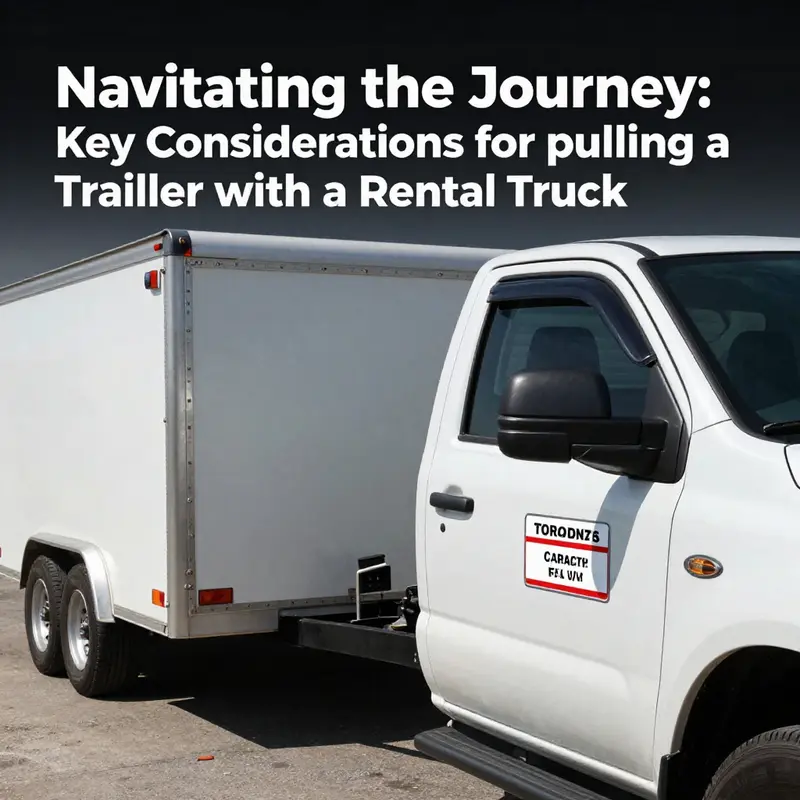
Pulling a trailer with a rental truck is a practical option for many moves, renovations, or occasional hauling needs. It’s a question that comes up frequently because people want to maximize what they already own and avoid extra trips. But the reality is more nuanced than a simple yes or no. The ability to tow hinges on several interconnected factors: the truck’s towing capacity, the hitch system, the trailer’s weight and type, and the regulatory or policy constraints set by the rental company. The goal is not just to make the trailer move but to move it safely and legally, with predictable handling and reliable braking. When you approach towing in this way, you’ll find that most rental trucks can handle a reasonable trailer, but only within strict limits. Reading the rental agreement carefully becomes an act of due diligence, not a hurdle. It is the document that translates the manufacturer’s specifications into the real-world rules you must follow on the road. In practice, the process begins with a clear understanding of what a towing capacity is, how it is determined, and how to verify it for the specific truck you plan to rent. Each rental truck comes with a published towing capacity, usually stated as a maximum towing weight or trailer weight. This figure is the ceiling for what you can safely pull, and it is derived from the vehicle’s engine performance, transmission characteristics, suspension design, and braking system. Exceeding this number invites a cascade of risks: reduced braking efficiency, steering instability, heat buildup in the drivetrain, and, ultimately, a higher chance of a roadside crisis. Read it as a red flag rather than a green light. The trailer you attach should also be compatible with the hitch system on the rental truck. The most common hitch receivers come in standard sizes, typically 2 inches or 2.5 inches in diameter. The hitch must physically fit the truck’s receiver and match the trailer’s coupler. Even if the gross weight seems manageable, a mismatch here can create serious safety issues. Tongue weight, the downward force the trailer exerts at the hitch, adds another layer of complexity. A general rule of thumb places tongue weight at about 10–15% of the trailer’s total weight. This balance helps maintain stability and reduces hitch-induced sway. For heavier or longer trailers, a weight-distribution hitch or sway control devices may be necessary to preserve controllability at typical operating speeds. These devices are not universal, and some rental agreements require you to obtain or rent them separately. The more mass involved, the more you’ll rely on proper weight distribution and properly tuned tongue weight to maintain stability during acceleration, braking, and turns. Beyond the equipment, safe towing hinges on the driver’s licensing and the local regulations governing combined vehicle weights. In many places, the law considers the combined weight of the truck and trailer, sometimes referenced as the gross combined vehicle weight rating (GCVWR). A driver’s license appropriate for the road class and vehicle category is essential. Some jurisdictions impose licensing thresholds based on GCVWR, especially for larger trailers or heavier loads. It is not unusual for rental customers to assume a standard license automatically suffices for any hitching scenario. In reality, the authorities may require a different class of license for certain weights, so it is wise to verify before you sign the rental contract. The rental agreement also frames what insurance coverage is required or recommended when towing. Some carriers will insist on additional insurance or a rider for the towing activity, especially if the trailer is wide, long, or heavy. Others may provide a basic towing coverage option that you can supplement if needed. The exact requirements vary by company and location, so a quick review of the policy language can prevent last-minute surprises if you encounter a problem on the road. One practical approach is to conduct a pre-move planning session that uses a checklist rather than a single rule. Start by identifying the trailer’s weight, length, and tongue weight. Then confirm the truck’s stated towing capacity in the rental agreement and compare it to the trailer’s weight. Check the hitch type and ensure your vehicle has the right receiver size for the actual coupler. If you are using a longer or heavier trailer, consider whether the rental company offers a weight-distribution hitch, sway control, or a brake controller. These items are often available as add-ons, sometimes with a separate rental fee. If your plan involves on-the-road adjustments—like moving through hills, crossing regions with steep grades, or navigating city traffic with frequent stops—you’ll want to consider how the trailer will affect acceleration, braking distance, and cornering. In all these aspects, the physics don’t change, but the handling does. The trailer adds mass behind the truck, creating a momentum you must manage with more cautious speed selection, longer stopping distances, and smoother steering inputs. The result is a safety-focused riding style rather than a return to normal driving until you’re unhitched. It helps to imagine the process as a chain of safe choices that starts with the rental agreement and ends with a well-secured load. First, confirm the towing allowance in the rental contract and verify the maximum weight. Then, check the hitch type, receiver size, and whether the trailer’s coupler matches the truck’s hitch. Next, confirm tongue weight and consider whether a weight-distribution hitch or sway control device is necessary. Finally, verify driver licensing, insurance coverage, and any local regulations that could affect your trip. At every step, document the checks you perform, particularly if you’ll be renting additional safety equipment like a brake controller or a hitch assembly. The practical realities of towing with a rental truck come into sharper focus when you translate numbers into action. If the trailer’s weight is near the upper limit of the truck’s capacity, a few conservative practices become especially important. Maintain a longer following distance to allow for extended stopping distances. Increase your awareness of wind gusts and road surface conditions that could amplify sway potential. Short, controlled, and deliberate steering inputs help keep the vehicle stable during lane changes and turning maneuvers. When overtaking or merging, give yourself extra room; motorcycles, cars, and trucks can react differently under the combined load. Parking and unhooking require equal attention. When you arrive at your destination, ensure the trailer is level and stable before disconnecting the hitch. Use wheel chocks and a set of hand signals or a pre-agreed communication method with any spotter who guides you during the final alignment. If you are new to towing with a rental truck, consider practicing in a wide, empty area before tackling a busy route. Running a few gentle sessions helps you feel how the truck’s steering, braking, and trailer’s sway respond to your inputs. It also reveals if your load distribution feels off—perhaps the trailer’s tongue weight is not correctly balanced, or the weight distribution hitch needs a minor adjustment. The translation from theory to practice is where the safety net tightens. Safety is not just about avoiding accidents; it’s about reducing wear on the truck and trailer and ensuring the load remains stable, so everything you’re transporting arrives intact. The rental company’s policies often reflect an emphasis on safety equipment, and these policies can influence what you decide to rent in addition to the truck itself. A brake controller, for example, becomes more compelling when you’re towing a larger or longer trailer because it helps the truck apply trailer brakes in synchrony with its own. This helps control stopping distance and can prevent trailer sway that complicates braking in emergency or abrupt-stop situations. A properly installed ball mount and hitch spacer can also be critical in achieving the correct hitch height. If the trailer’s height is not aligned with the truck’s hitch, you risk uneven load distribution and poor handling. A compatible wiring harness is essential too; it ensures that the trailer’s lights and signals communicate correctly with the truck, providing visibility to other drivers and compliance with safety standards. In addition to the mechanical and legal facets, there is a practical, everyday reality to towing with rental trucks: time. The planning phase you undertake before you pick up the truck will often determine how smoothly the journey unfolds. If you anticipate a rural drive with winding roads, you might choose a mid-range trailer rather than a long, heavy one. If urban streets dominate your route, a lighter trailer with easy backup maneuvers may be wiser. The goal is to align the trailer’s specifications with the truck’s capabilities and the trip’s demands, not to push the envelope. When it comes to policy alignment, the rental company’s terms often outline the conditions under which towing is allowed. Some companies explicitly permit towing, with guidelines about maximum trailer weight, hitch type, and required safety equipment. Others may restrict certain trailer types, such as gooseneck or fifth-wheel configurations, or may impose stricter weight limits for certain truck classes. Before you commit to a plan, you should read the agreement with a careful eye for the towing section. This is not merely bureaucratic paperwork; it is the part of the contract that translates the owner’s safety standards into your responsibilities on the road. The process of planning also benefits from external sources of information. For authoritative safety guidelines and regulatory context, the U.S. Department of Transportation maintains a rich resource on towing and vehicle safety. It is worth consulting these materials to understand how federal guidelines shape best practices for towing, which can help you make informed decisions about equipment and procedures. If your move is time-sensitive, you might feel pressure to take shortcuts. Resist that impulse. Short-term convenience can create long-term risk. The right approach is to commit to a careful, methodical plan that respects the truck’s capabilities and the trailer’s characteristics. This method reduces the chance of a failed tow, a breakdown, or a dangerous sway condition that can threaten your safety and the safety of others on the road. As you finalize your plan, consider how the trailer will be loaded and balanced. Heavier items should be placed close to the trailer’s axle to optimize weight distribution and minimize tongue weight fluctuations during trip conditions. Lighter items can fill the upper portions of the trailer to maintain a stable center of gravity. Secure all cargo with straps, nets, or appropriate tie-downs. Loose items can become dangerous projectiles in the event of sudden stops or swerves, turning what should be a routine move into a crisis scenario. Finally, a practical reminder: the rules and conventions surrounding towing can vary by location, trailer size, and vehicle class. A policy that seems straightforward in one place may have nuanced exceptions elsewhere. Therefore, a habit of proactive verification—checking the rental agreement, the vehicle’s manual or label, and local regulations—will pay dividends in ensuring a safe, compliant, and efficient towing experience. If you want a concrete starting point for broader insights on trailer towing policy and one-way trailer rental logistics, explore resources on the related topic of one-way trailer rentals, which can provide perspective on how rental fleets manage compatibility across routes and vehicle classes. For more on this topic, see the article linked here: Trailer Rentals One Way.
To supplement this guidance with official regulatory context, consult the U.S. Department of Transportation’s towing-related guidelines at the following resource: official U.S. Department of Transportation resources.
Tow Safe and Sound: The Essential Safety Gear and Practices for Pulling a Trailer with a Rental Truck
Towing a trailer with a rental truck is a common solution for moving, landscaping jobs, or transporting gear, but it isn’t a task to be undertaken lightly. The same vehicle that ferries your belongings can just as easily become a platform for danger if the trailer and truck aren’t prepared to work together. This chapter isn’t about the thrill of hitching up; it’s about the quiet, thorough discipline that keeps drivers and others on the road safe. It focuses on the safety equipment and practices that form the backbone of a responsible tow, and it threads these ideas into a practical mindset you can carry from the moment you reserve a truck to the moment you roll to a stop at your destination. The goal is simple: verify that every piece of safety gear is in place, that it works, and that you adjust your driving to the realities of towing. In doing so, you’ll reduce risk, improve control, and protect both your cargo and everyone else on the road.
Before you even hook up, the most important step is to consult the rental agreement and the vehicle’s towing specifications. The basic rule is straightforward: towing is allowed only if your chosen vehicle’s official towing capacity covers the trailer you intend to pull, and only if the rental agreement explicitly permits it. This is not a gray area you can infer from appearance or from a vague sense of what feels right. The numbers matter. The maximum trailer weight, sometimes labeled as maximum towing weight, is the ceiling you must respect. If the trailer’s weight plus its load would push you over that ceiling, you either need a different truck or a different trailer. This might sound obvious, but a surprising number of incidents trace back to not verifying those limits ahead of time. The moment you pick up the truck, take a minute to read the towing section of the agreement and confirm the exact limits. If anything is unclear, ask the rental agent and request written confirmation. A single overlooked line can lead to a risky setup once you’re on the road.
Once you’ve confirmed the basics, you’ll need to assemble and verify the safety equipment that makes towing practical and safe. The first and most visible element is the trailer lighting system. Operational lights are essential for signaling your intentions to others on the road—brake lights, tail lights, and turn signals all must function in concert with the vehicle’s indicators. A comprehensive Trailer Light Test should be performed before you depart. This isn’t something you can rely on a dashboard alert or a touchscreen indicator to guarantee. The trailer bulbs, wiring, and connectors must all be live and clearly visible to other drivers. If the light test reveals any problem, address it before you go anywhere; that often means replacing a fuse, cleaning connectors, or using a different wiring harness that is known to work. The trailer’s lighting isn’t a decorative feature. It is a critical communication channel with the traffic around you, and failing lights are a common source of avoidable incidents.
Another cornerstone is the secure hitch and coupling. The hitch must be firmly engaged with the coupler, and the latch must be locked or clipped in place according to the hitch type. A loose or misaligned connection can allow the trailer to detach at speed, which is catastrophic. You should perform a physical tug test after coupling to confirm there’s no obvious wobble and that the safety latch is engaged. Locking pins and safety chains are not optional adornments; they are your backup in case the primary connection fails. Safety chains should form a crossing pattern beneath the hitch to catch the trailer if the hitch fails, providing a controlled deceleration rather than a free-fall scenario. If you’re new to hitch systems, consider consulting a brief installation guide and practicing in a safe area before heading onto busy roads. For those who want to ensure the hitch is properly installed, you can consult a detailed guide on hitch installation. This kind of resource can help you recognize common missteps and the right sequence for securing components.
Tire safety is the next critical layer. The trailer’s tires must be inflated to the cold tire inflation pressure specified for towing. When tires are underinflated, handling is degraded, acceleration is less predictable, and the risk of blowouts increases. Inspect the trailer tires for tread wear, sidewall damage, and even wear patterns. The weight of a trailer multiplies the load your tires carry, and worn tread or damaged sidewalls can fail under load. Don’t overlook the spare tire if your trailer has one; ensure it’s properly inflated and accessible. While you’re at it, check the truck tires as well because towing transfers weight that can stress the vehicle’s own tires differently. The goal is a balanced, predictable platform where the trailer’s inertia is managed calmly rather than fighting an uncertain tire condition. Tire checks are a quick, repeatable ritual you can perform in minutes but pay dividends in reliability.
Beyond the mechanical connections, several safety practices deserve emphasis for any towing scenario. Reducing driving speed is not a sign of weakness when towing; it’s a prudent adaptation to the physics at play. Trailers add momentum and increase stopping distances, so you’ll want to allow extra room to brake gradually and to react to emerging hazards. Avoid sudden starts or stops, sharp lane changes, and abrupt corrections, which can induce trailer sway or jackknife scenarios if the connections and weight distribution aren’t perfectly aligned. A stable, smooth driving style is your most effective safety tool when towing. It’s tempting to push your limits on familiar roads, but towing demands respect for how much longer it takes to maneuver and stop with a trailer attached.
Your awareness expands further when you recognize how towing changes the vehicle’s behavior. Steering responsiveness is altered by load behind you, and the turning radius can feel unusual in tight spaces or when navigating roundabouts and parking lots. Braking performance shifts as well, since the combination of vehicle and trailer modifies braking dynamics. That awareness translates into deliberate driving: anticipate lane changes well in advance, use mirrors effectively, and give yourself space to adjust to the longer vehicle length. Practicing slow, controlled maneuvers in an open area can help you internalize these changes before you’re on a crowded street or a busy highway. If the trailer sways, do not overcorrect abruptly. Instead, ease off the accelerator slightly and apply steady, moderate braking to regain stability. Sway control is a discipline learned by experience, but the groundwork starts with predictable speed, steady inputs, and a well-secured load.
Another layer of safety comes from the items you carry and your approach to cargo. Tie-downs, straps, and appropriate cargo restraints are not optional extras; they are essential for preserving the trailer’s stability and preventing movement that could compromise steering or braking. When loading, distribute weight evenly across the trailer and squarely over the axle if possible. Secure heavy items low and centered to minimize shifting. Avoid overloading any single area, which can alter the hitch’s load distribution and affect handling. If you have tall items, pad and secure them to prevent movement that could generate dangerous shifts during braking or cornering. Consider adding soft restraints to cushion movement and reduce rattling that can loosen fasteners over time. If cargo shifts, stability is compromised. You’ll want to check the load again after a shake-down drive to ensure nothing has settled in a way that would produce unexpected behavior on the road.
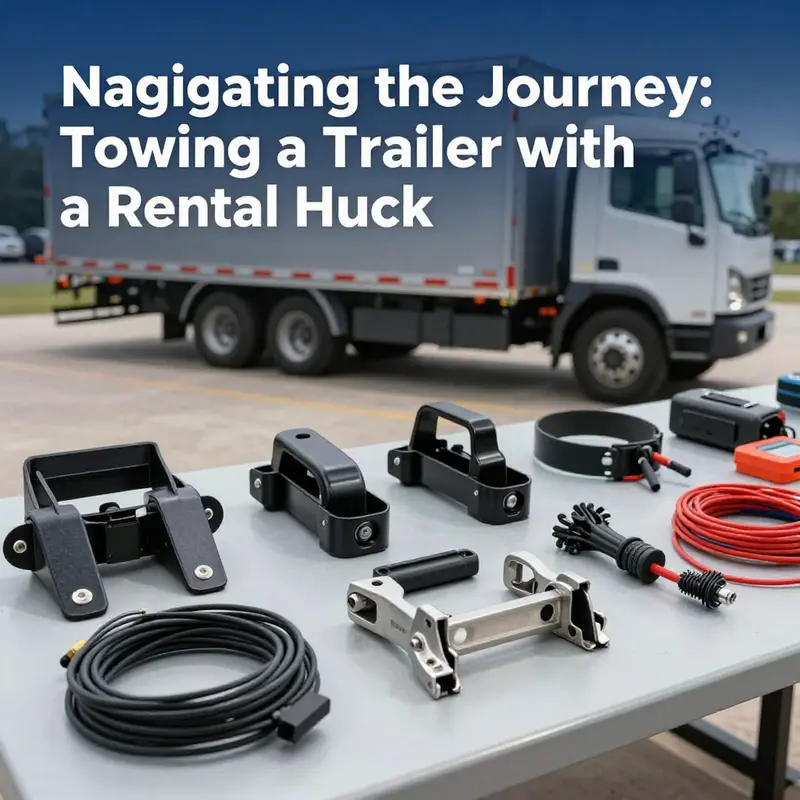
In the realm of equipment, rental agencies often provide or rent out a suite of safety accessories tailored for trailer towing. You may find options such as a dedicated brake controller, additional wiring harnesses, or upgraded hitch hardware. The right kit can simplify compatibility, improve braking response, and ensure reliable lighting across both vehicle and trailer. If you’re unsure what you need, ask about available safety-enhancement packages. While it’s possible to improvise, a purpose-built solution designed for towing reduces the risk of mismatches between trailer and truck, improves reliability, and keeps your costs predictable. The choice between renting these items and using your own gear should be guided by the trailer’s weight, the truck’s electrical system, and the complexity of the hitch setup.
One practical reminder about equipment relates to the interface between the truck’s electronics and the trailer’s wiring. In many cases, the truck’s instrument cluster or a touchscreen interface may display signals or indicators that imply everything is functioning. However, those displays do not guarantee that the trailer’s separate bulb system is working properly. Always perform the physical light test at the trailer, ensuring that each function—tail lights, brake lights, and turn signals—operates correctly on the trailer itself, not solely through the truck’s feedback. Wiring issues are common and can be subtle, so a direct verification is worth the effort.
Security considerations also deserve attention. Use chocks behind the trailer wheels when stationary to prevent movement and to protect against creep or accidental rollaway. Engage parking brakes on the towing vehicle as needed if you’ll be parked on an incline. When loading and securing the trailer in place, be mindful of road conditions and the potential for the trailer to shift with wind or passing traffic. Reflective markers, a spare reflective triangle, or a roadside safety kit can improve visibility if you have to stop on the shoulder. In other words, prepare not just for the journey but for the unlikely, so you aren’t scrambling to improvise in a stressful situation.
The practical decisions you make about safety equipment and towing practices should be informed by a broader sense of responsibility. Towing a trailer with a rental truck requires respect for the rules, attention to detail, and an approach that prioritizes safety over speed or convenience. It also requires a willingness to adapt plans if conditions or the load change. If the trailer’s weight or the kind of cargo shifts, reassess the capacity and, if needed, choose a different combination that remains within the approved limits. The freight you’re moving may be valuable or delicate, and you owe it to yourself and others to protect it with proper safety gear, careful loading, and disciplined driving.
Beyond the immediate checklist, there is value in seeking guidance from established towing guidelines that come from vehicle makers and safety organizations. These guidelines, when aligned with the rental company’s rules, create a robust framework that reduces risk. They also provide practical nuances, such as how to adjust hitch height to achieve proper trailer level travel, how to set up weight distribution systems if the trailer is heavy, and how to anticipate performance changes under different weather conditions. If you’re new to towing, it can be tempting to rely on a few quick tips from random online sources. A more reliable approach is to anchor your practices in official guidelines, which offer tested principles and concrete steps you can apply in real-world situations. See the external resource below for a broader set of towing guidelines.
In sum, preparing to tow with a rental truck is a process that blends paperwork with hardware and discipline with drive management. The safety equipment doesn’t exist for decoration; it exists to catch problems before they become dangerous. The checks you perform before departure—lights, hitch, wiring, tires, weight distribution—are not just necessary; they are a signal of a responsible approach to moving belongings. The driving adaptations—reduced speed, careful turning, mindful braking—are not optional luxuries but fundamental limits that preserve control. Finally, the cargo itself—how it’s loaded, restrained, and checked—defines how well the system behaves under real-world conditions. If you approach towing with that mindset, you’ll find that a rental truck can be a capable partner for a range of moves, provided you stay in the bounds of the rules and keep safety at the forefront.
For readers who want to explore the practical, hands-on details further, here are a few concrete steps to integrate into your plan. First, inspect and test the trailer lights and wiring at the start of each trip, ideally in a well-lit area with a helper. Second, verify the hitch and coupling with a physical check and a gentle tug. Third, confirm tire pressure on both the trailer and the tow vehicle and inspect tread depth. Fourth, budget time for a slow, controlled practice drive in an empty space to feel how the combined unit responds to steering, acceleration, and braking. Fifth, when loading, distribute weight evenly and secure items with reliable restraints. Finally, review the rental agreement for any restrictions on trailer types, gooseneck configurations, or other limitations and confirm any special equipment needs well before your departure. By treating towing as a multi-part system that hinges on clear rules, sound hardware, and deliberate practice, you bring safety into the foreground of any moving plan.
External resource for broader guidelines: https://www.toyotacare.com/towing-guidelines
Final thoughts
In conclusion, while pulling a trailer with a rental truck is feasible for business owners, it is imperative to pay close attention to the rental company’s policies, understand the vehicle’s towing capabilities, and ensure the right safety equipment is utilized. By adhering to these guidelines, you can navigate the towing process smoothly, enhancing your business’s logistical capabilities while ensuring compliance and safety.