
For business owners, the ability to haul a trailer with a rental truck can enhance operational efficiency and provide flexibility for transportation needs. Whether you’re moving equipment, supplies, or transporting goods for clients, understanding the dynamics of towing with rental trucks is crucial. This article breaks down key considerations into three pivotal chapters: Assessing truck compatibility for trailer hauling, understanding the various types of trailers and their weights, and navigating rental company policies that affect your towing capabilities. With this comprehensive knowledge arm, business owners can make informed decisions and ensure safe, compliant practices while saving time and resources.
Tow-Ready with a Rental Truck: Verifying Capacity, Hitches, and Safety for Trailer Hauls
Can you haul a trailer with a rental truck? The short answer is yes, but the longer answer demands careful planning and precise checks. Towing any trailer places extra demands on a vehicle, and rental trucks—while capable in many cases—come with limits that vary by model, year, and the specific configuration you rent. This chapter threads together the practical factors that determine whether a rental truck can successfully and safely pull your trailer, and it presents a clear way to approach the decision so you don’t gamble with weight, brakes, or legality on the road ahead. The aim is to help you translate brochure numbers into real-world readiness, where the numbers on the page match the load you intend to move.
To begin, compatibility is the touchstone. Every rental truck is designed with a particular towing capacity, a figure that reflects how much weight the engine, transmission, suspension, and brakes can handle in a sustained, safe manner. This capacity is not universal. It varies widely as you move from compact to full-size pickups, and it can shift with options such as upgraded suspensions, enhanced cooling systems, or additional towing hardware. The crucial concept here is the Gross Vehicle Weight Rating (GVWR) of the truck—the maximum safe weight the vehicle can carry, including passengers, cargo, and the tongue weight of the trailer. When you tow, you’re combining the trailer’s weight, its cargo, and the hitch and any attached equipment with the truck’s own weight. The sum must stay at or below the truck’s GVWR and its Gross Combined Weight Rating (GCWR), which accounts for the vehicle and trailer together. In practical terms, you must know two numbers: the trailer’s weight with its cargo (the gross trailer weight) and the truck’s towing capacity, plus, ideally, the GCWR. Only then can you determine whether a rental truck can safely bear the total burden.
The hitch system is another non-negotiable detail. A compatible hitch receiver size—most commonly 2-inch or 2.5-inch—is necessary to couple the trailer to the truck. The trailer’s coupler size must match the hitch ball on the truck, and the hitch ball must be rated for the payload you intend to tow. A mismatch here isn’t simply inconvenient; it’s dangerous. Even when the trailer’s weight falls within the truck’s capacity, an incompatible hitch can slip, fail, or cause a catastrophic loss of control. The simplest way to avoid this trap is to verify, before you select a rental, that the vehicle you’re considering has the correct receiver size and a properly rated hitch ball that matches your trailer’s coupler. If there is any doubt, ask for a brief on-site check with staff or request the truck’s hitch documentation, which should outline the receiver size and hitch ratings.
Braking compatibility stands alongside capacity and hitching. Trailers over a certain weight threshold typically require their own braking systems. When a trailer has brakes, those brakes are integrated with the tow vehicle’s braking system through a brake controller. In practice, this means the truck must be equipped with a functioning brake controller that can modulate trailer braking pressure in sync with the truck’s brakes. Some rental shops may provide or require a braking solution, while others may not. The upshot is simple: verify whether the trailer you plan to tow requires brakes and, if so, confirm that the rental truck includes a compatible brake controller or that you’re prepared to arrange one through the rental provider. Driving without integrated trailer brakes when they are required by weight or by local law can produce unsafe stopping distances and unexpected trailer sway—risks that multiply on highways or in hilly terrain.
Payload and weight distribution matter just as much as the gross numbers. Even a trailer with a light gross weight can become unmanageable if its tongue weight, or the weight the trailer puts on the hitch, is inappropriately distributed. A common misstep is loading the trailer unevenly or placing too much weight toward the back or front. Proper load balance reduces sway, improves steering feel, and helps the truck stay within its GVWR and GCWR. If you’re moving furniture or bulky items, plan the load so heavy pieces top out near the trailer’s front wall and are secured firmly to prevent shifting. Distributing weight properly also helps the trailer’s tires wear more evenly and reduces the risk of tire blowouts—a risk that climbs when your trailer is overloaded or the road surface is rough.
The policies of the rental company can nudge you toward or away from towing, and those policies deserve careful attention. Some rental providers offer towing packages or require you to rent a truck that is specifically configured for towing. Others may impose additional fees for towing equipment or require you to sign waivers. In some cases, the rental agreement itself may include language about where and how you can tow, which hitch configurations are allowed, and what maintenance or checks you should perform before departing. Reading the fine print isn’t tedious; it’s a practical safeguard. If you’re coordinating a move or a long relocation, you may also encounter options to rent a trailer as part of a package, which could influence the economics of your tow. The bottom line is to confirm with the rental provider (in writing, if possible) whether towing is permitted, what equipment is included or required, and what inspections or waivers you must complete before hitting the road.
From a safety and legal perspective, a few baseline checks can prevent most headaches. The trailer must have working brake lights, turn signals, and running lights, and the connection between the truck and trailer should be wired correctly so all lighting functions operate as required by law. If your trailer relies on separate braking, ensure the brake controller’s settings are appropriate for the trailer’s weight, and test the lighting system in a controlled environment before leaving the lot. Reflectors on the trailer should be clean and visible, and tires on both the truck and trailer must be in good condition with proper tread, no gouges, and adequate pressure. The tires deserve special note; underinflated tires contribute to overheating and blowouts, particularly when near or at the vehicle’s weight limit. It’s prudent to carry a basic set of tools, a spare tire, and roadside assistance information as a precaution against common issues such as a sudden flat or a damaged connector.
Practically, the approach to towing with a rental truck begins with careful measurement and verification. Start by calculating the trailer’s gross weight: its empty weight plus the anticipated payload. Then compare that figure to the truck’s advertised towing capacity. If the combined weight approaches or exceeds the GCWR, you’ll need a lighter trailer or a different vehicle. If you stay well within those numbers, you still must respect the trailer’s GVWR; the trailer’s own weight plus cargo should not push the trailer’s GVWR beyond what the trailer is designed to handle. These distinctions can be subtle, especially when weight labels on trailers aren’t immediately obvious. In scenarios where weight figure clarity is scarce, ask staff at the rental location to provide the exact GVWR of the truck you plan to rent and the GVWR of the trailer you intend to tow. If your trailer’s weight is ambiguous, err on the side of caution and consider a lighter option or a different vehicle configuration offered by the rental provider.
Beyond numbers, the feel of the drive changes when you’re towing. Acceleration is slower, braking distances increase, and turning radii widen. Your suspension system works harder, and you may notice more sway at higher speeds, especially if the trailer is not loaded evenly or if you’re towing in gusty conditions. The best practice is to approach the road with a lighter foot and more conservative margins. Allow extra space for merging and passing, and anticipate longer stopping distances. When you’re making turns, execute them more gradually, with wider entry and exit paths to avoid clipping curbs or hitting objects in your blind spots. On highways, maintain a steady pace and avoid abrupt lane changes that could unsettle the trailer. If conditions become windy or if you encounter uneven pavement, slow down and reassess your load and its balance in real time. These behavioral adaptations are not optional add-ons; they are essential for maintaining control, protecting cargo, and ensuring safety for others on the road.
To this practical spine, add a few actionable steps you can take before you go. First, confirm the exact towing capacity of the specific rental truck you intend to use, not just a general category. Second, verify the hitch system—receiver size and ball compatibility—and ask for documentation or a quick demonstration if needed. Third, check whether the trailer requires brakes and whether the truck is equipped with a compatible brake controller. Fourth, inspect both the truck and trailer tires, lights, and braking systems as part of a pre-trip check. Fifth, ensure load distribution is balanced and secure, minimizing shifting during transit. Sixth, review the rental agreement for towing permissions, fees, and safety mandates. Finally, if you’re unsure about any of these details, request additional support from the rental provider’s staff or choose a vehicle that is explicitly designated for towing. A few extra minutes spent on checks can pay off in days of safer travel and greater peace of mind.
The broader context of trailer towing with rental trucks is not simply about whether a weight value fits on a page. It’s about aligning your preparedness with the physical realities of towing. Ratings matter, but the actual quality of the hitch, the condition of the brakes, the balance of the load, and your own driving discipline are equally critical. This is why the process often begins with a candid assessment of your planned load and ends with careful execution behind the wheel after ensuring all safety checks are complete. For those who need extra guidance on hitch installation itself, a practical resource is available that focuses on the specifics of trailer hitch installation and compatibility. The resource provides clear, actionable steps for ensuring your hitch setup is correct and safe before you connect the trailer to a rental truck. You can consult it here: Penske trailer hitch installation. While the exact brand names and service models integral to real-world rental fleets may differ, the underlying principles of hitch compatibility, brake integration, weight distribution, and pre-trip checks remain universal.
In considering all these elements—the truck’s GVWR, GCWR, and towing capacity; the hitch and coupler compatibility; the trailer’s brakes and wiring; the legal and policy framework; and the practical, on-the-road behavior—you arrive at a robust framework for deciding whether a rental truck can haul your trailer and, if so, under what conditions. The framework isn’t a one-size-fits-all prescription; it’s a method for translating the numbers you can see into a safe, predictable journey. It empowers you to select a truck that matches the job, verify the hitch setup, respect weight limits, and adopt driving practices that maintain control under load. The goal is straightforward: to ensure that the act of moving your trailer with a rental truck is safe, legal, and completed with confidence rather than risk.
As you prepare to make the call or place the rental request, keep in mind that safety and compliance aren’t optional add-ons; they are integral to the process of hauling. A careful upfront assessment reduces the likelihood of surprises at the end of a move or on the highway. It also helps prevent wear and tear on the rental truck, the trailer, and your own nerves. By understanding the core concepts—towing capacity, GVWR, hitch compatibility, braking integration, and proper load balance—you set a foundation that supports a smoother, safer, and more economical towing experience when using a rental truck.
External resource for broader standards and context: ATA guidelines. This external reference offers a broader industry perspective on trailer operation, safety standards, and regulatory considerations that complement the practical, on-the-ground checks described here. In sum, towing with a rental truck is not a casual proposition. It is a careful balancing act between weight, equipment, and road-readiness, conducted with attention to detail and a clear understanding of the limits and responsibilities that come with pulling a trailer. By approaching the task with a disciplined, numbers-informed mindset, you can achieve a successful haul that stays within the truck’s capabilities and adheres to safety and legal requirements, letting you focus on the moving goal rather than the moving risk.
Tow-Wise Moving: Weighing Trailer Choices and Vehicle Capacity When Hauling with a Rental Truck
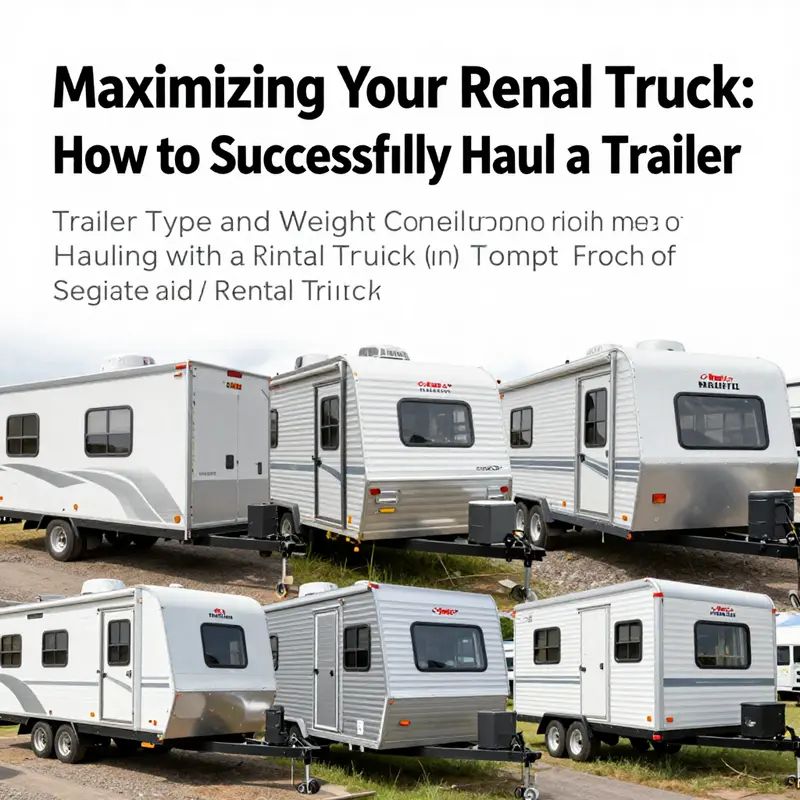
When you’re planning a move or a shipment that involves a trailer pulled by a rental truck, the core question isn’t simply whether you can tow something at all. It’s whether the trailer you have in mind, its cargo, and the rental truck you’re selecting all fit within clear boundaries of weight, balance, and policy. The practical path to success begins with a verdict on compatibility: does the rental truck have a towing capacity that can match or exceed the total weight of the trailer plus its load? Do you have the right hitch receiver and the appropriate hitch ball size to secure that trailer? And beyond hardware, are you aligned with the rental company’s towing rules, any required waivers, and the legal requirements that govern trailer operation in your area? These questions form a single thread that, when pulled, reveals a coherent approach to safe, efficient, and compliant towing using a rental vehicle. This approach moves beyond a simple yes-or-no answer and becomes a disciplined process that foregrounds safety, efficiency, and cost control as you plan to move a trailer with a truck you rent for the job.
To begin with, the idea of compatibility sits at the intersection of the truck’s design and the trailer’s demands. Not every rental truck is equipped to tow. Truck makers publish towing capacity, which represents the maximum weight the vehicle can safely pull, including the weight of the trailer and its cargo. It is common to find a range of towing capacities across a single model year or trim level, and the exact figure can depend on drivetrain, engine, axle ratio, and whether the vehicle is equipped with towing packages. When you rent, you should locate the towing capacity in the manual, on the vehicle’s door jamb sticker, or on the rental company’s specification sheet for the exact unit you’re considering. The number you need isn’t a marketing claim; it’s the ceiling for safe operation. A separate but equally critical factor is the hitch receiver. Most mid-sized and larger rental trucks use a 2-inch or 2.5-inch receiver, and you’ll need a compatible hitch ball that corresponds to your trailer’s coupler. It’s a small thing with a big impact: an incompatible hitch can compromise steering, braking, and even the trailer’s ability to remain attached in windy conditions or during lane changes.
The kind of trailer you intend to tow matters as well. Light-duty trailers—think utility trailers or small cargo boxes—are typically within reach for standard pickup trucks and some larger vans. Heavy-duty trailers, including large cargo trailers, gooseneck or fifth-wheel types, or even RV trailers, demand far more from a tow vehicle. These heavier trailers push you into the realm of trucks with stronger engines, higher GVWRs (gross vehicle weight ratings), and more robust suspension and braking systems. Each trailer has its own weight profile, and these figures aren’t arbitrary. The key rating is the GVWR, which indicates how much weight the trailer is manufactured to carry and how much the combination can weigh when you’re on the road. Your goal is simple: the sum of the trailer’s empty weight plus its cargo must stay within the truck’s stated towing capacity. In practice, you’ll compare the trailer’s GVWR and the actual loaded weight against the truck’s maximum tow rating. If either dimension exceeds the limit, you’re stepping outside safe, legal operation. When you’re evaluating a rental truck such as a common workhorse with a light-to-medium duty rating, the safer approach is to base the decision on the trailer that sits within the 60–80 percent range of the truck’s nominal towing capacity, rather than riding the edge of it. This buffer helps absorb the unexpected, such as a slope, a gust of wind, or a road hazard that could suddenly increase the load on the hitch.
The variety of trailer types you might encounter in a rental context is surprisingly broad, and understanding the practical implications of each type helps you choose not just what you can tow, but what you should tow. Low flat trailers, for example, are two-axle, lightweight frames that work well for medium hauling tasks. They’re typically under 10,000 pounds in load capacity, which makes them attractive for a rental truck that isn’t a full-size heavy-duty model. Their advantages are clear: easier towing, better fuel economy, and lower upfront costs. But their design also imposes limits. With a low flat, you might face stability challenges when the load is tall, uneven, or not uniformly distributed. They can also offer limited access from the front, which constrains certain loading scenarios in tight spaces or when you’re loading from a curbside point of view.
Utility trailers offer a different balance of versatility and risk. They’re open-frame designs that stand out for loading convenience and affordability. They’re well-suited to moving furniture, carrying equipment for home improvement tasks, or transporting goods for a small business. The open frame means you have plenty of loading flexibility, and you can fit awkward or oddly shaped items inside. However, that same openness leaves your cargo exposed to the weather and to potential theft. You’ll want to secure items meticulously with tie-downs and consider additional protection or coverage when the forecast isn’t favorable. These trailers also demand careful harnessing of cargo. Properly securing loads can be time-consuming but is essential for safe travel—loose items can shift, altering weight balance and causing steering or braking issues along the route.
Enclosed trailers address some of these concerns by offering weather protection and enhanced security. Fully enclosed designs guard belongings from rain, dust, and exposure. They’re particularly valued when transporting motorcycles, ATVs, sensitive equipment, or personal belongings on longer moves. The trade-off is that enclosed trailers are typically heavier than their open counterparts, and that extra weight translates into a greater demand on the tow vehicle’s engine and braking system. In other words, while an enclosed trailer protects your cargo, it also narrows the field of suitable rental trucks to those with more capable towing packages. If you’re moving sensitive equipment or valuable items, the added protection can outweigh the additional fuel and maintenance costs, but you’ll want to confirm that your rental truck meets the trailer’s GVWR and the trailer’s own weight when loaded.
Car hauler trailers constitute a specialized category. They’re engineered to carry vehicles and are available in open or enclosed formats, with ramps, tie-down points, and secure loading systems designed to manage the weight distribution of a car. The physics of towing a car are more demanding than towing a standard box or utility trailer. You’ll need precise weight distribution and a reliable braking setup to maintain control during long highway runs. For most renters, car haulers are not a first-choice option unless the rental truck is explicitly designed or upgraded to handle the load and the combined weight does not exceed the vehicle’s towing limits. In all cases, analyzing the trailer’s weight characteristics in conjunction with the truck’s GVWR and towing capacity is essential to prevent runaway loads or compromised handling.
In thinking through weight considerations, the most basic rule is non-negotiable: always verify your rental truck’s towing capacity before attaching any trailer. This is especially important when you’re working with mixed loads or when you’re considering a heavier trailer type. Let’s translate that into concrete practice. A mid-size pickup might offer a towing capacity between about 5,000 and 8,000 pounds, which suffices for many utility or small enclosed trailers when they’re lightly loaded. A full-size pickup or a dedicated work truck from a rental fleet could push that capacity much higher, potentially 12,000 pounds or more, depending on configuration. The trailer’s weight, plus cargo, must stay within that rating. A useful mental checklist is to compare the trailer’s gross vehicle weight rating (GVWR) to the vehicle’s maximum tow rating and then ensure the loaded trailer weight stays safely under that maximum. In many cases, the simplest approach is to select a trailer that, when loaded, does not exceed roughly half to two-thirds of the truck’s stated towing capacity. This buffer reduces the risk of overload on climbs, during lane changes, or in windy conditions.
Beyond the numbers, rental-company policies introduce another essential layer of planning. Many rental outfits offer towing packages or provide trucks that come pre-equipped for towing. It’s common to see an option to rent a truck with an integrated towing package, which may include a more robust hitch, wiring harnesses, and possibly a heavier-duty cooling system to sustain longer pull profiles. Some companies may charge extra for towing equipment or require you to sign a waiver acknowledging the risks of towing with a rental vehicle. The practice varies by company and by location, so it’s prudent to confirm in advance whether towing is permitted with the exact unit you plan to rent, what the fee structure looks like, and whether you need to bring or rent additional devices such as a brake controller for trailers that are equipped with electric brakes. It’s easy to assume that any pickup can tow a trailer, but the reality is that the rental policy, the particular unit’s configuration, and the legal obligations vary, sometimes in ways that significantly affect the total cost or the level of required training.
Safety and legal requirements frame the conditions under which towing is permissible. A trailer should have functioning brakes (if the trailer’s weight or legal requirement mandates them), proper lights and reflectors, and a reliable coupling that remains secure. If the trailer has brakes, you’ll typically want a trailer brake controller installed in the tow vehicle so the braking force is appropriately modulated and synchronized with the trailer’s brakes. Lighting, especially brake and turn signals, must operate in harmony with the tow vehicle’s lighting system. Failure to comply can result in legal penalties, failed inspections, or unsafe driving conditions. Local laws further constrain longer trailers by setting limits on trailer length, require certain lighting configurations, and specify maximum speeds when towing. On the road, the handling dynamics do shift when you tow. The longer wheelbase and weight distribution affect braking distance, acceleration response, steering feel, and cornering behavior. You’ll notice consequences such as longer stopping distances, wider turning radii, and a heightened tendency for trailer sway when speeds rise or when gusts interact with the trailer’s surface. The prudent driver compensates by reducing speed, increasing following distance, and making progressive, smooth maneuvers rather than abrupt changes in direction or throttle.
Practical preparation is the quiet engine behind safe towing. Before you depart, perform a thorough check that spans both the truck and the trailer. Confirm that the hitch is locked and latched, the safety chains are crossed and attached, and the wiring harness is producing proper brake, tail, and turn signals. Inspect the tires on both vehicles and ensure the spare is readily available. Place warning triangles or reflective markers if you’ll be moving through busy areas or parking lots, and ensure that the load is evenly distributed from side to side and front to rear. The forward portion of the trailer should sit level or slightly downward relative to the hitch; if the trailer sags excessively, you may be placing disproportionate stress on the hitch and the receiving frame. When loading, start with heavier items low and toward the front of the trailer to maintain a lower center of gravity and to improve steering stability. Use tie-downs with proper ratchet tension and distribute these restraints in a way that minimizes space for shifting. If you’re loading a sensitive item, such as a piano, a set of bicycles, or electronics, consider adding protective padding and securing devices that reduce vibration. The goal is to arrive at the destination with a load that looks balanced, anchored, and free of movement.
Hooking up a trailer is a skill that benefits from practice in a safe, open area. Take the time to practice aligning the hitch, connecting the trailer, and verifying all connectors. If you’re unsure about hitch setup, you can consult resources that provide step-by-step guidance and diagrams; for instance, you can reference this guide on hitch installation to ensure your installation aligns with the best practices for towing with a rental truck: Penske trailer hitch installation. The act of verifying the setup before you head out helps you avoid scenarios in which the trailer detaches, drifts, or produces unsafe sway. It also reduces the risk of legal trouble caused by a failure to comply with safety standards or with rental company rules, which can be just as consequential as the mechanical risk of towing with an insufficient vehicle.
Once you’re on the road, the adjustments are ongoing. Towing changes steering, braking, and turning dynamics. You’ll want to increase following distance to account for longer stopping times and be mindful of the trailer’s sway potential at highway speeds. Gentle inputs are rewarded with smoother, safer handling. When you pass through intersections, safely widen your lane awareness and maintain clear signaling in advance of turns. You’ll feel the difference in fuel economy when towing; the drag and weight increase fuel usage, so it’s wise to plan for longer travel times and to approximate fuel costs using the truck’s typical miles-per-gallon performance while towing. If the trailer is heavily loaded, consider route planning that avoids steep grades when possible, and plan for more frequent stops to reassess strap-downs, recheck lighting, and inspect for any movement of the cargo or connections.
Choosing to rent a truck with towing in mind means adopting a measured approach to both the preparation and the execution. If you’re carrying heavy or irregular loads, or if you anticipate long distances, weather changes, or difficult road conditions, you should favor a truck with higher tow capacity, a stronger engine, and a more robust suspension system. If your plan is modest—a few hundred pounds for a light utility trailer or for a small enclosed trailer—the standard rental package with a base towing package may be sufficient, provided you observe the safety checks, weight limits, and legal requirements described above. Each step in the decision makes a difference, not only in safety but in the reliability of your transport. It’s not merely about whether the trailer can be attached; it’s about ensuring the combination operates within predictable, controlled limits under real-world driving conditions. As you finalize the plan, keep in mind that the ultimate determinant is the combination’s total weight relative to the truck’s towing capacity and the trailer’s own GVWR, all of which must be in harmony with the rental agreement and the laws of the road. With careful planning, a rental truck can be a versatile platform for towing a range of trailer types, delivering both practical value and peace of mind on the move.
For readers who want a concise reference on safety while towing, the National Highway Traffic Safety Administration provides detailed guidelines that can help align driver behavior with best practices for trailer towing safety, regardless of whether you’re using a rental truck or a personal vehicle: https://www.nhtsa.gov/trailer-towing-safety
To connect practical considerations with a concrete step, think of the trailer types and the weight categories described above as a spectrum. The moment you decide to tow during a rental period, you’re selecting a scenario in which every choice—from the trailer’s GVWR to the truck’s towing capacity, from the hitch size to the braking setup, from the rental policy to the legal limits—needs to fit together cleanly like pieces of a well-planned moving puzzle. When each piece is aligned, the journey becomes not a test of nerve, but a well-orchestrated process that brings your cargo to its destination safely and efficiently. The real payoff is the quiet confidence that comes from knowing you chose the right trailer for the job, the right truck to pull it, and the right approach to loading, securing, and driving all the way to your new location.
Tow Rules and Real-World Checks for Towing with Rental Trucks
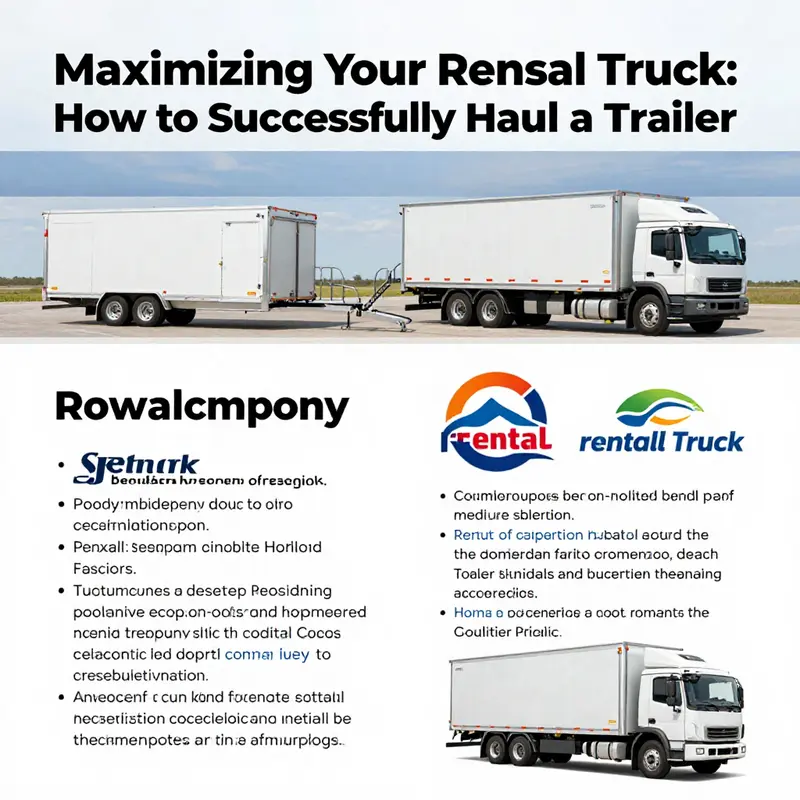
Towing a trailer with a rental truck is common and doable when you verify the truck’s towing capacity, the trailer’s GVWR, and the rental company’s rules. Start by confirming the truck’s stated towing limit and compare it to the trailer’s weight (including cargo). Ensure the trailer has brakes if required, connected wiring, lighting, and safety chains, and check that the hitch size matches the trailer’s coupler. Some rental programs require a trailer brake controller and a brief towing orientation. Read the contract for towing permissions, prohibited trailer types, insurance implications, and any towing fees or waivers. Practice hooking up the trailer in a safe area before driving, test lights and brakes, and adjust your driving: longer stopping distances, slower acceleration, and wider turns. Verify with the rental agent in writing that the chosen truck and trailer combination is approved, and keep a copy of the relevant sections of the rental agreement. If the numbers don’t align, consider a higher-capacity truck or a smaller trailer, or arrange a separate towing solution.
Final thoughts
In conclusion, the ability to haul a trailer with a rental truck can significantly benefit business owners by extending their transport capabilities. By ensuring compatibility between the truck and trailer, understanding the different types and weights of trailers, and staying informed about rental company policies, you can optimize your hauling operations efficiently and safely. Each step carries vital importance in protecting your investments and ensuring compliance with local regulations. With careful planning and proper execution, renting a truck for towing should become a seamless part of your logistics strategy.