
For business owners relying on rental trucks for logistics, understanding the cancellation policies of services like Penske is crucial. Whether it’s a scheduling conflict or a change in logistics, the ability to cancel a reservation smoothly can save both time and money. This article delves into the specifics of Penske’s cancellation policy, provides easy-to-follow steps for canceling a truck rental, and outlines the implications of doing so for your booking and business needs. Each chapter offers insights that are practical and valuable, helping you navigate the rental process with confidence.
When Plans Change: Demystifying Cancellation Rules for Penske Truck Rentals
Moving through a move or a temporary relocation often begins with a calendar full of hopeful plans. You book a truck, you map a route, you line up helpers, and then life, as it tends to do, throws a curveball. A sudden change in schedule, a shift in timing, or a new constraint can force you to rethink the whole arrangement. In those moments, the policy around canceling a Penske truck rental isn’t just a dry clause tucked in an agreement; it’s a practical tool that can save money, reduce stress, and free you to pivot without paying a penalty you didn’t anticipate. The ability to cancel confidently depends on understanding the core rule—cancel at least 24 hours before pickup to avoid fees—and recognizing the nuances that can appear in the fine print or real-world practice. This chapter walks through what that cancellation policy looks like in practice, how to execute a cancellation smoothly, what fees you might encounter if you miss the window, and how to approach a change in plans with clarity and calm. The goal is not to linger on anxiety about a last-minute cancellation but to illuminate a straightforward path that lets you adjust plans with confidence while preserving options for the future.
At its core, the Penske policy emphasizes a clear deadline: cancel at least 24 hours before your scheduled pickup time to avoid charges. This rule is framed to protect both customers and the company from sudden shifts that disrupt scheduling, fleet availability, and the costs associated with keeping a truck on standby. The practical upshot is simple: if you can commit to the window that starts 24 hours before pickup, you stand a good chance of avoiding a cancellation fee. It is a reminder that planning pays off, and the closer you are to your pickup time, the more prudent it becomes to proceed with a cancellation promptly and with proper notification. The logic is intuitive. A move, after all, is a complex choreography of timing, distance, and resource allocation. A last-minute cancellation can ripple through the lineup of reservations, affecting others who are counting on a truck’s availability. The policy’s aim is to balance flexibility for the customer with reliability for the fleet and its scheduling ecosystem.
Yet, as practical experience shows, the policy’s clarity can sometimes feel murky in real life. The public-facing guidance emphasizes the 24-hour cutoff, but a few policy notes and consumer summaries suggest a slightly different nuance: there is a window that starts when the reservation is made, and another window that governs the actual pickup time. In this sense, the cancellation decision sits at the intersection of two timelines. If you cancel within 24 hours after making your reservation, some summaries indicate there may be no cancellation fee. If you cancel after more than 24 hours have elapsed since the reservation was created, a cancellation fee of $25 can be charged. This bifurcation—one timeline tied to the act of reserving and another tied to the actual pickup window—highlights why it’s essential to verify the exact terms applicable to your specific reservation and location. It also underscores why customers are wise to review the latest language on the official site and to contact customer service if there’s any ambiguity. While this conditional nuance may not alter the primary recommendation—aim for that 24-hour lead time—it does matter when plans are still forming in the moment and the clock is ticking.
For readers weighing the practical implications, the most reliable approach remains straightforward: cancel online or through the Penske Truck Rental app as soon as you know you won’t need the truck for your scheduled pickup. The steps are designed to be user-friendly, with the expectation that reservations are easy to locate and cancel with a few taps or clicks. By initiating a cancellation through the official channel, you reduce the risk of miscommunication or lost confirmations and you secure a clear record of the date and time of cancellation. This, in turn, helps prevent misunderstandings about fees and refunds and ensures you have a documented trail should questions arise later. The online process aligns with the broader consumer expectation of immediate, predictable action in the digital age: you don’t have to wait on a phone line or chase a human being across time zones to take control of your reservation.
Of course, the best-laid plans often include contingencies. When the 24-hour window approaches, the question becomes how best to navigate a change that’s not merely a postponement but a real rearrangement of your moving timetable. If the scheduled pickup is, say, three days away and you realize you won’t need the truck, cancelling well before the 24-hour threshold protects you from fees while leaving space for a rescheduling option should your timing shift again. If the pickup is less than 24 hours away, the risk of a cancellation fee increases, and you’ll want to weigh whether a postponement or a different vehicle option could avoid unnecessary charges. The practical takeaway is to treat the cancellation decision as an active planning step rather than a reactive impulse.
An instructive way to think about the policy is to imagine two distinct moments: the moment you make the reservation and the moment you reach the day before pickup. At the former, a flexible window could exist in which a cancellation incurs no fee, depending on the exact terms in the policy language. At the latter, the standard rule kicks in—arrive at or before the 24-hour threshold to secure a fee-free cancellation. The discrepancy in published interpretations is not merely academic; it can shape how you time a cancellation and what you expect to be charged if things change. The prudent move is to rely on the official, up-to-date language and to confirm any ambiguous terms with customer service before finalizing a cancellation decision. This approach minimizes the risk of surprise charges and ensures that you are acting with the most accurate information available at the moment you cancel.
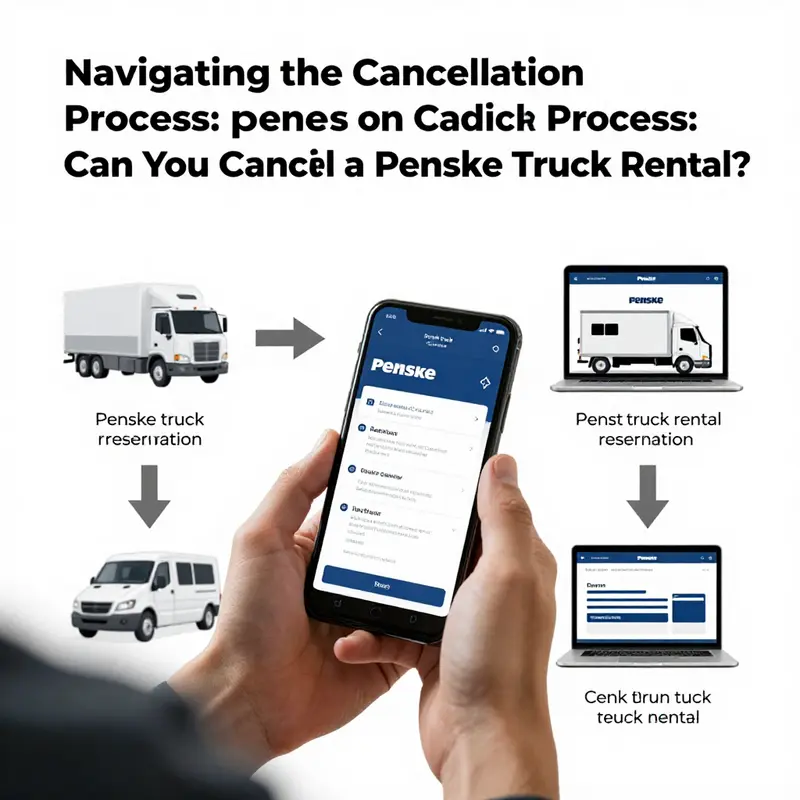
In practical terms, canceling a Penske truck rental is about clarity, speed, and documentation. Start by signing into your account on the Penske Truck Rental website or opening the mobile app. Locate your reservation—this could be listed under upcoming reservations or a similarly labeled section. From there, select the option to cancel and follow the prompts. You will typically be asked to confirm the cancellation and may be prompted to specify a reason for canceling. After you submit, you should receive a cancellation confirmation—either on screen, by email, or both. It’s important to keep that confirmation, especially if you anticipate a refund or if there’s any ambiguity about fees. In the absence of a confirmation, or if you suspect an error in the cancellation record, reaching out to customer service promptly is a wise move. The goal is to secure a definitive record that your reservation has been canceled and to understand precisely what, if any, fees apply in your particular case.
Beyond the mechanics of canceling, the broader question is how cancellations fit into the larger experience of using a truck rental for a move or a trip. For many customers, cancellations are not merely a matter of losing a booked vehicle; they are about reconfiguring a plan that could involve multiple moving days, truck sizes, and pickup locations. The flexibility to cancel without penalty, or with a minimal fee, supports a sense of control over moving logistics. It allows families to adjust their timelines in response to job changes, family needs, or unexpected complications. It can also serve as a catalyst to reassess the need for a rental, perhaps prompting a switch to a smaller truck or a different date that better aligns with the new reality. The policy, then, is not just a fee schedule; it is a strategic tool for managing a complex logistical operation in which timing matters as much as distance.
If you find yourself confronted with the possibility of cancellation, a few practical considerations can help you navigate with greater ease. First, act early. The sooner you cancel after realizing the change, the more you protect your financial options. Second, document everything. Save the cancellation confirmation, the reservation details, and any correspondence with customer service. Third, consider your rebooking options. Even if you don’t need a truck immediately, you might find a situation where rescheduling for a future date aligns better with your schedule and minimizes downtime or storage costs. Fourth, keep an eye out for any exceptions related to special circumstances. Some customers qualify for promotions, discounts, or alternative arrangements that could alter the fee landscape or the way refunds are processed. While those possibilities depend on the specifics of your reservation and the policies in place at the time, knowing they exist can empower you to ask the right questions when speaking with a representative.
For readers who enjoy exploring additional savings while navigating their moving plans, there is a related thread worth encountering. If you’re curious about discounts or deals that may accompany a rental without needing to cancel, you can explore resources such as Penske truck rental discounts, which gather information about promotional opportunities and cost-saving options that complement or, in some cases, reduce the temptation to cancel unnecessarily. You can read more about these savings opportunities at the linked resource below, which provides context on how to stretch your budget when moving without compromising your schedule or reliability. This is not a substitute for understanding the cancellation policy, but it offers a complementary perspective for those who want to optimize their overall moving plan rather than simply avoid a charge.
The broader takeaway is that cancellation is a standard instrument in the moving toolbox, designed to offer relief when plans shift, while preserving the integrity of the scheduling system for the fleet and other customers. The best practice is to treat the 24-hour cutoff as a practical shield—one that helps you safeguard against fees when possible while still allowing enough room to pivot. When plans are uncertain, the safest path is to cancel as early as possible and to document the outcome clearly. If a cancellation is unavoidable within the 24-hour window, you’ll want to be prepared for the possibility of a fee, most commonly around $25 in the scenarios described in the standard policy context. The exact amount and applicability can depend on the specifics of your reservation and the location, so the final word always rests with the official terms as published by Penske.
For readers seeking a precise, official articulation of the policy, the best source remains the Penske Truck Rental website. There, you will find the current terms, any regional variations, and contact options should there be questions or unusual circumstances. As with any service policy, the landscape can evolve, and staying current ensures you are acting with the most accurate information available at the moment you cancel. In practice, most customers find that their cancellation experience—when handled through the official channel and within the prescribed timelines—feels straightforward and respectful of both their needs and the fleet’s scheduling realities.
To summarize the core message in a way that is immediately actionable: if your plans change and you need to cancel a Penske truck rental, aim to complete the cancellation at least 24 hours before the scheduled pickup time to avoid any charges. If you cancel with less notice, you should anticipate a cancellation fee, commonly around $25, though confirm the exact terms for your reservation. Canceling online or through the Penske app typically yields the most reliable documentation and the cleanest path to a refund, if applicable. And when your plans are uncertain, cancel early to preserve options, minimize costs, and maintain clarity in your moving timeline. If you’d like to explore cost-saving opportunities that complement or reduce the urge to cancel, you can explore related discussions on Penske truck rental discounts, which can help you navigate budget considerations without sacrificing the reliability you expect from a rental service.
Internal link reference: Penske truck rental discounts. If you click through, you’ll find curated discussions on how to maximize savings on truck rentals while planning a move, including potential promotion codes and seasonal offers that may apply to different truck sizes, distances, or rental durations. This is intended as a resource for budgeting and planning—helping you avoid unnecessary cancellations by optimizing the rental choice from the start.
External resource: For the official policy language and the most current terms, see the Penske Truck Rental site: https://www.pensketruckrental.com/
Cancel with Confidence: Navigating the 24-Hour Rule and Online Tools for Penske Truck Rental Cancellations
Plans shift. A calendar filled with tightly packed moving deadlines can suddenly loosen, and a reservation that once made perfect sense may now feel inconvenient or wasteful. In those moments, a straightforward cancellation can feel like a lifeline rather than a setback. The good news is that for most Penske truck rentals, the process is designed to be simple, transparent, and remarkably forgiving if you act in time. The core idea is clear and customer-friendly: cancel your reservation online at least 24 hours before the scheduled pickup, and you won’t incur cancellation charges. That 24-hour window is the hinge on which the policy swings—give yourself ample time, and you keep the plan flexible without paying extra. The moment you realize your plans have changed, you can reach for the same online tools you used to reserve the vehicle in the first place and make the change with confidence. If you’re unsure about whether your specific reservation falls inside or outside this window, the quickest path is to review the reservation details online or in the mobile app, where a clear status update will tell you if you’re within the fee-free zone or approaching the boundary where fees could apply. The process and policy are straightforward, but the real value lies in how you navigate them when time is tight, and emotions run high as moving day approaches.
When you think about canceling, the first instinct might be to call a service line or to ping a support chat. The structure of Penske’s system is designed to support that intent, but the most reliable way to avoid any miscommunication is to cancel through the official channels—the Penske Truck Rental website or mobile app. The interface you’ll interact with mirrors the way you originally booked: sign in, locate your reservation, and select the option to cancel. If you’ve kept those reservation emails handy, you’ll have a snippet of critical information at your fingertips, such as the reservation number, pickup location, and scheduled pickup time. This isn’t just a bureaucratic hurdle; it’s a workflow built to preserve your time, protect your budget, and reassure you that flexibility is still part of the moving equation. The confirmation step is crucial, and you should expect a notification, either on screen or via email, confirming that the reservation was canceled successfully. This isn’t merely a courtesy; it’s your official receipt that you’ve disengaged from the contractual obligation for that particular rental window.
A common concern is what happens if the cancellation occurs within the 24-hour window before pickup. The policy, in its most widely applied form, indicates that a cancellation inside that window may incur a fee. The logic is intuitive: a vehicle reserved for you and prepared for your use becomes unavailable to others, and last-minute changes disrupt the logistics network that supports rental fleets. While the core rule is straightforward, there can be variations based on the exact reservation type, geographic location, or any promotional terms that might have accompanied the booking. Because moving plans can be unpredictable and schedules can shift in the blink of an eye, staying informed is as important as acting quickly. If you realize you’re approaching that delicate 24-hour mark, it’s worth revisiting the reservation in the app or site, where the system often clearly indicates whether penalties apply. This proactive check protects you from surprise charges and helps you plan your next steps, whether that means canceling, rescheduling, or rebooking a later time that aligns with your updated timetable.
The steps to cancel blend a familiar rhythm with a user-friendly interface. First, access your reservation—log in to the account you used to book, via the Penske Truck Rental website or the corresponding mobile application. Once you’re inside, navigate to the area that manages reservations, which is commonly labeled something like “My Reservations” or a similarly named section. This is the cockpit of your cancellation process, a place where you can review each booking’s status, location, and pickup details. When you identify the specific reservation you wish to cancel, you’ll find an option that says cancel. Selecting this initiates a confirmation sequence that reassures you that you’re making an intentional move rather than an accidental click. The system often asks you to confirm once more, ensuring you’re fully aware that, if canceled within the 24-hour window, a penalty may apply. If you proceed, you’ll receive a cancelation confirmation—typically a message on the screen and a follow-up email—that confirms the reservation is no longer active and that no further charges will come from this particular booking.
In practice, this flow isn’t just about erasing a reservation from a calendar. It’s about preserving your financial balance while maintaining the flexibility that moving—an inherently dynamic process—demands. The ability to cancel online without fees, provided you do so before the rental start time, is a feature that recognizes the realities people face: plans change, timelines slip, and sometimes the best decision is to opt out of the commitment before it becomes binding in a way that costs more than it saves. It’s a policy that invites a sense of empowerment rather than a sense of risk. When you cancel in a timely fashion, you avoid penalties, you keep cash on hand, and you can reallocate that vehicle to a window of time that better suits your evolving schedule. The simplicity of the cancellation workflow reinforces the broader consumer experience: ease of use, transparent terms, and the confidence that changing plans won’t turn into financial regret when you’ve acted with foresight.
A practical dimension of this process is the confirmation trail. After you cancel, you should receive a confirmation notification. This is more than a formality; it’s your documented proof that the cancellation has been acknowledged by the system. If, for any reason, the confirmation doesn’t arrive promptly, it’s a prudent step to check your email spam folder and then reach out to customer service for verification. In some cases, a cancellation may be reflected immediately in your account, but a separate confirmation email ensures you have a durable record. Keeping this record is helpful if you ever need to reference the cancellation in the future—for instance, if you’re cross-checking other moving arrangements or revisiting promotions and discounts you might still leverage for a future booking.
Beyond the technical steps, there is a human element to consider. The convenience of an online cancellation doesn’t erase the need to understand your own logistical constraints. You might be canceling for reasons that have nothing to do with a change of heart about renting a vehicle; perhaps a timing conflict with a moving crew, a change in the route, or a better option that arose from a last-minute planning decision. In these moments, the policy’s clarity becomes a source of reassurance. It tells you what’s possible, what’s expected, and what’s acceptable in terms of financial exposure. The policy’s clarity is complemented by the accessibility of support channels. If you encounter a cancellation scenario that isn’t fully explained by the standard terms—such as an exception tied to a specific contract, location, or fleet type—customer service is the bridge between policy and practice. You can reach out for clarification, and in many cases, a representative can offer a tailored solution that aligns with your circumstances while remaining within the spirit of the policy. This is the nuance that makes the cancellation experience less about compliance and more about meaningful service.
An additional layer of practicality concerns the preparation you can do before you reach the cancellation point. For instance, keep a few essential details handy when you reserve, such as the reservation number, pickup location, and the exact time you were scheduled to begin the rental. Having these details on hand reduces friction if you need to cancel, reschedule, or modify a reservation at the last minute. It also means you can quickly verify whether the booking was a standard rental, a one-way move, or a promotional arrangement. While the 24-hour window is a general guideline, certain booking types may have tailored terms, and a quick look at the reservation specifics can save you from misinterpreting the policy. If you’re running through this process in a busy week, your ability to act decisively depends on how cleanly you’ve organized the information that matters: dates, times, locations, and any unique identifiers associated with the rental.
As you consider the broader implications of cancellation, it’s natural to think about what comes next. If you cancel, you’re not simply ending a transaction; you’re keeping the door open for future mobility needs. The same system that allows you to cancel can often accommodate rescheduling or rebooking for a later date with the same ease you experienced initially. In many cases, if your plans shift but you still need a moving solution, you can pivot to a later pickup window or a different truck size that better aligns with your updated plan. In other words, canceling doesn’t mean you’re abandoning the service; it’s a strategic step that preserves your budget and lets you re-enter the rental process when conditions are more favorable. This continuity—the ability to cancel without penalties and rebook at a later time—helps users maintain momentum in a process that is, by its nature, highly time-sensitive and sensitive to external pressures.
For readers who want to explore related topics that deepen their understanding of moving logistics and vehicle options, there is value in looking at broader guides on truck sizes, fuel considerations, and one-way rentals. A detailed resource on the 16-foot rental option, for example, can offer practical context for whether you need a smaller, more maneuverable vehicle or a larger truck for bigger moves. This kind of information complements the cancellation policy by helping you make a smarter decision about when you might actually need to rent, and what you might choose to cancel or delay until a future date. If this topic matters to you, you can explore a focused guide such as the one dedicated to the 16-foot option in the related resource library. It provides concrete dimensions, payloads, and use cases that help you assess fit before you book, ensuring that when you do cancel or rebook, you’re starting from a stronger, more informed position. And if you want to quickly connect with content that digs into the specifics of truck size and capacity, you can explore a concise comparison within the internal link on the 16-foot option, which gives a practical sense of how different vehicle classes map to different loads and routes. This knowledge isn’t strictly about cancellation, but it informs the decision-making framework you bring to any booking decision, including the timing of a cancellation. To connect with that intuitive resource, see the linked guide on the 16 ft option: Penske truck rental 16 ft.
In the end, cancellation is a tool that rests on three pillars: accessibility, transparency, and respect for your evolving schedule. The online cancellation process is designed to be accessible anywhere, at any time, with a few taps or clicks. The terms are stated clearly, not hidden inside legalese, so you know when you’re avoiding fees and when you’re not. And the respect comes from recognizing that people’s lives don’t stop for moving plans—the policy recognizes that reality and supports you in navigating it without punitive penalties. When you combine these elements, canceling a Penske truck rental becomes less about losing a booking and more about regaining control over your timeline and budget. You’re not abandoning a commitment; you’re choosing the right moment to re-engage with the moving process on your terms. The experience, at its best, reflects what good service should feel like: simple, honest, and oriented toward keeping your plans intact even when they shift.
If you’re preparing for a cancellation, there are a few practical reminders that can save you time and reduce anxiety. Check the reservation details early so you’re not scrambling as pickup time approaches. Confirm whether you’re within the 24-hour window, and plan your next steps—whether that means canceling, rescheduling, or selecting a different pickup time or location. Keep the confirmation in a safe place, whether that’s your email archive, a notes app, or your own project folder for the move. If you must contact support, have your reservation number and key details ready to speed up the conversation. Support staff can offer guidance that clarifies whether any exceptions apply in your case. And if you find yourself frequently canceling or rescheduling, consider building a proactive approach: keep alternative dates in mind, outline a few backup locations if your preferred pickup point becomes unavailable, and mark the times you’re most likely to be able to proceed with a booking. This approach helps you stay agile in the face of uncertainty and ensures you have a ready plan when your circumstances shift abruptly.
The cancellation policy, ultimately, serves as a safety net for the moving journey rather than a constraint on it. It’s the recognition that timing matters and that plans can change, sometimes with little warning. Online cancellation empowers you to act quickly and with certainty, reducing the risk of surprise charges and restoring your agency in a process that can feel impersonal when embedded in a large fleet operation. In the broader arc of planning a move, this kind of policy—and the ability to enact it with minimal friction—helps keep the focus on the larger objective: a move that fits your life, your budget, and your schedule without creating unnecessary stress. For readers who want to stitch this policy into an even richer map of their moving toolkit, there are related resources that cover everything from rental discounts to fuel calculators, from one-way options to roadside assistance. These elements, taken together, compose a practical, user-centered framework for navigating corporate rental services in a way that respects your time and your bottom line. The cancellation option is a keystone in that framework, allowing you to pivot without penalty and reorient your plans toward success when the moment is right.
External resource: For the official policy and latest terms, you can consult the provider’s primary guidance at the external source linked below. This external reference reinforces the 24-hour window, the online cancellation capability, and the general expectation that fees may apply if you cancel too close to pickup. External reference: https://www.pensketruckrental.com
Cancel Without Surprises: Navigating Penske Truck Rental Cancellations

Planning a move or a roadside errand that requires a truck can feel like solving a jigsaw without the final piece. You secure a reservation, only to realize a calendar clash, a change of plans, or a tighter budget makes the trip unnecessary. In moments like these, the ability to cancel a Penske truck rental gracefully matters almost as much as the original booking itself. The good news is that the policy is designed with flexibility in mind, especially when you act with enough lead time. The core principle is straightforward: cancel before the scheduled pickup time to avoid penalties. Yet the practical reality is more nuanced. Cancellations are not a one-size-fits-all affair. They depend on when you cancel, the vehicle type you reserved, the branch you selected, and any special terms attached to a promotional rate. Understanding these nuances can save you money and reduce stress when plans shift suddenly, which is precisely the rhythm this chapter aims to map out.
Among the loudest signs of a well-managed rental experience is clarity about the cancellation window. In most standard scenarios, you should cancel at least 24 hours before your pickup to avoid charges. This rule is echoed in the official guidance, which emphasizes the importance of giving the system adequate notice so it can free up the vehicle for someone else and process any necessary adjustments to your account. The practical upshot is simple: a 24-hour buffer acts as a safety net for both you and the rental company. If your plans change with enough lead time, you can walk away without paying a cent beyond perhaps minor administrative fees, depending on the exact reservation and regional policies. The upside is straightforward: you retain flexibility without sacrificing financial clarity.
But the real world rarely adheres to a clean script. When schedules collide or unexpected issues arise, you may find yourself within that 24-hour window. The literature and core terms acknowledge that in such cases, fees may apply. The amount and structure of these fees can vary, but a common pattern is straightforward: the closer your cancellation is to the pickup time, the higher the potential cost. In some cases, you might receive a full refund or credit toward a future rental if you cancel within a broader window, typically 24 to 48 hours before pickup, depending on the reservation terms. This nuance is important to note because it means different bookings can behave a little differently. It also means that avoiding fees isn’t always a binary yes-or-no proposition; it can depend on the precise timing and the way the reservation was priced.
The interplay between timing and pricing grows more intricate when you consider location and vehicle type. A standard moving truck booked at one branch may have a different cancellation threshold than a specialty vehicle or a trailer reserved at another location. In some cases, promotional rates or discounted reservations carry stricter rules, potentially including non-refundable deposits or even no cancellations allowed under certain terms. These tighter rules are not the norm for every booking, but they are a reminder that the devil is in the details. If you secured a heavily discounted rate or a limited-time promotion, read the fine print carefully. The policy switch from flexible to strict may occur in the moment you finalize the deal, not just at the time of pickup. For customers, this means that a bargain can be compelling but may also bind you more tightly to the travel plan than a standard rate would.
There is another practical dimension to cancellations that often gets overlooked: the moment you actually pick up the truck and start your rental. Early return of the vehicle, while perfectly understandable in the face of changing plans, doesn’t always trigger a prorated refund. A lot of Penske rentals are billed on a fixed-rate basis, meaning you pay for the agreed period regardless of how many days you used the vehicle. In other words, returning the truck early might not unlock the savings you expect if you’re looking for a partial or prorated refund. This reality isn’t a punitive measure; it’s a pricing philosophy that can affect your decision-making if your plans are uncertain from the outset. If flexibility is crucial, you may want to factor that into your original booking by choosing a more flexible rate or a longer cancellation window where available.
To navigate these subtleties with confidence, the best practice is to stay aligned with the official channels. Review your confirmation email thoroughly—the details of your reservation, including the pickup time, vehicle type, location, and any special terms, are there for a reason. If something about the terms feels unclear, reach out to Penske customer service. They can verify whether your particular booking falls under a standard policy, a promotional agreement, or a location-specific rule. The aim is to avoid assumptions and ensure you have a clear understanding before you initiate a cancellation. This proactive step can prevent surprise charges and offer a smoother path toward rescheduling or opting for a different vehicle that better fits your needs.
Technical steps to cancel are straightforward, and the digital tools are designed to be user-friendly. You can cancel online through the Penske Truck Rental app or website, which provides a direct line to your reservation and a transparent display of any potential fees or credits. If the cancellation window is approaching and you’re weighing your options, a quick check of the cancellation screen can reveal whether you’re eligible for a full refund, a credit toward a future rental, or a mandatory fee. In many cases, the system will display the exact amount you would be charged, along with any credits that could be applied to a future booking. This transparency is helpful because it lets you compare the financial impact of canceling now versus rescheduling or keeping the original rental with a modified plan.
When the decision is made to cancel, timing remains a decisive factor, but there is more to consider beyond the numbers. The branch location can influence the outcome. Some locations may process cancellations more leniently, especially in regions with higher demand or with branches that are more accustomed to flexible scheduling. In other scenarios, a local policy variation might align with a specific fleet type or a promotional period that affects the cancellation terms. This doesn’t imply covert entropy in the system; it reflects the granularity of logistics operations where inventory, promotions, and staff availability can shape the final terms of a cancellation. If you suspect your local branch might apply a stricter interpretation, it is wise to contact the office directly. A quick call with a staff member who can access the same reservation system can confirm exactly what applies to your booking and what you stand to gain or lose by canceling.
The narrative around cancellations would be incomplete without acknowledging the practical realities of promotions and credit options. Some reservations offer credits rather than refunds, a mechanism that preserves future rental value while accommodating a change in plans. Credits can be particularly advantageous if you anticipate needing a truck again within a specified window. However, credits are typically tied to the original account and subject to expiration or renewal terms. They are not unconditional cash refunds, and their transferability may be limited. In other words, a cancellation can become a strategic move if you expect to use a Penske truck again within the allotted period. The key is to verify the credit terms at the moment of cancellation so you understand when and how the credit can be applied to a new reservation, and whether any new fees or restrictions apply.
The decision to cancel often sits at the intersection of timing, cost, and intent. If your schedule is uncertain, you can consider keeping the existing booking in a flexible state while you monitor changes, or exploring the option to modify the reservation rather than cancel entirely. In some cases, a modification—such as changing the pickup date, changing the vehicle size within the same family, or altering the rental duration—can be less costly than canceling and rebooking, particularly if you are within the window where the system expects changes to be processed smoothly. The modification path also preserves any promotions or rate protections attached to the booking, provided the terms of the promotion allow it. If you choose to modify, you’ll still want to confirm the new terms explicitly, since adjustments may trigger different fees or credits.
A practical approach to cancelation decisions emerges when you combine the official policy with common-sense planning. First, confirm the exact pickup time and the vehicle you reserved. If plans change, assess whether you can reallocate those resources to a different date or vehicle that better suits your new timeline. Second, check whether you are within the critical window where charges may apply and whether your reservation qualifies for a credit or full refund. Third, review any promotional terms or device-specific conditions that may impact your cancellation. Fourth, use the official cancellation flow to minimize the chance of miscommunication. The digital interface is designed to show you the precise financial implications before you commit. Finally, if there’s any doubt, contact customer support. A live agent can verify the reservation’s status, explain the latest terms, and help you decide whether cancellation, rescheduling, or modification offers the most favorable financial outcome.
To illustrate how these considerations unfold in practice, imagine a scenario in which a customer has booked a standard 16-foot Penske truck for a weekend move that suddenly collapses into a weekday transfer due to a change in work logistics. If the customer cancels 48 hours before pickup, they might be eligible for a full refund or a complete credit, depending on the reservation’s terms. If cancellation occurs 20 hours before pickup, a fee is more likely, and the customer may see a partial credit or a reduced refund. If the customer decides to stay with the reservation but changes the pickup date by a week, the system may honor the existing promotion while applying a new pickup time to avoid changing the overall cost dramatically. Each case is unique, but the guiding principle remains consistent: the more notice you give, the more options you typically retain.
In building a practical framework for cancellations, it’s helpful to keep a few actionable notes in mind. First, always review the confirmation details, not just the headline price. The confirmation is a contract in which the exact terms of cancellation are spelled out. Second, if you’re using a promotional rate, assume stricter cancellation rules and verify whether a non-refundable deposit applies or if a credit will be issued instead of a cash refund. Third, be mindful of how long the credit remains valid; expiration can quickly turn a flexible option into a missed opportunity. Fourth, remember that the branch location matters. A cancellation can be processed differently depending on where you picked up the truck, even when the reservation looks identical on paper. Fifth, if you decide to reschedule, ask for a direct quote that reflects the new dates and the updated rate to avoid surprises later in the process.
The broader takeaway is that cancellation is not merely a passive act of ending a reservation. It is an interaction with a dynamic pricing and logistics ecosystem where timing, location, vehicle type, and promotional terms all interact. Your success in navigating this ecosystem hinges on proactive planning, careful reading of terms, and timely communication with the rental provider. Embrace the digital tools, but don’t underestimate the value of a quick conversation with a live agent if anything about your reservation seems opaque. By combining the clarity of the confirmation with the transparency of the cancellation interface, you can proceed with confidence, even in the face of unpredictable schedules and changing moving timelines.
For readers who want to explore how other customers approach this topic or who want to consider discounts and promotions alongside cancellation flexibility, there is a related resource that dives into the broader ecosystem of Penske rental options. This internal reference provides supplementary context on how customers leverage promotions when planning moves and how a careful choice of rate plans can influence overall flexibility. You can explore this through a focused guide on discounts and promotions here: Penske Truck Rental Discounts. This link is intended to offer a complementary perspective without substituting official policy, and it serves to illuminate how customers balance value and flexibility in real-world scenarios.
In sum, canceling a Penske truck rental can be straightforward or nuanced, depending on timing, location, vehicle type, and the terms attached to your specific booking. The guiding principle remains: act early to maximize options and minimize fees. When in doubt, check the confirmation details, review the terms online, and, if needed, contact customer service for precise guidance tailored to your reservation. With a clear understanding of the cancellation window and the mechanics of refunds and credits, you can navigate the process with assurance and align your actions with the best financial outcome available for your situation.
External resource for precise terms: https://www.penske.com/rental-terms-and-conditions
Final thoughts
Understanding the cancellation policy of Penske Truck Rental is crucial for maintaining effective logistics in any business operation. By knowing when and how you can cancel your reservation, you can reduce any potential disruptions to your plans. Always make sure to review your reservation details and act within the stipulated time frame to avoid additional charges. Staying informed can lead to smarter decisions that positively impact your business logistics and bottom line.